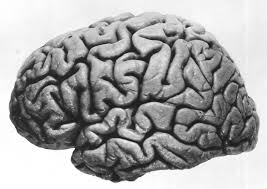
POEM: A Zombie’s Dilemma

brain


I ambled out the gate, down the street, and noticed:

  • Everyone was going my way.
  • Everyone was on foot.


Well, you can imagine what I thought,

I’ve fallen in with a zombie horde!


But, how to check?

Somehow asking,

“What is your stance on raw brain?”

seemed awkward.


So I concluded that I was—unquestionably—among zombies.


A sadness followed.

Couldn’t they smell that my brains were fresh, disease-free, and everything a Zombie finds delicious?

Did they know something that I didn’t?

Had my brain gone bad without my knowing?

And how could one ever know whether the thing one knows with is sour?


The sadness was short-lived.

A dilemma followed.

For I saw a man walking toward me, against the horde’s flow.

If I didn’t club him in head and try to eat his brain—given his clear unhorde-like behavior–would the horde realize that I was an imposter?


If I did… Well, I would be worse than Tom Hanks trying to get into that coconut in “Cast Away.”

Quite frankly, I had no idea how to get to the brains.

Should that be something I should know?

A piece of common knowledge I’d lost when my brain curdled?


But the horde didn’t descend on the man.


So I concluded it was–unquestionably–a defective zombie horde.


And I went about my day.

BOOK REVIEW: Hallucinations by Oliver Sacks

HallucinationsHallucinations by Oliver Sacks
My rating: 5 of 5 stars

Amazon page


Hallucinations are among the most captivating, yet misunderstood, phenomena of the mind. In the popular imagination, they are synonymous with losing one’s grip on reality and are considered evidence of a full-blown psychosis. However, there are a great variety of causes and forms of hallucination, many of which occur among the sane. What Sacks provides in this book is a survey of the forms of hallucination through exploration of cases and anecdotes. To emphasize the point that hallucinations aren’t just for the insane, Sacks doesn’t arrange the book around the idea sanity and insanity. Cases of mental illness are peppered throughout, but there are even more cases of people who fully realize that their hallucinated sensory experiences aren’t real. In fact, he starts with Charles Bonnet Syndrome, hallucinations among blind individuals who are often scared to discuss the phenomena for fear they will be labeled insane even though they know they aren’t really seeing anything. (The brain’s abhorrence of under-stimulation is a recurring theme in the book.)

As mentioned, the approach of the book is to discuss cases of hallucination, and not so much to delve into the research on causes and treatments. This anecdotal approach makes the book readable and offers a unique and intimate insight into hallucination, but it doesn’t drill down into the brain science as much as some might like. This will no doubt be a positive for many, and a negative for others. The author describes several of his own hallucinatory experiences related to drug use, drug withdrawal, and migraine headaches. As I understand it, that level of candor was par for the course for Sacks (though this is the first of his books that I’ve read.) At any rate, his personal experience offers a particularly vivid portrait, and moves the book beyond the sterile feel often found in scientific works.

The book consists of 15 chapters, organized by types / causes of hallucination. After an introduction and the aforementioned chapter on Charles Bonnet Syndrome, there’s a chapter on sensory deprivation hallucinations that’s aptly entitled “the prisoner’s cinema.” Chapters three and four are on olfactory and auditory hallucinations, respectively. The fifth chapter focuses on cases of hallucination experienced by those with Parkinson’s Disease. Chapter six is entitled “Altered States,” but it deals largely with drug-induced hallucinations (it should be pointed out other “altered states” of consciousness, notably sleep, are dealt with in other places), and it’s where Sacks’ personal story begins to be detailed. The next chapter deals with migraine headache related phenomena, and—as the author suffered from such headaches—his story is also imprinted on this chapter.

Chapter eight deals with epilepsy, and, like the Sam Kean book that I reviewed yesterday, is entitled “The Sacred Disease.” That name derives from the fact that those who develop temporal lobe epilepsy are sometimes known to become spontaneously hyper-spiritual in the process. In fact, many scientists now believe that Joan of Arc, Saint Paul (the Apostle), and [for my Indian readers] Ramakrishna were afflicted by this ailment. (Not based on their high degree of spirituality, but rather on accounts of sensory phenomena they were said to have experienced.)

Chapter nine examines cases related to hemianopia—a situation in which one occipital lobe is damaged resulting in a kind of “blindness” in half one’s visual field. While people think of blindness as being a problem with the eyes, it’s possible to have perfectly good eyes and optic nerves and be blind (on a conscious level) due to brain’s incapacity to process the input it is receiving. (Incidentally, in his book “Subliminal” Leonard Mlodinow describes engrossing cases of people who were blind due to brain damage, but–owing to a redundant subconscious systems–they could walk around without running into obstacles.)

Chapter ten describes cases associated with delirium, a common cause of hallucinations that can be the side-effect of any number of physical problems including fever, blood sugar imbalance, and liver failure.

The next two chapters are about sleep-related sensory imaginings. Chapter eleven details cases of hypnagogic and hypnopompic imagery, which are what we see as we are on the edge of falling asleep or awaking, respectively. Hypnagogic hallucinations may be as simple as shifting shapes, or more elaborate. If you’ve gotten this far in the book without any experience that corresponds to what Sack’s is describing, you’ll almost certainly have some experience with hypnagogic images. If not, you should stop consciously counting sheep (or whatever other daydreaming you do as you fall asleep) and just watch what your mind projects. You’ll know it when you see it because you won’t be able to control the imagery (though you can distract over it with conscious thought) and—as in dreams—it probably won’t make a lick of sense. Hypnopompic images are quite different, less widely experienced, and often more disconcerting. Chapter twelve presents cases dealing with narcolepsy (random spontaneous falling asleep) and sleep paralysis, a common experience on the trailing edge of sleep in which one can’t move and which often comes with imagined sensations of a more nefarious variety—hence the widespread lore of night hags and the like.

Chapter thirteen scrutinizes cases that are associated with traumatic events from one’s past. These can involve sightings of ghosts of departed loved ones or replays (flashbacks) of the traumatizing event. This chapter, in a discussion of dissociation, also foreshadows the phenomena of out-of-body (OOB) experience that’s dealt with in more detail in chapter 14. The theme of that penultimate chapter is seeing oneself. Beyond OOB, it deals with a variety of hallucinations of oneself, including those in which one’s body appears distorted (i.e. so-called “Alice in Wonderland” Syndrome.)

The last chapter discusses hallucinations in the tactile domain, and, specifically, the most widely investigated form of these phenomena—the phantom limb. Phantom limb syndrome is experienced by amputees, many of whom can still feel the lost limb. This has resulted in nightmarish scenarios in which an awaking patient complains of an itch on the sole of his or her foot only to be shown that they have no legs from the knee down.

There are no graphics in the book, but, because it’s based around cases, it doesn’t need them for clarification of complex ideas. There are footnotes, as well as a bibliography.

I found this book to be absorbing, and I learned a great deal from it. I’d recommend it for anyone who seeks greater insight into hallucinations or unusual mental phenomena more generally.

View all my reviews

POEM: Kashmiri Haiku

img_1423


mountain torn in twain

a ridge rended like a child’s

paper crafts project


the shikara slips

through inky predawn waters

a bare bulb aim point


burbling waters

ubiquitous, mountain soul

resonate to it


a glacier-fed lake

mirror clear until fog forms

filling the valley


foal copies its mom

grazing on neat pasture land

it’s never rushed


img_1662

DAILY PHOTO: Skinny Ox and Child, w/ Curious Onlookers

Taken in March of 2015 at Savandurga

Taken in March of 2015 at Savandurga

BOOK REVIEW: The Tale of the Dueling Neurosurgeons by Sam Kean

The Tale of the Dueling Neurosurgeons: The History of the Human Brain as Revealed by True Stories of Trauma, Madness, and RecoveryThe Tale of the Dueling Neurosurgeons: The History of the Human Brain as Revealed by True Stories of Trauma, Madness, and Recovery by Sam Kean
My rating: 5 of 5 stars

Amazon page


Once upon a time, our knowledge of what the brain did, how it worked, and the degree to which its parts were specialized came from observing people who had brain injuries or a disease of the brain. Kean’s book examines the evolution of our understanding of the brain by way of investigations of historic cases. Looking at damaged brains is obvious not the ideal way to study the most complex system in the known universe—accidents and brain-eating diseases aren’t discriminating. Still, over time, a few conscientious [and sometimes warped] doctors and scientists pieced together important clues. From the rudimentary observation that people conked on the head often pass out temporarily, doctors began to learn about the degree to which brain parts were specialized and how changes in the brain effected beliefs, memories, and behavior.

Kean’s book is in part a history and in part a work of popular science, and the cases selected are often of interest both as history and as science. We learn about the damaged brains of kings, assassins, soldiers, adventurers, and those with more mundane jobs but no less fascinating brain trauma (e.g. Phineas Gage, one of the most well-known cases in the book, a construction foreman who had a steel tamping rod rocketed through his skull.)

It’s this historical approach that builds a niche for Kean. There have been a massive number of popular science books on the brain in recent years. (You’ll note that I’ve reviewed many of them.) While other books discuss many of the same intriguing neuroscientific phenomena (e.g. synesthesia [mixing of sense and / or mental data, e.g. people who see colors with musical notes or even with numbers], phantom limbs, epilepsy’s effect on beliefs, and the brain’s role in aberrant behavior) most of them are rooted in the mother-lode of discoveries that have come out of functional Magnetic Resonance Imaging (fMRI) and other modern technologies. Even the works of V.S. Ramachandran, which largely deal in discoveries rooted in low-tech but exceedingly clever science, are placed in the context of present-day science. (You should read Ramachandran’s book “The Tell Tale Brain” also.)

Kean’s book is complementary to the body of works on popular neuroscience. While some of those books mention the same (or similar) cases as Kean, they do so to illustrate the Dark Age origins of many of these questions. Kean delves into the intriguing details of such cases. On the other hand, while Kean is dealing in the historic, he brings in modern science on occasion to give the reader insight into what ideas have been confirmed and which overturned. That’s important as Kean is often telling the reader about the opposing theories of the day—as the title suggests.

The book contains an Introduction and twelve chapters that are arranged into five parts. The book’s organization is by brain structure and key (interesting) functions tied to those various parts. It’s logically arranged, starting with a question as crude as the skull’s role in brain injury and ending on a topic so challenging that there remains a great deal of mystery (and controversy among scientists) about it, i.e. consciousness. In between, we learn about neurotransmitters, neuroplasticity, and the brains role in sensory processing / presentation, bodily awareness / movement, emotion, belief, delusion, and memory—as well as the degree to which the two halves of our brain are independent and what severing the connection does.

The book is end-noted and has a works cited section, but it has a couple other noteworthy features. A fun feature of note is that each chapter begins with a rebus, a kind of word puzzle that relates to an anatomical part relevant to that chapter. There are also graphics in the form of both diagrams and black-and-white photos, and they are interspersed throughout the book with the relevant text (as opposed to in special sections.)

I’d recommend this book for individuals not only interested in neuroscience, but in the history of science generally. Even history buffs who don’t think much about science will likely learn a thing or two from Kean’s presentation of the cases—e.g. there is much discussion of Civil War wounds.

View all my reviews

POEM: The Pain

img_1863


pain advances its speary phalanx
i watch–a dispassionate witness
like some Buddha once told me to
it’s sour march is not so daunting


and yet it makes for cruel, cruel masters
kicking at a puppy for peeing on the rug
when everyone knows a puppy is a lovable bundle of carpet-peeing madness
its service to help one see the beauty entwined in all happenings despised
elsewise, how might one learn the futility of despising?

DAILY PHOTO: Mansion on the Shore

Taken in the Summer of 2011 near Helsinki

Taken in the Summer of 2011 near Helsinki

DAILY PHOTO: Tram on the Nagykörút

Taken in July of 2012 in Budapest

Taken in July of 2012 in Budapest

POETRY: Half-a-Loaf Haiku

phnompenh-46
Half a loaf haiku
You may capture four seasons
While I have but two


In rainy season
Midnight downpours catch no cat
Out in the open


Butterfly dogfight
Jinking, dipping, and spiraling
Sketching a helix


Circling far above
Big winged hawks banking downward
Snapping up dinner


DAILY PHOTO: Back Alley Classic

Taken on October 9, 2016 in Panjim

Taken on October 9, 2016 in Panjim


One never knows what one will find in the twisting back alleys of an ancient town.