Does That Mean What I Think It Does? No, No It Does Not

Would you like a kick in the crotch with your cupcake?

Would you like a kick in the crotch with your cupcake? (The name reads a bit hostile for an American.)

Cultural idiosyncrasies of language matter. In India on a daily basis I find myself asking, “They don’t mean what I think they mean, do they?” Here’s a few examples.

You mean you're selling clothes, just clothes?

You mean you’re selling clothes, just clothes? (The “Happy Ending” sale just seems a little risqué to me. If the smiley face was winking it would really be suggestive.)

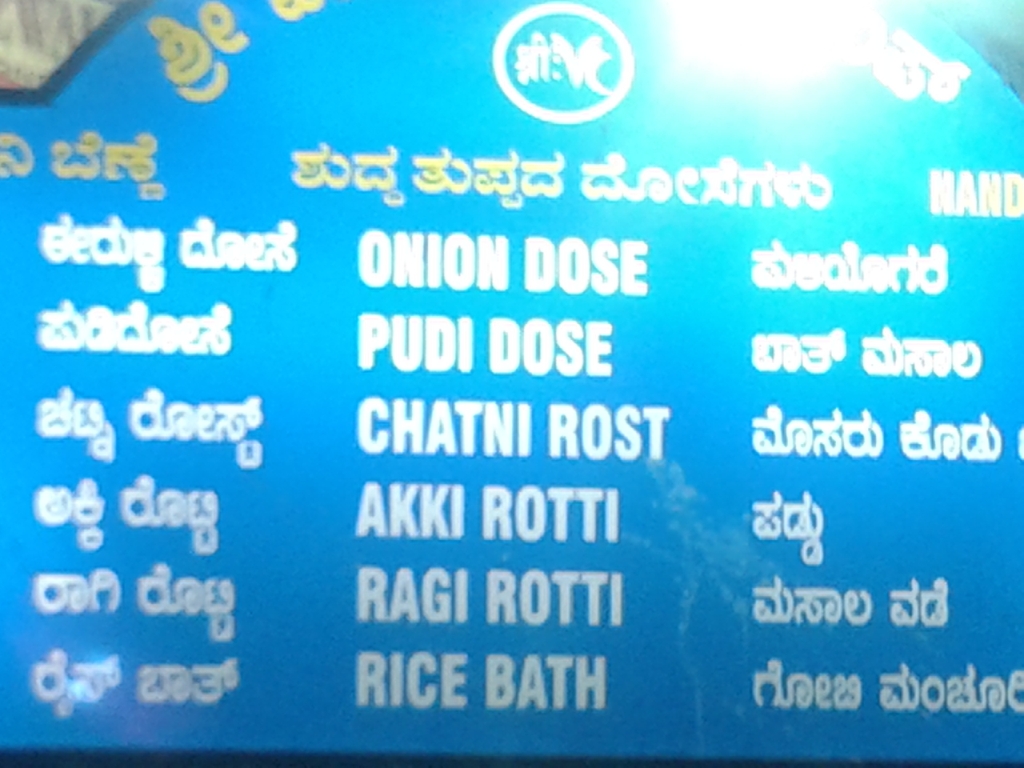
No, Sir, I will not loofah you just because you bought the rice bath!

No, Sir, I will not loofah you just because you ordered the rice bath! (FYI: rice bath is a Karnataka rice dish with lentils.)

Cut my hair? I thought this was a saloon?

Cut my hair? I thought this was a saloon?

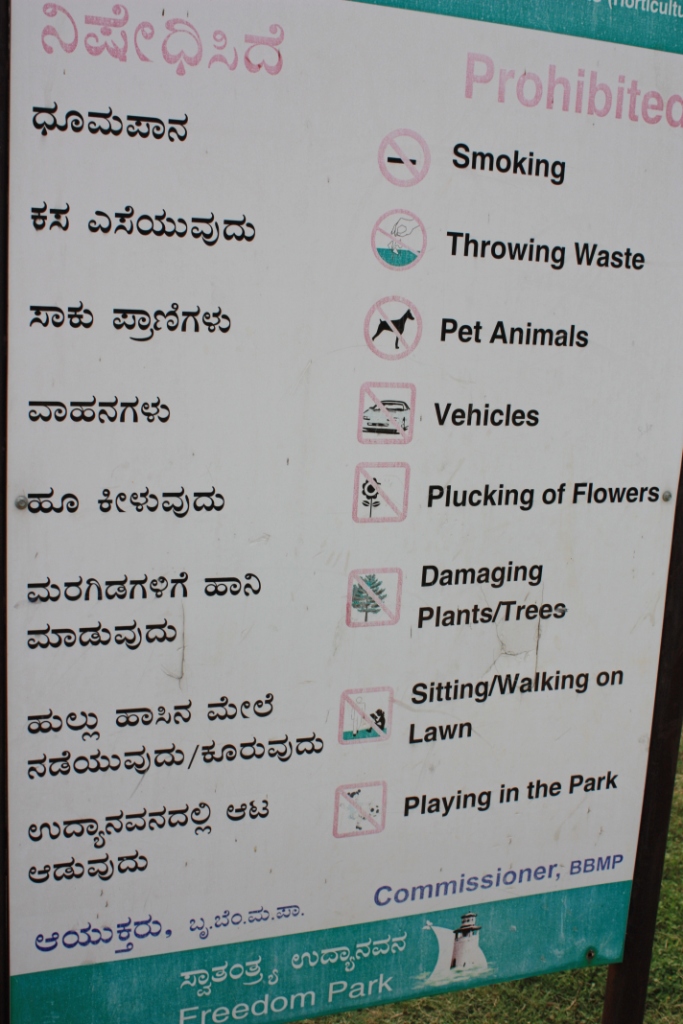
"Playing in the Park" is prohibited. Dear Park, What the hell are you good for? Signed Concerned Resident.

“Playing in the Park” is prohibited. Dear Park, What the hell are you good for? Signed Concerned Resident


DAILY PHOTO: Bangalorean Winter Flowers

Taken in Cubbon Park on December 13, 2014

Taken in Cubbon Park on December 13, 2014

The other day I posted a winter photo from Budapest to psyche myself up to experience winter for the first time in a while. Now I’m going the other route. As I pack to travel to a place with winter, I’m posting some of the flowers currently blooming in Cubbon Park.

20141215_163014

20141215_163006

Taken in Cubbon Park on December 13, 2014.

Taken in Cubbon Park on December 13, 2014.


Thailand Can NOT Catch a Break: Monk Pimp-Slaps an Expat

No, you didn’t read that sub-title wrong. A Buddhist monk delivered a series of slaps to a farang. It’s not clear whether the slaps were issued because the victim was a grown man wearing capri pants. But seriously though, it’s pretty well established that the slappings were delivered as the result of a communication mishap in which the monk heard one offensive word, but the victim says he said another (non-offensive) word–apparently corroborated by nearby witnesses. The story is here.


This is a minor incident, except that… well, it was  Buddhist monk. When men of peace get all slappy people start to wonder if there isn’t some greater underlying anti-farang sentiment. I mean, a monk is the last person you expect to slap the snot out of a person who’s just sitting there, and–if they are the last–that means that all the other Thais have been slapping around foreigners already. For the record I only got pummeled about the head and neck in the Muaythai gym, so it was in context.


There’s good reason why Thailand is one of the most beloved tourist destinations in the world. The people are awesome. The food is delectable. It’s easy to get around to see the country’s many impressive sights and serene beaches. It’s laid-back, and, unlike some tourist destinations, it’s a country that’s eager to have you whether you’re a poor backpacker or a wealthy industrialist.


However, lately Thailand cannot catch a break on the tourism front. First, the country is under martial law. I can say from experience that there isn’t much evidence of change if you’re a traveler. However, it probably still keeps some people out. Some governments even issued warnings to citizens out of fear that violence might erupt if citizens tire of the situation. “Martial law” doesn’t exactly scream safe travel destination.


Then in September (around the time I was last in Thailand) a couple was brutally murdered with a hoe on Koh Tao. This might have been even worse for the tourist trade than the martial law. For one thing, it got a lot of press because the couple was really, really nice looking, making it easy to plaster their faces across every media outlet in the world. For another thing, they were killed with a hoe. Who kills someone with a hoe, really? The only way it could have been worse was if it was murder by Garden Weasel (as seen on TV.) (I’m not saying that if it had been an ugly couple that got shot or stabbed with a knife, that the effect on tourism would have been minimal, but…)


As it was, it resulted in the need to put out a new tourism video entitle “I hate Thailand”, that oddly makes Western tourists seems like even bigger pricks than they (we) really are in an effort to attract tourism.

All that said, you should go to Thailand.

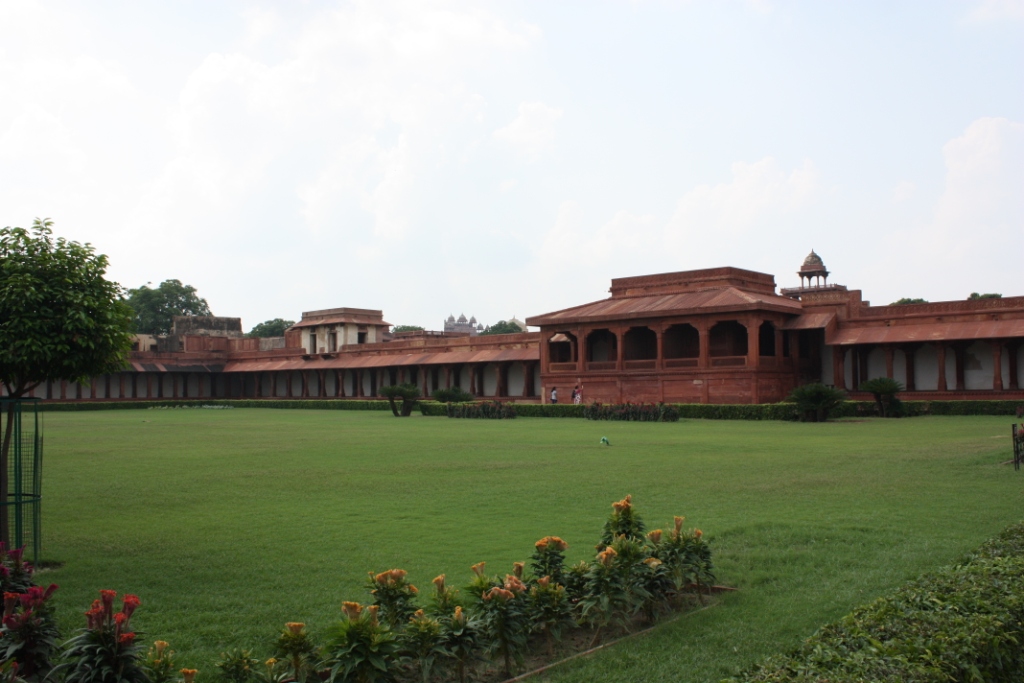
DAILY PHOTO: Fatehpur Sikri Garden

Taken in the Fall of 2013 at Fatehpur Sikri

Taken in the Fall of 2013 at Fatehpur Sikri

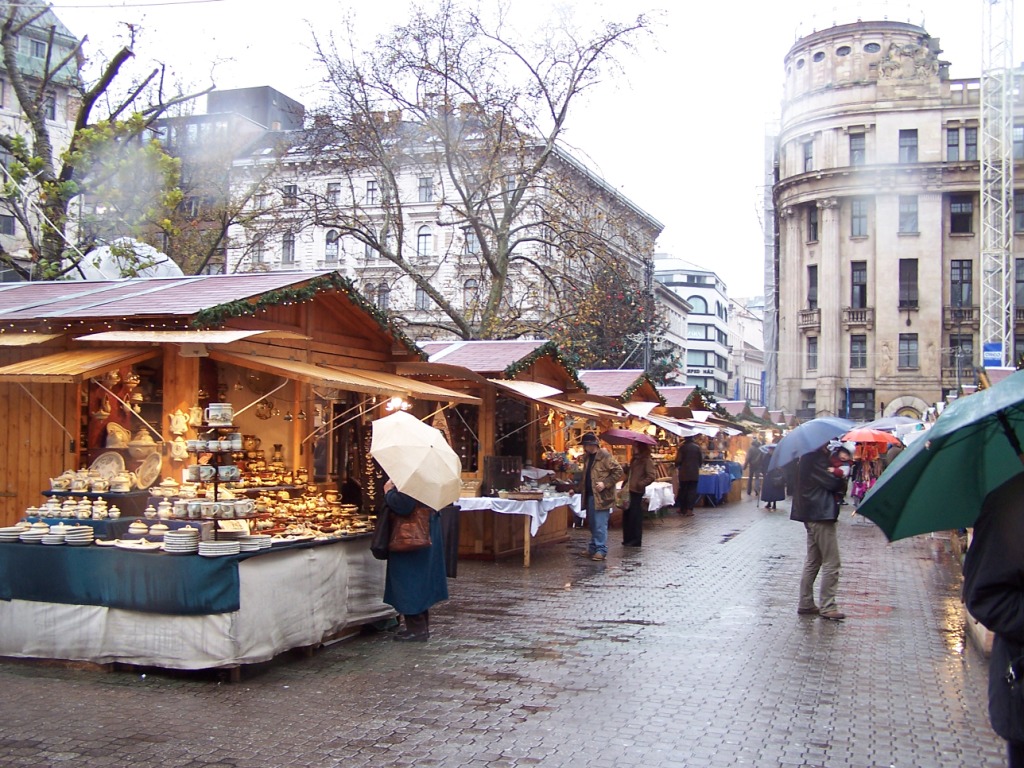
DAILY PHOTO: Winter Markets in Budapest

Taken in Budapest in the Winter of 2008.

Taken in Budapest in the Winter of 2008.

100_3457

Later in the week I will be traveling to Hungary. I’m posting this to psych myself up to experience winter. For the past year-and-a-half I’ve been living where there are only two seasons–rainy and dry. Before that I was living in Atlanta, where winter is generally a half-hearted affair. So this will be my first real winter in a few years.

DAILY PHOTO: The Path Forks and Narrows

Taken in Hampi in November of 2013.

Taken in Hampi in November of 2013.

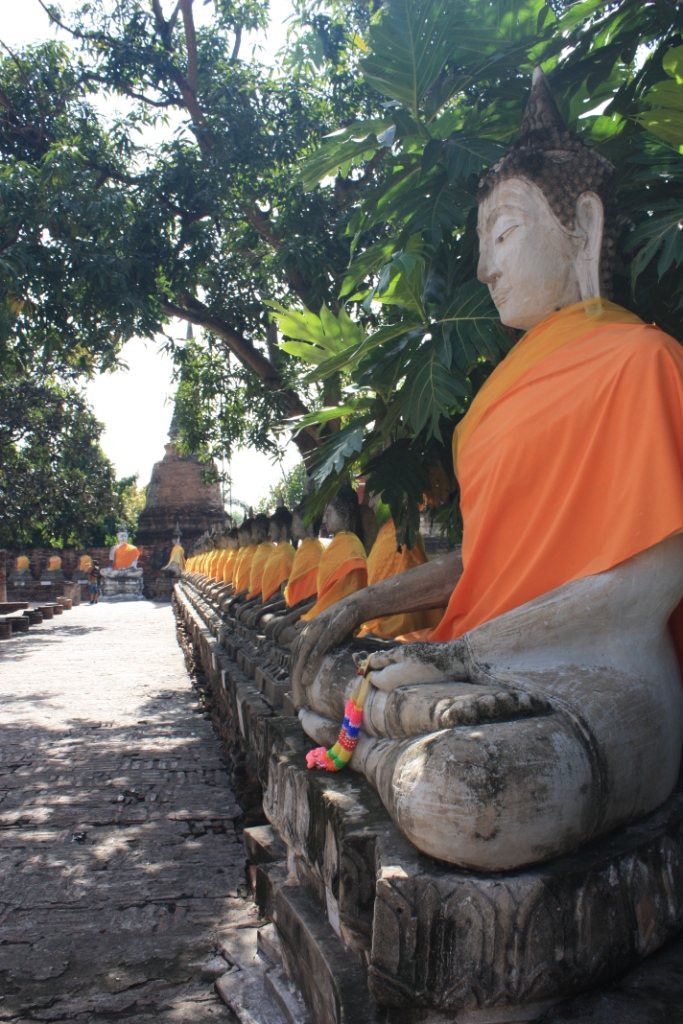
DAILY PHOTO: Buddhas in Saffron

Taken in August of 2014 in Ayutthaya, Thailand.

Taken in August of 2014 in Ayutthaya, Thailand.

These Buddhas line the perimeter of an important structure at the Wat Yai Chai Mongkol in Ayutthaya.

BOOK REVIEW: Shantaram by Gregory David Roberts

ShantaramShantaram by Gregory David Roberts

My rating: 5 of 5 stars

Amazon page

Shantaram is a journey through the life of a convict on the lam, a slum dweller, a prisoner in a crowded Indian jail, a de facto combat medic in the Soviet-Afghan War, and a Bombay gangster. The book is a novel, but mixes in autobiographical elements—at least in broad brush strokes. The author, Gregory David Roberts, was—as with his lead character–an escaped convict who fled his homeland of Australia to find anonymity among the Bombay (now Mumbai) masses. Roberts had taken up armed robbery of banks and institutions to support a heroine habit. However, it’s not clear to what degree the details described in the book echo reality. Roberts is adamant that the other characters in the book are completely fictional, but at least some members of this cast were recognizable as real people—some of whom disagree with the accounting of events in the book.

Most of the book is set in Bombay in the 1980s, and for many the book serves as portrait of the good, the bad, and the ugly of that city. The book picks up with the lead character’s arrival in Bombay, where the gregarious convict soon makes equally vibrant friends. There’s very little backstory, except for one chapter that details the protagonist’s escape from prison. There are occasional mentions of his heroin addiction and crimes peppered throughout the book—often delivered in doleful or apologetic moments. Also, he occasionally mentions the family that is missing in Australia—particularly a daughter—usually when the close nature of Indian familial relationships remind him of what he’s missing. This vague background makes sense as this was supposed to be book two in a quartet. Another book is supposed to be coming out called The Mountain Shadow, that I suspect would be the third book of this quartet.

The book excels at creating characters that are multidimensional in the extreme, but who one still finds engaging. The protagonist and several major characters should be unbelievable, given the degree to which they mix virtue and vice, cynicism and idealism. However, maybe they reflect human nature more than we’d like to admit.

Consider the protagonist. He is called “Shantaram” by the family of his best friend in Bombay. Shantaram means “man of peace,” and that’s supposedly what those characters saw in him, but he’s also a man of violence—by his own admission. He’s stabbed, beaten, and shot at other people, and continues to do so. It’s not just the lead character who is like this. It’s the same for his love interest, his gangster friends, his Mujahedeen friends, and his fellow prisoners. Many of them are anti-heroes, and others vacillate between hero and villain. “Doing the wrong thing for the right reason,” is a recurring theme throughout the book.

It should be noted that the anti-hero characters are also the source of loathing for those who hate the book—and there are those who hate it. It’s not just the frequent and raw violence from the “man of God’s peace,” but how the book glorifies gangsters—at least some gangsters.

There was one feature of the book that made this acceptable to me, and that’s that the character knows he’s flawed. As with any veiled autobiographical book, there’s probably some dancing events around to make the characters look more reasonable and likable than they really were. However, Shantaram does admit his mistakes and flaws. One can see how an element of self-loathing plays into these people’s behavior. The virtuous half of Shantaram can be seen as a desire for redemption.

One of the best encapsulations of his self-loathing is when Shantaram gets a promotion in the Bombay mafia, and he tries to recruit a couple of his friends from the slum. He is shocked to find that they would rather stay slum-dwellers who eke out an existence than to make good money breaking the law—even if only as document couriers (the documents being fake passports and the like.) [To be honest but non-PC, if you think Roberts glorifies gangsters, you should see how he glorifies slum-dwellers.] Shantaram also envies a man who refuses assistance to get his sentence reduced after the virtuous slum-dweller killed a horrible person in the heat of passion. In both of these cases, he has a “who must I be?” moment. Maybe that’s why we believe that this ex-junkie mobster would set up a free clinic in the slum or help his friends without question, he’s in a constant search for redemption. It could be said that the engine of this book is the search for redemption, but it’s a Promethean task because Shantaram keeps accruing karmic penalties in his tight-rope walk between good and evil—or maybe a damaged moral compass.

The book weighs in at almost a thousand pages, but it does a good job of keeping one reading. There many exhilarating and tragic events to keep one turning pages such as a fight against a cholera outbreak in the slum, torture in a Bombay prison, taking fire in the mountains of Afghanistan, the deaths of close friends, and fighting turf wars between factions of the Bombay mafia. However, the glue that binds all those climactic points together is the tension created by the various relationships from the expat community to the slums to the Mumbai mob.

Love it or loathe it, Shantaram is a powerful book. I define “powerful” as attracting love and hate at the extreme. This isn’t a book one feels indifferent about. I’d recommend it for a general audience.

View all my reviews

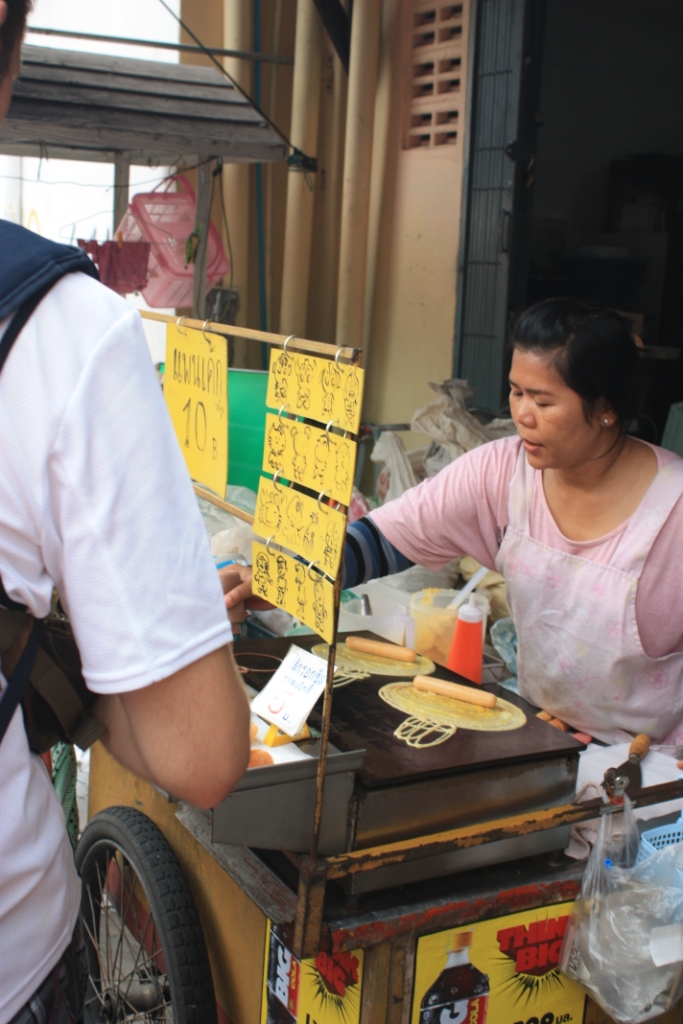
DAILY PHOTO: Street Food Art

Taken in Bangkok in September of 2014.

Taken in Bangkok in September of 2014.

This street vendor made crepes in the shape of various cartoon characters. The little drawings hanging from the front of the cart were the pictures you could select from. Or you could get a hot dog rolled in a crepe (pig in a blanket variation.)

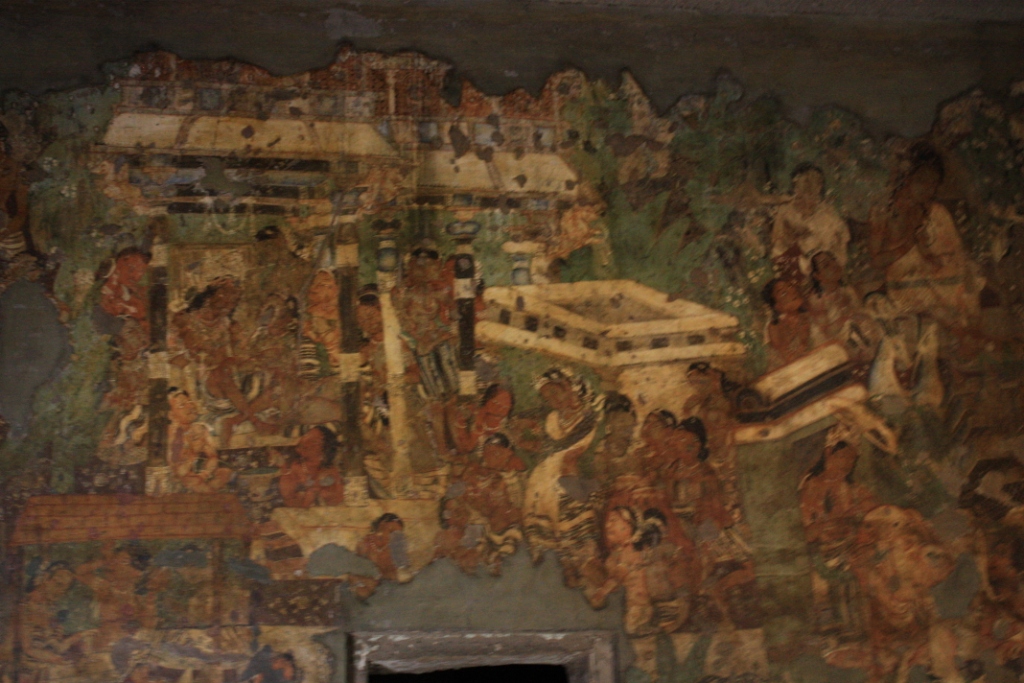
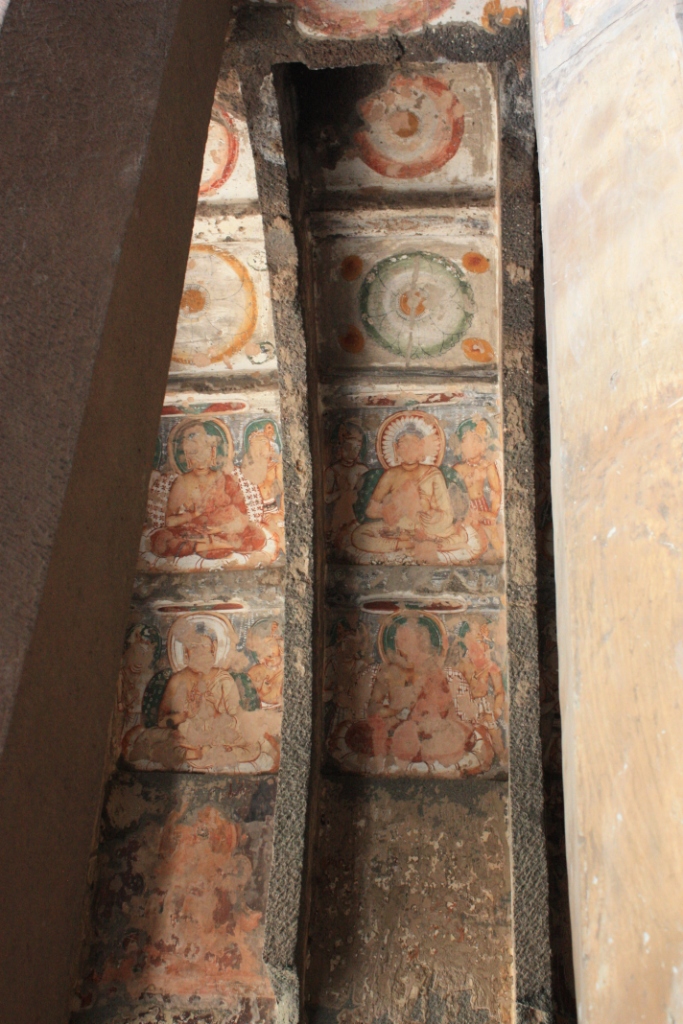
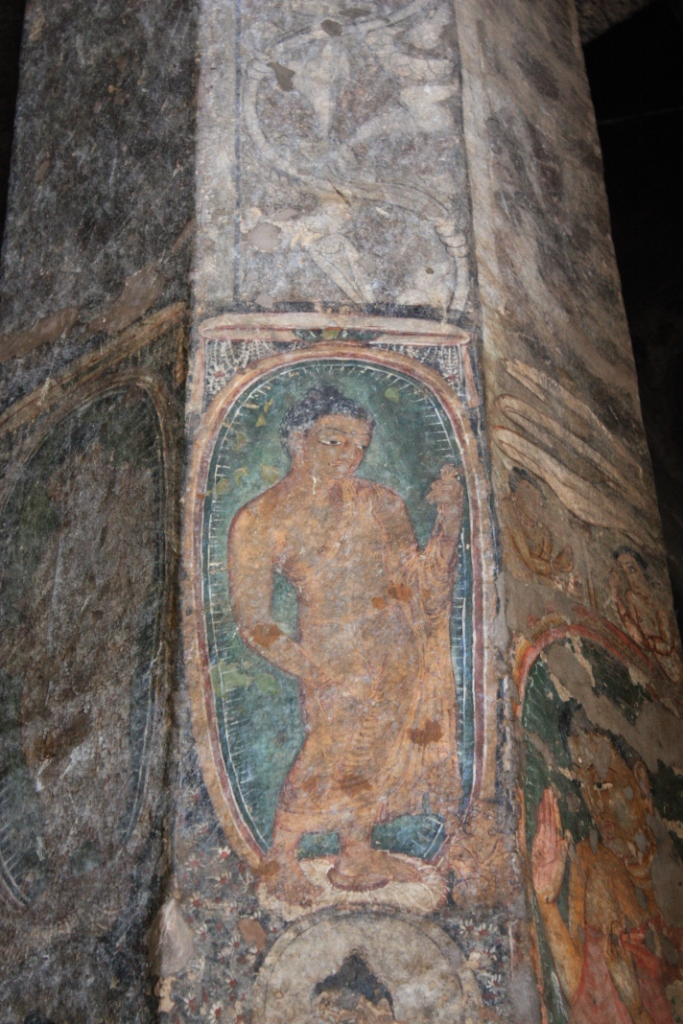
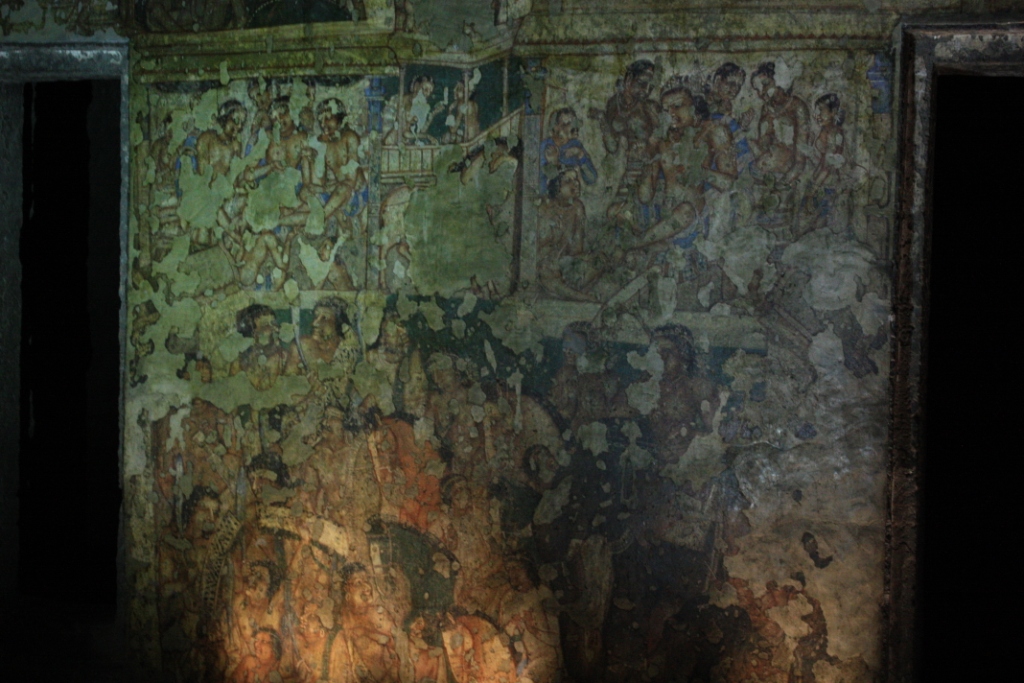
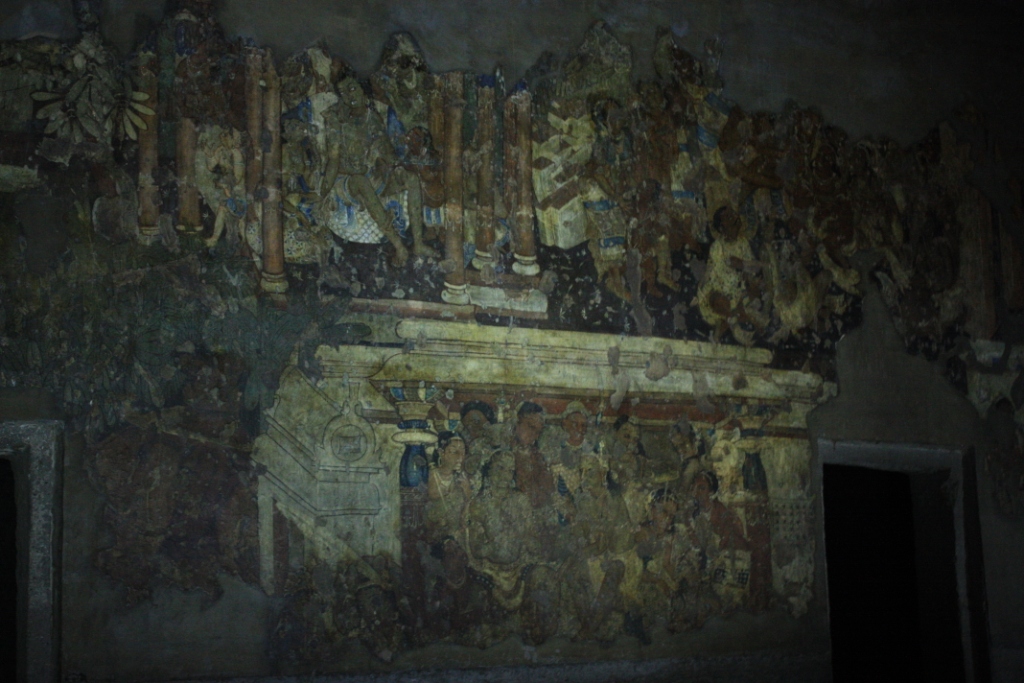
DAILY PHOTO: Ajanta Wall Murals

Taken on November 19, 2014 in Ajanta Caves

Taken on November 19, 2014 in Ajanta Caves

IMG_0421 IMG_0424IMG_0341 IMG_0324In the caves of Ajanta, many wall paintings have been preserved. As harsh light can damage these artworks, some of which have survived for centuries, flashes and outside lighting are prohibited. Therefore, it’s a challenge get decent photos, but here are a few attempts.