5 Essential TED Talks on Consciousness

5.) Anil Seth: Your Brain Hallucinates Your Conscious Reality


4.) David Chalmers: How Do You Explain consciousness?


3.) Max Tegmark: Consciousness is a Mathematical Pattern


2.) Antonio Damasio: The Quest to Understand Consciousness


1.) Oliver Sacks: What Hallucination Reveals about Our Minds

5 Ways the World May Be Weirder Than It Seems

Werner Heisenberg famously said, “Not only is the Universe stranger than we think, it is stranger than we can think.”


5.) Ancestor Simulation: The idea that we could be in a simulation isn’t only a staple of science fiction–e.g. The Matrix. It’s been given serious thought by thinkers who aren’t exactly on the lunatic fringe–most famously inventor /entrepreneur Elon Musk. The core of the argument goes like this. 1.) We are getting better and better at making simulations ourselves. 2.) At some point we will achieve a simulation indistinguishable from reality. 3.) If 2 is true, then it’s vastly more likely that we are already simulations because if it can be done, it probably already has been done many times over. (Thus, we’re more likely to be in one of the simulations than so-called “base reality.”)


4.) Mathematical Universe Hypothesis: Max Tegmark proposes that the universe may be–at its core–a mathematical structure, making us self-aware substructures. This may sound like a different way of stating the preceding hypothesis, but not necessarily. The simulation hypothesis suggests certain motivations of a simulation creator. MUH doesn’t require a creator or an objective. It could be the nature of reality at it’s most basic.


3.) A Holographic Universe: This idea sprang from thinking about what happens to the information when something falls into a black hole. The idea being that the information is trapped on the outside of the event horizon–i.e. information for a three dimensional entity stored in two dimensions. As physicists pondered this, some concluded that it might be that we are a projection of data, or–alternatively–much of what we see when we look out into space is.


2.) One of Myriad Universes: The idea that our universe is one of many (or an infinite number of) universes comes in several flavors and is a prediction of several theories widely given credence. In some versions, all the universes have different sets of laws and constants such that many flash in and out of existence and only a small proportion are capable of hosting life (but the math of infinity is weird and a small proportion of the infinite may also be infinite. I don’t know, I’m not a mathematician and the infinite never mattered in economics because ground zero is that everything is limited but desires.) This answers the Goldilocks zone issue nicely–i.e. we couldn’t exist if the equations and constants that govern our universe were very much different, but if there are many universes with many sets of laws then we just happen to be in one of the ones we can be in–hence, credulity remains unstrained. Other versions propose universes with the same laws such that there could be an infinite number of you living out lives that may be slightly different than yours (or–for that matter–in which you might be the Supreme Galactic Overlord.)


1.) Time is slowing: A couple Spanish physicists have suggested that the universe might not be expanding at an accelerating rate (as is the consensus view in physics,) but rather time may be slowing. This slowing would be anticipated to continue until one final moment is captured frozen in time–note: said point would be long after the Sun swallows the Earth.

BOOK REVIEW: Supernormal by Dean Radin

Supernormal: Science, Yoga and the Evidence for Extraordinary Psychic AbilitiesSupernormal: Science, Yoga and the Evidence for Extraordinary Psychic Abilities by Dean Radin
My rating: 4 of 5 stars

Amazon page


With this controversial book, Dean Radin presents the scientific evidence for an array of psychic powers, but he frames the discussion in terms of yogic siddhis. “Siddhi” is a Sanskrit term for an ability that isn’t seen among the general population–at least not reliably so– and for the most part these “accomplishments” correspond to the categories discussed in parapsychology (i.e. telepathy, precognition, psychokinesis, and clairvoyance.) [Note: As mentioned, this is a controversial book. I will attempt to provide as unbiased a review as possible. I am generally skeptical, but don’t believe in poo-pooing the study of subjects because they offend my skeptical sensibilities. Furthermore, I try to keep an open mind because: 1.) there is no scientific consensus about what consciousness is or how it works, 2.) quantum biology is a subject in its infancy and we may yet learn there is more quantum “spookiness” going on in the brain than we think. 3.) for all I know we are in an simulation and then it’s all a matter of programming.]

The yogic emphasis doesn’t change the book much from the pop psych literature review of parapsychology studies it would otherwise be, except to necessitate background information on yoga and siddhis. However, this emphasis may or may not have opened up a huge additional readership. Outside of a fringe, siddhis aren’t much in vogue among yoga practitioners these days. Among modern day yogis and yoginis, there are some who believe in them and some who think they’re throwbacks to an era of superstition, malnutrition, and wishful thinking. However, even among the former, siddhis are generally considered a distraction. The advice of most of the great yogis has been to not get lost in the pursuit of such powers because chasing siddhis can derail one from one’s ultimate objective (e.g. liberation.) Still, if even a small fraction of yoga practitioners take an interest, that’s a fairly large readership.

So what exactly is the controversy? Obviously, there are many divergent demographics with differing views on the topic. For hardcore skeptics, parapsychology is right up there with alien abduction, bigfoot /yeti sightings, and the anatomy of the Loch Ness monster with respect to being a legitimate topic for scientific study. On the other hand, there are believers who are offended by the mere notion of studying such phenomena with science, and who say such investigations are an assault on their beliefs.

But that’s not a very interesting controversy—i.e. there are some people who won’t believe in such abilities no matter what the evidence, and others who will believe in them no matter what science has to say. So let’s chop off the hardcore skeptics and hardcore believers and ask what the controversy is as it pertains to those of us who consider evidence when drawing conclusions.

The root of the controversy can be stated rather quickly and clearly. Here it is: the effect size is small but statistically significant. What does that mean? Say this study asks a subject to determine which of five randomly selected shapes has been chosen using nothing but his / her mind. Using pure guessing, one would expect to be right 20% (i.e. 1/5th) of the time. If a person happened to get 32% right in a given trial, that means nothing because small samples don’t give one a convergence towards a mean value. (i.e. Intuitively, you know that if you flip a coin 10 times and get 7 heads, it doesn’t necessarily mean anything. If you repeat that 10-flip set 10,000 times, and still get 70% heads, then you probably have a trick coin or something else odd is going on.) So the issue is that even when experimenters repeat the experiment over and over again such that the average value should converge on 20%, it doesn’t. It stays at, say, 30% (exact effects vary but it’s on this order.)

At this point the reader might be thinking of all the factors that could result in this effect (i.e. cheating [insider or outsider], subconscious observation of facial expressions, random selection that is biased, etc.) Well, so have the scientists. In any study, one wants to account for alternative explanations to the utmost. Over the years, researchers like Radin have put all manner of protections in place from quantum random number generators to booths with extreme sound-proofing and Faraday cages (prevents radio signals from transiting.) Still they get this small positive effect that can’t be explained by alternative explanations.

There is also the issue of the filing drawer problem, which Radin devotes considerable space to discussing. It’s the idea that when drawing conclusions from many similar studies, one must accept that there may be many unpublished studies that sit in file drawers because they didn’t produced negative results. These filed / unpublished studies could negate the outcome of the body of studies of that nature. While this remains an open criticism, there is mathematics for determining how many negative studies would have to be turned up to make the results insignificant. Radin argues that the numbers calculated strain credulity.

So this “small but statistically significant effect” is generally agreed upon by all, excepting conspiracy theorists. Now we get to the controversy, which is how to explain this effect. Skeptics run the gamut from hot-blooded haters who claim that it’s all just a scam perpetrated by hoaxers with tenure, to more diplomatic challengers who provide thoughtful, plausible, and non-nefarious explanations for what they believe are false results. Said objections include file drawer problems, statistical “crud factor” (an observed effect in which large sample size studies can show a significant correlations between any two random variables—i.e. everything is correlated with everything else to some degree), and outlier effects.

The latter is a particularly revealing controversy. Say your study results in this 30% instead of 20% effect, and there’s one subject in the study who (over many trials) got the shape right 80% of the time. If you’re a skeptic, you call that an outlier and you want to cut it out of the study because it may be causing part, most, or all of the effect you see. Your assumption is that that this outlier could be anything from a data entry error to an outright cheater, but it’s obviously not a gifted psychic. If you’re a believer, not only do you want to keep that result, you want to find that person and study them to find out if the result was a one-time fluke, or if you have some rare, gifted person.

The book is arranged into three parts. The first part offers background on yoga and siddhis. The second part is the heart of the book and it presents an overview of results from studies of precognition, telepathy, psychokinesis (both of animate and inanimate objects), clairvoyance, and the effect of meditation on these abilities (which also shows a small positive effect, i.e. the general population outdoes probability by a little bit and experienced meditators outperform the general population by a little bit.) The last section is just a couple chapters about the future of parapsychology.

I found this book to be interesting and thought-provoking. Radin comes across as a reasonable investigator who is willing to accept that there is a lot of duplicity going on out in the world, but yet when one uses the methods of science one obtains results that would be generally accepted as successful across the social sciences. At times he does go on anti-skeptic rants. On the other hand, one can imagine his frustration in dealing with individuals unwilling to pin down how much higher the bar must be for parapsychology results over results in more mainstream topics. I think Radin’s greatest mistake was in discussing levitation. Besides at a quantum level, the effects of gravity are well-understood and non-negotiable. While our lack of understanding of consciousness leaves wiggle room to at least consider some unusual happenings, levitation seems a non-starter. Fortunately, as it hasn’t been studied, Radin just presents a couple historical anecdotes and moves on (while—to be fair–acknowledging the fundamental risk in relying on anecdotes.)

I’d recommend this book. I can’t say it swayed my belief on the topic, which tends skeptical, but it did inform my confusion. (It should be pointed out that not all these abilities are equally reviled by science. Precognition is the most fundamentally opposed because it seems to violate the fundamental cause and effect nature of the universe at our scale and larger [as opposed to the quantum level were all sorts of weird happenings transpire.]) I do agree with Radin that there shouldn’t be taboos in science in which scientists are afraid to study a subject of interest because the prevailing notion is that it probably doesn’t have merit. If there weren’t scientists with the cojones to study “crazy stuff” we’d no doubt be far behind our current understanding of the world.

View all my reviews

BOOK REVIEW: Our Mathematical Universe by Max Tegmark

Our Mathematical Universe: My Quest for the Ultimate Nature of RealityOur Mathematical Universe: My Quest for the Ultimate Nature of Reality by Max Tegmark
My rating: 4 of 5 stars

Amazon page


In this book, physicist Max Tegmark makes an argument for the possibility of a reality in which the universe is a mathematical structure a theory that predicts a Level IV multiverse (i.e. one in which various universes all have different physical laws and aren’t spread out across one infinite space [i.e. not “side-by-side.”]) Nobel Laureate Eugene Wigner wrote a famous paper entitled, “The Unreasonable Effectiveness of Mathematics in the Natural Sciences.” The article describes one of the great mysteries of science, namely, how come mathematics describes our universe so well and with such high precision. Tegmark’s answer is because the universe is fundamentally mathematical—or at least he suspects it could be.

The first chapter serves as an introduction, setting the stage by considering the core question with which the book is concerned, “What is reality?” The book then proceeds in three parts. The first, Chapters 2 through 6, discuss the universe at the scale of the cosmos. Chapters two and three consider space and time and answer such questions as how big is the universe and where did everything come from. Chapter 4 explores many examples of mathematics’ “unreasonable effectiveness” in explaining our universe with respect to expansion and background radiation and the like (a more extensive discussion is in Ch. 10.) The fifth chapter investigates the big bang and our universe’s inflation. The last chapter in part one introduces the idea of multiverses and how the idea of multiple universes acts as an alternative explanation to prevailing notions in quantum physics (e.g. collapsing wave functions)—and, specifically, Tegmark describes the details of the first two of four models of the multiverse (i.e. the ones in which parallel universes are out there spread out across and infinite space), leaving the other two for the latter parts of the book.

Part two takes readers from the cosmological scale to the quantum scale, reflecting upon the nature of reality at the smallest scales—i.e. where the world gets weird. Chapter 7 is entitled “Cosmic Legos” and, as such, it describes the building blocks of our world as well as the oddities, anomalies, and counter-intuitive characteristics of the quantum realm. Chapter 8 brings in the Level III approach to multiverses and explains how it negates the need for waveform collapse that mainstream physics requires we accept (i.e. instead of a random outcome upon observation, both [or multiple] outcomes transpire as universes split.)

The final part is where Tegmark dives into his own theory. The first two parts having outlined what we know about the universe, and some of the major remaining mysteries left unexplained or unsubstantiated by current theories, Tegmark now makes his argument for why the Mathematical Universe Hypothesis (MUH) is at least as effective at explaining reality as any out there, and how it might eliminate some daunting mysteries.

Chapter 9 goes back to the topic of the first chapter, namely the nature of reality and the differences between our subjective internal reality, objective external reality, and a middling consensus reality. Chapter 10 also elaborates on the nature of reality, but this time by exploring mathematical and physical reality. Here he elaborates on how the universe behaves mathematically and explains the nature of mathematical structures—which is important as he is arguing the universe and everything in it may be one. Chapter 11 is entitled, “Is Time and Illusion?” and it proposes there is a block of space-time and our experience of time is an artifact of how we ride our world lines through it—in this view we are braids in space-time of the most complex kind observed. A lot of this chapter is about what we are and are not. Chapter 12 explains the Level IV multiverse (different laws for each universe) and what it does for us that the others do not. Chapter 13 is a bit different. It describes how we might destroy ourselves or die out, but that, it seems, is mostly a set up for a pep talk. You see, Tegmark has hypothesized a universe in which one might feel random and inconsequential, and so he wants to ensure the reader that that isn’t the case so that we don’t decide to plop down and watch the world burn.

While this book is about 4/5ths pop science physics book, the other 1/5th is a memoir of Tegmark’s trials and tribulations in coloring outside the lines with his science. All and all, I think this serves the book. The author avoids coming off as whiny in the way that scientists often do when writing about their challenges in obtaining funding and / or navigating a path to tenure that is sufficiently novel but not so heterodox as to be scandalous. There’s just enough to give you the feeling that he’s suffered for his science without making him seem ungrateful or like he has a martyr complex.

Graphics are presented throughout (photos, computer renderings, graphs, diagrams, etc.), and are essential because the book deals in complex concepts that aren’t easily translated from mathematics through text description and into a layman’s visualization. The book has endnotes to expand and clarify on points, some of which are mathematical—though not all. It also has recommended reading section to help the reader expand their understanding of the subject.

I enjoyed this book and found it to be loaded with food-for-thought. If Tegmark’s vision of the universe does prove to be meritorious, it will change our approach to the world. And, if not, it will make good fodder for sci-fi.

View all my reviews

BOOK REVIEW: How We Feel by Giovanni Frazzetto

How We FeelHow We Feel by Giovanni Frazzetto
My rating: 4 of 5 stars

Amazon page


Frazzetto’s book tells us what neuroscience can and can’t tell us about seven core emotions: anger, guilt, anxiety, grief, empathy, joy, and love. Doing so puts the neuroscience of emotion into a broader context of art, philosophy, the humanities, and the legal / political domains. Most often this serves to make the book more interesting by offering stories beyond the case files of neurologists and neuroscience researchers, but it does result in occasional editorializing.

The book consists of seven chapters, each of which is linked to one of the emotions listed in the preceding paragraph. These chapters always tell us the rudiments of what science has learned about the brain’s role in said emotion, but they often offer insights from other disciplines as well as providing more general information about the brain that the author found particularly relevant to the topic at hand.

The first chapter delves into anger. Besides the neuroscience of rage, we learn a bit about the expression of emotion (e.g. through facial appearance; a theme revisited in other chapters), and the degree to which genetics plays a role in proclivity towards anger. This chapter serves to set up general concepts, and so we also learn about what an absence of emotion looks like (e.g. indecisiveness.) And in compliance with the law that every pop science book on neuroscience tell the story of Phineas Gage (the foreman who got rebar shot through his brain and lived to tell the story—though in an uncharacteristically hostile way), Frazzetto knocks it out early.

Chapter two explores the topic of guilt. It should be noted that some of these chapters discuss more than one related emotion, and here we learn how shame and regret are differentiated from guilt. There’s an interesting story about Caravaggio and how his own guilt-ridden story influenced one of his most famous paintings.

Chapter three is about anxiety, and also takes on fear. In addition to the neuroscience, we get a discussion of relevant philosophy, specifically that of Heidegger. Here, the author also describes brain plasticity.

The next chapter investigates grief. As I suggested above, there are multiple points where emotional expression is discussed, and this chapter has one of the most extensive of such discussions. In terms of general concepts, Frazzetto introduces the reader to neurotransmitters. One also learns how grief is related to physical pain.

Chapter five elucidates empathy. A lot of this chapter discusses acting, and the need for actors and actresses to be able to acquire empathy from the audience. The reader learns the story of Stanislavski, and how he went about creating his self-named acting system which remains widely used. This chapter also explains mirror neurons that allow one to recognize expression and to mimic others.

The penultimate chapter is about joy, and here we learn more about expression of emotions and, specifically, the seeming universality of smiles. There is a discussion of poetry as it pertains to the emotion at hand. Having introduced neurotransmitters earlier, the reader learns about dopamine, its role in happiness, and how a number of drugs have been created that increase our natural dopamine’s effect or mimic it.

The last chapter is about love. Of course, we learn about oxytocin and vasopressin, two neurochemicals famously associated with loving behavior. There is also a fascinating discussion of Capgras Syndrome. In this condition, the patient feels that his loved ones have been replaced by impostors. That may not seem relevant until one realizes that the proposed mechanism for this illness is damage to parts of the brain that control emotional connection. Without an emotional connection, the person feels that said individuals can’t be his / her dearest friends and family—though his senses register that they are exact duplicates in every way. The brain builds a rationalization that they must be impostors. Of course, no emotion evokes more resentment towards materialist explanations rooted entirely in biology than that of love.

The book is extensively annotated and also has a bibliography. There are many graphics throughout the book from line drawn diagrams of brains to photos of brain scans to the artwork “David with the Head of Goliath” mentioned relative to the discussion of Caravaggio’s guilt.

There are a number of books in this domain (i.e. the neuroscience of emotion) and if you were only going to read one, I don’t think I’d recommend this one as it. However, if you are into this topic, it is definitely worth a read. It’s interesting and insightful, and has a unique approach.

View all my reviews

BOOK REVIEW: Perv by Jesse Bering

Perv: The Sexual Deviant in All of UsPerv: The Sexual Deviant in All of Us by Jesse Bering
My rating: 4 of 5 stars

Amazon page


“Perv” is an examination of human sexuality outside the norm. As one might expect from the back blurb mention of a woman who was aroused by the Eiffel Tower, the book provides many a revelatory “things-that-make-one-go-HUH?” moment. The author’s humor–and willingness to offer cringe-worthy personal confessions–makes the book all the more readable. (e.g. As an example of the author’s humor: “As an adolescent male, you’re basically an ambulant sperm factory with an incompetent foreman…”) The book is in the vein of Mary Roach’s “Bonk” (something about sexuality triggers the urge to go monosyllabic), but Bering carves out his niche in deviant territory, while Roach’s book provides a more balanced look at the subject (although both books exploit anomalies to make for interesting reading.)

There are two ways in which this book wasn’t the one I expected, one of which is entirely my fault for reading too much into some words in the book blurb while ignoring others. I think the author and/or publisher must take some responsibility for the other as the subtitle itself leads one to expect a different emphasis in the book beyond the first chapter. First, I expected more insight into why people engage in these behaviors. Are there explanations rooted in our evolution? Does a given act result from some cross-wiring in the brain? There’s a cursory mention of science in the book’s description which led me to expect it to go much further beyond a cataloging of anomalous sexual behavior. To be fair, the author does back load an interesting discussion on the role of theory of the mind into the last chapter and there is some of this discussion throughout. However, the book spends much more time on history and semantics than I expected. Semantics sounds boring, but there are some fascinating insights into how words came to be used, and how usages have changed over time. (Also, the reader may be surprised at the huge vocabulary of “-philias” [objects of love / attraction] that’s not unlike the more well-known one for “-phobias” [fears.])

The second way this wasn’t the book I expected was that—owing to the subtitle “the sexual deviant in all of us”—I expected much more discussion of widespread but unconventional sexual proclivities (e.g. exhibitionism, voyeurism, dominance / submission, role-play.) Instead, Bering spends a lot of time discussing rare fetishes for materials, animals, objects, etc, and also extremely high-profile (but also rare) proclivities such as pedophilia and vovarephilia (cannibalistic arousal.) One can see the appeal from the book selling perspective. Said emphasis provides a lot of WTF and giggle-inducing moments to keep up the reader’s interest. However, if you’re expecting drilling down into [no double entendre intended] why people engage in these activities, mostly you’ll get playful variants on “the heart wants what the heart wants” and not so much insight into whether there are unseen Darwinian mechanisms at work or whether there’s some synaptic cross-wiring. I doubt this is a conscious attempt to avoid dealing with the un-PC ramifications of finding some deviant behaviors to be explicable in terms of brains that are operating within expected parameters while others may only be explained in terms of something not working as usual. I doubt this because Bering seems quite willing to take the book in uncomfortable directions. I’m not certain that there’s not an unconscious bias away from considering the “why” questions because it risks putting one in the cross-hairs even if one reports in an objective and non-judgmental way. (Perhaps there’s a lack of scientific findings to report for the same reason.)

Still, while I didn’t get the book that I expected, there were some surprising bonuses to weigh into the mix. Bering provides interesting food-for-thought on a few topics. One of these is what he calls the “naturalistic fallacy,” which is the idea that whether an activity can be considered acceptable depends upon whether one sees it elsewhere in nature (i.e. besides humanity.) This has been used over the years to divide acceptable from unacceptable “perversions”—often by people who had little to no idea what activities are or aren’t seen across the animal kingdom. (We do, after all, see monkeys literally throwing their poop.) Another challenging area of consideration is whether society’s extreme distaste for pedophilia leads us to write laws that actually exacerbate child abuse and exploitation (e.g. completely CGI [computer generated imagery] pornographic material is illegal, and—according to the author—there is reason to believe that–were it not—exploitation of children would decline.)

The book consists of seven chapters. An introductory chapter sets up the idea of sexual deviance and its changing definitions. Chapter 2 is about the many ways in which people manage to overcome their instincts toward disgust in order to engage in sexual activities. Chapter 3 looks at various forms of hypersexuality (e.g. nymphomania) and the changing definitions over time—and the biases contained therein (i.e. it was once thought to be a condition only females could experience.) Chapter 4 considers various paraphilias—i.e. unconventional sources of arousal. Chapter 5 deals with the subjective experience of many of these sexual behaviors and how that brushes up against societal norms. Chapter 6 delves into the topic of age and attraction discussing pedophilia, hebephilia, ephebophilia, teleiophilia, and gerontophilia. Of these, the vast majority of people are teleiophilics (attracted to full-grown adults) with hebephilic and ephebophilic tendencies not being uncommon (i.e. attraction to pubescent or post-pubescent youths.) Much of the discussion is about pedophilia and the legal entanglement of pedophilia and ephebophilia. Chapter 7 delves into the science and psychology in a way that I wished the rest of the book had.

There are no graphics in the book. It does have both chapter end-notes and bibliographic notes (the former being more foot-note like elaborations and the latter being mostly sources.)

I found this book interesting. It was more historical and semantic (dealing in the terminology of deviant sexuality and its changing nature over time) and less scientific and psychological than I expected, but it was still loaded with interesting information and insights. I’d recommend this book with the provisos mentioned, i.e. that it might not be the book you expect and may deal much more in rare proclivities than one expects.

View all my reviews

BOOK REVIEW: Reality: A Very Short Introduction by Jan Westerhoff

Reality: A Very Short IntroductionReality: A Very Short Introduction by Jan Westerhoff
My rating: 4 of 5 stars

Amazon page


If one has an inquisitive nature and finds oneself with a bit of time on one’s hands, one is likely to question reality eventually. What is reality? What does it mean to be real? (Yeah, just like Morpheus’s “How do you define ‘real?’”) How could we know if we weren’t in the reality we think we are? Does it matter? i.e. If we aren’t in the reality we think we are, do we have any other choice than to behave as if we are—in other words is there any hope of escaping whatever unreality our consciousness exists in?

Does the quantum world not make a lick of sense relative to the world as we know it because the ancestors who are simulating us never expected us to get far enough to investigate that scale before we crashed? And now, like the writers and directors of an unexpectedly popular and long-lived TV show, they have to find a way to cobble some convincing story together because their overlords aren’t willing to scrap a perfectly functional simulation as it’s churning out huge amounts of data. Of course most people quickly dismiss such possibilities as sci-fi, but—then again—that dismissal is what one would do if one was programmed to be psychologically pained by the idea that the lunatic shouting and running naked through the streets may have found freedom, while you–who appears to be fully successful in living life—are an automaton, a slave pure and simple?

Philosopher Jan Westerhoff provides a brief survey of the many ways reality has been questioned over time and what evidence proponents cite—or, if not evidence per se, what inexplicable phenomena at least make the possibility seem feasible. The book consists of just four chapters. The first chapter offers a context by discussing dreams and simulations. Dreams are one of humanity’s first sources of doubt about reality. This was most famously summed up by the Taoist philosopher Zhuangzi’s quote “Now I do not know whether I was then a man dreaming he was a butterfly, or whether I am now a butterfly, dreaming I am a man.” The simulation hypothesis suggests that societies eventually develop a capacity to run extremely advanced simulations that would feel very real, and, furthermore, the proliferation of such simulations would make it much more likely that we are in one than in a real world.

The next three chapters examine three subjects where reality is taken for granted, but which each face challenges. The author starts with the most basic component of reality, matter. If you ask someone how they know the world is real, they might just knock on wood or kick a stone. Of course, that response only goes so far because there are a lot of entities we consider real that aren’t made of matter (e.g. is an economic recession real?) and so it’s definitely not a complete way of looking at the topic. There’s also the fact that all this hard and solid stuff we experience is mostly empty space. In this chapter, Westerhoff spends much of his time examining the basics of quantum mechanics, and the quantum strangeness that has put it in the minds of many that the world is probably not what we think it to be.

Chapter three explores the reality of a person. This is where people have the hardest time questioning reality, because most of us are quite certain that we exist. Descartes statement of: “I think, therefore, I am” nicely sums it up. But is there a place associated with personhood, or is it an emergent property? If it has a point of origin, where is it? Westerhoff describes the famous rubber hand experiment that shows that the connection between mind and body is more illusory than we think. He discusses many of the syndromes that challenge our intuitive beliefs about what it means to be a person, e.g. Cotard syndrome, in which individuals firmly believe that they don’t exist. (Note: this topic—at least the scientific dimension—is covered in detail in Anil Ananthaswamy’s book “The Man Who Wasn’t There.”)

Chapter four explores whether time is really what we think it is, and what it feels like to us. A lot of this chapter takes up findings about free will. A famous study in the neurosciences showed that before people make a decision at a conscious level, there is activation of subconscious parts of the brain such that what feels like a decision freely and consciously made is actually already made before the consciousness ever becomes aware of it. This study, now overwhelmingly validated by replication, presents a major challenge to our notion of free will—which isn’t to suggest we’re necessarily being fed a decision from some mysterious elsewhere but if some combination of our limbic and enteric nervous systems are making decisions without conscious input, then what is the nature of freedom in free will?

The book has an interesting Conclusion that gives the reader a map to consider the various ways reality might exist (or not.) This isn’t a dichotomous question—i.e. it’s not necessarily a matter of the world is real or it’s not. Instead, it can be thought of more as a continuum between everything is real and nothing is real with various way-points in between such as “I am all that is real” or “Everything is real, but me” and various ways of considering how some of the world might be real while some of it is not. Among the latter models, the relevant factor maybe consciousness (i.e. conscious may be unreal or maybe it’s the only thing that’s real.)

There are a number of graphics used to support the text, most of these are photographs and artworks, but some are diagrams. There is a “References and Further Readings” section in this book that is more substantial than most of the ones I’ve seen in AVSI (A Very Short Introduction) series books. It’s organized by chapter.

I’d recommend this book for anyone interested in the topic. I think the author does a great job in a small space of introducing various conceptions of reality. He draws on well-known works of film and literature to help clarify issues, and provides many thought-provoking ideas. It’s readable and doesn’t get bogged down in minutiae.

View all my reviews

5 Interesting Respiratory Facts for Yoga Teachers


Pranayama (breath exercise) is a crucial part of yogic practice. While I may spend less time on the pranayama portion of my practice than the asana (postural) part on most days, I’ve come to view pranayama as at least as important. (i.e. It packs a lot of punch.) With that in mind, here are a few fun facts about respiration for you your consideration:


5.) Asthma Fact: People in richer countries are more likely to have asthma, but–within more wealthy countries–poor people are disproportionately effected. (Asthma is a condition in which lung tissue becomes inflamed, and thus it’s hard to breath.)

Source: Krucoff & Krucoff. 2000. Healing Moves. New York: Three Rivers Press. p. 288

Yogic Relevance: There’s at least some preliminary evidence that yoga practice can benefit asthma patients. Mekonnen, D. & Mossie. A. 2010. “Clinical Effects of Yoga on Asthmatic Patients: A Preliminary Clinical Trial.” Ethiopian Journal of Health Science. Vol. 20(2). pp. 107-112.


4.) Altitude Fact: At the summit of Everest, atmospheric pressure is about 30% of what it is at sea level.

Source: Coulter, H.D. 2001. Anatomy of Hatha Yoga. Allahabad: Himalayan Institute India. p. 96.

Yogic Relevance: The slow deep breathing you sometimes teach in pranayama courses could be a life-saver. Bilo G. et. al.  2012. “Effects of Slow Deep Breathing at High Altitude on Oxygen Saturation,” Pulmonary and Systemic Hemodynamics. PLoS ONE. Vol. 7(11): e49074. https://doi.org/10.1371/journal.pone.0049074.


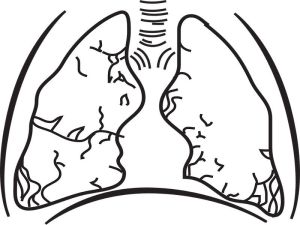
3.) Lung Fact: If one extracted, flattened, and laid side-by-side the 300 million alveoli of the average person’s lungs, they would cover an area greater than the average one bedroom apartment. (Alveoli are the little sacks at the end of the bronchioles where oxygen and carbon dioxide are exchanged.)

Source: Hymes. A. 2009. “Respiration and the Chest: The Mechanics of Breathing.” in Science of Breath: A Practical Guide by Swami Rama. Honesdale, PA: The Himalayan Institute Press.

Yogic Relevance: Vital capacity (total amount of air one can breath in and out of those little sacks) is increased through yogic practice. Karthik, P.S. et. al. 2014. “Effect of Pranayama and Suryanamaskar on Pulmonary Functions in Medical Students.” Journal of Clinical and Diagnostic Research. Vol. 8(2). pp. BC04 -BC06.

Note: there has been confusion about the degree to which yoga helps VO2 max (maximum oxygen utilization), at least in comparison to other forms of exercise, because there has been mixed results in the literature. The consensus seems to be the effect–if any–isn’t large compared to cardiovascular exercises. The strength of the pump (i.e. the heart) seems to have more to do with this particular measure than the lung’s holding capacity. While VO2 max is an important measure for athletes, the fact that it may not be improved by yoga doesn’t mean yoga doesn’t offer many fine benefits for athletes. As I recall, this is dealt with at length in Broad’s book (i.e.  Broad, W.J. 2012. The Science of Yoga: The Risks and Rewards. New York: Simon & Schuster.)


2.) Nose Fact: Rhinologists (doctors specializing in noses) figure that the nose has around 30 functions in the breathing process (e.g. moisturizing and warming air, catching foreign matter, directing airflow, and much more.)

Source: In the aforementioned Swami Rama book Science of Breath in a chapter entitled, “Following Your Nose: Nasal Function and Energy” by Rudolph Ballentine, MD.

Yogic Relevance: Alternate Nostril Breathing (Nadi Shodhana) is shown to tone the parasympathetic nervous system (PNS, i.e. the part of the autonomic nervous system involved in rest & digest functions.)  Sinha, A.N., et. al. 2013. “Assessment of the Effects of Pranayama / Alternate Nostril Breathing on the Parasympathetic Nervous System.” Journal of Clinical and Diagnostic Research. Vol. 7(5). pp. 821-823.


1.) Pace Fact: At about 5 breaths per minute, most people’s thinking is clearer than usual.

Source: Brown, R. & Gerbarg, P.2012. The Healing Power of Breath. Boston: Shambhala Publications.

Yogic Relevance: The breath is our most powerful tool for controlling the mind. Vindicated!

5 Neuroscience Fun Facts for Yogis & Yoginis

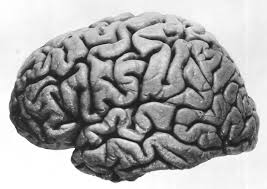
5.) IDEA: While our conscious mind feels like the sum of our mental world, in fact, it’s the tip of the iceberg of mental processes. Our decisions and actions are guided to a large degree by happenings below the waterline.

INTRIGUING EXAMPLE: In one study, interview subjects were randomly assigned to hold either iced or hot coffee. No attention was drawn to the coffee and it was set up as a mere accident of happenstance (the HR person directing the interviewees had her hands full.) The coffee was retrieved before the subjects made handshakes with interviewers. Unrelated to their verbal responses, those who had held the iced coffee were disproportionately described more in terms suggesting a cold personality (e.g. calculating, devious, etc.) and those who had held hot coffee were credited with a warmer personality.

RELEVANCE: Get your hands warm before you start making corrections.

REFERENCE: The coffee study is discussed by David J. Linden in his book Touch. However, there are many books on this topic, several that I’ve reviewed. In particular, I can recommend Eagleman’s Incognito and Mlodinow’s Subliminal.


4.) IDEA: Emotions play a crucial role in decision-making. We aren’t nearly so rationale and calculating as we think ourselves to be–particularly when there is uncertainty in the mix.

INTRIGUING EXAMPLE: Giovannni Frazzetto’s book describes cases of patients with lesions in their medial prefrontal cortexes who would deliberate ad nauseam and still couldn’t reach a decision.

RELEVANCE: This is why we don’t silence or stamp out emotions, but rather watch them dispassionately while avoiding a mental drift into a frenzy of illusion building.

REFERENCE: The Frazzetto book I referenced is: How We Feel, and it deals with anger, guilt, anxiety / fear, grief, empathy, joy, and love.  However, the patients described in his book were those of Antonio Damasio, and so you may want to check out Descartes’ Errorwhich I’ve heard good things about, but haven’t yet read.


3 .) IDEA: Experiences once thought to be supernatural, mystical, or fraudulent are increasingly being understood in scientific terms.

INTRIGUING EXAMPLE: For some, an Out-of-Body-Experience (OBE) is an impossible flight of fancy, while for others it’s a mystical / transcendent state beyond the physical realm. However, in recent years scientists have not only confirmed that people have these experiences, they’ve come a long way toward understanding such occurrences by actually inducing them via electrodes applied to the right angular gyrus. It seems that area of the brain is responsible for integrating sensory information from various senses, and its disruption creates an illusion of one’s consciousness floating outside the body.

RELEVANCE: As many have wisely advised, don’t spend a lot of time chasing siddhis–not only might it stunt your growth toward the ultimate goal, it might just be running after tricks of the mind.

REFERENCE: I highly recommend Anil Ananthaswamy’s The Man Who Wasn’t There. The book looks at the various ways in which “self” has been defined (one’s memories, one’s body, etc.) and it shows how neuroscience has learned a thing or two about the various dimensions of self, and how none of them fully defines an “I.” (i.e. The Buddhist conception of the self as illusion might turn out to be not far off the mark.)


2.) IDEA: Our brains can be rewired through practice and training. The property is called neuroplasticity, and it’s often described by the verse: “neurons that fire together, wire together.”

INTRIGUING EXAMPLE: You may have heard about  how London taxi cab drivers develop an enlarged hippocampus, which helps them meet the vast spatial memory needs required of the job. However, an even more fascinating example may be how some blind people have developed a capacity for echolocation–i.e. their mind registers changes as sound bounces off walls, curbs, and other obstacles.

RELEVANCE: One takes advantage of neuroplasticity when one works to be more kind and compassionate by recognizing and changing one’s behavior patterns.

REFERENCE: Fascinating reading on the topic can be gleaned from Kathleen Taylor’s book Brainwashing, but the most widely-cited book on the topic may be Norman Doidge’s The Brain That Changes Itself.


1.) IDEA: We have neural circuitry that predisposes us to spiritual belief and inclinations toward the sacred.

INTRIGUING EXAMPLE: The evidence suggests that it’s not so important who or what you believe in, but the more positive the message the better. People of religion have demonstrated both better and worse health outcomes–all else equal–and it seems linked to whether you have one of those smiting gods or a more compassionate one.

RELEVANCE: Belief and surrender–religious or secular–can play an important role in one’s personal development.

REFERENCE: Newberg and Waldman’s How Enlightenment Changes Your Brain deals with these issues in detail.

BOOK REVIEW: The Body Has a Mind of Its Own by Blakeslee and Blakeslee

The Body Has a Mind of Its Own: How Body Maps in Your Brain Help You Do (Almost) Everything BetterThe Body Has a Mind of Its Own: How Body Maps in Your Brain Help You Do (Almost) Everything Better by Sandra Blakeslee
My rating: 5 of 5 stars

Amazon page


This book examines the role of the nervous system in movement and bodily activity. It describes how one’s body is able to perform extraordinarily complex maneuvers that we often take for granted because they feel effortless. It investigates some of the ways in which the interface between body and brain go awry, as well as the various effects this can have. It also offers insight into how we can be deceived because we are experiencing the world less directly and more through the shaping activities of the brain than we feel is true.

The book contains ten chapters, plus a little forward and back matter. The first chapter is entitled “the body mandala” and it provides an overview of how the nervous system can be thought of as a series of maps layered upon maps that routes various input from outlying areas to the brain and commands from the brain to the outlying areas. A “mandala” is a symbolic representation of the universe [from Hindu and Buddhist traditions], and this notion is repeatedly revisited throughout the book.

Chapter 2 explores the mapping of the homunculus and its ramifications. If you’ve ever seen a 2-D or 3-D image /model of a human being that has gigantic lips and hands and disproportionately small torso and thighs, you’ve seen said homunculus (as the term is used in neuroscience.) The reason it’s scaled this way is that body part size is reflective of space in the nervous system dedicated to said parts and not their actual size. If you’ve ever seen one of those maps–called cartograms–in which the size of a country reflects a statistic, say, population (thus India, China, and Singapore are much larger than their physical size, but Canada is much smaller than its), you get the drift. This chapter also answers the question everyone wants to ask (and many do) which is “why–if the lips are so large because of their dedicated territory in the brain—are the genitals unexpectedly small in the homunculus?

Chapter 3 describes how body maps can be in conflict and what effect this can have. It talks about why people who lose weight often still feel fat and move in ways that are not reflective of their actual figure. It also gets into anorexia (and the lesser known bigorexia) which reflect mismatches between perceived body image and actual body schema.

Chapter 4 investigates a fascinating phenomenon in which visualization can often result in strength and performance gains. Said gains aren’t on the same scale as among those who actually exercise or practice, but the fact that one can make gains without moving a muscle is certainly intriguing. Of course, the takeaway is that one can get the best of both worlds by augmenting physical conditioning and practice with visualization—one has a more finite number of feasible physical training hours in a day (i.e. there are diminishing returns on physical training at some point.)

Chapter 5 is the first of two chapters that deal with problems related to improper interaction between the nervous system and the body. Here we learn about “the yips” that plague golfers and other occupational dystonias. When one begins practicing any physical activity, the objective is to build up muscle memory so that the movements can be completed purely unconsciously. This works through neuroplasticity—the fact that sequences of neurons that frequently fire together become more strongly linked—but neuroplasticity can have a dark side at the extremes.

Chapter 6 considers the way in which the system of maps can fail such that one fails to recognize one’s own limbs, one recognizes extra ones, or the like. Chapter 7 is about peripersonal space—i.e. the physical bubble of space that one needs to feel comfortable, and which varies both culturally and individually.

Chapter 8 delves into the role that upcoming technology may have in changing how we look at the body-brain connection. Mirror neurons are the subject of the penultimate chapter. You’ve probably heard of these neurons which fire when we see someone else perform an action. Usually there is an inhibitory signal to keep our body from actual mimicry, but sometimes you may find yourself unconsciously mimicking the position or body language of another person when one is engaged in an engrossing conversation. (Yawning contagiousness is a featured example.) Mirror neurons play a role in how we learn so quickly, how we sometimes anticipate the behavior or emotions of others, and deficient activity in these cells has been speculated to be responsible for autism.

Chapter 10 describes the role of the insula in human activities. The insula has been found to be involved in emotion and rewards system by which humans are motivated to engage in a number of bodily activities.

The book has many graphics to clarify technical points, many of these being line drawings of the brain and other physiological structures. There is also a glossary of key scientific terms.

I found this book to be fascinating. It was highly readable despite its technical subject matter, and it described these systems and the research about them in a clear manner. I’d highly recommend it—particularly if one is interested in movement, fitness, and optimal human performance.

View all my reviews