BOOK REVIEW: The Spread Mind by Riccardo Manzotti

The Spread Mind: Why Consciousness and the World Are OneThe Spread Mind: Why Consciousness and the World Are One by Riccardo Manzotti
My rating: 3 of 5 stars

Amazon page


Manzotti puts forth a bold and intriguing hypothesis that one’s mental experience is the physical world and not a model or representation of the world. Unfortunately, his book doesn’t make a compelling case for “The Spread Mind” (as he calls it) over its competition. Consciousness is one of those still dim corners of our world that isn’t yet fully understood by anyone, and this has spurred many competing ideas ranging from: a.) it being illusory; b.) it being purely a construct of a complex brain; c.) it hinging on some quantum mechanical action not yet understood; d.) panpsychic (all-pervading consciousness) arguments that may or may not resonate traditional Indian / Eastern conceptions; and e.) this idea that consciousness is identical with the physical world of which one is conscious.

However, for simplicity’s sake, one can contrast Manzotti’s idea with the most widely accepted view offered by science, which is that our brains construct mental models of the world often based on [but not identical to] sensory information they take in. (If my statement isn’t clear, you can check out neuroscientist Anil Seth’s TED Talk on “how our brains hallucinate reality,” which is as diametrically opposed to Manzotti’s hypothesis as one gets – and which, unfortunately for Manzotti, also makes a more cogent argument.)

At first blush, Manzotti’s idea might look appealing. It does, after all, simplify the picture. It eliminates the middle-man of mental models and seemingly solves the mind-body problem. The mind-body problem is how to reconcile how the body (wet, physical, objectively observable matter) relates to mind (intangible, subjective, ephemeral thoughts and feelings,) — if it does. Descartes famously suggested that mind and body were simply two separate things (i.e. dualism), and while that notion has remained popular with homo religiosis it’s all but dead in the world of science. However, there is no one monism that has unambiguously replaced Cartesian dualism. The most popular variant among those who study the brain is that some action in / across neurons creates a series mental imagery, internal monologuing, and emotional sensations that make up our mental experience. The mechanism by which this could happen is still not understood, but it’s an inherently hard problem to peer into because on can’t observe mind states directly and the best tool for studying it – i.e. functional Magnetic Resonance Imaging (fMRI) is only a couple decades old (and it’s still looking at brain blood flow and not consciousness, itself.) [I defend that this mechanism isn’t yet explained because one of Manzotti’s points seems to be: neuroscience hasn’t yet explained how neurons produced mental experience so just believe in my hypothesis which offers not even a hint of a mechanism by which it could work.] Manzotti’s is also a physical monist argument, but one that denies the mind is anything more than our experience of the physical world. In other words, there is a spoon, but there’s no mind separate of it.

So, what’s the problem? The reader may have already thought of some challenges confronting Manzotti’s hypothesis, and many of the most common ones the author refutes in the middle portion of the book. Dreams, hallucinations, fantasies, and even memory (certainly false memories, which we know are a wide-spread phenomenon) should utterly destroy the Spread Mind, given the simple definition we’ve given so far. After all, if your mental experience consists entirely of the physical objects that you are exposed to, then how does one explain the doughnut-shaped, sprinkle-breathing dragon that you hallucinated when you did ayahuasca on your trip to Iquitos? OK, you say you’re not such a wild child? Alright, how do you explain your detailed remembrance of putting that water bill into the mailbox, but then finding it under the seat of your car after you got a late notice from the water utility? If our mental experience is identical to the physical objects we experience, mentally experiencing things that don’t exist or events that never happened should never occur.

Manzotti elaborates upon Spread Mind to fend off these crippling attacks to his “theory.” (I use quotes because a theory is usually defined as “a well-substantiated explanation of a phenomenon” and it doesn’t seem to me there’s much in the way of substantiation of this idea.) There are two main prongs to his defense, one of which is unproven but soundly stated and consistent with the thinking of many physicists. The other defense seems to simply be a post-hoc rationalization used to make his “theory” work. Even though these ideas are presented in the opposite order in the book, I’ll deal with the first one I mentioned first because it’s relatively simple to cover. That’s the idea that past and present all exist always and at the same time. That may seem like an out-there idea because we can only ever be in touch with a moment we think of as the present and everything else is memory or fantasy /forecasts. However, it’s not exactly a rogue notion in science, especially once one starts thinking about making sense of Einsteinian Relativity. So, without this idea, if Spread Mind was correct, we could never have that fond memory of Mr. Fluffers, the pet we had in first grade who died decades ago. If our mental experience is Mr. Fluffers and not our mental model of Mr. Fluffers, we can’t have such an experience so long after he passed away. But if all time exist simultaneously, then one can conceive of how such a remembrance could happen. The only thing special about the present in Manzotti’s conception is that it’s the time during which we can interact with objects that also exist in the same time. This may or may not prove to be true. If it proves false it will kill Spread Mind, but if proves true the theory still has many questions to answer to prove itself worthy.

The second, and far less well-supported, defense could actually be divided in two ideas, but I’ll deal with it as a unit for simplicity’s sake. The parts of this defense our: a.) misbelief about our mental experience can happen, somehow [potential mechanisms by which this might occur are not described and that’s a huge problem for the author]; b.) objects we’ve experienced can be reshuffled to make objects appear to be entities that we know do not exist [Again, the mechanism by which this could occur is never explained or even seriously speculated about.] Let me give an example to explain how these defenses work. Say you drop a tab of acid and are having a hallucination of a dragon flying through the sky. Manzotti’s idea is that you are experiencing a reshuffled creature consisting of legs, a serpent, maybe some fire, a backdrop of sky, and you have a misbelief that all these constituent parts are in the present and co-exist together in space and time (as opposed to being disparate objects from varied past times.) This is a very convenient idea for Manzotti’s “theory” but it’s not really clear why we should buy it. In the competing notion that a mental model is built, one can imagine how the mind might construct something that doesn’t exist due to neuronal cross-firing or something like that. (The bigger question, in fact, might be why it doesn’t happen more often.) However, if our experience consists of objects that we’ve shared space-time with at some point, how and why should such weirdness occur? If the author made a compelling attempt to explain how this occurrence is reasonable, one might leave the book thinking his “theory” is – in fact — a theory and give it equal or superior footing to other approaches to consciousness, but as the book mostly offers gratuitous statements telling us to accept this all as a given, it’s not very powerful.

I’d like to get into one crucial example where I think Manzotti’s thinking is flawed in a way that could prove devastating to the Spread Mind. The author admits that an extraordinary hallucination would kill the Spread Mind. He defines an extraordinary hallucination as one consisting of objects that are non-existent in our world. Earlier, I used the example of a dragon which we know doesn’t exist, and we can be reasonably certain never existed. However, Manzotti would say that it’s just a reshuffling of parts like legs and snakes that we do know exist, combined with a misbelief about when these objects exist and that they co-exist in the same time. Manzotti says that there is no evidence that a hallucination that can’t be explained by reshuffling and misbelief ever existed. I have no doubt that if one read accounts of hallucinations; one could come away with that conclusion. However, I think it’s more convincingly explained by the nature of language as a unit of communication (hence necessitating common vocabulary.)

Example: Let’s assume for a minute that I had an extraordinary hallucination, and I decide to document it. I could take one of two approaches. On one hand, I could describe every completely novel element with a new word. I could say I saw a gruzzy-wug which had three separpals and a florgnak and a long and bushy krungleswam. Of course, I’m not communicating at this point because communication requires common vocabulary. Manzotti would likely argue that I’m just reshuffling letters [linguistic objects] to make up non-sense. On the other hand, as soon as I use a common vocabulary and analogy saying such and such is “kind of like a leg, but sort of with a curly-cue spiral and a mouth on top” Manzotti would say, well it’s a reshuffling of a leg and a pig’s tail and a mouth all of which the individual has seen before.

However, an even more devastating oversight is ignoring vast tracks of what most people would consider their mental experience. It’s the penultimate chapter before the book even touches upon emotion, which most would argue is a huge part of mental experience. Throughout most of the book, one is left wondering whether the author thinks of such things as emotion and language as part of consciousness. One imagines Manzotti’s experience of the world is one physical object after the other (mostly red apples with the occasional pink flying elephant – examples he uses ad nauseam) without any conceptual experience. Manzotti does explain that one must revise one’s conception of an object to think in terms of the Spread Mind, and one can see how this might explain language – which has a huge and powerful role in one’s mental experience and which is left unexplored by the book. But while language could arguable be explained as consisting of objects, emotional experience seems hard to fit Manzotti’s hypothesis.

The book consists of nine chapters. It has graphics and bibliography as one would expect of a scholarly work

I think most readers will find this book to be repetitive and frustrating in its lack of explanation. It’s not that it’s speculative; it’s that it just bludgeons the reader with gratuitous assertions that we expect will pay off in at least a hint of how the Spread Mind could work, but it never does. (For example, I greatly enjoyed Max Tegmark’s “Our Mathematical Universe” that speculates that our world is a mathematical structure – not that it can be described mathematically but that it fundamentally is mathematical.) Spread Mind is an interesting idea, but I can’t say I’d recommend the book unless one is really interested in knowing all of the varied lines of thinking about consciousness that exist out there. I must say it was a beneficial read because it made me consider some interesting ideas, but nothing in it swayed my thinking.

View all my reviews

BOOK REVIEW: The Forest Unseen by David George Haskell

The Forest Unseen: A Year's Watch in NatureThe Forest Unseen: A Year’s Watch in Nature by David George Haskell
My rating: 5 of 5 stars

Amazon page


The premise of this book is simple but the result is fascinating. The author, a naturalist, picks a small patch of old-growth forest in Tennessee and visits it three or four times per month over the course of a year. He then writes an essay on something that he observed in (on, above, below, etc.) that patch that he calls “the mandala.” (FYI- A mandala is a symbolic representation of the universe, or an aspect thereof, that some Eastern religions use for meditative purposes.) While botany and zoology form the heart of Haskell’s subject matter, the subjects vary and include geology, behavior (animal and human), light, medicinal use of plants, and more.

Using a full year as his scope, Haskell catches some of the rare and ephemeral forest happenings. He drills down and offers the reader insight into what is happening beneath the bark and fallen leaves, providing background and context through his research that supplements his observations. In some of the articles we learn how the mandala may have changed over the centuries. In others we learn about happenings at scales too small for us to observe directly.

Haskell’s descriptions are often beautiful and always necessary as he conveys all through words. There are no graphics, and so the reader benefits from vivid descriptions. The chapters / essays stand alone nicely, so one doesn’t have to read the book straight through, but can rather pick the book up once in a while over an extended time — as it was written. Reading this book over the course of a year wouldn’t be a bad way to go about it, particularly if one lives in an ecosystem similarly forested.

There is a bibliography, but that’s about the extent of ancillary matter. It’s a simple book and that sparseness resonates well with the book’s theme and style.

I enjoyed this book and think nature lovers will find it intriguing and enjoyable.

View all my reviews

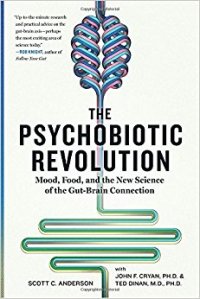
BOOK REVIEW: The Psychobiotic Revolution by Scott C. Anderson, et. al.

The Psychobiotic Revolution: Mood, Food, and the New Science of the Gut-Brain ConnectionThe Psychobiotic Revolution: Mood, Food, and the New Science of the Gut-Brain Connection by Scott C. Anderson
My rating: 5 of 5 stars

Amazon page


For centuries there have been cases in which a change in diet –often accidental– led to relief from a mental illness. However, given the sporadic nature of such effects and the complete lack of understanding of microbes, the enteric nervous system (i.e. the gut’s own “brain” that communicates with — but is also autonomous of — our “first” brain,) and the complexity the symbiotic relationships involved, these anecdotal cases had limited influence on the state of medicine. However, recent years have seen an explosion of understanding in this domain. This has resulted in a vast number of books being written on the role of microbes in the gut for overall health, the role that changing diet can have on changing our microbiota, and related topics such as how the overuse of antibiotics can have a deleterious effect on health by tossing out the microbial baby with the bath water. This book touches on all those topics (and more) as it explores the role of our bacterial hangers-on on our mental health.

The book consists of nine chapters. The chapters are organized so as to first present one with the necessary background to understand how changes to one’s gut microbiota can improve one’s health —particularly one’s mental health (though many of the mental illnesses influenced by microbiota are linked to physical ailments)— before moving on to the specifics of what microbes have been shown to have a given effect and what diseases can be influenced by consumption of probiotics.

The first five chapters give the reader an introduction to the topic and an overview of information one needs to know to understand the later chapters. Chapter three gives one an overview of the changing profile of one’s microbiota over the course of one’s life. Particular emphasis is given to one’s youth and to the transfer of bacteria to infants. [Readers may be aware of the problem that c-section births result in a failure of babies to receive a dose of beneficial microbes imparted by passage through the vaginal canal.] Chapter four takes one on a quick ride through one’s alimentary canal from mouth to rectum, with particular emphasis on questions such as how bacteria survive the stomach’s acid bath, and which parts of the digestive system contain which microbes (and to what effect.)

The last four chapters dig deeper into the specifics. These chapters look at specific probiotics, how one can get them into one’s system, and what science has found out about probiotics and psychobiotics (like probiotics, but specifically ones that influence mood and mental states) effects on specific ailments. Chapter eight, which deals with major diseases, does cover physical ailments as well as mental ones because – as mentioned— these afflictions often go hand-in-hand. The last chapter (Ch. 9) looks at where this body of knowledge is going. It delves into practices that are presently well-established, such as fecal matter transplants, but also into challenging works-in-progress such as attempts to develop narrower spectrum antibiotics so that we can get the life-saving benefits of these medications without their crippling side-effects.

The book has many graphics, as one would expect from a work that investigates such a complex scientific topic. I can’t really speak to the quality of the graphics as the review copy I read didn’t have completed graphics. However, the subjects of the graphics seemed appropriate and well-placed. The book also has a glossary, annotations, and a further reading section to assist the reader in the study of this subject.

I found this book to be informative and engaging, and would highly recommend it for anyone interested in the role of microbiota on mental health. The text was well-organized and readable. Given the scientific nature of the material, it’s easy for such a book to become ponderous, but the authors made attempts to keep the tone light and the presentation non-intimidating.

View all my reviews

5 Fascinating Nonfiction Books I Read in 2017

NOTE: I already did a post of the books published in 2017 that had the most profound effect on me. That post can be seen here. This one is about books I read in 2017, most of which weren’t published this year. The hyperlinks go to my GoodReads review of the respective book.


5.) Narconomics by Tom Wainwright: This is a look at how drug cartels have been drawing from the playbooks of successful multinational corporations to make their operations more efficient and profitable. It contains gripping journalism and–for an economics wonk such as myself–it hits the spot with regards to scholarly curiosity as well.


4.) The Man Who Wasn’t There by Anil Ananthaswamy: Neuroscience has been converging on a conclusion drawn by Buddhists long ago (though not necessarily sharing identical explanations /mechanisms) that the self is an illusion. Ananthaswamy considers the neuroscience of self by examining how nervous system ailments and injuries have challenged common explanations about what the self is based on what it feels to be a self. (e.g. Out-of-body experiences can be induced with electrodes. Some people deeply feel they are dead, or that they either have limbs that aren’t present or that limbs that are don’t belong to them.)


3.) The Way of the Iceman  by Wim Hof and Koen De Jong: Any book that can get one to start taking cold showers has to be pretty persuasive. Wim Hof is known for his cold endurance “stunts,” but his argument in this book is that anyone can do it and that there are health benefits to doing so. The authors report on the science of said benefits as well as offering a program to start one’s way on such a program.


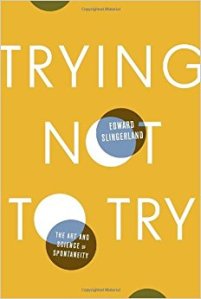
2.) Trying Not to Try by Edward Slingerland: Slingerland brings a fresh look at the ancient Chinese concept of wu-wei (apparently pronounced “ooo-way.”) Wu-wei is variously translated as “actionless action” or “to do without doing,” and–while that may sound like meaningless bumper-sticker wisdom–it reflects a state of effortless action that requires an elusive but powerful state of mind.  Slingerland presents varied Taoist and Confucian approaches to the subject, but also relates the idea to modern ideas such as Mihaly Csikszentmihalyi’s “Flow.”


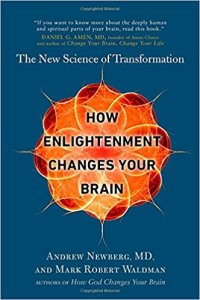
1.) How Enlightenment Changes Your Brain by Andrew Newberg and Mark Waldman: A neuroscientist and a positive psychologist team up to explain the common routes to the enlightened states of mind described in both Eastern religious / spiritual traditions and the mystic branches of Western religions (i.e. Jewish Kabbalah, mystic Christian sects, and Sufi Islam,) as well as their scientific underpinnings.

5 Books to Introduce You to Your Gut Microbiota

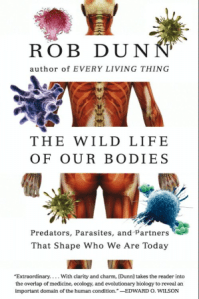
5.) The Wild Life of Our Bodies by Rob Dunn: This book takes a broad look at the role that hangers-on have on  human life.


4.) The Psychobiotic Revolution by Scott C. Anderson et. al.: This book focuses on the role that our gut microbiota have on our mental well-being–which increasingly appears to be substantial.


3.) Missing Microbes by Martin J. Blaser: The focus of this book is on how our love of antibiotics in every form– from pills to antimicrobial soaps–is killing us by denying us microbiotic diversity and robustness.


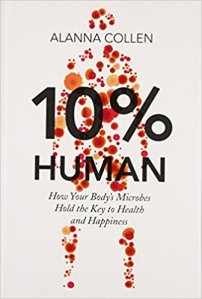
2.) 10% Human by Alanna Collen: Collen’s book addresses many of the same issues as the other books mentioned, but–as the title suggests–it emphasizes the fact that a human has 10 times as many hangers-on of other species as it does cells that are contiguous to the body. (If you’re wondering how this could be, it’s because the human body has some pretty big cells [some macroscopic, in fact] and the bacteria and other single-celled species tend to be relatively tiny.)


1.) I Contain Multitudes by Ed Young: This is probably the most highly-regarded of the books on this subject. It was considered one of the best science books of 2016.

5 Essential [and Sometimes Hilarious] TED Talks About the Human Body

5.) 3 Clues to Understanding your Brain by VS Ramachandran: Ramachandran discusses three afflictions that offer insight into the working of the brain. Capgras Syndrome occurs when individuals think loved ones have been replaced by impostors. Phantom limbs occur when there is an amputated limb which the brain continues to feel the presence of. Synesthesia is a muddling of sensory inputs /experiences.


4.) Charming Bowels by Giulia Enders: How we poop. How our gut nervous system influences our central nervous system. Why there is such a thing as “too clean for your own good.”


3.) Can We Create New Senses for Humans by David Eagleman: Our senses are narrowly attuned to taking in that information that offered evolutionary advantage to our ancestors. How might technology help us transcend those bounds?


2.) 10 Things You Don’t Know about Orgasm by Mary Roach: Eyebrow orgasm, thought-induced orgasm, orgasm among the deceased, and how orgasm may cure your hiccups.


1.) The Biology of Our Best and Worst Selves by Robert Sapolsky: Sapolsky explains that one can’t look at one biological system to understand violence or cooperation. Instead, genetics, environment, our nervous system, our endocrine system, and even the digestive system come into play. He also considers how we change.

BOOK REVIEW: Caesar’s Last Breath by Sam Kean

Caesar's Last Breath: Decoding the Secrets of the Air Around UsCaesar’s Last Breath: Decoding the Secrets of the Air Around Us by Sam Kean
My rating: 5 of 5 stars

Amazon page


A book about air and the gas molecules that float about in it may not sound gripping. However, Sam Kean has a gift for finding interesting little stories to make talk of nitrogen-fixing, the discovery of oxygen, and the improvement of the steam engine fascinating. Such stories include that of a vaporized resident of Mount St. Helens, a gas-belching lake that suffocated families in their sleep (not a horror movie plot—a documented event), the scientist who both made millions of new lives possible through his nitrogen-fixing process and then took killing to its most despicable with poison gas, the pig who survived nuclear fallout, and, of course, how the last breath of a Roman Emperor came to be his last–and how likely it is that you’re breathing some of it right now. Along the way you’ll learn about farts, about the use of nitrous oxide for fun and surgery, about Einstein’s venture into refrigerator design, about lighter-than-air air travel, and about what air might look like on another planet.

The book is divided into three parts and nine chapters. There are also eight “interludes” that each takes up an intriguing subject that is chemically or topically related to the preceding chapter. The first part, and its three chapters, addresses the components of air and where they come from. The three chapters explore sulfur dioxide and hydrogen sulfide as molecules released by geological processes (e.g. volcanoes,) the abundant but—without great effort—useless element of nitrogen, and oxygen—useful for breathing and setting the world on fire.

The middle part deals with how humans have used components of air for our own purposes. These three chapters discuss nitrous oxide’s invention, the exploitation of steam to power the Industrial Revolution, and the use of lighter-than-air elements for air travel.

The final part both describes ways in which humanity has changed the air, and looks at what we might have to contend with if we need to go to another planet to live. The seventh chapter explores nuclear testing and the radioactive isotopes that have been spread by it. The penultimate chapter examines the ways in which humans have tried to make weather more predictable by engineering it—usually with little to no effect. The last chapter is about what air might look like on other planets, be they planets on which we’d have to make air or ones that already have their own atmospheres.

There are a number of graphics, including molecule diagrams, photos, and artworks. There are also notes and a works cited section.

I’d highly recommend this book. I found it to be fun to read and fascinating. If you’re into science, you’ll love it, and—if you’re not—you may change your mind.

View all my reviews

5 Essential TED Talks on Consciousness

5.) Anil Seth: Your Brain Hallucinates Your Conscious Reality


4.) David Chalmers: How Do You Explain consciousness?


3.) Max Tegmark: Consciousness is a Mathematical Pattern


2.) Antonio Damasio: The Quest to Understand Consciousness


1.) Oliver Sacks: What Hallucination Reveals about Our Minds

5 Ways the World May Be Weirder Than It Seems

Werner Heisenberg famously said, “Not only is the Universe stranger than we think, it is stranger than we can think.”


5.) Ancestor Simulation: The idea that we could be in a simulation isn’t only a staple of science fiction–e.g. The Matrix. It’s been given serious thought by thinkers who aren’t exactly on the lunatic fringe–most famously inventor /entrepreneur Elon Musk. The core of the argument goes like this. 1.) We are getting better and better at making simulations ourselves. 2.) At some point we will achieve a simulation indistinguishable from reality. 3.) If 2 is true, then it’s vastly more likely that we are already simulations because if it can be done, it probably already has been done many times over. (Thus, we’re more likely to be in one of the simulations than so-called “base reality.”)


4.) Mathematical Universe Hypothesis: Max Tegmark proposes that the universe may be–at its core–a mathematical structure, making us self-aware substructures. This may sound like a different way of stating the preceding hypothesis, but not necessarily. The simulation hypothesis suggests certain motivations of a simulation creator. MUH doesn’t require a creator or an objective. It could be the nature of reality at it’s most basic.


3.) A Holographic Universe: This idea sprang from thinking about what happens to the information when something falls into a black hole. The idea being that the information is trapped on the outside of the event horizon–i.e. information for a three dimensional entity stored in two dimensions. As physicists pondered this, some concluded that it might be that we are a projection of data, or–alternatively–much of what we see when we look out into space is.


2.) One of Myriad Universes: The idea that our universe is one of many (or an infinite number of) universes comes in several flavors and is a prediction of several theories widely given credence. In some versions, all the universes have different sets of laws and constants such that many flash in and out of existence and only a small proportion are capable of hosting life (but the math of infinity is weird and a small proportion of the infinite may also be infinite. I don’t know, I’m not a mathematician and the infinite never mattered in economics because ground zero is that everything is limited but desires.) This answers the Goldilocks zone issue nicely–i.e. we couldn’t exist if the equations and constants that govern our universe were very much different, but if there are many universes with many sets of laws then we just happen to be in one of the ones we can be in–hence, credulity remains unstrained. Other versions propose universes with the same laws such that there could be an infinite number of you living out lives that may be slightly different than yours (or–for that matter–in which you might be the Supreme Galactic Overlord.)


1.) Time is slowing: A couple Spanish physicists have suggested that the universe might not be expanding at an accelerating rate (as is the consensus view in physics,) but rather time may be slowing. This slowing would be anticipated to continue until one final moment is captured frozen in time–note: said point would be long after the Sun swallows the Earth.

BOOK REVIEW: Supernormal by Dean Radin

Supernormal: Science, Yoga and the Evidence for Extraordinary Psychic AbilitiesSupernormal: Science, Yoga and the Evidence for Extraordinary Psychic Abilities by Dean Radin
My rating: 4 of 5 stars

Amazon page


With this controversial book, Dean Radin presents the scientific evidence for an array of psychic powers, but he frames the discussion in terms of yogic siddhis. “Siddhi” is a Sanskrit term for an ability that isn’t seen among the general population–at least not reliably so– and for the most part these “accomplishments” correspond to the categories discussed in parapsychology (i.e. telepathy, precognition, psychokinesis, and clairvoyance.) [Note: As mentioned, this is a controversial book. I will attempt to provide as unbiased a review as possible. I am generally skeptical, but don’t believe in poo-pooing the study of subjects because they offend my skeptical sensibilities. Furthermore, I try to keep an open mind because: 1.) there is no scientific consensus about what consciousness is or how it works, 2.) quantum biology is a subject in its infancy and we may yet learn there is more quantum “spookiness” going on in the brain than we think. 3.) for all I know we are in an simulation and then it’s all a matter of programming.]

The yogic emphasis doesn’t change the book much from the pop psych literature review of parapsychology studies it would otherwise be, except to necessitate background information on yoga and siddhis. However, this emphasis may or may not have opened up a huge additional readership. Outside of a fringe, siddhis aren’t much in vogue among yoga practitioners these days. Among modern day yogis and yoginis, there are some who believe in them and some who think they’re throwbacks to an era of superstition, malnutrition, and wishful thinking. However, even among the former, siddhis are generally considered a distraction. The advice of most of the great yogis has been to not get lost in the pursuit of such powers because chasing siddhis can derail one from one’s ultimate objective (e.g. liberation.) Still, if even a small fraction of yoga practitioners take an interest, that’s a fairly large readership.

So what exactly is the controversy? Obviously, there are many divergent demographics with differing views on the topic. For hardcore skeptics, parapsychology is right up there with alien abduction, bigfoot /yeti sightings, and the anatomy of the Loch Ness monster with respect to being a legitimate topic for scientific study. On the other hand, there are believers who are offended by the mere notion of studying such phenomena with science, and who say such investigations are an assault on their beliefs.

But that’s not a very interesting controversy—i.e. there are some people who won’t believe in such abilities no matter what the evidence, and others who will believe in them no matter what science has to say. So let’s chop off the hardcore skeptics and hardcore believers and ask what the controversy is as it pertains to those of us who consider evidence when drawing conclusions.

The root of the controversy can be stated rather quickly and clearly. Here it is: the effect size is small but statistically significant. What does that mean? Say this study asks a subject to determine which of five randomly selected shapes has been chosen using nothing but his / her mind. Using pure guessing, one would expect to be right 20% (i.e. 1/5th) of the time. If a person happened to get 32% right in a given trial, that means nothing because small samples don’t give one a convergence towards a mean value. (i.e. Intuitively, you know that if you flip a coin 10 times and get 7 heads, it doesn’t necessarily mean anything. If you repeat that 10-flip set 10,000 times, and still get 70% heads, then you probably have a trick coin or something else odd is going on.) So the issue is that even when experimenters repeat the experiment over and over again such that the average value should converge on 20%, it doesn’t. It stays at, say, 30% (exact effects vary but it’s on this order.)

At this point the reader might be thinking of all the factors that could result in this effect (i.e. cheating [insider or outsider], subconscious observation of facial expressions, random selection that is biased, etc.) Well, so have the scientists. In any study, one wants to account for alternative explanations to the utmost. Over the years, researchers like Radin have put all manner of protections in place from quantum random number generators to booths with extreme sound-proofing and Faraday cages (prevents radio signals from transiting.) Still they get this small positive effect that can’t be explained by alternative explanations.

There is also the issue of the filing drawer problem, which Radin devotes considerable space to discussing. It’s the idea that when drawing conclusions from many similar studies, one must accept that there may be many unpublished studies that sit in file drawers because they didn’t produced negative results. These filed / unpublished studies could negate the outcome of the body of studies of that nature. While this remains an open criticism, there is mathematics for determining how many negative studies would have to be turned up to make the results insignificant. Radin argues that the numbers calculated strain credulity.

So this “small but statistically significant effect” is generally agreed upon by all, excepting conspiracy theorists. Now we get to the controversy, which is how to explain this effect. Skeptics run the gamut from hot-blooded haters who claim that it’s all just a scam perpetrated by hoaxers with tenure, to more diplomatic challengers who provide thoughtful, plausible, and non-nefarious explanations for what they believe are false results. Said objections include file drawer problems, statistical “crud factor” (an observed effect in which large sample size studies can show a significant correlations between any two random variables—i.e. everything is correlated with everything else to some degree), and outlier effects.

The latter is a particularly revealing controversy. Say your study results in this 30% instead of 20% effect, and there’s one subject in the study who (over many trials) got the shape right 80% of the time. If you’re a skeptic, you call that an outlier and you want to cut it out of the study because it may be causing part, most, or all of the effect you see. Your assumption is that that this outlier could be anything from a data entry error to an outright cheater, but it’s obviously not a gifted psychic. If you’re a believer, not only do you want to keep that result, you want to find that person and study them to find out if the result was a one-time fluke, or if you have some rare, gifted person.

The book is arranged into three parts. The first part offers background on yoga and siddhis. The second part is the heart of the book and it presents an overview of results from studies of precognition, telepathy, psychokinesis (both of animate and inanimate objects), clairvoyance, and the effect of meditation on these abilities (which also shows a small positive effect, i.e. the general population outdoes probability by a little bit and experienced meditators outperform the general population by a little bit.) The last section is just a couple chapters about the future of parapsychology.

I found this book to be interesting and thought-provoking. Radin comes across as a reasonable investigator who is willing to accept that there is a lot of duplicity going on out in the world, but yet when one uses the methods of science one obtains results that would be generally accepted as successful across the social sciences. At times he does go on anti-skeptic rants. On the other hand, one can imagine his frustration in dealing with individuals unwilling to pin down how much higher the bar must be for parapsychology results over results in more mainstream topics. I think Radin’s greatest mistake was in discussing levitation. Besides at a quantum level, the effects of gravity are well-understood and non-negotiable. While our lack of understanding of consciousness leaves wiggle room to at least consider some unusual happenings, levitation seems a non-starter. Fortunately, as it hasn’t been studied, Radin just presents a couple historical anecdotes and moves on (while—to be fair–acknowledging the fundamental risk in relying on anecdotes.)

I’d recommend this book. I can’t say it swayed my belief on the topic, which tends skeptical, but it did inform my confusion. (It should be pointed out that not all these abilities are equally reviled by science. Precognition is the most fundamentally opposed because it seems to violate the fundamental cause and effect nature of the universe at our scale and larger [as opposed to the quantum level were all sorts of weird happenings transpire.]) I do agree with Radin that there shouldn’t be taboos in science in which scientists are afraid to study a subject of interest because the prevailing notion is that it probably doesn’t have merit. If there weren’t scientists with the cojones to study “crazy stuff” we’d no doubt be far behind our current understanding of the world.

View all my reviews