BOOK REVIEW: Head in the Game by Brandon Sneed

Head in the Game: The Mental Engineering of the World's Greatest AthletesHead in the Game: The Mental Engineering of the World’s Greatest Athletes by Brandon Sneed
My rating: 5 of 5 stars

Amazon page


There are many factors that influence whether an athlete can reach an elite level. Physical factors such as VO2 max (maximum oxygen consumption) and musculature have long been at the fore in the minds of coaches and trainers, but they’ve never told the full story. There are athletes who have the muscles, lungs, and general physiology to dominate their sports who fall apart under pressure. One also sees the occasional athlete who is consistently good even though he seems puny by comparison to his peers. It used to be that mental performance was considered an endowed X-factor–you either had it or you didn’t. Coaches didn’t know how to coach for issues of the mind and often exacerbated problems with old school attitudes and approaches.

We’ve now entered a new era in which a bevy of techniques and technologies are being exploited to strengthen the mind and improve psychological deficiencies, just as gyms have always been used to build the body and combat physical deficiencies. These range from techniques of meditation and visualization that have been known to yogis and Buddhists for centuries to advanced technologies that have only become available in recent decades and which are constantly improving and being made obsolete. Sneed examines the gamut of these approaches as they are applied to improving performance in sports: from the meditative or therapeutic to the electronic or pharmacological. One no longer need give up on athletes who are great at their best, but who get the yips at the worst possible times. The performance of mediocre athletes can be improved and that of the best can be made more consistent.

Sneed has a unique qualification to write this book. He counts himself among the athletes who couldn’t reach his potential because of inconsistency rooted in psychological challenges. His willingness to be forthright about his own problems makes the book more engaging. His own stories are thrown into the mix with those of athletes from football, basketball, soccer, baseball, adventure sports, and mixed martial arts (MMA.)

The book’s 19 chapters are divided among four parts. The first part lays the groundwork, helping the reader understand the rudiments of how the brain works, doesn’t work, or works too hard for a competitor’s own good. A central theme is that the ability to analyze and train through the lens of neuroscience has removed some of the stigma that has always been attached to psychological issues in sports (not to mention the days when they were written off as weakness.) Much of the six chapters of Part I deal with assessment of the athlete’s baseline mental performance. The last chapter (Ch. 6) covers a range of topics that have been around a long time as they’ve been reevaluated through modern scientific research. These include religion, faith, superstition, meditation, visualization, and the immortal question of whether sex is good or bad for athletic performance.

The second part consists of five chapters taking on one fundamental truth: mind and body are not two disparate and independent entities. This section starts at the most logical point: breath. Practitioners of yoga (i.e. pranayama) and chi gong have known for centuries that breath can be used to influence one’s emotional state and level of mental clarity. Sneed evaluates the technology that is being used to help athletes master the same age-old lessons. Having laid the groundwork through breath, the section advances into biofeedback technology. There are two chapters in the book that deal with pharmacological approaches. One is in this section and it deals with legal (at least in some locales) substances such as caffeine, alcohol, nicotine, nootropics (alleged mind enhancing drugs), and marijuana. (The other is in the final part and it deals with hallucinogens.) There are also a couple of chapters on technologies used to produce or enhance desired mental states.

For most readers, the third part will be seen as the heart of the book. Having considered how to evaluate an athlete’s mental performance (Part I) and how to influence mind states by way of the body (Part II), this part explores the range of technologies that are used to exercise the mind in a manner analogous to working out the body. These technologies focus on a range of areas including improving the nervous system’s ability to take in information, process that information, and respond appropriately. Much of this part focuses on video games; albeit video games using state of the art virtual reality and which are customized to improvement of athletic performance. Some of the games are used to train general cognitive performance (e.g. Ch. 13) but others are specifically tailored to the game in question (i.e. Ch. 14.) Just as simulators are used in aviation, part of the advantage of these games is the ability to put players in progressively more challenging conditions.

The last part of the book was the most interesting to me, personally. [It’s also the part of the book that will be the most relevant and readable a few years down the road because it’s not as modern technology-centric as most of the book—especially Part III–is.] It’s entitled “The Spirit” and it explores X-factors to performance, but sans the assumption that these are endowments, but rather under the assumption they are trainable. The part has an important introduction that presents the research about how “soft” factors like gratitude play into outlook and performance. Then there are the Part’s three chapters. The first describes an experiment involving taking elite athletes into physically arduous conditions of the kind normally experienced by military special operations forces in survival training. The second tells the story of MMA fighter Kyle Kingsbury’s use of hallucinogenic substances (most intriguingly, ayahuasca, a powerful drug long used by Peruvian shamans.) Finally, the last chapter deals with sensory deprivation—a technology some will associate with the movie “Altered States” but which many athletes swear by.

The book has an extensive section on notations and sources organized by chapter. There are no graphics.

I enjoyed this book and found it to be informative. There are a number of books that explore the techniques and technologies of optimal mental performance, but this one develops a niche by focusing on the realm of sports and some of the technologies that are only available with the kind of deep-pockets seen in professional sports. The book is heavily weighted toward the technology part of the equation, which is both good and bad. If you’re reading it now (2017), it’s great because you’re getting an up-to-date discussion of the subject from the perspective of entities that are awash in money for tech. The downside is that this book won’t age well, at least not as well as it would if there was more emphasis on approaches that aren’t based on cutting-edge technology.

I’d recommend this book if you are interested in optimal human performance, and if you have an interest in sports, all the better.

View all my reviews

BOOK REVIEW: Monkey: A Folk Novel of China by Wu Cheng’en

Monkey: A Folk Novel of ChinaMonkey: A Folk Novel of China by Wu Cheng’en
My rating: 4 of 5 stars

Amazon page


If you’re familiar with any Chinese folklore, it’s probably this story. But you probably know it as “Journey to the West.” It’s not only been released in numerous editions as a novel, it’s also been adapted for film, stage play, and I’m sure there must be a video game of it out there.

If you’re thinking, “Chinese folklore? Sounds boring.” Think again. This is a superhero story. Monkey, also known as the Monkey-King and “Great Sage Equal to Heaven,” is an immortal who has all manner of supernatural powers. He can fly. He can make copies of himself. He can transform himself—either disguising himself as another being or appearing as an inanimate object. He has an iron truncheon that can be the size of a sewing needle or a mile long and which is indestructible. Wielding said staff, he can defeat armies or deities.

In fact, the flaw in this story isn’t a lack of adventure or thrill. On the contrary, it’s one adventure after the next. If anything, the flaw is “Superman Syndrome.” That’s what I call it when the hero is so ridiculously overpowered that even when he’s fighting gods, dragons, or whole armies there’s still no doubt about the outcome.

Of course, the Monkey does eventually meet his match in the form of the Buddha. The Buddha defeats Monkey not in combat, but in a bet. That event shifts the direction of the story. In the early chapters, Monkey is goes about heaven and earth arrogantly wreaking havoc. He’s not altogether detestable. He does have his redeeming traits, but he’s insufferably arrogant and mischievous. After he’s imprisoned following his run-in with the Buddha, a monk is assigned to go to India to bring back scriptures (hence, a “journey to the west”) to China. Monkey is assigned to be the monk’s guardian and along with two others that they pick up along the way (Pigsy and Sandy) the monk is escorted on his journey. The party faces one challenge after the next, and the trip is long and arduous. Some of the challenges require brute force but in many cases they are battles of wits. So while Monkey may be overpowered, he does experience personal growth over the course of the story.

The story is told over 30 chapters, each set up with a cliffhanger. I enjoyed this translation by Arthur Waley. It is end-noted, which is useful given the historic and cultural nuances that may not be clear to readers.

It should be noted that this is unambiguously a Buddhist tale. There is a bias against Taoists and other non-Buddhist religions evident throughout the story. It’s not just the fact that the Buddha easily defeats Monkey when no other deity or group of deities can, there’s a steady stream of anti-Taoist sentiment. So, Taoists and Chinese Folk Religion practitioners be warned, I guess.

I would recommend this book for fiction readers, particularly if you have an interest in the superhero genre or Chinese literature.

View all my reviews

BOOK REVIEW: The Checklist Manifesto by Atul Gawande

The Checklist Manifesto: How to Get Things RightThe Checklist Manifesto: How to Get Things Right by Atul Gawande
My rating: 5 of 5 stars

Amazon page


Checklists have a bad, bureaucratic rap. Like Taylor’s time and motion studies and forms filed in triplicate, checklists seem to exist only to compound the drudgery of the workplace. Furthermore, many of the sectors in which checklists are most necessary are also those in which they are certain to be resisted—i.e. places in which there is a strong leader who is unused to having his or her instructions challenged: e.g. operating rooms and airplane cockpits. The element that ties those two locations together (along with other places where checklists are found) is that they are domains in which extremely complex activities take place, and in which one missed detail can have tragic consequences.

While the main story being told in this book is about the author’s experience leading a task force to build a surgical checklist and research its efficacy via a global study. However, Dr. Gawande takes us on the rounds of industries that found checklists before medicine did, and which had a thing or two to teach doctors about building and using them—notably the construction and air travel industries.

The book consists of nine chapters. After an Introduction that features a surgical case exemplifying how unexpected case characteristics can easily be overlooked when seconds count, the problem of extreme complexity is described as a rationale of the need for checklists in Chapter 1. While we tend to think we humans are tailor-made for complexity, the fact of the matter is that we aren’t. Mother Nature gives no capabilities that aren’t demanded to survive in the environment in which one evolved. So while we’ve done a great deal of cultural evolution to increase our capacity to deal with complexity (checklists included), the fact of the matter is that our minds and bodies are limited instruments. We can only hold a few items in short-term memory at once. We are no good at multi-tasking—despite the fact that most people feel otherwise. And when stress throws us into “fight or flight” mode, we develop tunnel-vision, not helping our capacity to see the minutiae in the big picture.

Chapter 2 delves into the checklist as solution to the aforementioned problem of extreme complexity. This chapter begins with the story of a bomber aircraft that had awesome capabilities but was deemed too complex for a single pilot to fly. (All it needed was a checklist.) The chapter then goes into medical examples. The first is a study of one of the major cause of infections: central line insertions. This offers a prime example of a procedure in which medical staff members know exactly what to do, but often small details are overlooked leading to disastrous outcomes. Then there is the case in which a little girl was saved against apparently impossible odds, in part due to a checklist performance.

Chapter 3 is entitled “The End of the Master Builder,” and as that name suggests, it’s largely about the role of checklists in construction. Construction can be compared and contrasted with medicine. The major similarity is that both fields have such high degrees of complexity that many specialists must be involved. The major difference is that time isn’t so critical in construction. (Just stopping and mulling over a solution is frequently not an option in surgery.) The biggest takeaway of this chapter is that it’s not only the tasks to be performed that need to be on the checklist but also the communication between team members.

Chapter 4 explains how centralized decision-making can be death in complex environments. The principle case discussed was how Wal-Mart out-performed the government in the wake of Hurricane Katrina in large part because leadership supported but did not dictate to managers of the stores in the storm-damaged area. However, the most fascinating piece of information for me was the explanation of why Van Halen had its infamous contract rider about having a bowl of M&M’s with all the brown ones removed. Apparently, no one cared about the candy. It was just an easy way to see at a glance whether anyone had been through the minutiae of the document–minutiae that included critical information such as how much weight the stage had to accommodate—i.e. safety issues not so easily observed but which would be potentially devastating if missed.

Chapter 5 tells the story of the World Health Organization (WHO) contacting Dr. Gawande and his first attempt at building and implementing a surgical checklist. As to be expected, there was a lot about that initial trial that wouldn’t work.

This led the author to go to what he calls “The Checklist Factory” in Chapter 6. Said “factory” is at Boeing, and it writes and updates all the checklists for Boeing aircraft—which are then modified by the individual airlines, presumably within limits governed by regulatory agencies. While the construction people taught Gawande that communication had to be on the checklist, the aircraft people taught him the need to simplify. One can’t put every detail on the list, only those that could be easily overlooked with devastating consequences. (i.e. One doesn’t need to write “Make an incision” because that’s impossible to forget, but one does include “Ensure antibiotics were delivered.”) Boeing also taught the author that there are two different flavors of checklist: READ-DO and DO-CONFIRM.

Chapter 7 describes the pilot study of the revised surgical checklist in eight hospitals in eight different countries (four developed and four developing.)

Chapter 8, “The Hero in the Age of Checklists,” explores the problem mentioned above about there being resistance in a many sectors (including medicine) because those leaders have rock star vibe going. We admire risk-takers and those who excel under pressure, but checklists seem to run counter to those traits. Thus, even when it’s clear that checklists save lives, there can be a reluctance to adopt them. Of course, as in the airline industry, eventually the checklist becomes accepted, and its use becomes second nature.

Chapter 9 tells of one of the author’s own surgical foibles, and how it led him to work to improve the procedure in order to reduce the risk of that kind of accident. It’s also an example of how the checklist kept the tragedy from being much worse.

This book has its sources annotated, but contains no graphics or other ancillary matter.

I’d recommend this book, particularly for those who work in the domain of complexity. However, I read it because it was referenced in a book I’d read on decision-making under fear. So it may also be of interest to you if you’re into questions of optimal human performance.

View all my reviews

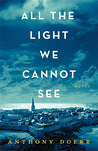
BOOK REVIEW: All the Light We Cannot See by Anthony Doerr

All the Light We Cannot SeeAll the Light We Cannot See by Anthony Doerr
My rating: 5 of 5 stars

Amazon page


This review will be short because, JUST READ IT.


“But, historical fiction isn’t my bag,” he said.


This isn’t that kind of historical fiction—i.e. the kind that binds one in a web of cultural minutiae and reads like a history book writ purple. This book will make you enrapt.


“But, I don’t like war stories. Too violent,” she said.


I bet you’ll like this one. Yes, it’s set during World War II, and war’s ugly face peeks around the corner from time to time, but one also sees how ordinary people do extraordinary things when exposed to the crucible of war. War doesn’t just bring out the worst; it also forces people to be better than they’ve ever had cause to be. The book is largely about a girl living under occupation and isn’t so much about life on the front lines.


How can I so boldly assert that one should read this particular book? (I normally lay out the facts first and only at the end make a recommendation.) Because this is one of the best crafted novels I’ve read. It’s extremely readable and engaging. The characters are superbly developed and one feels one knows them. Even the closest thing to a villain (if you don’t count war as the villain) is a complex and nuanced character who one wants to understand better.


I will tell you something substantive about the novel. It interweaves the stories of two teenage characters whose lives are fated to become entwined through the fortunes (and misfortunes) of war. The first is a blind girl who lives with her father in Paris. Father and daughter flee when the Nazis occupy France and end up living on the coast at Saint Malo with her great-uncle who is a shut-in owing to his experience in the last Great War. Of course, the move to the coast only delays the occupation and the point at which the war comes to them.


The other lead character is a German orphan boy with a gift for science who gets prematurely drawn into the war because of his great intellect and skill with radios. Not only are these characters both people who readers are drawn to, they both experience great growth over the course of the story. Imagine being blind in a war zone–or even just being a young nerd drafted into the war–and you can taste some of the emotional tension that resonates throughout this book. I won’t say that it’s all happy endings. It never is in war.


I’d highly recommend this book for all readers.

View all my reviews

BOOK REVIEW: Tropic of Cancer by Henry Miller

Tropic of CancerTropic of Cancer by Henry Miller
My rating: 3 of 5 stars

Amazon page


This, Henry Miller’s first novel, is about a young man living a bohemian life in Paris in the late 1920’s. It reads autobiographically. It’s often said that literary fiction downplays story in favor of character development. This isn’t necessarily true today, but it seems to be the case with this 1934 novel. There’s not much story—though a little one is packed in at the very end. The book does illuminate the lead character, but the reaction that character evokes is neither love nor hate but more of an “ewww” of disgust. Put another way, he’s like a Chuck Palahniuk anti-hero (e.g. think of Victor from “Choke”), but without out the quirky humor to make him amusing and interesting. This will make more sense in the next paragraph.

This book is often classified as erotica, but many readers might not find it to be erotic. Like a shock-jock, Miller chooses the most vulgar term to stun rather than using descriptive language to arouse. The lead (and other characters) spends a lot of time in bed with prostitutes, but at the same time he’s sleeping on the couch of some acquaintance or grumbling that he can’t afford a sandwich. Lest one think I’m hammering the book because of gratuitous sex, let me say that it’s not the sex that I find dismaying but a guy whose priorities are so askew of Maslow’s hierarchy as to make one wonder if he’s of the same species. There’s an uncanny valley with this character, only not with respect to facial appearance. All of that would be fine if the character experienced change over the course of the book, but the character neither grows nor is destroyed. I should also point out that I like Palahniuk’s anti-hero stories, but Miller takes himself too seriously to be fun, and I think that fun is the only way such a character makes for appealing reading.

So far I’ve made this book sound horrible, but I didn’t savage it with a sour rating. Ergo, there must be some redeeming value. There is. Miller’s use of language is intermittently gorgeous. He gets in these streams of consciousness in which poetry infuses into his prose. During these times, the story—such as it is—disappears even further into the hinterland, but the words can spark. Maybe Miller should’ve forgotten the hype that the novel is the ultimate literary art form and devoted his efforts to poetry.

I offer a qualified recommendation of the book. If you’re a reader of erotica and heard that this was a classic of that genre, then pursue it with caution. However, if you love words artfully twisted into little flashes of light, maybe you should check it out.

It goes without saying that there’s graphic content, but there are other reasons readers might be sensitive to this book. Not that I encourage avoiding a book because a character makes one feel ill-at-ease. (On the contrary, I frequently encourage it.) If a lead who comes off as simultaneously lusting after and despising women is a trigger for you, be forewarned this is such a character. (Note: He may also be anti-semitic, racist, and homophobic as well, but those elements aren’t explored in great detail. It could well be that the character doesn’t like humans in general. Maybe he was supposed to be a robot after all [hence the uncanny valley] and in that case I recant this review.)

View all my reviews

BOOK REVIEW: Missing Link Discovered by P. Marer, Z. Buzady, and Z. Vecsey

Missing Link Discovered: Planting Csikszentmihalyi's Flow Theory into Management and Leadership Practice by using FLIGBY, the official Flow-Leadership GameMissing Link Discovered: Planting Csikszentmihalyi’s Flow Theory into Management and Leadership Practice by using FLIGBY, the official Flow-Leadership Game by Paul Marer
My rating: 4 of 5 stars

Amazon page


So, you’re a leader and you’ve experienced Flow. Self-criticism vanished. Time fell away. The task was challenging, but the performance felt effortless. Your attention was rapt, and any craving for distractions disappeared. Maybe you even had a spate of creativity. You come away feeling great. Clarity reigns. Maybe you found Flow at work, but maybe it was skiing, golfing, or composing haiku. Either way, after thinking about how to repeat the feat, your next thought is, “What could my business [or organization] achieve if my people were in this state of mind for even a fraction of each day?” Increased productivity? Decreased healthcare costs and / or disruptions from sick days? Maybe, you’d see fewer complaints between stressed co-workers, or coming from customers? Regardless, you know that Flow is elusive and fickle. It may seem that the harder you seek it, the less success you have. You pick up a couple of books on finding Flow—maybe you watch some TedTalks on YouTube–and they provide helpful tips for finding the state for yourself, but most don’t have much to say on facilitating Flow for others.


That’s where FLIGBY comes in, and “Missing Link Discovered” is a companion to FLIGBY. [Note- “FLIGBY” is short for “FLow is Good Business for You,” which ties it into the work of positive psychologist Mihaly Csikszentmihalyi who both coined the term “Flow” and wrote a book entitled “Good Business” about both achieving Flow in the workplace and how some businesses succeed in the simultaneous pursuit of profit and virtue. Csikszentmihalyi was actively involved in the development of the FLIGBY game. The “missing link” referenced in the title is between leadership and Flow.] FLIGBY is an educational video game in which the player assumes the role of General Manager (GM) of a winery. The last GM was a hard-driving pursuer of profit who left the winery’s mission and values in a muddle and its employees stressed out and at each other’s throats. The player makes about 150 decisions over the course of the 23 scenes that map to a timeline of one’s first half a year as GM. While the player still has to consider the usual business objectives–such as profitability–to succeed one also has to help one’s employees find Flow. The game is used by both by professors of business education courses (e.g. in MBA programs) and by corporate trainers.


As this is a review of the book and not the FLIGBY game, I won’t talk too much more about it beyond this paragraph. However, I did have an opportunity to play the game and found it to be both educational and engrossing. The scenes are live-action, and the cast did a great job of creating the emotional tension necessary to make one feel a stake in the decisions. There’s a narrative arc that unfolds over the course of the game, and so it appeals to the way our brains best take in information. Of course, the game also pays attention to those factors that facilitate Flow, such as offering immediate feedback and an increasing challenge such that the difficulty rises with one’s skill.


I’ll now clarify what I mean by the book being “a companion” to the FLIGBY game. It’s not a game manual. [i.e. The nuts and bolts of how to navigate the game as well as general background information are provided within the game itself as well as through a series of digital appendices—a list of which is included in the book.] Rather, “Missing Link Discovered” is intended to bring readers up to speed in three areas relevant to the FLIGBY game. These areas are delineated by the book’s three parts. Part I (Ch. 1 – 3) introduces Flow and explains how its pursuit fits into the larger scheme of leadership responsibilities. It begins with an introduction to Flow and Csikszentmihalyi’s research, then links Flow and leadership, and—finally–describes the set of leadership skills used in the game.


The second part (Ch. 4 – 8) introduces the game, situates it in the context of serious games (those for which entertainment is a secondary concern), and discusses the topic of feedback in great detail (Note: feedback is a crucial issue because delayed or inadequate feedback is one of the major reasons that people have trouble achieving Flow–particularly in a workplace setting.) The last chapter in this section is a collection of captioned photos that charts the development of the game from the first meeting with Professor Csikszentmihalyi to the game’s use for both instruction and research.


While the first two parts of the book are relevant to all players, the last part is aimed at Professors, corporate trainers, and researchers. It consists of two chapters. Chapter 9 discusses such issues as where in an individual’s education or training the game should be situated, and how it should be presented. The last chapter (Ch. 10) is a bit different in that it opens up a discussion about the research potential offered by FLIGBY. Given the game’s widespread use in both academia and the corporate world, a great deal of data is collected that can be used anonymously by researchers to study interesting research questions (e.g. how players in differing demographics or job positions make decisions.)


The book offers a number of ancillary features that increase its usability and clarity. The first of these features are two single-page summaries that introduce readers to Flow and FLIGBY, respectively. Besides the aforementioned photo chapter, the book has many diagrams and other graphics to clarify concepts addressed in the text. The book is footnoted throughout, and provides a glossary of key terms. It should also be noted that there is an introduction by Professor Csikszentmihalyi in which he describes his involvement in the project and presents his thoughts on the value of FLIGBY.


I recommend this book, particularly for those who will be playing FLIGBY or who are in the process of determining whether FLIGBY is right for one’s students or employees. From corporate programs in mindfulness to interest in Flow-based leadership, all signs point to a workplace revolution in which there is a long overdue convergence of incentives and objectives between employees and employers. It’s been a long road from Henry Ford’s plan to make sure all employees could afford the cars the company made to the explosion of Google’s “Search Inside Yourself” program and others like it, but this revolution is picking up steam and if you’re unaware, you might want to look into it.

View all my reviews

BOOK REVIEW: Modern British Poetry ed. by Louis Untermeyer

Modern British PoetryModern British Poetry by Louis Untermeyer
My rating: 4 of 5 stars

Amazon page (not the same edition)


This is an anthology of 183 poems written by 77 British authors. Given the title, “Modern British Poetry,” the first thing that should be stated is that the original work came out around 1920, and so the bulk of these poems are from the 19th century. That may fit perfectly with your classification of modern poetry, but if you’re looking for present-day poets, this isn’t the book you’re after.

However, the good news is that you might still find some unexpected treasures. Often collections of public domain poetry like this gather poems that are ubiquitous and which are probably already on the shelves of most poetry readers in various collections and anthologies. But of the almost 80 poets included, only a handful will be household names for a general reader—particularly if you aren’t from the UK and thus didn’t get exposed to the more obscure British poets. Of course, there are a number who have stood the test of time: Thomas Hardy, Robert Louis Stevenson, Oscar Wilde, A.E. Housman, William Butler Yeats, Rudyard Kipling, G.K. Chesterton, Alfred Noyes, D.H. Lawrence, Edith Sitwell, and Robert Graves spring to mind. Furthermore, the poems chosen aren’t a straightforward “greatest hits” list. (e.g. “If” isn’t among the four Rudyard Kipling entries.)

As one might expect of a 230 page anthology that contains 183 poems (plus author bios and the occasional footnote), the poems selected are brief. In a few cases, excerpts from longer works are included, but for the most part these are poems that fit comfortably on a single page. This is great for someone trying to get a feel for the various poets and for those who enjoy more compact works over epic poems—which, if we’re being honest, is most of us.

The anthologist, Louis Untermeyer, includes brief bios for each of the poets in front of their entries in the anthology. Generally, each included poet has between one and four poems. While the poems are organized by poet, the poets seem to be organized chronologically (at least as near as I can tell; it begins with Thomas Hardy [1840 – 1928] and ends with Robert Graves [1895 – 1985.])

I read a Kindle version of this work and found it to be far better organized than most of these public domain compilations. It not only had an index that would take one to individual poems or poet bios, but it also contained a hyperlinked index. Unfortunately, I obtained the book some time ago and I couldn’t find the same edition when I looked for it while doing the review. Most of the Kindle editions now seem to bundle Untermeyer’s “Modern American Poetry” with his “Modern British Poetry” but the edition I had was just the British poets.

I recommend this book for poetry readers. In addition to having some exemplary short form poetry from both well-known and forgotten poets, it happens to contain the first poem I ever memorized in it—a powerful little poem by John McCrae entitled “In Flanders Fields” (if you don’t know it, read it; it’s war poetry at its finest.)

View all my reviews

BOOK REVIEW: District and Circle by Seamus Heaney

District and CircleDistrict and Circle by Seamus Heaney
My rating: 5 of 5 stars

Amazon page


“District and Circle” is a collection of 44 poems by the Nobel Laureate Seamus Heaney that was released in 2006.

One feels the essence of the 20th century across this collection. There are a couple of poems that refer to World War II, not from the perspective of crucial events and violent clashes, but as it was experienced in “the District” (e.g. “Anahorish 1944.”)

There are also a number of poems that make industrialization romantic or—at least, in some way–evocative. Heaney writes of mechanical devices and processes in a way that many great nature poems are composed (e.g. the first poem in the collection “The Turnip-Snedder.”) In fact, it’s almost like industrial haiku. It doesn’t share the brevity of Japanese form, but it removes the extraneous and deals in only what one can experience with the senses. In that way, one can feel the heft of these objects. They aren’t cheap, flimsy plastic, but wood and iron and brass. There are also some lovely nature poems.

Heaney’s use of language is resplendent. It’s not just the description, but the sound. I’ve even found myself thinking, “I don’t know what that word means, but—damn–it sounds gorgeous right there.”

The poems range from several words to a few pages in length, with most fitting on a single page. It’s about 80 pages of beautifully composed poetry.

I’d recommend this book for all poetry readers.

View all my reviews

BOOK REVIEW: The Memoirs of Sherlock Holmes by Arthur Conan Doyle

The Memoirs of Sherlock Holmes (Sherlock Holmes, #4)The Memoirs of Sherlock Holmes by Arthur Conan Doyle
My rating: 5 of 5 stars

Amazon page


This is the second collection of short stories and the fourth book overall in the canon of Sherlock Holmes. It includes eleven adventures of the great detective as narrated by his partner, Dr. John Watson.

Below, I’ll describe the premise of each of the stories:


“Silver Blaze” A race horse goes missing and its trainer is found dead. The eponymous race horse is favored to win an upcoming race, so Holmes faces a race against time to see that the horse can compete.


“The Yellow Face” A man begins to suspect the wife that he’s never had cause to doubt before. Only he doesn’t know exactly what he suspects her of, but it seems to revolve around visits to a nearby cottage that has been recently occupied by an unknown and mysterious resident. Note: this is one of my favorite Sherlock Holmes stories both because it displays the humanity of the character in that his initial guess proves wrong, and in it shows how the author was ahead of his time in his worldview.


“The Stock-Broker’s Clerk” When an out-of-work clerk, recently hired by prestigious firm, is given an offer of much more money but finds himself doing only busy work, he gets suspicious and calls on Sherlock Holmes.


“The ‘Gloria Scott’” Holmes is visiting a college friend when the friend’s father is visited by a gruff ex-sailor. When the family patriarch uncharacteristically bends over backwards to make the sailor happy, it’s unclear why. When the old man dies upon reading a letter, the mystery becomes all the more intriguing.


“The Musgrave Ritual” A butler is fired for digging around in the family papers, despite the fact that the document he’s discovered with is nothing more than a series of cute questions constituting an old family ritual.


“The Reigate Puzzle” Burglaries in the countryside culminate in the murder of a coachman. The family that employed the coachman is neighbor to a close friend of Watson.


“The Crooked Man” A couple who’ve been married for thirty years without any known incidents of domestic unrest get in a raucous fight, and the man–a career military officer–ends up dead. The wife is the only suspect.


“The Resident Patient” A benefactor agrees to fully fund a new doctor’s practice provided that he is allowed to live on-site as a resident patient. The mystery begins when the resident patient begins to be inexplicably nervous.


“The Greek Interpreter” An interpreter is kidnapped and forced to translate a mysterious conversation between his kidnappers and a disheveled Greek man. Despite handsome compensation and threats of what will happen if he should tell anyone of the job, the interpreter feels obliged to get to the bottom of the imprisoned Greek man’s case by hiring Holmes.


“The Naval Treaty” A member of the Foreign Service has a crucial treaty stolen while he goes to check on the service of his tardy coffee. The loss of the treaty spells professional death for the young man unless Holmes can solve the case. The commissionaire and his wife are initially the sole suspects.


“The Final Problem” Perhaps the best known story of the collection, it was intended to be the end of Sherlock Holmes. The story involves an uncharacteristically shaken Holmes, his arch-nemesis, and a trip to Reichenbach Falls.


This collection includes some essential Sherlock Holmes stories, as well as some classic Holmsian cases and quotes. For 19th century literature, it’s highly readable. Definitely a must read for fans of Sherlock Holmes.

View all my reviews

BOOK REVIEW: Mastermind by Maria Konnikova

Mastermind: How to Think Like Sherlock HolmesMastermind: How to Think Like Sherlock Holmes by Maria Konnikova
My rating: 4 of 5 stars

Amazon page


This is a book about how to be more observant while avoiding the pitfalls of drawing faulty conclusions based on unsound reasoning, tainted memory, or faulty assumptions. Examples from the canon of Sherlock Holmes (i.e. the 4 novels and 56 short stories written by Sir Arthur Conan Doyle) are prevalent throughout the book, but Konnikova also discusses Doyle’s limited real life investigations as well as those of the men who influenced the writer. Doyle lived at time when science and reason were making great strides in overcoming superstitious and spurious ways of thinking, and so the Sherlock Holmes works were cutting edge for their time.

The book is neatly organized into four parts with two chapters each. The first part is entitled “Understanding Yourself” and it unpacks what we have to work with in the human brain. One learns how one’s brain works and how it sometimes leads one astray. It also introduces how the scientific method can provide a framework to harness the brain’s strengths and avoid the hazards of its weaknesses.

Part II investigates how one can become more skilled at investigation, as well as the role played by creativity and imagination. We learn how our attention is much more limited than we feel it to be.

The third part reflects upon the building one’s powers of reasoning as well as the importance of knowledge-building in the process. Konnikova describes “deductive reasoning” using Holmes’s favorite term. [She doesn’t really get into the whole muddle of—as many have pointed out—the fact that Holmes more often uses induction than deduction, i.e. going from very specific observations to draw broader conclusions.] The second chapter considers the importance of being knowledgeable and broadly educated. Holmes’s conclusions often hinge on fairly arcane knowledge about a range of issues: animal, vegetable, and mineral. However, a large part of the discussion is about the idea of degree of confidence. It’s also pointed out that knowledge can be double-edged sword—an impediment as well as a tool. Extraneous knowledge may lead one down the wrong path.

The final part suitably closes the book with one chapter on practical advice for how to put all of the knowledge discussed in the book to work and another on the recognition that even the best minds can go astray. The first chapter summarizes as it offers pragmatic advice. The second of these chapters discusses a fascinating investigation of a supernatural phenomenon (i.e. the existence of fairies from photographic evidence) upon which even Sir Arthur Conan Doyle’s mind led him astray.

The use of the Sherlock Holmes character is beneficial as many readers have consumed the entire Holmsian canon, or will do so, because it’s short and readable even today. Even those who haven’t read it will at least be familiar with the lead character and his proclivities as well as the other essential characters, such as Dr. Watson, Professor Moriarty, and Irene Adler. There are too many television shows, movies, and pop culture references to not be aware of these characters. One needn’t have read all Doyle’s Holmes to benefit, as Konnikova offers the essential background. However, one might find it a bit more intriguing if one has read the canon. At the end of each chapter, Konnikova offers a set of references that point to the sections in the Sherlock Holmes canon relating to that chapter’s discussion. Konnikova uses quotes and stories that aren’t attributable to Doyle to good effect throughout this book as well.

Graphics are used sparsely and only as absolutely necessary. There is a “Further Reading” section at the end of the book in addition to the end of chapter pointers. Besides a list of the Sherlock Holmes books, there are chapter-by-chapter prose suggestions of relevant key readings.

I found this book interesting and informative. While it may be most useful for someone who wants to become more attentive, less prone to biases, and more effective in drawing conclusions, it could also be enjoyed by Sherlock Holmes fans as a way to drill down into stories a bit further.

View all my reviews