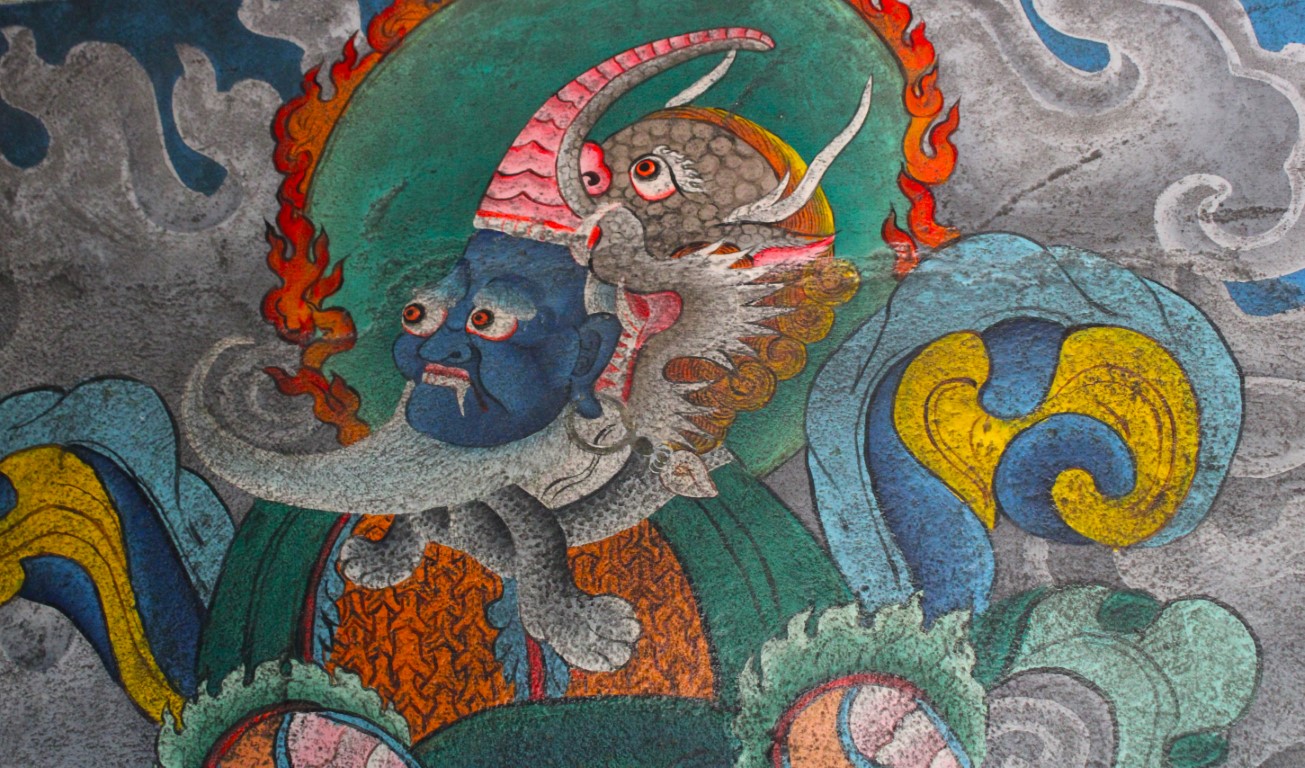
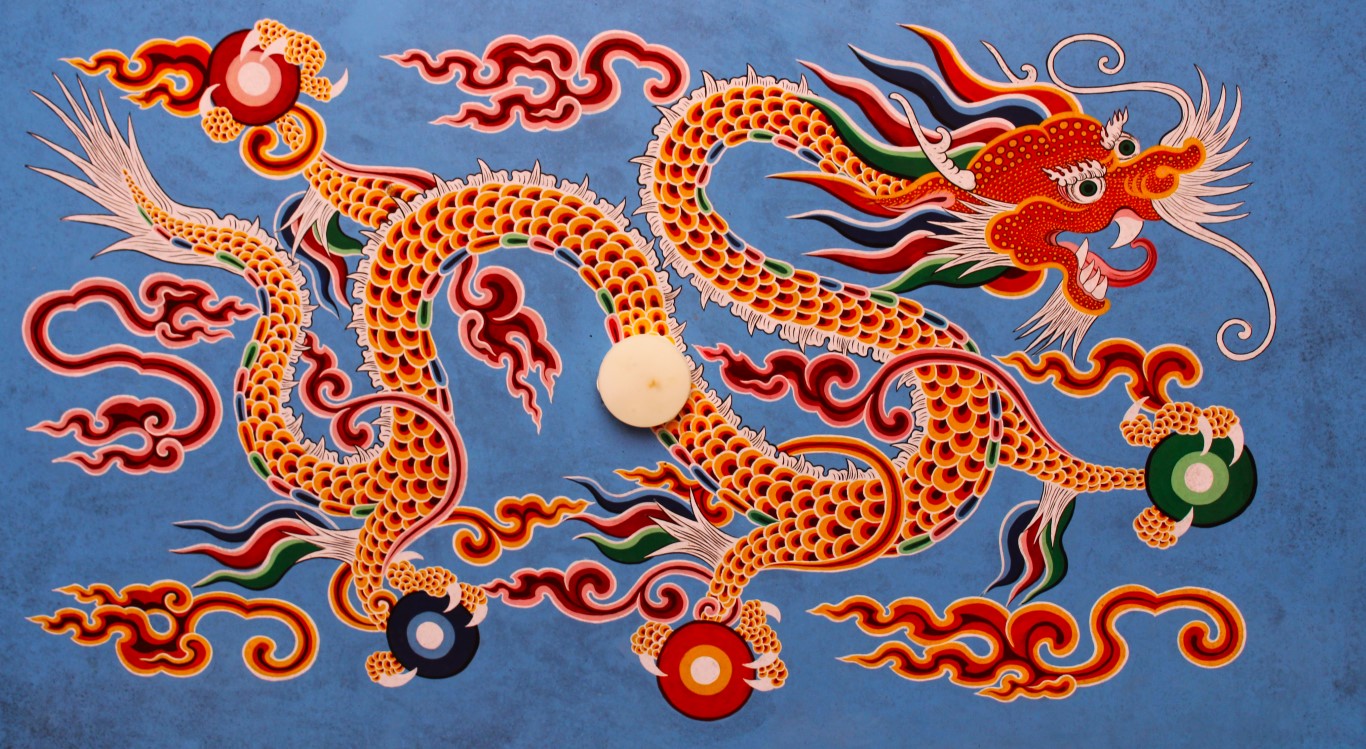
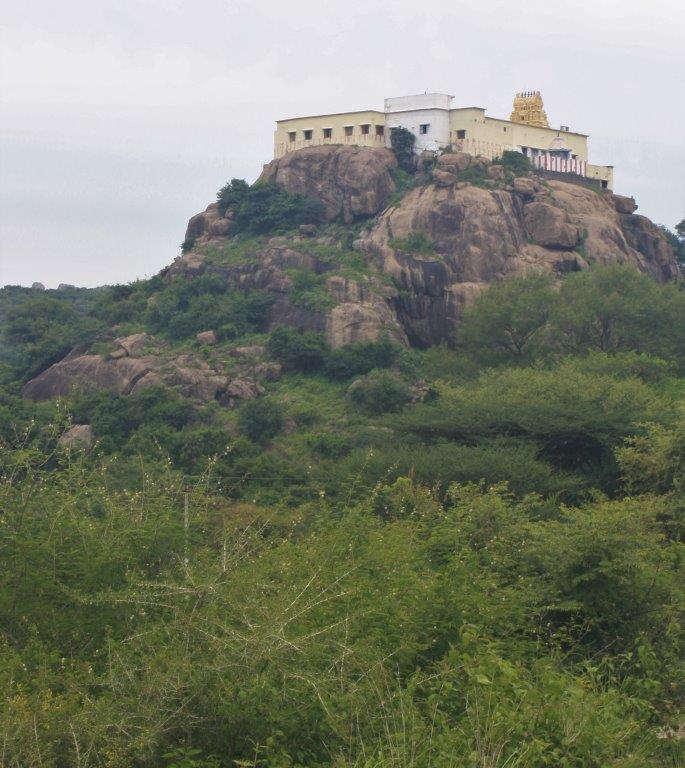
DAILY PHOTO: Bon Monastery, Sikkim

Taken in Sikkim on May 12, 2022

BOOK REVIEW: Jagannatha of Puri by Gayatri M. Dutt

Jagannatha of puriJagannatha of puri by Gayatri Madan Dutt

My rating: 4 of 5 stars

Amazon.in Page

I recently visited Puri, and – seeing the little, big-eyed Jagannath idols and images all across Odisha – I was curious to learn about the mythology behind the Puri temple and its tripartite deity. This 30+ page comic may not be the most scholarly or detailed account, but it may be the quickest way to get the gist of the story. And the comic does present an intriguing morality tale that includes lessons of patience and unselfishness.

The story begins with a king who is obsessed with finding a fabled cave-shrine that he was directed to in a dream. The king sends his best men out in search of the cave as its whereabouts are unknown. In time, one of the men stumbles upon a village whose chieftain is said to regularly make secretive visits to the cave and its idol. And from there, the race is on to get the king to the cave. But the deity is elusive, and insists that its followers work together harmoniously.

It’s a clear and well-developed story. It blends intriguing trippy elements like time-travel and messages in dreams with traditional religious mythology.

If you’re looking for a brief explanation of the Puri temple and the Jagannaths, it’s worth giving this short comic a look.


View all my reviews

BOOK REVIEW: Romanticism: A Very Short Introduction by Michael Ferber

Romanticism: A Very Short IntroductionRomanticism: A Very Short Introduction by Michael Ferber
My rating: 4 of 5 stars

Amazon.in Page

Romanticism was a literary, artistic, and philosophical movement of the late 18th and early 19th century. It’s commonly believed to have been a response to the Enlightenment, a desire to not throw out the baby with the bathwater as the influence of religion waned. In this book, we learn that that’s a misleading oversimplification, but not one completely devoid of truth.

Like a lot of “movements,” Romanticism is a fairly loose set, containing a disparate band of entities. This is exacerbated because it’s not just, say, a style of painting or of music, but rather it cuts across a diverse range of activities. Because of that, the book offers the least clarity in the opening chapters (ch. 1&2) and in the last one (ch. 6.) The first two try to rope in Romanticism and to differentiate it from “sensibility,” a movement oft-confused for Romanticism. The last chapter attempts to show the commonality that cuts across different domains, e.g. how are Romantic paintings similar to Romantic novels, or – for that matter – Idealist philosophy.

However, starting with chapter three, the book provides clear insight into the nature of Romanticism. Chapter three investigates poetry. Chapter four examines philosophy and Romantic attitudes towards religion and science. This was quite eye opening to me because I’d previously contrasted Romanticism with the Enlightenment, and here I learned that the Romantics’ views on religion and science were far from the opposite end of a spectrum. Chapter five shines light on the social context of Romanticism, focusing on politics, the French and the Industrial Revolutions, and War, but also evaluating what influence, if any, Romanticism had on changing views toward women.

I feel I came away from the book with a better understanding of Romanticism, and so I’d recommend it for others interested in learning more.

View all my reviews

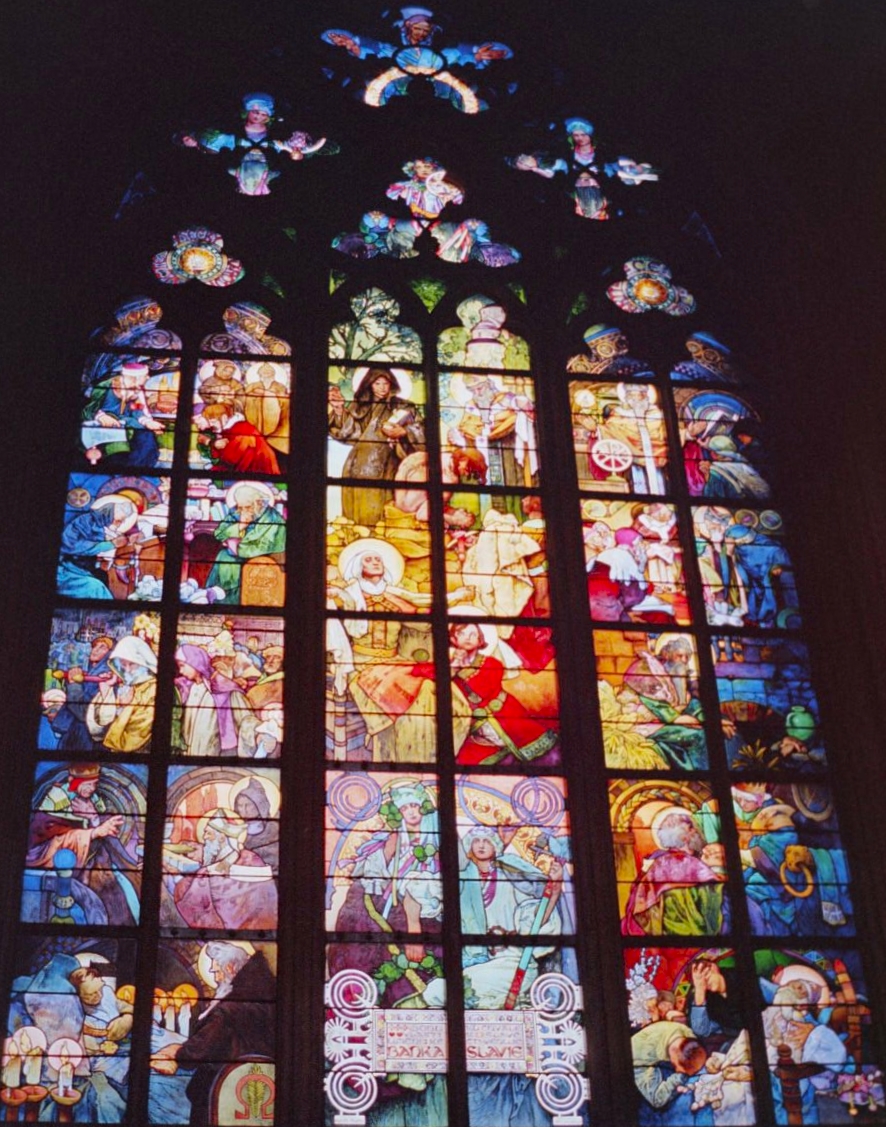
DAILY PHOTO: St. Vitus Stained Glass, Prague

Taken in 2002 in Prague

DAILY PHOTO: Church of the Immaculate Conception, Yanque

Taken in 2010-ish in Yanque, Peru [Near Colca Canyon]

BOOK REVIEW: Miracles: A Very Short Introduction by Yujin Nagasawa

Miracles: A Very Short IntroductionMiracles: A Very Short Introduction by Yujin Nagasawa
My rating: 5 of 5 stars

Amazon.in Page

This concise guide to miracles is built around the intriguing observation that, according to polls, a majority of people believe in miracles, and yet we don’t witness supernatural events [at least not ones that can be confirmed by objective investigation.] There are coincidences (boosted in salience by selection bias and / or a lack of intuitive grasp of probability,) there are patterns that our minds turn into significant images (e.g. the Madonna on a taco shell,) and there are cases of spontaneous remission in which a serious medical condition disappears where treatments haven’t worked or weren’t tried (experienced by the devoutly religious, the marginally religious, the agnostic, and the atheistic, alike.) But those events can be explained more simply without resorting to the supernatural (i.e. probability, the human brain’s great skill at pattern recognition [re: which is so good that it often becomes pattern creation,] and the fact that under the right circumstances the human body’s immune system does a bang-up job of self-repair.)

The five chapters of this book are built around five questions. First, what are miracles – i.e. what criteria should be used, and what events that people call miracles fail to meet these criteria? Second, what are the categories of miracles seen among the various religious traditions [note: the book uses examples from both Eastern and Western religions, though generally sticks to the major world religions?] Third, how can one explain the fact that so many believe despite a lack of evidence? This chapter presents hypotheses suggesting we’re neurologically wired to believe. Fourth, is it rational to believe? Here, philosophers’ arguments (most notably and extensively, that of Hume) are discussed and critiqued. The last chapter asks whether non-supernatural events can (or should) be regarded as miraculous, specifically acts of altruism in which someone sacrificed their life for strangers.

I found this book to be incredibly thought-provoking, and it changed my way of thinking about the subject. I’d highly recommend it.


View all my reviews

DAILY PHOTO: Confessional in St. Stephen’s

Inside St. Stephen’s Cathedral in Vienna in December of 2016

BOOK REVIEW: Angels: A Very Short Introduction by David Albert Jones

Angels: A Very Short IntroductionAngels: A Very Short Introduction by David Albert Jones
My rating: 5 of 5 stars

Amazon.in Page

This book offers an overview of angels in the Abrahamic religious traditions (i.e. Judaism, Christianity, and Islam.) [It does take a quick dip into angel-like beings from other religious traditions – e.g. Hindu and Parsi – but generally comes down on the side of it doing a disservice to everybody to equate such beings across mythological traditions – with the possible exception of the New Age angel which is predominantly an offshoot from Abrahamic mythology.] The book considers the evolution of theological thinking on angels: how they’ve been portrayed in art; what they are [made of;] what their purposes are (i.e. messengers, healers, guardians, warriors, etc.;) and, occasionally, how they play into popular culture.

I took away a great deal from this book. For example, I learned about the differences between the djinn of Islam mythology and demons of Judeo-Christian mythology, and the theological underpinnings of this difference (i.e. Muslims do not believe angels have free will, and thus angels can’t be fallen, and so the djinn are a separate entity altogether [rather than being fallen angels.]) I found the book to be readable, interesting, and balanced in its approach to the topic. If you’re looking to learn more about how angels (and related beings, e.g. fallen angels / demons) have been treated by thinkers of various ages, without getting deep into the minutiae, this is a fine book to consider.


View all my reviews

DAILY PHOTO: Inside Uspenski Cathedral, Helsinki

Taken in the summer of 2011 in Helsinki

Sacrifice Play [Common Meter]

A prayer was made at the altar --
a prayer no one could hear.
A sacrifice had been promised
of someone all held dear.

But not one soul would take the knife,
and do the wicked deed:
to take that life, an unearned life
and speak the evil creed.

They dragged the victim to the rim
of an old volcano.
Just one kick would be all it took;
still, they all said, "Hell no!"

What kind of beastly deity
could fault them for failing?
The kind whose sense of right and wrong
is fucked beyond ailing.