BOOK REVIEW: The Heart’s Necessities by Jane Tyson Clement

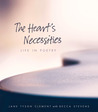
The Heart's Necessities: Life in PoetryThe Heart’s Necessities: Life in Poetry by Jane Tyson Clement
My rating: 4 of 5 stars

Amazon page


At its heart, this is a collection of the poems of Jane Tyson Clement, who lived from 1917 to 2000, but there’s more going on in the book than the poetry. As the subtitle, “A Life in Poetry,” hints, the poems range over the almost sixty-year writing career of this author and poet. Having a selection of verse that runs from Clement’s teenage years into her seventies, offers the reader an opportunity to watch the growth of this poet and to see how the dictates of life influenced the style and content of her poems. The poems cover a range of topics, including: relationships, art, and nature. I found the nature poems particularly evocative, but they are all skillfully composed and endearing. Also, it should be noted that the Prelude and commentaries were presented by a musician and songwriter, Becca Stevens, and her interest skews to the artistically oriented works. While I’ll discuss at length how these poems were spread across the life of a little known but skillful 20th century poet, I should point out that the poems don’t feel dated or obsolete. Dealing in fundamental issues of humanity, the selections have aged well.

The collection is divided into five chapters. There is a roughly chronological progression to the collection, but chronology isn’t strictly followed in favor of supporting each chapter’s theme. (Though the themes are informed by what was going on in the poet’s life during various points.) The first chapter presents poems written between 1935 and 1939 (age 18 to 22.) The second picks up in 1939 and while it ends on a poem from 1953, mostly covers a period to 1941. Chapter three includes selections from 1940 to 1953 (ages 23 to 36.) The penultimate chapter includes poems from 1954 and 1955. The last chapter is stretched out from 1955 to 1991 with much less temporal density to the poems than is seen in earlier chapters.

I said in the introductory paragraph that there was more going on than the poems. Here I’ll discuss what these ancillary additions were, ranging from what I found to be most to least beneficial to the work overall. First, there are photographs throughout the book that are warm, heavily oriented toward nautical-coastal themes, and which create a retro vibe appropriate to a book on the life of a twentieth century poet. Besides the coastal and nautical photographs, there are many that revolve around music, including photos of Stevens but also more artsy still-lifes.

Second, each chapter begins with a brief biographical statement of where Tyson Clement was at during the period in question in terms of relationships, family, religious beliefs, where she was living, and what else was occupying her time besides poetry writing. It was interesting to see what was going on with the poet as she was composing the selected works.

Finally, there are commentaries interspersed amid the poems here and there, presented as though Becca Stevens is letting the reader into her head as she ruminates on some of the poems. At this point I’ll confess my own bias. I’m not a big fan of commentaries in poetry collections. There is a famous saying by E.B. White about humor that I think equally applies to poetry: “Analyzing humor is like dissecting a frog. Few people are interested and the frog dies of it.” I’m not saying that Stevens didn’t offer insight, particularly related to her life as a musical artist. She is certainly articulate and thoughtful. Still, I think commentary detracts from the poetry reading experience by overwriting what the reader takes from a piece with the commentator’s thoughts. But, your mileage may vary.

I would recommend this work for poetry readers. The poems are evocative and the language is beautiful. The poems are readable and have aged well.

View all my reviews

POEM: Dark River


sitting beside the dark river
watching the inky water flow
though balmy, i feel a shiver
abyss, but for a moon lit glow

in the rippling liquid metal
aside blinding light from the moon
i see loping letters settle
in lyrics of an unsung tune

i don’t fear the talking waters
nor the dirge they write for me
for in life we’re all but squatters
i dread the river’s gift lost to a cold sea

POEM: Rambling on a Koan

“What is your original face?”

Original? Does that mean I have one now?

Perhaps when I mirror gaze.

Otherwise, if I have a face, it resides in the minds of those who look upon it.

He who takes a scaffold built of patches of matter, varying distances from his eye

and reflecting various spectra of light, and fleshes it out in subjectivity owns the face.

That mean thing,

thing of glee,

that by which cantankerousness is displayed

thing of sorrow,

thing of madness,

that ugly-pretty, disheveled topography of flesh

is a faceless face,

or — perhaps — a thoughtless thought.

POEM: The Endrow, or: How To Survive a Cornfield

I was once a kid in the corn.

News at Eleven ran a story
about a child found dehydrated
and on death’s door — deep in a field.

Any farm-boy will tell you,
you can’t get lost in a cornfield —
not truly lost.

Pick one of the two directions
that your row runs,
and walk.

When the rows re-align at right angles,
that’s the endrow —
you’re almost out.

Sure, it sucks if you hit the river,
because then you’ve got to walk
all the way back past where you started,
moving in the opposite direction.

But a kid has a lot of walk in him.

The only way to get lost in a cornfield
is to panic, and lose all faith
in the logic of a field.

In nature, one may walk oneself in circles
’cause one leg is stronger than the other,
and nature’s chaos is omnisymmetric
to an order-loving human brain.

But, in a field, the rows run true,
and the only way to walk in circles
is to feed your fear
and lose faith in the straightness of rows.

One can’t teleport a harvester into a field,
it needs to be driven there on a road.

Find your endrow, find your road.

POEM: Cancer

The crab! Oh, so apropos.
Claw, grotesque and over-sized.
This death won’t know pain or throe.
It’s tyrannically civilized.

Like a crust of frozen snow,
it girds drift, and melt ‘s unseen,
but still will grow into a floe
as host grows weak and lean.
Later becoming gaunt and sallow,
it starts work deep inside,
building out toward the shallows.
And like all who succumb to pride,
the crab builds in its own image.
It makes its host low and hard —
a fearsome face of scrimmage,
with a shell well battle-scarred.

If you can make those scars your own,
facing that hard shell the right way —
deny cold access to the bone —
the crab may be kept at bay.

POEM: Fractal Echoes and Sacred Geometries

fractal echoes

prismatic fire

a world seen through a cracked mirror,

but cracked into perfect patterns —

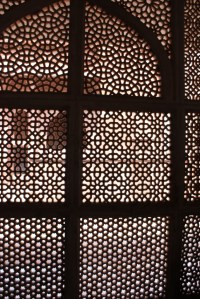
like the jaali at the Tomb of Akbar the Great

patterns overwrite blank spaces

this reality hates the mundane


and how can that machine be so loud?

a motorcycle rode through my brain from fifty feet away

down on a street somewhere below


there’s a switch

i can’t see it

nor can i touch it

it’s somewhere in my brain

and i can flip it

and it zaps me into a reality, still and banal

that fades into pulsing closeness and periodic sound floods

as soon as i love the mundane an instant too long

BOOK REVIEW: Careless Whispers: Pritish Nandy Recreates the Best of Sanskrit Love Poetry

Careless Whispers: Pritish Nandy Recreates the Best of Sanskrit Love PoetryCareless Whispers: Pritish Nandy Recreates the Best of Sanskrit Love Poetry by Pritish Nandy
My rating: 4 of 5 stars


This is the third in a series of [at least] three short, illustrated collections of love poetry. As with the others in the series, the poems are said to be based upon the work of historical poets though not – strictly speaking – translations of these poets’ work. The books were release in 1994 by Rupa & Co. with the sub-subtitle of “Classic India: Images of Love.” This book is different from the preceding volumes in a couple of ways that result in it having a different feel. First, the poems anthologize from the works of various poets rather than having a single inspiration. Second, they changed artists, and the artwork bears little resemblance to the previous volumes except with respect to being erotic in subject matter.

The book begins with a short introduction by Nandy that seeks to both introduce the reader to the anthology which serves as the basis for the poems included, as well as to explain that the poems are not translations but rather work with the gist of that poet’s verse to create new works, and why he took that approach. The source matter is said to have been originally anthologized by a Bengali Buddhist scholar named Vidyakara.

Beyond the introduction, the 50-ish pages are covered with poems and black and white line drawings. The poems are sparse free verse poems. Unlike the previous collections, it is quite clear where one poem begins and the next ends because these are attributed to different authors.

The artist who did the drawings is M. F. Husain. The drawings are not only monochrome, but are more crudely drawn and stylistic. (I’m not suggesting the artist is less skillful. They may well be purposely cruder, intending to reflect a historical artistic style rather than being modernistic like the previous volumes. The previous volumes’ art was very 1980’s.)

Despite the campiness of the titles, which are based on American pop tunes or romantic pop culture references, these books have insightful moments amid language that can sometimes drip with cliché and bland – if lustful — imagery.

If you read love poetry and run across a copy of this book, it’s worth a read.

View all my reviews

BOOK REVIEW: Unchained Melody: Pritish Nandy Rediscovers the Love Poems of Amaru

Unchained Melody: Pritish Nandy Rediscovers the Love Poems of AmaruUnchained Melody: Pritish Nandy Rediscovers the Love Poems of Amaru by Pritish Nandy
My rating: 4 of 5 stars


This is the second in a series of [at least] three short, illustrated collections of love poetry. As with the others in the series, the poems are said to be based upon the work of historical poets (in this case, Amaru) though not – strictly speaking – translations of their work. The books were release in 1994 by Rupa & Co. with the sub-subtitle of “Classic India: Images of Love.”

The book begins with a short introduction by Nandy that seeks to both introduce the reader to Amaru and to explain that the poems are not translations but rather work with the gist of that poet’s verse to create new works, and why he took that approach. Amaru was a Sixth Century poet and anthologist. As for why Nandy rewrote, rather than translating from the Sanskrit, he offers an Italian quote that says that poetry translations are like women, “the more beautiful, the more unfaithful.”

Beyond the introduction, the 50-ish pages are covered with poems and colorful drawings. The poems are sparse free verse poems, and it’s not always clear where one is meant to begin and another end. Because the topic throughout is love, sex, and romance, and the imagery thereof, the poems often flow together — whether that was intended or not is not clear. One can choose to read them as short pieces or as a longer flowing pieces.

The artist who did color drawings (the look to be colored pencil drawings) is Samir Mondal. The plates are always erotic, sometimes symbolically so, but in most cases explicitly so – involving nude figures or sensuous lips.

Despite the campiness of the titles, which are based on American pop tunes or romantic pop culture references, these books have insightful moments amid language that can sometimes drip with cliche and bland – if lustful — imagery.

If you read love poetry and run across a copy of this book, it’s worth a read.

View all my reviews

BOOK REVIEW: Untamed Heart: Pritish Nandy Rediscovers the Love Poems of Bhartrhari

Untamed Heart: Pritish Nandy Rediscovers the Love Poems of BhartrhariUntamed Heart: Pritish Nandy Rediscovers the Love Poems of Bhartrhari by Pritish Nandy
My rating: 4 of 5 stars


This is the first in a series of [at least] three short, illustrated collections of love poetry. As with the others in the series, the poems are said to be based upon the work of historical poets (in this case, Bhartrhari) though not – strictly speaking – translations of their work. The books were release in 1994 by Rupa & Co. with the sub-subtitle of “Classic India: Images of Love.”

The book begins with a short introduction by Nandy that seeks to both introduce the reader to Bhartrhari and to explain that the poems are not translations but rather work with the gist of that poet’s verse to create new works, and why he took that approach.

Beyond the introduction, the 50-ish pages are covered with poems and colorful drawings. The poems are sparse free verse poems, and it’s not always clear where one is meant to begin and another end. Because the topic throughout is love, sex, and romance, and the imagery thereof, the poems often flow together — whether that was intended or not is not clear.

The artist who did color drawings (the look to be colored pencil drawings) is Samir Mondal. The plates are always erotic, sometimes symbolically so, but in most cases explicitly so – involving nude figures or sensuous lips.

Despite the campiness of the titles, which are based on American pop tunes (except this one which appears to be taken from an American romantic comedy film), these books have insightful moments amid language that can sometimes drip with cliche and bland – if lustful — imagery.

If you read love poetry and run across a copy of this book, it’s worth a read.

View all my reviews

Sea Haiku


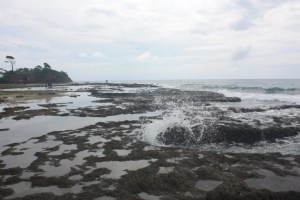
liquid metal
shape-shifting silver seas
ribbed and rippling


tiny crabs
writing alien script
high tides erase


turquoise water
bound by brown patches
a tidal maze


tiny limpid fish
braver than your bigger peers
drifting as they dart


tsunami swamped
moments under water
forever changed