
painted skies
make mountains puny
by contrast
in thin air
poor sleep paid in
grand skies
Pangong Tso
seen as by the prisoner
from Plato’s cave

painted skies
make mountains puny
by contrast
in thin air
poor sleep paid in
grand skies
Pangong Tso
seen as by the prisoner
from Plato’s cave
 How to Love a Country by Richard Blanco
My rating: 5 of 5 stars
Out March 26, 2019
This book takes one on a roller coaster ride of insight into the author’s relationship with his country as an immigrant from a family of Cuban exiles. At times the tone is hopeful and at other times seething or even vitriolic. Unlike many of the angry works of political verse of late, this one sometimes reflects that most beautiful of pragmatic truths: one can’t truly love anything if one can’t embrace it imperfections and all. As it happens, this wide sway in tone is partly the result of these poems being collected from various sources. Having a poem commissioned by the State Department in a collection with a poem that was a response to a news story about someone being gunned down is bound to result in some variation in feel. Still, I think the poems were well-organized to reflect the various trials and glories one goes through in a relationship. The angry verse is well-positioned toward the middle, and about the time I was over the rage, the storm clouds began to break up and a more beautiful scene unfolded.
The poems are prose poetry or free verse. There is beautiful use of language interspersed with plain-spoken verse.
I’d recommend this collection for poetry readers. I don’t suspect it will have a particularly wide audience. A jingoistic reader who picks it up for its title will drop it like a hot rock long before getting to the aforementioned angry plateau. Which is not to say that there isn’t something to be gained from reading this book even if it doesn’t comport with one’s own views. The issue of division along fault lines of political-philosophy is a major theme of this collection.
trunk bent at a right angle
and leaning to the south
yet, that tree shows no struggle
every second — day and night
gravity summons it to the ground
it’s survived more than a few monsoons
puddles and soggy soil
have conspired with gravity
the wind has conspired
climbing animals have conspired
alighting hawks and crows have conspired
the boy who crawled out the horizontal limb and swung conspired
for years they have conspired
but the tree rarely so much as trembles
it’s doomed, but that knowledge holds no sway
and when i sit,
centered to thwart gravity,
i still feel the dogged pull
though its only conspirator is
my mind

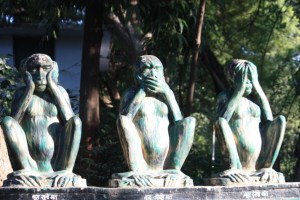
some will speak of loneliness
like a knife tip stuck in bone
some will tell their fever dreams,
that summer they had no home
some have never walked barefoot
through streets strewn with broken glass
but yet they still found themselves
waking, rolled in fresh mown grass
if you gave them each one wish
some would wish it never was
others wish they hadn’t been seen
but see he who saves it “just because”

a flower
became the pivot
of my mind
thoughts form,
float ephemerally,
then burst
quiet came
my mind wordless
as pictures gel
feel emotion,
but don’t ever feed
that old goat
perfectionist?
the perfect can’t be loved,
only vied for
 William Blake: A Selection of Poems and Letters by Jacob Bronowski
My rating: 5 of 5 stars
This is a selection of poems and letters by William Blake. The poetry includes several of Blake’s collections in their entirety, including: “Songs of Innocence,” “Songs of Experience,” “The Everlasting Gospel,” “The Book of Thel,” “The Marriage of Heaven and Hell,” “America,” and “The Song of Los.” Additionally, it includes selections from Blake’s “Poetical Sketches 1783,” “MSS c. 1793,” “MSS c. 1803,” “MSS c. 1810,” “The Four Zoas,” “Milton,” “Jerusalem,” and “The Gates of Paradise.”
This selection gives the reader all of Blake’s most well-known and beloved works in the form of “The Songs of Innocence and Experience” and “The Marriage of Heaven and Hell.” The former presenting the short and lyrical poems such as: “The Lamb,” “The Little Black Boy,” “The Tyger,” and “A Little Boy Lost.” The latter best voicing Blake’s philosophy, which was spiritual but yet ran afoul of the zeitgeist by rejecting the morality of the day – particularly as regards sexuality and relationships. In truth, Blake was considered a madman by many of his contemporaries. At this point, it’s hard to know the degree to which he was truly insane versus just in conflict with the prevailing mode of thought. I’ve read that Blake’s biographies (particularly Chesterton) heavily overplays the insanity angle. It should be noted that Blake was also a painter, and his images – which are in some cases nightmare fodder – probably helped establish his lunatic status. Still, his poetry reads much less objectionably to the modern ear [possibly why Blake was one of those poets who was not well-known or well-read during his lifetime, but rather gained a major following after he was deceased.]
Most of the works that are merely sampled from are collectively called “Blake’s prophetic works” – e.g. “The Four Zoas,” “Milton,” and “Jerusalem.” These are epic poems expressing a mythology developed by Blake. For most readers, sampling these works will prove sufficient. The prophetic works involve many characters and an unfamiliar mythological base (i.e. as opposed to reading Norse or Greek mythology for which the educated reader likely has some helpful background.) In their day, the prophetic works were considered nonsensical, but more recent scholars and reviewers tend to look upon these poems in a kindlier fashion. At any rate, the select chapters aren’t enough to give the reader a flow of the story, but rather merely a taste of the language and tone of the works.
The letters number fewer than twenty, and include thank you notes and explanations of the drama going on in Blake’s life at the time. Ordinarily, I would consider the inclusion of these documents mere padding, but I’m more fascinated by Blake as a person than I am many other poets and so the letters do shed a little light on Blake as a man. Still, because one is only getting snippets of information and all from Blake’s side, the insight offered by the letters is quite limited. In my opinion, the editor should have either left the letters out or heavily footnoted them to provide background context to make sense out of them.
I’d recommend this book. I think the editor’s selection strikes the right balance in excerpting the prophetic works. I think most readers can skip the letters, unless one has a major fascination with Blake.

I know you best by the gray of your winters
when road salt coats the sidewalks
and a witch of wind rides down the Danube
whistling around pedestrians on your broad bridges
— except there are no pedestrians
— save for me —
river crossers huddle in yellow trams
or pack into the Metro that rolls under the river
I know your beauty can be unsullied
I’ve seen a Budapest in bloom,
under blue skies and cotton clouds
But your gray days lend a distinguished air
a melancholic miracle is birthed from gloom
a sweep of story,
a piece of poetry,
that would move a stoic to tears
And escape is always close at hand
for Kürtőskalács fires sunshine in my mind

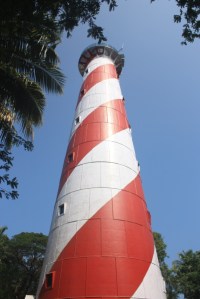 it’s a lighthouse in the wilderness
shining a spray of consciousness
over all that is surveyed
experiencing the world through a window
framed by this meat machine,
which is optimized for chasing down prey
over long stretches of African savanna
maybe there is so much more
as so many boldly claim to know
but neither they nor i have the mechanism to know it
— even if we have a masterpiece mechanism for believing it —
so, i’ll not yet extend my footings into the darkness
 Prussian Nights: A Poem by Aleksandr Solzhenitsyn
My rating: 5 of 5 stars
This long-form narrative poem tells a tale of inhumanity in the Soviet advance toward Germany during the Second World War. The narrator is a run-of-the-mill soldier who witnesses rape and murder by his comrades. Solzhenitsyn was a young officer in the military during the war, and it’s probable that the story of the poem draws from his real-world experience during the war. It’s said that he composed and memorized the poem while he was in the Gulag.
While the poem’s story focuses on violence and inhumanity perpetrated by some soldiers, it isn’t particularly graphic in its description. Rather, the author sets up scenes and leaves it to the reader’s imagination to fill in the blanks. It’s also true that in some cases the narrator is witnessing the aftermath of violence and not the act itself. It’s not a pretty story, but readers needn’t be concerned it will be gratuitously graphic.
While the translator chose to stick to rhyming verse, the poem is quite readable. The story is told in a straightforward fashion. Many will find this appealing because the readability is high. However, others may find the lack of metaphor and poetic approaches to language to make for unappealing poetry. There’s not a lot of symbolism and the meanings seem quite literal. That said, the imagery is often vivid and evocative, and the metered verse reads smoothly and lyrically.
The book has a feature that I like, which is the original [Russian] is on the left-hand page with the English translation, produced by Robert Conquest, on the right. The translation didn’t come in greatly useful for me. I had two years of Russian back in college, but that was a long time ago and I read Cyrillic with the unconfident stammer of a first grader. Still, it’s interesting to get a taste of the original.
I’d recommend this book, regardless of whether one is a poetry reader. The story can be read as just that, a story, and it offers insight into the ugly inhumanity too often set free in the act of warring.

of egg coffee and banh mi
to rocky islands in the sea
tiny, tidy market stalls
to the mammoth shopping malls
once a town in ruin and rubble
I saw not an ounce of past troubles
maybe a bullet-pocked citadel
though it be true that war is hell
it’s also a terrible liar
as if the world could be remade through blood and fire.


