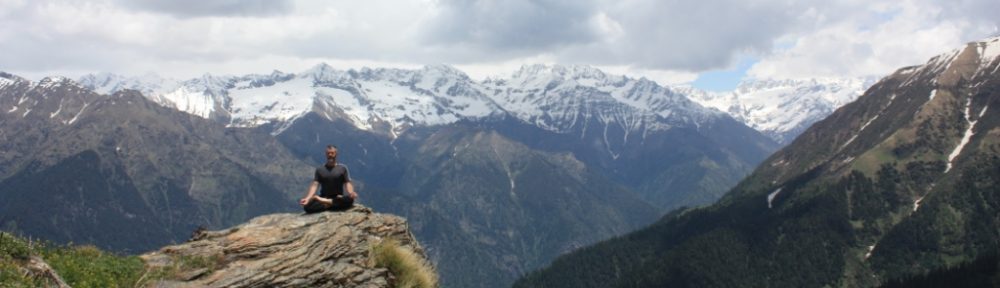
circling hawk glides
I’m glad it’s not a vulture
I must be alive
still lake reflecting
a mountainous lay of land
hiding fish below
hissing wind gusting
through narrow leaves of bamboo
calling to no one
circling hawk glides
I’m glad it’s not a vulture
I must be alive
still lake reflecting
a mountainous lay of land
hiding fish below
hissing wind gusting
through narrow leaves of bamboo
calling to no one
 Clouds chugged landward
Smothering a festive town
In a dense, gray cloak
Dreary days have come
Reminding me of Britain,
the long nightless nights
Drizzle piddles down
Dimpling the sidewalk sheen
With random ripples
I am a string of MEs
Strung out through eternity
But each eternity will die
Leaving in place another I
An I, a me, standing before the sea
Forget what I said about eternity
I am a finite speck of sand
Pushed and dragged by an unseen hand
Crack the speck, the TARDIS of Who
I’m every creature in the zoo
Every beast with limb and lung
Residing in every land far-flung
You think you know me? You know me not
I’ve not known me since I was just a tot
So I’ll thank you not to spoil my investigation
By classifying me by creed or nation
Kicked, I tip over the lip, and plummet down a well.
Falling, falling, screaming, and calling, toward the firelake of hell?
Thrashing and lashing, I hit the drink splashing, and sink to the inky deep.
Kicking and stroking, sputtering and choking, I claw at the well wall so steep.
Treading water, I curse the kicking rotter, who sentenced me too this fate.
Taking note, I consider what floats, and jettison my anger, fear, and hate.
They’ll just weigh me down, cause me to drown, and not on my side is the time.
There is no try, nothing but do or die, my only course is to climb.
My rating: 5 of 5 stars
It’s for good reason that this is considered one of the greatest poems of the 20th century. Eliot’s vivid verse paints a bleak landscape in language of beauty not seen in the poem’s imagery. It will come as no surprise that this work was penned during a dark time in the poet’s life, but it wasn’t just Eliot’s personal dark hour; for many, the wounds of World War I hadn’t yet scarred over.
This poem is divided into five sections, each with an artful title. The five sections of The Waste Land are: “The Burial of the Dead”, “A Game of Chess”, “The Fire Sermon”, “Death by Water”, and “What the Thunder Said.” Some consider The Waste Land to be a collection of five poems, but there is both language and theme that connects the various parts. For example, the following verse is contained in both the first and third chapter:
Unreal City,
Under the brown fog…
The poem contains many complex references to Arthurian legends and to a broad swath of literary canon. You can learn about that from individuals more erudite than I. I will suggest a simpler theme, and that is death—not just death, but death as an eraser of legacies and influence. Eliot refers to bone almost as much as he does death, and by the time one’s body is reduced to bones one’s influence on the land of the living is minimal—even for giants among men. When he’s not speaking of bones, he’s speaking of death of masses, also a form of anonymous death.
I will pick a few lines from each of the five sections to illustrate my point.
From “The Burial of the Dead”:
Unreal City,
Under the brown fog of a winter dawn
A crowd flowed over the London Bridge, so many,
I had not thought death had undone so many
From “A Game of Chess”:
I think we are in rat’s alley
Where the dead men lost their bones
From “The Fire Sermon”:
White bodies naked on the low damp ground
And bones cast in a little low dry garret
Rattled by the rat’s foot only, year to year.
From “Death by Water”:
A current under sea
Picked his bones in whispers
From “What the Thunder Said”:
After the agony in stony places
The shouting and the crying
Prison and palace and reverberation
Of thunder of spring over distant mountains
He who was living is long dead
We who were living are now dying
With little patience
I’m not saying that Eliot’s views on death and dying are great from a philosophical or psychological perspective—on the contrary, but as a work of poetry these words should be read by all.
Neither the version linked to in GoodReads nor on Amazon is the version I read. As far as I could tell by way of a hasty search, the Kindle edition I read no longer exists.
 The 20th Century in Poetry by Michael Hulse
My rating: 4 of 5 stars
The 20th Century in Poetry is an anthology of over 400 poems written in the 20th century that take (often tenuously or symbolically) historical events as their prevailing theme. The poets included in this collection range from household names to those who’ll be well-known only to poetry lovers to a few obscure choices. Among the more famous poets included are: Rudyard Kipling, A.E. Housman, James Joyce, W.B. Yeats, D.H. Lawrence, Ezra Pound, Robert Frost, Carl Sandburg, T.S. Eliot, Langston Hughes, William Carlos Williams, A.A. Milne, Countee Cullen, Edna St. Vincent Millay, W.H. Auden, e.e. cummings, Dylan Thomas, Allen Ginsberg, Bob Dylan, Sylvia Plath, John Updike, Chinua Achele, Robert Penn Warren, and Seamus Heaney.
Read the title carefully, this isn’t a collection of the best or most popular poems of the 20th century. Many of the works included aren’t even among the best known works of poet authoring them—though there are a few exceptions (e.g. William Carlos Williams’ Red Wheel Borrow and Dylan Thomas’ Do not go gentle into that good night.) Having “clarified” this point, one should note that many of the poems aren’t written about 20th century events. In other words, they’re all written in the 20th century, and they’re mostly about (or around) historical happenings, but sometimes those happenings are from a much earlier time period. However, the editors could well argue that the decision to reflect back on ancient events at that particular time speaks to perceived corollaries in the contemporary era.
I remember reading the reviews on Amazon for this book when I was considering whether to purchase it. The few reviews were overwhelmingly positive, but there was one negative review. Now usually when there’s one negative review and several positive ones, one can dismiss the negative review as that of a curmudgeon—the same person who returns his or her steak three times because the cook can’t get it within one minute and half-a-degree of what that person has determined is the ideal state of cookedness. However, I gave this negative review the benefit of the doubt and read it. What I found was a well-reasoned and uncurmudgeonly explanation of why that person didn’t like the anthology. Still, I dismissed the review and bought it. While I’m glad I did, I can see that reviewer’s point.
What was said critique? It was that the entire anthology was bleak and depressing. At the time of purchase, I shrugged that off. It’s poetry. Of course, it leans to the dark and morose. Poets aren’t generally known for their cheery dispositions (Augden Nash, Dr. Seuss, and Shel Silverstein notwithstanding—and, of course, none of those individuals’ works is in this book.) There are times when the doom and gloom obviously strikes the right tone (e.g. poems about the Depression, the World Wars, and various genocidal atrocities.) However, the 20th century was not all war and holocaust; it was also a time of great advancements in science, technology, and quality of life. But even the best times of the 20th century are painted depressingly in this collection. To give an example, there are three poems about the moon landing and they all come across as works of petty douchebags. (I suppose the underlying sentiment was, “Why are we spending millions going to the moon when there are poets who can’t make a decent living moping about and painting word pictures of the world as seen through shit-colored glasses.)
As this book is proclaimed as an attempt to capture the history of an entire century through poetry, it’s worth pointing out that this is clearly an English language centric view of history. To be fair, the editors do go to lengths to include poems from both Indian (i.e. South Asian Indian) and African poets whose works were published in English.
The poems are arranged in 7 chronological parts: 1900-1914, 1915-1922, 1923-1939, 1940-1945, 1946-1968, 1969-1988, and 1989-2000. Anybody remotely familiar with the history of the 20th century should be able to tell what world events drove this particular delineation of timeframes. For readers who aren’t history buffs, one nice feature is that each part begins with a prose discussion of world events during said era.
I would recommend this book to individuals interested in poetry as long as they don’t currently suffer from depressive disorders.
Caught in a midnight neon glow
Neurons firing in slo-mo
As blue and red dance on the wall
I felt the footsteps in the hall
A jagged game of cat and mouse
Ends, spied by a mattress louse
An ominous knock near at hand
Me, without the will to stand
This story started days ago
Me, without a need to know
Just a lackey in a suit
Who took a case from a coot
What’s in the case? You want to know?
Oh, they’re here. It’s time to go…
Chasm, toes curled over the edge,
seeking a simian grip.
But they are the piggies of a
little girl:
-bare feet
-rosy cheeked
She stands before a gaping maw
ripped in the world.
Staring vacantly,
eyes unable to penetrate the cloud.
She rubs her eyes with tiny fists.
The ashes will fall soon,
drifting to Earth like gray snow,
piling up in tomb-like silence.

I.
How thrilling to learn
without delay
that now was to be
your laundry day.
Oh, how I waited
with bated breath
to hear if you’d hit
wash-day sudden death
Your posts banal?
Who would think?
You took us to
the wash-day brink…
never knowing if there’d be a Boxer Rebellion or a Brazilian Thong Crisis!
II.
“It’s Complicated”
are two words
often posted
but never heard
amid the complication.
1 + 1, easy as pie.
Calculus is “complicated.”
Are you in wedlock?
Or have you dated?
Is she human…oid?
It begs the question,
can a complication read
the words typed on
your daily feed,
and solve for x?
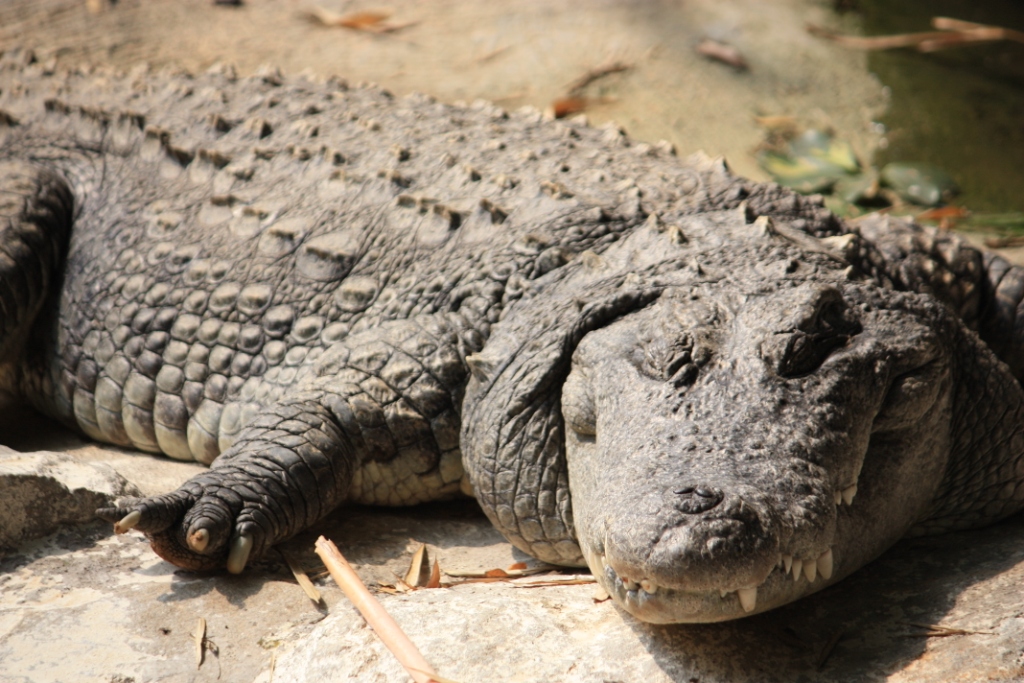
Taken in November of 2013 at the Mysore Zoo
There is no smile
worn by a crocodile,
that’ll induce me to pet him.
There’s no grin,
neither wide nor thin,
that extends my treasured limb.
Save your beaming.
It looks scheming.
“No, I won’t go for a swim.”