BOOK REVIEW: Murderous Minds by Dean A. Haycock

Murderous Minds: Exploring the Criminal Psychopathic Brain: Neurological Imaging and the Manifestation of EvilMurderous Minds: Exploring the Criminal Psychopathic Brain: Neurological Imaging and the Manifestation of Evil by Dean A. Haycock
My rating: 4 of 5 stars

Amazon page


This book examines what neuroscience can tell us about the psychopathic mind, and how that compares to what other disciplines – such as psychology and genetics – have been telling us. This is no simple task because there remains a great deal of disagreement about what psychopathy is and how it relates to other behavioral conditions, like sociopathy.

The book begins with front matter (a Preface and an Introduction) that sets the stage for a reader who may have only a vague and Hollywood-inspired notion of what psychopathy is and who may confuse it with any number of psychiatric conditions.

Chapter 1 builds intrigue and offers a narrative introduction to psychopathy by telling the story of the architects of the Columbine shooting, Dylan Klebold and Eric Harris. The Columbine shooting gives the reader an ability to compare and contrast, because the two shooters had quite different psychological profiles. The chapter also uses the case of Jared Loughner, a Tucson shooter who killed or wounded almost twenty people – most famously Congressional Representative Gabrielle Giffords.

Chapter 2 dives into the controversial questions of what a psychopath is, how effectively can psychopathy be measured, and how it compares to conditions that have the same or similar symptoms. The obvious point of comparison is Sociopathy, about which a controversy remains as to whether it’s a distinct condition. However, the more interesting comparison is to “Kunlangeta,” which is a term from an Inuit tribe. The Kunlangeta – psychopathy comparison gets to the fact that aberrant behavior isn’t new. It’s just how these actions are viewed and responded to that has changed.

Chapter 3 describes the strengths and limitations of brain imaging as a tool for understanding the psychopath. We find that neuro-imaging has revealed tendencies – notably a reduction of gray matter in parts of the frontal and temporal cortex. However, we also discover that there remains much to be learned.

Chapter 4 is entitled “A Problem Behind the Forehead” and it continues the discussion of the neurological connection to psychopathy – particularly by considering the case of Jim Fallon (the neuroscientist who stumbled onto the fact that he had the brain of a psychopath — not to be confused with the late night talk show host.) The consideration of Fallon’s case foreshadows a discussion that is detailed in Chapter 8 about psychopaths who function just fine in society and who don’t kill people with axes.

Chapter 5 examines competing explanations for psychopathy that are more likely to be complementary to neuroscience than competitors – notably genetics and childhood abuse. This chapter highlights the fact that criminal psychopathy has complex causes and there is as of yet no single silver bullet that links to psychopathic behavior.

The idea in chapter 5 leads nicely into the next chapter (ch. 6) which considers to what degree we have enough (or will ever have enough) information to be able to predict who is likely to engage in bad behavior. Is a real world “Minority Report” scenario likely in which someday we’ll be able to know who’s going to commit violent felonies before they do (at least for some cases.)

Chapter 7 explores the most notable symptoms of psychopathic behavior, including the inability to empathize and a lack of fear.

Chapter 8, as mentioned, explores the fact that not everyone who has psychopathic traits runs afoul of the law. In fact, many lead productive lives running companies or performing surgeries.

The next two chapters reflect upon questions that may be of great interest to readers. Chapter 9 asks whether one can become a psychopath late in life. In other words, once one has lived out an abuse-free childhood, grown a fully developed brain, and reached an age where the relevant genes have or haven’t flipped on is one safe? Or, is there some way – an injury or ailment, perhaps – that one might become the victim of adult-onset psychopathy? The penultimate chapter asks whether one’s child might be a psychopath in the making.

The last chapter discusses how criminal justice works if it turns out that at least some individuals commit crimes because they got a bad brain. While there may be controversies over the death penalty, most people feel at ease with harsh sentencing and with locking convicted criminals away for life. However, if some individuals had no choice but to do what they did by virtue of a brain defect, it’s much harder to be confident one has taken a fair and reasonable course of action.

There’s a brief epilogue which presents a common fixture in science books: the scholarly rant about how the field is underfunded.

The book has a number of color and black-and-white graphics including photos, diagrams, brain scans, and brain cross-section pictures. There’s a recommended reading section in addition to the bibliographic notes. I read the Kindle version of the book, and it had excellent hyperlinks for the notes as well as in the index.

I’d recommend this book for anyone who is interested in the question of the degree to which brains determine who engages in criminally aberrant behavior. The author uses stories of famous cases of psychopathy to present a book that is very readable and doesn’t get lost in scientific minutiae. It’s a quick and fascinating read.

View all my reviews

BOOK REVIEW: The Like Switch by Jack Schafer

The Like Switch: An Ex-FBI Agent's Guide to Influencing, Attracting, and Winning People OverThe Like Switch: An Ex-FBI Agent’s Guide to Influencing, Attracting, and Winning People Over by Jack Schafer
My rating: 4 of 5 stars

Amazon page


Written by a former FBI behavior analyst, this book presents tips on how to build rapport — be it with a co-worker, a love interest, or the subject of an interrogation. There’s not a lot of material in this book that’s surprising or unexpected, but the stories of counter-intelligence operations and criminal investigations make for greater intrigue than the typical book of this nature. (Though the most common type of story in it may be the tale of “how I got a free upgrade from an airline employee,” and that’s probably not that different from what one would read in a similar book by a corporate trainer with a more mundane resume.)

One aspect of this book that did seem unique was how much discussion is given to laying the groundwork of a friendship. Schafer emphasizes the need for patience, and he uses an example of cultivating a spy that involved a Special Agent placing himself in proximity to a target day after day before he ever exchanged so much as eye contact, let alone speaking. Interestingly, the epilogue shares a similar story from a historical memoir that shows both how effective these tactics are and how long they’ve been around. I wouldn’t be surprised if a civilian expert on these issues would say, “that’s fine if you need an ultra-light hand to cultivate a spy, but the same tactics may be a little too glacial for finding a mate or building a customer base. Personally, I don’t know how well Schafer’s approach translates to the work-a-day world, but I can imagine that if one parked oneself along a potential love interest’s route for week after week they might form the opinion one is either spineless or a stalker long before one got a chance to share eye contact.

The book consists of eight chapters, plus some front and back matter. The first chapter, entitled “The Friendship Formula,” sets out some banal concepts about the need to put oneself in proximity with one’s “target,” and then to build the frequency, duration, and intensity of said proximity events. However, it goes on to introduce some of the fundamentals that are elaborated upon later.

Chapter two focuses on pre-conversational activities. This largely involves non-verbal facial expressions and body language, but it also gets into issues such as appearance. Chapter three is about a central concept that Schafer calls “the golden rule of friendship,” which is basically the idea that people like individuals who make them feel good about themselves. Of course, people may distrust flatterers, and so the direct approach may not always be the best approach. The chapter therefore addresses pitfalls as well as sound tactics.

Chapter four is about what the author calls “the laws of attraction,” which are a series of ideas used to get the subject to look at one in a favorable light while avoiding the pitfalls of being too ham-handed. These are just ways to seem more appealing, often by capitalizing on (or making clear) existing causes for the individual to like one. But sometimes they involve deck-stacking activities such as in the case of “the law of misattribution.” In misattribution one shows up when an individual has been exercising so that maybe he or she will mistake the exercise-induced endorphin high for positive feelings towards one. There is a mix of ethical and exploitative approaches, and some ideas that might be of benefit for gaining a temporary upper-hand with someone one doesn’t have any long-term concern about might not be wise to employ with someone with which one might want a long-term relationship.

Chapter five is where one gets around to talking to the target of one’s desired rapport. As with the preceding chapters, this is as much about what not to say as it is what to say, but the single biggest point is to do more listening than talking. That is, give the target plenty of opportunity to talk about his- or herself and be cognizant of what they are saying, rather than preparing one’s own words. This is easier said than done given all that one must keep in mind, and the non-verbal cues one is watching for, etc.

Chapter six returns to non-verbal communication territory, and emphasizes testing one’s efforts to build rapport while simultaneously noticing the signs of whether it’s going well or not. This allows one to adjust one’s strategy (or to know it’s time to give up.)

Chapters seven and eight include material that one won’t necessarily see in competing books. Chapter seven is about maintaining the relationship that one has established. A lot of this chapter is about conversational strategies for defusing tense situations, lessening the friction in the relationship, and getting what one wants without building animosity. The last chapter takes one into really different territory by discussing on-line relationships and the building thereof. In large part, this chapter is a cautionary tale of the risks of entering a relationship given the lack of all the non-verbal cues. There are several cases of how individuals managed to portray themselves as something they weren’t.

I found this book interesting and beneficial. Its strengths include a tight focus; it doesn’t blast one with information by fire-hose, but rather offers a few simple ideas to focus on and hammers them home. The organization was logical, basically building up over the course of a relationship / interaction from being in proximity to making eye contact to conversing to weathering an argument. I also found that the book used photographs effectively. Non-verbal communication is much more effectively and efficiently communicated by photograph, and the author used many color photographs for this purpose. There was even a series of plates that acted as a quiz, asking the reader to put the knowledge she’d acquired to use, with an Appendix serving as the quiz key.

I should mention that some jerk tactics are scattered throughout the book – by that I mean approaches designed to dupe and / or manipulate the target. These may be fair game for interrogating criminal suspects or terrorists but some could backfire upon one when put to use in a relationship that demands more trust. Usually, the author isolates himself from these tactics by telling us it was something his student or a suspect once mentioned. For example, he describes pickup artists going to an ATM kiosk, plucking up receipts showing large balances, and then using said receipts when it came time to give a girl his number as a means to subtly plant the lie that he was wealthy. Mostly, the book seemed to separate itself from the many “how to be a successful creep” books that are out there, as is noted by the chapter on fostering long-term relationships.

I’d recommend this book for anyone interested in the dynamics of building relationships.

View all my reviews

BOOK REVIEW: Messy by Tim Harford

Messy: The Power of Disorder to Transform Our LivesMessy: The Power of Disorder to Transform Our Lives by Tim Harford
My rating: 4 of 5 stars

Amazon page


The book’s premise is simple: being neat and tidy isn’t the great virtue you’ve been led to believe, and being messy isn’t inherently a vice. Over nine chapters, Harford explores the various dimensions in which our impulse to toward tidiness can get in our way, and for which a little messiness might be the cure. Each chapter uses a central story or two as exemplars, with other stories and anecdotes providing support.

The book’s introduction sets up the idea by describing a famous concert in Köln (Cologne) by Kieth Jarrett in which the pianist reluctantly agreed to play the concert on a sub-par piano, and (it’s argued because of the limitations of that instrument) went on to produce the best-selling solo jazz album. This tale sets up chapter one, which focuses on creativity, nicely. Creativity may be explicitly the topic of chapter one, but it’s a concept that cuts across the entirety of the book. Tidiness – it is argued — is antagonistic to creativity. In the first chapter, Harford describes how David Bowie partnered up with Brian Eno, and how Eno’s “oblique strategies” – while they annoyed the musicians to no end by throwing monkey wrenches into the act of making music – were highly successful in producing a unique sound.

Chapter two discusses collaboration, which always makes a mess. Central to this chapter is a discussion of the Hungarian mathematician Paul Erdős and the famous Erdős number that virtually all scholars are familiar with — at least those in who work in math, science, engineering, and other disciplines with a quantitative bent. It’s sort of a Kevin Bacon six-degrees-of-separation for those who make mathematics. The number describes how far removed one is from having a paper penned with this notoriously prolific mathematician (co-authored, one removed co-author, etc.,) and everyone publishing quantitative / mathematical scholarship desired a low number. The point made by Harford wasn’t just that collaboration in general is messy, but that working with Erdős, specifically, was, and it required collaborators to adjust to his peculiar, professorial ways.

Chapter three explores how tidy workplaces sometimes hinder productivity. The central case is MIT’s Building 20, which was popped up in record time to meet a wartime demand. The building housed a disproportionate amount of world-class science and engineering, and it’s argued that this was in part because its poor design put random people together on long walks to exits or toilets, and in part because – since it was a hideous monstrosity of a building – no one cared if its labs and offices were a mess or not.

Chapter four delves into the value of mess in improvisation. Of course, Jazz is revisited in this chapter, but the lead story is Martin Luther King Jr.’s most famous speech and how it came out of being forced by circumstance to abandon his usual process of extensive preparation and editing. Chapter five describes messy tactics as winning strategies. Erwin Rommel’s success by disruption and chaos creation is at the heart of this chapter as is the development of Britain’s SAS which sometimes beat Rommel at his own game by using a similar approach using smaller, more agile, and more elite forces. There is also an extensive discussion of how Amazon went from humble beginnings to being the 800 pound gorilla of online shopping.

The sixth chapter investigates the role of incentives. For an economist, this is a fascinating topic as the key to understanding economic behavior is usually to follow the incentives. Of course, unintended consequences often go hand in hand with attempts to produce / manipulate incentives. Much of this chapter describes how attempts to tie up loose ends through regulation have ended up generating worse outcomes than could ever have been anticipated.

The next chapter (ch. 7) is about automation, which could be seen as an attempt to clean up messy activities. Harford discusses the situation with self-driving cars, which it’s hoped will help to make highways safer. However, the case he concentrates on is that of flight Air France 447, which went down in part because its inexperienced pilot at the helm couldn’t cope when the fly-by-wire system designed to anticipate and smooth the pilot’s inputs into the controls suddenly went off-line. In other words, the junior pilot wasn’t used to flying messy.

Chapter 8 is about resilience, and here the author challenges the age-old economic notion that specialization always results in greater productivity. Harford suggests that diversity and intermixing of activities and people – rather than specialization and homogenization – often results in a better outcome. The final chapter takes a wider view at how being messy can help one in life. The author spends a great deal of space to the question of how on-line dating services do such a poor job – spoiler alert – they try to make the messy process of finding a soul mate neat and tidy.

The book has citations and end-notes. In the Kindle edition, these notes are hyperlinked for ease of use. There are no graphics, but they aren’t missed.

I enjoyed reading this book and found it to offer many fascinating cases. I will say, as I was reading these well-researched and interestingly described cases, I sometimes had to think hard (maybe do some mental gymnastics) to make the connection between the case at hand and the book’s central theme – leaving me to wonder if I was missing something or whether there wasn’t some shoe-horning of interesting anecdotes into the book to produce a work that was more about being interesting than about proving a particular point. That said, I would recommend the book, particularly for anyone interested in increasing their creativity, productivity, or both.

View all my reviews

BOOK REVIEW: The Memory Illusion by Julia Shaw

The Memory Illusion: Remembering, Forgetting, and the Science of False MemoryThe Memory Illusion: Remembering, Forgetting, and the Science of False Memory by Julia Shaw
My rating: 4 of 5 stars

Amazon page


Julia Shaw is a psychologist who conducted research into whether (and how) false memories could be “planted” in a person’s mind – and not just any memories, but memories of having committed a crime that one actually didn’t. That research is fascinating, and I think it’s tremendously valuable given the disparity between how accurate people believe their memories are and how fallible they are in practice. This disparity has played a major role in many a miscarriage of justice with eye-witnesses historically being considered the gold standard of evidence in criminal trials. Of course, I’m also a bit uneasy about people learning the recipe for an optimal process of generating false memories as it has the taint of being MK Ultra-level nefarious. (Though it should be pointed out that subjects must be active – if unwitting – participants in creating these false memories, so “planting” memories is an oversimplification.) This book discusses Shaw’s research, but it’s more of an overview of science’s understanding of the limits of memory and how those limits conflict with our beliefs – at least about one’s own memory [we often recognize how fallible other people’s memories are.]

The book consists of ten chapters. Chapter one dives into to one of the most common occurrences of false memory, and that’s the claim by some people that they remember events from their infancy – if not their own birth. Shaw presents the evidence for why such memories aren’t possible. This sets up the whole subject nicely because one must ask how so many people can claim to remember events that are physiologically impossible for them to have remembered, and to frequently be right about most key details. No one is suggesting that such people are liars (not all – or even most — of them, anyway.)

Imagine a school-age child hearing a story about his or her life as a baby. Hearing said story triggers a visualization in this child’s mind, and that visualization might well be filed away in memory, but when that memory is recalled the person in question may not realize she is recalling her imagined image of a story and not the actual event itself. Herein lies the crux of false memory: 1.) anything one visualizes in detail might potentially be stored away and become undifferentiated from the experiencing of an event; 2.) when we recall a memory we are recalling the last time we remembered it and not the event directly, and this can lead to a disparity between the memory and the actual event as it gets tied up with what’s going on in one’s mind at the time.

Chapter two explores perception, and how flawed perceptions may become flawed or tarnished memories. Just as memory isn’t the direct recording of events that we often feel it is, perception isn’t a direct replication of the world but rather a model generated in the brain. Therefore, the limitations and inaccuracies of the mental model are the first line of deviation of memory from reality. Chapter three describes how the brain’s physiology and evolutionary biology produce limitations to our ability to remember – limitations in spite of which we could thrive in the world in which we evolved.

Chapter four begins a series of chapters that take on specific objections that will arise to the ideas about false memory presented in the early chapters. This chapter counters an anticipated objection about people who seem to have perfect memories. In other words, a reader might admit that most people’s memories are crap (and even that his own memory isn’t infallible,) but what about the people with Las Vegas stage shows or the Asperger savant who knows every phone number in the Manhattan White Pages? Surely, these rare cases disprove the general idea of how memory works. Shaw shows that none of these people have perfect memory. Some have spectacular autobiographical memory (memory for their own life events) and others are exceedingly skilled at using mnemonic devices to remember any facts, but they all have limits. There’s also a discussion of how an unusually perfect autobiographical memory is often more of a curse than a blessing. We forget for good reason.

Chapter five examines another common memory fallacy, which is that one can remember best by getting the middleman of the consciousness mind out of the way and feeding data directly into the subconscious. In other words, it takes on subliminal learning. You may be familiar with the idea from ads suggesting that you can learn French in a couple of weeks without cracking a book just by playing audio tracks in one’s sleep and letting oneself learn effortlessly. Like every program that promises growth without effort, this one is debunked. Studies suggest that if one sleeps during such nights, one won’t learn, and if one learns, one isn’t actually sleeping. In other words, learning requires one’s attention.

I will say, the book fell off the rails for me a bit during this chapter. As I wrote in a recent blog post about psychological concepts that even psychologists repeatedly get wrong, Shaw denies the existence of hypnotic trance state as an altered state of consciousness. However, it becomes clear she isn’t arguing against the scientific perspective of what hypnosis is (a physically relaxed but highly mentally attentive state) and is rather denying the misconceived popular notion that seems to involve a person (possibly wearing a glittery cape) taking control of another person’s mind and making them into a zombified drone. She writes in an odd, round-about fashion on this subject as well as the topic of brainwashing – for which she offers her own value-laden definition. I’m not so sure that she didn’t understand hypnosis as much as she wanted to make sure her work was thoroughly distanced from hypnosis and brainwashing. It seems just seems strange and a bit dubious that a scholar studying false memory wouldn’t be thoroughly familiar with the literature on suggestibility and the states of mind most associated with it, i.e. hypnosis. I can only imagine the hoops she had to go through to get her research design through an IRB. (IRB’s are review boards that make determinations about whether a research project is – among other things – ethically defensible. After a series of famous — and ethically questionable — studies by the likes of Stanley Milgram, Ewen Cameron, and Timothy Leary, to name a few, psychology has come under great scrutiny.)

Chapter six asks whywe believe our memories are so awesome despite all evidence to the contrary. This comes down to why most of us unjustifiably judge ourselves superior in most regards. As is true of drivers, almost every person thinks she is better than average in the realm of memory. This is important because it’s not so much that our memory is fallible that leads to problems but that it’s fallible while we think it’s perfect. Chapter seven challenges the belief that there are certain events that are indelibly etched into our brains such as (depending upon age) the Kennedy assassination, the Challenger explosion, or 9/11. Such memories were once considered “flash bulb” memories, perfect renderings of societally traumatic events carved into our synapses. However, once these memories started to be put to the test, it was found that the details — vis-à-vis where one was and what one was doing at the time — are often wrong.

Chapter eight discusses how media and social media mold memories. One element of this is group-think. One’s memories may be molded through manipulation of the fact that people will readily believe that which is consistent with their beliefs while denying that which is inconsistent – regardless of facts and evidence. This chapter also takes on how social media influences memory as a distraction and because of so-called digital amnesia in which people remember less because they figure they can look it up at any time in the vastness of the internet.

Chapter nine proposes that even one’s most traumatic memories aren’t necessarily accurate, and – in fact – might be more likely to be fallacious. This may be the most important chapter of the book because it shows how a confluence of factors (namely, bad questioning tactics and peer / societal pressure) can result in the inadvertent planting of false memories. The chapter focuses on a series of Satanic ritual sexual abuse cases, a number of which were eventually disproved. So eager to build a case to bring believed wrong-doers to justice, law enforcement officers sometimes inadvertently pressured children into making up stories under the guise of trying to get them to open up, stories that sometimes became false memories.

Chapter ten shifts gears to consider what one can do about the issue of faulty memory – in other words how one can avoid being manipulated through exploitation of the limitations of one’s own memory. This is valuable information and not just for legal purposes but for life in general.

The book has a few graphics as necessary throughout the book and has end-notes to provide sources and elaboration on comments in the text.

I found this book to be immensely valuable as food-for-thought. The author presents many fascinating stories and the results of intriguing research studies, all in a readable package. I’d recommend this book for anyone who is interested in the subject of the limits of human memory, how these limits can be manipulated, and how that manipulation can impact the criminal justice process.

View all my reviews

BOOK REVIEW: Perfect Breathing by Al Lee and Don Campbell

Perfect Breathing: Transform Your Life One Breath at a TimePerfect Breathing: Transform Your Life One Breath at a Time by Al Lee
My rating: 4 of 5 stars

Amazon page


It’s not an exaggeration to say that there is no set of yogic practices with a greater power to transform one’s life than breathing exercises (pranayama.) With this in mind, I’m always on the look out for new sources of insight into breathing – be it from free-divers, Buddhists, sports scientists, yogis, martial artists, or else-wise. This book provides an overview from a diverse set of experts with descriptions of a number of different breathing practices (e.g. Taoist qi gong, yogic pranayama, a practice for runners, etc.,) but it takes as its central tenet a six-second breath that it recommends as the titular “perfect breath.”

Breathing practices are often underestimated. People, after all, figure that they’ve been breathing every day of their lives, so who can teach them anything on the subject. The idea of reading a book on breathing is right up there with watching the paint dry or the grass grow for excitement. Unfortunately, in parts – many densely pack up front – the authors do too little to dissuade readers of this belief. In early chapters and sprinkled throughout, the book is rife with truisms and banal comments that will leave the rankest neophyte thinking they aren’t going to learn anything of value. That said, I’m glad I kept with it, because the authors convey some powerful insights by telling the stories of people from various walks of life who’ve achieved great things by improving their breath.

The book is organized around a central structure of breathing as a tool for improvement of body, mind, emotion, and spirit. This is sound approach to covering the topic, and the discussion of breath as a means to emotional control is particularly beneficial and welcome. It could be argued that the coverage of the topic of spirituality could have been jettisoned without much loss. The authors talked around the subject in away that was vague and insubstantial. To be fair, they may have been trying to avoid running afoul of individuals who were either secular / scientific (non-spiritual) or who had strong sectarian beliefs on spiritual matters.

The book has seven parts. Part I consists of two chapters that offer an introduction into the topic. These could have been pared down without substantial loss of value. Part II (Ch. 3 – 8) is entitled “Your Perfect Breath” and it discusses developing awareness of breath, body, emotion, spirit, and introduces the fundamentals of how one should breath the “perfect breath.” Part III (Ch. 9 – 12) explores the role that breathing practices can have on improving health outcomes. It’s well established that the body puts healing / rebuilding on hold under high stress, when the sympathetic nervous system is engaged. Breathing practices can help trip parasympathetic (rest and digest) activity. Part IV (Ch. 13 – 15) is of particular interest to athletes and those who want to perform better at some physical or mental activity. In addition to discussing both physical and mental performance, the authors devote a chapter to what is sometimes called Flow (Csikszentmihaly) or The Zone, and how breath can play into quieting the mind to facilitate said state. Part V (Ch. 16 – 19) is about breathing as a means to take control of one’s emotional life. People in the throes of emotional turmoil are unlikely to notice how that turmoil influences their breath, but it has a major impact — and it’s a two-way street, i.e. one can help mitigate excessive emotional response through breath. Part VI (Ch. 20 – 21) is devoted to spirituality and the nexus of breath and prayer or meditation. The final part (Ch. 22) explores the idea of the final breath. I thought this was a valuable discussion, given the tremendous anxiety of coming to one’s last breath and its impact on people’s lives.

There are no graphics in the book. They aren’t greatly missed, but might have been useful in places. (It’s probably more accurate to say the authors could have gone into more depth if they’d used graphics and not stayed in such vague territory.) There is an appendix that lists and briefly describes the included exercises, and the e-book / Kindle version includes hyperlinks to the detailed description in the book’s interior. Having a link to the practices is a useful feature. There is also a short section of recommended readings.

While it took me a bit of time to get traction in reading this book, once I did, I learned a great deal. I would recommend it for anyone who is interested in an overview of breathing practices for health, emotional control, and increased physical performance. The authors transmit expertise from a broad range of experts from various walks of life.

View all my reviews

BOOK REVIEW: The Drunken Botanist by Amy Stewart

The Drunken Botanist: The Plants That Create the World's Great DrinksThe Drunken Botanist: The Plants That Create the World’s Great Drinks by Amy Stewart
My rating: 5 of 5 stars

Amazon page


This book is about how plants are used in the making of alcoholic beverages from vegetative matter that serves as the primary ingredient in fermentation to obscure herbs and berries used to lend subtle flavoring. The book covers a lot of ground, being at once a guide to the chemistry of fermentation and distillation, a mixologist’s recipe book, and a guide to growing the plants used to make booze.

I will admit, if I weren’t such a neophyte to both subjects at hand – botany and alcoholic beverages – I probably wouldn’t have rated this book so highly. For me, almost every page offered new fun facts about alcoholic beverages, some of which I’ve consumed and many of which I never have. So if you have a high degree of understanding about one or both of these subjects, you may not find the book as intensely satisfying. Also, at times the book comes off a bit pretentiously – hardcore drunks probably don’t want to be shackled with so many rules for optimal alcoholic consumption (e.g. what type of glass they should drink a given drink from, etc.), but hardcore drunks are probably not a huge readership demographic. (It should also be noted that the reader gets some knowledge to fight pretentiousness as well, such as against gin drinkers who say they would never drink vodka when, in fact, they are drinking juniper berry-flavored vodka.)

The book consists of three parts. The first part describes fermentation and distillation and then offers two sub-parts dealing with the most everyday bases for alcoholic drinks (e.g. corn, grapes, potato, and wheat) as well as some of the more obscure and unusual objects of fermentation, respectively.

The second part delves into the plants that are added for flavoring or the like, and these are organized by: 1.) herbs and spices, 2.) flowers, 3.) trees, 4.) fruit, and 5.) nuts and seeds.

The final part gives some guidance on how some of these plants can be grown. It should be noted that this section is a bit thinner because a lot of information on growing the plants is covered in side-bars in the earlier sections and also this isn’t the book’s main thrust. The third part is similarly divided up between herbs, flowers, trees, berries & vines, and fruits & vegetables.

There are quite a few graphics, mostly in the form of line drawings, throughout the book – some are purely aesthetic and others are informative (e.g. drawings of plants.) There is also a recommended reading section that proposes further books to expand one’s understanding at the nexus of booze and plants. The book presents a lot of material in text boxes that set the information aside. These boxes include recipes, but also insights into how to best grow these plants with particularly emphasis given to how the process is optimized for those growing for beverage production (e.g. sometimes the optimal variety isn’t the most common variety.)

I enjoyed this book. It was readable, full of fun bits of information, and written in a light-hearted style. If you’re looking for a book on plants and alcoholic beverages, this is a good starting point. It doesn’t get too deep in the weeds but yet offers some obscure but amusing factoids.

View all my reviews

BOOK REVIEW: Raoul Wallenberg by Ingrid Carlberg

Raoul Wallenberg: The BiographyRaoul Wallenberg: The Biography by Ingrid Carlberg
My rating: 5 of 5 stars

Amazon page


This is the most recent of the many biographies of Raoul Wallenberg. Wallenberg was a Swedish diplomat during the Second World War who is credited with saving thousands of lives. He was posted to Budapest with an assignment of issuing protective passports to Hungarian Jews. Hungary was a last bastion of Judaism among Nazi controlled / allied countries, but in the summer of 1944 they began mass deportation to the death camps in Poland. Protective passports from the neutral country of Sweden staved off deportation for many.

As dangerous as Wallenberg’s life was during his assignment to Budapest when he was constantly at odds with the Arrow Cross Militia (the Hungarian fascist party) and the Nazis who put them in power, the most intriguing part of Wallenberg’s life story may be his disappearance. In January of 1945, as he was seeking contact with the commander of the Red Army in Hungary to facilitate a post-War reconstruction of Budapest, he was arrested by the Soviets and surreptitiously moved to Lubyanka Prison in Moscow. The Soviets denied having Wallenberg, but facing overwhelming evidence from released prisoners who came into contact with Wallenberg in Lubyanka and Lefortovo prisons eventually made the Soviets recant. In the 1950’s they admitted they’d had him while making the suspect claim that he’d died of natural causes in 1947. There remains a great deal of mystery surrounding the case. Why they arrested Wallenberg in the first place? Why didn’t they release or exchange him like other foreign diplomats they had in custody. If they executed him – why’d they do it and why’d they do it when they did it. [There were claims by prisoners stating that they’d met Wallenberg in Gulag camps in the 1960’s and even into the 70’s (though the latter claims are more suspect.)]

In a bold move, this book is written in the old school style, which is to say chronologically. This may not seem odd for those who’ve been reading biographies and autobiographies for a long time. It’s how historians always used to write their books, and it certainly seems like a logical arrangement for the telling of historical events. However, the mode today is to start in media res, or in the middle of the exciting bits, and to sprinkle in only what is absolutely necessary of backstory as one goes along. Because of a combination of intense competition for one’s reading time and what seems like the diminished attention span of today’s average reader, it’s really quite brave for Carlberg to start with 150+ pages discussing: Wallenberg’s parents and grandparents, his days in America as an architecture student studying a form of building design that would be considered virtually useless when he returned to Sweden, and his attempts to get started in business in the years between his return to Sweden and his entry into the diplomatic corps. That said, this first of the three parts that make up the book is well done and more interesting than one might expect. It doesn’t suffer from the painful dryness that is so common when one discusses ancestors and the subject’s childhood. It’s not just that Carlberg keeps an eye on what data might be useful for the reader later in the book. In fact, I’d say that what makes the first part interesting isn’t that it shows us how Wallenberg’s youth forged him into an inevitable hero. Rather, it’s that we come away with a picture of a somewhat shiftless kid from the least wealthy limb of a family tree of a rich family. It’s not that he was born to be a hero that makes his background fascinating; it’s that he was in many ways an ordinary fellow whose decisions at critical moments made him a hero.

As mentioned, the book’s 23 chapters are divided into three parts. The first part, as described, is Wallenberg’s background. The second part explores his actions while posted to Budapest. This is when he had to deal with the likes of Adolf Eichmann and – at the very end – rogue elements of the Arrow Cross Militia who were engaged in killing sprees. The third part covers the period of Wallenberg’s arrest and disappearance at the hands of the Soviet Union. Many of the popular biographies of Wallenberg were written in the 1980’s, during a period of reawakened interest in his fate but when the Soviets were just beginning to loosen up, and so this version does contain a little bit of new information that came out during the Glasnost years and subsequently.

The book has a substantial group of black and white pictures of relevant people and documents. There are also modern-day descriptions of the author’s visits to various key places in Wallenberg’s story including various offices and residences, as well as Lefortovo prison. These are short (a few pages at most) and are interspersed with the chapters around which that locale was relevant. Some of them involved talking with people who had insight into Wallenberg’s life and other places are occupied by individuals with little to no knowledge of Wallenberg. There is a detailed accounting of sources, including both a bibliography and lists of interviewed individuals and unpublished sources.

I found this book fascinating. I will admit that I didn’t get hooked right away. While there was enough in part one to keep me interested, the book doesn’t become truly gripping until the second and third parts. In part three, it becomes genuinely hard to put down.

That said, if one is hoping for a work that resolves all questions, that work doesn’t yet exist, and it’s less and less likely that it ever will given the way the Soviets purged Wallenberg from documentation (very few references were found during the Glasnost era investigation) and apparently cremated his body. Few people remain alive who were involved and their memories are adversely effected by time. Still, Carlberg offers excellent insight into what went wrong on the Swedish side that may have contributed to Wallenberg’s demise. The Swedish diplomat jumped to conclusions that probably hurt Wallenberg’s survival odds. There are a few brief scenes in the book that are visceral, and one of these involves the degree to which that one diplomat was haunted by his missteps in the case. (Another involves a cudgel-wielding former KGB-interrogator who threatened Wallenberg’s step-brother when the relative tried to visit to find out more. If the sparse documentation is to be believed, the retired KGB man may have been the last person to speak with Wallenberg. But the man clearly wanted to put that behind him.)

There were just a couple of questions that I wish had been addressed by the book that weren’t. Carlberg is keen to point out that it appeared that the Soviets were hinting that a teen-aged Baltic refugee, Lydia Makarova, could be a possible exchange for Wallenberg. (The Swedish diplomats were too dense to get this at first because one had concluded Wallenberg died in Hungary and another – higher up — didn’t believe in quid pro quo life trades.) I can see how this Lydia Makarova wasn’t really relevant to Wallenberg’s story. She was just an extremely high value subject, but I couldn’t help but wonder why they would want a teen-aged girl so badly that they’d have been willing to take the public relations nightmare of admitting they abducted a diplomat regarded as an international hero. With the book weighing in at over 600 pages, I can see why there was reticent to investigate this further just to scratch an itch of curiosity, but still the itch remains.

I’d highly recommend this book. I’ve read other books on Wallenberg, and believe that this book offered substantial value added – particularly regarding the investigation of Wallenberg’s disappearance.

View all my reviews

5 Works of Nonfiction That May Be [at least in part] Fiction

NOTE: There are many famous examples of books presented as nonfiction that turned out to be partially or completely fabricated (e.g. Go Ask Alice, A Million Little Pieces, Three Cups of Tea, The Teachings of Don Juan, and Papillon are examples that spring to mind.) That’s not what I was going for when I started this list. Instead, I was thinking of examples of books that may well be true to the best of the author’s knowledge, but which may also be examples of false memory syndrome. I became interested in this while reading Julia Shaw’s The Memory Illusion, which discusses how faulty memory can be — to the point that people can be led into false memories of something as traumatic as committing crimes that never occurred. Meredith Maran wrote a book entitled My Lie: A True Story of False Memory about what she discovered were false memories of childhood sexual abuse. So, I’m not saying these books are fabrications, and — for all I know — some may be completely true. After all, some of the featured individuals think they were exploited by the MK Ultra mind-control shenanigans, and some of them may have been, but it’s also possible some weren’t.


5.) Secret Weapons by Cheryl and Lynn Hersha: The Hersha sisters say they were in a program that turned them into femme fatales.


4.) Psychic Warrior by David Morehouse: I read about Morehouse in Jon Ronson’s The Men Who Stare at Goats. Sadly, it’s not in question that the military maintained a program of psychics, nor that Morehouse was involved in said program. What is in question is the degree to which the program had successes.


3.) Communion by Whitley Strieber: This is the most famous alien abduction story. I don’t know what really happened, but I seriously doubt it’s what the author proposed.


2.) The Control of Candy Jones by Donald Bain: This is a more well-known case similar to that of the Hersha sisters in which a woman was said to be reprogrammed by a nefarious psychiatrist in a mind control program. Candy Jones was famous as a pin up girl. After she got married, her behavior changed radically, and her husband asked her to participate in sessions of hypnosis which are said to have turned up a buried second personality.


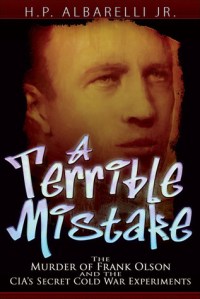
1.) A Terrible Mistake by H.P. Albarelli Jr: This is another example of a case in which there are certain remarkable facts that aren’t in dispute, but the degree to which the fine details are accurate is hard to judge. The fact is that Frank Olson was a biologist in the employ of the government, he was dosed with hallucinogenic substances, and thereafter he took a fatal plunge out of a hotel window. Whether he was murdered as a cover up or just had a bad trip has always been an open question.

BOOK REVIEW: Bring Me the Rhinoceros by John Tarrant

Bring Me the Rhinoceros: And Other Zen Koans That Will Save Your LifeBring Me the Rhinoceros: And Other Zen Koans That Will Save Your Life by John Tarrant
My rating: 5 of 5 stars

Amazon page


This book is an examination of fifteen classic Zen koans selected by John Tarrant, founder of the Pacific Zen Institute (PZI.) Koans are statements or stories that are designed to help students of Zen Buddhism escape their usual ways of thinking because the absurdity of koans cannot be meaningfully answered with the usual approach based in logic and reason. Even if the concept isn’t familiar, readers are sure to have heard the famous koan: “What is the sound of one hand clapping?” [Though one may have missed the value as a tool of the mind, and dismissed the koan as a sage’s attempt to be abstruse and esoteric.]

Each chapter addresses one koan in great detail. First, the koan is presented in a simple fashion. It should be pointed out that some of these koans are a single line and others are as long as several paragraphs. Next, there is a sort of introduction to the concept or point being addressed in the koan. Tarrant knows the value of story, and this frequently involves a narrative approach. Next, there is a section describing the koan in more detail than in which it was first introduced. Here the author elaborates and provides background. The final section of each chapter is about “working with the koan” and offers a bit of insight into how to start considering the lesson of each koan.

I enjoyed this book. It’s a good selection of koans that cover a wide range of styles and approaches. As I mentioned the author uses stories and anecdotes – both historical and contemporary – to help get his point across. The titular use of a particularly absurd koan “punchline,” gives one a taste of the author’s willingness to engage in the whimsical.

I’d highly recommend this book for those who are seeking to better understand koans, either as students of Zen or as individuals interested in the workings of the mind more generally.

View all my reviews

BOOK REVIEW: How to Hypnotise Anyone by The Rogue Hypnotist

How to Hypnotise Anyone - Confessions of a Rogue HypnotistHow to Hypnotise Anyone – Confessions of a Rogue Hypnotist by The Rogue Hypnotist
My rating: 4 of 5 stars

Amazon page


This is the first book in a popular eBook series on hypnosis. The series is written by an anonymous hypnotist and neuro-linguistic programming (NLP) practitioner from London. As the first book, it addresses the basics of hypnotic induction, including background about what a hypnotic trance is and how it’s achieved, as well as fundamentals of voice and word choice that can influence the hypnotist’s effectiveness. The book also introduces “convincers” and “deepeners,” practices that help get the subject in the right state of mind for hypnosis and which take them deeper into trance, respectively. [Though, the author argues that the former aren’t really necessary.]

This short book consists of 29 chapters and 5 appendices. The “chapters” are as short as a single paragraph and lay out the concepts, and the appendices are scripts for hypnotic induction or trance deepening. This is a short book, and some have complained that it reads more like a detailed outline than a book. While it’s true that it’s a “just the facts” kind of format, many will find that preferable, depending upon how one likes to take in information. As long as you’re not expecting a lot of narrative examples, you may find it’s just what you are seeking. It’s written in a conversational style as if the author were telling one the information in person.

Given the controversial title, a reasonable question to ask is whether the book is practical or a lot of pie-in-the-sky ramblings by someone who doesn’t know what they are talking about. What’s the controversy? While there are many hypnotists and would-be hypnotists who claim that they can induce a hypnotic trance in anyone, regardless of the individual or the situation, the science suggests that there is continuum of degrees of hypnotizability. The distribution along this continuum follows a bell curve. What’s this mean? Almost everyone can be hypnotized to some degree, but at one tail there are people who are extremely suggestible – however, at the other end there are people who just can’t be induced. Because there are so many Hollywood misconceptions (see: “Now You See Me”) and hypnosis related fantasy and fiction, it’s not surprising that there are a lot of wrong ideas out there. [I should point out that everyone probably achieves a trance state at some point organically, but some people seem unable to be induced into that state because of anxiety, resistance, or otherwise.] Having said all that, it seemed that the author knew of what he wrote and was quite open about the myths, misconceptions, and limitations.

Later titles in this series address such topics as the details of language for hypnosis, escaping cultural hypnosis, applications for anxiety reduction, uses for combating addiction, as well as the more bizarre and arcane side of the subject.

I’d recommend this book for anyone looking for a primer on hypnosis. I was not bothered by the sparse approach. It’s quick and readable, and seemed to offer well reasoned approach to hypnotism.

View all my reviews