Miscellaneous Haiku


shaggy yak
in Himalaya high
gallops carefree


desert skies
painted impossible hues
scrub and sand


moth wing eyes
so very convincing
owl or “seeing tree”


calm seas
don’t draw sailors
storms do


monkey moments
that mirrored pond,
reflecting us

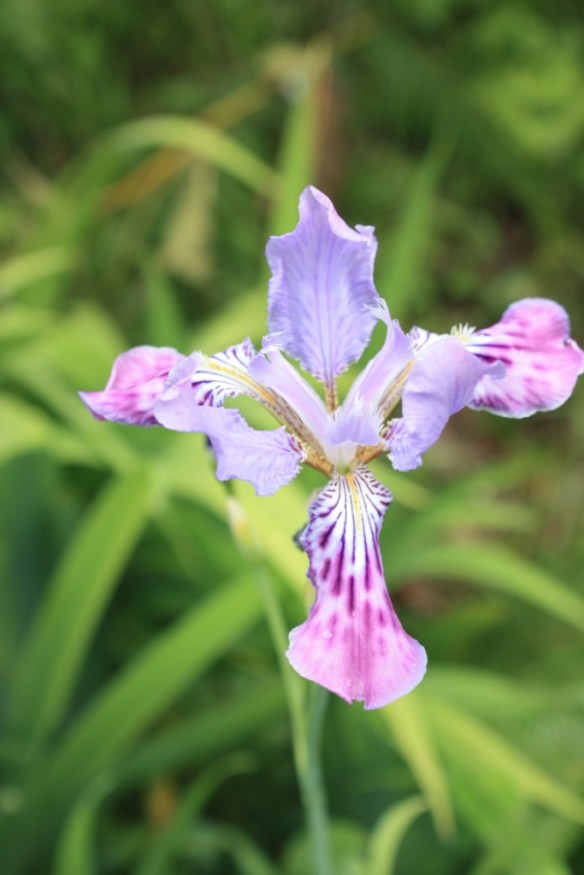
DAILY PHOTO: Flowers in Mudigere

Taken in April of 2015 on or around the Karthikeya Coffee Plantation

DAILY PHOTO: Howrah Natural Bridge at Low Tide

Taken on Neil Island (Shaheed Island) in December of 2018

DAILY PHOTO: Tusker Chewing Marsh Grass

Taken in May of 2017 at Amboseli National Park

BOOK REVIEW: Second Nature by Michael Pollan

Second Nature: A Gardener's EducationSecond Nature: A Gardener’s Education by Michael Pollan
My rating: 5 of 5 stars

Amazon page


This isn’t simply a discussion of lessons of gardening, though it does tread that ground. However, Pollan uses that topic as a jumping off point to explore a couple of broader topics. First, what defines the American approach to lawns and gardens, which is clearly distinct from that of our Old-World ancestors / comrades? Second, what does it mean to say some approach is more or less “natural” in an ecosystem that has been shaped by the hand of man? As a neophyte balcony-container gardener, I was attracted to the book for its gardening lessons, but I found myself most provoked to thought by these other questions.

This book starts with an Introduction to set the stage and a first chapter that contrasts two approaches to lawn and garden that Pollan saw within his own family. The other eleven chapters are divided into seasonally themed parts. These parts – Spring, Summer, Fall, and Winter – touch upon the life of a gardener during each, respective, season.

The section entitled Spring discusses the challenge of getting plants to grow against the onslaught of competitors and consumers: animal, vegetative, and other. It also discusses mowing, the open approach to lawns found throughout America, and what the latter means for the former. (It has long intrigued me that many Americans who will pledge liberty or death, often aren’t so big on their neighbor’s liberty if said individual’s lawn gets to about four inches of shag.) Lastly, Pollan educates the reader about the gardener’s passion for compost.

The three Summer chapters explore what happens through the middle of the growing phase, including the need to weed. Though Pollan explores the criticisms from the “keep it natural” camp. There’s a lot of discussion of the ideas of Emerson and Thoreau, and how they represented a change from previous thought on the garden. However, the first chapter in this section is about Pollan’s experiences with growing roses, a provocative subject among gardeners, apparently.

Fall is harvest season, but the chapter in this section that I found most intriguing was one about planting a tree. This is where Pollan brings the question of what it means to be “natural” to a head. He discusses a nearby piece of protected forest that was decimated by a tornado. There was an ardent debate between those who thought that nothing should be done with the land and it should be allowed to grow back however nature saw fit and others who thought intervention was necessary. The argument can end up turning a position on its head. What if one does nothing and the land is overtaken by a non-indigenous invasive species?

The last section has an amusing chapter on garden catalogs and how companies’s style and emphasis varies in an attempt to corner a segment of the market.

I enjoyed this book, and would highly recommend it not just for gardeners, but for individuals who have an interest in the interplay between nature and humanity.

View all my reviews

DAILY PHOTO: Crab in Fog (but really seawater)

Taken in December of 2013 near Nai Harn, Phuket

DAILY PHOTO: Deer, Arabia Mountain

Taken at Arabia Mountain Park in August of 2011

DAILY PHOTO: Chowing Baby Macaque

Taken in March of 2014 at Nandi Hills

DAILY PHOTO: Volcanic Cones in Peru

Taken in July of 2010 near Arequipa

POEM: Black Kite Over Bangalore

The predator commands a post atop a monolithic chimney, which it defends from swooping competitors with a hop, a wing flare, all while going talons up. Its trilling whistle call signals I know not what to I know not whom, but it’s persistent. Its head swivel-snaps around in precise jerks — a clockwork motion. The kite is peering more across the building tops toward the incoming weather than down into the urban valley where it might find a meal. Monsoon season is coming, and it intends to get in some preemptive showers — just to make certain all know that Mother Nature consults no calendars. When a gust hits, the kite beak aligns on the wind direction, but wind shear catches its back feathers, giving it a shabby look.

In the background, I watch its comrades in flight. To say “circling” would be to impose more order than these birds’ chaotic aerial dance warrants. Mostly they glide, each to its own flight plan — occasionally flapping for altitude or making a brief, awkward plummet.