Rock at the End of the World [Haiku]

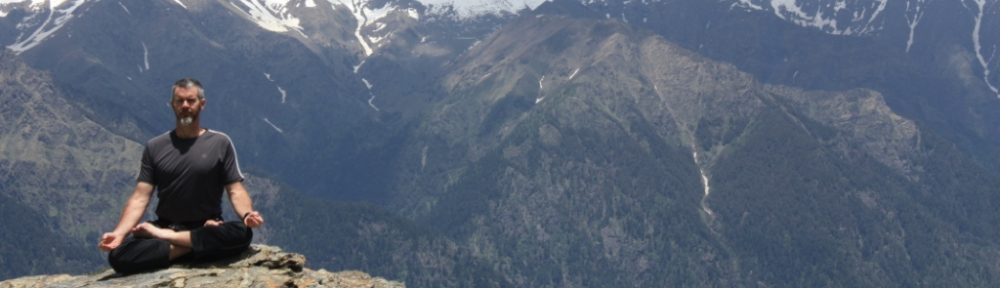
rock swells from sea,
a perfect perch to think on
the world's end

Flame Mind [Common Meter]

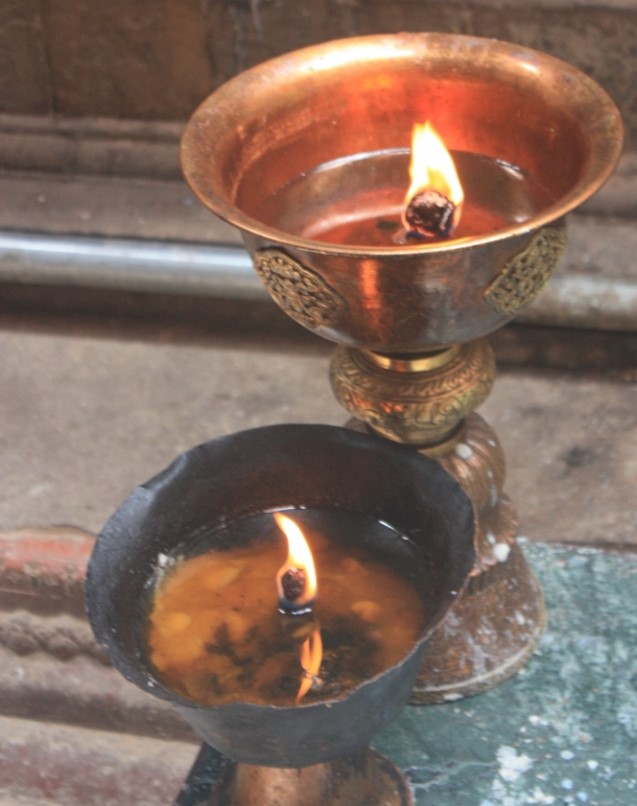
His eyes take in the dancing flame
until his mind is flame.
He anticipates its flutter,
its flareups, just the same.

There's nothing in his mind or eye
that is not set ablaze.
He knows not whether it's been like
this for hours, weeks, or days.

Others think it will devour him,
leaving a pile of ash,
taking him from this world at once,
in one big, blinding flash.

POEM: Insight: Or, The Benefits of Meditation

Once, tsunami waves crashed ashore,
catching me off-guard.
In wonder of just what’d hit me,
I’d sit – soaked and scarred.

The more I’d sit, watching my world,
the more I’d see storms howl.
I’d still get drenched, but, sometimes,
I could reach my towel.

Often, when I’d witness my mind,
I’d see the squalls approach,
and I could pack my things and go
before the surge encroached.

I never learned the magic to
turn the winds away,
but I could see the distant clouds
and shelter from the fray.

BOOK REVIEW: Catching the Big Fish by David Lynch

Catching the Big Fish: Meditation, Consciousness, and CreativityCatching the Big Fish: Meditation, Consciousness, and Creativity by David Lynch
My rating: 4 of 5 stars

Amazon page

This book consists of a series of topical micro-essays – the shortest being a simple sentence and the longest being a few pages, with the average being about a page. Lynch is most well-known as the director who created such works as “Eraserhead,” “Mulholland Drive,” “Blue Velvet,” and “Twin Peaks.” As the subtitle suggests, the overarching theme of the book is the nexus of meditation and creativity. While many of the essays explicitly touch on how meditation influences consciousness, which in turn influences the creative process, not all of them do. Some of them are more biographical or about the filmmaking process – including discussion of technical considerations (what is the optimal type of camera and how high definition can be too much definition for its own good) and what a neophyte such as myself might call the managerial considerations of movie direction (how to best get one’s vision across through the actors.) Along the way, one glimpses how Lynch shifted from his first artistic love, painting, into the world of cinema.

Lynch is a long-time practitioner of Transcendental Meditation (TM,) which is a mantra-based meditation in which the meditator silently repeats a mantra given to him or her by a teacher. The central analogy posed by Lynch is that meditation expands the consciousness and this allows one to catch bigger fish (more profound and creative ideas) through one’s art. He’s not suggesting that the ideas come directly within the process of meditation, but rather that meditation facilitates one’s ability to deepen the pool and pull up bigger creative fish.

He does engage in a fallacious form of thinking that I’ve critiqued in other books, and so I figure I should mention it here as well – even though I found it a little less troubling because of his free flowing “artsy” approach to presenting ideas. But this fallacious bit of reasoning goes something like this: “See how science is talking about this confusing issue and admitting that no one fully understands it yet? And see here how these scriptures are describing this nebulous idea with a few kernels that sound vaguely similar to what the scientists are talking about? From this we can conclude that they are – in fact — talking about the same thing, and that the ancients actually understood this all in much greater detail than we do today.” He does this mostly with reference to the unified field theory (which still hasn’t unified gravity into its ranks, let alone establishing some kind of oneness of all things.) It’s what dear old Dr. Sherrill used to call the “firstest-is-bestest” fallacy, which is thinking that back in the day they knew everything any we are presently just stumbling around in the dark trying to get back on track. [One should note, there is an equally fallacious counterpart that he called the “outhouse fallacy,” which assumes that because people in the past didn’t have indoor plumbing that they were complete idiots.]

For cinephiles, the book provides a lot of interesting tidbits about Lynch’s filmography. [For non-cinephiles such as myself, some of this will make sense, and some of it won’t. I occasionally had to make a Google run while reading the book to figure out some obscure reference about one of his movies.] For those interested in meditation, there is a great deal of fascinating thought about how creativity happens and how it’s advanced by having a meditative practice.

The most notable ancillary matter is an appendix of interviews with Paul McCartney and Ringo Starr. Lynch has a foundation that works to bring meditation into the educational process and the two former-Beatles support its efforts enough to do an interview. The McCartney interview stays more on the topic of meditation — particularly the Beatles’ interaction with Maharishi Mahesh Yogi, the creator of TM and a guru who taught the band both during a visit to the United Kingdom and in his own home base of Rishikesh. The Ringo Starr interview is actually much more about the musical history of Starr and the band.

I enjoyed this book. It’s a quick read. It’s a little all-over-the-place, but not in a bad way. A lot of the writing has a stream of thought feel that seems appropriate to the subject matter. If you’re interested in the films of David Lynch the book definitely has some inside insight for you. If you are interested in the meditation and the mind, you’ll also receive some good food for thought. If you are just looking for a way to spur creativity, it’s also worth a read.

View all my reviews

An App for That: Profound Yogic Practices You May Not See in Class

To the average person, yoga consists of a series of poses that stretch the muscles and strengthen the core.  In truth, often the most profound and life-altering experiences had by yoga practitioners involve only a seated or lying posture. If you practice yoga, you’re probably aware that postural practice, or asana, is just only one element of yoga, and perhaps you’ve experienced some of the other elements of yogic practice. However, it’s not always easy to access such training at the local studio.


These days there’s another way. These practices can be accessed through apps such as EKA.


Below are five powerful yogic practices that you might not find taught at your local yoga studio, but that you’ll find on EKA.


5.) Yoga Nidra: Yoga Nidra translates to “yogic sleep.” It’s a practice in which one stays in the mind-state between wakefulness and sleep, i.e. hypnagogia, for an extended period while working through a sequence of practices. Yoga nidra is extremely relaxing, but also allows one to access the subconscious in a manner similar to that of self-hypnosis. This makes the practice useful both for people who have trouble with sleep or settling into rest, but it also allows one to influence the subconscious so that one can make changes in areas where subconscious influence is strong.


For example, a person seeking to lose weight understands that they need to be careful about what they eat. However, the subconscious isn’t always on the same page as the conscious mind, and cravings for sugary or fatty foods may win the battle. In yoga nidra, we use sankalpa — a resolution, to help win the subconscious over. We also use practices like visualizations to gain insight into what is happening outside the bounds of conscious thought, and to exercise influence over it.


4.) Kaya Sthairyam: Kaya Sthairyam translates to bodily stillness, or steadiness. If you’ve done any meditation, you were probably taught to adopt a position in which you could be as still as possible throughout the practice. The reason for this is that even subtle movements can distract one, weaken one’s concentration, or have a stimulating effect. In yoga, kaya sthairyam is used to achieve a state of maximum stillness. If one wishes to increase one’s ability to concentrate for extended periods, one must build one’s capacity to remain still. That said, kaya sthairyam need not be thought of as only a prelude to meditation. The tranquility that arises from these practices make them worthwhile in their own right.


3.) Bija Mantra: In India, chanting is a very popular practice among yoga practitioners, and many have found great clarity in it. In one of my early classes teaching yoga to children, I found that as soon as the kids sat in a cross-legged pose many of the younger children spontaneously started softly reciting the gayatri mantra. That’s how intense was their association between sitting down cross-legged and chanting.


In the West, mantra chanting is less familiar. The six bija mantra, or seed mantra, are a beautiful way to introduce oneself to mantra chanting because of their simplicity. Because the bija mantra (LAM, VAM, RAM, YAM, HUM, and AUM) are all monosyllabic, easily pronounced, and are related sounds, they can be picked up quickly and easily.


2.) Witnessing Meditations: The yogic teaching that has had the most life-changing effect on me has been dispassionate witnessing. While it’s not a complex idea, it requires some explanation.


Let’s first consider what minds usually do in the face of a problem. There are two common responses that are not particularly healthy.


The first is to distract oneself from the problem. In some cases, this distraction can be an unhealthy activity — such as drug abuse, but it might also be something neutral like watching television. However, even if you distract yourself with a wholesome activity like volunteering at a soup kitchen, the problem is still there and it will have its say. If not directly, then indirectly through nightmares, indigestion, or a stress-induced illness.


The second option is obsessing. The brain tries to lessen the sting by anticipating the worst possible scenario. The trouble with this obsession is that to find our worst case scenario — we have to hang toxic labels on all possible events and invent possibilities that are so unlikely as to be nearly impossible. And having invented such dire cases, we often give them too much weight. As Mark Twain put it, “I’ve had a lot of worries in my life, most of which never happened.”  The negativity piles up and causes stress and anxiety to balloon out of control.


In dispassionate witnessing, we don’t ignore or distract ourselves, but we also don’t strap on value judgements or build worst cases. We simply recognize what we are feeling, acknowledge it, but don’t feed our anxieties.


One of the most basic witnessing practices involves watching sensations in the body. Imagine you’re doing this practice and you feel an ache in your back. If you try to ignore the sensation, the mind may turn up the intensity to get your attention.  If you obsess, you’ll soon convince yourself that this sensation is really an ache… no, a pain… no, it’s agony… oh no, could there be a tumor growing on my spine? [That may be exaggerating a bit, but you see the point.] However, if you focus your attention on the sensation without labeling it, you’ll probably find that the sensation passes. In essence, the body says, “Hmm, the brain examined this sensation and didn’t think it was anything to be concerned about, let’s move on.”


1.) Pranayama: Probably the most under-rated yogic practice is pranayama, or breathing exercises. By controlling one’s breath, one can influence one’s emotional state, one’s physiological processes, and the state of agitation in one’s mind. Breath practices are the most direct means to counteracting the stress response. However, despite constantly breathing — day in and day out — most people remain unaware of the incredible power of consciously controlling the breath.


There are a variety of types of breath exercises. There are breaths that have a stimulating effect on the body and mind, and those that have a calming effect. Scientific evidence has accumulated that there are benefits to practicing slower and deeper breathing, and pranayama offers a systematic approach to building this capacity. No matter what kind of pranayama one is doing, there is a side benefit from holding one’s focus on one point, the breath.


Pranayama is a great lead-in to meditative practices. It helps achieve a state of mind which is neither drowsy nor agitated. That said, pranayama is also beneficial on its own.


If you’re interested in exploring any of these practices, the EKA app is a great place to start.


POEM: Confessions of Mindfulness Pimp

It’s disconcerting, discovering one is a pimp.

Don’t get me wrong;

-I’ve never slapped a ho’

-I’ve never even called anyone a ho’

-To the best of my recollection,

I’ve not even thought anyone a ho’

I’m empathetic to honest work reviled.


But I’ve known the hard-handed hustle of a product that’s felt about in much different terms than it’s talked about — felt an act of masochism but called “working late.”

-a product the customer wishes — with every fiber of his being — he didn’t need.

-a product around which distractions grow like weeds through the cracks of a post-apocalyptic sidewalk.

-a product the customer wishes he could fast-forward to the end-bliss, escaping the awkward preliminaries.

-a skill that the customer tells himself he’s good at, knowing if he had skills, monetary transactions wouldn’t be necessary.

I’ve dealt virtue like it was a vice.

“Psst, Buddy, want some clarity?

“I won’t tell a soul you’re out here looking.”

I’ve pimped mindfulness and wellness — unrepentantly.

My Year of Discovering How Weird the Mind Gets, Pt. XI [Chanting]

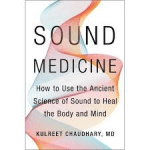
Some people swear by the mind-altering properties [and other benefits] of chanting mantras. I’ve been reading a review copy of Kulreet Chaudhary’s “Sound Medicine,” a book whose play-on-words title says it all. It’s about the way sound is either shown or speculated to have health effects. (Full-disclosure: Some of the speculation gets a bit out there.)  Chaudhary is both a medical doctor and an Ayurvedic practitioner, and has an outlook akin to that of Deepak Chopra.

Chanting has never been my thing. I’ve learned about it and done some in yoga training, but I can’t say it ever resonated [no pun intended] with me. However, in the spirit of investigation, this month I did a few one hour and half-hour sessions of chanting. I kept it very basic, chanting AUM as I was taught with equal parts of A – U – and – M.

While I can’t say that I’m sold that chanting is the ultimate practice that achieves outcomes unachievable through other means, I will say that after these sessions I do feel a sense of calm and clarity. I can certainly see why mantra chanting has appeal for so many people, even though I also believe that, sadly, it’s sometimes oversold as something supernatural and the discussions about it are needlessly complicated.

BOOK REVIEW: The Science of Meditation [also sold as Altered Traits] by Daniel Goleman and Richard Davidson

The Science of Meditation: How to Change Your Brain, Mind and BodyThe Science of Meditation: How to Change Your Brain, Mind and Body by Daniel Goleman
My rating: 5 of 5 stars

Amazon page


This book has been sold under the title listed above as well as the less prosaic title, “Altered Traits.” The switch may represent a lack of confidence that the coined term “altered traits” would catch on, and / or a desire to market the book as broadly as possible.

“Altered Traits” is a play on the more well-known term “altered states [of consciousness.]” The idea being that meditation (as well as many other activities from consuming psychoactive drugs to having a shamanistic drum rave) create a change from the ordinary waking state of consciousness, but what the authors wanted to focus more upon is the long-term and sustained changes that result from extended meditation practice. (Hence, coining the term “altered traits.”) These sustained changes are a prevalent theme through out the book. This makes sense as one of the co-authors, Richard Davidson, is well-known for investigating the brains and brain activity of monks and yogis with extremely advanced practices (tens of thousands of hours in meditation.) Still, the prosaic title, “The Science of Meditation,” may make more than marketing sense because the book does discuss the scientific research on meditation pretty broadly.

Both Goleman and Davidson are long time meditators as well as being subject matter experts in psychology and brain science. This is a major strength of the book. Some scientists are dismissive of practices that have origins in spiritual practices and have blindsides or are prone to oversimplifications because of that bias. On the other hand, that bias isn’t helped by the fact that meditation experts often oversell meditation as a practice that will do everything from spontaneously cure your cancer to allow you to levitate six feet in the air. The authors of this book aren’t afraid to call out such spurious claims, but aren’t dismissive of practices of religious or spiritual origin. The authors also spend a fair amount of time criticizing past scientific investigations of meditation (including their own) on the basis of naivete about the nature of the practices. A major problem has always been an “apples and oranges” grouping together of practices that are different in potentially important ways. There have also been all the problems that plague other disciplines as well (small sample size, poor methodology, etc.) These discussions won’t mean much to most readers, but are helpful to those who want a better idea which studies are gold standard and which are weak. That said, the book doesn’t get bogged down in technical issues.

The book opens by laying out some of the important differences between various meditation practices and trying to educate readers who may either not know much about meditation or may know it only from the perspective of a single discipline. Goleman and Davidson suggest one way of thinking about different kinds of meditation is in terms of “the deep and the wide.” The former being sectarian practitioners who practice specific ritualized practices in an intense way. The latter being more secular practitioners whose practices may borrow from different domains. They present a more extensive classification scheme than this simple bifurcation, making it more of a continuum. Later in the book, they consider ways in which practices might be categorized (e.g. Attentional, Constructive, and Deconstructive) but it’s emphasized that there isn’t currently an agreed upon schema.

Throughout the book, one gets stories of the authors experience in investigating this subject. This included trying to get monks to allow themselves to be studied, even with a letter from the Dalai Lama. It also covers the challenge of trying to build interest in the subject in an academic setting that once thought of meditation as little more than voodoo.

The middle portion of the book has a number of chapters that address particular types of practices and the specific effects they have (and haven’t) been found to have. These include developing a more compassionate outlook and behavior (ch. 6), improved attention (ch. 7), negation of pain and physical ailments (ch. 8 & 9), and meditation / mindfulness as part of a psychotherapeutic approach. The authors repeatedly point out that these practices were never intended for the purpose of treating ailments (mental or physical,) though they do seem to show benefits in a number of domains outside of what the spiritual seekers who brought them to prominence intended of them.

The chapters toward the book’s end focus heavily on investigations into advanced meditators, and the altered traits and brain changes seen in them.

There are few graphics in the book, but it’s annotated and has an “additional resources” section in the back.

I’d highly recommend this book. The authors’ mixed background gives them a good vantage point to provide an overview of the subject, and also allows them to tap into stories of their experiences which make the book more interesting than it otherwise would be.

View all my reviews

My Year of Discovering How Weird the Mind Gets, Part VII [Lucid Dreaming]

Lucid dreaming is the act of becoming aware that one is in a dream while dreaming. It’s called “Dream Yoga” in some Eastern traditions (most notably, Tibetan [Vajrayana] Buddhism.) Many people pursue lucid dreaming because they find it just too cool to experience the world of dreams consciously, but — for those who don’t — the natural question is “why bother?”  Well, it gives one an unprecedentedly vivid insight into one’s subconscious mind. [For those who are still wondering “why?” This post is probably not for you.]

Since I was young, I’ve occasionally experienced lucid dreams. But it wasn’t until recent years that I began a dream yoga practice — which I had discontinued until resuming it for this month’s study. Those unfamiliar lucid dreaming might wonder how one “practices” becoming aware that one is in a dream in the midst of dreaming. If one didn’t come to the table with a talent for lucidity in dreams, one can’t exactly do anything about it in the middle of REM sleep (rapid eye movement, when the bulk of dreaming occurs.)  A dream yoga practice consists of actions one takes during the day to help facilitate becoming lucid during one’s dreams. These actions include:

  • Journaling one’s dreams (i.e. writing down whatever one remembers of one’s dreams as soon as possible so that one builds the capacity to remember dreams, which can be ephemeral.)
  • Doing reality checks in waking life whenever one notices anything that has an unreal quality about it. This is done in an attempt to train your brain’s BS detector — that’s obviously not how neuroscientists refer to it, but in waking consciousness we have a potent ability to notice and focus our attention on apparent incongruities. The parts of the brain that manage that responsiveness tend to be down for the count during sleep. Hence, in a dream one can walk out of one’s bedroom onto the Serengeti Plains without a second thought. So you are attempting to train your brain to become aware when the anomalous takes place. If it works right, you will begin to do the reality checks in your dreams as well. Of course, real life offers much more subtle seeming incongruities, hence the need to be on the look out for them. There are two approaches to reality check with which I’m familiar. The one I use is to count my fingers, and then flip my hand over and count them again. In a waking state, I always have five digits during counts. In dreams, my hand does some funky stuff. An alternate method is to look at a clock or watch, look away, and then look back at it. In real life, only a second or two will have passed, but in a dream the times will likely be entirely different.
  • Bedtime resolutions to remember one’s dreams and to become lucid during them. For yogis and yoginis, this is like a sankalpa, a resolution that one repeats during yoga nidra (“yogic sleep,” a yogic relaxation and mind development technique that — ironically — doesn’t involve sleep but rather a prolonged hypnogogic state [between waking and sleep.]) The resolution should be a short statement without negation that is repeated exactly the same way several times.
  • Meditative practices that recall dream settings. One practice that I stumbled onto is done in a meditative state. When my conscious mind quieted and I was experiencing subconscious imagery, I found that I could remember many more of the settings in which dreams take place. I have a lot of recurring settings for dreams. [Typical of dreams, these places don’t always look exactly the same, but they feel like they are meant to be the same place.]

Long story short, one is doing two basic things in the practice of dream yoga. First, you’re trying to remember your dreams better. As I suggested, you could be becoming lucid in dreams every night, but if you don’t remember them you’re not gaining any conscious insights from them. Second, you’re trying to recognize the dream state by way of the bizarre incongruities that take place in dreams.

I should point out that mine is a bare bones practice, there are other activities one can do as well. Really hardcore practitioners set alarms in an attempt to wake themselves up in the midst of a dream. This allows them to remember dreams better and to help them become aware they are in a dream when they return to the dream after going back to sleep. This isn’t so far fetched as it might sound. We tend to dream in cycles of around 90 minutes and proceed through the same sequence of mind states from waking consciousness through hypnogogic state through various stages of sleep into a hypnopompic state and the back to waking consciousness. So, there is a degree of predictability on which to base one’s alarm estimate. I’m not so keen on disrupting my sleep. [Part of the reason that I discontinued practice is that I found I really only remembered lucid dreams when my sleep was troubled. (Usually it is not so much “troubled” as I when I’m sleeping lightly because I’ve slept longer than usual — e.g. occasionally oversleeping on the weekend.)  If I sleep like a baby, I typically don’t remember lucid dreams — that doesn’t mean I’m not having them, but I wouldn’t know if I did.]

Even though a dream yoga practice has often seemed to have little influence on my having [or, perhaps more accurately, remembering] lucid dreams, this month I’ve had five that I remembered — a couple of which I only remembered the in-dream reality check (counting fingers.) [A warning to would-be lucid dreamers, its possible to wake yourself up with the excitement of becoming aware that you are in a dream.] I’ve been consistently journaling and have picked up doing more reality checks. [Bangalore is a great place for this because it’s in constant flux, so I’m forever having “was that there yesterday” moments and “has that looked like that for the past five years” moments as I move about the town.]

It’s been fun coming back to this practice. I’m one of those who doesn’t really need another reason for trying to dream lucidly other than the fact that I’m so in awe of being in a dream and knowing that anything my mind can conjure might come next. Still, the lucid dreams I’ve had this month have offered some interesting features to contemplate the meaning of, including: faceless people, being on some kind of backward moving speed-walk while I tried to go investigate a scene in front of me, and something akin to being in a video game.

I’m leaning toward doing a short stint of sleep deprivation for next month, if I can find two days or so to safely give it a try (i.e. no need to drive or do anything else requiring fresh faculties.) I’ve gone about 54 hours without sleep before (not for its own sake, but because of the situation at hand,) and know it can have some interesting effects.