2015 Top 10: Highlights From the Year That Was

These aren’t necessarily in any order.


1.) Trekking the Great Himalayan National Park [June]:

IMG_1898


2.) Teaching kids at KAMMS and Socare [September & October]: I finished my RCYT course in April and have been teaching kids when I have a chance:

IMG_0101


3.) Completing Level I Examination at the Muay Thai Institute [September]:

IMG_1926


4.) Riding camels at Pushkar and Jaipur [November]:

IMG_3002


5.) Boating on the Ganges in Varanasi [October]:

IMG_3538


6.) Wandering around a coffee plantation near Chikmaglur [April]:

IMG_1966


7.) Completing the Level III and IV reviews in Kalaripayattu [February & August]:

IMG_4289


8.) Touring the Glenloch tea factory in Sri Lanka [May]:

IMG_0572


9.) 108 Surya Namaskara Against Child Trafficking [March]:

IMG_3331


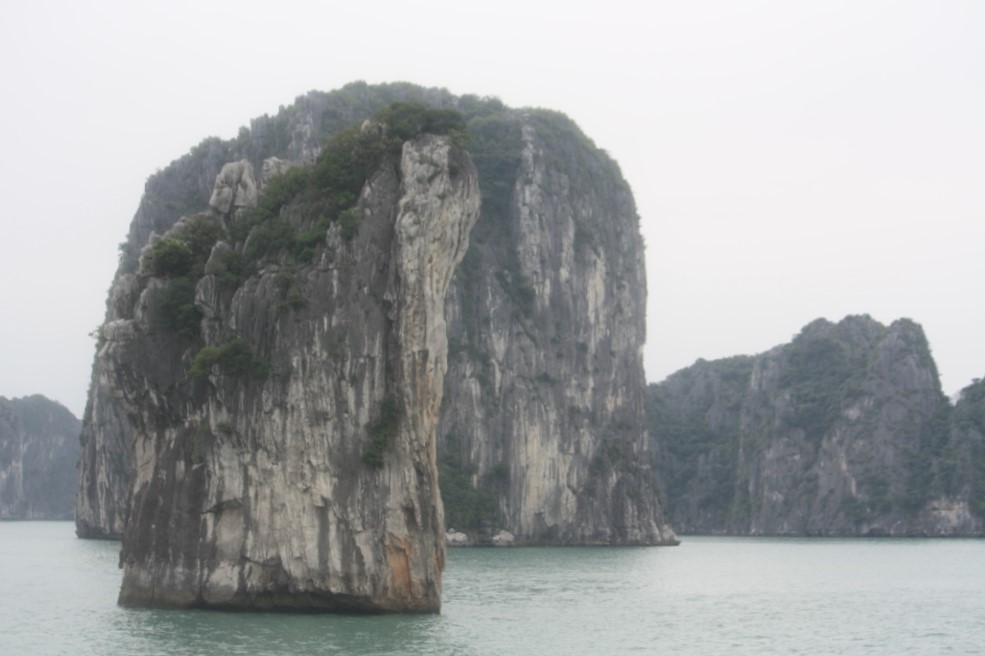
10.) Junk boat tour of Ha Long Bay, Vietnam [December]: This may be jinxing us to put it on the list,  before we’ve been (we leave tomorrow) but I’m optimistic that our three weeks in Vietnam will be awesome, and I’m told Ha Long


What to expect in 2016? Lilla and I will be moving back to the States around mid-year. (To where, exactly, remains a mystery.) In January and February I’ll be doing an RYT-300 course to round out my 500 hour yoga teacher certification. I plan to make at least one more trip to Thailand to MTI for Level II. I’d also like to complete the 10-day Vipassana meditation course before returning. Lilla and I are thinking about another Himalaya trek for the summer.

I’ll also be continuing to work on press handstand progression, as that’s been a focus for me of late and I still have a ways to go.

IMG_4354

IMG_4342

The Science of Wisdom & The Wisdom of Science

Shrine_nearRoppongi_statues

For the purposes of this post, wisdom is neither a collection of trite adages, nor is it an accumulation of arcane or esoteric scripture. Wisdom is:

1.) the ability to quiet the mind

2.) the ability to suppress inclinations to be petty in a healthy way

3.) the ability to override instinct with conscious thought when it’s beneficial to do so

4.) the ability to know when it’s beneficial to do so (see #3)

5.) mastery of (rather than being mastered by) one’s emotions

The objective of these activities is to increase happiness, reduce strife, and exercise better and healthier decision-making.


While these are secular objectives, the pursuit of this form of wisdom has to a large extent become entwined with certain breeds of religion or spiritualism. Mystical religious traditions are the style of spiritualism that are most commonly associated with these pursuits. (Here I use mysticism in its scholarly sense, i.e. traditions that believe in a god or gods and who believe that the space in they can interact with said god is to be found inwardly. This is as opposed to the ill-defined colloquial meaning of mysticism that has a negative connotation and is infused with judgement about hippy-dippiness.) One sees the pursuit of this form of wisdom in yogic philosophy, in most branches of Buddhism, in Taoism, etc.


I’m not sure why this connection should be so entrenched. Why should agnostics and atheists forfeit the pursuit of such forms of personal improvement? Maybe the scientifically-minded think that they are knowledgeable and knowledge is wisdom, and so they think they are already on the path. I can tell you that knowledge isn’t wisdom. I base this on the experience of knowing intellectually brilliant people who couldn’t get along with anyone, who perpetually said the wrong things, and whose personal lives were a wreck. Skeptics and geeks are as subject to strained relationships, stress, and unhappiness as their pious neighbors.


Another possible explanation is that many scientifically-minded people just don’t think that such goals are achievable because the routes to them have too often been couched in supernatural terms.   However, there’s a growing literature on how these objectives can be pursued that is rooted in neuroscience and neuroplasticity, and for which the presence or absence of a deity is irrelevant.  I’ve been reading a book called Zen and the Brain lately that offers an understanding of the effects of meditation that is firmly rooted in the science of the brain. I also recently purchased a book entitled Buddha’s Brain that takes a look at how neuroplasticity allows for a “rewiring” the brain to a healthier state. (Yes, I realize the irony of citing two books that have religious references in their titles in this post. I’d argue that this is how inexorably tangled these pursuits have become with religion. However, both of the scientist/authors of the aforementioned books, James H. Austin and Rick Hanson, have books with more secular titles if you’d prefer.)

BuddhaBrain Zen&Brain


I was once eating in a university cafeteria when I heard a religious man make the argument to a fellow he was trying to “educate” that went like this:  “If there’s not a God, why should I be nice to my wife–why shouldn’t I kick the hell out of my dog?” My first thought was that this man desperately needed therapy. If the only reason he wasn’t being a violent asshole is because he feared the wrath of an invisible, omnipotent entity who–by they way–would have to be showing a complete indifference to what people do to each other in real-time, then he’s an accident waiting to happen. If he either: a.) loses his fear of said deity, or b.) begins to think that the deity is telling him to go another way (since whatever the deity is “telling” him is almost certainly just his mind telling him), then his wife and dog are in great peril.


My second thought was, “this is the cafeteria in an institution for higher learning, how’d this guy get in without at least the rudimentary training in logic to imagine a basis of moral behavior that’s not rooted in the supernatural smiting ability of a deity [who–I might add–sees a helluva lot of smite-worthy activity on a daily basis.]”


If you’re considering an action that seems questionable, you don’t need to ask what Jesus would do? You can start by asking the question: Would my life (or those of my loved ones) be adversely impacted by living in a world in which everybody did what I’m about to do in the manner I intend to do it? (Implied is the idea that, if the action in question involves doing something to someone, you would be subject to being on the receiving end of same action sooner or later.)   If the answer is “yes,” don’t do it. If the answer is “no” there still may be reasons not to do the activity that have to do with what is good for you personally. (We’ll get into that a little further down.)


I realize that the above standard isn’t perfect, but it’s far less subject to user error than WWJD and it explains why the fellow from above shouldn’t beat his wife or his dog unless he likes rigorous and regular beatings himself. Some people might say that they don’t think they or their loved one’s would be adversely in the slightest if everyone went about walking around naked. Others might believe that they would be stressed out (or overstimulated) in such a world. However, the above approach has already gotten us to the fringe of questionable activity. Yes, some people might be traumatized if their neighbors walked around in the nude. But I suspect if everybody did it (as per the question) it would become not weird (definitely not harmful) in short order. There are those people who are so fragile that they can’t sleep knowing that a couple engaging in intercourse in privacy of a room three doors down are probably not using a missionary-approved posture. Said people need the kind of wisdom I’m talking about more than any because part of it is accepting that there may be more in heaven and earth than is dreamt of in their philosophy. Now that we know how to kill stray asteroids, if humanity ever dies out it will be at the hands of people who can’t bear anyone living by rules not those that they took for themselves.


At any rate, I think there are two reasons why the above approach is difficult for homo religiosis (religious human.) First, there are many activities that homo religiosis wants to see universally abolished because their religion considers forbidden, but which don’t adversely impact others. (e.g. Jains are pretty easy-come-easy-go, but imagine you were told you’d have to forgo onions because of that religion’s moral belief that no food should come from a plant that’s killed by harvesting. [FYI: Let me laugh now at the religious people who say “but there’s nothing crazy like that in my religion?” That just means you are so untraveled and uneducated that you can’t fathom how completely wacky some of your “moral” beliefs / practices are. e.g. How about eating salmon on Fridays as a sacrifice in lieu of eating a hamburger? That’s just nutty on all sorts of levels.])


Second, many believers really do believe that they have a special place in god’s heart and, therefore, aren’t subject to the same limitations as those poor, god unloved people. The idea that said person shouldn’t commit rape because they wouldn’t like it if someone else raped them or their sister or their mother is non-sense, because their god would never let someone else get away with shit like that with them. (Yes, there are people who’ve lived sheltered enough lives to believe that god punishes others but–at most–“tries” them.)


Most of us must accept that when it comes to being a person, we are the same as all the other people. While one may be stronger, faster, smarter, or in some dimension more talented than others, this doesn’t endow one with a different set of rights and responsibilities. On a genetic level there are no chosen people.


Earlier I mentioned that the “if everyone else did it” standard might leave one on the horns of a dilemma as to how to behave or what decision to make. Here’s where we’ve got to use our brains because the hard and fast rules go out the window. Evolution has programmed us with some guidelines that were beneficial given the constraints of the world our ancestors lived in. However, this programming of pleasure and pain may or may not be great advice given the ways in which humans have changed our own world.


Let me give some examples. Our nervous system suggests we eat foods that are sweet and fatty. We crave chocolate and bacon, and pleasure centers in the brain light up when we consume these foods. In our hunter / gatherer existence, this was excellent guidance because a.) these foods were relatively rare, b.) these foods had dense caloric content, c.) sweet foods are less likely to be poison, and d.) we worked our asses off in physical labor (i.e. high caloric demands.) However, today these high caloric foods are mass-produced, we require almost no caloric expenditure to obtain them (or to do most anything else in our cubicle-dwelling work lives), and in some cases people are literally (I don’t use “literally” lightly) killing themselves with such foods.  So part of the wisdom I’m talking about is developing the capacity to exercise conscious control over decisions about whether to eat such foods, how much of such foods to consume, and what activities to do to counter act the flood of empty calories. Our biology is a harsh mistress, and it can require intense efforts to keep such impulses under control.


We are also programmed with love, a trait which has served us well over all. I know some of you are cringing about the idea of “evolutionarily programmed love”–so unromantic. It’s simple. Those who could build connections with others disproportionately survived to pass their genes on. This further fed into our species’ rise because, while we think of ourselves as the planet’s dominant species, we produce the most vulnerable 1 year olds (or 8 year olds for that matter) of any species on the planet. A human three-year-old is good for two things–learning and food. It takes a lot of love to make sure its the former and not the latter. An extremely intense experience of love is essential to our species’ ability to not just wander off and let our pain-in-the-ass children get eaten. This gives us plenty of time to teach kids more than just how to elude a saber-tooth tiger. We have time to teach kids language, social niceties, and trigonometry.


We can, therefore, use our gigantic brains to noodle out whether a given action is best for us,  in addition to whether it does no harm to those around us. The complexity of our brains allows us to rewrite our rule book in unprecedented ways. Some of the religious “morality” that seems vacuous (e.g. don’t eat shellfish, but feel free to own as many people as you can afford) probably had a logic in that time (e.g. people were getting sick from eating shellfish because they didn’t yet know how to prepare it.) The problem is that one has to be ready to jettison obsolete advice, and that’s hard to do once it’s entrenched as dogma. This is where being Homo sapiens, the thinking human, comes into play.


10 Easy Pieces of Wisdom: and, Why “Secret Wisdom” is Bullshit

IMG_0438

Having lived in India–land of sages–for over a year now, one may wonder whether enlightenment has taken hold. Let me share some of the nuggets I’ve gleaned. This isn’t what I found chiseled on walls in Sanskrit. It’s what living and thinking in the modern world have wrought.


1.) Anger is just fear in a red dress.

It’s all just frustration / unease / discontent with one’s limited domain of control.

On a related note, I read a relevant quote from Irmgard Schloegl recently: “Look at getting mad from this perspective. If you had but five more minutes to live, and it would still be worth getting mad over, then by all means do so.”


2.) Secret paths to wisdom are bullshit–the theory is simple the practice is arduous.

It all boils down to living in the moment more, being aware of your mind, and exercising your will.

First, you start becoming aware that you were recently a jackass.

Next, you begin to realize you’re in the process of being a jackass.

Then realize that you’re about to be a jackass–but you can’t help yourself and end up with jackass’s remorse.

Finally, you begin to preempt your inner jackass.

The latter is wisdom, and it’s not for lazy people who like shortcuts.


3.) There’s no ratchet effect on wisdom–no one-way trip to enlightenment or nirvana.

Either you accept that life is a glorious lifelong struggle to be the best version of yourself, or you wallow in a sty of mediocrity.


4.) The words “just a…”–as Catholic nuns say of masturbation–result in immediate blindness.

There’s nothing that will blind you to the deepest beauty of a person, place, or animal faster than saying it’s “just a…”


5.) Stop thinking of the body as an “empty vessel.”

It results in your treating it like a rental car. You aren’t a bar of gold being hauled around in a manure spreader. You were endowed with a Rolls Royce with on-board access to a Cray super-computer, and you risk turning into a Yugo with an abacus when you fail to keep it tuned and quietly revel in its magnificence.


6.) If a teacher is happy that his students  almost reach his level, he’s part of a dying tradition.

In a growth tradition, some students will surpass their teachers, and that’s only likely if the teacher wants it to be that way.


7.)  Be a scalable hero.

Human beings are terrified by their smallness, impermanence, and ultimate insignificance. In geologic time, everybody is an inconsequential blip. You can’t get around this, but you can pick a scale of time and space in which you matter. That space is here, and that time is now. In the here and now, you can be a giant–figuratively, of course. Here and now you can’t be everybody’s hero, but you can be somebody’s.


8.) Start your pursuit of virtue by doing no harm.

Begin being virtuous by capturing the advantage in those quiet moments that need nothing but a lack of interference or insinuation. Then go on to active expressions of virtue.


9.) Vicarious living ain’t living.

Don’t sit around watching others live life.


10.) Don’t count yourself free if your impulses overwhelm your conscious mind.

People worry a lot about the control that external forces and authorities exercise over their ability to act, but often spend far too little time on whether they’re working towards liberating themselves from raw impulse, habit, and reactionary living. Epictetus used to piss high society types off by asking them whether they thought they were truly free.

If you’ve been following the science of free will, you’ll know that the current prevailing thought lands against the notion of free will. This is because brain imaging has made it possible to see how decisions are biochemically made before the mind consciously ruminates and “makes a decision.” However, the verdict is still out. The question isn’t whether we ever fail to exercise conscious free will. Of course, there are many times we fail to, maybe even most times. The whole point of emotions is to help us make decisions without adequate information to make rationally optimized decision. However, the question is whether we can learn to exercise free will. Scientist long ago verified that some yogis and monks can exercise conscious control over autonomic bodily functions (e.g. controlling heart rate from a static position.)


There it is: wisdom for the modern age stuffed in a nutshell of bullet points.


My 2014: A Year in Review [w/ Photos]

2014 will be our first full year living in India. Having said that, I spent almost 50 days in Thailand, and Lilla and I will spend the last two weeks of the year in Hungary. So, in truth, I will have lived about ten months of 2014 in India.


The four months of 2013 that we lived in India largely involved acclimating and getting our feet under us, though we did see some important sights in India including the Taj Mahal, Delhi, Fatehpur Sikri, Hampi, Mysore, Belur, Halibidu, and Shravanabelagola.


2014 was an interesting and learning-intensive year, so I’ll review some of the year’s key happenings.


January:

From the 1st through the 18th, I was in Phuket, Thailand. Lilla and I spent the holidays there, and–upon her return to Bangalore–I stayed another couple of weeks training at Tiger Muaythai. Tiger is probably Phuket’s largest and most well-known Muaythai gym.  In addition to Muaythai classes, I took advantage of their broad class offerings to learn a little about Krabi Krabong, Muay Boran, Western Boxing, Mixed Martial Arts, Brazilian Jujutsu, as well as taking daily Yoga classes. I was particularly keen to learn about Muay Boran, MuayThai’s more combative ancestor art.

20140105_163231

While my training schedule (up to six hours / day, 6 days a week) didn’t allow for much sightseeing, I did get to see a little of Phuket Town and a couple of the beaches that Lilla and I skipped while we were traveling together. Phuket displays a lot of Chinese influence and there are many brightly colored Taoist, Confucian, and Chinese ancestral shrines and temples around Phuket Town. Rang Hill overlooks the island’s main “metropolis”, and I was able to take advantage of that vantage point. The beaches I visited were Karon and Kata which were middling between the two beaches Lilla and I visited together. That is, they weren’t as quiet and secluded as Naiharn, but neither were they as frenetic and overrun as Patong.

IMG_2015

February:

February was marked by two firsts. First, I began taking classes in Kalaripayattu two mornings a week. While this Indian martial art is far afield of the Japanese art I was raised on, I wanted to take advantage of living in India to learn something of the indigenous martial arts. One reason for my interest is the widespread belief that Indian martial arts—and Kalaripayattu specifically—are ancestors to many of the Asian martial arts–including the Chinese martial arts that are said to be predecessor to the Japanese arts I’ve studied. While I’m somewhat skeptical of that claim, I’m not in a position to altogether dismiss it. (I believe that in the face of combat, martial arts evolve rapidly to adapt to local conditions and needs. Also, I believe that ancestral arts continue to evolve as much as their off-shoots. Together this means that a martial art could look quite different from its ancestor in short order.)

20140220_085958


The reason I’ve kept training is that Kalaripayattu is an awesome workout. I see a two-fold strength in the art. For one thing, it builds bodily capacity. I mean one is able to leap higher, stretch farther, and endure more through the practice of this art. I’ve realized that the idea of a martial art solely as a means to ingrain movements that worked in the past is limited.  Another thing that the art does is help build a variety of fearlessness.  One has to throw one’s body around in a ways that can be intimidating, and one must build confidence that one will—like a cat—land on one’s feet. Further down the line, the metal weapons practice—choreographed as it may be—takes a special kind of inner calm. By “further down the line” I mean—as of this writing–I haven’t yet begun to learn weapons. I’ve passed through the first two levels and it’s been suggested that it might be time for the third test (though I’m far from skilled with some of the required jumps), but these levels are all unarmed.


The second activity I began in February was volunteering that the Don Bosco Mane Center, which is home and bridge school for young boys in central Bangalore. (A bridge school is a school used to prepare kids to go to regular public school, which is what they try to do a soon as possible, but some of the kids haven’t been to school and aren’t ready to leap in at the appropriate grade level.) BOSCO is one of the major charities working on children’s issues in Bangalore, and particularly in trying to intercept kids coming into the bus and train stations before the pimps and slavers get their hooks into them. They also run a help / reporting phone line.  If it’s possible, they try to get the kids back to their families, but if that’s unsafe or impossible the children live at one of the centers like Mane.


BOSCO also has a person trying to match kids to foster homes. Foster homes are a relatively new and undeveloped approach in India as compared to the West, but–as it’s a much better approach when it works—they’d like to see more of it. I volunteered here over the course of two months, before I started Yoga Teacher Training. Because I was only volunteering one day a week, and given the nature labor costs in India, they weren’t always sure what to do with me. Such a facility in the West would probably tend to be much more undermanned, but that didn’t seem to be so much the problem here as the challenge of funding and resources. At any rate, I have talked to the head priest about going back to teach martial arts and /or yoga. It was amazing to see how well-adjusted and respectful the kids were, given the hard life they’ve had.


March:

March wasn’t a big month for travel or new experiences. Lilla was in the middle of her busy season, and I continued learning Kalaripayattu and volunteering at BOSCO. Otherwise, I was writing or working out. I’ve been keeping my Gyokko-ryū koshijutsu and Kukishin-ryū jōjutsu training going as much as I can, and work on Muaythai as well.  As part of my yoga training, I started doing yoga with Lilla three mornings a week (this began in January or February), and—after going through yoga teacher training—this will become a regular class that I teach MWF from 7 to 8am. I attended about four studio sessions a week at a1000 Yoga in Indiranagar during March.

IMG_1278


We did take one long weekend trip at the end of the month. We went to Coorg and stayed a couple of nights at a coffee / tea plantation near Madikeri. We stopped along the way to visit the Namdroling Monastery, which is a Tibetan Buddhist monastery set up by exiled Tibetans in the early 1960’s. It’s one of the largest Tibetan communities in South India, and is the largest teaching center for the Nyingma sect of Tibetan Buddhism in the world. The monasterial campus was impressive.

IMG_1599


The serenity of the plantation provided a welcome respite from the horns and chaos of Bangalore. The Golden Mist Plantation is owned by a German who spends part of his year in Germany and part of the year in Coorg. Interestingly, they sell only organic products, which they largely export because organics are just beginning to catch on in India and not at the same scale as in Europe and other parts of Asia. The food was great, and—needless to say—the coffee and tea were fresh as can be.  We had a couple nice hikes in the Coorgi countryside, and I had authentic Coorgi pork—that’s a popular Indian dish from these parts.

IMG_1838


April:

April saw me begin my 200 hour yoga teacher training course (RYT-200) at a1000 Yoga. This course ran about 4 hours a day for five days a week through May 23rd.  The first hour and a half to two hours each day was yoga on the mat, and then we got into a broad range of subjects dubbed “theory” in the afternoon. These included yogic philosophy, Indian approaches to the body (chakras, nadis, granthis, kundalini, koshas, prantas, etc.), Western anatomy and physiology, and the historical development of yoga. The most unusual practice we learned was jala neti, in which one pours warm salt water in one nostril such that it drains out the other, cleansing the nasal passages. It wasn’t as bad as it sounds, and—given the dustiness of India—it’s a valuable skill to stave off sinusitis. Most of the course was about learning yoga, but the last week focused on learning about teaching.

IMG_1536


May:

The RYT-200 course occupied most of my time during this month as well. Even after the course ended on May 23rd, there were many requirements to be met and they all had to be documented. This included seva, which was charitable teaching requirement that we did at another of Bangalore’s (unfortunately) many orphanages.  This was a smaller shelter than the BOSCO center, and was run by an individual man rather than a large organization. Again, the kids were enthusiastic and well-behaved and made the process a happy one. I also had class observations to make as well as documenting my own teaching experiences from the guesthouse class and sadhana (my personal practice.)

IMG_1603


At the beginning of May, I completed a workshop in Tok Sen. Tok Sen is a Thai approach to massage that uses a mallet and a wooden chisel-shaped tool. While it sounds less than pleasant, it’s actually quite enjoyable. I had no idea what to expect besides that it was a Thai approach to body work that used wooden tools.

shoulder_work_on_me


Toward the end of the month there was a Kalaripayattu demonstration. This was the first time I’d seen the art practiced besides in Kalari sessions. Needless to say, it was much more acrobatic and stunning than day-to-day training. It featured many weapons, including the urumi, which is a four to six-foot flexible sword that old-time practitioners wore as a belt. Urumi demonstrations are about as edge-of-the-seat as one can imagine. While the demonstration is choreographed, the urumi is a severe injury waiting to happen. It requires the utmost attention on the part of both participants.

20140523_212734


June:

June was an intense month for my yoga practice. In addition to my own personal practice, which I was still documenting for my RYT-200 certification, I was attending 5 to 7 studio sessions per week. I was also able to do some refresher training with my Thai Yoga Bodywork teacher as he was running the Level I and II course in Bangalore, and I attended a few days.

IMG_0068


July:

In July I finally got my RYT-200 journal in and accepted, completing the requirements for a RYT-200 Yoga Teacher certification. Through the first half of the month, I was largely working on finishing up the last of the requirements and typing it all up into a 54 page account of my yoga life (not even double-spaced) since the courses beginning including my teaching, personal practice, observation of master teachers, etc.


We made our first trip to Kerala, another of the states in south India—bounding the Arabian Sea. We overnighted on a houseboat in the backwaters, got our first Ayurvedic massage, stayed at a resort in tea country, and toured the historic Malabar spice capital of Kochi (Cochin.) We were very fortunate with the weather in that we visited Kerala during the heart of rainy season, but stayed dry for the most part.

IMG_0178


Our houseboat stay was great. Our cook was skilled and the meals were outstanding. Chugging through the backwaters, I felt like a young Martin Sheen heading into the jungle to track down a rogue Army officer who became a cultist chieftain. Except that there was so much life and the ubiquitous Indian flare for color and sound. We got to see a snake boat crew in training, and saw so many colorful houses ornamenting the lush dikes—usually with verdant rice paddies as a backdrop.

IMG_0274

Ayurvedic massage was an unusual experience. It was the most oily I’ve ever been. Days later I felt a little like greased pig. It took place on a massive hardwood slab that had a channel carved through the middle to keep the oil from sluicing over onto the floor, an event that would cause the most skilled masseuse / masseur to slip fatally. The table looked a little like an autopsy table carved out of hardwood. It was a very impressive looking piece of furniture and not the least bit comfortable on one’s bony parts.


Munnar, amid the tea plantations, was green hill country and the low hanging clouds and vast expanses of tea bushes made it a scenic wonder. There were also some waterfalls in the area. It was misting part of the time we were here, which brought out the full jungle feel.

IMG_0565


Kochi is an enigma: ancient and modern, small but global. Its history is shrouded in the mists of time. It’s been an important center of commerce since who knows when. While trade with Arabs, Jews, and Chinese are all well-documented, it’s said that this port was familiar to the Greeks and Romans as well. When spice was king, Kochi ruled.

IMG_0977


August:

Lilla and I attended a yoganidra workshop this month. Yoganidra literally means “yoga sleep” and it’s a relaxation technique in which one maintains a state that is neuro-electrically like being on the edge of sleep. As you may know from visions that pop into your head right before sleep, those dreamlike random fragments that don’t make a lick of sense, this is a fertile state for the subconscious mind.


My second visit to Thailand took place in August and September. I left out on the August 20th and returned on September 17th.  From the 20th to September 3rd, I was training at the Muay Thai Institute (MTI) in Rangsit, Thailand. This involved training four hours a day—i.e. two 2-hour sessions. Unlike Tiger, which offered a wide range of classes, MTI specializes in Muaythai and all my training time was devoted Muay Thai. (At Tiger I generally trained one Muay Thai session per day and one other session in boxing, grappling, or muay boran.)  I was in the freestyle tract, and had a well-rounded experience of footwork drills, bagwork, pad drills, shadowboxing, and a bit of sparring.

IMG_4881


While I was training at MTI, I took one day trip with other trainees to play paintball, ride ATV’s, and go rafting. This also involved stops at a couple of temples at Ayutthaya, one of which I’d visited on my 2012 trip and another which was new to me. The one I’d visited before is Wat Mahathat, which famously appears in Jean-Claude Van Damme’s Kickboxer movie.  Wat Mahathat is particularly famous for a Buddha head that’s enveloped by Strangler Fig roots.

20140825_134351


I also took a boat trip around Koh Kret, which is an island in the middle of the Chao Phraya River—i.e. the river that runs through Bangkok. Koh Kret has a popular market and is known for certain unusual street foods like fried flower petals.  The only other place I visited during training was the J.J. Market, Bangkok’s sprawling weekend market where one can buy everything from pets to artworks to cheap tsotchkes to Louie Vattan (that’s how it’s spelled there) purses to street food. I’d been once before in 2012, but still got lost in its maze-like corridors packed with goods.

IMG_1360


September:

After I finished my second training week at MTI, I moved into Bangkok to a guesthouse in Chinatown.  This was a short walking commute to the Wat Po Thai Traditional Massage School where I completed the General Thai Massage course and the Foot Massage course. These courses were each 5 days long, and the first one is a prerequisite for just about everything at the Wat Po School.

IMG_2074


In the morning I would work out in one of two nearby parks frequented mostly by elderly fitness-buffs doing tai chi, chi gong, takraw, or Jianzi (the latter two being hacky-sack like games played with a woven ball [Thai] or a feathered weight [Chinese], respectively.)  On several occasions I went to the Thai Yoga (Russi Dutton) classes that were run inside the temple grounds. Then I would go to class for the day. The General Thai Massage sequence was gradually taught by parts defined by position (supine, side, prone, and seated), and it was not so different from the Chiang Mai style I’d learned in Bangalore. With the Foot Massage course, we began doing the entire sequence from the very outset, which meant one got to practice it about 10 times over the course of the five days.

GeneralThaiMassage2


I was glad to visit Wat Po this time, as it’s the most important Bangkok sight that we missed during our 2012 visit. I also made it across the river to Wat Arun. I also made a trip across the river to a popular seafood restaurant on the edge of town with a group of fellow students from my General Thai Massage Course. With the same of Thais and Germans, I had dinner at the top of the tallest building in Thailand, the Baiyoke Tower.

IMG_1634


After I returned to Bangalore, there were two small events of note. I attended a function for the children at the KAMMS put on by Lilla’s firm, Grant Thornton, which is the third youth shelter /orphanage I’ve visited. This was the largest group of kids I’ve seen, because, unlike the other shelters, it was both genders and a wide-ranging age group. Again, the kids were very pleasant to be around.

IMG_1668


I attended another Kalaripayattu demonstration. This one was out of town at the Kalari Gurukulam, which is the parent school to the Kalari Academy where I’ve been attending classes. This would not be noteworthy except that I was briefly interviewed by a Canadian film crew who were making a documentary about old martial arts in Asia. They’d previously interviewed the Master of Bokator in Phnom Penh, and were making their rounds through the rest of Asia. (I almost visited that same school in Phnom Penh in 2012, but our limited time didn’t allow it. There was a time when it looked like moving to Cambodia might be a possibility.)

IMG_2246


October:

The big event in the month was our 20th wedding anniversary.

IMG_4492


Our big trip this month was to Mysore for the Dasara festival. We took the train, our first Indian train ride. Mysore is a city that’s only about an hour and a half away from Bangalore.  While it’s much smaller than Bangalore, it’s also more popular with tourists and travelers than Bangalore because of its history as a long-standing capital of the Wodeyar Kingdom and as a global center for yoga. It’s a yoga mecca because it was the home of T Krishnamacharya, who was the guru to some of the most famous yogis of the modern era, including B.K.S. Iyengar, Indira Devi, Pattabhi K. Jois, and T.K.V. Desikachar. Pattabhi Jois, founder of the Ashtanga Vinyasa style of yoga, also lived in Mysore and ran a school there until he passed away in 2009.

IMG_1714


Anyway, Dasara is huge in Mysore. They celebrate all 10 days with various events around town. However, the processional and the torchlight parade on the last day are the major draws, and we had seats for both of those events. For the processional we were right up front at the start of the parade route. For the torchlight parade our seats were not as great, but close to the front. We revisited the Zoo, which this year was rated the best in India by a TripAdvisor survey. There was flower show in progress for the festival.

IMG_2111


I attended a 10-day Advanced Hatha Yoga workshop that focused on building the capacity to do challenging intermediate and advance yogasana (postures.)


November:

I did a couple of sessions of intern/assistant teaching of corporate yoga for a1000 yoga, and will do some more after the beginning of the New Year.


Lilla and I went to a talk on philosophy which introduced me to an organization near our home that we were completely unaware of called the New Acropolis. It’s a school of practical philosophy. This led me to sign up for their introductory course, which takes place every Tuesday night. The class covers a wide range of topics in the domain of practical philosophy. (By practical philosophy, I mean philosophy geared toward substantively improving oneself, as opposed to sitting around staring at one’s navel and bemoaning our inability to know whether anything is real or whether we are all heads floating in vats.)  As of this writing, I’ve attended three of the first four sessions (I was in Maharashtra for one of the classes) and have found it to be a fascinating experience.


As you may know from my recent posts, this month I traveled to the Indian state of Maharashtra. Lilla and I were going to Mumbai to visit a relative, and I decided to take advantage of the relative proximity to visit the Buddhist caves at Ajanta and Ellora. The caves are among the most important archeological sites in India, but are out in the boondocks, and so they aren’t as well-known as, say, the Taj Mahal. However, in their own way I would rate them—as I do Hampi—as far more impressive than the Taj. A city of about 1.2 million, called Aurangabad, was my base from which to visit the caves. Aurangabad has a few sights of its own, most notably a copy of the Taj Mahal that is from the same era. Aurangabad also has its own set of caves that are nowhere near as extensive as the ones at Ajanta and Ellora, but are worth a visit, and it has remnants of fortification from the days when it was Aurangzeb’s capital.

IMG_0310


December:

Because the last graduation date occurred while I was in Thailand, I attended the graduation to get my RYT-200 certificate.

IMG_1584


We have one more trip for the year. Lilla and I will be traveling to Hungary in the middle of the month and will be there through New Year’s Day. We last visited Budapest in the summer of 2011, and haven’t been there in the winter since 2008. We haven’t experienced seasons, in the conventional sense, for a year and half–so that’ll be interesting.  (Bangalore has two seasons, rainy and dry, and even those can be muddled, as they were this year.) While I’ve been to Hungary many times, I hope to see some new sights this time, including a possible trip to Pécs, which will be my first Hungary trip south of Balaton. There are also some quirky Budapest locations listed on Atlas Obscura that I’d like to check out.

Skating_rink


The Upcoming Year:

I hope to do some new and interesting things in the upcoming year as well. Probably the oddest activity for the year will be attending the Vipassana Meditation Course. It’s 10 days on the outskirts of Bangalore with no books, notebooks, or electronic devices of any kind, and during which my only interaction with other people will be daily meetings with a teacher. It’s meditation all day every day for 10 days straight. From accounts I’ve read it’s an amazing or insanity-inducing experience.


Writing: The past year hasn’t been as productive as I’d like on the novel front. As I mentioned, I’ve traveled quite a bit and had major time commitments on the Yoga Teacher Training front. A fragmented life disagrees with novel writing because novels are long and fictional, so if you get away from it for any length of time you have a lot of reacquainting to do when you come back to it. If you’ve ever put a book you’re reading down for a month and had trouble getting back into it, multiply that by 100 and you’ll know the challenge of doing the same for a book you’re writing—so many details for which continuity needs to be maintained.  I tossed my first to chapters out entirely and rewrote them from scratch, having to update the rest to accommodate the new beginning. I’ve hemmed and hawed for days over certain plot points and devices.


Having said all that, I’m converging on a product that I’ll be ready to submit sample chapters to agents from in 2015. Most of the points that have been giving me problems are worked out as well as I think they are likely to.


I’ll do some revamping of my website, part of which I’ve already begun.


Martial Arts:  I expected that the jumping-intensive level of Kalaripayattu would be the end of that martial art for me. I’m not built for leaping. However, having cut some weight and built my fitness, I’ve found that my old body has taken the acrobatic craziness surprisingly well. So I’ll continue taking classes at the Kalari Academy as long as my body holds up.

IMG_1226


I plan to check out another martial art as well. There are a number of Muaythai places in Bangalore, and I may see if any of those work for me.  I don’t have any plans to travel to Thailand in the upcoming year, but—if I do—I’ll make sure to squeeze in some Muaythai.  (Actually, wherever I go I’ll try to squeeze in some of the indigenous arts.) Alternatively, there are Krav Maga classes offered at the New Acropolis, and that would be convenient to check out.


Yoga: I’d originally planned to do the 300-hour course that would complete my RYT-500 certification, but it doesn’t look like it will work with my travel schedule. However, I do intend to continue my studies, and—in particular—may pursue specialty teacher training courses in Children’s Yoga and /or Prenatal Yoga. There are also some intriguing workshop opportunities in Ashtanga Vinyasa and Iyengar Yoga (props yoga.) I may even try out the yoga in Mysore.

Natarajasana_Hatha_side

I’ll continue to teach my MWF courses as long as there is interest and will maintain my own personal practice. Also, I’ll try to do some interning / teaching of corporate yoga classes.


Travel: We don’t have any specific trip planned past our December Hungary trip, but we’re sure to see some fascinating places in 2015.


It looks like I may have to make a trip to the US during the summer time-frame. However, if I don’t have to take care of business with the house, I’ll probably stay in Asia and visit some other country—possibly Burma. Lilla and I are planning to make a trip to the Himalayas sometime during the summer. This may involve a trip to Amritsar (location of the Sikh Golden Temple) in conjunction with visiting McLeod Ganj / Dharamsala (home of the Dalai Lama and the Tibetan government in exile) and Shimla or Ladakh or other Indian portions of the Himalayas. Alternatively, we may go to Nepal.


Among the Indian locations that remain on our list to see are Khajuraho, Varanasi, Pondicherry, Hyderibad, Chennai (with Kanakapura), Kolkata, and Darjeeling. That’s not to mention countries nearby that we’d like to visit while we’re here like Burma and Sri Lanka. It’s unlikely we’ll pack all that in to 2015, but hopefully we can make a dent in it.


Well there’s my 4,500 word narcissism-fest, but it has pictures.

TODAY’S RANDOM THOUGHT: Death as the Good Drunk

I don’t think Death should be depicted as a cowled, faceless Grim Reaper.

Instead, I think Death should be the wise drinking buddy who can hold his liquor.  Not the one who acts like an idiot an encourages friends to do the same. Rather, the one who spurs you to ask out a girl who’s way out of your league, and keeps you classy if (when) she declines.

BOOK REVIEW: The Wild Life of Our Bodies by Rob Dunn

The Wild Life of Our Bodies: Predators, Parasites, and Partners That Shape Who We Are TodayThe Wild Life of Our Bodies: Predators, Parasites, and Partners That Shape Who We Are Today by Rob Dunn

My rating: 4 of 5 stars

Amazon page

Dunn’s book addresses a host of intriguing questions such as:

-Why are there diseases that disproportionately attack those in the richest parts of the world while being almost non-existent in poor countries?
-Why is obesity at epidemic proportions among modern humans?
-Why—while people have diverse tastes overall—do there seem to be universal preferences for sweet, salty, and fatty foods?
-Why are so many people’s lives wrecked by constant stress and worry?
-Is the Appendix really a vestigial organ with no apparent purpose?

As the subtitle suggests, this book is about the role that other species have played in human evolution and the way we look, behave, and think today. The message of The Wild Life of Our Bodies is that humanity’s proclivity to see itself as an island–uninfluenced by other species–has its cost.

The book is popular science–approachable to a layman but with the usual disdain for gratuitous assertions and shoddy reasoning that define the scientific though process. That being said, Dunn does put some editorial opinion out there in ways that might appear as fact in a slipshod reading. The most prominent example being Dunn’s suggesting that what best defines humanity is not our intelligence or ability for abstract representation (or even our physical appearance), but that we are the only (first?) species that has killed other species off not purely of self-defense or for food, but to exercise control over our ecosystem. I doubt this would strike a majority of impartial scientists as a fair and unbiased way to define humanity. Granted, this point not what The Wild Life of Our Bodies is about, and whether one thinks this it is fair or not is not critical to whether one will find the book to be of value. However, the idea (and the fact) that humans have zealously killed off other creatures is certainly relevant to the discussion at hand.

If “terraforming” is the term for how an alien race might environmentally engineer Earth to make it suitable for them to live here, perhaps we could call humanity’s assault on other species “bio-forming” of the planet—choosing a roster of species that strikes our fancy. All the time humans were trying to make ourselves more comfortable by getting rid of inconvenient species, we remained ignorant to the downside.

Dunn covers a broad range of mismatches between who we are evolutionarily and how we live in the modern world. The Wild Life of Our Bodies suggests that, like the pronghorn antelope, humans are in many cases over-designed because of the loss of species (parasites, predators, symbiotes, etc.) that helped to make us who we are today. (One question that once puzzled biologists was why pronghorns were so much faster than every species they faced.)

While it sounds good to be over-designed (at least relative to the alternative), it’s not without cost. In our case, we had guts that were supremely adapted to having parasites, but the lightning fast (on an evolutionary timescale) elimination of those parasites has left us with bodies that attack a non-existent enemy and this has resulted in a number of new diseases. We are used to diseases that succeed in the poorest—and, hence, least hygienic areas– but disease that mostly attacked in the cleanest places on Earth have puzzled us for some time. Crohn’s disease is a prime example. “Rewilding” (i.e. putting parasites back into) the guts of Crohn’s patients has shown positive results.

Dunn lays out a couple of the theories as to how the loss of our intestinal bacteria may result in a number of first-world ailments. Interestingly, some of these diseases aren’t even digestive in nature, and might seem to have no logical connection to gut bacteria. However, our body’s systems are a system-of-systems—i.e. they are integrally linked. One issue is that some parasites have been able to mask their presence, and our bodies have learned to present a heightened response to account for this veiled threat. Today our systems can’t tell the difference between our squeaky clean guts and a gut full of these sneaking parasites so it drops the immune system version of an A-bomb.

This is one example of why some diseases don’t exist in the third-world where the body knows what parasites it’s up against. One might say, “Yes, but these ailments of over-reactive systems can’t be as bad as the effects of the parasites.” That’s often not true. Most people with internal bugs (we all have them to some degree), don’t even realize it. The fact that people with Crohns’ are willing to have predators implanted in them speaks to this issue.

There has been concern for years about downside of the rampant use of anti-bacterials, antibiotics, and antiseptics, and this is a topic Dunn addresses as well. For example, there seems to be little evidence that such agents in soap do any particular good, but they decidedly do bad (encouraging drug resistant species.)

Perhaps the single greatest change in the nature of homo sapiens life resulted from the agricultural revolution, and Dunn delves into how this seminal event changed our bodies. With paleo-dieting all the rage, it will come as no surprise that there have been some major changes to the human diet since our hunter-gatherer ancestors roamed the Earth. Once again, we have bodies built on an evolutionary timescale, and they don’t necessarily cope well with our new diets.

One problem is that we have strong hardwired drives for foods that were a rarity in our species’ past, but which we now produce in abundance. For example, we eat far too much refined sugar because our bodies are wired to love sweet, but that kind of food was rare to our pre-agricultural ancestors. Hence we have the existence of diabetes, and its greater prevalence where high-sugar diets are common. Many people are also saddled with an evolutionary advantage to store fat because their ancestors come from a clime where food was not abundant year round. The problem is that now there’s a grocery store on every corner and this once great advantage is contributing to burgeoning waistlines.

I gave this book a high rating on the grounds that it presented a lot of food for thought, and that’s what I most value in non-fiction. Some of the theories may turn out to be incorrect, but this book offers one a lot to think about and clear explanations of the bases for what can otherwise seem a little outlandish. There is also some wit in places that contributes to heightened readability.

View all my reviews

BOOK REVIEW: Mind Over Medicine by Lissa Rankin

Mind Over Medicine: Scientific Proof That You Can Heal YourselfMind Over Medicine: Scientific Proof That You Can Heal Yourself by Lissa Rankin

My rating: 4 of 5 stars

Amazon page

This book is one of many that challenge the conventional approach to medical care in which a patient is a passive character who just goes to the doctor and does (or ingests) whatever the doc tells them to. In the vein of works by Deepak Chopra and Bernie Siegal, this book is written by medical doctor who has different beliefs on healing. So what’s the niche of Mind Over Medicine, given that there are already a number of prominent medical doctors preaching the same message? That message is that your body is a healing machine and will do MOST (not ALL, none of these individuals advocates abandoning modern medical science) of the heavy lifting of healing, if you create the right conditions. Rankin presents results from scientific studies as the thrust of her book. I’m not really that familiar with Siegal, but you’ll find Rankin’s work a great deal less spiritual and more scientific than the works of Deepak Chopra.

There’s a lot of scientific interest in understanding why some people experience spontaneous remissions from the most lethal of ailments while others succumb to diseases that most people weather with ease. While many people will chalk it up to divine will or chakra nudging or having one’s demons expunged, these aren’t satisfying answers for the scientifically minded individual. However, neither is the extreme skeptic’s suggestion that these are just randomly distributed flukes of nature—and it’s a waste of time to try to explain the outliers. The latter being unsatisfying because phenomena like the placebo effect are well documented.

So what conclusion does Rankin draw from the scientific literature. As suggested earlier, the conclusion is that the body is extremely good at healing what ails it, but it has to be in the right mode to have this healing take place. What’s the right mode? It has to be in relaxed mode, or, in scientific parlance, the parasympathetic system must be engaged. The problem is that when a person is under stress, the body switches into a fight or flight mode. Humanity hasn’t really come to grips with the fact that work deadlines, fears about ailments, or fears that our spouse may be cheating aren’t really the same as our ancestor’s experience of being chased by a saber-tooth tiger. When that ancestor was being chased by a tiger, his or her body shut down everything that wasn’t germane to immediate survival (e.g. digestion is interrupted, blood isn’t evenly distributed but goes to lungs and skeletal muscles, etc.) The tiger chase is over shortly, and the body returns doing its regular at-rest functions (e.g. digesting, healing, etc.) However, if we let our stressors kick us into that immediate survival mode–and just having a disease can be stressing enough in itself–then our healing can be severely or completely curtailed.

Can faith healing, karma cleansing, chakra fluffing, or sugar pills contribute to healing? Sure, but not in the way that the faithful thinks. These systems–each of which has proponents who’ll swear they witnessed first-hand the power of faith or magic or invisible energy (and they are probably not lying)–work because the person who firmly believes in these therapies is able to relax and let their bodies can do what they do.

Does this mean that those who don’t believe in religion or cosmic energy manipulation are out of luck? No. You just skip the middleman and engage in activities such as meditation, yoga, tai chi, or breathing exercises that allow you to put the body in a relaxed state. Secular meditation works just fine if practiced consistently, and particularly if one confronts, addresses, and eliminates the long-terms stressors in one’s life.

At the heart of the book is a discussion about how to go about performing one’s own diagnosis and writing one’s own prescription. As I mentioned earlier, this isn’t about cutting the doctor out. In this case one is diagnosing one’s stressors and prescribing activities to eliminate them. This doesn’t mean one should pass up medical treatment or doctor’s advice. However, it may entail switching doctors if you have a doctor that firmly believes you are incapable of getting better—you don’t need any doubts about your body’s ability to do its thing being foist upon you.

I’d highly recommend this book for scientifically-minded individuals interested in learning how they can help their bodies get into a state conducive to healing.

View all my reviews

DAILY PHOTO: Half a Tree is Better than None

Taken December 7, 2013 in Cox Town.

Taken December 7, 2013 in Cox Town.

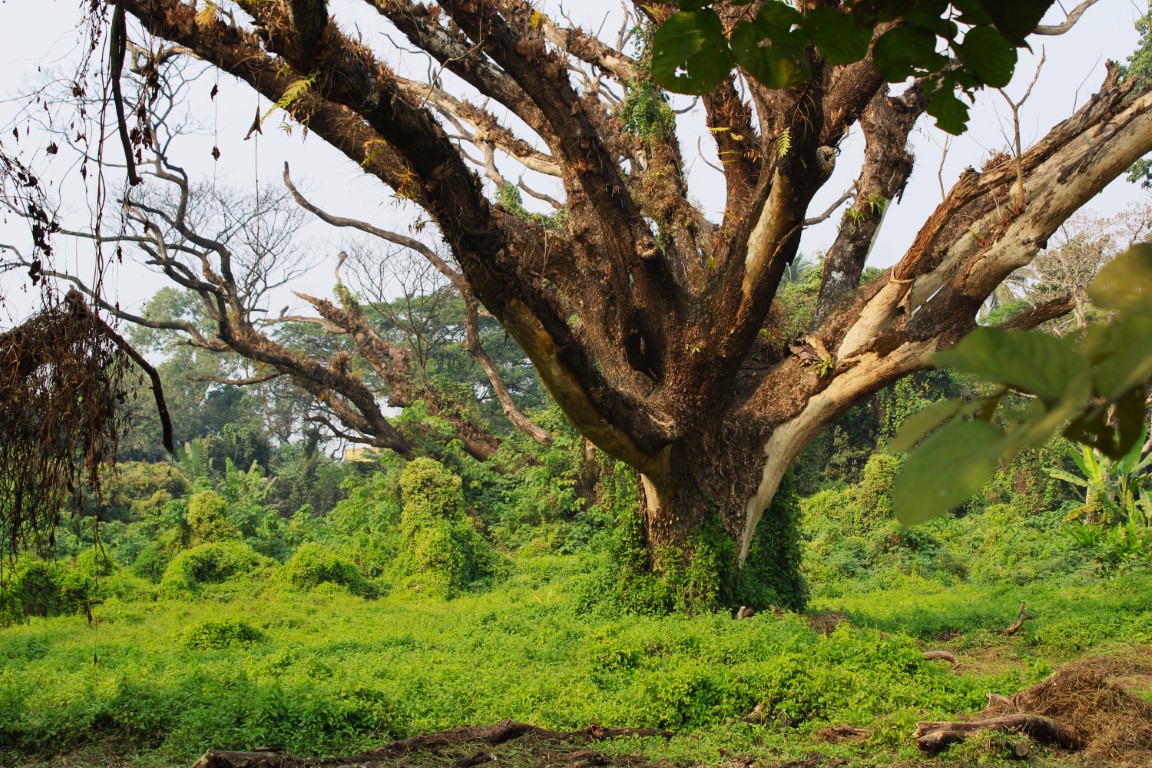
I took this photo yesterday in Cox Town as we were walking over to the United Charities Bazaar (a great and highly recommended event.) It’s a tree that juts out into the road next to a small Hindu temple. When they put in a flyover, they cut away quite a bit of the tree, but the part that remains seems to be thriving.

When one moves to a new country, one experiences a wide variety of cultural insights. All of a sudden, this invisible thing called culture becomes visible. There are, of course, many norms that grate on one’s nerves with respect to the culture one has been transplanted into. In the vast majority of cases, there isn’t anything inherently wrong with the new culture–they are just differences, just shocks to one’s system. There are a few cultural proclivities that one can fairly say are objectively inferior, and it’s a testament to India that they are trying to fix these problems (e.g. by outlawing the caste, by trying to prevent killing off of girl children, etc.)

However, if one is honest with oneself, one also gains insight into one’s native culture, and its particular inferiorities.  As I said, we take culture so for granted that we don’t necessarily even see the peculiarities of our own culture. One of the Indian  norms that I find most laudable is the preservation of living things to the extent possible. Put alternatively, one of the norms of my own culture that I’ve come to find most dismaying is the belief that anything that causes a person the least inconvenience must die immediately.

I imagine that some Westerners in India find it to be a pain to have to step out into the street when walking down the sidewalk because there are occasionally ten-foot diameter trees hogging the whole sidewalk. In the US, they’d just cut down the big tree and replace it with a dwarf tree of some sort that would never give them a problem–and if it did, just get out the saw.

POEM: Scared Little Chipmunk

Taken at Fatehpur Sikri

Taken at Fatehpur Sikri

Poor little rodent, run up a door.

Chattering and chattering, frantic, he swore.

Babel Fish Rodentia translated his words:

“It’s not bad enough, the cats and the birds,

hectic humans and their frantic pace,

always running about like they’re in a race.

Stuck on this peg for nigh half a day.

‘A break in the traffic’, I fervently pray.

Pfff! Bipedal humans with their gigantic feet

designed to crush chipmunks right in the street.”

Training the Mind


IMG_0520Left to its own devices, the mind is like Indian traffic: chaotic, noisy, slow-moving, relentless, and brimming with latent rage. Meditation is a tool to help unsnarl the traffic jams so that one can observe the mind as something other than indecipherable chaos.


Meditation isn’t the end game. If one goes to the gym daily to lift weights, but one has no interest in–or use for–putting one’s muscles to practical use, one is engaging in an act of vanity more than one of personal development. In the same way, if one builds one’s awareness of the mind, and doesn’t use it for betterment in one’s daily life, what is the point? What do I mean by betterment? I mean defeating the petty elements of one’s nature that cause oneself and others suffering and that keep one living in a world of delusion.


Meditation trains one to take note of the daydreams and obsessive thoughts that run through one’s mind, and to do so progressively sooner—before they can coalesce into a full-blown avalanche of negativity and delusion. In meditation, we observe these errant thoughts and then let them float on down the river. As one lives one’s waking life, however, one may take time to consider what these thoughts and daydreams are doing for one. Often one can remain ignorant of the purposes these thoughts serve, realizing only that they make one feel better temporarily.


A few of the purposes that these errant thoughts may serve are:

martyrdom (i.e. thinking the world is against one so whatever goes wrong is the result of outside forces)

-ego-boosting (imaging one has the confidence to do something one doesn’t in reality)

-empowerment (fantasizing one has power in the face of feelings of powerlessness)

-wishful thinking (imagining a perfect life just a PowerBall ticket away)


So, if these thoughts make one feel better, why shouldn’t one let them fly? For one thing, they keep one from seeing the situation as it is. The fantasy or obsessive thought becomes one’s reality and one remains ignorant of what is real. The problem is that if one wants to fix the problem, one must know what it is (i.e. have a true view of it.) If one imagines that one has no role in the problem, then how can one fix the problem? If the problem is one’s unhappiness, one can always do something—even if one can’t change the external situation.  One’s unhappiness is a function of one’s mind, and is, therefore, under one’s control.


Second, by giving into obsessive thoughts and fantasies, one becomes dependent upon them as crutches, and becomes stuck in a cycle of helplessness.


Third, when one removes oneself from the problem, one denies one’s power to change the situation—or the emotional result. One makes oneself vulnerable to manipulation. If one doesn’t recognize the ability of another person to “make one mad,” one denies them that power. (But this requires accepting that one has a responsibility for one’s emotional state, a sometimes uncomfortable proposition.)


I have a theory that the steadfast pursuit of an enlightened mind will either result in enlightenment or insanity. Why should it result in insanity? Because, the process involves stripping away the coping mechanisms that got one through each day. If one has the internal confidence (i.e. fudōshin, or immovable spirit) to stare in the mirror and see one’s flaws and weaknesses, one may achieve an enlightened state. If one lacks such confidence, seeing those flaws and weaknesses may be depressing. Of course, fudōshin  is just one side of the coin, it also matters whether one has the relative freedom from stress to lead an introspective life or whether one feels the constant pressure that propels most people back into old habits. It’s easier to make positive changes when one’s life radically changes, then the power of routine and habit lose hold.


The challenge is that the pursuit of an enlightened state of mind is a constant job. Some branches of Buddhism and other mystic religions suggest that enlightenment is a tipping point, and that once one achieves that state one is forever enlightened. I’m not in a position to refute such beliefs, but it seems that it’s more like being a sober AA member–there is an ever-present potential to revert to old habits of the mind. So, one must be ever vigilant. There’s no rest until one is dead… as far as I know.