BOOK REVIEW: The Silk Road: A Very Short Introduction by James A. Millward

The Silk Road: A Very Short IntroductionThe Silk Road: A Very Short Introduction by James A. Millward
My rating: 4 of 5 stars

Amazon page


Millward’s emphasis is in pointing out that the Silk Road was neither predominantly about silk nor was it the single route that the word “road” implies. While silk was certainly a product that traded on this transportation network, it wasn’t necessarily the most important commodity by value– and certainly wasn’t in terms of its effect on the world. More broadly, the author presents a Silk Road that defies neat delineations and definitions, a Silk Road that is often more of a conceptual bridge than a literal transportation route.

The book consists of six chapters. The first describes the territory serviced by this network, and particularly Central Eurasia which served as the bridge between East and West. This is the Silk Road as connective tissue allowing dispersion of ideas, technologies, products, services, and art between regions separated by vast distances and cultural gulfs.

While chapter one deals in the space of the Silk Road, chapter two explores time periods in which the Silk Road flourished. This begins with Indo-European nomads as far back as 3000 BC / BCE, and proceeds through various eras seeing changes in the route and the products moving along it. Most of these eras, e.g. the classical Silk Road period and the time of the Mongol Empire, are defined by burgeoning use of the network. However, Millward does ask how dead was the period from the 3rd to the 5th AD / CE which is normally considered a dead spot in Silk Road history. It should be noted that modern history is addressed mostly in the last chapter, which considers whether the Silk Road remains relevant in today’s world with its very different transportation and communications infrastructures.

Chapter three is about the biology of the Silk Road. A considerable portion of this chapter is devoted to human dispersion and the legacy of events in Central Asia as seen in human DNA. However, the author also examines the spread of horses, grapes, and dumplings. The approach of focusing on a few key commodities is repeated in chapters four and five. (These three chapters form the core of the book.)

Chapter four reflects on the role of the Silk Road in dispersion of technology. Silk is presented in this chapter, but not so much as pashmina and bolts of cloth, but rather in terms of sericulture—the technology of producing silk. The second product to be evaluated herein is paper, and it’s argued that paper was a more important commodity than was silk. Medicine and military technology are also examined in this chapter as among the biggest global game changers of the Silk Road.

Chapter five is about the spread of art along the Silk Road. One of the most interesting parts of the book, for me personally, was a discussion of stories and myths that spread via the Silk Route, and which can be seen in various cultures along the way. The lute (and stringed instruments that sprung from it) is also considered as a key artistic commodity of trade. There is also an extensive discussion of visual motifs seen along the Silk Road, as well as the blue-and-white porcelain that was a popular product, ultimately becoming widely copied.

As discussed above, the last chapter is about the present and future of the Silk Road. Entitled “Whither the Silk Road,” the author suggests that this trade network didn’t become irrelevant with the rise of transportation by sea and air and new modes of communication—though it has changed considerably.

There are a small number of graphics, including maps as well as photos and pictures that depict examples of commodities and technologies relevant to discussion of Silk Road trade. There are also sections devoted to references, advice on further readings, and a page of relevant websites.

I’d recommend this book for anyone who wants a brief overview of the Silk Road. If you’re a history buff and want to dig deep and see broadly, it seems there are some very well-regarded books of a much more detailed nature. I can’t comment on said books, but I know there is more than one award-winning book on Silk Road trade and cultural interactions. This, as the subtitle suggests, is much more of an outline of the subject. That said, I think the author does a good job of picking a few exemplary commodities, technologies, and arts, and focusing on them. Thus, one does get some of the insights of a book that drills down, just not along as broad of subject matter.

View all my reviews

BOOK REVIEW: The Lost City of the Monkey God by Douglas Preston

The Lost City of the Monkey God: A True StoryThe Lost City of the Monkey God: A True Story by Douglas Preston
My rating: 5 of 5 stars

Amazon page


Preston tells the story of his participation in an expedition into the Mosquitia region of Honduras in search of a lost city, alternately called the White City (i.e. La Ciudad Blanca) or the City of the Monkey God. Preston was acting as a correspondent for National Geographic and was part of a larger team including a photographer, filmmakers, archaeologists, and a team of ex-Spec Ops escorts. It’s not a simple and straightforward tale of Indiana Jones types chasing after the artifacts of a long collapsed civilization (though it does capitalize on that sense of intrigue greatly from the title to the telling of both the historic and contemporary searches for this fabled lost city.) The book tells several stories that occur about and around this search, and they are arguably more interesting.

One of these side stories is the historic accounts of past explorers who searched for the White City. Those were the individuals who more closely corresponded to Indiana Jones–both because they didn’t have an airplane with a state-of-the-art Lidar system (lidar is the light/laser version of radar or sonar), and because they were more likely to engage in tomb-raiding and artifact robbery. This isn’t to say that the expedition that Preston was on didn’t have its share of snakes, quickmud, and other hazards that are the only reason that a huge city from a past civilization would remain undiscovered in the present day. The region in which the expedition took place had not only all the natural hazards of dense jungle, but the human hazards posed by operating in territory controlled by drug cartels. That said, they didn’t have to machete through hundreds of miles of jungle with no idea of where they were likely to find their objective.

One of the most interesting side stories occurred when Preston and many of the members of the expedition came down with leishmaniasis, a nasty tropical disease vectored by sandflies. The disease has a treatment that’s almost as likely to kill one as is the disease. It’s almost impossible to completely get rid of the disease. One can be cured in the sense of being made asymptomatic, but one may remain a potential carrier waiting to be bitten again and to pass the nasty parasite onto another sandfly so they can infect someone else. There are several elements of the disease story that are intriguing. The most interesting is speculation about the role that disease might have played in the sudden evacuation of this lost city. This is informed by a broader discussion of how “Old World” diseases spread through the “New World” with crippling effect. Another is how diseases are neglected when they almost exclusively infect poor and rural people (until a National Geographic correspondent tracks it back to the continental US, that is.)

For those outside of archaeology, one of the least interesting, but still interesting, side stories is that of the intense controversy in the field. Preston is very forthcoming about his talks with scholars who were angered and outraged by the use of terms like “Lost City” which hearken back to a period in which tomb-raiding was the norm and Westerners stole and shipped priceless artifacts back to the West by the ton. These internecine wars of academia reinforce the idea that this isn’t just musty history, but involves questions that many people feel intensely passionate about.

There is a photo section that provides images of both the cast of highly discussed people and a few of the artifacts uncovered. There’s also a section of sources and citations.

I found this book to be fascinating and I’d highly recommend it. Those interested in exploration and adventure tales will find it of obvious interest, but those with a curiosity about public health may find it unexpectedly of interest.

View all my reviews

POEM: Holocaust Haiku

half a coffee
sits on an oak table
long cold


devil days
a line feeds the train
one way


madman rants
spittle flies in an arc
message lost

BOOK REVIEW: Marquis de Sade: A Very Short Introduction by John Phillips

The Marquis de Sade: A Very Short IntroductionThe Marquis de Sade: A Very Short Introduction by John Phillips
My rating: 4 of 5 stars

Amazon page


History has—fairly or not—relegated the Marquis de Sade to status as the author of four violently sexual novels and the eponyms (i.e. sadism and sadist) that arose from those works. He produced many more conventional works than libertine / sadomasochistic ones (including plays, stories, essays, and correspondence), and has been credited among the leading developers of the modern short story. While his philosophy tended to be both extremist and inconsistent, it was also in the vanguard of rationalist thinking that eschewed superstition, put mankind squarely in the realm of nature, and advocated cherishing the body (if tending toward a hedonistic approach, but contrasting with religious thinking in which the body was a mere empty vessel—a burden to be gratefully cast off at death.) The man also lived through fascinating times astride the French Revolution, while spending much of his adult life in prison.

Phillips emphasizes the unfair oversimplification of Sade’s work, ideas, and place in history. That said, he does give special attention to the four libertine novels (i.e. “Justine,” “Juliette,” “120 Days of Sodom,” and “Philosophy of the Bedroom.”) This attention is spread across the book’s seven chapters as Phillips deemed relevant. While the author wants us to recognize Sade was more complicated than we might think, he also suggests that the libertine novels tell us the most about the man’s philosophy and his personal psychology. If it sounds like Phillips is a mere champion of Sade, he does mix in strong criticism with his defensive positions.

The first chapter is a biographical sketch of the life of the Marquis de Sade. Sade’s life story has been the subject of more than one book, so this is that biography greatly condensed. The chapter is designed, as its heading suggests, to separate the man from the myth. In this more objective telling of Sade’s life, one learns some interesting facts. For example, Sade held a judicial position in which he could have passed sentence on his ex-in-laws for whom he had no love. However, the ultra-violent sadist set them free because he didn’t believe in the death sentence, and knew they would be doomed to it if he did otherwise. This is representative of the contradiction of Sade, but it’s also not. Sade distrusted violence in the hands of groups and government even while he swore it was the way of nature between individuals. There is a seed of truth in his apparently irrational stance, and that is that we humans are inescapably of nature.

Chapter two is entitled “Man of Letters” and it looks at Sade as an author and scholar. Here we learn about the breadth and depth of Sade’s work which included comedies, tragedies, and satires, and in which plays out in several media. Chapter three is about Sade’s stance as an atheist, which could have gotten him killed before or after the Revolution, and it was a much more lethal stance than his life as a pornographer. (Note: I use “pornographer” as the authorities might. Phillip makes a point [upon which I agree] that most of Sade’s libertine writings are too disgusting and/or violent to achieve eroticism. Some would classify them in the horror genre rather than that of erotica.)

The fourth chapter describes Sade’s life around the French Revolution. He was in prison at times before and after, but—as mentioned–at one point was given a judgeship. Phillips points out that at one point Sade’s prison cell overlooked a yard in which Robespierre’s guillotine operated as the revolutionary’s “Terror” was in progress. (As has been true on numerous other occasions, revolutionaries can more than match the brutality of those they overthrew.) It seems likely that witnessing executions had a profound influence on Sade’s psyche and philosophy.

Chapter five is about Sade’s theatricality. Besides being a playwright, Sade was known to act and also to use theatrical elements in his other written works. Phillips specifically notes this tendency with respect to “120 Days of Sodom” in which much of the action revolves around four libertines listening to stories of old prostitutes, which the libertines then try to reenact or outdo in person.

Chapter six delves into an area of great controversy: Sade’s views on women. Sade has often been dismissed as a she-hating misogynist. This reputation isn’t without reason, despite the fact that Sade’s libertine characters are brutal to males over which they have power in similar fashion. However, one sees in both “Philosophy of the Boudoir” and “Juliette” a more nuanced view. The former is a girl’s coming of age story (coming to age as a lady libertine, though), and the latter is a counterpoint to “Justine” in which tragedy after tragedy befalls a virtuous female lead (in “Juliette,” Justine’s separated sister–who took to vice in accord with the ways of nature as Sade saw them–experiences prosperity beyond all expectations.) The take-away is that Sade may have been a hater of goody-two-shoes women, but his views on Jezebels seems to border on affectionate.

The final chapter considers Sade’s perspective on liberty. Like his positions on femininity and philosophy, it’s a mixed bag of muddled views, but it doesn’t lack for boldness. As mentioned, Sade saw both the before and after of Revolution and was inherently distrustful of any party in power. He’d been an aristocrat (if a scandalized one) and he’d been freed from the royal dungeons–thus currying temporary favor among revolutionaries. And, of course, he’d watched many a head roll wondering if his day wasn’t soon to come. He saw mankind in the Hobbesian state of nature, and couldn’t help but have it reinforce his established views.

The book has numerous graphics. One should note that many of these are line drawings of a sexual and / or sadomasochistic nature. There are also “further reading” and “references” section, that are a little longer than average for books in this series.

I’ve reviewed a number of books in this “A Very Short Introduction” series put out by Oxford University Press. They are designed to give one the core information on a subject in a compact package. This one is slightly longer than average for the ones I’ve previously reviewed (i.e. usually 100pp, this one is about 140pp), but not severely so–particularly given it being in the humanities.

I’d recommend this book to anyone who wants to separate the Marquis de Sade from his myth. It’s not straight biography, and–if that’ s specifically what you’re looking for–it may not be your primary choice, but I’d still recommend it for some of the information on specific subtopics addressed.

View all my reviews

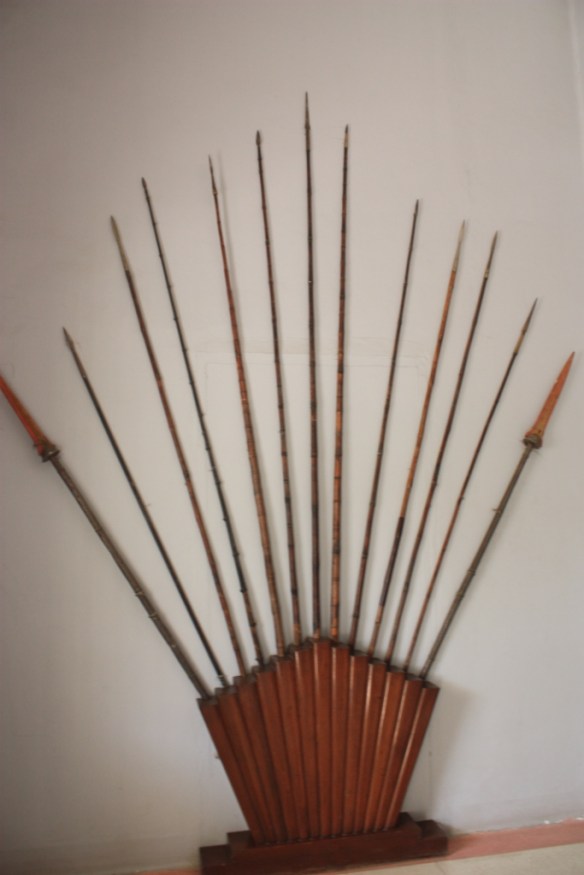
DAILY PHOTO: Weapons of Mehrangarh Fort

Taken on November of 2015 in Jodhpur


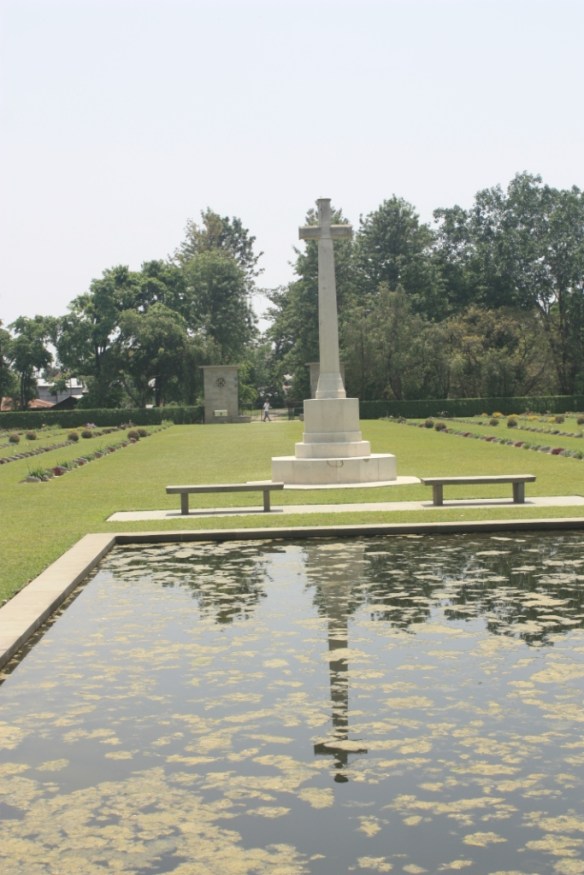
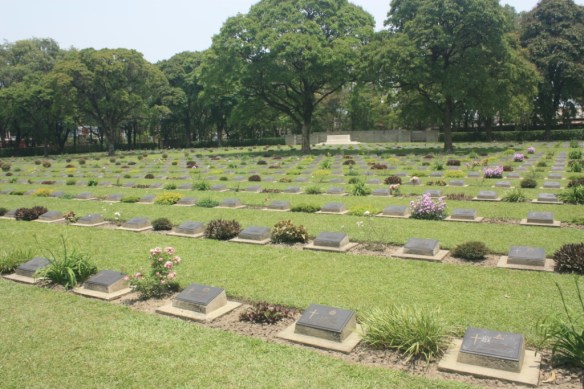
DAILY PHOTO: Imphal War Cemetery

Taken on May 5, 2017 in Imphal


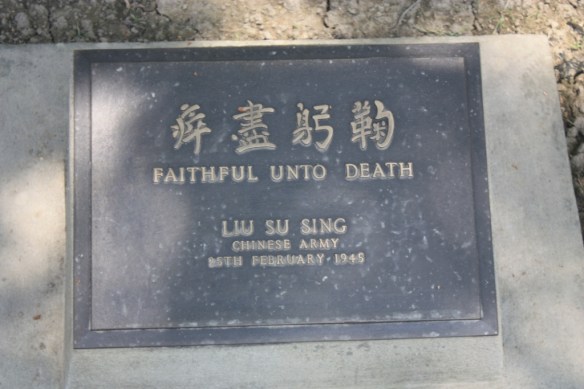
Japan reached the end of line in its advance to the west in Northeastern India. Both Kohima in Nagaland and Imphal in Manipur have substantial war cemeteries. This is the one in Imphal. The graves are largely English names with crosses or Indian names with Hindi writing, but there are a few others of note. There are several unknown soldier graves, and a fair number of Muslim graves.  There are also laborers who got only one name put on their grave, and–in the case below–the grave of a Chinese soldier.


It was a confusing time because many Indians were serving with the British to fight the Japanese, but other Indians were fighting Britain and trying to ally with Japan.


DAILY PHOTO: Medieval Warfare at Sümeg

Taken at Sümeg Castle on December 20, 2016

Taken at Sümeg Castle on December 20, 2016


Close up foot armor.   One imagines this kicking up under the front plate to stab the enemy without ever breaching his armor; file under "W" for "wicked."

Close up of foot armor. One imagines this kicking up under the front plate to stab the enemy without ever breaching his armor; file under “W” for “wicked.”


Another armor close up

Another armor close up


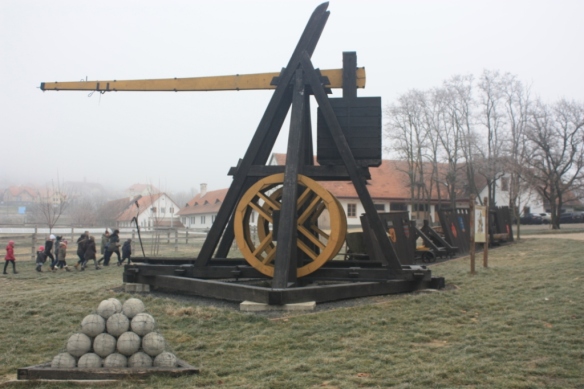
One of the trebuchet on display at the base of Sümeg castle

One of the trebuchet on display at the base of Sümeg castle

BOOK REVIEW: The Devils of Loudun by Aldous Huxley

The Devils of LoudunThe Devils of Loudun by Aldous Huxley
My rating: 5 of 5 stars

Amazon page


In 1634, a parish priest named Urbain Grandier was tortured to exact a confession that he’d engaged in sorcery and made a pact with the devil. There was plenty of reason to believe that Grandier was a less than virtuous fellow (e.g. that he knocked up the teenage daughter of his best friend in Loudun), but no evidence of the crimes that he was actually accused of–and that the Church insisted he cop to despite his steadfast denials. However, there was some potent circumstantial evidence in the form of a case of mass hysteria by members of a convent of Ursuline nuns that was attributed to demonic possession at the time.

Huxley tells this fascinating story in great detail. At some points, perhaps too much detail. The writing style can come across as pretentious, needlessly complicated, and slow-moving at times. (For example, there are frequent quotes and snippets of poetry in French–and a few in Latin—and many of these were not translated to English in the edition that I read. Apparently, the assumption was that the reader would have a basic competency in these languages.) However, when it comes to the climax of the story, the book is as gripping as they come. Having been presented with great insight into Father Grandier, we know him to be a deeply flawed man. He’s like the priests and bishops of a Marquis de Sade novel, lecherous and libertine. Yet, he manages to become a sympathetic character as he shows virtue of sticking to his guns in denial of being in league with Satan long after the truth of his vices has been admitted. In essence, when juxtaposed to his inquisitors, he becomes the lesser of two evils.

I also don’t fault that Huxley delves into analysis, because there is a fascinating question at the heart of the event—one that deserves to be batted around. What made this group of nuns behave in such an un-nun-like fashion? There was writhing, foul language, wardrobe malfunctions, etc. Today, it’s impossible for a rational skeptic to write these events off as demonic possession. However, while the Mother Superior, Sister Jeanne of the Angels, clearly had an axe to grind against Grandier (for issues regarding organizational leadership and not so much for womanizing the townies), that also seems unsatisfactory as a cause for these sisters to behave as they did. There have been a number of cases of pretended possession, but generally these were individuals—e.g. Martha Broissier. There seems to be some fascinating psychology at work in this case.

The book is arranged in 11 longish chapters, largely following a chronological progression of events. The edition that I have has some interesting appendices as well as a bibliography. There isn’t much in the way of graphics, but as the book reads like a novel one doesn’t expect there to be.

I’d recommend this book for those who are interested in history or psychology. It’s fascinating in both domains. While I thought the book could have been a little clearer and more concise, it’s still quite readable and the heart of the story is highly engaging. I was also reading the book as a general interest reader. A scholarly reader might appreciate Huxley’s thoroughness more.

View all my reviews

DAILY PHOTO: Scenes from Sümeg Castle

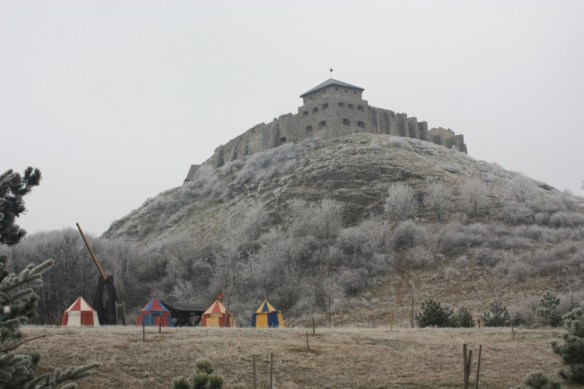
The Castle; Taken on December 20, 2016 at Sümeg

The Castle; Taken on December 20, 2016 at Sümeg


Sümeg is a castle town north of Lake Balaton in Hungary. It was built in the late 13th century by King Bela IV. It was gifted to the Catholic church by King Stephen V. It’s been nicely remodeled, and is now the site of renaissance faire style events. Here are some pics from within:


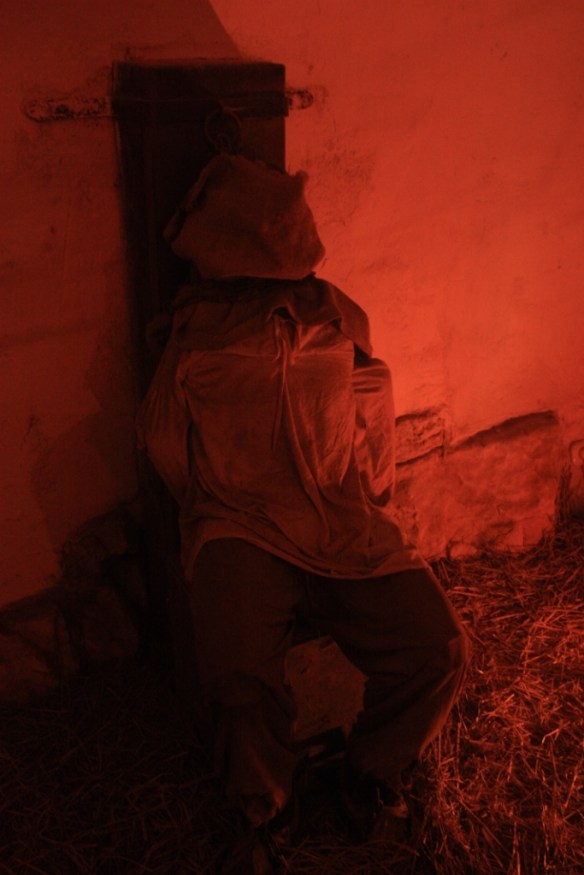
In the dungeon (i.e. the várbörtön)

In the dungeon (i.e. the várbörtön)


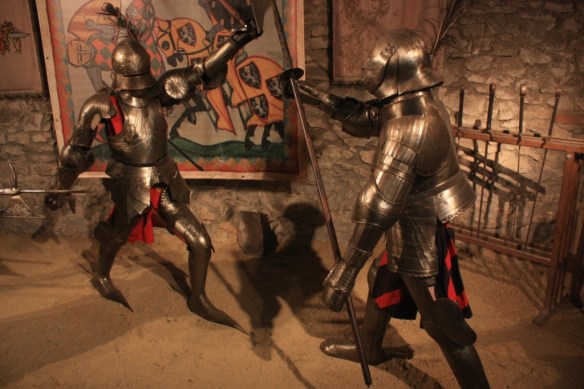
Medieval warfare, check out those pointy boots

Medieval warfare, check out those pointy boots


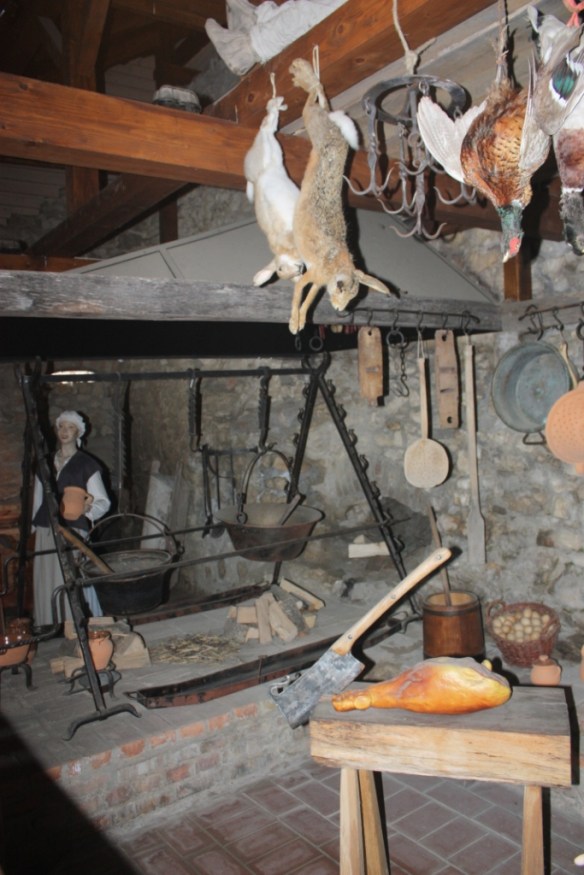
The kitchen

The kitchen


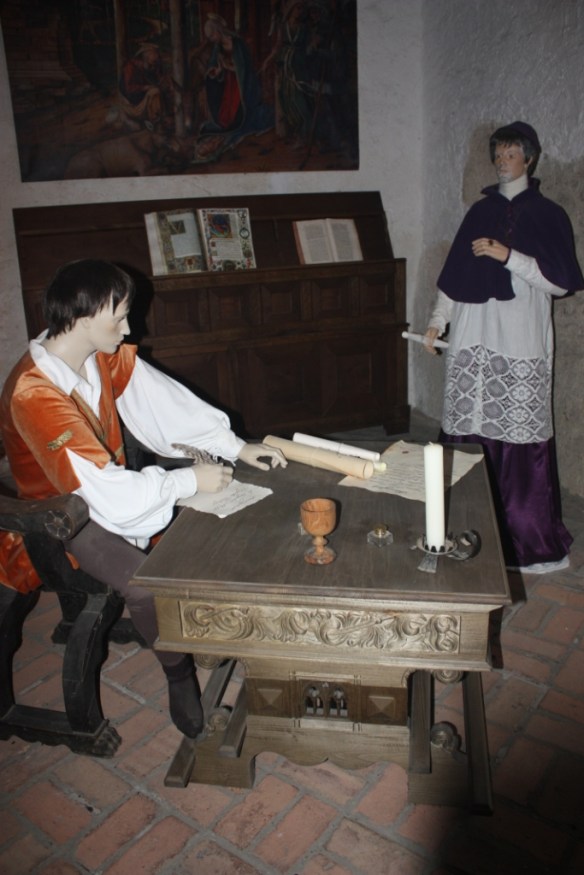
The Bishop's Quarters

The Bishop’s Quarters

DAILY PHOTO: Azad Maidan, Panjim

Taken on October 9, 2016 in Panjim, Goa

Taken on October 9, 2016 in Panjim, Goa


This monument is dedicated to Dr. Tristao de Braganza Cunha, who was an Indian nationalist who opposed the colonial regime. While India gained it’s independence from Britain in 1947, Goa remained under Portuguese rule until 1961.