Know Thyself by Way of a Bigger Vocabulary

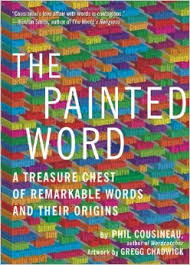
Painted WordI just finished a book on words, The Painted Word. It’s amazing what one can learn about oneself by expanding one’s vocabulary. I found out that I engage in sciamachy and omphaloskepsis on a regular basis. I now know that I’m a obsimath with a borderline case of abibliophobia and a full-blown case of dromomania.


What about you? Do you know your value in millihelens? If so, is said value jolie laide or conventional? Have you ever had gymnophoria? Do you groak? When you engage in omphaloskepsis, do you ever find a phlug?


Key:
Sciamachy = shadowboxing
Omphaloskepsis = navel gazing / deep introspection
Obsimath = like a polymath, but learning later in life
Abibliophobia = fear of running out of reading material
Dromomania = a crazed passion for travel
Millihelen = the beauty required to launch a single ship (re: Helen of Troy)
Jolie laide = unconventional beauty
Gymnophoria = queasy feeling someone is undressing you with their eyes
Groak = stare at some else’s food hoping to be offered some
Phlug = bellybutton lint

Uncle’s Shop, And Other Mysteries of The Indian Auto-Rickshaw

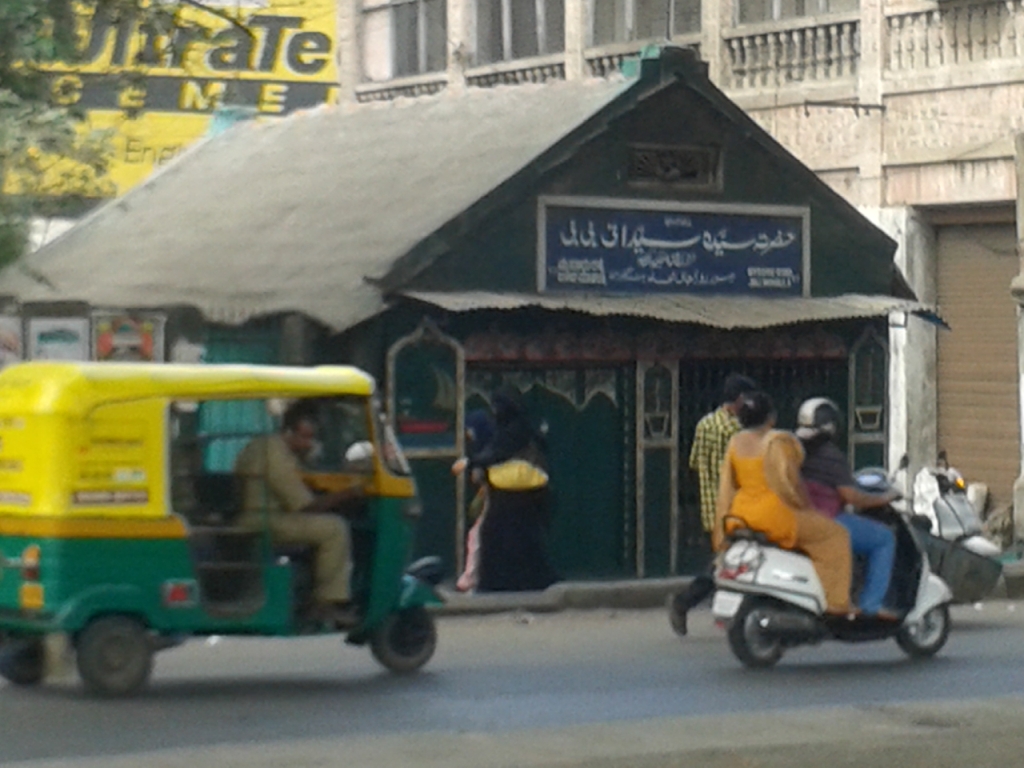
20140219_152150Where is Uncle’s shop? It’s where you are going if you got into an auto-rickshaw with a driver who has volunteered to drive you around for less than the metered rate. It may not be where you want to go, where you think you’re going, or where you’d like to go. But in the driver’s eyes, by taking him up on a reduced fare, you’ve entered into an implicit contract to be taken to a random store and nagged into buying something expensive enough that the shop can happily recoup the driver’s finders fee.

FYI- Bangalore auto-rickshaw fare is currently 25 rupee (Rs) for the first 1.9km, and 13Rs  for every kilometer thereafter. If the driver offers to take you around for 10 or 20Rs, you know they have plans. (Although there is a small chance that they are counting on you to be ignorant of the fact that the place they are offering to take you is 50 feet away.) Usually, a driver will offer to take you to a place for 4 to 8 times the metered rate (sometimes more if he has no idea where said place is–a not uncommon condition in Bangalore.) In other words, the driver will normally try to rip you off in the old-fashioned way (which eats at your pocket-book, but not at your time.)

If you find the new-fangled rip-off scheme to be a deplorable con, just remember to save some of your wrath for FaceBook, Google, and the other websites you commonly use. They almost all work on the same model. You get charged little or nothing to use said sites in exchange for agreeing to be shamelessly pitched stuff you don’t want or need.

What does Uncle’s shop sell? I hope you like a good mystery, because there’s no telling whether Uncle’s shop sells anything in which you have the slightest interest. If you are a single male, Uncle’s shop probably sells saris and pashminas. If you have a tiny apartment, Uncle’s shop probably specializes in 14 foot tall bronze statues of Ganesha. It could sell woven goods, knick-knacks, bric-a-brac, widgets, tsotchkes, or relics of a religion you know nothing about so you can engage in some low-grade impiety. (FYI- You may not realize this but for the devoted, it can be a bit offensive for a bunch of non-believers to be wearing “OM” symbols or having Buddha statues who aren’t Hindu/Yogic or Buddhist, respectively. Sort of the way many hardcore Christians feel about how Christmas was shanghai’d by a jolly old elf or Easter was overtaken by a giant bunny.) In some cases, Uncle’s shop will sell all of the aforementioned items and more.

Surely I will get an outstanding deal at Uncle’s shop, right? I mean, Uncle is not going to rip off his nephew’s customer, right? Wrong. First of all, there is an infinitesimally small chance that the driver is biologically related to the store owner in any way, shape, or form. It’s probably more likely that they’ve never formally met.

Second, let’s do some Uncle’s shop mathematics. We will call the wholesale cost of the product “C” and the bloated profit that the store owner would like “W” (for “wishful thinking profit”)  and the lowest profit “Uncle” is willing to accept “R” (for “reservation price profit.”) If you just walked into the shop off the street and bought said item you’d pay some amount ≤(C+W) and ≥(C+R).

However, now the driver expects a reward. [Granted, it may be nominal in the scheme of things.] We’ll call the fixed-rate payment to the driver “S” (for “sucker wrangling charge.”)  [You may wonder why I’m assuming this is a fixed-rate payment. Fair enough, if the driver is savvy, it will be percentage. However, my finding has been that between 60% and 80% of autorickshaw drivers in Bangalore don’t understand the concept of a map. I’m not saying they don’t know how to use a map. I’m saying that they don’t get that it’s a representation of the streets surrounding them. My point being, auto-rickshaw drivers are–as a group–not savvy. Granted, certain among them are really savvy. However, my point holds as long as we can except that S>0, for all S–whether fixed or a percentage.)

Long story short, now you will pay between (C+W+S) and (C+R+S), where S>0.  Long story shorter, going to Uncle’s shop with an auto driver will not save you money (unless you’re looking for something specific, and it will save you the value of time to have a guide to show you where to get what you’re after. Good luck with said guide being an auto driver, the driver doesn’t care what you want, he wants you to buy whatever Uncle’s shop is selling. You can buy what you want on your own time.) It’s true that you may find it worth it to pay the nominal extra amount for many reasons, i.e. convenience, a likable driver, etc. Just be informed.

How come it’s called Uncle’s shop, when nobody involved is the Uncle of anybody else involved? Indians use “auntie” and “uncle” as honorifics for older individuals who are in positions / stature commanding respect–it needn’t be a relative by blood. For auto drivers, this includes random shop owners who’ll pay them 50 rupee for dragging hapless tourists into the store.


The Non-shopping Firang

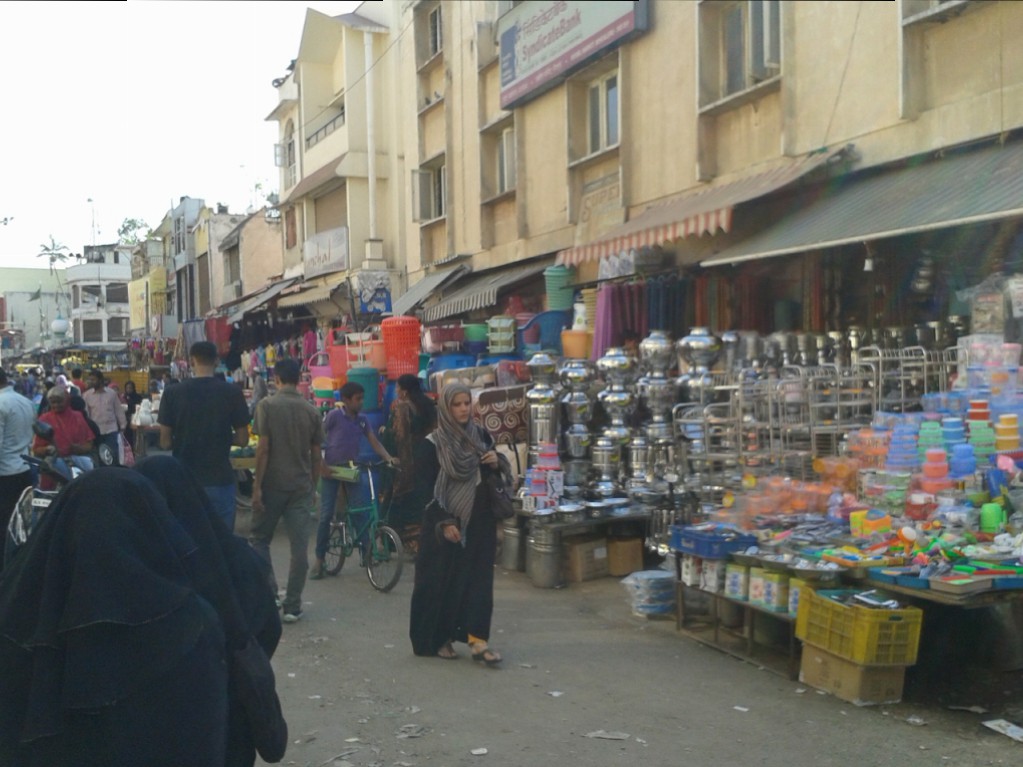
20140316_160803With the notable exception of books, I hate shopping. There are few endeavors more painfully tedious to me than wandering through stores looking for clothes, tsotchkes, knick-knacks, bric-a-brac, widgets, or doo-dads. I do go shopping, in part because I like to eat, and in part because societal conventions require that I wear clothing (you’re welcome.)


Were I not married, I’d be a complete fashion nightmare because I have only three questions when shopping for clothes. 1.) Does it look like it fits? 2.) Does it look comfortable? 3.) Is the price reasonable? (i.e. given that I’m a cheapskate for which stylishness and/or trendiness mean diddlysquat.) If the price of two shirts of the same size is identical, I will buy the one that’s closest to the cash register–or which will otherwise get me out of the store the quickest.


You’ll note, I didn’t include the question: “Does it match?” Correct. I’m not even sure I know what that means. If it’s a shirt, it matches pants because you wear them together, right? A shirt would not match another shirt, unless one could wear one over the other? If you can’t wear the two items at the same time, they definitely don’t match, but that doesn’t come up often. (I know all the bits that need covering, ergo, I can succeed at picking a group of garments that covers all the essential anatomical area.)


I also didn’t include “Does it look good?” It had to look good to someone–they made the damn thing. Who am I to say my taste is better than theirs? I think we’ve already established that I know not thing-one about being fashionable. Now, if it has feathers or a cape, I wouldn’t buy it on the grounds of lack of functionality (have you ever gotten your cape caught in an elevator or escalator?), but I don’t judge on taste. There but for the grace of my wife, go I… looking like non-sparkly Elton John.


So where am I going with this, you may ask? What’s intriguing is that, despite the fact that I hate shopping, I get asked if I want to be taken to a market, mall, or commercial district about four times per day (fyi, that’s roughly the number of times I go shopping per annum.)


Imagine a white person walking down the sidewalk wearing a t-shirt and sweatpants, said person has a full duffle-bag on their shoulder that is long enough to accommodate a standard size yoga mat when rolled up. Where is this person going?

A.) He /she is going to the yoga studio.

B.) He /she is going to a gym.

C.) He / she is going to a martial arts studio.

D.) There isn’t enough information to determine between A,B, or C.

E.) He /she desperately wants to go shopping.


If you answered “D” you’re a keen and astute observer. If you answered A, B, or C, you have drawn a reasonable conclusion, but did so too quickly and without sufficient information for that degree of specificity.  If you answered “E,” you drive an autorickshaw (tuk-tuk) for a living.


For a while, I thought that this was just blatant ignorance, as all forms of racism are. Could these drivers truly not fathom–despite all evidence to the contrary–that I (i.e. whitey) spent my time doing things other than shopping? Did they really think that my days were divided between counting infinite piles of cash and spending it on crap for which I had no real need?


Then I realized that it was tenacious hope that drove these inquiries, and not biases. I came to this conclusion as I was watching a few of the recent Superbowl ads. If I don’t get enraged at Madison Avenue, I can’t really get mad at the aforementioned driver. Advertisers and that driver are both just trying to persuade me that something that I don’t need and have no interest in is somehow pursuit-worthy.


The driver knows that I’m going to yoga or kalari or a funeral (or wherever the evidence might suggest I’m headed at the moment), but they’re just holding out the thin hope that I can be diverted from that funeral to go buy some gee-gaw from which they can obtain a commission. In a way, they’re like the guys (or girls, to be non-discriminatory) who hit on a person who is way out of their league. It takes a lot of confidence to suffer repeated crushing rejection with such low probability of success. There’s a guy in the building where I get both my haircuts and Tibetan thukpa, who invites me into his carpet shop every single time I enter the building–despite the fact that the first 100 times I’ve shown zero interest. As long as said persistent wooer doesn’t resort to stalking, it’s kind of endearing. (Of course, it’s a thin line into stalker territory, and then it becomes instantly intolerable.)


There’s another reason I’ve discovered I shouldn’t hold this persistence against the drivers. That’s that they’re stereotyping isn’t without basis. Most of my expat compatriots do love themselves some shopping. I’m very curious about the root of this behavior. I suspect that it’s the vestigial evolutionary programming of hunter/gatherer behavior carried over into people who don’t like to get their toes muddy, to have to touch anything “icky,” or–in general–to be outdoors.


However, I’m a little out of my league, because I only have this compulsion to shop for books. I’m sure that’s residual hunter / gather behavior, but there’s a goal that can be understood. Through book shopping, I’m searching for a kind of nourishment–not the kind that ends hunger pangs, but the kind that’s an assault on my stupidity. I still don’t have a theory for how this applies to Hello Kitty stickers, Chia Pets, a second (or 403rd) pair of sneakers, or any of the other inane crap the people really–but unbelievably–purchase.

IMG_2160

Does That Mean What I Think It Does? No, No It Does Not

Would you like a kick in the crotch with your cupcake?

Would you like a kick in the crotch with your cupcake? (The name reads a bit hostile for an American.)

Cultural idiosyncrasies of language matter. In India on a daily basis I find myself asking, “They don’t mean what I think they mean, do they?” Here’s a few examples.

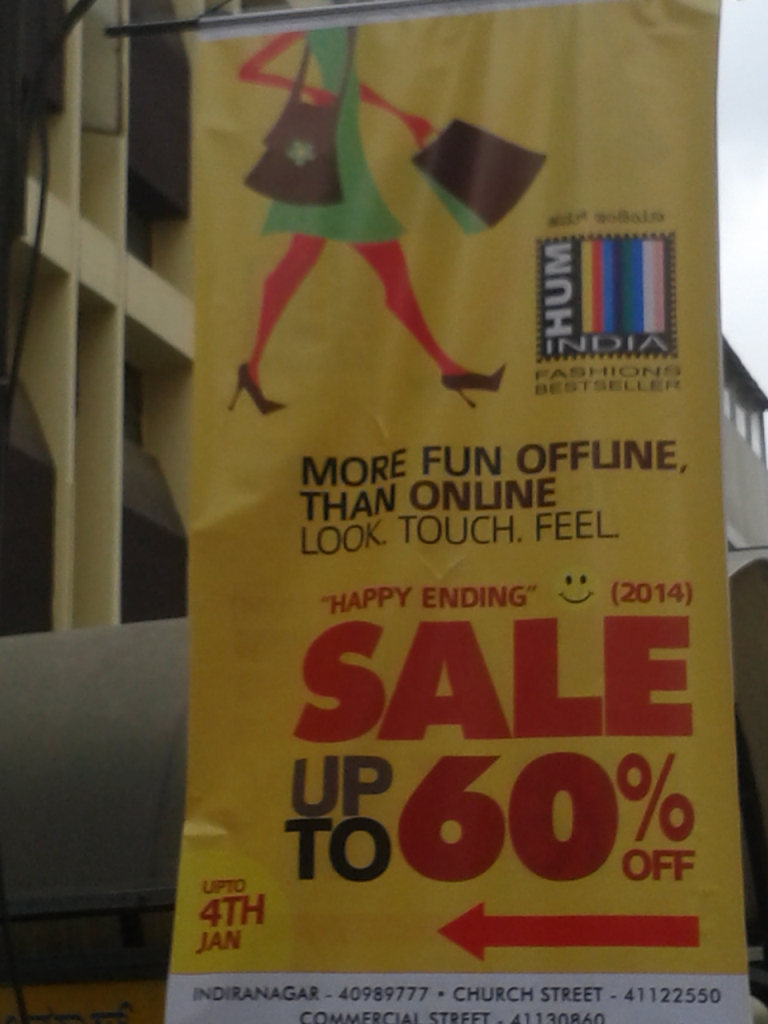
You mean you're selling clothes, just clothes?

You mean you’re selling clothes, just clothes? (The “Happy Ending” sale just seems a little risqué to me. If the smiley face was winking it would really be suggestive.)

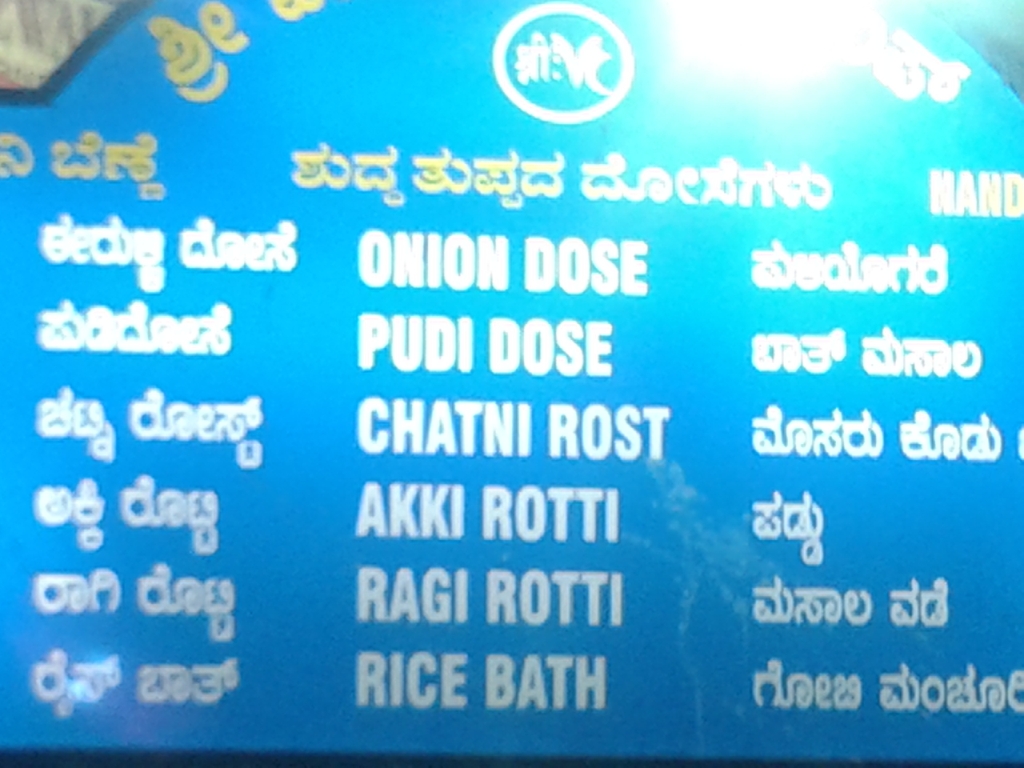
No, Sir, I will not loofah you just because you bought the rice bath!

No, Sir, I will not loofah you just because you ordered the rice bath! (FYI: rice bath is a Karnataka rice dish with lentils.)

Cut my hair? I thought this was a saloon?

Cut my hair? I thought this was a saloon?

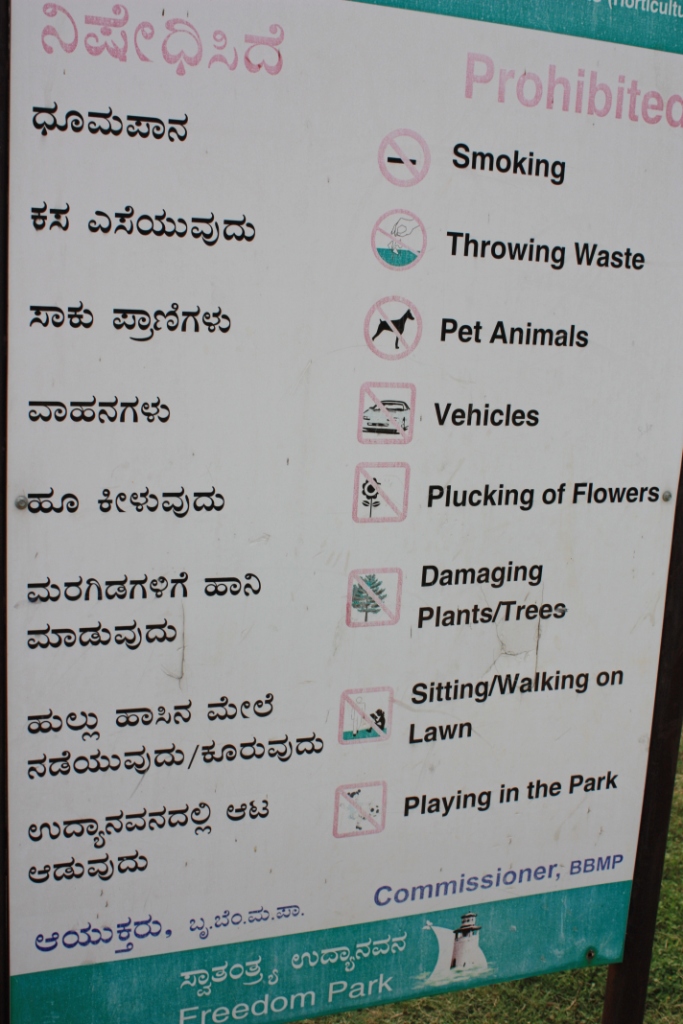
"Playing in the Park" is prohibited. Dear Park, What the hell are you good for? Signed Concerned Resident.

“Playing in the Park” is prohibited. Dear Park, What the hell are you good for? Signed Concerned Resident


Seeking Expert Answers About A Possible Bengaluru Ratzilla

This fake rat is kind of large, but if you asked me   how it differed from real Indian rats, I'd have to say the bling. Indian rats aren't ostentatious, and rarely wear jewelry.

This fake rat is kind of big, but if you asked me how it differed from real Indian rats, I’d have to say the bling. Real Bengaluru rats aren’t ostentatious, and rarely wear jewelry.

Occasionally, I will see a rat–usually the carcass thereof–that makes me exclaim… Duh-uh-AAAaaammmmm! They often look like beavers, sans the distinctive paddle-tail, but with a whip-like, hairless rat tail in its place.


These sightings have raised some intriguing questions:


The first question is for any biologists or geneticists who–quite improbably–might read this post. Is it possible for the offspring of an English Bulldog and a Norwegian Rat to survive? If so, I’m pretty sure that I’ve seen one. If I find out where it lives, will they name it after me? Can I pay them not to?


The second question is for statisticians–particularly bio-statisticians. Let’s say that 95 percent of rats successfully live their lives underground, in walls, and out of sight. Let’s further say that I’ve seen a rat that was 1.5 feet long and 0.75 feet wide. Is it possible to calculate how large the biggest statistically likely rat would be. I’m thinking, lurking somewhere in the sewers, there is a three-foot long and foot-and-a-half wide ratzilla–probably chomping on a cigar and belching occasionally.


The third question is for an ecologist.  I know that cats and other predators will attack–often successfully–prey that are larger than they are. However, given the freakish disparity in sizes that we are seeing, will the existing ecological order be overturned, and to what effect? Bangalorean cats are about the same size as American cats, but Bangalorean rats are about the size of American pigs–not the cute little pot-bellied variety but rather the kind that take a blue ribbon at a 4H County Fair. I know humans were once primarily prey, and only quite recently became dominant predators. This worries me because I know that humanity’s prey-like predilection to be scared of everything, combined with its unprecedented predatory weapon set, has fucked up the world but good. I can only image what a rat would do with a hydrogen bomb.


The fourth question for a rat neurologist. Are rats really that much smarter than turtles? I know the Teenage Mutant Ninja Turtles follow their Rat Sensei unquestioningly. I googled it. Rats live about 1 year and turtles can live to be about 40. So Splinter must have learned much faster in addition to being much smarter.


OK, the last one was not a serious question (but it’s a serious plot-hole for TMNT), but I do have one last question for the general public.


Which do you find more disturbing: a.) when you see a single mammoth rat? or b.) when you see an elaborate Vietcong-style series of tunnel openings and you know there is a billion rat army wriggling all over each other just centimeters below your feet?


Please don’t think I’m anti-rat. I know that, while we fear the plague-infested rats, it was really the fleas that gave us the Black Plague. I also know there are places like Karni Mata Temple in Rajasthan where rats are treated deferentially. There are an estimate 20,000 rats living on the temple grounds.

Source: Wikipedia entry on Karni Mata Temple in Rajasthan.

Source: Wikipedia entry on Karni Mata Temple in Rajasthan.

I guess this raises one more question for a rat nutritionist. How come these rats, which are fed and cared for, don’t get huge like the one’s lurking in the back alleys of Bengaluru.


BOOK REVIEW: Sorry I Ruined Your Orgy by Bradley Sands

Sorry I Ruined Your OrgySorry I Ruined Your Orgy by Bradley Sands

My rating: 3 of 5 stars

Amazon page

Contrary to the title, this isn’t an etiquette primer on how to make amends for a poor performance at a friend’s sexual soiree. It’s a collection of absurdist flash fiction that takes its name from a its introductory story in which a man shows up to an orgy wearing a bear costume and proceeds to behave badly.

Most of these stories are under a page long and few are longer than three pages. The stories don’t make sense, and are not intended to. (If they do make sense, the author has failed.) Instead, they are designed to subvert expectations to the maximum extent possible. Subverted expectations being the foundation of humor, there will be chuckles. However, it’s not just humor. It’s about defying one’s ability to judge what’s around the next corner by resisting any temptation to observe socio-cultural conventions about what could possibly and properly come next. Like spoken word acts, these stories are meant to invoke a response in the reader by surprises of language—often jarring surprises—more than by way of meaning.

If you are the type who doesn’t take words too seriously and take to absurdity like it’s a Zen koan, you might enjoy this brief work for the tickling it gives one’s mind. If you’re the type who takes words very seriously and are prone to get bent out of shape by “inappropriate” or loose word use, you will hate it and should avoid the trauma of reading it.

I’ll elaborate on my last statement. Irreverence, impiety, and a proclivity for the shocking are a few of the characteristics that go hand-in-hand with subverting expectations and conventions. Because of this, there’s a fair amount of profanity and jarring concepts included in the mix. I’ll offer one example of such a jarring concept that’s included in the book: “rape camp.” If you’re prone to be offended by the loose use of the word “rape,” then probably the only more reprehensible phrase than “rape camp” would be “rape fiesta” (though, to be fair, in the book a rape camp is more like a concentration camp than a summer camp.)

As a litmus test of how you’ll respond to this work, imagine opening a Hallmark card and reading the following sentence as contained in this book, “Sorry your grandma died! She molested me when I was eight.” If—despite realizing that it’s so wrong—you can’t help but grin, you’ll like this book. If your impulse is to write the author hate mail, you should avoid reading it.

It should be noted that the book is not all rape, molestation, and orgies. The book mostly consists of less prurient attempts to achieve the unexpected and/or shocking.

View all my reviews

TRAVEL TIP: Know Your Country’s Go-to Collision Avoidance Device

Bangalore

Bangalore traffic

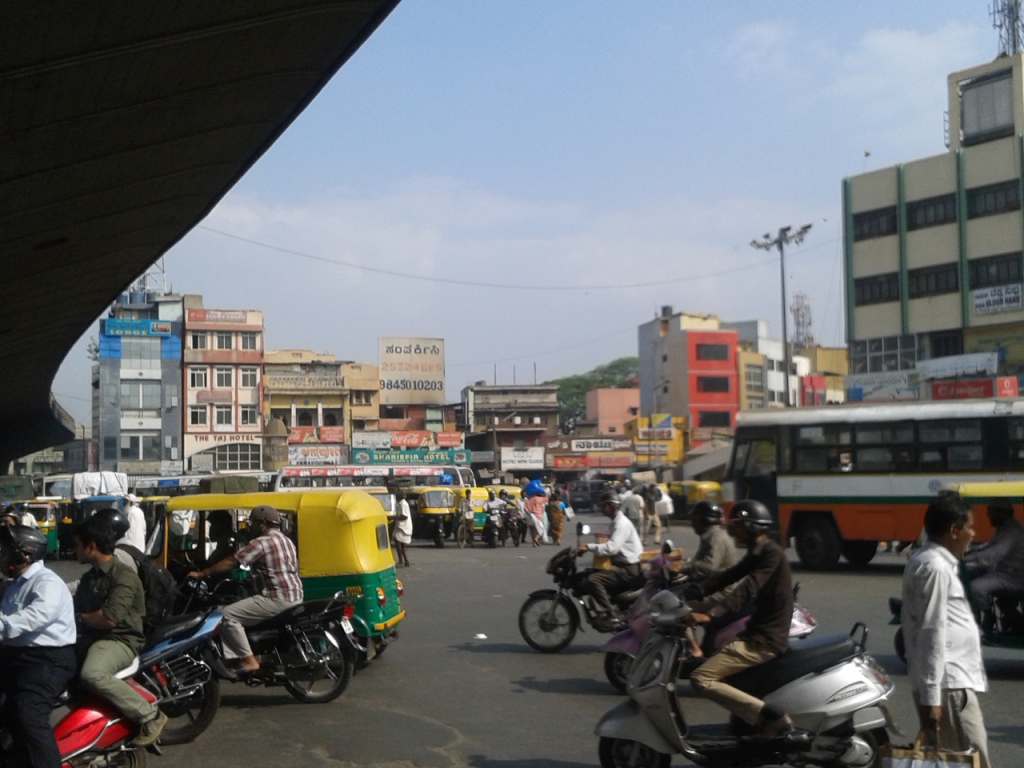
It took me several months to master the art of crossing streets in India. Pedestrian crossing signals are as rare as gold crappers, and as useful as wings on a goat. There are many streets that one can’t cross in one fell swoop between the hours of 8am and 11pm. So, if you don’t want to spend the day trapped on your block like a jittery puppy, you need to plunge into traffic and take it one lane at a time.

Fearlessness. That’s the key–pure and simple. One will have crosstown buses whizzing past on either side. In the military, during Basic Training, we got inoculations via cattle vaccination-guns. It was an assembly line of shots. Take one step forward get a shot, one more step and get another shot. The clinic staff had a lot of recruits to inoculate that were standing between them and their morning coffee. The warning was, “Take one step and stand perfectly still.” Because as soon as you stopped, they would  “shu-shunk” that shot into your deltoid. If you wavered, the gun wouldn’t make a nice solitary puncture, but rather would gouge out a slit. Or so we were told. At any rate, the advice to a Bangalore pedestrian is the same, “Step onto the dashed line and remain perfectly still, because if you cringe, you’ll get a truck mirror up side the cranium and you’ll die.”

I traveled to Thailand this past month. I’ve been to Thailand on a couple previous occasions, but not with the implicit rules of Indian traffic ingrained in me. My first official act in Bangkok was to almost cause a multi-car pile up accident. Why? Because Thai people do this strange thing when a  pedestrian wanders into the street or an intersection in front of them, they apply the brakes. Now every Indian knows that the proper device to employ when someone crosses into traffic in front of one is the horn. As a matter of fact, the horn is the go-to Indian driving tool for almost every eventuality. It wouldn’t occur to most Indians to apply the brakes and certainly not to make a lane change for an encroaching pedestrian or other driver. If the pedestrian doesn’t get out of one’s way, you simply lean into the horn, putting all your body weight into it.

Now, it may sound like I’m giving Indian drivers a hard time. However, it occurred to me that either system works as long as everybody is on the same page. Those who’ve experienced roundabouts will tell you that they are at least as safe–and probably more so–than crossroad intersections. Even though roundabouts seem terrifying for novice drivers, they have a prevailing logic that is sound. By the same token,  it may be that the Indian approach is at least as safe. (It certainly makes a pedestrian more cautious.) The Thai approach, which is widespread though most of the world, is at once more polite but less trusting than the Indian approach.


BONUS TRAVEL TRAFFIC ADVICE: Anywhere in the developing world, always look both ways when crossing one-way streets. The prevailing view is that lane directives are optional for scooters and small motorcycles.


TODAY’S RANDOM THOUGHT: Hitler’s Final Victory

Source: German Federal Archives

Source: German Federal Archives

Hitler killed the short-stache (a.k.a. the “toothbrush mustache.”) Imagine that, almost 70 years after his death, he still holds power over people’s decisions about facial hair.

This is a misplaced take-away lesson. It’s the unbridled narcissism, the icy hatred, and the irrational exuberance in the power of evil of Hitler that should be abandoned (yet, somehow, those intangibles still quietly exist.) It’s not the superficial aspects of Hitler that should be shunned, but the ones at the bastard’s core.

I’m not saying the toothbrush-stache was a good look. On the contrary–as one who has had a mustache his entire adult life and has worn a beard now for several years–I’m a little offended by the lack of commitment to one’s choice of facial hair that the toothbrush-stache represents. (Incidentally, I feel the same about the sole patch and mutton chops.) In my mind, one should go full-stache or go home to shave.

Still, there being no accounting for taste, I think those individuals who would otherwise find the short-stache appealing (i.e. you know, indecisive types who wear culottes and eat with sporks) should revive the toothbrush mustache as a big fuck-you to Hitler–don’t let tyrants boss you around from the grave.

Toothbrush mustache admirers of world, unite!  (No, I won’t be joining you.)

The Prostate Exam

Before moving to India, I got a stem to stern medical checkup. This included the dreaded  first prostate exam (emphasis on “prostate exam” not on “first” as I don’t suspect the process gets any more pleasant.) When my wife and I had both been on my work insurance, we had a HMO that said they didn’t do prostate exams for white males until they were 65 and older (or postmortem, if they died of prostate cancer, whichever came first.) That should’ve been a clue that they were a bunch of bean-counting quacks, but as I was less than eager to get said exam I took their word for it.


Anyhow, the area where I lived was fairly close to Emory University, and my new doctor’s office was even closer. (For those of you unfamiliar with Atlanta or Georgia–Emory has one of the preeminent medical schools in the Southeast and for some specialties the country) When I got my physical, after the preliminaries conducted by the nurse, I was next seen by what–for lack of a better term–I’ll call a junior doctor (ER went off the air too long ago for me to remember the proper terminology). This was a poised and professional young woman–I know not whether a medical student or recent graduate from Emory medical school.


She reviewed my medical history and did a few rudimentary “stick out your tongue and say ‘ahh'” kinds of things.   Then she told me that my doctor–a man I’d never met before–would be into look me over and write the prescriptions for the meds that I needed for coming to an area prone to malaria and other plagues.


She then asked, “If you’d prefer, your doctor can do your prostate exam. Otherwise, I’ll do it. Do you have a preference?”


I said, “Having never met the man, and at the risk of sounding sexist, I’m going to assume that you’ve got daintier hands. Ergo, you’ve got the job.”   To which she replied, “Yeeeah, me,” in the feeblest monotone voice, her tone suggesting that she might not be as thrilled by the prospect as her words would have indicated.


I had the exam. It was quick, painless, but–I’ll not lie–not without the inevitable awkwardness associated with one person having a hand–or part thereof–lodged in another person.


For those of you who know me, it goes without saying that my doctor turned out to be the most petite homuculus of a man. (You know what they say about what happens when you ASS-U-ME, U get the hand of  a bigger ME in your ASS.) However, you pays your money and you takes your choice. I wouldn’t have felt comfortable asking the doctor and intern to place their palms together to see who had bigger digits.

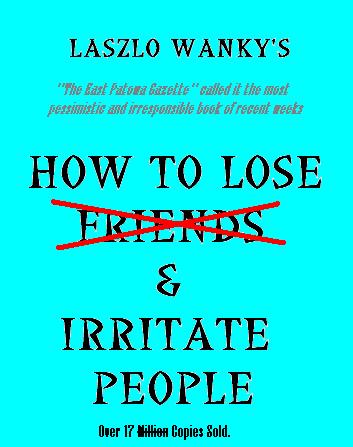
BOOK REVIEW: How to Lose Friends & Irritate People by Laszlo Wanky

Cover_How_to_Lose_Friends


How to Lose Friends and Irritate People by Laszlo Wanky

My Rating: 5 out of 5 Stars

Amazon Page


Wanky pays an homage to Dale Carnegie’s seminal self-help book by calling it, “a book for its time–that time being one in which people were lonely, pathetic, and didn’t understand social networking.” The author’s central premise is that we live in very different times, and today people are inundated by Facebook friends they neither like nor find interesting. Furthermore, Wanky goes on to argue, gone are the days when likable people are  liked. We live in an era in which douche-bags and drug-addled celebrities are gods among men. The book offers many headline examples, such as how Miley Cyrus’s career crashed as the sweet and admirable Hannah Montana, but then she caught her second wind by adopting the persona of a meth-addicted prostitute.


Roughly half of the book is dedicated to how to find success in defriending unwanted virtual amigos. Wanky suggests that the usual tactic of subtly “un-adding” people almost always fails because people are too “wussified” to make it stick. The only effective strategy, according to the author, is to trick others into removing you from their list of pseudo-friends. Be forewarned, however, being uninteresting and annoying is not enough–one must be spectacularly despicable. This is hard for most people–whom Wanky calls “the sychophantic masses”–because they slobber over being liked. Wanky devotes three chapters to helping people get over their love of being liked. The most cogent of these chapters is, “Kim Jong Un or Gandhi: Who Ya Wanna Party With?


The aforementioned chapters also help set up Part II of the book, which explains how one can put a skyrocket on one’s career by borrowing the techniques of the likes of Howard Stern, Rush Limbaugh, and Piers Morgan. Wanky shows how, like these individuals, one can be thoroughly unlikable while having people hang on your every word.  Again, three chapters form the core of this part of the book. They are: “Loud = True”, “Bombastic Fact Picking for Beginners”, and “Your Hairstyle Makes You Sound Stupid.”


I’m not going to pretend that Mr. Wanky’s language is fluid or graceful.  The author’s prose is colloquial… at best. A typical sentence–seen in chapter 8–is, “If ya wanna get with the boom-chiggy-booms, you gotta shout those fart-monkeys down, cause if they hear ’em they’ll all be like, ‘who’s the fart-monkey now, bitch, who’s the fart-monkey now?'”


The book’s strengths include its incredible brevity. Weighing in at only 26 pages, four chapters consist entirely of 27-syllable haiku. It also features fine graphics such as a picture of a “fart-monkey” that any grandmother would be proud to stick on their refrigerator. (The color choices were bit odd, but Wanky was clearly limited to the 16-color box of Crayolas.)


I’d recommend this book for anyone who doesn’t like friends and who really despises people’s indifference toward them. I have no doubt that by following Mr. Wanky’s recommendations, one can become a thoroughly loathsome individual in a matter of days.


Lastly, Happy April Fool’s Day.