BOOK REVIEW: The Color of Magic by Terry Prachett

The Color of Magic (Discworld, #1)The Color of Magic by Terry Pratchett

My rating: 3 of 5 stars

Amazon page
The Color of Magic is a hero’s journey tale done in comedic fashion. It’s the first book in Prachett’s disc world series. An incompetent wizard, Rincewind, becomes the guide to a goofy but wealthy tourist named Twoflower. However, as it happens the events that confront these two on their journey are part of a game being played between gods. I loved the humor, liked the story, but wasn’t a fan of the organization of the book.

I should admit up front that fantasy is–hands down–my least favorite genre, and I can’t say that view didn’t jaundice my perception of this book. However, it’s a testament to Pratchett’s humor and readability that I continued reading it.

What is my beef with fantasy in general? First, once one introduces magic, how does one maintain tension in an environment in which anything can happen effortlessly? Obviously, fantasy fans find plenty of tension to keep them reading, but I just don’t get it personally. I know that one retort is that the same could be said of other speculative fiction genres. To the degree that is true, I also don’t care for those other genres so much either. However, sci-fi (for example) has a basis for constraints that can be widely agreed upon. Second, the appeal of feudal society for setting perplexes me. I guess there is a certain romance to these periods for fans (perhaps because they imagine themselves in the statistically-unlikely role of king or knight as opposed to the much more likely position of serfdom, but whatever), but I see this type of society as backward and unsustainable (a ten millennia old kingdom maybe possible in a world of magic, but not in a world as we know it.)

I know fantasy fans will be able to come up with examples of how their favorite authors avoid both of the pet peeves mentioned. In truth, Pratchett does a good job of negating these pitfalls. With respect to the magic problem, he makes the protagonist wizard really inept and, therefore, easily in situations over his head. Simply put, he makes his lead weak relative to those confronting him. With respect to the setting issue, Pratchett creates an entirely different kind of world, the disc world. This is not Charlemagne’s Europe with wizards.

Prachett is often compared to Douglas Adams. In fact, if you Google “the Douglas Adams of fantasy,” you are sure to pull sites pertaining to Pratchett. One can see the same type of absurdist humor in Prachett’s work. Here’s a compilation of a few of my favorite lines:

“Being Ymor’s right-hand man was like being gently flogged to death with scented bootlaces.”

“No, what he didn’t like about heroes was that they were usually suicidally gloomy when sober and homicidally insane when drunk.”

“Yah. I outnumber you one to two.”

“He wondered what kind of life it would be, having to keep swimming all the time to stay exactly in the same place. Pretty similar to his own, he decided.”

“But the captain had long ago decided that he would, on the whole, prefer to achieve immortality by not dying.”

“Your affected air of craven cowardness does not fool me.”

Pratchett appeals to the downtrodden in all of us. This can best be gleaned from the tale of Goldeneyes Silverhand Dactylos. Dactylos is a superb craftsman who is blinded, has his hand cut off, and suffers ever greater indignities because the Emir wants him to never again produce anything as lovely. It’s like the myth about Shah Jahan having the hands cut off Taj Mahal craftsman, except Pratchett’s Emir keeps asking the same man of increasing handicaps back to construct ever greater marvels of engineering.

The book is arranged in just four chapters. This is a bit of an oddity for commercial fiction, and I don’t really care for the sparse employment of breaking points in this book. Again, if I was enough of a fan of fantasy to read this in a single sitting (or even a few sittings) I would likely not find this to be an issue. However, I read it over time and interspersed with many other books (a lot of which were more captivating to me personally.) This might seem like a ridiculously nit-picky point, but for those of us who have a lot of reading up in the air at once, being able to readily put a book down and pick it up seamlessly later without losing the story is of great benefit.

If you like humor, this book will appeal to you. If you like fantasy, I suspect you’ll doubly like it–as long as you have a sense of humor. If you don’t like either, this book will not be for you.

View all my reviews

BOOK REVIEW: Justice League Vol. 1: Origin by Geoff Johns

Justice League, Vol. 1: OriginJustice League, Vol. 1: Origin by Geoff Johns

My rating: 2 of 5 stars

Amazon Page

Amazon had the Kindle edition of this graphic novel on sale recently. With all the talk of a Justice League movie, and whether it can ever get off the ground, my curiosity in these characters was piqued.

This volume was released in August of 2011 as the leading edge of a reboot of the entire DC comics line called “the New 52.” This is the origin story for the Justice League as a team, though all but one of the individual characters–Cyborg–is an existing hero at the time the story begins. The other characters, i.e. Batman, Green Lantern, Superman, Flash, Wonder Woman and Aquaman are familiar to the world but are not well liked. (and are introduced into the story arc in that order.)The volume consists of Issues #1 – 6 of the Justice League [New 52] reboot.

In the beginning, there’s only one dyad among this group who knows each other personally, the Green Lantern and the Flash–we don’t really know how they know each other. Most of the other characters are aware of each other’s existence (or myth), but have never met. Of course, Cyborg doesn’t exist at the beginning of the story, and his individual origin story is woven in throughout the book as a subplot so that he can be introduced into the arc at the climax. The characters are assumed to each operate in his (or her) own domains, i.e. Gotham City, Metropolis, Coast City, Central City, etc.

As the story opens, Batman is chasing down a stocky, non-human creature on the roof tops of Gotham in order to try to figure out what the nefarious character is up to. Green Lantern is inexplicably introduced into the middle of this chase scene. Batman and Green Lantern viscerally despise each other from the get go. This isn’t surprising as Green Lantern is an arrogant ass throughout the entire story. Perhaps the highlight of the book (which is sad as it happens so early) is when Lantern is busy mocking Batman, and the Dark Knight steals his ring–the source of his power–right off his finger.

The Green Lantern and Batman witness the inhuman creature planting a piece of alien-looking technology (later revealed to be a “mother box”), and Green Lantern’s ring confirms it to be otherworldly. The pair decide to pay a visit to the Earth’s resident alien, a.k.a. Superman. Green Lantern immediately runs afoul of Superman, arrogantly thinking he can subdue the Man of Steel, and has to call his old friend the Flash. The quartet finally stop fighting and begrudgingly agree to put their heads together.

After seeing a piece of the Cyborg origin story, we are introduced to Wonder Woman. She is probably the character that we get the greatest sense of. (Besides Lantern, who is unlikable throughout.] The Amazonian seems more alien than Superman. She’s never had ice cream but loves it, but not quite as much as a good fight. She’s not emotional about fighting, neither fearful nor angry, but is at her most happy when fighting. She’s the character most out of touch with the world she is occupies. She joins up with the four in the chase for the winged, alien monsters, forming a quintet and instilling some gender equity.

The Cyborg origin story comes to a head when Silas Stone, a brilliant defense industry scientist, turns his dying son, Victor, into the Cyborg, thinking it the only way to save the young man after he suffered severe burns from a mother box explosion. The former star football player is now a kind of Frankenstein’s monster, part himself and part autonomous machine. There’s a cacophony in his head as he can now pick up various radio signals.

It’s shortly thereafter that Aquaman is introduced. Considerable artistic effort was put into manning up Aguaman, who always seemed the weak link in this team. The group happens to be standing around near the water when Aquaman and his fish minions chase some of the evil army to the surface

The enemy is Darkseid, a juggernaut warlord from another world (or a parallel universe), whose army of evil minions have been the ones that the newly formed League have been fighting both individually and as a group. When Cyborg goes running away from his father–and his creator as a machine-man, he runs into the six superheroes, and the team of seven is fully assembled. Darkseid’s power is so great that he relatively easily captures and subdues Superman.

Batman goes to rescue Superman as the rest of the team regroups. The Dark Knight’s tactic is letting one of the evil, winged, juggernaut minions capture him–as they have been capturing others.

I won’t spoil the ending, but will say that it was pretty weak, and a large part of the reason I gave this work such a low rating.

A two star rating may seem a little harsh. The dialogue in this work is better than most comic books. There’s relatively less “As you know, Bob,…” style exposition. There is some, as when Green Lantern feels the need to explain to Batman about how there are other Green Lanterns and this is his space sector. However, there are also clever uses of action to present background, as when Lantern begins to admit that he’s a show-off and it turns out he’s brushing up against Wonder Woman’s truth lasso. (This is a much better way to do it than Wonder Woman saying, “And now my lasso is around you and you’ll have to tell the truth, for whosoever the lasso touches cannot bear false witness.” Which would be the typical comic book way of revealing the lasso’s power.)

There are two problems with this work that are too serious to overlook. First is the deus ex machina ending. The authors make a bold choice as to who will save the day, perhaps to create surprise and perhaps to highlight the character. But the whole resolution strains credulity. Second, there is no good explanation for why these characters keep piling into each other (except for the Xenophobic thought processes of Batman and the Green Lantern that Superman must know about anything alien.) These evil minions are supposedly everywhere, and yet the individual superheroes keep running into each other–and continuing to stay together despite the fact that most of them clearly don’t like the others. I think the author takes this “we hate each other, but are begrudgingly working together” trope a little too far. It feels as if this Wizard of Oz cast hadn’t come together by commonly following the yellow brick road, but rather that seven separate and randomly moving tornadoes picked up one each and just happened to stack them in a neat pile.

Besides Green Lantern being arrogant and unlikable and Wonder Woman being endearingly alien, we get very little sense of individual characters. Batman and the Flash are the voices of reason of two differing type, but Superman and Aquaman are just muscle.

I have a black and white Kindle, but the art looked good to me–but that’s not my forte. I applaud the artists for getting rid of Superman’s red tighty-whities and making Aquaman look more manly. At the end there’s some alternative artwork and info on costume development for those who geek out on such things.

If there’s any hope for a Justice League movie, it’s not to be found in this story line. If you’re a DC fan, you’ve already read this–like it or not. If you’re wondering whether to become a DC fan, I wouldn’t start here.

View all my reviews

BOOK REVIEW: Ender’s Game by Orson Scott Card

Ender's Game (Ender's Saga, #1)Ender’s Game by Orson Scott Card

My rating: 4 of 5 stars

Amazon page

Ender’s Game is the story of a boy, Ender Wiggin, whose intelligence and capacity for ruthlessness lead the military establishment to believe that he’s the last hope for mankind. The book is set in a future after the Earth has been invaded twice by an alien species called the buggers, and now the Earth is planning its own “preemptive” invasion to end the bugger threat once and for all.

The novel follows Ender’s life from his short home life as a “third”—a rare third child for which special permission must be granted—through his post-war life. (This entire timeline transpires before adulthood.) The bulk of the novel takes place in Battle School, where Ender receives his training in military tactics and strategy and spends much of his time in zero gravity war games. He rises up through the ranks quickly, as expected, but not without stirring some animus in the process. He learns strategy both through war games and through the mind-field of real world animosity by others who are jealous or feel insulted by his brilliance.

As Commander material, Ender is considered to be in the Goldilocks zone. His older brother, Peter, is too cruel; his sister, Valentine, is just too kind. (All three Wiggin children are geniuses.) Ender has the right mix to fight the buggers. His problem is that the world forces him to be ruthless and his compassionate side makes it hard to cope.
While Ender leaves home young and early in the novel, there is a subplot involving the older Wiggin children that is revealed over the course of the book—showing the reader more of the tormenting brother and the loving sister who shaped his worldview. Ender does interact with Valentine in person on a couple of occasions, but his only interaction with Peter is a brief mention of correspondence at the end of the book.

Ender is an intriguing character. He is always the outsider, by birth as a third and then through isolation in Battle School that is facilitated by the conflicted head of the Battle School, Col. Graff.

I won’t get into the ending except to say that there is a twist at the novel’s climax. I will say that the reveal of this twist felt a little anti-climactic to me. However, as the real story isn’t about fighting the buggers, but Ender’s internal struggle, this isn’t as dismaying as it might otherwise be.

One can tell that this is a series book because it climaxes and resolves relatively early, leaving a fair amount of space to set up the next book. This actually helps the twist offer some surprise because the reader sees that there are so many pages left for the novel to resolve itself.

Card does an interesting thing in making the central character stronger than everyone around him–at least until he’s introduced to his new guru, Mazer Rackham–the Commander who won the key battle of the second bugger invasion and who is alive by virtue of a relativistic trip. Ender’s superiority seems like a recipe for boredom, but it works because what we don’t know is whether Ender is stronger than everyone else pitted against him combined, and, moreover, we don’t know whether he is strong enough inside to withstand all the horridness to which he is subjected. A lot of the tension of the novel is really internal to Ender. Unlike Peter, who would revel in ruthlessness, Ender is tormented by all of the violence he must perpetrate.

I’d recommend this novel. It has its flaws, but it is quite readable and Ender’s character is intriguing from start to finish.

The movie version is coming out tomorrow. I haven’t seen it, but here is the trailer.

View all my reviews

BOOK REVIEW: American Gods by Neil Gaiman

American Gods (American Gods, #1)American Gods by Neil Gaiman

My rating: 5 of 5 stars

Amazon page

American Gods is the story of a hapless and gentle brute who goes by the nickname “Shadow.” We meet Shadow as he is being released from prison a few days early because the wife that he loved dearly has passed away. While the description of Shadow’s imposing size and criminal activity might lead us to believe he’s an unsavory character, we find him sympathetic from the outset–though we don’t learn that it was virtue more than vice that landed him in prison until late in the book.

Given that the name of the book is American Gods others who’ve read it may wonder why I say it’s about Shadow instead of being about a war between America’s old gods and its new ones (e.g. technology and mass media.)The latter statement is more likely what one will read on the dust jacket. However, for me it was the character of Shadow that kept me reading. As with any great novel’s main character, Shadow is put in predicament after predicament, and one must see how he’ll handle them. Eventually, we suspect that enough will be enough and he will have to choose to act in his own best interest rather than in the moral manner.

The importance of character in this novel doesn’t mean that it’s lacking a plot. Early on we are given a great hook when Shadow is introduced to the character of “Wednesday.” The hook is that Wednesday seems to know things about Shadow that no one could, and he makes a proposal to Shadow. The reader is thus drawn in and wants to know how Wednesday knows the impossible and whether Shadow will agree to the vague offer. While we don’t know what agreeing will mean for Shadow, we suspect that it’s tailor-made to land him back in hot water.

While Shadow seems to be always ending up with the short end of the stick, what makes things interesting is that he’s not dumb. He doesn’t stumble into these traps unwittingly. Rather, Shadow defies convention and, by some measures, is really quite a sharp man. Often, he sees the folly of his decisions but is compelled by virtue to act in ways that put him at risk.

Shadow is on a journey of self-discovery throughout the book, and what he ultimately discovers about himself is spectacular.

In a way American Gods is Neil Gaiman’s commentary on America, and Shadow represents America at its most virtuous. We see plenty of America’s faults and failings in the process, its vainglory and hunger for power. But in Shadow we see a character who is honor bound to do what he thinks is the right thing–even when it comes at great personal cost and even when he knows he is being manipulated.

I found this novel to be highly readable and would recommend it. It has Gaiman’s characteristic humor, darkness, and dark humor.

View all my reviews

BOOK REVIEW: Man of Steel by Greg Cox

Man of Steel: The Official Movie NovelizationMan of Steel: The Official Movie Novelization by Greg Cox

My rating: 3 of 5 stars

Amazon page

This is the first novelization of a movie I’ve reviewed. In fact, I haven’t even seen the movie yet. However, from the trailers I can see a little of how the book describes the events of the movie. In the afterword the author, Greg Cox, indicated that he hadn’t yet seen the completed movie. (Not surprisingly, considering the desire to get the book out in time.) He presumably worked mostly from the screenplay, and perhaps some unedited scenes from the movie. At any rate, unlike a movie adaptation of a novel, one expects a novelization to be spot on with the movie’s story.

As I’ve said in other posts, it’s hard to do Superman really well. Stories are all about tension, and it’s hard to build tension if your hero is indestructible and has god-like powers. [The sequel is supposedly Batman v. Superman, and one has to wonder how this can be done well. Batman is formidable, but the Joker sometimes gets the best of him, and the Joker is no Superman.] At any rate, I think this rendition does a better job than most, and vastly better than the epicly-awful 2006 Superman Returns.

The story begins on a dying planet Krypton as a coup led by General Zod takes place. Both Jor-El (Superman’s father) and Zod believe the planet is dying, and that urgent steps need to be taken to save the Kryptonian race. However, they differ vastly on how to go about saving the race. Zod believes in saving certain blood lines, and Jor-El believes in a much more balanced and progressive approach.

When we are introduced to Clark Kent/Kal-El/Superman, he is a young man who is living a secret life. He engages in episodes of heroic derring-do, but has not yet donned the costume and is forced to move nomadically from one dead-end job to the next as his powers are revealed. There are also many flashbacks to cue us in to his troubles and dilemmas as a child.

Shortly after Kent realizes who he is and gets some Kryptonian backstory, Zod and his band of zealots shows up–newly escaped from the phantom zone. The climax and resolution of the movie involve Superman’s battles with Zod and the General’s fierce underlings–with a love interest subplot between Lois Lane and Superman.

What this story does right is to introduce a strong foe for Superman to battle. Not only does Zod have a numerical advantage, he is a life-long warrior and is thus more experienced. Zod’s second-in-command, Faora Hu-ul, is a worthy adversary in her own right. This is not Superman versus a green, glowing rock.

The challenge of this type of story (as with movies like The Avengers) is that, having set up an “immovable object meets irresistible force” scenario, it’s extremely hard to resolve the tension in a manner that is both logically and emotionally satisfying. While I have criticized movies for this, if the visuals are impressive enough it seems to work with viewers. It works because it creates enough emotional satisfaction for one to suspend concern about whether the resolution makes any sense based upon what is known from earlier in the story. It’s harder to reliably do this in writing. Therefore, you may find the ending a bit flat after an intriguing build up.

I doubt it’s worth reading the novelization and seeing the movie, except if one is interested in how one’s internal view of it matches with the movie (in which case one should avoid the trailers and read the novelization first.)

View all my reviews

For those who do want to view the trailer.

BOOK REVIEW: Wise Blood by Flannery O’Connor

Wise BloodWise Blood by Flannery O’Connor

My rating: 5 of 5 stars

Amazon page

Wise Blood is a character-driven novel about a young veteran, Hazel Motes, who becomes a devout atheist. If that sounds like an oxymoron, let me explain. After becoming enamored with a preacher (and having the blood of a preacher man in his veins), Motes begins to preach the tenets of his newly formed Church Without Christ. In essence, Motes believes in religion without believing in God (the opposite condition of that which some of us find ourselves.)

This was Flannery O’Connor’s first novel, and it’s the first of her novels that I’ve read. I have, however, read some of her stories, and Wise Blood displays a dark humor similar to that found in O’Connor’s best know story “A Good Man is Hard to Find.”

Throughout the book, Motes struggles to convey the depths of his disbelief. He attacks false prophets. He follows through on an act of self-mutilation that he had earlier discovered the preacher, Asa Hawks, could not. Thus proving his lack of faith to be stronger than the preacher’s faith. Motes is wooed by both by the nymphomanical daughter of Hawks, Sabbath Lily, and later by his landlady, Ms. Flood. While Motes doesn’t necessarily remain chaste, he does maintain a kind of priestly detachment from the pleasures of the flesh.

An interesting part of the story details Motes’s interaction with a con-man named Hoover Shoats who co-opts Motes’ preaching sessions and starts his own Holy Church of Christ Without Christ–which passers-by find to be a source of amusement–as a bastardization of Motes’ message. Motes rejects Hoover, but sees his mission being usurped anyway. Motes shows deadly seriousness in his desire to be taken seriously in the word that he preaches.

This novel was apparently built from a series of stories, and a little bit of discontinuity can be sensed early on. However, that’s just part of the charm of a book that is sometimes thought-provoking, sometimes humorous, and sometimes both.

I would recommend book for anybody, excepting those hard-core pious who grow red-faced with rage in the face of atheism or other beliefs.

View all my reviews

Are Action Movies Dazzling Us Stupid?

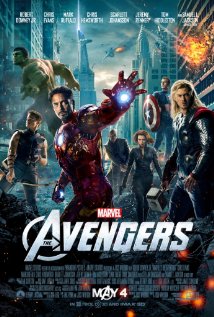
AvengersJust like everyone else, when I first watched The Avengers, I was awed. As I digested the experience, however, I realized how appallingly flawed the story was. Can a film that is visually impressive enough dance over the hard parts of story?

Alright, it’s not just being visually impressive. If it were, then the Transformers movies (I’m thinking particularly of the second one) wouldn’t be so sucktacular. No. Filmmakers also need clever quips. This feeds an inexplicable urge of young people to repeat the witty remarks of movie characters ad infinitum. (Confession: I’ve always longed for an excuse to say, “I’m your Huckleberry,” as per Doc Holliday’s words to Johnny Ringo in Tombstone.) It’s not just that the Hulk bashes a marble floor to dust using Loki’s lanky frame, but that he delivers that witty, two-word rejoinder. Together the CGI and the quip seal the scene in one’s mind.

[Spoilers ahead] If one looks up deus ex machina in the dictionary, one learns that it means: “someone or something that solves a situation that seemed impossible to solve in a sudden and unlikely way, especially in a book, play, movie, etc.” If one’s dictionary is online, one would then probably be treated to a video clip of the scene in which Professor Selvig is knocked on the head, becomes unenslaved, and consciously realizes that his subconscious built a backdoor that will allow him to shut down the portal that were previously told can’t be shut. The clip could then continue through the end of the movie (minus the post-credit shawarma scene.)  The following are key incidents of deus ex machina in this film:

-a bump on the noggin releases one from the mind-control of a god (A “puny god,” indeed.)
-a conscious mind (in a waking and non-meditative state) knows in great detail what happened in the subconscious
-an attack on the mothership disables all troops on the ground, Independence Day style (worst command and control ever.)

One may be thinking that I’m just one of those douches who picks nits, but I’m really not. These flaws are fundamental to how the story is resolved. They are cheats that make everything that happened leading up to the climax irrelevant. Think about it; if the Professor had gotten knocked on the head 20 minutes earlier, the massive Avengers battle through Manhattan would never have been necessary. They could have called the movie “Professor Selvig’s Magical Mind” and left the Avengers out of it all together.

I’m willing to sustain disbelief about the small things. There are plenty of critics who get into the minutiae of continuity gaffes and the like. A couple of my favorites are below.

Lest one think that I’m picking on The Avengers, that’s only because it’s the third highest grossing film ever and first in the superhero genre. If you’re spending hundreds of millions on a film, you’d think you could throw some chump change into good story-building.  I realize that filmmakers have a jaded audience to contend with, and that they have to ramp up the peril to impossible heights to impress. Maybe they are forced to then throw away the resolution of story. Those who read my recent review of The Wolverine, will know that my criticism isn’t restricted to The Avengers.

Well, I’ve got nits to pick.

BOOK REVIEW: World War Z by Max Brooks

World War Z: An Oral History of the Zombie WarWorld War Z: An Oral History of the Zombie War by Max Brooks

My rating: 4 of 5 stars

Amazon page

World War Z, as the subtitle suggests, is written as a series of interviews of key (or in some cases typical) people involved in the Zombie War. The viewpoints addressed include various political leaders, military service members of various branches and nations, strategic planners, doctors, and even civilians caught up in the diaspora that resulted from the plague.

The approach of the novel is unusual. To the degree there is a lead character, it’s the UN employee who conducts all the interviews. However, we don’t experience the interviewer’s story arc and are left with very little insight into this individual. Rather, the story is a global arc of mankind’s experience of zombies from “patient zero” through the clean up in the years following the war. And, it is a global tale. The stories of these individuals take one to places like Chongquing, Meteora, the Amazon, Barbados, Johannesburg, the Alang ship breaking yard (an excellent choice for a post-apocalyptic setting, I must say), Denver, and even onto a ballistic-missile-toting submarine sitting on the ocean floor.

Where Brooks’s book excels is in making one think, and in that regard it does an excellent job. This isn’t about edge-of-the-seat adrenaline injections to which most Zombie book authors aspire. I don’t deny that there are emotional parts to the book, but the tension is reduced by virtue of being a collection of survivors’ tales. That is, we know the story-tellers survived more-or-less intact. Also, because of the intrusions of the interviewer and the authenticity of responses (some are more skilled and open story tellers than others), we never lose sight of the fact that this is a couple of people talking war stories.

That being said, we take a cook’s tour of gut-wrenching food for thought over the course of the novel. Consider a government that abandons its citizenry, and even uses some as bait to help save others. Brooks tugs at the readers’ heartstrings through an interview with a K-9 soldier who describes the role of man’s best friend. Brooks portrays the best and worst that mankind has to offer–as one would surely expect to experience them in such a world gone wrong.

I must admit, some of the topics may be more interesting to me as a social scientist than they will be to others. One interviewee discusses the mismatch between job skills needed and job skills available in a rapidly evolving post-apocalyptic landscape. This speaks to present-day society as much as it does to a dystopian future. The author devotes an interview to questioning the man responsible for reestablishing trust in the dollar in an economy that has by necessity reverted to barter. There is also discussion of revolutions in governance that find their catalyst in the Zombie War. There are intriguing turns of events such as the makeshift flotillas of U.S. citizens converging on Cuba because Fidel’s authoritarian regime was uniquely prepared to close itself off during the earliest days of the outbreak.

With the movie coming out this Friday (June 21), I will say that I can’t see much in common between the book and the trailers for the movie that I’ve seen to date. However, I can imagine the movie being an extension or outgrowth of one of the many vignettes expressed in the book. This is not to say that the movie will be bad (or that it won’t be), but if one sees the movie one will still be left with impetus to read the book.

I enjoyed World War Z because it makes one think–a feat that isn’t the strong suit of Zombie literature.

View all my reviews

Your Post-Apocalyptic Guidance Counselor Is In

I’ve been reading World War Z because I had heard it’s an interesting book and because it went on sale–presumably in anticipation of the movie that comes out next week that shares a name (but probably little else besides Zombies) with the novel. I don’t usually read zombie or vampire literature because there’s so much of it and rarely does it offer anything new or intriguing. (Once one’s read Bramstoker and Matheson, what more is there to be said on the undead.) Brooks’ book is an exception. Told as a series of oral histories collected by a UN employee who serves as a quasi-protagonist–but not necessarily a central character–of the book, World War Z  chronicles the human dimension of the Zombie War.

The book tells a series of personal vignettes from the earliest sign of the pandemic through the cleanup afterward. One of the issues that is discussed is the mismatch between the skill sets the survivors had and the skill sets that were needed to survive in a post-apocalyptic world. In one of the interviews, a bureaucrat discusses the need for job retraining because they had all these information age analysts, managers, coordinators, etc. but few people who knew how to make new things, grow food, or repair damaged infrastructure. They had all these mid-level white-collar people and they needed blue collars.

This got me thinking. To be honest, I haven’t had a job that would be useful in a post-apocalyptic wasteland since I was a 22-year-old infantry-trained law enforcement officer. Everything since then has involved life in a cubicle or small office uncovering, creating, evaluating, analyzing, describing, modifying, and disseminating information. Then there has been writing, which I love, but which isn’t exactly going to pull humanity back from extinction. (Let’s not kid ourselves that “reading is fundamental” when society has to be rebuilt from the ground up–fed, clothed, etc.)

This isn’t to say that I would be altogether useless in a post-Zombie Apocalypse world. I lived years 0 through 18 on a working farm. That was a long time ago, but I’m sure I could remember something about how to engage in activities that are actually directly related to keeping people alive (as opposed to keeping them informed.)

So will you be useful post zombie apocalypse? What would you be interested in doing if your current Dilbert-esque work life became irrelevant?

BOOK REVIEW: Rules for Virgins by Amy Tan

Rules for VirginsRules for Virgins by Amy Tan

My rating: 3 of 5 stars

Amazon page

This Kindle Single is written in the form of advice by a Madam to the newest member of her brothel. It’s historical fiction, and is set ambiguously in the past. It is presumably set in China, but I don’t recall that that is ever explicitly determined.

The Madam shows a mix of maternal protectiveness for the girl and straightforward, harsh candor. She tells the young girl how to game the men, and how to get the most out of them. She instructs the girl in how to defend her virginity until such time as it is sold to someone who can afford to richly compensate them for it.

There is nothing in the way of a plot in the book. It does read just like rambling advice, so there is also not a lot by way of setting. We do get character development of the Madam, but not so much of the title character.

It’s well-written and seems to be well-researched as well. While I don’t know a great deal about the subject, it rings authentic. Despite the subject, the book isn’t gratuitous in its talk of sex. However, don’t be surprised that the entire work revolves “around” the intertwined subjects of sex and money.

View all my reviews