BOOKS: How Long Can the Moon Be Caged by Suchitra Vijayan & Francesca Recchia

How Long Can the Moon Be Caged?: Voices of Indian Political PrisonersHow Long Can the Moon Be Caged?: Voices of Indian Political Prisoners by Suchitra Vijayan
My rating: 4 of 5 stars

Amazon.in Page

It’s no secret that the Gandhian pluralistic vision for India has been taking some hard knocks under the current administration (and the rise of Hindu nationalism that it represents,) but it’s also not as widely and intensely discussed as it could be. This book represents an attempt to make the stories of dissident political prisoners more widely heard.

For that attempt, I would give it high marks, but the execution is problematic. The middle part of the book does a reasonably good job of telling the stories of these individuals. However, the book comes across far too much like a reference book than a journalistic account for much of its length — particularly in the beginning and at the end. The beginning has a long bullet point account of relevant events that I’m sure is meant to give readers an idea of the scope of the problem, but it also sterilizes the information. At the end there are letters and a chapter that consists entirely of data. Letters can be fine, but they aren’t the most evocative way to convey these stories because they contain a good deal of information that is extraneous to the author’s point, and thus the message is diluted.

I do wish supporting evidence was turned up and gratuitous statements turned down a bit. In other words, I assume the government could present a counter-narrative that these are not just dissenters voicing unpopular opinions but rather individuals actively engaged in subversive operations. Granted, the prominence of poets, the ill, and the elderly does make it hard to believe these are some sort of guerrilla warfare masterminds. True, there is a challenge in disproving a negative that makes it hard to prove a person has done nothing wrong.

At any rate, it’s a book I’m glad I read, and I did learn about the issue, but I wish the execution had been better. Maybe that’s for another book.

View all my reviews

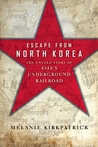
BOOK REVIEW: Escape from North Korea by Melanie Kirkpatrick

Escape from North Korea: The Untold Story of Asia's Underground RailroadEscape from North Korea: The Untold Story of Asia’s Underground Railroad by Melanie Kirkpatrick

My rating: 5 of 5 stars

Amazon page

Escape from North Korea is the most intriguing non-fiction book I’ve read in recent months. Kirkpatrick offers a glimpse into the operations of a modern-day underground railroad, one whose stories—sadly—are often no less chilling than those associated with its US Civil War namesake from 150 years ago.

The 17 chapters of this book are arranged into six parts. The organizational logic of the book takes the reader from the germ of an idea to flee all the way to settling into life in a free country, with all the trials and tribulations that are experienced in between. It begins as a story of one person who decides to escape, and who must virtually always get across the border into China on his or her own. Once across the border, there is help to be had if the refugee can find it before he or she gets caught by the Chinese and repatriated or is exploited by nefarious individuals. Danger is ever-present, occasionally even once the individual gets to South Korea.

Chapters 3 through 7 were particularly interesting because they looked at various classes of escapee, some of which one might not realize existed. It starts with the classic defectors, similar to those one might associate with the USSR—political, military, sporting, and artistic figures. This was the main class of refugee until people began starving in the 1990’s due to nation-wide famine.

Next is a chapter on brides for sale. Many North Korean women end up forced into slave marriages. China has a dearth of eligible women due a bias against female children, particularly combined with its one-child policy. Some women are lured across the border under false pretenses, but others, finding themselves fugitives in China, end up being exploited due to their vulnerability. Each bride fetches about $1,200 to $1,500 ($500 to $800 from the wholesaler to the retailer.) There’s also a chapter devoted to the children of such marriages, and particularly the cases in which the mother is repatriated and the child ends up orphaned because children born in China will not be taken by the North Koreans and frequently the fathers want nothing to do with the children. Pregnant women repatriated to North Korea are often forced to abort pregnancies involving Chinese fathers.

One of the most intriguing chapters was on the North Korean lumberjacks residing in Siberia. This profit-sharing deal goes back to the Soviet days. When the Soviet Union imploded, however, the arrangement was kept with some worker rights installed on paper to appease Russia’s newly developed human rights watchdogs. One might wonder how the Kims—fearful of dissidents as they are—would let a group live outside the country on a remote site that’s hard to guard. The answer is that all the lumberjacks had to have both wives and children at home to serve as hostages. Still, some decide to make the break.

There is also a chapter about the Prisoners of War from the Korean War who were trapped on the wrong side of the border.

I’m fairly well-read on the subject of North Korea, but, like most Americans, the bulk of this has to do with Pyongyang’s nuclear program. I, therefore, found some of the stories of the regime’s depravity to be beyond the pale. A sampling of such stories includes:
-guards severely beating a prisoner and then having other prisoners bury the victim alive

-the warden in a state-run orphanage having orphans fight each other for bigger food servings

-a family that killed themselves rather than be repatriated to North Korea

-individuals, such as Ri Hyok-ok, who were executed for distributing bibles

-North Korea’s provision of family information on trans-border family members as a profit-making scheme

-Kim Jong Il pulling a Pol Pot and shutting down the universities and colleges and sending students to work on farms and in factories for months in 2011 because he was afraid that the Arab Spring might be infectious

-Kidnapping foreigners on foreign soil, which North Korea has even admitted to openly.

Sadly, the woeful tales aren’t limited to the North Koreans. Kirkpatrick devotes a considerable amount of space to chastising the Chinese for repatriating North Koreans. Under international law, which China ratified, refugees shouldn’t be sent back to their country of origin if it’s likely they will be punished. China claims that individuals are economic migrants and not political refugees, and it compares them to Mexicans crossing onto American soil—without addressing the fact that Mexicans are not sentenced to hard labor or killed when they are returned to Mexico. The Chinese might also point to Hwang Jang-yop, the author of the North Korean Juche (self-reliance) policy, as an example of a “true” political refugee that they didn’t repatriate, but allowed to migrate to South Korea (where the North Koreans tried to assassinate him in Seoul several times.)

There’s even some disappointing behavior on the side of the US. In 2006, an American consulate employee in China not only turned away several North Korea refugees, but–by speaking openly over an unsecured line–got a conductor on the Underground Railroad arrested.

The end of the book contains an interesting description of how the Kims are beginning to lose the war on keeping the information age out of North Korea. From balloon drops to radio broadcasts, North Koreans are beginning to get true information about both the outside world and their own leadership. Lest one think that no one could possibly believe the propaganda out of Pyongyang, even in the absence of information inflows, there’s a story about an immigrant to America who had a hard time coaxing his family out because they believed that America was out to kill North Koreans. This father’s story of the good life in sunny Florida didn’t entirely convince them, and ultimately they had to be coaxed to their new home in stages. It’s telling that the cellphone was only introduced in North Korea in 2008. While cellphones aren’t that useful for the railroad because they can’t call outside the country, they do allow for some spread of information inside.

One might think that once a North Korean gets to freedom, everything is hunky-dory, but Kirkpatrick discusses the problems that most North Koreans have adjusting to life in South Korea. As workers, North Koreans tend to lack initiative. They just want to be told what to do, and will do no more. It’s not that they’re inherently lazy; they come from a world in which initiative is not rewarded but is often punished.

While it may be hard to believe, most of the emigrants have trouble coping with the massive amount of choice available in their new homelands. Having an entire aisle of the market devoted to laundry detergent overwhelms them. Apparently, a few—very few—have even snuck themselves back into North Korea where all they have to do is do what they’re told, eat what they can, and maybe starve to death.

I think this is an important book that should be read by anyone interested in world affairs. North Korea is truly unique in the world. One telling line from the book was, “Even during the Communist era, Russia was more liberal and prosperous than North Korea.” The continuance of the Kim Dynasty is an unstable proposition, and it’s impossible to know when it will fall and what damage will be done internationally when it does.

View all my reviews

Snowden’s Muddled Message

Also posted in my blog, Strategic Ramblings.

Edward Snowden is once again the headline leader. The man some consider a whistle-blower and others think a traitor is trying to gain temporary asylum in Russia. His U.S. passport having been suspended, Russian asylum seems to be his only immediate path out of the transit lounge of Sheremetyevo International Airport in Moscow. A few countries in Latin America have agreed to offer Snowden asylum and he has expressed interest in taking Venezuela up on the offer, but without a passport he is stuck like Tom Hanks’ character in Terminal Man.

The request for Russian asylum is problematic in that Russian President Vladimir Putin has said that asylum wouldn’t be considered as long as Snowden was still leaking. While Snowden said he has no interest in hurting the U.S., he is still talking about U.S. intelligence activities and seems unlikely to give up giving up information.

When the revelations of this story initially broke in the Guardian, I was outraged by the allegations being put forth by Snowden. In essence, Snowden suggested that Americans’ electronic communications were being spied on without warrants and without specificity. While lawyers and politicians love to play word games, the Fourth Amendment is clear and concise. Where there is a reasonable expectation of privacy, searches require a warrant that says who is involved and what’s being sought. In short, the Constitution doesn’t allow fishing expeditions.

The damage control by the Administration and the Intelligence Community in subsequent days was even more infuriating. The message seemed to be, “We want to have an open debate about all these nifty protections that are in place to make this all legal, but, alas, that’s all classified.I’m not saying you should just trust us, but–yeah–just trust us, ya-da-ya-da-ya-da.” I’m suspicious of a government attempting to expand its power; I abhor a government that tries to do it under the cover of darkness.

Director of National Intelligence, James Clapper, had been asked the following question by a Senator during his testimony, “Does the NSA collect any type of data at all on millions or hundreds of millions of Americans?”

Clearly the answer to this question, in light of the Verizon revelation was, “yes.” However, Clapper answered in the negative, and then added a qualifier “not wittingly” that didn’t help improve the truthfulness of statement, but should have been a red flag that the Director was trying to play some type of semantic game. Clapper later went on a Nixon-esque / Clinton-esque defensive about how his answer was the “least untruthful.” Of course, to suggest that the Verizon data was “unwittingly collected” strains credulity.

When General Keith Alexander of the NSA (among others) testified, he said that he had three points. First, that the programs had yielded positive results, or–in other words–the ends justified the means. Second, that the programs in question were “limited, focused, and subject to rigorous oversight.” Third, privacy and civil liberties are protected by the programs. However, he seemed to only want to talk substance about the first point–that is, what ends justified these means. I found it disconcerting that Gen. Alexander could tell us something about which cases had positive outcomes as a result of these programs, but not about the processes and protections required to draw specific information from the vast pools of data being collected on Americans. The former being the kind of information that could have negative security ramifications, the latter could only embarrass politicians. Secrecy is needed to protect assets and methods, but shouldn’t be a tool of protecting dubious legal practices. Al Qaeda doesn’t get a leg up by knowing the legal process required to access data generically.

The testimony was full of what would be objected to as “leading questions” in a court of law. For example, Alexander was asked if there was “any switch that could be flipped to allow analysts to eavesdrop on communications.” This makes for nice ass-covering when it turns out that they, in fact, have to type a command into a command line. “No, we never lied. We were as truthy as can be, there is no switch– we had the switches replaced with buttons decades ago.” Alexander repeated the “flip a switch” phrase back in his reply so that they were all on the same page.

As sad as any comment made was when Alexander said, “Further, as the Deputy Attorney General noted, virtually all countries have lawful intercept programs under which they compel communications providers to share information about individuals they believe represent a threat to their societies.” At the risk of sounding nostalgic, I remember when America prided itself in being a leader in liberty rather than saying, “look we aren’t doing anything that Russia and China aren’t!”

Telling me that you had success due to these programs isn’t enough for me. If you said, “hey, we put everyone of a particular religious persuasion in jail, and we foiled x-number of plots,” should I be reassured or outraged. I would argue the latter.

Telling me that other countries have such programs doesn’t satisfy me. I think the U.S. should seek to be on the leading edge of freedom and not happy slouching around the middle of the pack.

Telling me that a given database has only phone numbers and metadata and no identifying information doesn’t really inspire confidence. It turns out that there’s this nifty thing called “the internet” that allows one to look up people’s names from a phone number. You’re going to tell me that no one is going to google the number they’re looking for information about?

If the government wants to reassure the public, they need to have transparency in legal processes and not hide behind a veil of classified information.

Of course, part of the disagreement is that the law as it now stands only suggests only the content of messages incurs a reasonable expectation of privacy. That Mr. A talked to his therapist for two hours one Sunday evening as (according to cell tower triangulation data) he was sitting in the parking lot of a hospital is–in the eyes of many–completely unprotected information that no one could reasonably expect to be their own damn business.

I’m not comfortable with the collection of vast stores of information on citizens. Even if there are some protections that are working for the moment, all that information will just be waiting for some moment of weakness, some rally-around-the-flag moment, during which people are willing to flush all they hold dear down the crapper in exchange for a promise of security.

Having said all this, I’ve had a bit of trouble retaining sympathy towards Snowden as he’s muddled his initial message about unconstitutional actions. When he started releasing information about how the U.S. was spying on China, his message became lost. Of course the U.S. is spying on China, and they upon us. That’s the nature of the game in an anarchic international system. Yes, it’s a political embarrassment; coming as it did when the President was attempting to give China “the old what for” over the issue, but spying on other countries in order to keep one safe is part of what is expected of a government. (Yes, even on allies. You can be certain Israel, Japan, and the United Kingdom are spying on the U.S.) I take as a given that other countries might try to read my email if they think it has any potential benefit to them. However, they haven’t been granted a monopoly on the legitimate use of force against me. I expect my government to serve to protect me from any dire consequences of other country’s snooping. In fact, I have held jobs where other countries may have eavesdropped on me (not because of the work I did, but because of with whom I was in contact.) The potential for nefarious activities by a foreign country are just not the same as they are for domestic shenanigans–for most of us at least. There is less incentive to try to manipulate a random Joe for political or material gain across borders than there is within.

If Snowden is driven by his love of freedom, why has he headed in the direction that he has. Even if everything he says is absolutely true, the U.S. is still vastly more free than either Russia or Venezuela (e.g.Freedom House ranks the former as “not free” and the latter as “partially free.”) (There is some doubt about whether what Snowden says is true, but as the government hasn’t really delved into details or engaged in any contradiction that is not riddled with carefully censored qualifying words, one cannot tell.)

Drones over Des Moines: or, UAV’s in the Heartland

Source: Wikipedia; User: Dammit

Source: Wikipedia; User: Dammit

National Geographic has an interesting and well-timed article in this month’s issue called The Drones Come Home. I say well-timed because of all of the attention that Senator Rand Paul’s recent filibuster received. Senator Paul was filibustering the nomination of John Brennan as CIA Director, but his true purpose was to bring attention to the lack of transparency on policy regarding the use of drone strikes on U.S. soil. You’ll recall from your Civics classes that the 5th and 6th amendments (supported by other laws) require legal due process be conducted before anyone gets, to use the mafia-esque term, “whacked.”

The impetus for all this discussion of drones is the Obama Administration’s 2012 direction to the Federal Aviation Administration (FAA) to open the skies to Unmanned Aerial Vehicles (UAV’s) by September 30, 2015.

It should be noted that the use of armed drones for execution missions is only the most dramatic of many legal issues that will arise with the proliferation of this technology. The National Geographic article devotes more space to the use of drones by state and local law enforcement than they do to that of the Federal government.

Some other new legal considerations will include:

Searches:  I suspect that well before any government is terminating U.S. citizens at home with such devices, they will be using them for surveillance and investigation (i.e. spying.)  The Constitutional standard is that law enforcement can act on any evidence that can be seen from a place they legally have a right to be. So if you’ve got a stolen car in your front yard, they can arrest you.  However,  if the police get an anonymous tip that there is a stolen car in your backyard under your deck, things are trickier. They can ask you to see your backyard, but you can say no. They can ask a neighbor if the neighbor will allow them to look from the neighbor’s property onto yours, but, if that’s unsuccessful, they’d better be able to impress a judge sufficiently to obtain a warrant.

However, what  happens with UAV’s? Now the law enforcement officer can be parked perfectly legally on the street while his “eyes” are hovering over your backyard.  Your property rights overhead are not established (unless you are getting a check every time Delta flies over your house–I’m not.)

Extensions: What about peaking in through your window with an aerial telephoto lens? What if it’s not law enforcement, but rather the Neighborhood Watch? What if it’s not even the Neighborhood Watch, but rather the crotchety retiree at the end of the block who has self-appointed himself neighborhood watchman because he’s bored to tears… and more than a little bitter?

Sovereign Immunity: Many governments have laws that prevent you from suing them. So what happens given a scenario suggested in the National Geographic article, the government’s UAV falls out of the sky and it’s rotor-blade slices open the jugular of your four-year old daughter as she is innocently playing in the sandbox in your back yard?

There are many who are concerned that this technology is not perfected. The military is having its share of problems, and they are spending billions on UAV’s. Imagine what will happen when local governments, corporations, and other cash-strapped entities begin flying more low-budget versions?

Personal No Fly Zones: Despite the tenuous legal situation regarding the “airspace” over one’s head. You know that, sooner or later, someone will try to enforce a no-fly zone over their property. So what happens when a person sees that Sheriff’s department UAV peeping through their window, and they blast it out of the sky with a 12-gauge shotgun?

Of course, there will be a whole new wave of issues that will arise as the autonomous UAV’s are perfected. By “autonomous” I mean ones that don’t need a remote pilot, but are more “fire-off and forget.”

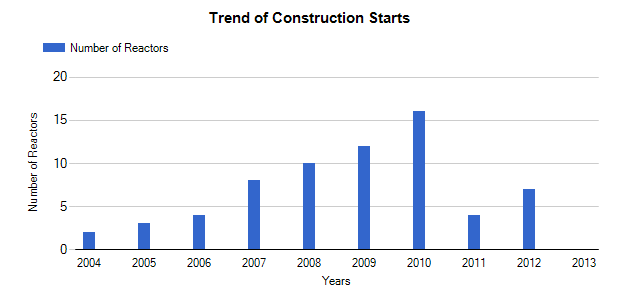
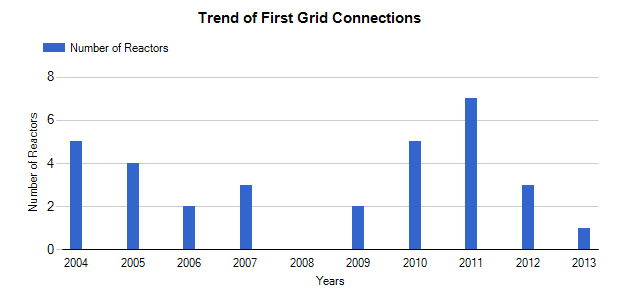
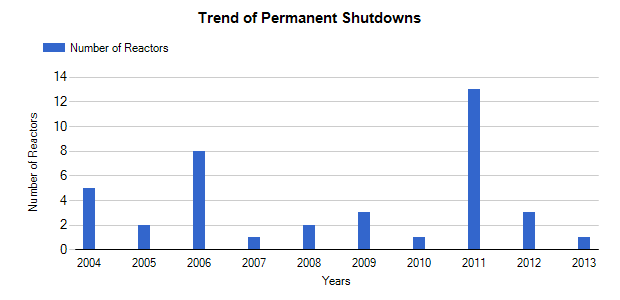
Was the Fukushima-Daiichi Incident the Final Nail in Nuclear Energy’s Coffin?

Today is the two-year anniversary of the tsunami that swamped parts of eastern Japan. Among the ongoing effects of this event was a re-chilling of attitudes toward nuclear energy–undoing a thaw that some swore was imminent. The tsunami hit the Fukushima-Daiichi plants and knocked out generators that were needed to run the coolant pumps with the power lines down. In the days after the disaster, the release of radioactivity and explosions of built up hydrogen presented some of the most prominent news stories.

Japan obtained about a third of its energy from nuclear prior to the event. All reactors were shut down in subsequent months, at no small cost to their economy. Eventually, a couple of plants were brought back on-line, providing only a fraction of the electricity of the country’s full fleet of 50+ nuclear plants.The Japanese had plans to add another 15 plants to their reactor fleet at that time, plans that have since vanished.

Even China, the world’s most prolific builder of nuclear plants as of late, had a brief moratorium on nuclear power plant (NPP) construction. However, China seems to have regained its ardor for nuclear power. France, of course, won’t be dissuaded either. However, for much of the rest of the world, doubts remain.

Pictures may be worth a thousand words.

Source: International Atomic Energy Agency (IAEA) Power Reactor Information System (PRIS)

Source: International Atomic Energy Agency (IAEA) Power Reactor Information System (PRIS)

Source: IAEA PRIS

Source: IAEA PRIS

Source: IAEA PRIS

Source: IAEA PRIS


The Nuclear Renaissance and International Security

Edited by Adam N. Stulberg and Matthew Fuhrmann

2013, Available Now

Buy this book

ONLINE RESOURCES
Contents

Contributors

Introduction

5 Minefields of Armageddon for 2013

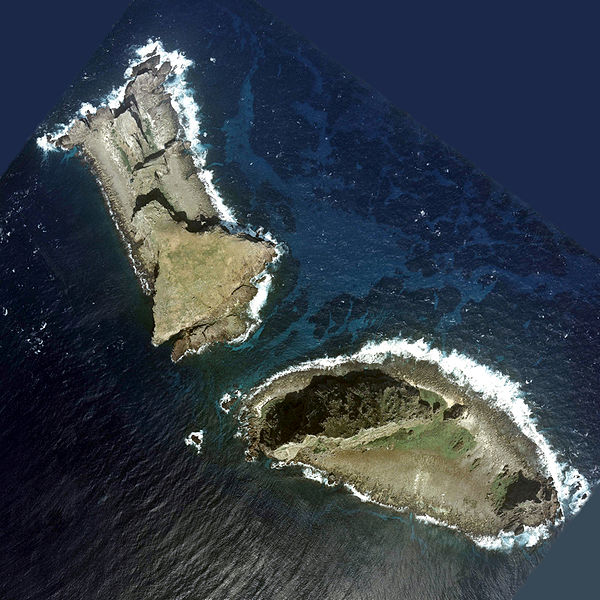
National Land Image Information, Ministry of Land, Infrastructure, Transportation & Tourism, Japan

National Land Image Information, Ministry of Land, Infrastructure, Transportation & Tourism, Japan

1.) Ever heard of the Senkakus? What about Diaoyus? If not, you should look them up. When you’ve been wearing a gas mask for the 33rd day straight, you may want to know about the chunks of rock in the East China Sea that we tripped into nuclear winter over. Simmering tensions between Japan and China have been flaring up over these islands of late. So you’re probably wondering who lives there who’s so important that it’s worth wandering through a minefield that could trigger World War III. If you answered, “absolutely no one,” give yourself a prize.  They’re uninhabited. It’s not the islands themselves that anyone gives a rat’s as about, it’s the ramification they have for underwater drilling rights.

The reader may accuse me of hyperbole. (Shh! Dont tell anyone, but– of course– that’s what I do.) After all, China has a boldly stated “No First Use” policy. That is, they claim they will not use nukes in a first strike. Given that Japan isn’t a nuclear weapons state (NWS), there doesn’t seem to be much risk. Except that a.) Japan lives under the U.S. nuclear umbrella;  b.) Japan is the non-NWS that could develop nuclear weapons in the shortest time imaginable — they have the material, infrastructure, and technical know-how (okay, Germany is in the same bag); and c.) see #2

KimJongUn3

2.) North Korea conducted its third nuclear test. This presents a risk because: a.) it provides an incentive for Japan to build its own nukes (particularly if faith in the US umbrella wanes.) b.) [and more importantly] Kim Jong Un has too many yes-men, and no one to slap him in his chubby face and say, “are you smoking powdered unicorn horn?” In other words, he doesn’t have a good idea of what he can get away with before the world unleashes a crate of whoop-ass on his sad country. So he wanders in the minefield.

3.) Europe is getting depressed. Fat and happy Europeans are productive and polite. Downtrodden Europeans have been known to swallow some pretty despicable narratives, and– in doing so– drag the world into war. At the moment this seems really far-fetched. These political movements are at best in the political fringe of countries on Europe’s fringe, right? Maybe so. Time will tell.

4.) If America’s economy is crash-landed, everyone is going to be hit by the debris. This will be depressing, see #3 and then multiply globally. Times like these  echo Churchill’s comment, “Democracy is the worst form of government, except for all those other forms that have been tried from time to time.” Any person, company, or government that sees the train coming in the distance but can’t find its way off the tracks can’t be expected to thrive for long.

5.) India and Pakistan, enough said…

TODAY’S RANT: Pudgy Dictators, Ugggh

This is my iron hand for which to rule you.

This is my iron hand for which to rule you.

Well, the new Kim on the block is about to pop his first nuke. This will be the third test for the PAB* Dynasty over all. Of course, as an AP article today indicates, we won’t necessarily know whether they succeed because any seismic event emanating from the country might just be a perfectly choreographed simultaneous jump by all citizens.

News reports suggest that Kim is upset about the latest sanctions. While sanctions generally don’t succeed (see Iran), we have hit the DPRK leadership where they live by restricting the flow of commemorative NBA bobble-head dolls– preventing the new Dear Leader from finishing his collection. This has led to veiled threats that he might, “Stop lavishing on the world glorious views of national splendor and brilliance… or bust a nuke up in America’s grill.'”

We need a better class of dictatorial villain. North Korea’s one success has been in killing the new Red Dawn movie by providing such an improbable nemesis. (They almost killed James Bond in the same manner.) Don’t let them kill again.

* PAB = Pudgy Ass Bastard

If you like dark DPRK humor, their state news service is hilarious.

P.S. I had real trouble deciding on which caption to use for the photo. Please let me know which caption you prefer [write-ins enabled.]

KimJongUn3