Unknown's avatar

About B Gourley

Bernie Gourley is a writer living in Bangalore, India. His poetry collection, Poems of the Introverted Yogi is now available on Amazon. He teaches yoga, with a specialization in pranayama, and holds a RYT500 certification. For most of his adult life, he practiced martial arts, including: Kobudo, Muay Thai, Kalaripayattu, and Taiji. He is a world traveler, having visited more than 40 countries around the globe.

POEM: Kathmandu

tight warren of streets, alleys, and stupa-laden courtyards
— a junky’s labyrinth
low portals force a bow to the ever-watching Buddha
how’s someone, hot-wired and strung out —
slipping the sacred geometries —
kink their way through this dusty burg
without clocking a noggin on bricks
— blocks of brown, dried blood brown
how do lost self-medicating masses find themselves
where it’s so easy to be lost

DAILY PHOTO: Asian Elephants, Sri Lanka

Taken in Kegalle, Sri Lanka (near Kandy) in May of 2015


DAILY PHOTO: Scenes from Patan’s Durbar Square

Taken on May 4, 2018 in Patan (Lalitpur.)

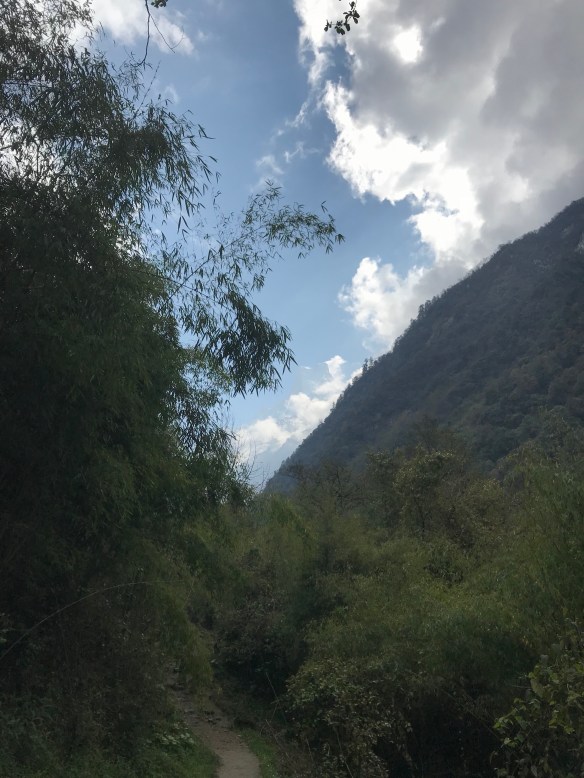
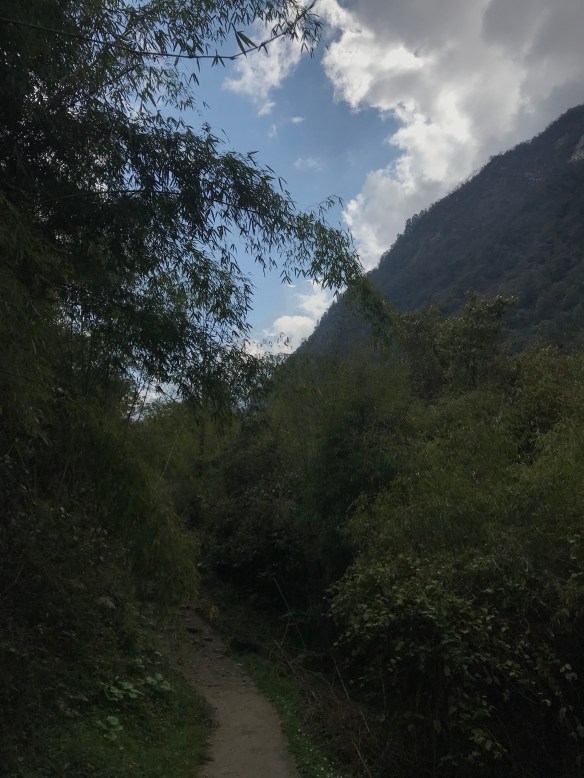
DAILY PHOTO: Find the Fishtail

Taken in April of 2018 in Nepal.

Remarkable how well mountains can blend with cloud and sky. Machapuchre (“Fishtail”) Mountain becomes almost invisible.

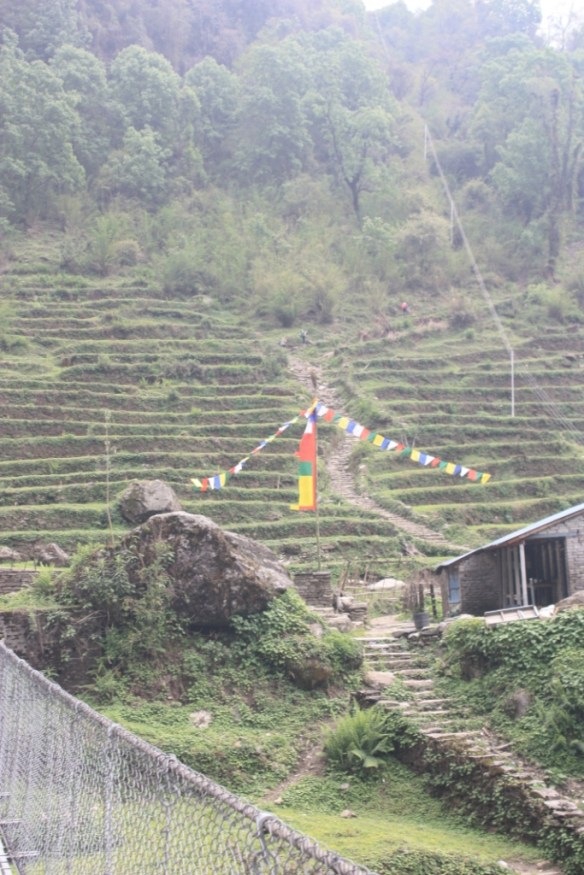
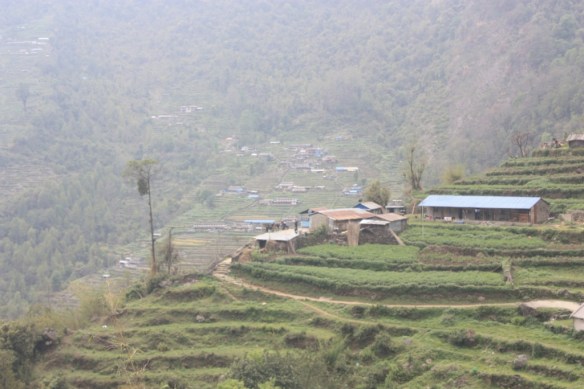
DAILY PHOTO: Terraces

Taken in April of 2018 near Chomrong, Nepal

5 Works of Nonfiction That May Be [at least in part] Fiction

NOTE: There are many famous examples of books presented as nonfiction that turned out to be partially or completely fabricated (e.g. Go Ask Alice, A Million Little Pieces, Three Cups of Tea, The Teachings of Don Juan, and Papillon are examples that spring to mind.) That’s not what I was going for when I started this list. Instead, I was thinking of examples of books that may well be true to the best of the author’s knowledge, but which may also be examples of false memory syndrome. I became interested in this while reading Julia Shaw’s The Memory Illusion, which discusses how faulty memory can be — to the point that people can be led into false memories of something as traumatic as committing crimes that never occurred. Meredith Maran wrote a book entitled My Lie: A True Story of False Memory about what she discovered were false memories of childhood sexual abuse. So, I’m not saying these books are fabrications, and — for all I know — some may be completely true. After all, some of the featured individuals think they were exploited by the MK Ultra mind-control shenanigans, and some of them may have been, but it’s also possible some weren’t.


5.) Secret Weapons by Cheryl and Lynn Hersha: The Hersha sisters say they were in a program that turned them into femme fatales.


4.) Psychic Warrior by David Morehouse: I read about Morehouse in Jon Ronson’s The Men Who Stare at Goats. Sadly, it’s not in question that the military maintained a program of psychics, nor that Morehouse was involved in said program. What is in question is the degree to which the program had successes.


3.) Communion by Whitley Strieber: This is the most famous alien abduction story. I don’t know what really happened, but I seriously doubt it’s what the author proposed.


2.) The Control of Candy Jones by Donald Bain: This is a more well-known case similar to that of the Hersha sisters in which a woman was said to be reprogrammed by a nefarious psychiatrist in a mind control program. Candy Jones was famous as a pin up girl. After she got married, her behavior changed radically, and her husband asked her to participate in sessions of hypnosis which are said to have turned up a buried second personality.


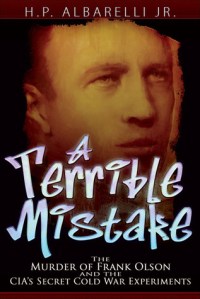
1.) A Terrible Mistake by H.P. Albarelli Jr: This is another example of a case in which there are certain remarkable facts that aren’t in dispute, but the degree to which the fine details are accurate is hard to judge. The fact is that Frank Olson was a biologist in the employ of the government, he was dosed with hallucinogenic substances, and thereafter he took a fatal plunge out of a hotel window. Whether he was murdered as a cover up or just had a bad trip has always been an open question.

DAILY PHOTO: Stupa Field, Swayambhunath

Taken in April of 2018 in Kathmandu


DAILY PHOTO: Purple Flower

Taken in Bhaktapur, Nepal on May 3, 2018

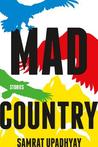
BOOK REVIEW: Mad Country by Samrat Upadhyay

Mad CountryMad Country by Samrat Upadhyay
My rating: 5 of 5 stars

Amazon page


I’ve recently started reading at least one work of literature from each country I visit, and I picked this book up in Nepal as a first take on that country through the lens of literature. I couldn’t be happier with my selection. This book provided exactly what I was looking for in such a book, and more. What I want from such a book is insight into culture, lifestyle, and politico-historical context that can be difficult to witness through travel. Traveling a new country is like dating a new person; one doesn’t see the rough edges for some time. (Usually the relationship – in either case — is over before one sees into the murky depths.)

Over the course of eight stories, Upadhyay not only gives one insight into the nature of life for a variety of Nepalis (e.g. rich, poor, and middle class as well as young / progressive v.) older / conservative), he also shows the life of a hippie ex-pat gone native as well as presenting the worldview of a Nepali abroad (i.e. in America for college.) Where this book exceeded my expectations was in the skilfulness of tension-building employed in the stories. Often a book that achieves the aforementioned objectives does so in a way that is flat on story because it takes the character-centric orientation common in literary fiction. These stories are gripping as well as insightful, and don’t abandon story for character. It dances a beautiful line in that regard.

The first of eight stories tells of the trials and tribulations of an editor of a hard-hitting journalistic magazine, and the dual challenges she faces in taking on a corrupt regime while at the same time she has a friend who is going through a messy breakup. However the editor juggles these competing demands, we know she won’t escape some guilt of failing someone important to her.

The second story is about a rich boy whose life is tormented by the fact that his mother abandoned him and his father and moved on to form a new family. The boy takes to impersonating a beggar, secretly hoping his mother will see him and will be shocked into change. The story is also about the young man’s wake up call to the fact that he’ll never have the killer instincts bred by necessity into those less fortunate that are arrayed against him.

The third story is about “the Sharmas,” a dysfunctional Nepali nuclear family in which the mother is pure shrew, the father is trying fumblingly to have an affair, the son is a dim-wit, and the daughter is dating a young man who everybody seems to think is out of her league.

The fourth story is about a girl in the early 1980’s Kathmandu who goes from the drug-addled life of a Freak Street hippie to going full native. Here we see what draws the foreigner to Nepal and to Nepalese people, as well as how attempts to escape into another culture can be as troubled as attempts to escape into drug-induced euphoria.

The fifth story is by far the longest and might be classed as a novella. It’s about a young man who becomes obsessed with an African girl that he rescues in Kathmandu. The piece has a very dream-like quality to it, and through much of the story one is left unclear as to what is real and what is the product of the lead’s mind. In fact, the title “Dreaming of Ghana” suggests this imagined state of affairs.

The sixth story is the shortest, and – as its title suggests – it’s about an “Affair before the Earthquake.” The story evokes the emotion of world events that cleanly bisect our lives.

The eponymously titled penultimate chapter follows a wealthy and powerful woman who is “disappeared” by a corrupt authoritarian regime when she tries to look into the similar disappearance of her son. It’s a fascinating tale about a prominent real estate developer who is disabused of the notion that she is too powerful to be man-handled by the State. We see her transformation as a prisoner as the wind is taken out of her sails until one wonders whether she would ever be able to cope in her old life after being cowed by prison life.

The last story, like the fourth, turns things upside-down a bit. In it we find a Nepali student abroad who finds himself out in the cold because of his strong views on race. He discovers he’s at odds with the other foreign students because he thinks they should be more outraged about the bias displayed against them. He identifies with the plight of blacks, but they don’t see him as one of them.

This is an intense little collection of stories and I’d highly recommend it. The stories are well-crafted and keep the reader intrigued.

View all my reviews

BOOK REVIEW: Bring Me the Rhinoceros by John Tarrant

Bring Me the Rhinoceros: And Other Zen Koans That Will Save Your LifeBring Me the Rhinoceros: And Other Zen Koans That Will Save Your Life by John Tarrant
My rating: 5 of 5 stars

Amazon page


This book is an examination of fifteen classic Zen koans selected by John Tarrant, founder of the Pacific Zen Institute (PZI.) Koans are statements or stories that are designed to help students of Zen Buddhism escape their usual ways of thinking because the absurdity of koans cannot be meaningfully answered with the usual approach based in logic and reason. Even if the concept isn’t familiar, readers are sure to have heard the famous koan: “What is the sound of one hand clapping?” [Though one may have missed the value as a tool of the mind, and dismissed the koan as a sage’s attempt to be abstruse and esoteric.]

Each chapter addresses one koan in great detail. First, the koan is presented in a simple fashion. It should be pointed out that some of these koans are a single line and others are as long as several paragraphs. Next, there is a sort of introduction to the concept or point being addressed in the koan. Tarrant knows the value of story, and this frequently involves a narrative approach. Next, there is a section describing the koan in more detail than in which it was first introduced. Here the author elaborates and provides background. The final section of each chapter is about “working with the koan” and offers a bit of insight into how to start considering the lesson of each koan.

I enjoyed this book. It’s a good selection of koans that cover a wide range of styles and approaches. As I mentioned the author uses stories and anecdotes – both historical and contemporary – to help get his point across. The titular use of a particularly absurd koan “punchline,” gives one a taste of the author’s willingness to engage in the whimsical.

I’d highly recommend this book for those who are seeking to better understand koans, either as students of Zen or as individuals interested in the workings of the mind more generally.

View all my reviews