

Taken in Tallinn in the summer of 2011.
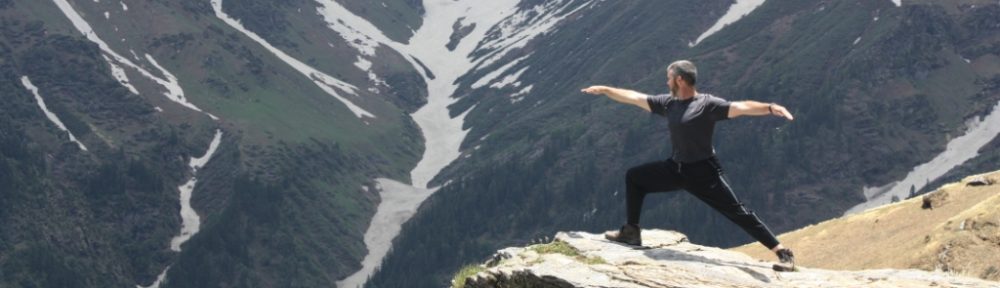

[Ghazal is a poetic form of Arab origin consisting of between 5 and 15 couplets. Traditionally, it is metered (how many feet per line varies from poem to poem, but shouldn’t within a couplet,) and has a rhyme scheme of AA-BA-CA-DA-etc. A common theme word or phrase across couplets is also tradition, and it often forms the rhyme. Loss and separation are among the most common themes.]

In the airport, I think I’ll find a way
to be “he who stayed” as I go away.
“Left” and “stayed” aren’t just matters of locale.
Some who stay, long ago drifted away.
Some retreat within their seats, I speak true.
Body here; mind a million miles away.
Unwalking undead, this kind of zombie.
So, the living must become runaways.
They’ll say I’m playing games of semantics,
but games are done, now I must go away.
 The Immune System: A Very Short Introduction by Paul Klenerman
My rating: 5 of 5 stars
This is a volume in the “A Very Short Introduction” [AVSI] series put out by Oxford University Press on a wide variety of scholarly subjects. As the series title suggests, the central objective of AVSI books is to pack as much of the fundamentals of a topic into as slim a package as possible. I read quite a few of these to get the gist of a subject without a lot of extraneous information. In short, they are brief and provide a high caliber understanding of the topic, but they aren’t written to be entertaining and they assume a basic scientific literacy. They usually weigh in at between 100 and 200 pages. (In this case, 144 pp.)
I found the seven chapters were optimally arranged. Chapter 1 describes and delineates the immune system, which isn’t as easy as it might seem. Putting the immune system inside neat borders is hard. If you simply describe it as the body’s defensive system, you quickly run into problems at the edges of competing classification. Sure, B cells and T cells are clearly part of the immune system, but what about skin and mucus membranes? Where does the lymphatic system end and the immune system (which uses it extensively) begin?
Chapters two and three explore the two major divisions of the immune system: the innate and the adaptive. These days, with COVID-19 at the center of global attention, the distinction is probably clear to most. The innate system isn’t geared to take on specific invaders. It has the advantage of being able to fight almost any invader, but the disadvantage of not being able to keep up with invaders that grow rapidly, are good at disguise, or both. An adaptive system response is what we all lack for COVID-19 because it only recently jumped to our species (well not “all of us,” those who had it and are recovered have adaptive immunity and that’s why they don’t have to worry about getting it again [those who have properly working immune system, at least.]) The adaptive response recognizes specific invaders and can raise an army against them tremendously quickly. Vaccines train the adaptive system to build such a response (typically by injecting a weakened strain into the body, but more detail is provided in the final chapter.)
Chapter four is entitled “making memories,” and it is an extension of chapter three. It further investigates adaptive immunity by focusing on the question of how the body develops a memory of those invaders it’s crushed in the past (or that it learned to crush by way of vaccination.)
The next two chapters delve into the two opposing ways the immune system can fail. Chapter five is about immunological failure, or how and why the body sometimes isn’t up to defeating invading adversaries. Most famously this is seen in HIV / AIDS patients, but there are other ways that the system fails in its job as the body’s bouncer. Chapter six looks at what happens when the immune system is too aggressive. [It’s important to realize that not only does the immune system check out foreign bodies, it also checks the tags on the body’s own cells, killing those that don’t display a proper “tag.”] The two major categories of over-performance are: autoimmune disorders (when the body wrongly attacks its own cells) and allergies (when the body goes all “This is Sparta!” on relatively benign foreign objects.)
The last chapter looks briefly at what work is being done in medicine these days involving the immune system, including approaches to vaccines, immunotherapy, biological therapies, and work on inflammation and the how the immune system is linked to aging.
If there was one topic I wish was better (more extensively) handled it would be discussion of what is known about how and why lifestyle choices influence immune system operation. There was a mention of how smoking has been linked to a specific immune system deficiency, and a general comment on how diet and exercise appear to be linked to increased effectiveness of autophagy (the body’s process of self-consumption and recycling of cells,) but that’s pretty much it. As there is a lot to cover in a small space, it’s hard to be too critical about this, but it seems like a crucial topic (if not as scientifically sexy as vaccine research, which is discussed relatively extensively.)
I found this book did as advertised, give me the immune system basics in a quick read. It has simple illustrations to support the text, and has a table of abbreviations — which can be beneficial given the hugely abbreviately nature of the immune system physiology. There is also a “further reading” section, but it’s heavily focused on textbooks – versus presenting popular science books that cover the material in a more light and entertaining manner.
I’d highly recommend this book if you have a basic scientific literacy and want just the facts on immunity without a lot of meandering narrative.
 let us now pray
for short people with no one
to reach the top shelf
moon-gazer
sitting on a rooftop
hugging knees
silent morning
awakened by the sounds
that aren’t
closing eyes
seeking faces forgotten,
sadly failing
what void
holds the millions
unseen
[Since it’s National Poetry Month (NaPoMo,) I’m trying to do a different form each day. So far: limericks, a sonnet, and haiku. If you know of any obscure forms, I’d be glad to hear of them, because I don’t think I know 30 flavors of poetry, presently — relatively short form, of course, I don’t have the time or skill to do an epic narrative in a day. (Though micro-narrative will certainly be a thing.)]
a tantrum caught on the face, but not thrown
a barrier unseen, like a mime’s “box”
a sprouting plant sprung from a seed unsown
and time shown on broken, not working, clocks
passing the test using knowledge unknown
farmer plows no field with an oxless ox
interest free loans and the silent moan
sale on magic, mineral-deficient rocks
train bound for nowhere at nought miles-an-hour
entropy decrease, the Second Law is dashed
try solving world peace with all-purpose flour
car jumps from a telephone pole uncrashed
i’ve seen all these, and oh so many more,
but i’m not some self-aggrandizing poet-whore

Taken in June of 2017 at Amboseli National Park
I once tried an act of repositioning
to escape a fellow, uninteresting.
Back then, I did offend,
Too late, I have a mend,
Nowadays it’s just called “social distancing.”
 There once lived a procurator named Pilate.
If not for but one thing you’d say, “What?”
But his legend, it stands,
because he washed his hands,
So take a hint and be more like Pontius Pilate!

Taken in December of 2017 in Kuala Lumpur


