Unknown's avatar

About B Gourley

Bernie Gourley is a writer living in Bangalore, India. His poetry collection, Poems of the Introverted Yogi is now available on Amazon. He teaches yoga, with a specialization in pranayama, and holds a RYT500 certification. For most of his adult life, he practiced martial arts, including: Kobudo, Muay Thai, Kalaripayattu, and Taiji. He is a world traveler, having visited more than 40 countries around the globe.

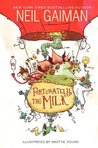
BOOK REVIEW: Fortunately, The Milk by Neil Gaiman

Fortunately, the MilkFortunately, the Milk by Neil Gaiman
My rating: 5 of 5 stars

Amazon page

It’s “The Usual Suspects” for kids, but with Gaiman’s humor and imagination. A father goes out to buy a carton of milk for his kids’ cereal. When he comes back after being long delinquent, he’s got a rather extraordinary explanation for why the short run to the corner c-store took so long.

I read in a Gaiman’s new nonfiction collection, “The View from the Cheap Seats,” (due out May 31, 2016) that even he got grief for writing a children’s book in which the lead isn’t a child. But, he’s Neil Gaiman; so they wisely published it anyway. While the book is aimed at the children’s market, there’s enough humor and absurd happenings to keep an adult reading. So the risky choice of protagonist may prove useful. It certainly helps Gaiman’s argument against narrow definitions of children’s versus adult books (also discussed in detail “The View from the Cheap Seats.”)

Apropos of a youth market book, it’s only about 140 pages, but that’s with extensive illustrations (on almost every page, and many are full-page) and large font. Chris Riddell’s black and white drawings match the whimsicality of the text well.

I’d recommend the book for anyone who reads kid’s books (whether they’re a kid or not.)

View all my reviews

DAILY PHOTO: Sun Setting Over Ganta Ghar

Taken on April 8, 2016 in Amritsar

Taken on April 8, 2016 in Amritsar

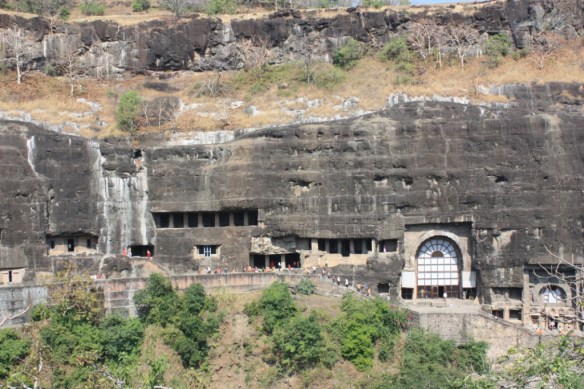
DAILY PHOTO: Caves at Ajanta

Taken in November of 2014 at Ajanta

Taken in November of 2014 at Ajanta

IMG_0686

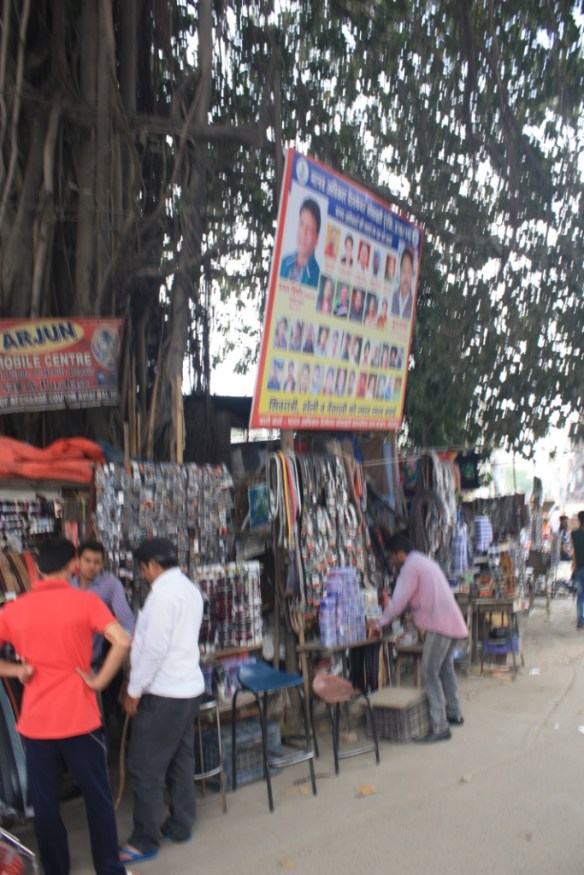
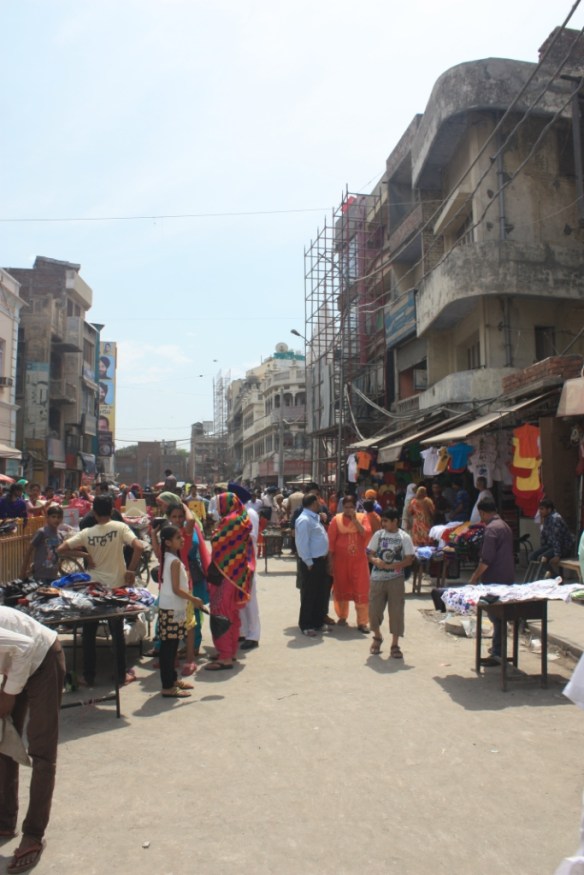
DAILY PHOTO: On the Streets of Amritsar

Taken on April 10, 2016 in Amritsar

Taken on April 10, 2016 in Amritsar

IMG_2985 IMG_3470 IMG_3471 IMG_3474

DAILY PHOTO: Just What Makes that Little, Old Chipmunk…

Taken on April 10, 2016 in Amritsar

Taken on April 10, 2016 in Amritsar

IMG_2912

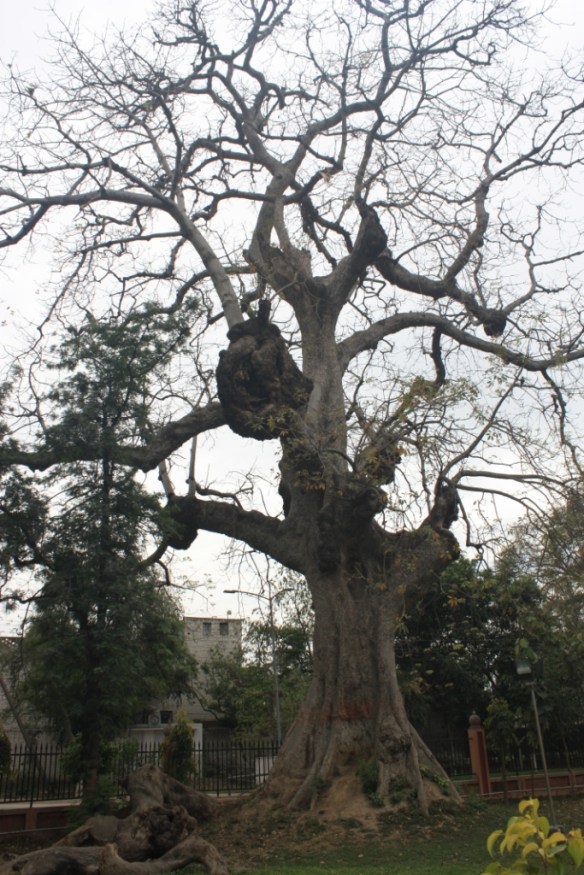
We watched a chipmunk tug a blanket up a tree in the garden of the Maharaja Ranjit Singh Panorama in Amritsar. It was neither a small cloth nor a small tree. (But the heart of that rodent was huge.) It’s a beautiful garden, and the museum is highly undervalued by the “must-visit” lists–e.g. as TripAdvisor.  If you’re in Amritsar, give it a try.

This is the tree in question.

This is the tree in question.


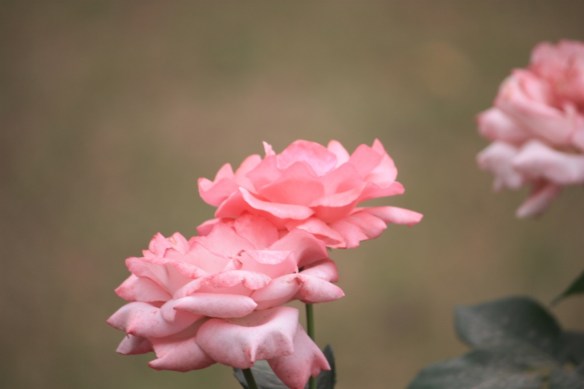
And here are some flower photos from the garden.

IMG_2929 IMG_2924 IMG_2922

This is the tree in question.

BOOK REVIEW: Applied Tai Chi Chuan by Nigel Sutton

Applied Tai Chi Chuan (Martial Arts)Applied Tai Chi Chuan by Nigel Sutton
My rating: 4 of 5 stars

Amazon page

This book distinguishes itself from the pile of books on tai chi chuan sitting on the shelves of your local bookstore. Most tai chi books are large-format, glossy books with full-color photographs of the various moves of the solo forms–usually the Yang-style short form (also called the Beijing Standard Form [or the like.]) Sutton’s book, on the other hand, is mostly text about the history, philosophy, tactics, and lesser-known dimensions of tai chi chuan. In short, while most books give little indication that there’s more to tai chi than the solo form, Sutton builds his niche in focusing on everything other than the solo form. Those who’ve practiced tai chi will be familiar with the on-going debate about whether the art is primarily chi gong (energy work for health purposes) or a martial art. Sutton comes down on the latter side.

The book consists of 32 short chapters (mostly 2 to 4 pages.) It isn’t written as a how-to manual, but rather as a series of meditations on various aspects of tai chi. As I mentioned, the book deals more with “push hands,” the “san shou” fast forms, and weapons than does most books on tai chi. It doesn’t try to teach these methods, but instead tries to offer insight on them. The book would be of most value to someone who has some experience with the art, but who isn’t an expert. The latter might find it boring, but those without minimal knowledge might have trouble visualizing what the author is attempting to convey.

There are some black & white graphics in the book. They are static photos in a section at the middle of the book. The pictures don’t convey a sequence or details of any particular movement, but instead capture various masters within a movement so as to give the reader a taste of the art. There are also a few line drawings used to show items such as weapons and the yin-yang symbol.

The oddest part of the book is the last chapter (which is far longer than the others and is out of character with the rest of the book.) It consists of extended bios on a number of teachers under which the author has trained. I understand the value of paying homage to one’s teachers, but the bios in this section are long and are inconsistent with the general approach of the book. In essence it’s like a 15 page dedication on a 125 page book. The teachers covered seem to have nothing particular in common other than that the author trained with each of them as some point in his life (i.e. they cover different styles and are from different locales.) That said, there are some interesting nuggets about some of these individuals.

I’d recommend this book for anyone wanting to learn more about tai chi. However, if you’re purely interested in learning the solo forms for chi gong (i.e. you don’t want to know about tai chi as a martial art) then one of those other books may serve you better.

View all my reviews

BOOK REVIEW: A Guide to Chinese Martial Arts by Li Tianji & Du Xilian

Guide To Chinese Martial ArtsGuide To Chinese Martial Arts by Li Tianji
My rating: 3 of 5 stars

Amazon page

This is a brief guide to the martial arts of China. The bulk of the book (about 150 pages of the book’s 178 pages) tells the reader about three major branches of Chinese martial arts: Chang Quan, Tai Chi Chuan, and Shaolin Kung fu at a general level. (The book devotes space to those arts in the same order–i.e. the largest number of pages discuss Chang Quan, then Tai Chi, and the smallest number to Shaolin. This may be surprising as your average non-Kungfu practitioner is least likely to have heard of Chang Quan—by name anyway. Chang Quan is a general term that encompasses several Northern Styles—some of which might be more familiar to general readers [of martial arts books.]) The book also has a brief chapter that describes the history of martial arts in China from ancient times through the modern era, and one that talks about the many schools of martial arts of China (in no great detail because there are so many of them) as well as the various strengths and purposes of these arts.

The bulk of the illustrations are line drawings used to show typical sequences for each of the three major branches of martial art mentioned above. However, there are some black and white photographs and copies of relevant art works and documents as well.

I found this book to be interesting and informative. There’s a bit too much space devoted to describing techniques for my taste. However, I realize that I may be in the minority in that regard. I don’t believe that martial arts can be taught via books or media, and, therefore, there’s a diminishing value to detailed descriptions of technique. In this sort of book one only needs to get a feel so as to be able to see how the martial arts compare and contrast with others.

I’d recommend this book for someone who wants to learn a bit about the nature of Chinese martial arts. It may not be of much value for an expert, but for a kungfu neophyte it provides some interesting information about the history, tactics, and training methods of Chinese martial arts. It’s originally published by Foreign Languages Press in Beijing, but I don’t suspect there is any more bias than there would be if it was published by anyone else (i.e. it’s the rare martial arts book that doesn’t present the martial art under discussion as the ultimate fighting art.)

View all my reviews

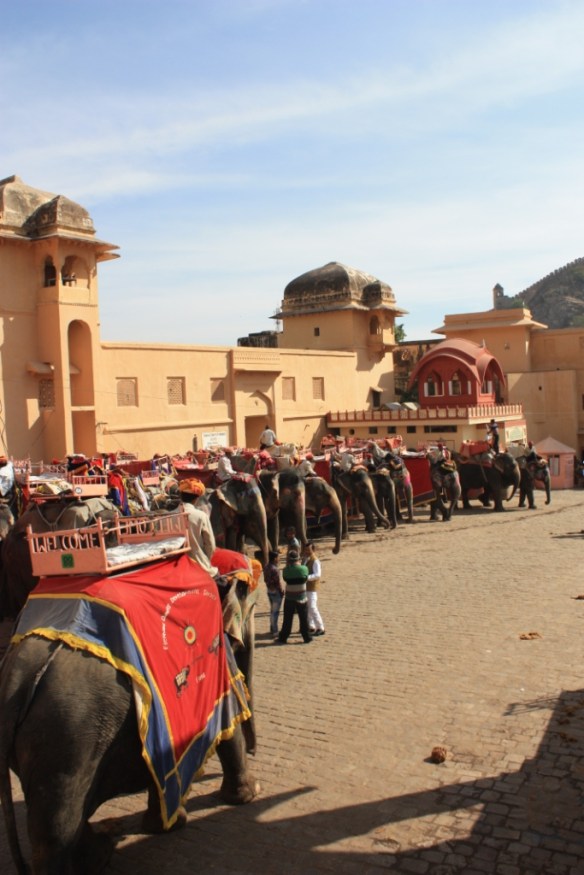
DAILY PHOTO: Elephants at the Amber Fort

Taken in November 2015 in Jaipur

Taken in November 2015 in Jaipur

IMG_1952 IMG_1951

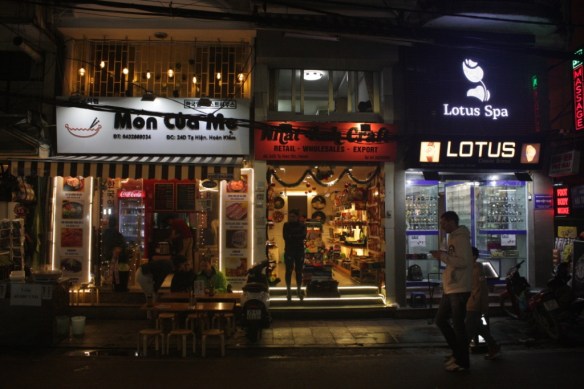
DAILY PHOTO: Shops of Hanoi

Taken in December of 2015 in Hanoi

Taken in December of 2015 in Hanoi

IMG_1443 IMG_1448 IMG_1493
IMG_1580 IMG_1757

BOOK REVIEW: Võ Dân Tộ Martial Arts by Hữu Ngọc & Lady Borton

Vo Dan Toc / Martial Arts (Handbooks of Vietnam Culture)Vo Dan Toc / Martial Arts by Hữu Ngọc
My rating: 3 of 5 stars

Amazon page

This book is part of a series that is subtitled “Vietnamese Culture: Frequently Asked Questions,” and that tells one a little about both the content and the format of the book. It’s better described as pamphlet than a book. At about 75 pages, it’s in bilingual format (i.e. one page is in Vietnamese and the adjacent page is the English translation.) So it’s about 38 pages in English that answer 11 questions about Vietnamese martial arts.

The 11 questions addressed by the book are:
1.) How have martial arts developed throughout Vietnamese history?
2.) How were training and examinations for martial arts organized by the court?
3.) What are the schools of Vietnamese martial arts?
4.) What are the main sects of Vietnamese martial arts in France?
5.) How did Liễu Ðôi become a village with a great wrestling tradition?
6.) Who killed a ferocious tiger in 1770 in Sài Gòn’s Tân Kiểng Market?
7.) How did the famous school of Lady Trà-Tân Khánh martial arts begin and develop?
8.) How did President Hổ Chí Minh keep himself fit?
9.) Who played a key role in the success of Thúy Hiển, the world wushu champion?
10.) What do foreigners think of Vietnamese martial arts?
11.) How did the female master Hổ Hoa Huệ impress the Europeans?

The listed questions tell the reader what the book is about. It starts with some general history from centuries past, and then goes on to discuss specific events. I have no idea to what degree propaganda / myth has seeped into the text—maybe not at all or maybe a lot. I purchased the book in Hue, and am not sure if it’s available outside Vietnam. As one can see from the questions, this book won’t give one much insight into the details of Vietnamese martial arts tactics or philosophy. Instead, one gets a bit of history that some readers will find interesting and others will not. There are black and white photos (about 8) that show static instances of Vietnamese martial arts practice, and there is a glossary.

I picked this book up because I was curious about Vietnam’s martial art history—knowing that it must have had an impressive one. There isn’t much English-language information available about Vietnamese martial arts other than Vovinam. Vovinam is a martial art that allegedly developed in the modern era utilizing pieces of other martial arts and arranged to be ideal for the typical Vietnamese body type. However, what one sees of Vovinam on-line is just a poor-man’s version of that signature move of Black Widow from the MCU movies, so I don’t know whether there is any substance there or if it’s just for show.

Considering that it’s only about $0.67 USD in bookstores in Vietnam, I’d say it’s worth picking up this little book if you want to learn something about Vietnam’s martial history.  [If you buy pay alot for a copy on-line, you’ll probably be disappointed.]

View all my reviews