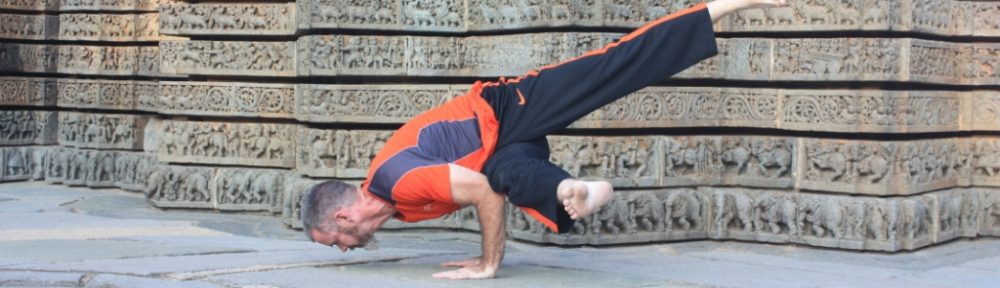
DAILY PHOTO: Charminar of Gandikota

Taken on November 1, 2021 in Gandikota Fort

City as Organism [Free Verse]

There are cities 
that grow upon cities,

piling them up 
and spreading them out;
amoeba-like false feet
reaching down the cold run
corridors of transit

Markets grow up 
through the cracks -
some vast and hardy
tumors of commerce
while others are little 
card table kiosks
kicked into corners

The view becomes 
uniform & undifferentiated -
like an ocean,
sprawling to infinity
in all directions;
more complex than the sea
but equal in its
dispiriting sameness

In some room or another,
in that vast repository of rooms,
everything that can happen
is happening --
loving, killing, praying,
torturing, healing, 
and so on

Rooms are the city's cells;
the buildings - its organs;
the neighborhoods - its systems;
and we are but molecules 
in the city's scheme.

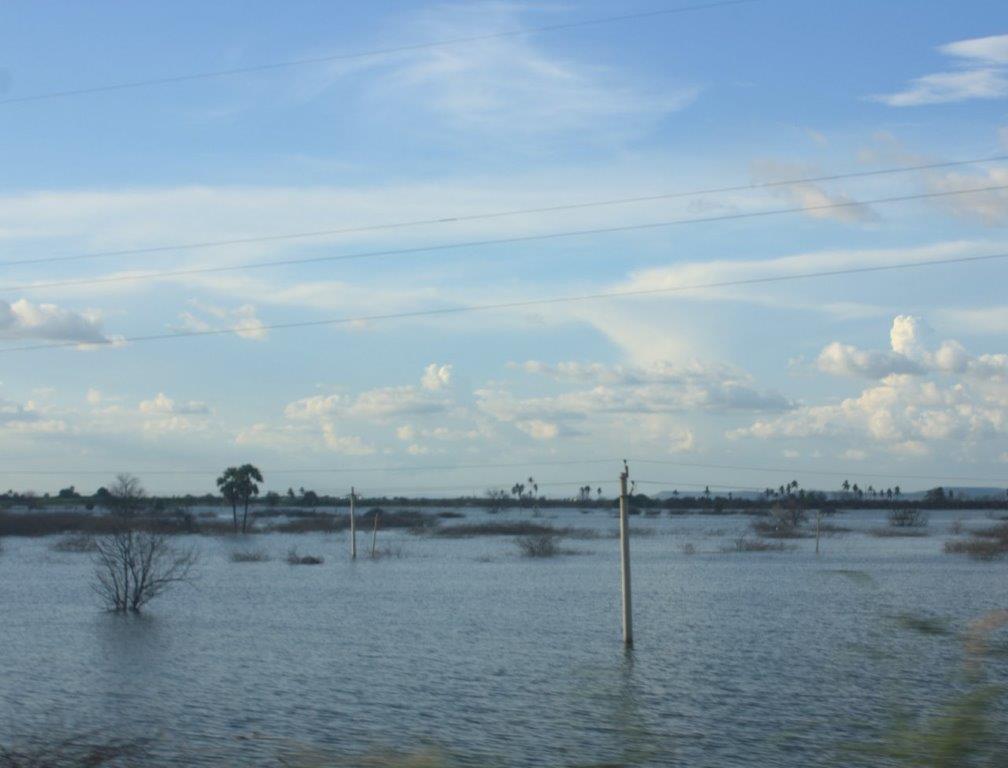
Floods [Common Meter]

The waters rise slowly, at first -
like a cool tease or flirt.
But soon there's not one single inch
of dry or exposed dirt.

It's knee-high seas for as far as
the naked eye can see.
The shrubs are drowned, and there're no trunks
on any of the trees.

I'm sick of being soaked, and hope
the world will quickly drain,
and restore what was once a vast
expanse of fruitful plains.

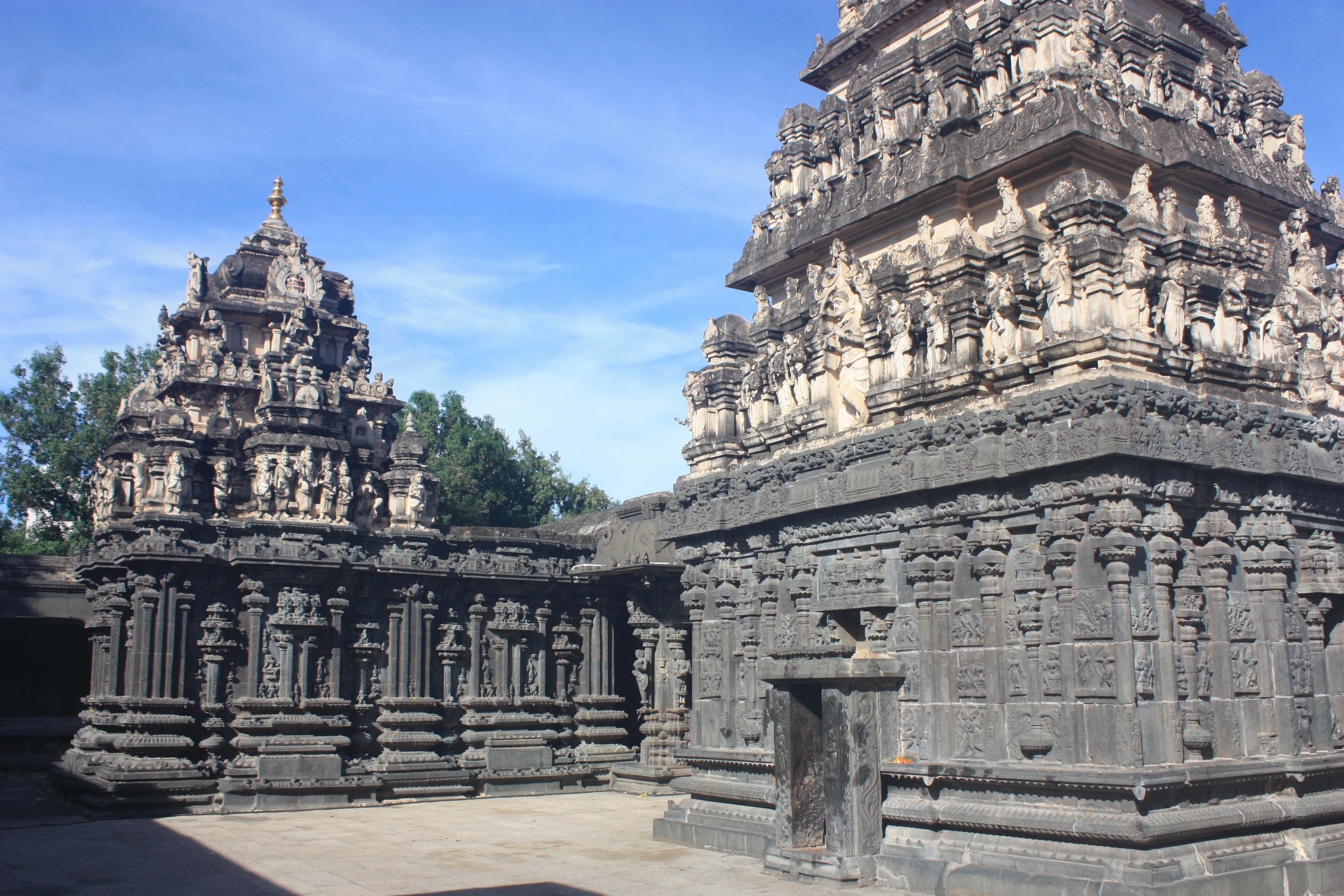
DAILY PHOTO: Chintalarayaswamy Temple

Taken on October 31, 2021 in Tadipatri

Patchwork Lands [Free Verse]

patchwork 
in shades of green, 
beige, 
and rust-red clay

geometries formed
of odd angles

spreading ahead
to the edge of
sight 
& 
imagination

so many fields
in so many states -
yet, all in one
time
&
place

there, I felt
a tad bit infinite,
being stretched
from a stable center
in all directions
as time sprawled
first to last
in no particular order

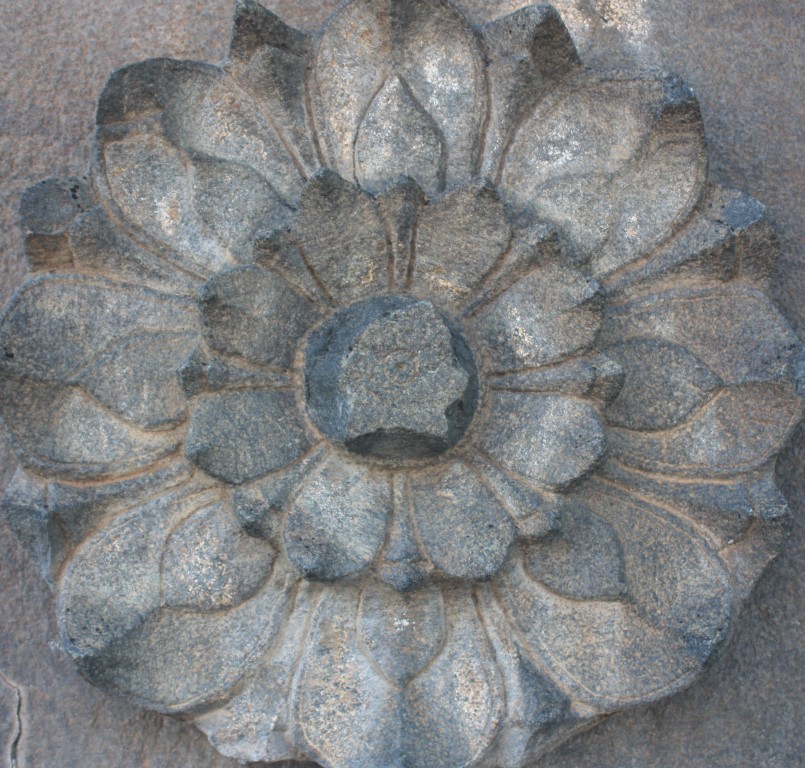
Stone Lotus [Tanka]

the stone lotus
carved in the temple wall
will outlast
lovers and real lotuses -
such a clumsy copy

BOOK REVIEW: Epicureanism: A Very Short Introduction by Catherine Wilson

Epicureanism: A Very Short IntroductionEpicureanism: A Very Short Introduction by Catherine Wilson

My rating: 5 of 5 stars

Amazon.in Page

Like all ancient schools of philosophy, Epicureanism birthed an adjectival oversimplification that has eclipsed the word’s original meaning and obscured the full story of this philosophical system. Platonic refers to the teachings of Plato, but platonic is a friends-without-benefits scenario. A Cynic is a minimalist who eschews comfort and rejects social norms, but to be cynical is to think the worst. A Stoic believes that there are things one can control and things one can’t and that one should act virtuously in the former case and indifferently in the latter, but a stoic is an emotionless automaton. Epicureans developed a comprehensive system of philosophy that included metaphysics, epistemology, ethics, and political philosophy, but an epicurean is a hedonist, probably dripping butter from his chin. The tenet that there is nothing wrong with seeking pleasure became the whole picture, and lost was the understanding that moderation is a virtue.

Being unacquainted with Epicureanism, I was surprised to learn that it was the least superstitious, as well as the most compassionate, of all the ancient Greek philosophies. Like most people studying ancient philosophies, I’m most interested in those aspects that might be called “philosophy of life” – i.e. ethics, politics, and other aspects that deal in how one should live. [As opposed to the more arcane questions of metaphysics and epistemology.] The reason is simple; the former ideas have aged better, while ancient metaphysics, for example, appears ridiculous in light of all the science that has come along. For this reason, I tend to overlook the long-discredited ideas of ancient philosophers. However, I’ve come to see that these ideas informed the life philosophy of each school (and, also, that there are degrees of wrong.) For example, the Epicureans, being atomists, were correct to a point, and in rooting their entire system in nature (rather than gods and the supernatural) they avoided preoccupation with pleasing the gods and developed an acceptance of the fact that sh!% happens (and it’s not due to angry gods.) So, while many of the details of Epicurean atomism were far from the mark, it did yield a less superstitious outlook (and was less wrong than most ancients.) My point is that I ended up benefiting from this guide’s comprehensive approach.

If you’re looking for an overview of Epicureanism, or you think the defining characteristic of an Epicurean is a love of heavy sauces, you should definitely check this book out.


View all my reviews

DAILY PHOTO: Gooty Fort Ruins

Taken in October of 2021 at Gooty Fort

BOOK REVIEW: Yoga Anatomy, 3rd Ed. by Leslie Kaminoff and Amy Matthews

Yoga AnatomyYoga Anatomy by Leslie Kaminoff
My rating: 5 of 5 stars

Amazon.in Page

This book has several competitors, and so this review will focus on a few of the features that I believe make it one of the best books on yoga anatomy, and the most appropriate for many users. To clarify, H. David Coulter’s “Anatomy of Hatha Yoga” has some advantages over this book, but Coulter’s book is also denser and will send neophyte readers to the glossary / internet / library much more often. On the other hand, some of the other yoga anatomy books fixate entirely on postural yoga and treat it entirely as a matter of skeletal alignment and muscular engagement. While a lot of this book (and any such book, really) focuses on skeletal alignment and muscular engagement, I appreciated the books exploration of breath and the nervous system – topics that are often neglected. In short, this book offers a mix of reader-friendliness and detail that makes it at once approachable and tremendously informative.

One important feature of this book is that it avoids the dogmatism of some yoga texts, encouraging experimentation and recognizing that a one-size-fits-all approach to bodies is bound to fail. This can best be seen in the “Cueing Callout” boxes that explore the pithy adjustment directives for which yoga teachers are famous (and often satirized,) advice that is often misunderstood in ways detrimental to a student’s progress.

A second key feature involves keeping anatomy and physiology distinct from the folk science of yoga / ayurveda. While Kaminoff and Matthews do refer to ideas like prana and apana, they do so in a broad, conceptual way that doesn’t conflate said ideas with science. A common problem in yoga texts is conflation of science with folk science such that confused readers are left with a muddle of puzzle pieces that don’t belong to the same puzzle.

Finally, as one who’s found pranayama (breathwork) to be one of the most profoundly transformative elements of a yoga practice, I appreciated that the book not only had a chapter on breath dynamics, but that all the posture discussions included a “breath inquiry” section that encouraged readers to reflect upon the effect of the posture on breathing, as well as suggesting ways in which a practitioner might experiment to improve one’s breathing.

The only criticism I have is that many of the text-boxes in the early chapters seemed to contain random information that could have been incorporated into the text, into footnotes, or edited out altogether. [In contrast to the aforementioned “Cueing Callout” boxes that had a clear and distinct purpose.] If you’re a yoga teacher or dedicated practitioner without a deep scientific background, you’d be hard-pressed to do better than this book for learning about the anatomy of yoga.


View all my reviews