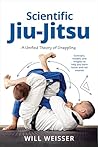
BOOK: “Scientific Jiu-jitsu” by Will Weisser

Scientific Jiu-Jitsu: A Unified Theory of Grappling (Martial Science)Scientific Jiu-Jitsu: A Unified Theory of Grappling by Will Weisser
My rating: 4 of 5 stars

Publisher Site – YMAA Publication Center

Release date: June 2, 2026

This book outlines principles of positioning, alignment, and movement used to gain advantage while grappling. It is not a technique-centric book but rather is a concept-centric one. Weisser does for Brazilian Jiu-jitsu what Jiichi Watanabe and Lindy Avakian did for Judo with their book alternatively titled The Secrets of Judo or The Art and Science of Judo. Watanabe and Avakian focused more on both technique and elementary physics than does Weisser, but there is common ground in ideas of what positions make a body strong and what movements bring vulnerability. The biggest area of divergence between Watanabe’s book and Weisser’s is simply the difference between Judo and Brazilian Jiu-jitsu. Watanabe and Avakian direct the vast majority of their attention to how one gets the opponent to the ground and relatively little on what to do when one gets there, and Weisser’s book is the other way around — i.e. primarily assuming at least one person is already on the ground.

Weisser’s book does assume that the reader has a background in Brazilian Jiu-jitsu, using terms specific to that system without necessarily providing elaboration. I say this just to point it out as (to be fair) I realized that I would have thought nothing of it if it used Japanese Jujutsu / Judo terminology in the same way. (I did have to go to Google at one point to elucidate what turned out to be a Dragonball-Z reference that went right over my head.)

Weisser’s book uses a combination of graphics, including photographs. I found it easier to see the linkage between what the author was describing in the text and what was in the photos in some cases than in others. Often, there was a single photo catching one static situation, and if the grapplers were closely entangled (as grapplers are want to be,) it was not so easy to see — even with different colored uniforms. [Note: I should point out that I was reading an ARC galley, and so that may all be sorted in the final formatting.]

As one who knows little of Brazilian Jiu-jitsu, but with some experience with other grappling systems, I found this book readable and thought-provoking. The statement of ideas is clear, and I’d recommend it for grapplers looking to engage in thinking about first principles of grappling.

View all my reviews

MEXICO LIMERICK

PROMPT: Sports

Bloganuary writing prompt
What are your favorite sports to watch and play?

Combatives: i.e. Boxing, Wrestling (real, not acted,) Muay Thai, Judo, etc.

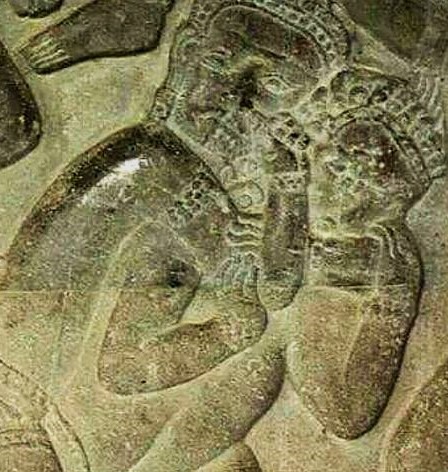
Chokehold [Lyric Poem]

Source: Wikipedia; cropped & modified; Khmeri chokehold
dying by the second
   from a starving brain;
 each new panicked moment
   narrows down the frame.

now, my world is dwindling,
   shrinking to a dot:
 like TV's used to do
    when you shut them off.

Now, this poem is done.
   there's nothing past one pel --
 except for oblivion:
    no sight, no sound, no smell.

BOOK REVIEW: Enter the Dangal by Rudraneil Sengupta

Enter the Dangal: Travels through India's Wrestling LandscapeEnter the Dangal: Travels through India’s Wrestling Landscape by Rudraneil Sengupta
My rating: 5 of 5 stars

Amazon.in Page

Get Speechify to make any book an audiobook

Enter the Dangal offers a fascinating discussion of the sport of wrestling in India, be it the dirt-pit Kushti variety or on the mats in the highest stage the sport has to offer, the Olympics. Sengupta offers a glimpse into the fully formed subculture that exists around akhada, live-in wrestling academies. We see India’s wrestling world through both the tradition- and virtue-oriented training grounds that produced greats like Gama and Sushil Kumar, but the book also takes forthright dips into the darker reaches of the sport.

The book is divided into three parts. The first part both provides background and tells the story of one of the most profound experiences of modern Indian wrestling, Sushil Kumar’s match for the gold medal in the 2012 Olympics [he took silver.] The second part explores the long wave of the rise and fall of Indian wrestling, and the third part takes the reader back to the golden age of wrestling, telling of the international matches of Gama and the movement by some Indian wrestlers into both the legitimate and staged wrestling domains of Europe and America.

There are two discussions that I found particularly intriguing. First, there’s the matter of women entering this all-male domain. Historically, not only did women not wrestle, mothers and sisters didn’t even go to the akhada to see their son’s and brother’s training. Second, the book answers an interesting question: why is India such a non-contender in the Summer Olympic games? [India falls between Uzbekistan and Ireland for total Summer Olympic medals, not even making the top 50 – which, for a country of its size and talent pool across a range of body types, is pretty dismal performance.] The answer is rooted in patriarchy, corruption, and downstream problems resulting from those problems (i.e. lack of best practices vis-à-vis sports science and poor facilities.)

I found this book to be compelling read and would highly recommend it for those wishing to learn more about wrestling in India.

View all my reviews

DAILY PHOTO: Mexican Wresting Poster

Taken in July of 2009 in Playa Del Carmen

Taken in July of 2009 in Playa Del Carmen