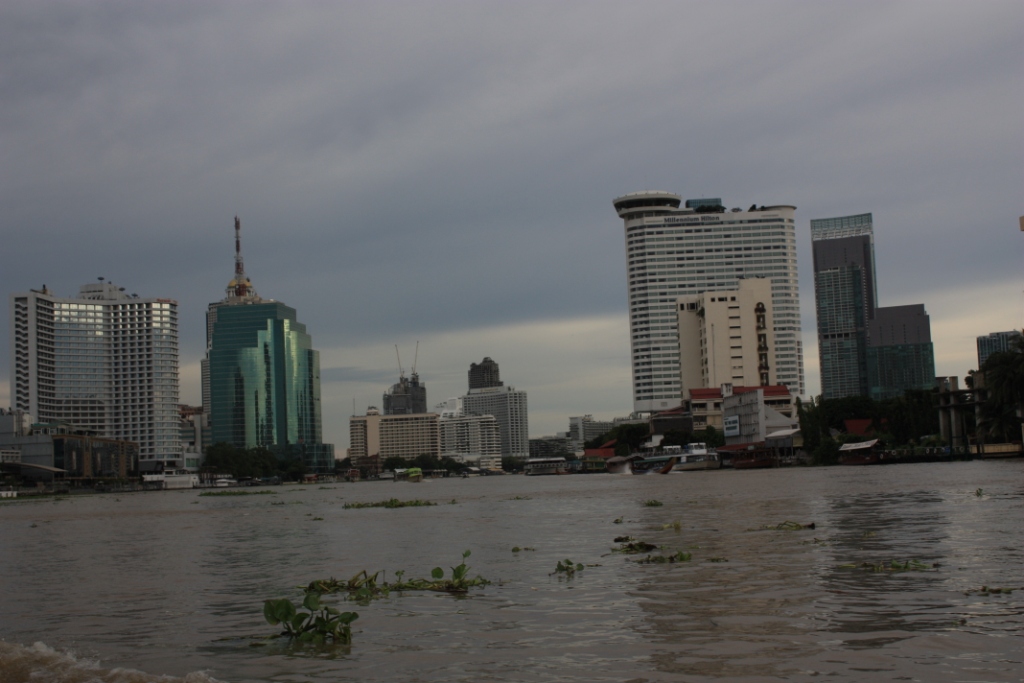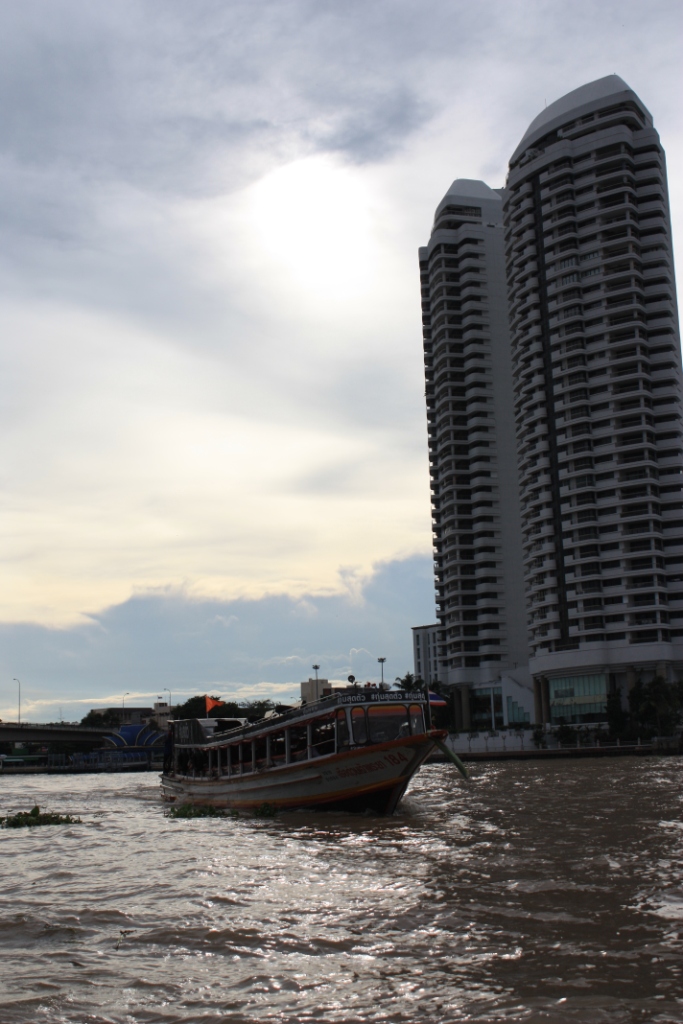
The photo above and the photo below were taken at almost the same time (around dusk), but with some adjustments to the manual settings. (You can see the time continuity in the clouds above the hotel in the right half of the photo.) What a difference a few clicks make.
Tag Archives: tourism
Learning Indian Cooking in Bangalore
The thing about Indian food–with its penchant for pureed gravies–is that I find it delectable, but often have no idea what I’m eating or how it got to me looking, tasting, and smelling like it does.
That is until recently. A couple of weeks ago I attended a cooking class at Manju’s Cooking School in RT Nagar in an attempt to rectify (or at least reduce) my ignorance. Manju’s offers a wide variety of classes (Indian and non-Indian, veg and non-Veg, cooking and baking, etc.)
I attended with a group of friends, and we constituted a class unto ourselves. We, therefore, got a quick and dirty introduction to a number of common / typical Indian foods (veg and non-veg, and both North and South Indian.) The menu we prepared consisted of two breads (kulcha and Malabar parota), dal makhani, paneer butter masala, and kadai chicken.
The class took 2.5 or 3 hours, and ended in a banquet of the foods we hand prepared.
Some of the fun facts that I learned include:
-“Kadai” in the name of dish just means that it’s wok-cooked.
-A Kulcha is essentially a naan of a different thickness.
-Dal makhani requires a lot of prep, even if you have access to a pressure cooker.
-There’s a lot of finely chopped onion in these gravies that often goes unnoticed.
-One can cook with the pot upside-down. This is how we cooked Kulcha. In a restaurant it would be cooked in a Tandoor oven, but at home you can cook it stuck to the bottom of a deep pot.
-Lastly, the key to a the flaky goodness of a Malabar parota is lots of fat… who’d have thought?
DAILY PHOTO: Totem Tea House
DAILY PHOTO: Taj Hotel in Mumbai
The story is that Mr. J. N. Tata built this hotel after being turned away from upscale hotels at the turn of the 20th century because he wasn’t white (he’s Parsi. He made it one of the most opulent hotels in India. I haven’t seen corroboration of this story, but it’s what people say.
This photo is taken from the Gateway of India.
DAILY PHOTO: Girl in Green
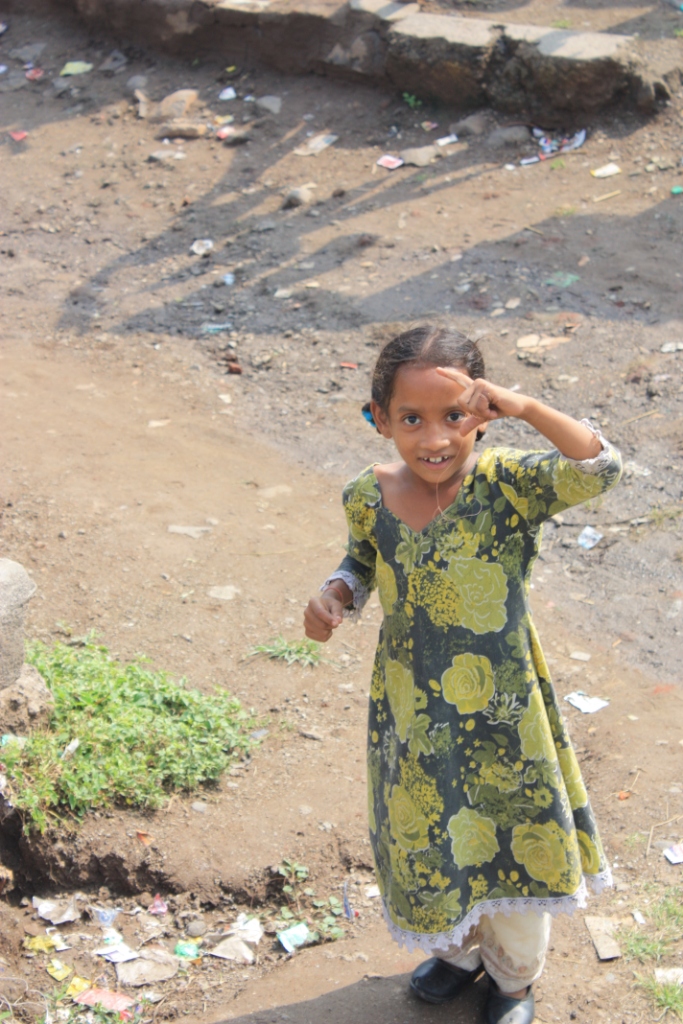
This girl was part of a school group visiting Daulatabad Fort while I was there. The teacher asked me to explain something about the differences between the U.S. and India in terms of geography and economics.
The photo below is the same group resting in the citadel, the highest point of the fortress.
DAILY PHOTO: Green Budapest
DAILY PHOTO: Temple in the Sun
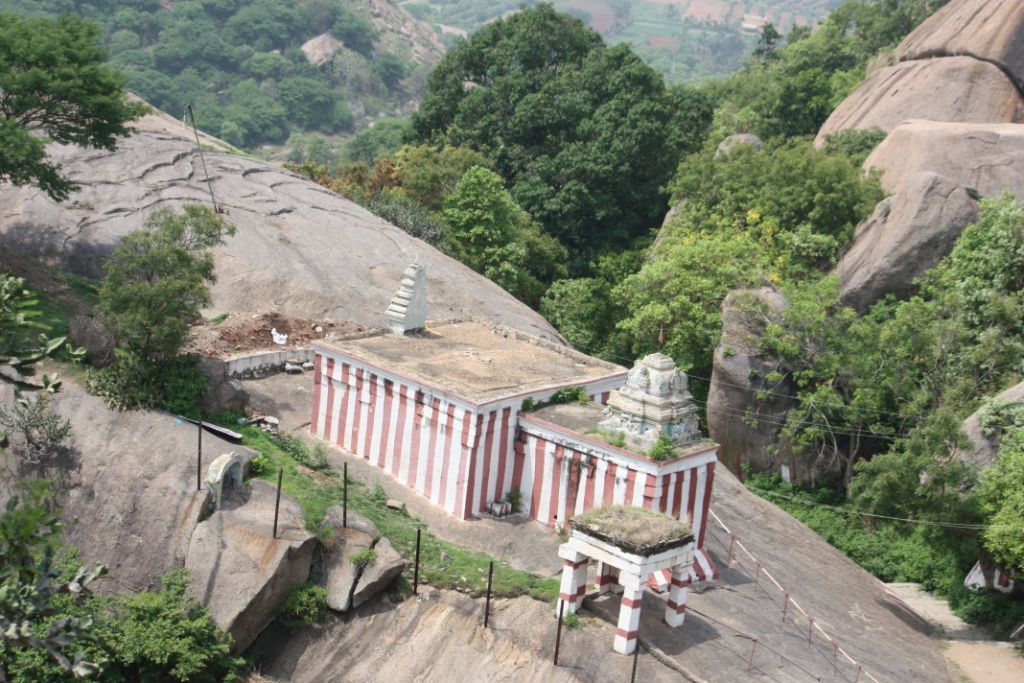
The temples at Belur and Halebidu are among India’s most impressive–but least known–historical sites. Both cities were a capitals during the days of the Hoysala Empire, but are well off the major tourist path. If you’re spending some time in South India, these temples should be on your itinerary.
Uncle’s Shop, And Other Mysteries of The Indian Auto-Rickshaw
Where is Uncle’s shop? It’s where you are going if you got into an auto-rickshaw with a driver who has volunteered to drive you around for less than the metered rate. It may not be where you want to go, where you think you’re going, or where you’d like to go. But in the driver’s eyes, by taking him up on a reduced fare, you’ve entered into an implicit contract to be taken to a random store and nagged into buying something expensive enough that the shop can happily recoup the driver’s finders fee.
FYI- Bangalore auto-rickshaw fare is currently 25 rupee (Rs) for the first 1.9km, and 13Rs for every kilometer thereafter. If the driver offers to take you around for 10 or 20Rs, you know they have plans. (Although there is a small chance that they are counting on you to be ignorant of the fact that the place they are offering to take you is 50 feet away.) Usually, a driver will offer to take you to a place for 4 to 8 times the metered rate (sometimes more if he has no idea where said place is–a not uncommon condition in Bangalore.) In other words, the driver will normally try to rip you off in the old-fashioned way (which eats at your pocket-book, but not at your time.)
If you find the new-fangled rip-off scheme to be a deplorable con, just remember to save some of your wrath for FaceBook, Google, and the other websites you commonly use. They almost all work on the same model. You get charged little or nothing to use said sites in exchange for agreeing to be shamelessly pitched stuff you don’t want or need.
What does Uncle’s shop sell? I hope you like a good mystery, because there’s no telling whether Uncle’s shop sells anything in which you have the slightest interest. If you are a single male, Uncle’s shop probably sells saris and pashminas. If you have a tiny apartment, Uncle’s shop probably specializes in 14 foot tall bronze statues of Ganesha. It could sell woven goods, knick-knacks, bric-a-brac, widgets, tsotchkes, or relics of a religion you know nothing about so you can engage in some low-grade impiety. (FYI- You may not realize this but for the devoted, it can be a bit offensive for a bunch of non-believers to be wearing “OM” symbols or having Buddha statues who aren’t Hindu/Yogic or Buddhist, respectively. Sort of the way many hardcore Christians feel about how Christmas was shanghai’d by a jolly old elf or Easter was overtaken by a giant bunny.) In some cases, Uncle’s shop will sell all of the aforementioned items and more.
Surely I will get an outstanding deal at Uncle’s shop, right? I mean, Uncle is not going to rip off his nephew’s customer, right? Wrong. First of all, there is an infinitesimally small chance that the driver is biologically related to the store owner in any way, shape, or form. It’s probably more likely that they’ve never formally met.
Second, let’s do some Uncle’s shop mathematics. We will call the wholesale cost of the product “C” and the bloated profit that the store owner would like “W” (for “wishful thinking profit”) and the lowest profit “Uncle” is willing to accept “R” (for “reservation price profit.”) If you just walked into the shop off the street and bought said item you’d pay some amount ≤(C+W) and ≥(C+R).
However, now the driver expects a reward. [Granted, it may be nominal in the scheme of things.] We’ll call the fixed-rate payment to the driver “S” (for “sucker wrangling charge.”) [You may wonder why I’m assuming this is a fixed-rate payment. Fair enough, if the driver is savvy, it will be percentage. However, my finding has been that between 60% and 80% of autorickshaw drivers in Bangalore don’t understand the concept of a map. I’m not saying they don’t know how to use a map. I’m saying that they don’t get that it’s a representation of the streets surrounding them. My point being, auto-rickshaw drivers are–as a group–not savvy. Granted, certain among them are really savvy. However, my point holds as long as we can except that S>0, for all S–whether fixed or a percentage.)
Long story short, now you will pay between (C+W+S) and (C+R+S), where S>0. Long story shorter, going to Uncle’s shop with an auto driver will not save you money (unless you’re looking for something specific, and it will save you the value of time to have a guide to show you where to get what you’re after. Good luck with said guide being an auto driver, the driver doesn’t care what you want, he wants you to buy whatever Uncle’s shop is selling. You can buy what you want on your own time.) It’s true that you may find it worth it to pay the nominal extra amount for many reasons, i.e. convenience, a likable driver, etc. Just be informed.
How come it’s called Uncle’s shop, when nobody involved is the Uncle of anybody else involved? Indians use “auntie” and “uncle” as honorifics for older individuals who are in positions / stature commanding respect–it needn’t be a relative by blood. For auto drivers, this includes random shop owners who’ll pay them 50 rupee for dragging hapless tourists into the store.