BOOK REVIEW: Batman: The Dark Knight Returns by Frank Miller

Batman: The Dark Knight ReturnsBatman: The Dark Knight Returns by Frank Miller

My rating: 4 of 5 stars

Amazon page

A couple of reviews ago, I covered Frank Miller’s Batman: Year One, which imagined the first year of the Dark Knight’s venture into crime fighting. The Dark Knight Returns is Miller’s take on the other end of the Caped Crusader’s career. It begins ten years after the last sighting of the Batman. Commissioner Gordon is on the verge of retirement, and there’s a mix of new and old threats rising.

There are four parts to this work. The first, also entitled The Dark Knight Returns shows the rise of a powerful gang of thugs called “The Mutants.” The way this gang’s leader is drawn makes him look like he truly is an altogether different species, but it’s his filed teeth and his bulky physique that account for his appearance. The main battle is with the “rehabilitated” Harvey Dent (a.k.a. “Two-Face,” an inappropriate moniker as his face has been fixed and his flighty psychiatrist ensures the community that Dent’s mind is fixed as well.) We see Bruce Wayne’s concern about the deteriorating state of Gotham and his eventual return to crime fighting, which is instigated by a freakish bat flying through his [closed] window. Wayne takes the bat as a sign from the universe that the Batman is indeed needed. Dent engages in a terroristic plot which the Dark Knight must try to foil.

As was the case in Batman: Year One, the story of Commissioner Gordon plays out in parallel with that of Bruce Wayne / Batman. However, in the third book, Gordon has retired and it’s the new Commissioner, Ellen Yendel, who shares the spotlight. Yendel, unlike Gordon, promptly issues an arrest warrant for Batman.

Book Two is called, The Dark Knight Triumphant, and it’s in this episode that Batman comes up against the leader of the Mutants. As in Batman: Year One, Batman arrives to the fight as an underdog. However, as would be expected, the nature of his underdog status is completely different. In Year One, Batman is a supreme physical specimen, but is green to crime fighting. In The Dark Knight Returns we see a battle-hardened veteran Batman who is a spry geriatric, not up to fighting young, mutant thugs. However, as with the former comic, the Dark Knight does redeem himself. Many of the Mutants, being fair-weather friends to their leader, form a cult of Batman in the wake of the Dark Knight’s victory over their former boss.

Besides broadening the readership demographic to retirement community dwellers, another new demographic is appealed to with Carrie Kelley, the new Robin. There are references early in the book to the profound effect that the death of Jason Todd had on Bruce Wayne. Be that as it may, Batman seems quick to bring this young girl into harm’s way given the lingering wound of Jason Todd.

Book Three, Hunt the Dark Knight, pits Batman against his ultimate nemesis, the Joker—who like Dent—has been sprung in no small part due to his lunatic psychiatrist. Miller continues the popular Batman comic disdain for psychiatrists, who are portrayed as a small nudge away from becoming bat-shit crazy (pun intended.) While the battle against the Joker provides this chapter’s crime fight, Commissioner Yendel’s war on Batman is a major part of the storyline. We also discover that time has not been as kind to Selina Kyle as it was to the men of this series. (i.e. Gordon is old but distinguished, and Batman has pretty much the same preternatural physique that he did as the young batman.)

The Dark Knight Falls is the last section, and it’s the most famous for the battle between Batman and Superman. Earlier in the book there’s a foreshadowing call from Clark Kent to let Batman know that the Superman will be out-of-town for a while. Appropriate to the 1986 issue date of this comic, a Cold War crisis is the event consuming Superman’s time. These Cold War tensions result in a nuclear missile launch that Superman diverts, but the Man of Steel hasn’t read up on the Electro-Magnetic Pulse (EMP) effect. [Incidentally, Miller didn’t read up on the use of nuclear weapons as an EMP either, or—at least—he gets it completely wrong. Perhaps, he just figured that his readers wouldn’t know the difference–and he’s probably right. At any rate, I’m not deducting stars for bad science.] The power outage caused by the EMP results in looting and societal chaos. Batman quells this with the help of the cult of Batman mentioned previously. However, this doesn’t go over smoothly with some, which results in Superman’s invasion of Batman’s Gotham turf, and the ultimate battle.

I enjoyed this work more than Batman: Year One in part owing to the serious enemies that the Dark Knight must vanquish. I’d agree with the common view that this is a must-read for those interested in the canon of the Caped Crusader.

Also, if you aren’t a comics fan but are wondering how Batman and Superman could end up fighting–as per the upcoming Batman v Superman: Dawn of Justice movie–this might give you some insight. [Though I wouldn’t expect that movie to follow this work in any of the vaguest ways.] Also, there are other Caped Crusader versus Man of Steel interpretations out there, though this is probably the most famous.

View all my reviews

2014 Superhero Movies

Here’s an overview of the upcoming year’s superhero movies.


I, FRANKENSTEIN; January 24th

Frankenstein’s monster may not the usual superhero, but it’s based on a graphic novel and the demon-battling premise seems heroic enough.


ROBOCOP; February 12th

This is also one you might not think of this as a superhero movie, I include it because there was a Marvel comic based on the movie and if Iron Man is a superhero…


CAPTAIN AMERICA: THE WINTER SOLDIER; April 4th

The second Captain America installment and the third of the five Marvel Phase II films. After taking on some high level conspiracies, Captain America finds himself battling his old sidekick’s villainous alter ego, i.e. The Winter Soldier.


AMAZING SPIDERMAN 2; May 2nd

The sequel finds Spiderman facing Electro and–to a lesser degree–Rhino.


X-MEN: DAYS OF FUTURE PAST; May 23rd

As the confusing title implies, this is a time travel story in which events in the past must be changed to avert a grim future. Wolverine is sent back to affect this change.


TRANSFORMERS 4: AGE OF EXTINCTION; June 27th
220px-Transformers4_Teaser_Poster
OK, this is more a toy movie than a superhero movie, but cars that turn into robots seem super in my book. That’s not to say there isn’t a better than average chance the movie will stink.


GUARDIANS OF THE GALAXY; August 1st
220px-Guardians_of_the_Galaxy_logo
It’s still early. There’s no trailer out as of this posting.


TEENAGE MUTANT NINJA TURTLES; August 8th
No trailer or images out, and little is known except this is about as ridiculous a premise for a movie as is imaginable.


BIG HERO 6; November 7th
Big_Hero_6_logo
This is an animated Marvel project. A robotics prodigy and his creation team up with amateur crime-fighters to put an end to a nefarious plot.

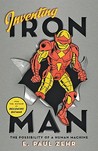
BOOK REVIEW: Inventing Iron Man by E. Paul Zehr

Inventing Iron Man: The Possibility of a Human MachineInventing Iron Man: The Possibility of a Human Machine by E. Paul Zehr

My rating: 4 of 5 stars

Amazon page

As the title suggests, this book examines whether Iron Man could exist in the real world. As with Michio Kaku’s book Physics of the Impossible, answering the question involves defining the various meanings of “impossible.”

One way to parse the question is, “Is Iron Man possible today given the existing state of technology?” In and of itself, this question is of limited interest because the answer is, “no.” There’s certainly a demand, and so if Iron Man could exist given current technology, he probably would. That’s not to say it isn’t interesting to learn about what technologies are holding us back and where the cutting edge of relevant technologies lies—both of which are addressed by the book.

Still, a more interesting inquiry is, “Will Iron Man ever be reality given the physical laws that we know to govern the universe?” While more intriguing, it’s also a harder question to definitively answer. It’s impossible to foresee all the technological developments that might come along to answer the seemingly insurmountable challenges (e.g. Tony Stark’s inevitable Traumatic Brain Injury (TBI).) The book deals with the critical question of what challenges would have to be overcome for Iron Man to be reality.

As Zehr suggests, the appeal of Iron Man is that he’s considered to be among superheroes for the common man. Like Batman, the sufficiently bright and diligent nerd may fantasize that, “That could be me.” You or I can’t be Superman or Wolverine, but given enough money, smarts, and training we could be Batman, or—even better—pilot the Iron Man suit. Put in this light, the book may seem like just another frivolous attempt to capitalize on the popularity of superheroes to sell books. However, there’s actually a great deal of food for thought packed in the book. Like others, I read the book because its title is Inventing Iron Man and not Neuro-motor control of a self-propelled armor system or some other suitably scholarly title.

Dr. Zehr has the bona fides to delve into this topic. He is a Professor who investigates questions of how the nervous system controls movement. That subject may not constitute the sum total of critical concerns, but it’s one of the most important challenges. For Iron Man to move the way he does in the movies and comic books, Tony Stark’s impulses to move have to be transmitted seamlessly to the servo-motors that move the suit. From dodging Col. Rhodes’ (i.e. War Machine’s) punches to ducking RPGs, Stark can’t be quick enough if he has to manually steer the device. Then, of course, there’s the issue of feedback. Any neophyte meditator who’s had his or her foot fall sound asleep will know how difficult it is to walk surefootedly when one can’t feel anything through one’s foot.

[Iron Man 3 spoiler commentary in this paragraph.] One of the most damning challenges for making Iron Man a reality is the high probability of severe concussions. Let’s say you make the suit out of a material that is virtually indestructible? This may be possible. However, the pilot’s mushy brain is still sloshing around inside that impenetrable armor. One can remotely pilot the suit in order to negate this (as has been done in the comic books and the third movie), but—at that point—is it still Iron Man? I know from a writer’s perspective it’s a lot harder to maintain tension if there’s nothing human on the line. In the third movie about 30 autonomously piloted suits get wiped out and the viewer doesn’t care—the only source of tension is that Tony Stark is without armor half the time.

Some of the most interesting discussions are about where the current state of the art lies with respect to: a.) direct mind control over mechanical systems; b.) a “flying suit”; and c.) robotic movement enhancers. Zehr conducts interviews with those engineers and technologists involved in such technologies, and finds out where we are presently. Letter “a” above seems to be the least developed of the three technologies, but they are all active lines of research.

I enjoyed this book and found it interesting. I think anyone who is interested in the state of technology and its limits will find it a nice pop-sci introduction to the subject. The use of superheroes as a pedagogic device may be overdone, but it continues to work because we are fascinated by the edge of possibility, and that’s what superheroes represent.

View all my reviews

BOOK REVIEW: Justice League Vol. 1: Origin by Geoff Johns

Justice League, Vol. 1: OriginJustice League, Vol. 1: Origin by Geoff Johns

My rating: 2 of 5 stars

Amazon Page

Amazon had the Kindle edition of this graphic novel on sale recently. With all the talk of a Justice League movie, and whether it can ever get off the ground, my curiosity in these characters was piqued.

This volume was released in August of 2011 as the leading edge of a reboot of the entire DC comics line called “the New 52.” This is the origin story for the Justice League as a team, though all but one of the individual characters–Cyborg–is an existing hero at the time the story begins. The other characters, i.e. Batman, Green Lantern, Superman, Flash, Wonder Woman and Aquaman are familiar to the world but are not well liked. (and are introduced into the story arc in that order.)The volume consists of Issues #1 – 6 of the Justice League [New 52] reboot.

In the beginning, there’s only one dyad among this group who knows each other personally, the Green Lantern and the Flash–we don’t really know how they know each other. Most of the other characters are aware of each other’s existence (or myth), but have never met. Of course, Cyborg doesn’t exist at the beginning of the story, and his individual origin story is woven in throughout the book as a subplot so that he can be introduced into the arc at the climax. The characters are assumed to each operate in his (or her) own domains, i.e. Gotham City, Metropolis, Coast City, Central City, etc.

As the story opens, Batman is chasing down a stocky, non-human creature on the roof tops of Gotham in order to try to figure out what the nefarious character is up to. Green Lantern is inexplicably introduced into the middle of this chase scene. Batman and Green Lantern viscerally despise each other from the get go. This isn’t surprising as Green Lantern is an arrogant ass throughout the entire story. Perhaps the highlight of the book (which is sad as it happens so early) is when Lantern is busy mocking Batman, and the Dark Knight steals his ring–the source of his power–right off his finger.

The Green Lantern and Batman witness the inhuman creature planting a piece of alien-looking technology (later revealed to be a “mother box”), and Green Lantern’s ring confirms it to be otherworldly. The pair decide to pay a visit to the Earth’s resident alien, a.k.a. Superman. Green Lantern immediately runs afoul of Superman, arrogantly thinking he can subdue the Man of Steel, and has to call his old friend the Flash. The quartet finally stop fighting and begrudgingly agree to put their heads together.

After seeing a piece of the Cyborg origin story, we are introduced to Wonder Woman. She is probably the character that we get the greatest sense of. (Besides Lantern, who is unlikable throughout.] The Amazonian seems more alien than Superman. She’s never had ice cream but loves it, but not quite as much as a good fight. She’s not emotional about fighting, neither fearful nor angry, but is at her most happy when fighting. She’s the character most out of touch with the world she is occupies. She joins up with the four in the chase for the winged, alien monsters, forming a quintet and instilling some gender equity.

The Cyborg origin story comes to a head when Silas Stone, a brilliant defense industry scientist, turns his dying son, Victor, into the Cyborg, thinking it the only way to save the young man after he suffered severe burns from a mother box explosion. The former star football player is now a kind of Frankenstein’s monster, part himself and part autonomous machine. There’s a cacophony in his head as he can now pick up various radio signals.

It’s shortly thereafter that Aquaman is introduced. Considerable artistic effort was put into manning up Aguaman, who always seemed the weak link in this team. The group happens to be standing around near the water when Aquaman and his fish minions chase some of the evil army to the surface

The enemy is Darkseid, a juggernaut warlord from another world (or a parallel universe), whose army of evil minions have been the ones that the newly formed League have been fighting both individually and as a group. When Cyborg goes running away from his father–and his creator as a machine-man, he runs into the six superheroes, and the team of seven is fully assembled. Darkseid’s power is so great that he relatively easily captures and subdues Superman.

Batman goes to rescue Superman as the rest of the team regroups. The Dark Knight’s tactic is letting one of the evil, winged, juggernaut minions capture him–as they have been capturing others.

I won’t spoil the ending, but will say that it was pretty weak, and a large part of the reason I gave this work such a low rating.

A two star rating may seem a little harsh. The dialogue in this work is better than most comic books. There’s relatively less “As you know, Bob,…” style exposition. There is some, as when Green Lantern feels the need to explain to Batman about how there are other Green Lanterns and this is his space sector. However, there are also clever uses of action to present background, as when Lantern begins to admit that he’s a show-off and it turns out he’s brushing up against Wonder Woman’s truth lasso. (This is a much better way to do it than Wonder Woman saying, “And now my lasso is around you and you’ll have to tell the truth, for whosoever the lasso touches cannot bear false witness.” Which would be the typical comic book way of revealing the lasso’s power.)

There are two problems with this work that are too serious to overlook. First is the deus ex machina ending. The authors make a bold choice as to who will save the day, perhaps to create surprise and perhaps to highlight the character. But the whole resolution strains credulity. Second, there is no good explanation for why these characters keep piling into each other (except for the Xenophobic thought processes of Batman and the Green Lantern that Superman must know about anything alien.) These evil minions are supposedly everywhere, and yet the individual superheroes keep running into each other–and continuing to stay together despite the fact that most of them clearly don’t like the others. I think the author takes this “we hate each other, but are begrudgingly working together” trope a little too far. It feels as if this Wizard of Oz cast hadn’t come together by commonly following the yellow brick road, but rather that seven separate and randomly moving tornadoes picked up one each and just happened to stack them in a neat pile.

Besides Green Lantern being arrogant and unlikable and Wonder Woman being endearingly alien, we get very little sense of individual characters. Batman and the Flash are the voices of reason of two differing type, but Superman and Aquaman are just muscle.

I have a black and white Kindle, but the art looked good to me–but that’s not my forte. I applaud the artists for getting rid of Superman’s red tighty-whities and making Aquaman look more manly. At the end there’s some alternative artwork and info on costume development for those who geek out on such things.

If there’s any hope for a Justice League movie, it’s not to be found in this story line. If you’re a DC fan, you’ve already read this–like it or not. If you’re wondering whether to become a DC fan, I wouldn’t start here.

View all my reviews

BOOK REVIEW: Seven Spiritual Laws of Superheroes by Deepak Chopra

The Seven Spiritual Laws of Superheroes: Harnessing Our Power to Change the WorldThe Seven Spiritual Laws of Superheroes: Harnessing Our Power to Change the World by Deepak Chopra

My rating: 3 of 5 stars

Amazon page

This is Deepak Chopra’s attempt to capitalize on society’s fascination with superheroes. By “capitalize” I’m not necessarily saying to “make money off of,” but perhaps to “use to his advantage in conveying his lessons.” [I’ll leave it to the reader to make judgments about the former.] There are books on the physics of superheroes, the philosophy of superheroes, and the mythology of superheroes, so why shouldn’t there be a book on the spiritual life of superheroes?

The book uses both the superheroes of mythology—i.e. Indian, Greek, Judeo-Christian, Muslim, and others—as well as the superheroes of comic books. While Chopra’s knowledge of the former is considerable, he enlists the co-authorship of his son Gotham (not named after Bruce Wayne’s hometown) to offer insight into the latter.

This book is also intended to capitalize (again, take that as you see fit) upon Chopra’s best-selling book, The Seven Spiritual Laws of Success, but without rehashing the same laws. The Seven Spiritual Laws of Superheroes format is as straightforward as its title. There are seven chapters, each corresponding to one of Chopra’s laws. Said laws address balance, transformation, power, love, creativity, intention, and transcendence.

As I read the book, there was something that rubbed me the wrong way about the writing. It wasn’t that I had major disagreement with Chopra’s ideas, but rather the way he was stating them. At first I thought this was the use of gratuitous assertion. He often began chapters with detailed statements about what superheroes are, do, believe, and understand without much—if any–substantiation of these claims. However, as I got into the first chapter I noticed that he would put one section in each chapter that discussed an example in-depth, offering at least anecdotal support for his claims.

This still left a bit of a bad taste in my mouth. It was because he used general statements like “superheroes know…” and “superheroes understand…,” and then provided a solitary example that fit his statement well, but leaving a vast cast of heroes that didn’t. It seemed a low form of inductive reasoning. In other words, he was attributing an enlightened way of thinking and acting to characters like Hulk and Wolverine.

Chopra and his supporters might make the claim that saying, “The Hulk understands X [insert any of the laws here]” doesn’t necessarily mean he understands them as an intellectual exercise, but rather that he shows this understanding through his behavior. Let me give a story that may make my meaning clearer.

An economist is giving a lecture on consumer behavior. Someone in the audience says, “Professor, how could consumers possibly behave in the way you suggest? Your theory requires complex Lagrangian optimization mathematics, which very few of them understand?”

The Professor replies, “Most of them don’t understand Newton’s work either, but they obey the Law of Gravity without fail.”

I thought about Chopra’s statements from this perspective, but concluded that his point was probably something entirely different. As an author of self-help books about the mind, when Chopra says “Superheroes understand X,” he’s not saying “Each and every superhero understands X,” but instead he’s saying, “If you want to be a superhero, you need to understand X.”

Accepting that that’s what Chopra meant, only one more qualm with the book remained. Laws can be clearly stated (OK, perhaps not tax law, but laws of physics—which seem to be more the kind of law he seeks to emulate), but Chopra’s discussion of his “laws” is vague and ill-defined. Each chapter begins with a large-font italics statement. I don’t know if this is supposed to be “the law” or not. It usually begins with a definition (some vaguely stated) and then statements that superheroes comport themselves in accordance with said definition. Maybe the unstated laws are supposed to be, “Superheroes live a life of balance,” and so on for the other chapters. As one trained as an economist, I’m well-aware of the wide-spread overuse of the term “law,” and maybe the ill-defined nature of Chopra’s laws is a recognition of this.

This book is written for Chopra’s usual audience of seekers of enlightenment. I don’t know that it’ll do well with hard-core science fiction or comic fans, and I don’t know that the Venn intersect of “spiritual self-help readers” and “comic book fans” is as big as Chopra would like. (But, I could be wrong.) Some of Chopra’s ideas about the potential spiritual ramifications of “quantum entanglement” are quite popular with sci-fi fans, but I’m not sure that that offers this book a clear audience. (It might. Chopra is a trained physician, and has some scientific bona fides—unlike many who share shelf space with him and who exist in a spiritual plane entirely unrelated to the world as we know it.)

All this being said, there are some thought-provoking ideas in this book, and the superhero and mythological examples help entertain and—in doing so—become the spoon of sugar that makes the medicine go down. Another testimonial is that I read most of this book in a single sitting, and I tend to jump from a chapter in one book to another book unless something really holds my interest.

View all my reviews

Are Action Movies Dazzling Us Stupid?

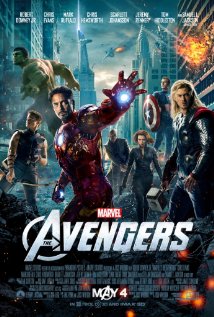
AvengersJust like everyone else, when I first watched The Avengers, I was awed. As I digested the experience, however, I realized how appallingly flawed the story was. Can a film that is visually impressive enough dance over the hard parts of story?

Alright, it’s not just being visually impressive. If it were, then the Transformers movies (I’m thinking particularly of the second one) wouldn’t be so sucktacular. No. Filmmakers also need clever quips. This feeds an inexplicable urge of young people to repeat the witty remarks of movie characters ad infinitum. (Confession: I’ve always longed for an excuse to say, “I’m your Huckleberry,” as per Doc Holliday’s words to Johnny Ringo in Tombstone.) It’s not just that the Hulk bashes a marble floor to dust using Loki’s lanky frame, but that he delivers that witty, two-word rejoinder. Together the CGI and the quip seal the scene in one’s mind.

[Spoilers ahead] If one looks up deus ex machina in the dictionary, one learns that it means: “someone or something that solves a situation that seemed impossible to solve in a sudden and unlikely way, especially in a book, play, movie, etc.” If one’s dictionary is online, one would then probably be treated to a video clip of the scene in which Professor Selvig is knocked on the head, becomes unenslaved, and consciously realizes that his subconscious built a backdoor that will allow him to shut down the portal that were previously told can’t be shut. The clip could then continue through the end of the movie (minus the post-credit shawarma scene.)  The following are key incidents of deus ex machina in this film:

-a bump on the noggin releases one from the mind-control of a god (A “puny god,” indeed.)
-a conscious mind (in a waking and non-meditative state) knows in great detail what happened in the subconscious
-an attack on the mothership disables all troops on the ground, Independence Day style (worst command and control ever.)

One may be thinking that I’m just one of those douches who picks nits, but I’m really not. These flaws are fundamental to how the story is resolved. They are cheats that make everything that happened leading up to the climax irrelevant. Think about it; if the Professor had gotten knocked on the head 20 minutes earlier, the massive Avengers battle through Manhattan would never have been necessary. They could have called the movie “Professor Selvig’s Magical Mind” and left the Avengers out of it all together.

I’m willing to sustain disbelief about the small things. There are plenty of critics who get into the minutiae of continuity gaffes and the like. A couple of my favorites are below.

Lest one think that I’m picking on The Avengers, that’s only because it’s the third highest grossing film ever and first in the superhero genre. If you’re spending hundreds of millions on a film, you’d think you could throw some chump change into good story-building.  I realize that filmmakers have a jaded audience to contend with, and that they have to ramp up the peril to impossible heights to impress. Maybe they are forced to then throw away the resolution of story. Those who read my recent review of The Wolverine, will know that my criticism isn’t restricted to The Avengers.

Well, I’ve got nits to pick.

MOVIE REVIEW: The Wolverine

I don’t normally do movie reviews because, for one reason, I don’t watch that many movies–at least not in the timely fashion necessary to be relevant. However, I figured I’d do one for The Wolverine because I did a book review of Clairmont & Miller’s Wolverine.

The Wolverine shares superficial common ground with the Clairmont & Miller book.  The setting for each is largely Japan. The movie and the book share almost the same slate of major characters. However, the characters don’t necessarily have the same relationships to each other or the same personalities as in the book.

If you’ve seen the trailers, my synopsis will be largely spoiler/surprise free. The movie opens with Logan saving a young Japanese officer. It then flashes forward to Logan living in the wilderness of the Pacific Northeast. The primary reference to the earlier films is that he is tormented by killing Jean Grey in X-men: The Last Stand (a.k.a. X-Men 3.) Yukio (a female warrior who the movie makes friendly to Logan from the get go) tracks Logan down to take him to see her employer, the same individual he saved during the war. That individual offers him mortality. After their meeting, Logan’s principal goal shifts from living by a vow to not kill to one of keeping Mariko safe. Mariko is the granddaughter of the officer Logan saved and she becomes his love interest. As in the book, Mariko is tangled in intrigues of family and company (i.e. kairetsu), but the nature of these intrigues is somewhat updated in the movie. In the book, Mariko is a helpless damsel-in-distress, but in the movie we see her strength.

The biggest strength of this movie is that Wolverine becomes mortal in the film–at least for a time. This creates stakes for Logan where none usually exist. The problem with Wolverine’s combination of rapid healing and indestructible skeleton is that there’s no nail-biting over his fate. You know no matter how much he gets tossed around, he’s going to get up and within a minute he’ll be right as rain.

In my opinion, the biggest flaw of the movie is the creation of a twist ending that fails to surprise but yet requires distorting a character. I realize it’s hard to write a good twist ending. If one foreshadows too much, one gives away the surprise. If one fails to foreshadow, then one annoys the audience with a “gotcha” type ending. In this case, one of the characters behaves in a manner that is out of character with the first act portrayal. This is a “gotcha,” but one that one couldn’t help but thinking was a possibility. There are a number of little forgivable sins that I won’t discuss, and which may be inevitable in film.

The film also contributes to the general continuity muddle of X-men films. Because this film attempts to be a standalone film, it may not seem fair to critique this point. However, by using the aforementioned piece of the X-Men 3 timeline, I think they open themselves up to this criticism. As an example, while in the X-Men Origins: Wolverine film we are told that Wolverine can’t grow back his memories, he apparently grows back his memories of what happened in WWII just fine. There’s a post-credit scene which happens three years after The Wolverine timeline that is a set up for X-Men: Days of Future Past and Professor X appears in it, but they hint that there may be an explanation for this (Xavier died in the same X-Men 3 that this film references through about half a dozen dream sequences.) This is not so much an example of  discontinuity, also because the upcoming film features time travel prominently, but may or may not be example of the general X-Men muddle.

I’d recommend seeing this movie, but only if one goes in thinking of X-Men Origins: Wolverine. If one does that one will find it an enjoyable step up. However, if one goes in expecting a movie of The Dark Knight caliber, one will be sorely disappointed.

BOOK REVIEW: Watchmen by Moore & Gibbons

WatchmenWatchmen by Alan Moore

My rating: 4 of 5 stars

Amazon page

When one sees lists of must-read books, if there is a graphic novel on the list, it’s probably this one. Watchmen represents both the graphic novel and the super-hero tale at their best. It forgoes the unrealistic and hackneyed dialogue and internal monologue that usually plague this genre. While the “tough” style (see: Tough Sweet Stuffy by Walker Gibson)is used liberally–particularly for the voice of Rorschach–it has a natural ring to it.

At its heart, Watchmen is a morality tale that pits absolutist morality against the utilitarian approach. Rorschach (a.k.a. Walter Kovacs) represents the absolutist extreme. For Rorschach, the lesser of two evils is nothing more than an evil to be punished. On the other hand, Ozymandias (a.k.a. Adrian Veidt) represents the utilitarian view that to save the many one may have to sacrifice the few. The rest of the cast is in between, showing varying degrees of comfort with utilitarianism, but none willing to accept the absolutist extreme.

While my preceding paragraph may have made this sound dreadfully boring, in fact it’s anything but. The morality tale plays out inside a well-developed mystery plot. It begins with an inciting incident best described by a quote from Rorschach’s journal, “Tonight, a comedian died in New York.” That comedian was “The Comedian” one of the book’s cast of costumed heroes. As other heroes begin to be eliminated–not all by death, some by imprisonment or apparently self-imposed exile–the intrigue builds. Events pull individuals–such as Nite Owl and Silk Spectre–back into the game after many years out.

For those who have seen the movie, I will say that it follows the book far more than do most film adaptations. The movie borrows many of the exact words of dialogue. It even borrows a lot of the imagery almost exactly (e.g. the Comedian flying out the window enveloped by glass shards.) However, if you’re wondering whether it’s still worth reading, I’ll say two things. First, the book does cover a lot more detail than the movie. Besides the usual comic book style graphic panels, there are excerpts from fictitious novels, correspondence, magazine interviews, and another graphic novels that support the story line. Second, the biggest deviation between the book and the film is in the details of the devious plan that is revealed at the book’s end. In other words, there are a few surprises.

I would agree with the widespread notion that if you only read one graphic novel, make it this one.

View all my reviews

Will “Man of Steel” Turn the Tide on Superman Movies?

I hold contrary views to the character Bill, played by the late David Carradine, in the Kill Bill movies. Bill said that Superman was his absolute favorite superhero. The Man of Steel is among my least favorite superheroes. From a writer’s point of view, it’s hard to write an edge-of-the-seat Superman tale because readers have to feel the protagonist is in peril at every turn. That’s a tough sell if your hero is all-powerful and invulnerable. Superman writers learned this quickly, and they responded by creating a rock that could weaken or kill their character by its mere presence. In books and movies, the bad guy should be stronger and smarter than the hero. Lex Luthor is a devious fiend, but he’s no match for Superman in any domain but wickedness.

There’s a lot of talk about this year’s Superman movie, entitled Man of Steel, being darker and grittier with the implication that it’ll be more interesting than past Superman movies. The involvement of Christopher Nolan, who is most famous for the outstanding Dark Knight movie trilogy, makes many optimistic. It may be that they can tap into some of the Dark Knight narrative power. However, it’s easier to have gripping Batman tale. Batman is only human, with no superpowers, and he is inherently a loner (or in some cases a dynamic duo.) Batman may be smart, but he’s not the smartest. He may be strong, but he’s not the strongest. This makes it relatively easy to write him into perilous situations in which he is outmatched.

I have high hopes for Man of Steel, but I’m skeptical.