“Trigger Warning” is a collection of 24 pieces of short fiction and poetry written by Neil Gaiman. If you know what a trigger warning is (I had to look it up) you may be thinking this collection is darker, edgier, and/or more risque than it really is. (For those who don’t want to look it up, a “trigger warning” is a blurb that intimates that a work has words or images that may induce a traumatic reaction.) However, these stories are Gaiman to the core, which means they are humorous, clever, and often quirky; but they are unlikely to throw one into catatonia or an apoplectic fit. The pieces include Sherlock Holmes and Doctor Who stories, spin-offs from Sleeping Beauty and American Gods, as well as a few homages to other authors, including Ray Bradbury, Gene Wolfe, and William Blake.
Without further ado, I’ll give a rundown of the included works:
1.) “Making a Chair”: This is a poem about writer’s block.
2.) “A Lunar Labyrinth”: An homage to Gene Wolfe’s work, “Solar Labyrinth.” This short story is about a maze that was destroyed, and that wasn’t to be walked on full moon nights.
3.) “The Thing About Cassandra”: This is among my favorite stories in the collection. What happens when your friends and family start bumping into the girl who you made up as a girlfriend back in school?
4.) “Down to a Sunless Sea”: This was written for a water-themed event. It’s about a person riding in a lifeboat down the Thames toward the sea.
5.) “The Truth is a Cave in the Black Mountains”: This one was inspired by an island off Scotland called Skye, but the story is fantasy with magic elements. A man strikes out in search of revenge and closing, regarding a daughter who he thought had run away. This is one of the most engaging pieces in the collection.
6.) “My Last Landlady”: This is a story, conveyed in poetic form, about a mean landlady.
7.) “Adventure Story”: In the Introduction, Gaiman calls this a companion piece to his novella “The Ocean at the End of the Lane.” However, I didn’t make that connection, (and I’ve read that story.) At any rate, it’s a great story about an intriguing artifact left behind by a [deceased] father whose stories were always painfully dull. It’s told by a mother to a son who is incredulous that his, seemingly milquetoast, father lived through such a fascinating event.
8.) “Orange”: Like several of the pieces in this book, this one is unconventional / experimental. However, it’s creative, and it works. It consists of answers to a questionnaire, from which the reader pieces together the story. One doesn’t have the questions, but most of them are fairly clear from the context of the answer.
9.) “Calendar of Tales”: This is what it sounds like, 12 stories each matched to a month. It’s another of the unconventional and unusual pieces. Each story was spun from a tweet response to a question about a given month of the year.
10.) “The Case of Death and Honey”: Few characters in the public domain have spurred as many offshoot stories as Sherlock Holmes, and this is Gaiman’s entry in the pool. Holmes’s interest in bee-keeping is central to the story.
11.) “The Man Who Forgot Ray Bradbury”: An homage to Bradbury. If one forgets a person, did they ever exist?
12.) “Jerusalem”: This work was influenced both by a poem by William Blake and a trip the author took to said city. The story is about a couple of tourists and the unique mental illness associated with this locale.
13.) “Click-Clack the Rattlebag”: A scary bedtime story told by a child about a different kind of monster.
14.) “An Invocation of Incuriosity”: A story about one of the strange and colorful people one might meet at a flea market.
15.) “’And Weep, Like Alexander’”: A lighthearted story about an “un-inventor,” one who keeps you from having flying cars and all the other promised technology from sci-fi.
16.) “Nothing O’Clock”: This is a “Doctor Who” story. It’s not necessary to be familiar with the series (necessary backstory is provided), but it could make it more appealing—i.e. the inside joke effect.
17.) “Diamonds and Pearls: A Fairy Tale”: This is from “Who Killed Amanda Palmer?” Palmer is a cabaret-punk singer/songwriter and Gaiman’s wife, and the aforementioned booklet consists of a series of photos of Palmer looking deceased with brief stories to go along. This is one of the stories that could stand alone. It’s a fairy tale of the adults-only variety.
18.) “The Return of the Thin White Duke”: Another fairy tale, this one about a Duke that strikes out on a quest for adventure in order to rescue a Queen who doesn’t need rescuing.
19.) “Feminine Endings”: A story about a human statue—by that I mean one of those people who deck themselves out and stand on a box in the town square in touristy places in many parts of the world.
20.) “Observing the Formalities”: A poem about one who doesn’t get invited.
21.) “The Sleeper and the Spindle”: A take on the story of “Sleeping Beauty,” but from a different point of view.
22.) “Witch Work”: This is another poem. I believe it’s the only one that’s not free verse. It’s about the life of a witch.
23.) “In Relig Odhrain”: This is a true story about a saint, written in free verse.
24.) “Black Dog”: This is a spin-off from the novel “American Gods” and it features that book’s protagonist, Shadow. You don’t need to have read that book, but you might have a greater affinity for the story if you have. It should also be noted that this is the one piece that is original to this collection, and it’s one of the most substantial pieces in the collection. i.e. it gives fans a reason to pick up the book even if they’ve read a lot of it from the original source.
I enjoyed this book. Gaiman is a masterful story-teller. Whether it’s one of conventional pieces based in established worlds (e.g. “Doctor Who” or that of Sherlock Holmes) or one of the off-the-wall, experimental pieces, these stories and poems are a pleasure to read.
This collection consists of 30 pieces of short fiction that might be put in the bucket of speculative fiction. (“Speculative fiction” being defined as existing in a world unlike our own–i.e. sci-fi, horror, strange tales, and fantasy.) The stories are cross-genre, but “tales of the weird” is a common theme. Many of the pieces are too long for flash but on the short side of short story, though there are also a number that are of typical short story length.
It’s a mixed bag not only in terms of genre, but also in terms of the appeal. There were a few stories that I enjoyed, others that I didn’t care for, and—worst of all–a number that were utterly forgettable. Besides the strangeness, there’s another quality that might be called “quirky humor” that sparkles here and there throughout the collection.
Among the pieces that I found most interesting and readable were: “Spirit Gobs,” “Barbara Hutton Toujours,” “On Orly’s Border,” “Icon,” and “Meeting the Dog Girls.”
There’s a mini Tai Chi theme running across a couple of pieces, so I dig that.
If you enjoy tales of the strange and you can pick this book up at a good price, you just might like it.
This book collects ten pieces of short fiction penned by Hemingway. Each of them is a stand-alone short story; though there’s indication that they all take place in the same universe. Notably, the character Nick Adams recurs in four of the stories (“Fathers and Sons,” “In Another Country,” “The Killers,” and “A Way You’ll Never Be.”)
The first and last stories present intriguing similarities that make them interesting bookends to the collection. The first, and eponymous, story—“The Snows of Kilimanjaro”—follows the last hours of a man who is dying of gangrene from an infected wound he sustained on Mount Kilimanjaro. The dialogue pits a wife in denial against the man who seems resigned to the inevitability of his death. The last story, “The Short Happy Life of Francis Macomber” is also set in Africa and features a man and wife whose adventure goes awry. In this case the story begins with the man having been emasculated when he bolted in the face of a charging lion, and all in front of his harpy-esque wife. Francis Macomber manages to redeem himself only in the last seconds of his life.
Besides the aforementioned book-ending stories, among the most substantial and well-developed stories in the book include: “The Gambler, the Nun, and the Radio,” “The Killers,” and “Fifty Grand.” The first of these is about a gambler put in the hospital by a disgruntled competitor and the happenings in the hospital while he is on the ward. “The Killers” is about two hitmen who venture into a small town diner looking for a boxer who apparently owes someone money or decided not to take a dive. “Fifty Grand” is about an aging boxer who bets against himself (and will probably soon be in the same boat as the boxer in “The Killers.”)
There are a couple of stories that feel fragmentary, including: “A Clean, Well-Lighted Place” and “A Day’s Wait.”
This collection features the usual elements of Hemingway fiction, e.g. punchy and spare prose, artfully constructed dialogue, tales of manliness and inadequacy. It’s a short readable book of only about 150 pages.
The stories included are:
1.) The Snows of Kilimanjaro
2.) A Clean, Well-lighted Place
3.) A Day’s Weight
4.) The Gambler, the Nun, and the Radio
5.) Fathers and Sons
6.) In Another Country
7.) The Killers
8.) A Way You’ll Never Be
9.) Fifty Grand
10.) The Short Happy Life of Francis Macomber
I’d recommend this for readers of short fiction who haven’t gotten around to it yet.
This is a story anthology offering tales of monsters—just not your everyday monsters. In her Introduction, Editor Ellen Datlow said her solicitation for stories asked for “unusual monster stories.” She wanted neither “human monsters” (i.e. no pedophiles or serial killers) nor was she interested in your classic Transylvanian Count Dracula. With this book’s 20 stories, the authors succeed in meeting Datlow’s request—in several cases spectacularly. Some of the stories are chilling, others are creepy, and two are even humorous, but all feature monsters that are out of the ordinary, or—at least—the monsters are in extraordinary situations.
Without further ado, I’ll offer a brief synopsis of, and comments on, the stories in this anthology:
1.) A Natural History of Autumn by Jeffery Ford: Set in Japan, a salaryman takes a girl-next-door escort to a remote onsen (thermal springs bathhouse and inn.) Neither of the main characters is what they seem, and, therein, lies the story’s appeal.
2.) Ashputtle by Peter Straub: A beloved kindergarten teacher describes her life and experience of the disappearance of a bright student. This story comes closest to violating the “no human monsters” proviso, but it creates a character so intriguing that you don’t necessarily care.
3.) Giants of the Earth by Dale Bailey: Miners stumble onto something unexpected deep within the Earth. This wasn’t one of the more engaging or memorable works, though it does have an intriguing premise.
4.) The Beginning of the Year without Summer by Caitlín R. Kiernan: A professor and a young, female townie chat by lakeside, and also a discovered book is returned. This is one of two southern gothic pieces, and is more engaging for the conversation between the intelligent professor and a more “common” young woman than for monstrous or supernatural elements.
5.) A Wish from a Bone by Gemma Files: An archeological team in a war zone stumble into more than they signed up for. Like a terrestrial Aliens movie with Sumerian evil spirits in lieu of aliens.
6.) The Last Clean, Bright Summer by Livia Llewellyn: A teenaged girl in a dystopian future travels with her parents to the sea for a rite of passage of an unexpected and haunting variety. This is one of the most visceral entries, and the author captures the teenage voice to great effect. This is in my top five stories from the anthology.
7.) The Totals by Adam-Troy Castro: A get-together between monsters to discuss quarterly figures and give out performance awards. This is one of the humor-oriented pieces—though not to the extent of the Monsters animated movies. The two humor pieces (the other being How I Met the Ghoul) offer two different angles on monster humor. This piece is set in a monstrous world, but juxtaposed against that eeriness is the work-a-day feature of a staff meeting. (The other story is set in our world—or at least a very mundane world reminiscent of ours—and draws its humor from the introduction of the monster into the midst in a very banal environment.)
8.) The Chill Clutch of the Unseen by Kim Newman: The last monster killer waits for the last monster to steam into town. This is one of the entries with a wild west feel to it. A common approach in this collection is to create unusual monster stories by putting monsters that may or may not be usual (in this case they aren’t) into settings and across from characters that one wouldn’t expect to see them.
9.) Down Among the Dead Men by Jack Dann and Gardner Dozois: A man discovers that his best friend in a Nazi concentration camp is a vampire. Referring to the previous entry (i.e. the Kim Newman story), this is an example of a typical monster (a vampire) given new life by placing it in a context that one would least expect to find it—a concentration camp. This was also one of my top five from this collection.
10.) Catching Flies by Carole Johnstone: A girl and her baby brother are removed from a household (by a DFACS-like entity) after their mother dies from mysterious causes. I mentioned a story done in the voice of a teenager. This is one of a few entries written in the voice of a child—which is very apropos for an anthology about monsters.
11.) Our Turn Too Will One Day Come by Brian Hodge: A man is called in the middle of the night, and asked to come and bring a shovel—which is, needless to say, never a good situation. The monsters, while fascinatingly described and unique, are almost superfluous to this story. The monsters appear only at the end, and it would be a highly readable story without them—though it would be in the wrong collection sans the monsters.
12.) Grindstone by Stephen Graham Jones: A man who’s been shot up is fleeing from something across desolate territory. This is the other entry with a very Western feel to it. This is also one of the shortest entries of the batch.
13.) Doll Hands by Adam L. G. Nevill: Set in a dystopian future, a laborer in a luxury building takes matters into his own (doll-like) hands when he can no longer accept the atrocities the super-wealthy patrons of the building are perpetrating. One of the great features of this story is that it creates visual imagery that one isn’t sure whether to take literally or just descriptively. For example, the lead baddie is an old, rich woman who’s described in avian terms. It’s clear that something has gone terribly wrong in this world, though there is strategic ambiguity as to what. This is in my top five.
14.) How I Met the Ghoul by Sofia Samatar: A reporter conducts an interview with a ghoul in an airport lounge. This is the other story that is more comedy than horror. The comedy is born of putting the monstrous creature in a mundane setting during a workaday interview. It’s not even the kind of hard-hitting story that a well-known journalist would take on, but more like a cub reporter doing a human interest featurette.
15.) Jenny Come to Play by Terry Dowling: A former Siamese twin, separated from her twin as a teenager, admits herself into a psychiatric hospital where her psychiatrist tries to separate fact from fiction and the twisted imaginings of insanity from reality. These Siamese twins shared no common organs, just muscle, and were ideal candidates for separation as infants. However, their father kept them conjoined (and much worse) so that they could be the main attraction in his cabinet of curiosities. Not only is this story in my top five, I’d have to call it my favorite of the bunch. It reminds me a little of the work of the novelist team Preston and Child at their best. It has the same combination of creepiness and dark foreboding, while keeping one in the dark as to what imaginable events have actually transpired.
16.) Miss Ill-kept Runt by Glen Hirshberg: A family drives through the night to go to stay with family as if fleeing an ill-defined threat. This is another of the stories done in a child’s voice and perspective, and it captures that voice well.
17.) Chasing Sunset by A.C. Wise: A young man flees across country in an attempt to escape a demonic father who is after his body. This story offers the most impressive use of language. It’s one of the most enjoyable pieces to read, and, while it didn’t quite make my top five, it definitely gets honorable mention.
18.) The Monster Makers by Steve Rasnic Tem: A grandfather teaches his grandkids the family magic of being able to make others turn into monsters. In a way this seems like a thinly-veiled allegory for how grandparents turn children into “monsters,” but it’s entertaining nonetheless.
19.) Piano Man by Christopher Fowler: A travel writer doing a story on New Orleans gets caught up in a local voodoo turf war. This is another Southern Gothic piece with post-Katrina New Orleans as the setting—with all its tragic, macabre undertones.
20.) Corpsemouth by John Langan: An American visits his ancestral home and old world family in Scotland and discovers that the “gibberish” last message of his dying father actually had a rather spectacular meaning. This story rounds out my top five. I found it to be engaging, highly readable, and with an intriguing premise.
This anthology is thrilling and readable, and I’d recommend it to anyone who wants to read about unusual monsters.
The Elephanta Suite is a collection of three novellas that feature Westerners out of their league in India. As an American living in India, I suspect anyone who’s had this experience will recognize instances in which—for good, bad, or a mix of each—one is swallowed whole by some feature of India that one couldn’t possibly have anticipated. The novellas aren’t interconnected, except by way of the themes that run through them and Theroux’s trademark use of what I’ll call—for lack of a better term—cameo references. These aren’t his own cameo appearances in the book—as he’s also been known to do—but rather minor instances in which the lives of the characters in one story brush up against those in another.
The first of the novellas is called “Monkey Hill,” and it features a tourist couple who are staying at an upscale resort that’s near a town with a large Hanuman temple. (Hanuman is the “monkey-god” of Hinduism, a popular deity with a monkey-like face and a man-like body who features prominently in the epic entitled Ramayana.) The resort grounds also have monkeys, and so there are two potential meanings to the title. Like many wealthy travelers to India, the couple isn’t really experiencing India—though, like the characters in the other stories, they end up doing so in a major way by the story’s end. Experiencing India in unexpected ways is a central theme across the three works. The couple’s only real experience of India comes through each of their respective dalliances with locals that are carried out unbeknownst to the other. (I would point out that characters who aren’t particularly high in moral fiber are another prevailing theme across these stories, but really such characters are a hallmark of Theroux’s writing in general.)
“The Gateway of India,” as Bombay visitors might suspect, is set in that city and the waterfront attraction features prominently in the novel. The lead in this story is a business traveler who’s staying in the famous Taj Hotel in Mumbai. (The hotel overlooks the Gateway and was allegedly built by a pissed off J.N. Tata who was irate because, as a Parsi, he wasn’t allowed to stay in any of the upscale hotels because they exclusively catered to Westerners. As a “screw-you,” he built the most elegant hotel in the country at the time.) At the story’s beginning, our business traveler is a caricature of business travelers to India. He’s too scared to eat or drink anything that isn’t from a five-star hotel—and even then he’s wary. He’s filled with disgust whenever he rides through town or interacts with locals in the street. By turns, he’s transformed over the course of the story. Like the couple in “Monkey Hill” his introduction to the real India comes from a sexual liaison with a native. That said, this story features the most positive character transformation of the three stories. This is the one “feel-good” transformation of the three.
The final novella, entitled “The Elephant God,” begins in Mumbai, but is largely set in Bangalore. This story features yet another class of traveler to India–the backpacker. This lead is a young woman who is traveling on a tight budget while staying at an ashram. Beginning the story in Mumbai allows the reader to see how the backpacker loses her traveling companion, an issue that will prove crucial to the story’s resolution. As one might expect of a backpacker, our protagonist has had a truer experience of India than the wealthy protagonists of the other stories. She knows a little of the indigenous culture and how real people behave faced with real world events. In fact, there’s an intriguing piece of the story line that involves a job she gets teaching English to employees of a call center for a multinational corporation. [It should strain credulity that she’d be able to get a job on the visa she would have, but this is India.] At any rate, she begins to realize that—by teaching the call-takers to speak to American customers in a way that will make Americans comfortable—she’s essentially turning them rude—all their endearing deferential mannerisms fade in the face of her teachings. She feels bad about this. The titular reference involves an elephant and its handler (mahout) that she befriends. (In two years living in Bangalore, I’ve not seen an elephant living inside the city, but I can’t say that I found this aspect of the story unbelievable. I have seen, for example, the equally improbable camel or two.) The elephant isn’t a major feature of the story until the climax, though visits do recur.
I enjoyed these stories and would recommend The Elephanta Suite–particularly for any Westerners who have spent, or plan to spend, substantial time in India. The book may not surprise or inform such readers, but it’ll probably resonate with them.
This collection of short fiction by Harlan Ellison consists of only seven stories. It was originally published in the late 1960’s and a second edition was released in 1983—the latter being the edition I read. Despite a bit of Cold War zeitgeist–most notably in the title story—this collection holds up well to time.
I’ll proceed by discussing each of the seven stories.
1.) I Have No Mouth & I Must Scream: It’s after World War III, the Soviets, Americans, and Chinese had built artificial intelligences (AIs) to help prosecute the war. The AIs ganged up against humanity and exterminated all humans—excepting five individuals (4 men and 1 woman.) The AI finds a way to indefinitely extend the lives of the five so that it can keep its playthings around. The AI is kind of like a sadistic child with an ant farm. The story is told from the perspective of one of the five remaining humans.
2.) Big Sam Was My Friend: A folksy narrator tells the tale of how a fellow interstellar circus performer met his ends. The deceased, Big Sam, was capable of teleportation, like the character Nightcrawler (Kurt Wagner) in the X-men. Ellison does an excellent job of creating a unique character and tone in this story.
3.) Eyes of Dust: On a planet of beautiful people, there remains a family of uggos–and the child is the ugliest of all. However, ugliness isn’t the boy’s only unique trait. This is one of the weaker stories of the collection in my opinion, but it’s not bad.
4.) World of The Myth: The three-person crew of a spaceship crashes on an unfamiliar planet. The planet is inhabited by ant-like creatures that can form complex shapes, and through such displays the creatures can reflect the essence of who a person is back at them. This proves more than the despicable captain of the small crew can bear.
5.) Lonelyache: This story is more realism than speculative fiction—or at least I interpreted it that way. It’s about a guy who’s gone through a divorce recently, and is living alone. The story intersperses recurringly-themed dreams in which men are trying to kill the lead character, with waking sequences which revolve around the man’s troubled relationships with women.
6.) Delusion For a Dragon Slayer: In the Introduction, we are told by Theodore Sturgeon that the description in this story is very much how people on hallucinogens experience the world. I can see what Sturgeon is saying. The story begins with a series of vignettes about people who died for no logical reason and at the least likely times. The story then tells an extended tale of one such death, that of the lead character, in a way that mixes dream and reality in a way that’s hard to differentiate.
7.) Pretty Maggie Moneyeyes: A man in Las Vegas hits the jackpot on a slot machine. He feels compelled to engage in the very sucker-like behavior of playing the same machine again, but he wins again and then keeps winning. The casino obviously suspects foul play with the second jackpot, but they can’t find anything wrong with the machine or any way in which the man might be cheating. All their investigation reveals is that a woman had died playing that machine some time before.
I’d recommend this book for those who like short speculative fiction. The best of the stories are outstanding, and the worst of them are still intriguing and readable. I will say that it’s not a collection for readers with delicate sensibilities–including young readers. (e.g. Rape is a theme that repeats in a couple of stories.)
999 is a collection of 28 short stories and one novella that are all in the genre of horror and dark suspense. The collection includes some superstar authors such as Stephen King, Joyce Carol Oates, Neil Gaiman, and David Morrell, but all of the authors are established writers and most will be familiar to readers in this genre.
I won’t go into each story in-depth, but will list and briefly describe each. A few of the stories stuck with me, while others were quite forgettable—so I’ll point out which were which. Your results may vary.
1.) “Amerikanski Dead at the Moscow Morgue” by Kim Newman: This is a Cold War Zombie story. It was intriguing.
2.) “The Ruins of Contracoeur” by Joyce Carol Oates: The family of a disgraced Judge move to a remote area to stay out of the limelight, and faceless monster sightings ensue. How bad could a Joyce Carol Oates’ story be? It’s solid and well-written. It wasn’t among my favorites.
3.) “The Owl and the Pussycat” by Thomas M. Disch: An “inanimate” stuffed owl and plush-toy cat converse about their wicked, spouse-abusing owner. Creepy, but not one of the strongest entries. The stories in this collection range from realism to far-fetched speculative fiction. This work is toward the latter end of the spectrum.
4.) “The Road Virus Heads North” by Stephen King: A mutating “killer” picture is obtained at a yard sale. This is among the stronger stories.
5.) “Keepsakes and Treasures: A Love Story” by Neil Gaiman: About a collector of the “exotic.” While Gaiman is my favorite author of this bunch, I can’t say this is story was among my favorites of the collection. I will say that it has some of the cleverest wording of any of the stories (as one would expect of Gaiman), but maybe that humor works at right-angles to the story. You decide.
6.) “Growing Things” by T.E.D. Klein: About a husband / Mr. Fixit and his following of advice columns on a growth. This is a short piece, but not among the more memorable stories. It’s innovative, but not the least bit intense.
7.) “Good Friday” by F. Paul Wilson: A vampire story set in a convent. A good story, but obviously not particularly innovative. However, if you like the idea of nuns battling vampires, here’s your story.
8.) “Excerpts from the Records of the New Zodiac and the Diaries of Henry Watson Fairfax” by Chet Williamson: A swanky dinner club that rotates hosts and each host tries to outdo the last in the presentation of “exotic delicacies.”
9.) “An Exaltation of Termagants” by Eric Van Lustbader: I’ll have to be honest; this was the least memorable of these stories. When I flipped back through to write this review, I found that I’d completely forgotten the piece. I think its lack of memorableness speaks for itself. It’s about an unappealing man and his sucky life that’s tied to his poor relationships with women. I think the problem is two-fold. First, it’s one of the longer stories in the collection. Second, unlike Joe R. Lansdale’s “Mad Dog Summer,” it’s a long short story without memorable characters or a taut story arc. In short, if you’re going to go long, you’ve got to give us characters we can either love or despise, and you’ve got to give us a pace that keeps us intrigued. This story does neither. I know it’s all subjective, but I think this collection without this story would be improved.
10.) “Itinerary” by Tim Powers: A mysterious caller asks the protagonist to tell an unknown woman caller that said caller “just left” in response to her inquiry. From there the story meanders into personal tragedy before bringing it all back together in the end. It was so-so. I liked the premise, but it didn’t have that x-factor in execution.
11.) “Catfish Gal Blues” by Nancy A. Collins: A river catfish mermaid story. This was a weird but highly memorable story.
12.) “The Entertainment” by Ramsey Campbell: Man thinks he’s checked into a hotel, but it’s really some sort of asylum. Not the most memorable, but not the least either.
13.) “ICU” by Edward Lee: Man awakes in an ICU, and is informed that he’s a gangster involved in pedophilia and other hardcore taboo pornography. Vivid and well-crafted.
14.) “The Grave” by P.D. Cacek: A young woman with a horrible mother discovers a grave in the woods that she’s never seen before. This one is eery and visceral.
15.) “The Shadow, The Darkness” by Thomas Ligotti: About a tour group promised “the ultimate physical-metaphysical excursion.” This paranormal story is just OK.
16.) “Knocking” by Rick Hautala: Remember Y2K? It was the idea that the entirety of the world of computing would come to a screeching halt because their little (inadequately programmed) computer minds would be blown by a date starting in “20?” This story is based on that notion.
17.) “Rio Grande Gothic” by David Morrell: A cop keeps finding shoes left in the same section of road, and eventually begins to wonder if someone isn’t trying to tell him something. This story does a good job of capturing one’s curiosity and keeping one’s attention.
18.) “Des Saucisses, Sans Doute” by Peter Schneider: This is one of the shorter stories in the book, and it’s also an almost absurdist dark piece. You may laugh or you may vomit, either way the writer had an effect.
19.) “Angie” by Ed Gorman: This story is white-trash gothic. It’s about a couple that are “stuck” with this kid, and are concerned that the child has learned their dirty, little secret and will turn them in. It was one of the stories that stuck with me most intensely. The unlikable character development is exceptional.
20.) “The Ropy Thing” by Al Sarrantonio: A couple of kids in a neighborhood assaulted by a thing that is… well, ropy (rope-like.) Not one of the better pieces, but it has the virtue of being short.
21.) “The Tree is My Hat” by Gene Wolfe: A man befriends an outcast on island in the South Pacific. It’s a solid piece.
22.) “Styx and Bones” by Edward Bryant: A cheating man comes down with a mysterious ailment. This is a well-executed story.
23.) “Hemophage” by Steven Spruill: Another vampire story, this one set inside a detective story.
24.) “The Book of Irrational Numbers” by Michael Marshall Smith: It’s about a guy from Roanoke, Virginia who is obsessed with numbers. As there aren’t many math short stories, if you are a big fan of math fiction you may find this interesting. The writing style is fun. If you aren’t a math fan, you may lose the story.
25.) “Mad Dog Summer” by Joe R. Lansdale: A man recounts a story of murder from his youth living in a rural community. This is one of the strongest stories in the collection. It’s also one of the longest, but the author does an outstanding job of keeping one’s attention throughout.
26.) “The Theatre” by Bentley Little: A clerk at a bookstore ventures into a forbidden floor above the store to find a creepy theater that will change his life. It’s a good, creepy story.
27.) “Rehersals” by Thomas F. Monteleone: I don’t know that I would have put this in the same genre as the other stories, but it’s an excellent story—and so I can see why the editor was eager to include it. It is speculative fiction, as opposed to being realist, but I wouldn’t count it as either horror or suspense. It’s about a man handling props in a community theater who is given glimpses into what his life could have been like if he’d stood up to his abusive father. It’s one of the best stories in the collection.
28.) “Darkness” by Dennis L. McKiernan: A man moves into a beautiful house willed to him by an eccentric uncle. The problem is that the lights in the house are so bright as to be an assault on the eyes—leaving not a shadow or dark space in the house. The lights are wired to be either all on or all off. It doesn’t occur to the nephew that the lights might be that way for a reason.
29.) “Elsewhere” by William Peter Blatty: This is the longest piece–a novella / very short novel and not a short story. It’s about a realtor who’s trying to sell a house that’s haunted. She brings together a writer and a couple “experts on the paranormal” to debunk the haunting so that the house will become salable. But everything is not as it appears.
This is a good collection of stories. Some are better than others, but the best are extraordinary. I’d highly recommend it for anyone who likes horror, dark suspense, or the macabre. Within that genre, it’s an eclectic mix of stories in form, substance, and style.
As suggested by the subtitle, this is a collection of nine short stories about a dystopian world. What makes it a particularly intriguing read is that the stories take place in one world, and the events all exist within a greater context that could qualify the book as a loosely plotted novel had the writer not defined it as a story collection.
Some characters recur in different stories. For the most part the recurring characters are cameo appearances (e.g. Folio Johnson, a detective and the lead in one story, commiserates at a bar in another). However, the character of Ptolemy “Popo” Bent is a critical character in both the first and penultimate chapters.
Race and politics aren’t subtle in this book. Given the [sad] proclivity of American readers to only read / enjoy politically charged works with which they agree (unless the book in question is making fun of the opposition), it’s safe to say that—on the whole–those at the left-end of the political spectrum will find this book more palatable and on-point and those to the right-end will find it unbelievable and overbearing in its message.
Having said that, I’m of the persuasion that finds Mosley’s dystopian vision strains credulity, and yet I thoroughly enjoyed this collection of stories. This book’s dystopia is characterized by global domination by a corporation and a religion called the “Infochurch,” both led by the same man. The corporate control of the world storyline is a little hard to swallow. A monopoly can’t enslave people (or even enforce its monopoly status) unless it has a monopoly on force, and it’s hard to imagine a path by which a private business gets the people to give them a monopoly on force. That being said, Mosley’s stories are engrossing, creative, and readable.
The nine stories are as follows:
1.) Whispers in the Dark (6 Chapters): A man makes the ultimate sacrifice to help nurture a brilliant child’s special gift.
2.) The Greatest (9 Chapters): A female boxer becomes the world champion while seeking to help her father, whose addition to a drug called Pulse has left him in dire health. (The father’s story, Voices, appears later in the collection.)
3.) Dr. Kismet (4 Chapters): The man who is, for all intents and purposes, Emperor of the World tries to co-opt the co-chair of the 6th Radical Congress—a leading member of his opposition.
4.) Angel’s Island (5 Chapters): A hacker, sent to prison for Antisocial Behavior, has a device called a snake-pack installed that can control him by administration of drugs and shocks. But the ultimate hacker might not be the most easily controlled using technology.
5.) Electric Eye (4 Chapters): Folio Johnson, a private eye with an electronic eye, is hired to find out why young International Socialists are dropping dead left and right. Johnson learns that any hardware, even his eye, can be hacked.
6.) Voices (8 Chapters): Professor Jones, father of the female boxer from The Greatest, undergoes a transplant of neural matter to repair damage from his Pulse addition. After having dreams and memories that are not his own, Jones discovers that his treatment is not all that it seemed.
7.) Little Brother (3 Chapters): Frendon Blythe is on trial before a computer that acts as both judge and prosecutor. He pleads his own case, and finds he was a pawn.
8.) En Masse (12 Chapters): A worker gets sent to a new division only to find that it’s nothing like his previous divisions. Instead of strict rules, GEE-PRO-9 has no rules. He wonders if it might be a test by the management. It turns out that it is a test–just not of the type he imagined.
9.) The Nig in Me (6 Chapters): After a plot to destroy certain races backfires, a surviving man finds himself missing those with whom he was closest.
There’re no stinkers among these stories. They are all intriguing and readable, but a few of them stood out as being particularly good. These were: Whispers in the Dark, Angel’s Island, Voices, and En Masse.
I’d recommend this for readers of soft science fiction.
Amazon recently put out a list of 100 Books to Read in a Lifetime. I appreciate the mega-bookseller taking a less doctrinaire approach than, say, The Guardian’s 1000 Novels Everyone Must Read. Also, props to Amazon for including a number of contemporary works—though I guess that is self-serving of them (i.e. $10 versus $0 sales price)—so never mind.
Whenever I see one of these lists—and there are so many of them—I always feel a bit inadequate. I suspect I’m not alone, given a recent generic list posted by The Millions, entitled 28 Books You Should Read If You Want To. That author’s approach is laudable. She doesn’t hand out exact titles as if we all need the same books, but rather suggests the kind of books one should consider reading (but only if you want to.)
I read like a fiend. While I usually don’t read rapidly (I can; I learned how in grad school, but I prefer savoring to injecting words), I’m constantly reading. So it’s a little disappointing to see how I stack up in the grand scheme of list-makers.
So this brings me to the point of this post, which is to boost my self-esteem by building a list of books, all of which, I’ve read. As I considered the books I’ve read that I would be so bold as to recommend “everyone” read, I saw trends. First, I read a lot of thin books, or, perhaps, they stick with me more. Don’t get me wrong, I’ve read some monsters Moby Dick (on everybody’s list—I don’t know why), Atlas Shrugged (on the Libertarian Book-of-the-Month Club list, and not much else), and 1Q84 (given a few years, it’ll be on all the lists.) However, it’s the thin books that have stuck with me, and they often get kicked aside by the [other] pretentious list makers. Also, shorter forms (e.g. essays, short stories, poems, and novellas) often don’t get properly recognized because everyone wants to talk about novels and tomes.
Second, while I like to consider myself an international reader (e.g. I’ve read a fair number of translated Japanese and Chinese classics), the fact of the matter is that I’ve had a skewed reading history. I’m an American, and have disproportionately read books that are either by Americans or that speak to the American worldview / mindset (my list will be both.) This isn’t so much an issue for most of the list makers as they simply propose that every Nigerian, Thai, and Peruvian should read a canon devoid of any Nigerian, Thai, and Peruvian authors (but instead that is 50% British, 30% American, and 20% all others.) While the list may be targeted toward U.S. audience, these books are good for everybody, and everybody should read outside the familiar.
Without further ado, my list, 30 Thin Books That Every [Attention-Challenged] American Should Read:
Because poetry is good for the soul. Yes, this anthology is skewed toward dead poets, but it’s not only thin, it’s cheap. It’s got Whitman, Dickinson, Frost, Sandburg, and Hughes.
Because, screw totalitarianism, that’s why. This is like 1984, but without the villainy clubbing one over the skull. Therefore, you can introduce the kids to commie-hating early and without giving them nightmares—well not bad ones. Plus, it’s thinner than 1984.
Because virtue is good for the soul. This is Plato’s account of Socrates’ defense at his own trial and his subsequent explanation of why he was going to drink the hemlock. Yes, it’s technically three books, but they are often bundled together as one book. Even with all three, it’s pretty thin.
Because Orwellian dystopia isn’t the only dystopia. In Huxley’s book, tyranny wasn’t a matter of force, but manipulation. This book shows how dystopia can be disguised as utopia by keeping the population adequately drugged and well-sexed.
Because satire is good for the soul. No sacred cows escape roasting in this thin volume. A naïve young man travels out into the world to find that evil is ubiquitous.
Because how often does a book coin a common phrase. (FYI- “A Clockwork Orange” was a phrase Burgess borrowed for the book that was common in some parts, but Heller invented the term “Catch-22.”) The story revolves around the notion that one can’t get out of the war by reason of insanity, because if one is trying to get out of the war one is sane by definition, and if you are insane, you don’t try to get out.
Because if you’re going to break the law, you should know how to do it do it virtuously and not like a dirtbag. (Hint: It’s more painful than you think.) This essay tells of Thoreau’s imprisonment because he refused to pay taxes that would fund the war with Mexico. It’s usually bundled with other essays.
Because books are good. The title comes from the temperature at which books burn, and it’s set in a dystopian future in which the protagonist, “Fireman” Guy Montag, goes around collecting and burning books.
Because you should know how to turn someone down (e.g. I would not eat them on a boat, I would not eat them with a goat.) Or, because learning to be playful with words may serve one well. Or, because you should try new things. In the story, an unnamed narrator is subjected endlessly to green eggs and ham, which he steadfastly, refuses until the end.
Because you think you’ve got a weird family. Hamlet exacts revenge when he finds out that his uncle killed his father to marry his mother and usurp the throne.
Because you don’t want to underestimate Mother Nature when you strike out to build your indomitable American spirit. This is the true story of a college graduate who gives away his bank account, burns his pocket-money, cuts ties with his upper-middle class family, and sets off to become self-made. Ultimately, he ends up in Alaska, and it does not end well.
Because, stop being such a gloomy-Gus. Admittedly, this is an unconventional choice– both because it’s not particularly skillfully written and a few of its conclusions may not be as true as they once were. However, it does inject a dose of reality for those who view the world through shit-colored glasses. As the title suggests, the authors argue that life in America is getting better year after year. We are getting healthier and richer. Being economists, they present much of their findings as graphic representations of statistical data.
Because sometimes the world actually looks better through shit-colored glasses, Seriously, because you need to know how to get on with it when life is at its toughest. Viktor Frankl was a psychiatrist and Holocaust survivor who writes about what kept people going at places like Auschwitz.
Because, just get on with it. This was actually a kind of “Notes to Self,” written by the Roman Emperor to remind himself to be virtuous, to live, and to not fear death.
Because you don’t get enough of the word “rickety” these days. But seriously, you get to “see” a lot of America through Kerouac’s poetic language. It follows the road trips of a beat generation protagonist through America.
Because Faulkner’s language rocks, and this is a gripping and gritty tale. It’s the story of an upper class co-ed who’s dragged down into the underworld and some desperate times by a couple bad decisions, not the least of which was going for a ride with a stupid drunk.
Because you need a pep talk to think for yourself. Emerson proposed that one stand as an individual and stop letting political parties, religions, or other organizations decide what one believes. Emerson and Twain both saw a sad trend brewing in which people were starting define their beliefs by identifying with a party and then letting that party’s opinion leaders tell them what to think. Sadly, this trend only grew since there day to the point that many people have extremely strong beliefs that they can’t begin explain in a logically and factually consistent way.
Because one day China is going to collect on our debts, and well need some grasp of their culture. Seriously, you should read outside your culture. In the process, you’ll find that the Taoist stream of thought isn’t all that far off our own—“f#@k authority and pretentiousness and all the bureaucratic formalities.”
Because, screw Melville, this is the great American novel. Yes, I realize that it’s not particularly thin, but compared to Moby Dick it is—and it reads more quickly because there aren’t long drawn out sections on the minutiae of whale pineal glands and what not. This book follows the adventures of that rapscallion, Huck, as he flees a drunk father and a lady who wants to make him civilized, and takes to rafting on the Mississippi with an escaped slave. Yes, it has the n-word like a billion times, but if you read all the words (and not just that one) you’ll see there’s a positive message about the development of mutual friendship and respect between Huck and Jim.
Because you need to get outside more. It’s the story of a dog who is taken from the good life as a pet in California to the wilds of Alaska, and what said dog must do to survive.
Because you need to be concise AND coherent. In the age of Twitter, people are mastering the former while losing the latter. This is a thin books that tells you most of what you need to know to write intelligibly in English.
Because America has a dark side, and nobody writes it better than Poe. Any of the many collections of Poe’s short stories (some including poems and/or long-form works) will do. One definitely wants “The Pit and the Pendulum,” “Tell-tale Heart,” “The Murders in the Rue Morgue,” “A Descent into the Maelstrom,” and, of course, the title poem.
Because we need an injection of Stoicism to counteract the prevailing trend toward whining and moaning. Epictetus was a slave who became one of the most famous Greek sages. His sayings are mostly about not crying over spilt milk, but to be careful not to be the one who spills the milk. In other words, don’t whine about what the world gives you, devote your energies to being virtuous and conscientious.
Because you should understand your place in the ecosystem, and Lewis Thomas describes it artfully and concisely. This is a series of essays that covers a lot of ground with respect to the subjects of biology and physiology.
Because you may just want to take over the word someday. This is advice about how to rule. It may not make one popular as a middle manager, but there are bits of wisdom throughout.
Because someday it’s all going to come to an end, and it will probably end badly. This is the story of a father and son wandering through a post-apocalyptic wasteland. I realize I’ve put a lot of dystopianism on this short list, but I’m going to say that’s part of the American condition. America has had it good for long enough to realize that all things come to an end.
Because we should not give the short story short shrift, and Hemingway—like Poe—did them well. Besides the title story, this collection includes “The Killers”, “The Gambler, The Nun, and the Radio”, and “A Clean, Well-lighted Place.”
Because you need to get out of the country and experience some of the rest of the world. This is about the travels from Paris to Pamplona of a group of men who’ve all fallen for the same woman with that woman—of course—along for the ride.
Because you need to get out of the house, away from your cubicle, and out into nature. This is an essay extolling the virtues of putting one foot in front of the other like you mean it.
This is the story of a little boy’s dreamtime journey to a world inhabited by “monsters” and his interaction with them. Like Green Eggs and Ham, you should have read this as a kid. If you didn’t, I’m sorry about your defective parents, but get over it. Since you probably don’t want to read this as an adult on the Metro going to work, you can get Christopher Walken to read it for you on YouTube.
So that is it. That is my list of 30 Thin Books that Every [Attention-Challenged] American Should Read.
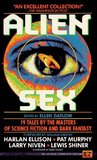
Alien Sex is an anthology of 19 works of short fiction that revolve around sex, attempted sex, or sex-like behavior with non-human entities. While the title leads one to believe the book is specifically about sex with aliens from outer space, that’s not the case in all these stories. There are also stories where the object of affection is a lesser primate, an incubus, a new species, and a biologically-modeled robot. As one would expect with life forms from other worlds, the “sexual” act is not always what we would recognize as sex. (e.g. One planet’s whoopee might be another’s mundane act.) As a last warning about what the book is not, it’s not—on the whole—a collection of sci-fi erotica. A number of the stories probably wouldn’t be arousing to the freakiest of super-freak, and I can only assume weren’t meant to be.
While there’s a unifying theme, the works included cover a lot of ground in terms of style and format. It’s not even true to say it’s 19 short stories because there’s one poem and one chapter that reads more like an essay (i.e. lacks a narrative structure.) Some of the works are written in the language, tone, and style of erotica, but others aren’t. A few of them read like thinly veiled commentary on problems in the author’s own love life—i.e. cheating spouses, feeling a lack of attentiveness, or porn addiction. (Each work has a brief author commentary at the end, and a couple of the authors suggest that what was going on in their own life or those close to them shaped the idea.)
While the appeal of the works varied significantly, overall this was a fun and intriguing read. The works included are as follows:
1.) Her Furry Face by Leigh Kennedy
A primate handler who is in a waning marriage falls for one of his super-intelligent orangutan students.
2.) War Bride by Rick Wilbur
The world is going to end tomorrow unless you’ve been taken as a pet by one of the aliens.
3.) How’s the Night Life on Cissalda by Harlan Ellison
A man sent to investigate an alien race becomes inextricably sexually entangled with one of the aliens. Eventually, he’s forcibly separated from the alien—of a race that are apparently thin-skinned—and lives to see the descent of mankind.
4.) The Jamesburg Incubus by Scott Baker
A teacher in a Catholic school finds that he can make out-of-body nocturnal visits to some of his more attractive female students.
5.) Man of Steel, Woman of Kleenex by Larry Niven
This reads more like an essay than a short story. The work delves into the physics of why sex with Superman would be fatal for Lois Lane.
6.) The First Time by K.W. Jeter
This is a variation on the old coming of age story in which a young man is taken to a brothel for his first sexual encounter. It’s just that this encounter is of the 3rd kind.
7.) The Jungle Rot Kid on the Nod by Philip José Farmer
The premise behind the story is what if William S. Burroughs (author of Naked Lunch) had written the Tarzan stories instead of Edgar Rice Burroughs. In essence, it’s a risqué take on Tarzan.
8.) Husbands by Lisa Tuttle
After the extinction of husbands, a woman develops a new species to serve the companion role.
9.) When the Fathers Go by Bruce McAllister
A husband confesses to his wife that while she was in stasis waiting for him to come back from interplanetary travel, he sired a child with an alien. Furthermore, the child is coming to live with them. But wait there’s more…
10.) Dancing Chickens by Edward Bryant
This story reads more like an overly elaborate joke than a short story. It begins with the question, “What do aliens want?” and ends with a pun punch line. That being said, the lead is an unappealing but intriguing character.
11.) Roadside Rescue by Pat Cadigan
A stranded motorist is made an indecent proposal by a chauffeur on behalf of his alien employer.
12.) Omnisexual by Geoff Ryman
This is about an intergalactic brothel, but it’s the story in the collection that reads most like literary fiction—meant in both the best and worst possible ways.
13.) All My Darling Daughters by Connie Willis
While there are several really good works in this anthology, I’d have to rank this as my favorite—if only by a narrow victory. A sassy, sexually-liberated co-ed has her sex life torn asunder when all the young men come back from break with little, furry creatures in their possession and no interest in the female student body. Besides a neat concept for a story (though it may be implying that men are overwhelmingly rapey), the author does a great job of character development making the lead character both interesting and likable, while juxtaposing her with her apparently goodie two-shoes roommate.
14.) Arousal by Richard Christian Matheson
A woman who cheats on her husband with a stranger is cursed with permanent post-coital euphoria that swamps all interest in her family and life in general.
15.) Scales by Lewis Shiner
A woman’s husband is having an affair with what she thinks is a student assistant, but who turns out to be a soul-sucking seductress from the netherworld.
16.) Saving the World at the New Moon Hotel by Roberta Lannes
A woman waiting for her spouse to meet her at a bar to apologize for his infidelities decides to get a little herself. The man she hooks up with turns out not to be a man at all.
17.) And I Awoke and Found Me Here on the Cold Hill’s Side James Tiptree, Jr.
An experienced man offers advice to a newbie to get away before he ends up seduced by the aliens. This story talks about sex, but is about something much broader.
18.) Picture Planes Michaela Roessner
This one is a poem about alien sex, rather than a story. It stands alone as the only non-prose entry.
19.) Love and Sex Among the Invertebrates Pat Murphy
In a post-apocalyptic world, a dying scientist–who no longer believes in science–creates robots capable of engaging in the act. The creatures she makes are based on a range of real animals which are written about interspersed with the story-line.
I’d recommend this book for those who enjoy science fiction. One need not be into erotica to enjoy the stories and, the more one is seeking erotica, the less appeal the book may have. It’s a collection of big name writers in science-fiction, and the anthology’s diversity makes it particularly interesting.

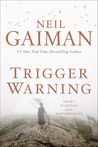 Trigger Warning: Short Fictions and Disturbances by Neil Gaiman






 Tiger Riding for Beginners