POEM: Overcast Day

Clouds tugged themselves over the city like a thick quilt
adding to the gritty gray inner-city nightmare.
I rode through this monochrome madness
without seeing a person on the sidewalks.
I felt their eyes peer down through ash-covered windows,
like a hand running over the tips of tiny hairs on my back
A high-pitched tone sounded in my ears
filling the void of chirpless birds and dumbstruck relicts

It can’t be long now.

POEM: Chirpy Bird in a Cedar Tree

Hey, little chirpy bird,
who rambles on without a word,
does your measure and your meter
tell of life in yonder cedar?

Haiku no Gyokko-ryū Jōryaku no Maki

throw open the gate
mindless herds will charge headlong
into the stockyard


prolong each journey
show the Emperor the sights
drop his palanquin


the guitarist’s hand
bounds chord to chord on the dot
no beat is missed


the slug ricochets
yet always finds its mark
burrowing deeply


waves washing ashore
within a rocky inlet
turn about strongly


gulls flap into flight
slowly lifting skyward in
an unrushed climb


sparks pop from the fire
with impeccable timing
uncapturable


topple the gatepost
with a splintering impact
but start with a sting


the pinky finger
of a raging wild-eyed brute
snaps like a pea-pod


once the snake constricts
all is hopelessly lost
sting first and sting deep


bears don’t crush stout trees
stout trees sometimes crush a bear
falling in tree’s time


the bull’s hoof clomps down
a statement made decisive
not to be wrangled

Two Tigers Circle In The Night

Taken at the Budapest Zoo

Taken at the Budapest Zoo

Two tigers circle in the night.
Neither eager to be first in fight.
Bellies low, they scrape the ground.
Each step pads without a sound.

One false step brings the pounce
of each fearsome muscled ounce.
They twist and writhe and snap,
each jaw a toothy, steely trap.

In the end one slinks away.
Both live on to later days.
A test upon the jungle floor
and each cat knows the final score.

Life by Lists

I remember when I could remember,
but these days I invariably forget.
My life isn’t even in its September
but by absent-mindedness I’m beset.

My keys? My keys? Where are they please?
I’ve searched from ceiling to floor.
My keys? My keys? Where are they please?
No, I’m certain I didn’t ask that before.

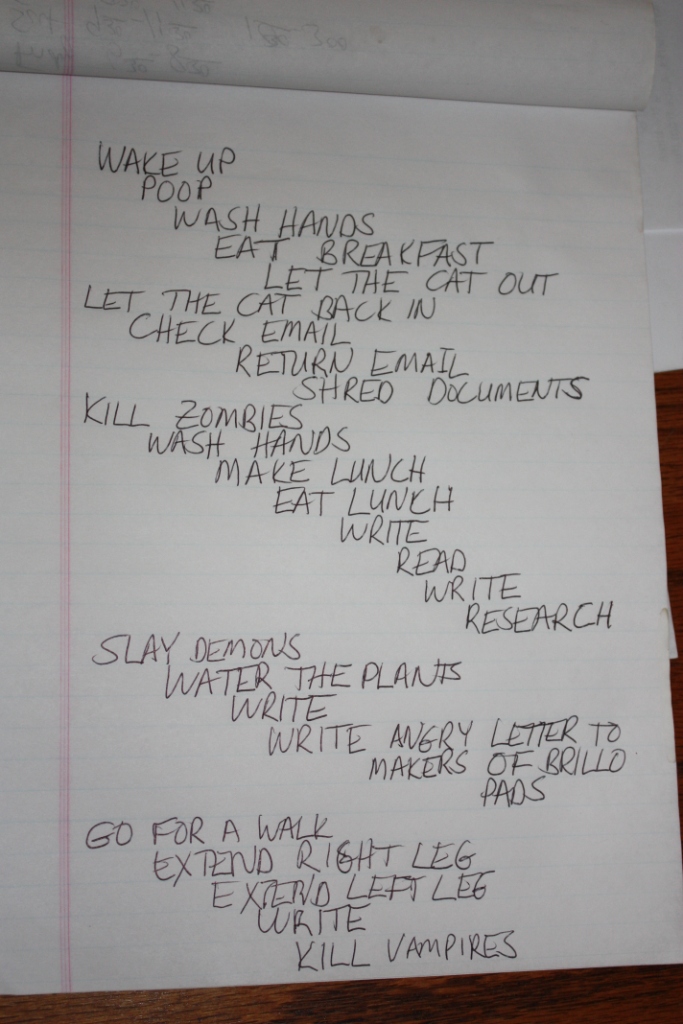
Once I juggled a hundred tasks right within my mind.
Now I need write a list if they number more than two.
Buy stock in the makers of legal pads, if you’re so inclined
What were we talking about? There’s something I need to do…

Daily list

Daily list

POEM: Twisted Time

Six months a year
the river flows
away from the sea.
Entropy’s fall?

No.

The fits and starts
of progress are
not rooted in
twisted time.

Here,
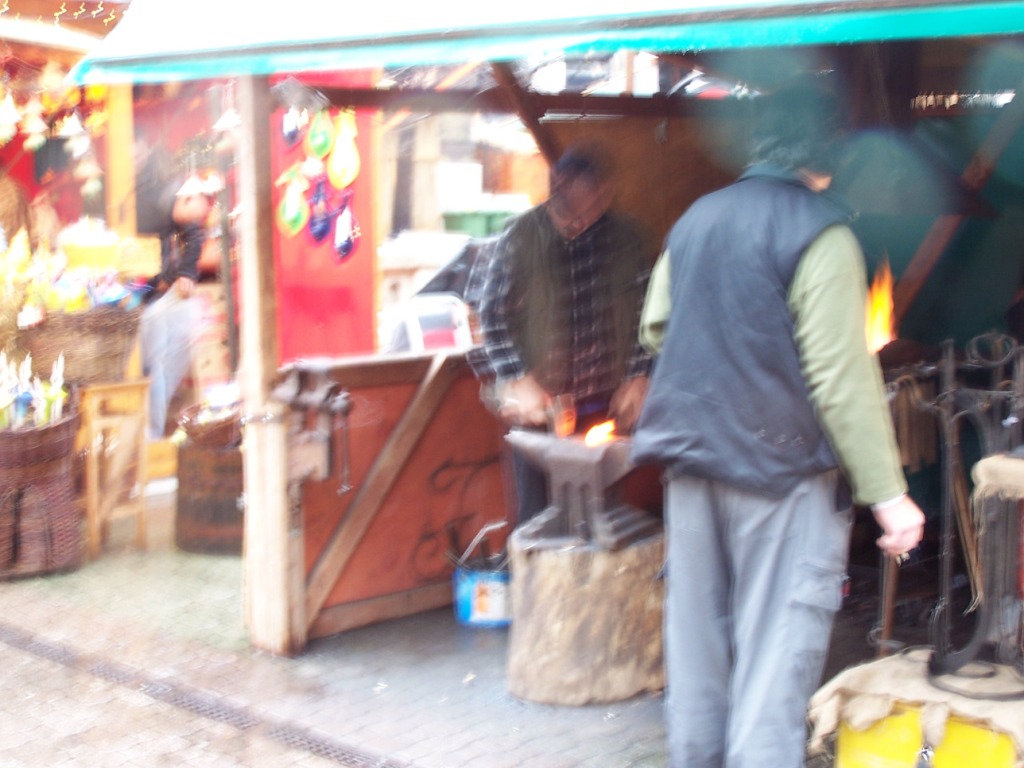
blacksmiths exist.
The hammer bounces
on the anvil

Tap-Tap-CLANG
Tap-Tap-CLANG

Ordered repetition,
until the steel begins
to bend and twist
and flex and tear.
It tears like taffy,
taffy glowing orange.

Tap-Tap-CLANG
Tap-Tap-CLANG

What is time for
that glowing rod?
The fire makes
its molecules
race and feud.

The hammer spreads
time into an eternity

of

Tap-Tap-CLANG
Tap-Tap-CLANG

Taken in Hungary in 2008

Taken in Hungary in 2008

BOOK REVIEW: 101 Great American Poems ed. The American Poetry and Literacy Project

101 Great American Poems101 Great American Poems by The American Poetry and Literacy Project

My rating: 5 of 5 stars

Amazon page

This is a collection of 101 poems by 39 different American poets. It begins with a poem by Anne Bradstreet in the 17th century and proceeds through to a work by W.H. Auden of the 20th century. In between are many poets that one would expect, such as Poe, Whitman, Dickinson, Sandburg, and Cummings. There are others that might be unexpected such as Abraham Lincoln, Herman Melville, and Stephen Crane. While the poems aren’t all jingoistic in nature, there is a recurring theme of celebration of America.

Most of the poems in this tiny anthology will be familiar to poetry readers. This is a $1 Kindle e-book of a Dover Thrift Edition, and so one won’t find living poets represented, or poems that tap into the zeitgeist du jour— at the risk of mixing loan words. However, most of these poems deserve to be read and reread.

A few of my favorites are below with title, author, and a fragment.

The Builders by Henry Wadsworth Longfellow
Nothing useless is, or low;
Each thing in its place is best;
And what seems but idle show
Strengthens and supports the rest.

The Raven by Edgar Allen Poe
Once upon a midnight dreary, while I pondered, weak and weary,

O Captain! My Captain! by Walt Whitman
O Captain! my captain! our fearful trip is done,
the ship has weather’d every rack, the prize we sought is won,

I’m nobody! Who are you? by Emily Dickenson
I’m nobody! Who are you?
Are you nobody, too?
Then there’s a pair of us–don’t tell!
They’d banish us, you know

The New Colossus by Emma Lazarus
“Give my your tired, your poor,
Your huddled masses yearning to breathe free,…

Solitude by Ella Wheeler Wilcox
Laugh, and the world laughs with you;
Weep, and you weep alone

War is Kind by Stephen Crane
Do no weep, maiden, for war is kind

Sence You Wend Away by James Weldon Johnson
Seems lak to me de stars don’t shine so bright,

Sympathy by Paul Laurence Dunbar
I know what the caged bird feels, alas!
When the sun is bright on the upland slopes;

Fire and Ice by Robert Frost
Some say the world will end in fire,
Some say in ice.
From what I’ve tasted of desire
I hold with those who favor fire

The Road Not Taken by Robert Frost
Two roads diverged in a wood, and I–
I took the one less traveled by,
And that has made all the difference.

Chicago by Carl Sandburg
They tell me you are wicked and I believe them, for I have seen your painted women under the gas lamps luring the farm boys.

Fog by Carl Sandburg
The fog comes
on little cat feet.

Thirteen Ways of Looking at a Blackbird by Wallace Stevens
Among twenty snowy mountains,
The only moving thing
Was the eye of the blackbird;

The Red Wheelbarrow by William Carlos Williams
so much depends
upon

a red wheel
barrow

The Love Songs of J. Alfred Prufrock by T.S. Eliot
The yellow fog that rubs its back upon the window-panes,

First Fig by Edna St. Vincent Millay
My candle burns at both ends;
It will not last the night;
But ah, my foes, and oh, my friends–
it gives a lovely light.

Ars Poetica by Archibald Macleish
A poem should not mean
But be

I, Too by Langston Hughes
I am the darker brother.
They send me to eat in the kitchen
When company comes,

Little Old Letter by Langston Hughes
You don’t need no gun nor knife–
A little old letter
Can take a person’s life.

Nothing struck me as conspicuously absent from this collection, but I’d be curious what poems people feel should (or shouldn’t) be in such a collection.

View all my reviews

BOOK REVIEW: Classic Haiku ed. by Yuzuru Miura

Classic Haiku: A Master's SelectionClassic Haiku: A Master’s Selection by Yuzuru Miura

My rating: 5 of 5 stars

Classic Haiku is a collection of 106 poems by masters such as Matsuo Bashō, Kobayashi Issa, and Yosa Buson. It’s logically arranged into five sections: Spring, Summer, Autumn, Winter, and New Year’s Day. While haiku has come to be thought of as any poem in a 5-7-5 syllable arrangement, those familiar with traditional haiku know that there are other requirements that are at least as fundamental as the syllabic arrangement. One of these is that the poem be pure observation devoid of exposition. Another criteria is that it be rooted in nature. A final criteria, historically, has been that the poem indicate the season, if not giving an explicit seasonal word or phrase. This makes the season an optimal organizational unit for the book.

One nice feature of this book is that it includes the English translation, the Japanese romaji version (i.e. the way it would be spoken in Japanese but using roman alphabet characters), and the version using the Japanese system of writing. Granted, for those who aren’t fluent in Japanese, these features might not seem to add much. However, sound can be evocative itself in poetry, and so it can be interesting to read the Japanese for that reason. Furthermore, there are those who argue that 5-7-5 syllables is not the closest facsimile to Japanese haiku for haiku written in English. Because of the average length of syllables, some say that a 2-3-2 accented syllable pattern for English haiku is closer to the original Japanese form. Reading the Japanese, gives one an idea of the sound characteristics of Japanese haiku.

[Furthermore, if one loves a haiku enough to want to get it tattooed in Japanese on one’s body, one can double-check the characters before one gets it done at a Chinatown tattoo parlor only to find that what one really has tattooed on one’s butt is, “Syphilitic nightmare – Ketchup bottle mayhem day – Rides the goat to school”]

Here’s a sampling my favorites:


the raftsman’s straw cape
brocaded with
the storm-strewn cherry blossoms
– Yosa Buson

calm and serene
the sound of cicada
penetrates the rock
– Matsuo Bashō

in summer grasses
are now buried
glorious dreams of ancient warriors
– Matsuo Bashō

oh, cricket
act as grave keeper
after I’m gone
– Kobayashi Issa

View all my reviews

TODAY’S RANT: The War on Rhyming Verse

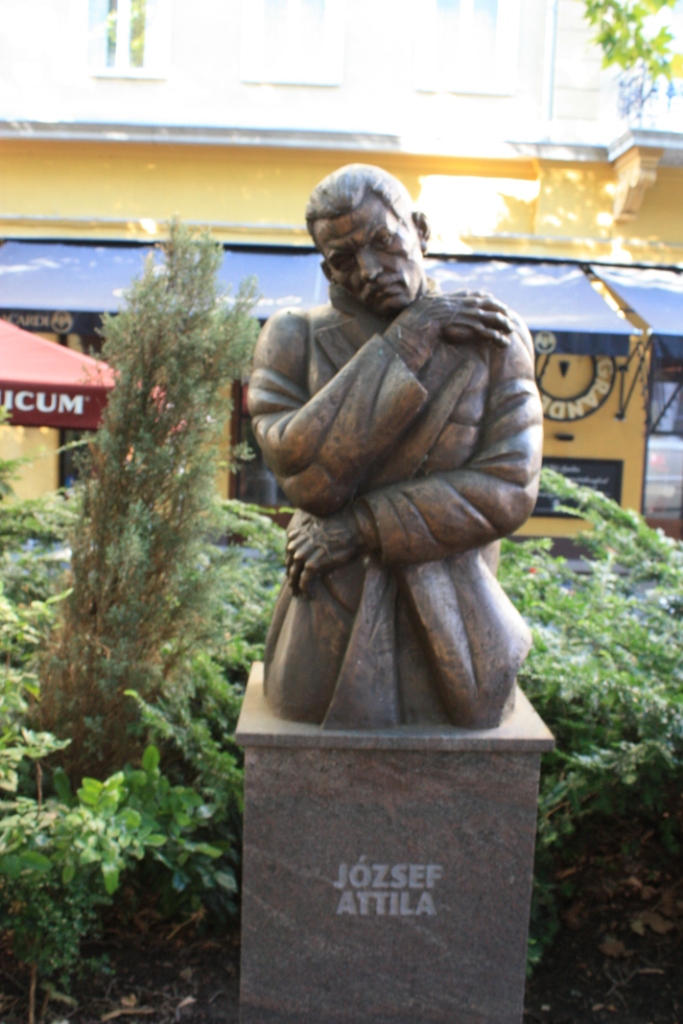
A fine Hungarian poet who Wrote with and without rhyme

A fine Hungarian poet who Wrote with and without rhyme

it’s my cross, my curse
this rhyme in my verse
rhymers aren’t taken seriously
and are berated furiously

“Oh, your poem is so cutsie,
like little baby bootsies.”
call it banal or call it niche
but “cutsie?”, please!, step off bitch

just because my verse ain’t free
don’t act like I’m a perp to slavery
I spare my words the sting of the rod
they’ve never tasted a cattle prod

I’ve never waterboarded my “ands” or “buts”
or kicked a pronoun square in the nuts
I don’t whip my adjectives to get ’em in line
I stand waiting patiently holding a sign

Why steer my words like some stern brigadier?
because it scratches an itch somewhere in my ear
I know my rhymes sometimes lack cachet
because they’re little too Ogden Nash-ay
but from the hilltops I sing
like that guy Rodney King
hear the words of my song
“Can’t the poets all just get along!”

Who Am I?

“I” am a collection of cells.
some  expressly invited by “my” genes
others are interlopers,  “my” guts their cross-town bus
but these interlopers defend “me”  daily
fending off worse marauders
thankfully
so “I” let them stay inside “me”
“my” greatest shame? “I” am a slave owner.
the  mitochondria in “my” cells  are trapped and  forced to serve “me”
all this begs one fundamental question,
am “I” really just a “me?”
or  a  whole society?

If “my” parts
needn’t be fully integrated
where do “I” end and “you” begin?
can “I” say that “I” have been everywhere?
well, everywhere on this tiny, spherical-ish speck of galactic dust?