Summer Lake [Haiku]

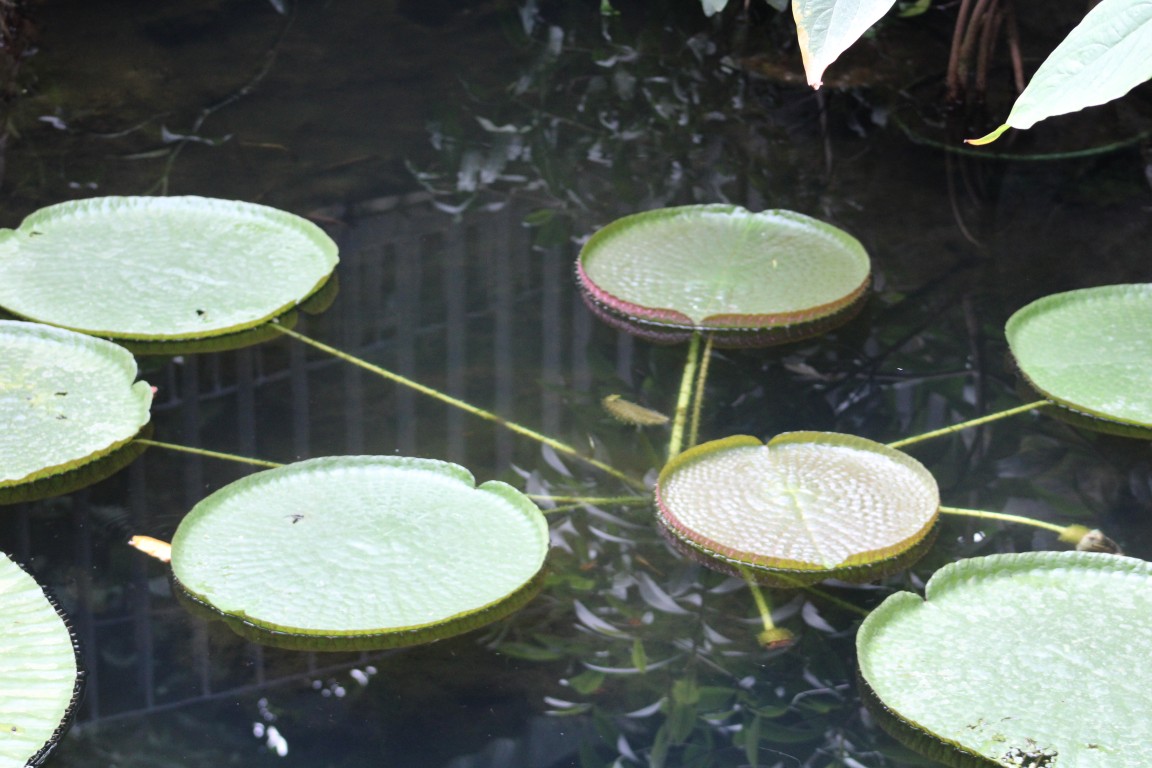
invisible bugs
ripple the lake surface;
from here, it’s mirror.

Dripping Blossom [Haiku]

Photograph of a pink and orange flower taken in Mussoorie, Uttarakhand, India.
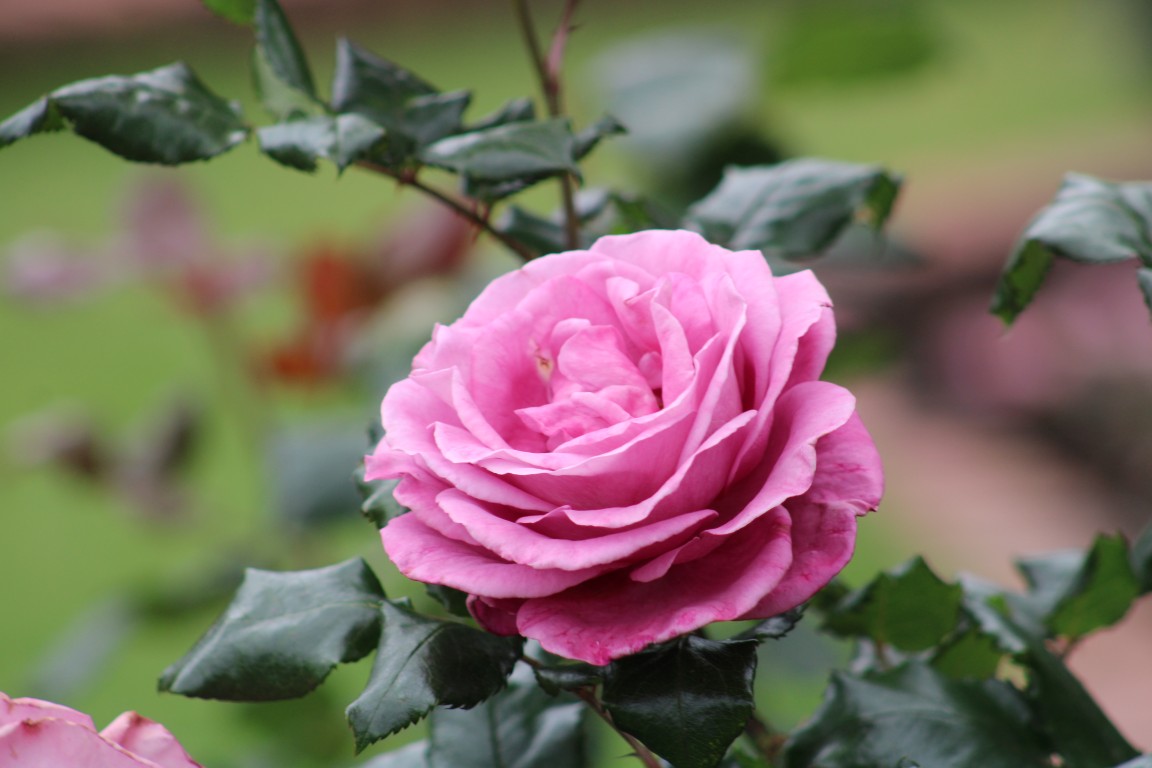
droplets drip 
from the bottom petal,
after the rain.

Misty Mountain [Haiku]

Photograph of mushroom caps among lichens and leaves, taken in the mountains near Mussoorie, Uttarakhand, India.
in misty mountains,
tiny fungi bloom amid
lichens and mosses.

Jungle Entropy [Senryū]

Photograph taken on Bukit Cina in Malacca, Malaysia.
the jungle wants to 
hide, then eat, whatever
humans build in it.

BOOK: “Shuhari” by Nobuo Suzuki

Shuhari: The Three-Step Japanese Path to Lifelong Growth and SuccessShuhari: The Three-Step Japanese Path to Lifelong Growth and Success by Nobuo Suzuki
My rating: 5 of 5 stars

Release date: August 11, 2026

I was introduced to the concept of “shuhari” as a student of Japanese martial arts, and over time I discovered it to be one of the most useful concepts for personal growth and development. Shuhari is by no means exclusive to martial arts and is applied to arts in the broadest sense — really to endeavors of any type (as is true in this book which references not only martial arts, but literary arts, graphic arts, cinematic art, and even sciences.) The idea is this: one begins by repetitively practicing what one is taught in as close to an exemplary fashion as possible (shu,) then one starts adapting the principles one has cultivated to changing and unpredictable circumstances (ha,) and finally one abandons the forms and embraces the spontaneous (ri.) In short, we follow the rules (shu,) break the rules (ha,) and abandon the rules (ri.)

Recent years have seen a flood of books on cultural life philosophies, starting and continuing with those of the Japanese culture, but venturing out into Scandinavian (Sisu and Lagom,) Goan (Susegad,) and many others. One could easily fill a shelf each with the popular books on “ikigai” or “ganbatte.” It’s kind of a surprise to see that it’s taken this long to venture into the invaluable concept of “Shuhari.” It is an idea whose time has come to go global.

In a broad sense, this is a book on learning and creativity, and I’d highly recommend it for anyone looking to reevaluate their approach to learning and / or creating.

View all my reviews

Depth Deception [Senryū]

Photograph of reeds and water plants taken in Vientiane, Laos.
reeds & water plants
look like you could walk among them.
you could -- waist deep.

Monsoon Green [Haiku]

Photograph taken atop Kaurava Kunda near Chikkaballapur, Karnataka, India.
what passed for desert
before monsoon is now
green and waterlogged.

BOOK: “A Thousand and One Limericks” Anthologized by Rosemary Gray

A Thousand and One LimericksA Thousand and One Limericks by rosemary-gray
My rating: 4 of 5 stars

Publisher Site

As the title suggests, this book consists of a thousand and one limericks (I didn’t count them, but at three a page, the math works -ish,) a few are well-known, most are groaners, but some are brilliant by virtue of being clever on multiple levels. I will offer two warnings by way of clarifying for whom this book is not. First, it ventures into all those corners of depravity with which the limerick is well-associated — i.e. it’s not a collection for prudes. Second, the collection shows the limerick’s unabashed joy in poking fun at the English language. There are many “misspellings” as poems use one spelling regime for all rhymes (i.e. highlighting English’s complete lack of phonetic consistency.) There are also a lot of slant rhymes and false rhymes… long story short, if you’re a grammar / spelling Nazi, this book will raise all the hackles.

Who is it for? Readers with a sense of humor who are not easily offended.

I have seen a few of these poems attributed to specific authors (e.g. Edward Lear or Ogden Nash) in other collections, but — oddly — this book offers no attribution or discussion thereof. The byline listed, Rosemary Gray, is actually in an anthologist / editor role. (She may have written some of the pieces, but I’m fairly sure I’ve seen a few published in earlier anthologies. Maybe these are all in the public domain, but — as I’ve said — I’ve seen some attributed (and I’m pretty sure some to individuals who died less than 70 years ago.) Long story short, if you can’t find a copy of this, it may be because there was a huge copyright infringement case or threat thereof.

I’d recommend this collection for limerick lovers.

View all my reviews

BOOKS: “Four Quartets” by T. S. Eliot

Four QuartetsFour Quartets by T.S. Eliot
My rating: 5 of 5 stars

Available online

Four Quartets is a collection of four long poems by T.S. Eliot, written over several years before and during the Second World War. The poems are: “Burnt Norton,” “East Coker,” “The Dry Salvages,” and “Little Gidding.” They share a theme of metaphysical inquiry, particularly regarding time and man’s relation therewith. The book came out about five years before Eliot won the Nobel Prize for Literature, and was the last of his major poetry collections, and so it reflects a mature phase of his poetry writing.

I loved this collection, which combines food for thought with beautiful turn of phrase. As far as I could see, most of the disgruntlement with the collection had to do with Eliot’s religious / spiritual references, which offended the sensibilities of some of the most stridently atheist / agnostic individuals in the poetic community. Besides reflecting his own Christian worldview, Eliot had clearly been moved by reading the Bhagavad Gita and makes a number of references to Krishna.

Four Quartets is a pleasant read and I’d highly recommend it for poetry readers.

View all my reviews

Duck out of Water [Epigram]

Photograph taken in the Halasuru neighborhood of Bangalore of ducks in water.
The "duck out of water"
might just take to flight.