BOOK REVIEW: Gulp by Mary Roach

Gulp: Adventures on the Alimentary CanalGulp: Adventures on the Alimentary Canal by Mary Roach
My rating: 5 of 5 stars

Amazon page


This week I’m [improbably] doing two book reviews about works devoted to the human digestive tract. (Before you conclude that I’ve got a colon fetish, let me explain that I was spurred to this research by life events. I did some advanced yoga cleansing practices and wanted to learn more about the science of what was going on down below.) In addition to this book, Mary Roach’s “GULP,” I’ll be soon posting a review of Giulia Enders’s “GUT.” The two books have more in common than their monosyllabic titles beginning in “gu” and the fact that they each came out within the past couple years. They’re both light-hearted romps down your digestive tract. However, they’re also different in several key ways. GULP is quirkier; GUT is perkier, but more importantly the two books have different thrusts (yes, there’s just that much interesting stuff to learn about digestion (and the lack thereof)—which make the two books complementary. Cutting to the chase, I’d recommend both books, but if you only read one book about your alimentary canal this year, I hope my reviews will help you determine which one is for you.

Explaining how Roach’s book is “quirkier” will tell one a lot about Roach’s book and how it differs from Ender’s work. (And since Ender’s writing style could be described as quirky itself, it’ll help clarify that as well.) By “quirky,” I mean that Roach’s book is built around a set of narrow questions that address topics of a bizarre or strange nature. In GULP one will read about whether your pet really wants “paté in beef gravy” [spoiler: it does not], whether the story of Jonah and the whale is BS, how smugglers use their digestive tracts illicitly, what are the benefits of Fletcherizing (chewing your food more thoroughly—much more thoroughly), whether Thanksgiving dinner can split one’s stomach open (like it feels it does), and what’s the worst case flatulence scenario.

This isn’t to say that one doesn’t learn something about the basic science of digestion as one is reading about extreme cases of tasting skill, stomach fistulas, flatulence, constipation, and overeating. One does, but this book isn’t organized to educate one about the alimentary canal systematically and generally. It’s a work of creative nonfiction designed to make the reader keep saying “huh, I never would have thought” and it does an outstanding job of it. You may not have given much thought to some of these topics, but you’ll be craving answers by the time you get past the chapter heading. There’s a reason that Roach’s works top the charts of pop science books. She finds the interesting questions and the most fascinating examples.

There are 17 chapters in GULP, and while they collectively take one on a tour of the alimentary canal, Roach devotes more space to some parts than others. She spends more time on what goes at the head end (smelling, tasting, chewing, and salivating) than does Enders. Also, please don’t think the book is low brow or that it appeals to the lowest common denominator (8-year-old boys?) when I tell you that there are three chapters on various dimensions of flatulence.

As I said, you may not have thought much about some of these questions, but you’ll learn something nonetheless. A prime example can be seen in the chapter on smuggling via the digestive tract. I’d read stories of cocaine mules dying when a condom burst in their stomach, but I had no idea about the extent to which items and materials are smuggled down there. It’s not just drugs. One guy was explaining how he smuggled knives. Really. Knives. Plural.

There are a few topics that are well covered by both books. Take, for example, constipation. Roach elucidates the topic using the case of Elvis Presley and others who’ve been literally terminally constipated. (Ender’s—on the other hand—considers the everyman’s constipation, though with amusing drawings and commentary.)

I’d recommend this book for readers interested in learning more about how their food makes its way through—particularly if you like learning about the strange cases.

View all my reviews

BOOK REVIEW: Emperor of All Maladies by Siddhartha Mukherjee

The Emperor of All Maladies: A Biography of CancerThe Emperor of All Maladies: A Biography of Cancer by Siddhartha Mukherjee
My rating: 5 of 5 stars

Amazon page

Dr. Mukherjee describes his Pulitzer Prize winning book as a biography of cancer. If so, it’s like the biography of a master thief or a gangster. One reads it not because one finds the character in any way endearing, but one can’t help but admire the resourcefulness and indomitable spirit of the culprit. Humanity has been at war with cancer for decades, but it remains alive and well–losing ground in specific domains but gaining overall.

The book covers a period from when our technology was too crude to see at the tiny levels necessary to recognize the commonality between various forms of cancer to the present-day attempts to find treatments that can target cancer cells without attacking good cells—a challenging prospect. The implication of that last sentence is that the cure might be as damning as the disease, and this has often proven to be the case. It’s often a race to see whether the cancer can be killed before the treatment kills the patient. This has been the case with radiation, radical surgeries, and various forms of chemotherapy that are toxic to good cells as well as bad. While the book ends on a hopeful note about more targeted treatment, cancer has not gone gently into that good night.

While the book covers a broad period, the bulk of its pages are devoted to the latter half of the 20th century. That’s when the war on cancer got serious and the science became advanced enough to move beyond crude approaches like radical mastectomies. Our understanding of chemistry, pharmacology, and biology reached a point at which cures were no longer pie-in-the-sky notions. But it wasn’t just the medical science that was more advanced, statistical methodology also reached a point at which it could answer questions that had previously been elusive. Such questions include whether smoking caused cancer—a fact that seems self-evident today, but which wasn’t as straightforward as one might think. There is also the issue of whether various treatments were actually extending the lifespans of those afflicted, which was also not as simple as one might think.

While the above discussion of science and statistics might make this book seem dreadfully boring, this isn’t the case. Mukherjee didn’t get the 2011 Pulitzer Prize for Nonfiction by being dull. The author knows the value of a story, and uses stories successfully throughout the book. There are the stories of individual patient cases, but also the story of the mass movement to raise dollars, awareness, and Congressional support to fight cancer. These true stories sometimes show the roller coaster ride that we associate with fiction—such as the apparent cure of a form of childhood leukemia that seemed promising until the kids once in remission started coming back with symptoms (the leukemia crossed the brain-blood barrier and found fertile ground on the other side of a biological wall that was meant to keep such ne’er-do-wells out.)

As one might expect of a book that covers so much ground, it’s not thin. The book’s 600 pages are arranged in 43 chapters divided into six parts. I’m sure there’s a lot more one could learn about cancer, but Mukherjee covers a lot of ground in an interesting package.

I won’t say I enjoyed the book (it’s unavoidably depressing, if hopeful) but I did find it both interesting and readable. While it might not be the sunniest and most joyous of reads, it’s one that many people should read. I’d recommend it for anyone. I would say “anyone who has been touched by cancer,” but I think that’s the same thing at this point.

View all my reviews

BOOK REVIEW: An Introduction to Zen Training by Omori Sogen

An Introduction to Zen TrainingAn Introduction to Zen Training by Omori Sogen
My rating: 4 of 5 stars

Amazon page

This is a guidebook that explains how to sit for meditation—particularly in the Rinzai style. It describes all the fundamentals one needs to begin Zen sitting including: posture, breathing, where to look, what to do with one’s hands, and even how to get up after a long session. It also provides background information about what to look for in a teacher, what differentiates Rinzai from Soto Zen, and what the objective of practice is (and why it is sought after.) This makes it sound like a dry, technical manual, and to some degree it’s unavoidably so. However, the author does include stories here and there to make the book more engaging and palatable. Overall, though, it’s written as a manual for students.

The book is arranged into 7 chapters, but it’s only the first five of these that are the author’s introduction to Zen meditation. These five chapters are logically arranged to cover the ground from why one should practice to what effects it will have with consideration of the aims, technique, and pitfalls covered in between. The last two chapters are commentaries on (including text from) a couple of the key documents of Zen Buddhism: “A Song of Zen” (Zazen Wazen) and “The Ten Oxherding Pictures.”

There are black and white graphics. First, there are line drawings used to convey information about posture and the physical body in meditation. Second, there are a few photographs of the author, including his dōjō and in the practice of swordsmanship. The author was a skilled swordsman; hence my tagging of this book in “martial arts,” as there may be some interest among martial artists in the author’s take as one who straddled the two worlds of Zen and budō. Finally, there are also copies of the ten ox herding pictures that go with the verse.

I think this book is well-organized and provides a beginner an excellent introduction to the practice of Zen. I didn’t really note any major deficiencies, and will thus recommend it as a good resource for anyone considering taking up a Zen practice or wanting to learn more about doing so. I should point out that the book does also get into the philosophical aspects of Zen, but if one isn’t looking for information about how to practice then there may be books more oriented toward one’s needs. Despite the fact that the book is a translation, it’s clear and readable. As I said, it includes stories—including those about Japanese warriors as well as Zen masters—and that helps to break up the dryness of what is at its core an instructional manual.

View all my reviews

BOOK REVIEW: Zen and the Brain by James H. Austin

Zen and the BrainZen and the Brain by James H. Austin
My rating: 4 of 5 stars

Amazon page

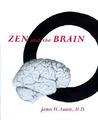
Dr. Austin’s 900-page book looks at what the brain does during (and as a result of) the practice of Zen, and is a great resource for those interested in the science of meditative practices. It’s easy to sum up the strength and weakness of this book. With respect to the book’s greatest strength, it’s that the author—like the book—straddles two widely divergent worlds. He is at once a scientist and a practitioner of Zen. This gives him rare insight into both halves of the equation. This isn’t one of those books written by a spiritual seeker who uses the word “science” and “scientific” very loosely (and in a manner that shows a lack of understanding of the central premise of science.) On the other hand, it’s not one of those books by a scientist who got all of his understanding of meditation from other books.

As for the weakness, it’s that the book was written in the late 1990’s. Ordinarily, I would say that wouldn’t matter much, but concerning our understanding of the brain, it might as well have been the Stone Age—hyperbole duly noted. One doesn’t put together a book of almost 1000 pages overnight, and so much of the references for “Zen and the Brain” are actually from papers from the 1980’s and earlier. The fMRI (functional Magnetic Resonance Imaging) machine didn’t even come out until the early 1990’s, but—of course—it took a while for the studies featuring this powerful technology to reach publication.

The book is arranged into a whopping 158 chapters divided amongst 8 parts. Some of the chapters are pure neuroscience, and there are detailed descriptions of the brain and the functions of its various parts. Other chapters are designed to give one an insight into the practice of Zen and aren’t technical at all. The author has a reasonably engaging writing style when he’s not conveying the minutiae of brain science. He tells stories of his experience as a practitioner of Zen, and passes on the wisdom of past Zen masters.

I have an unconventional recommendation for this book, which I got so much out of. I recommend you first check out the book “Zen-Brain Horizons” put out by the same author and press (MIT Press) in 2014. While I haven’t yet read that book, it seems to hold three advantages. First, it’s only one-third as long and seems to cover similar material. Obviously, it goes into far less detail. (But you may find that a plus.) Second, the 2014 book is reasonably priced. “Zen and the Brain” is one of the most expensive books I’ve bought in recent years. I’m not saying I regret paying as much as I did, because it was a useful book, but cheaper would be better. Finally, the 2014 has the benefit of access to a lot of great research from the past couple decades. If you read the 2014 book and think you need more detail about the brain, then—by all means—get this book.

View all my reviews

BOOK REVIEW: The Elements by Theodore Gray

Elements: A Visual Exploration of Every Known Atom in the UniverseElements: A Visual Exploration of Every Known Atom in the Universe by Theodore Gray
My rating: 4 of 5 stars

Amazon page

What element makes up most of your body by weight? Are diamonds really the hardest known material on Earth? How can you tell a genuine neon light from one that doesn’t contain any actual neon? Are silicon-based life forms really a possibility? How did phosphorous contribute to a human population explosion? How can one tell whether one’s “Titanium” golf club actually contains titanium? What is tin used for–given that it’s not tin cans, tin foil, or tin roofs? Which noble gas has been caught forming compounds with common elements? Why do welders have to get x-rays before an MRI? Why does Ytterby, Sweden have four elements named after it? Why are gorilla lovers boycotting tantalum? Which is better for committing homicide: Thallium or Polonium? [Hint: The answer depends on whether you want to send a message or not—if you know what I mean.] How much natural uranium can a private citizen possess in the US? Which, if any, of the elements named for people are named for the person who discovered them? These are the types of questions you’ll have answered while reading this book.

The most general question the book addresses is probably, how can one collect elements without setting the world on fire? [If that doesn’t make sense, I’d recommend Randall Munroe’s book “What If?” Munroe tells us what would happen if one tried to make a wall out of one square foot containers of each of the elements (in the form of the Periodic Table)? You’ll note that I said “tried to make” and not “made,” and that should tell you something.] Gray is an element collector, and the many photographs for each element show examples of the forms (including manufactured products) in which a given element can be acquired. You’ll also find out where the gaps will remain in your collection of pure elements. [On a related note, you’ll learn which elements are radioactive.] You also may be interested to hear what element sample the FBI confiscated from the author’s collection [hint: it wasn’t Uranium or Plutonium.]

The organization of the book is straight forward. There’s front matter that gives one a rudimentary primer on chemistry and the periodic table in order to refresh the knowledge that has fallen out of your brain since high school or college. But the bulk of the book consists of one short chapter for each element. The chapters each have a cover page containing a photo and some technical information about the element that will only be of interest to the very nerdiest of nerds. Then there’s a page or so of text, which gives some interesting factoids about the element and how it’s used. Finally, there’s a collection of photos of the element and some products that contain it—with one notable exception.

I enjoyed this book. It’s a quick read, but provides a lot of interesting information. And the author’s sense of humor shines here and there.

I read this book on a Kindle Touch. I mention this because true element groupies may find this less than ideal because of the lack of color. However, for me it was fine. Furthermore, the e-book formatting was good. Sometimes books with a lot of graphics don’t work out so well, but in this case it was not a problem.

I’d recommend this book for anyone interested in science, though if you know a lot about chemistry you may find it a bit remedial.

View all my reviews

BOOK REVIEW: Kalaripayat by Patrick Denaud

Kalaripayat: The Martial Arts Tradition of IndiaKalaripayat: The Martial Arts Tradition of India by Patrick Denaud
My rating: 4 of 5 stars

Amazon page

There’s a dearth of books on Indian martial arts, in general, and Kalaripayattu, specifically. The few books that do exist, such as Ranjan Mullaratt’s “Kalari Margam” (a fine book which I’ve previously reviewed), focus heavily on the techniques of the martial art. Denaud builds a niche by writing perhaps the only English-language book yet that turns its focus on other aspects of the art, including the art’s history, philosophy, customs, psychology, and its influence on–and interaction with–other systems both in India and abroad (e.g. yoga, Kathakali, Ayurvedic massage, and Tai Chi.)

After three forwards by luminaries and an introduction, the book consists of seven chapters. The chapters cover the history and mythology of the art, Kalaripayattu as a martial art (weapons and techniques in general terms), the psychological aspects of the art, the art’s relationship with Ayurvedic practices—particularly massage, its relationship to other elements of Keralan culture, the results of interviews with modern-day masters, and the influence of India and Kalaripayattu on foreign martial arts.

When I picked this book up, I was somewhat expecting that it would contain little in the way of intriguing and relevant information, and that it would be stuffed with generally known background information. I’ve come across far too many books on topics for which there’s little information, and have become well-acquainted with the many methods by which authors pad out a pamphlet’s worth of information into a book. However, I was pleasantly surprised by how much information on Kalaripayattu this book contained, and how relevant the background seemed. While there’s a fair amount of background, the book doesn’t feel padded. Granted, I can’t be certain how much of this information is accurate. I know common myths are repeated that are now believed to be false (e.g. Bodhidharma spreading Kalaripayattu to Shaolin), but I saw nothing that seemed like pure fabrication (though I’d be unlikely to recognize such a thing.) Denaud does cite his sources (not in bibliographic format, just by attribution of authors and texts) on most occasions and it certainly wrings authoritatively.

I’d recommend this book for individuals interested in martial arts, and the history of martial arts. It’s a rare glimpse into various aspects of Kalaripayattu. Also, some people who are interested in south Indian culture more than martial arts may also find it worthwhile.

View all my reviews

BOOK REVIEW: Boxing Fitness by Ian Oliver

Boxing Fitness: A Guide to Get Fighting Fit (Fitness Series)Boxing Fitness: A Guide to Get Fighting Fit by Ian Oliver
My rating: 4 of 5 stars

Amazon page

How does one skip rope, work the pads, or avoid nipple rash? If you think that boxing would be a fun way to get fit, this would probably be a useful book for you. Oliver shows a range of fitness practices—many specific to boxing, but others that are used in a number of sports and fitness activities—that will help one improve one’s fitness.

The reader will gain insight into bagwork, padwork, and boxing drills–from beginner to advanced. While the book’s emphasis isn’t on boxing technique, there’s a minimal discussion of the basics of footwork and punching designed to allow a reader to safely begin practice of bagwork and padwork. One also learns about roadwork, the basics of weightlifting as it’s useful for boxers, calisthenics, and other exercise routines that boxers use. It’s a small book and, therefore, doesn’t go into great detail on any particular subject. However, it does offer useful tips in a concise form.

There’s a chapter on equipment, but throughout the book the author gives advice on equipment as it’s relevant to the discussion at hand. The same is true of safety tips. There’s a chapter on injury and illness, but you’ll find insights into how to avoid injuries woven throughout.

I liked the approach of this book. While it shows one the age-old practices of fighters, it also describes more recent developments. In other words, it’s neither crusty and obsolete, nor does it try to re-invent every wheel in order to prove itself cutting edge. I also appreciated the author’s pragmatism—e.g. emphasizing the benefit of a strong core over that of six-pack building and suggesting dietary practices that are sound and simple rather than fads and fables.

Graphics include black and white photographs throughout a few diagrams. Most chapters have photographs, and they are generally sufficient to convey the necessary information without being overwhelming.

While this is a book of the basics, I found it to be a beneficial read and I appreciated the way it was arranged and the way information was conveyed. I’d recommend it for anyone interested in fitness for combative sports or who thinks boxing would be a good way for them to stay motivated to get fitter.

View all my reviews

BOOK REVIEW: The Harvard Medical School Guide to Tai Chi by Peter M. Wayne & Mark Fuerst

The Harvard Medical School Guide to Tai Chi: 12 Weeks to a Healthy Body, Strong Heart, and Sharp MindThe Harvard Medical School Guide to Tai Chi: 12 Weeks to a Healthy Body, Strong Heart, and Sharp Mind by Peter Wayne
My rating: 5 of 5 stars

Amazon page

This book provides an overview (and a laymen-friendly literature review) of the scientific findings about tai chi, and it helps a beginner get started in his / her own practice. (Tai chi, short for tai chi chuan, is a Chinese martial art that is called an internal–or soft–style.)

The authors achieve an impressive tightrope act. And they manage to do it in a way that reads sincerely, while at the same time providing useful information for all readers. Often books on the science of Eastern health-enhancing activities (e.g. tai chi, chi gong, or yoga)–even if they are positive on the results of such activities—take digs at people’s beliefs about ideas like chi, prana, meridians, or chakra as the authors attempt to distance themselves from such beliefs. On the other hand, books that cater to the spiritually inclined—even when they are couched in scientific terms—may resort to third-hand anecdotes about the supernatural powers of some ancient master or report methodological train wrecks that support their views alongside sound studies, as long as the latter don’t present any evidence contrary to their belief system. In short, such books often talk in scientific lingo while showing a complete lack of understanding of the scientific method. In this book, Wayne manages to navigate these rocky shores because he’s both a scientist and a longtime tai chi practitioner who genuinely accepts that there may be more at work in the practice than science fully understands. Thus, he knows the importance of testable hypotheses and when a study needs to be validated by more a robust follow-up study, but he also reports on the traditional beliefs and isn’t adverse to writing about studies evaluating the benefits of spirituality (note: showing that being spiritual has benefits doesn’t mean that the benefits result from anything spiritual or supernatural.)

The book has 14 chapters divided into three parts. The first part introduces the reader to tai chi, describes the dimensions along which tai chi has been shown to offer benefits (the authors call these “the 8 active ingredients of Tai Chi,” relating them to pharmacological medicines), and explains how tai chi can be simplified for beginners (even the short form sequences take a while to be memorized—let alone building any grasp of the intricacies of said forms.) The second part consists of six chapters that report the findings of studies on the health effects of tai chi, as well as discussing the possible mechanisms of those benefits. The topics discussed in this section include: increased balance, bone density, pain mitigation, cardiovascular health, mental performance, psychological well-being, and sleep quality. The book’s last part suggests ways in which the reader can build a tai chi practice. The five chapters in this section deal with the interactive practices of tai chi (tai chi isn’t just the solo forms that you’ve seen elderly people do in the park), integrating tai chi with other health and fitness practices, the potential for practicing tai chi at work, the role of tai chi in creative practices, and tai chi as a practice of lifelong learning (this last chapter gives beginners tips about how to start a practice.) There is also an afterword about how tai chi might play a part in building improved health and well-being in the present era.

I found the book to be well-organized to achieve its objective. It’s packed with food for thought. Neophytes will find a lot of benefit in this book, but I suspect even advanced practitioners can glean insights—particularly if said advanced practitioner hasn’t been reading up on the scientific findings. Humor, quotes, and stories are used to lighten the tone and illustrate key points. There are some photos and other graphics where needed (mostly in chapter 3), but they are relatively sparse for a book on a practice like tai chi. (That’s not a complaint. I think there are far too many attempts to teach movement arts through books—an impossible task—and not enough effort put into conveying the kind of ancillary information that is transmissible in book form.)

I’d recommend this book for anyone who’s interested in knowing more about the health benefits of tai chi, and moving beyond the platitudes often heard but seldom evaluated.

View all my reviews

BOOK REVIEW: City P.D. Smith

City: A Guidebook for the Urban AgeCity: A Guidebook for the Urban Age by P.D. Smith
My rating: 5 of 5 stars

Amazon page

Desmond Morris wrote about the rise of super-tribes—groupings of people in which it was no longer possible for every member to know every other. Morris controversially proposed that super-tribes facilitated the growth of many behaviors that are considered weird, perverse, or aberrant. The fact that the seedy underbelly of society resides right under the greatest concentration of noses is one of the reasons we find cities fascinating. But it’s not the only reason. (Smith touches on but doesn’t dwell on the seamy side of the city, including sidebars on gangs and red-light districts.) The tremendous challenges of governance, distribution, transportation, and security that arise when people are packed together are huge.

Smith gives a fascinating overview of the past, present, and possible future of the city. We learn about a time when the most advanced cities in the world weren’t New York, London, or Tokyo, but instead were Sumer, Tenochtitlan, or Angkor. (A nice feature of this book is how much ground it covers geographically. Smith brings in examples from ancient Alexandria to modern-day Mumbai in addition to those from cities–such as New York, Tokyo, and Paris–that might first pop to mind when one thinks of a city.) The reader is shown a city as an organism that has to get food and workers to its heart while expelling a massive accumulation of wastes. Cities require homeostasis as much as does the human body.

The book has eight chapters that discuss topics such as the rise of the city and how it was tied to human endeavors more generally (e.g. on the agricultural front), the development of neighborhoods, the challenge of transportation in an ever-growing community, how cities manage to be exemplary of both wealth and poverty at the same time, how the masses are entertained given the free time that arose from specialization and regulation of the labor market, and what the future of cities might bring. It’s topically, rather than chronologically arranged (though the discussion of the rise of the city is early in the book), and the organization works though it’s not necessarily what would spring to mind if one were outlining such a book.

I found this book fascinating. It’s full of interesting information and uses graphics and sidebars to good effect. If it can be called a micro-history (the subject of the urban world being so encompassing), it’s among the most interesting micro-histories that I’ve read. Whether it’s churches, Chinatowns, or coffee houses, this book lends insight into the nooks and crannies of the modern metropolis. The sections on subway systems and skyscrapers are among the most fascinating sub-chapters. (It just occurred to me that the last sentence could be taken in some sort of freaky, sexual way. That wasn’t my intention. I just find the engineering challenges of such infrastructure to be intriguing.) From gladiatorial combat to the birth of libraries, there’s something in this book to pique a reader’s interest.

I’d highly recommend this book for readers of non-fiction, and in particularly those who enjoy micro-histories.

View all my reviews

BOOK REVIEW: Maphead by Ken Jennings

Maphead: Charting the Wide, Weird World of Geography WonksMaphead: Charting the Wide, Weird World of Geography Wonks by Ken Jennings
My rating: 4 of 5 stars

Amazon page

In a sad commentary TV’s popularity, you may only know Ken Jennings from his record winning streak on Jeopardy, and the books he’s written since then may have escaped your attention. But Jennings isn’t just a fast-handed font of trivia, he writes nonfiction that is approachable, intriguing, and displays a good sense of humor.

Maphead is about maps and the people who love them, and–in some cases–who build their lives around various forms of graphic depiction of our world. In 12 chapters, Jennings not only reflects upon the many forms of map and geography fetish, he also presents insight on the opposite–the often dismaying and sometimes hilarious geographic illiteracy of college students and beauty queens. Besides learning about the million dollar outlays of rare map collectors and the intense rivalry of geocache hunters, Geography Bee contestants, and Traveler’s Century Club members (only those who’ve been to 100+ countries need apply), you’ll hear about a college professor who was fired for letting fly the fact that a majority of his incoming students hadn’t the vaguest idea of the whereabouts of metropoles like London or Chicago.

This book may seem like it’s only for those geeky to an obsessive level, but it’s one intriguing work of geo-geekery. It’s certainly for the intellectually inclined, but Jennings doesn’t bludgeon the reader with his intellect. True, you’ll be introduced to terms like hypsometric maps and cartacacoethes, but never in a manner that suggests a normal person would know such arcane terms. As might be expected from a trivia master, Jennings heavily seasons his book with fascinating tidbits and factoids—particularly in the chapter of the National Geographic “geography bee.” You’ll learn how the borders work between countries that drive on opposite sides of the road (I’ve experienced this myself from Cambodia to Thailand, and that may be the only place in the world where it occurs.) You’ll learn what’s in a name, and why one like “Whorehouse Meadows” was doomed from the start. You’ll learn about why maps that are wrong are often the most prized.

But it’s not all trivia. Jennings takes on serious questions as well. For example, he reflects on the degree to which kids being prohibited from venturing out into the world because of an overblown concern about pedophilic maniacs has contributed to a geographically uninterested and incapable student body. The reader is exposed to a history in which mapmakers were adventurers—the stuff of legends. In doing so, Jennings attempts to reignite a passion for geography that is lacking in a post-frontier world. We’ve become jaded by our planetary proliferation. But the book’s excitement isn’t all in the past. One learns about vintage map thieves and the sometimes wild and wooly world of modern travel (e.g. where one should get passport stamps on a separate sheet of paper to avoid border rectal exams.)

Maybe it’s the maphead in me, but I’d recommend this book for anyone who reads nonfiction. And if you’re not sure whether you’re a maphead or not, there’s a handy quiz in the back of the book.

View all my reviews