
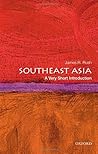
 Southeast Asia: A Very Short Introduction by James R. Rush
My rating: 4 of 5 stars
Publisher Site
I’ve been to most of the eleven countries of Southeast Asia, but still my questions are many. This short guide answered some of them. The book takes a largely historical approach, breaking the timeline into periods during which these countries were pre-nation-state kingdoms, then colonies, and then independent countries. While the guide is written by a historian and is organized by governance (i.e. who won the wars,) it does not solely address politics and regimes.
The guide also explores subjects such as religion. This was fortunate for me because a lot of my questions involve this topic. Why is the northern part of the region mostly Buddhist while the southern part is mostly Muslim? Why did Hinduism and other Indian religions (not inclusive of Buddhism, which virtually died out within India) almost entirely give way to other religions in this area, except for spotty exceptions (most notably Bali?) Incidentally, the former question is answered more than the latter, which makes sense as this is small book for a relatively large area, but more importantly for a long history. Southeast Asia has been a strategically and economically important place for centuries.
As a traveler, I found this book well worth reading as a way to gain insight into the region. It doesn’t dive deep into cultural questions (except a bit into religion,) and so there is much more to learn from other books. It does explore who governed these countries and how, and the last chapter brings the question up to date — reflecting on the political and economic changes in the last couple decades. If you’re curious to know more about Southeast Asia, in a way that doesn’t get too deep in the minutiae, this book is worth checking out.
View all my reviews













 Tiger Riding for Beginners