The title of this novel about the doomed love affair of two cancer-riddled teens says a great deal, and—while lifted from Shakespeare–it’s well-chosen. The lead character is a sixteen-year-old girl named Hazel who has lungs that, as she puts it, “suck at being lungs.” She meets a boy, Augustus, at support group who is in remission, but who had a leg amputated in the process of achieving his momentary cancer-free status. Hazel takes an immediate liking to the handsome and charismatic Augustus (i.e. “Gus”), but remains standoffish because she is–to use her own words–“a grenade.” Meaning that she is going to die young, leaving her loved ones devastated. She has enough guilt about the fact that she will do this to her parents, but is unwilling to subject Gus to the same fate. Augustus, however, is an ardent and skillful wooer and eventually wears Hazel down with his winning ways and selfless acts.
This isn’t a typical read for me by a long shot. It’s written in the language of YA fiction, and it’s brutally depressing in places. Neither of the aforementioned characteristics usually draw me in. However, despite its sad subject matter, the book has a sense of humor that is essential to keep the story from crushing one’s will to continue reading. Of course, the fact that all the major young characters are dying is a cloud ever-present throughout the book. I will say it’s the most viscerally emotional novel I’ve read in some time. The only books this depressing that I’ve read recently were nonfiction works on Pol Pot era Cambodia and the Holocaust.
The strength of the book is its characters. They may be atypically intelligent, clever, and well-spoken teens, but they are intriguing, likable, and well-developed characters. Besides Hazel and Gus, there is a secondary character named Isaac who has a form of cancer that isn’t highly lethal but which does claim his eyes. Hazel and Gus are in one way polar opposites. Gus, the former star athlete, is ever concerned about his legacy, but the less ambitious Hazel believes that everyone fades into oblivion rapidly. These divergent perspectives of similarly doomed youths give one insight into the varied approaches to experiencing one’s mortality.
Another intriguing character is Peter Van Houten, a one-time American writer living in Amsterdam and the heir to a fortune off which he lives as a professional drunk. Van Houten wrote a single book about a person who dies young, which turns out to be based on his own child and is Hazel’s favorite book. Gus reads the book to please Hazel, but becomes genuinely intrigued with its ambiguous ending. Van Houten is an unpleasant character, but his book is a focal point of the storyline. The couple takes a trip to Amsterdam to try to get answers about the novel’s abrupt ending, and this experience proves to be the pivotal point in their relationship. Van Houten–jackass as he may be–does end up passing on some useful wisdom to Hazel and Gus.
I rate this book highly for being readable, captivating, and gripping. I would recommend it for those who don’t usually read YA, though the language and focus is decidedly geared toward a YA audience.
It should be noted that the film adaptation will come out this summer. For some reason they filmed it in Pittsburgh instead of the story’s real setting—and my one-time home—Indianapolis, Indiana. I’ll try not to hold this against it, too much.
As suggested by the subtitle, this is a collection of nine short stories about a dystopian world. What makes it a particularly intriguing read is that the stories take place in one world, and the events all exist within a greater context that could qualify the book as a loosely plotted novel had the writer not defined it as a story collection.
Some characters recur in different stories. For the most part the recurring characters are cameo appearances (e.g. Folio Johnson, a detective and the lead in one story, commiserates at a bar in another). However, the character of Ptolemy “Popo” Bent is a critical character in both the first and penultimate chapters.
Race and politics aren’t subtle in this book. Given the [sad] proclivity of American readers to only read / enjoy politically charged works with which they agree (unless the book in question is making fun of the opposition), it’s safe to say that—on the whole–those at the left-end of the political spectrum will find this book more palatable and on-point and those to the right-end will find it unbelievable and overbearing in its message.
Having said that, I’m of the persuasion that finds Mosley’s dystopian vision strains credulity, and yet I thoroughly enjoyed this collection of stories. This book’s dystopia is characterized by global domination by a corporation and a religion called the “Infochurch,” both led by the same man. The corporate control of the world storyline is a little hard to swallow. A monopoly can’t enslave people (or even enforce its monopoly status) unless it has a monopoly on force, and it’s hard to imagine a path by which a private business gets the people to give them a monopoly on force. That being said, Mosley’s stories are engrossing, creative, and readable.
The nine stories are as follows:
1.) Whispers in the Dark (6 Chapters): A man makes the ultimate sacrifice to help nurture a brilliant child’s special gift.
2.) The Greatest (9 Chapters): A female boxer becomes the world champion while seeking to help her father, whose addition to a drug called Pulse has left him in dire health. (The father’s story, Voices, appears later in the collection.)
3.) Dr. Kismet (4 Chapters): The man who is, for all intents and purposes, Emperor of the World tries to co-opt the co-chair of the 6th Radical Congress—a leading member of his opposition.
4.) Angel’s Island (5 Chapters): A hacker, sent to prison for Antisocial Behavior, has a device called a snake-pack installed that can control him by administration of drugs and shocks. But the ultimate hacker might not be the most easily controlled using technology.
5.) Electric Eye (4 Chapters): Folio Johnson, a private eye with an electronic eye, is hired to find out why young International Socialists are dropping dead left and right. Johnson learns that any hardware, even his eye, can be hacked.
6.) Voices (8 Chapters): Professor Jones, father of the female boxer from The Greatest, undergoes a transplant of neural matter to repair damage from his Pulse addition. After having dreams and memories that are not his own, Jones discovers that his treatment is not all that it seemed.
7.) Little Brother (3 Chapters): Frendon Blythe is on trial before a computer that acts as both judge and prosecutor. He pleads his own case, and finds he was a pawn.
8.) En Masse (12 Chapters): A worker gets sent to a new division only to find that it’s nothing like his previous divisions. Instead of strict rules, GEE-PRO-9 has no rules. He wonders if it might be a test by the management. It turns out that it is a test–just not of the type he imagined.
9.) The Nig in Me (6 Chapters): After a plot to destroy certain races backfires, a surviving man finds himself missing those with whom he was closest.
There’re no stinkers among these stories. They are all intriguing and readable, but a few of them stood out as being particularly good. These were: Whispers in the Dark, Angel’s Island, Voices, and En Masse.
I’d recommend this for readers of soft science fiction.
Even if you haven’t read Mary Shelley’s masterwork, you’re probably familiar with the gist of the story. An ambitious, young scientist creates a creature grotesquely emulating the human form, and then abandons it in disgust. The creature, which doesn’t start off as a monster, eventually becomes one as it is subjected to brutal, inescapable loneliness.
The story has been spoofed by Mel Brooks and the Simpsons, and recently a movie came out that is based on a graphic novel that continues the story in the future as the immortal “monster”—played by Aaron Ekhart–roams the Earth. Of course, many of the pop culture references are based on the early Frankenstein movies. These movies made the creature much less nuanced, and told a story that was much less sophisticated. In the movies, Frankenstein’s monster is the villain, but in the novel one is as likely to see the doctor, Victor Frankenstein, as the true villain.
Besides being readable for early 19th century prose, the story is loaded with morality tales that don’t draw attention to themselves—those are the best kind. The first lesson is that joy is in the journey and not the destination. Victor Frankenstein wants nothing more than to create life—except perhaps to marry Elizabeth, a sister-like childhood playmate who is not blood related. As soon as he succeeds in creating life, he abandons his creation and will have nothing to do with the monster.
Second, Frankenstein’s lack of empathy for the wretched creature is the source of his own downfall. This lack of empathy is rooted in the notion that the creature is not human. While perhaps the creature isn’t human (that question itself is one of the great philosophical debates proffered by this book), when Frankenstein’s monster shows himself to have the same longings and frailties as a man, doctor Frankenstein still can’t empathize with it.
Third, decisions made out of fear often lead down a path to damnation. Dr. Frankenstein vacillates between agreeing to assist the monster he detests and refusal to help. After agreeing, he lets his fears drive a turnabout that ultimately damns the monster and himself.
The narrative approach taken is interesting. It’s a story being told within a story. The account is written by a ship’s Captain who rescues Dr. Frankenstein during the doctor’s pursuit of the monster. The explanation takes the form of a series of letters to the Captain’s sister. However, as it’s essentially a transcription of Dr. Frankenstein’s account to the Captain, that’s how most of it reads. We start and end in real-time aboard the ship in the icy north, but the bulk of the book is a retelling of events that occurred in Europe, starting with Dr. Frankenstein’s childhood and revolving around the creation of the monster and the events that ensued thereafter. Part of the story is actually told from the monster’s perspective as Frankenstein recounts what the monster told him.
The main weakness of the book is a slow beginning as Dr. Frankenstein feels the need to tell his life story in chronological order from his boyhood. It’s deceptive to say it “starts slow” because it opens with a great hook. If you knew nothing of the story—as Mary Shelley had to assume of her readers—you would really be curious about the Captain’s description of what the ship’s crew witnessed. It’s really when Frankenstein begins telling his tale that there is some needless exposition.
As one might imagine, there are many elements of the story that strain credulity. Frankenstein’s monster not only learns the language, but learns to speak it with the eloquence and erudition of a highly educated man in a relatively short time period. However, I don’t fault this because it raises the question of what faculties the monster receives from his component pieces. In other words, does Frankenstein really need to learn to read and speak from scratch or does he just need to remember what lays in the transplanted brain (and vocal chords) from which he was built. Of course, this further raises the question of whether he is human, humans, or something different altogether.
This is one of those books that everybody should read, and they should think about what they are reading. This is the kind of book that one can learn from. Mainly, one can learn a lot about how not to conduct oneself by the tragic story of Dr. Frankenstein.
Furthermore, for fans of science fiction, this is generally considered to be where the genre all began. While the movies have been heavily in the domain of horror, the novel revolves around the scientific and philosophical questions, which are much more front and center.
Amazon recently put out a list of 100 Books to Read in a Lifetime. I appreciate the mega-bookseller taking a less doctrinaire approach than, say, The Guardian’s 1000 Novels Everyone Must Read. Also, props to Amazon for including a number of contemporary works—though I guess that is self-serving of them (i.e. $10 versus $0 sales price)—so never mind.
Whenever I see one of these lists—and there are so many of them—I always feel a bit inadequate. I suspect I’m not alone, given a recent generic list posted by The Millions, entitled 28 Books You Should Read If You Want To. That author’s approach is laudable. She doesn’t hand out exact titles as if we all need the same books, but rather suggests the kind of books one should consider reading (but only if you want to.)
I read like a fiend. While I usually don’t read rapidly (I can; I learned how in grad school, but I prefer savoring to injecting words), I’m constantly reading. So it’s a little disappointing to see how I stack up in the grand scheme of list-makers.
So this brings me to the point of this post, which is to boost my self-esteem by building a list of books, all of which, I’ve read. As I considered the books I’ve read that I would be so bold as to recommend “everyone” read, I saw trends. First, I read a lot of thin books, or, perhaps, they stick with me more. Don’t get me wrong, I’ve read some monsters Moby Dick (on everybody’s list—I don’t know why), Atlas Shrugged (on the Libertarian Book-of-the-Month Club list, and not much else), and 1Q84 (given a few years, it’ll be on all the lists.) However, it’s the thin books that have stuck with me, and they often get kicked aside by the [other] pretentious list makers. Also, shorter forms (e.g. essays, short stories, poems, and novellas) often don’t get properly recognized because everyone wants to talk about novels and tomes.
Second, while I like to consider myself an international reader (e.g. I’ve read a fair number of translated Japanese and Chinese classics), the fact of the matter is that I’ve had a skewed reading history. I’m an American, and have disproportionately read books that are either by Americans or that speak to the American worldview / mindset (my list will be both.) This isn’t so much an issue for most of the list makers as they simply propose that every Nigerian, Thai, and Peruvian should read a canon devoid of any Nigerian, Thai, and Peruvian authors (but instead that is 50% British, 30% American, and 20% all others.) While the list may be targeted toward U.S. audience, these books are good for everybody, and everybody should read outside the familiar.
Without further ado, my list, 30 Thin Books That Every [Attention-Challenged] American Should Read:
Because poetry is good for the soul. Yes, this anthology is skewed toward dead poets, but it’s not only thin, it’s cheap. It’s got Whitman, Dickinson, Frost, Sandburg, and Hughes.
Because, screw totalitarianism, that’s why. This is like 1984, but without the villainy clubbing one over the skull. Therefore, you can introduce the kids to commie-hating early and without giving them nightmares—well not bad ones. Plus, it’s thinner than 1984.
Because virtue is good for the soul. This is Plato’s account of Socrates’ defense at his own trial and his subsequent explanation of why he was going to drink the hemlock. Yes, it’s technically three books, but they are often bundled together as one book. Even with all three, it’s pretty thin.
Because Orwellian dystopia isn’t the only dystopia. In Huxley’s book, tyranny wasn’t a matter of force, but manipulation. This book shows how dystopia can be disguised as utopia by keeping the population adequately drugged and well-sexed.
Because satire is good for the soul. No sacred cows escape roasting in this thin volume. A naïve young man travels out into the world to find that evil is ubiquitous.
Because how often does a book coin a common phrase. (FYI- “A Clockwork Orange” was a phrase Burgess borrowed for the book that was common in some parts, but Heller invented the term “Catch-22.”) The story revolves around the notion that one can’t get out of the war by reason of insanity, because if one is trying to get out of the war one is sane by definition, and if you are insane, you don’t try to get out.
Because if you’re going to break the law, you should know how to do it do it virtuously and not like a dirtbag. (Hint: It’s more painful than you think.) This essay tells of Thoreau’s imprisonment because he refused to pay taxes that would fund the war with Mexico. It’s usually bundled with other essays.
Because books are good. The title comes from the temperature at which books burn, and it’s set in a dystopian future in which the protagonist, “Fireman” Guy Montag, goes around collecting and burning books.
Because you should know how to turn someone down (e.g. I would not eat them on a boat, I would not eat them with a goat.) Or, because learning to be playful with words may serve one well. Or, because you should try new things. In the story, an unnamed narrator is subjected endlessly to green eggs and ham, which he steadfastly, refuses until the end.
Because you think you’ve got a weird family. Hamlet exacts revenge when he finds out that his uncle killed his father to marry his mother and usurp the throne.
Because you don’t want to underestimate Mother Nature when you strike out to build your indomitable American spirit. This is the true story of a college graduate who gives away his bank account, burns his pocket-money, cuts ties with his upper-middle class family, and sets off to become self-made. Ultimately, he ends up in Alaska, and it does not end well.
Because, stop being such a gloomy-Gus. Admittedly, this is an unconventional choice– both because it’s not particularly skillfully written and a few of its conclusions may not be as true as they once were. However, it does inject a dose of reality for those who view the world through shit-colored glasses. As the title suggests, the authors argue that life in America is getting better year after year. We are getting healthier and richer. Being economists, they present much of their findings as graphic representations of statistical data.
Because sometimes the world actually looks better through shit-colored glasses, Seriously, because you need to know how to get on with it when life is at its toughest. Viktor Frankl was a psychiatrist and Holocaust survivor who writes about what kept people going at places like Auschwitz.
Because, just get on with it. This was actually a kind of “Notes to Self,” written by the Roman Emperor to remind himself to be virtuous, to live, and to not fear death.
Because you don’t get enough of the word “rickety” these days. But seriously, you get to “see” a lot of America through Kerouac’s poetic language. It follows the road trips of a beat generation protagonist through America.
Because Faulkner’s language rocks, and this is a gripping and gritty tale. It’s the story of an upper class co-ed who’s dragged down into the underworld and some desperate times by a couple bad decisions, not the least of which was going for a ride with a stupid drunk.
Because you need a pep talk to think for yourself. Emerson proposed that one stand as an individual and stop letting political parties, religions, or other organizations decide what one believes. Emerson and Twain both saw a sad trend brewing in which people were starting define their beliefs by identifying with a party and then letting that party’s opinion leaders tell them what to think. Sadly, this trend only grew since there day to the point that many people have extremely strong beliefs that they can’t begin explain in a logically and factually consistent way.
Because one day China is going to collect on our debts, and well need some grasp of their culture. Seriously, you should read outside your culture. In the process, you’ll find that the Taoist stream of thought isn’t all that far off our own—“f#@k authority and pretentiousness and all the bureaucratic formalities.”
Because, screw Melville, this is the great American novel. Yes, I realize that it’s not particularly thin, but compared to Moby Dick it is—and it reads more quickly because there aren’t long drawn out sections on the minutiae of whale pineal glands and what not. This book follows the adventures of that rapscallion, Huck, as he flees a drunk father and a lady who wants to make him civilized, and takes to rafting on the Mississippi with an escaped slave. Yes, it has the n-word like a billion times, but if you read all the words (and not just that one) you’ll see there’s a positive message about the development of mutual friendship and respect between Huck and Jim.
Because you need to get outside more. It’s the story of a dog who is taken from the good life as a pet in California to the wilds of Alaska, and what said dog must do to survive.
Because you need to be concise AND coherent. In the age of Twitter, people are mastering the former while losing the latter. This is a thin books that tells you most of what you need to know to write intelligibly in English.
Because America has a dark side, and nobody writes it better than Poe. Any of the many collections of Poe’s short stories (some including poems and/or long-form works) will do. One definitely wants “The Pit and the Pendulum,” “Tell-tale Heart,” “The Murders in the Rue Morgue,” “A Descent into the Maelstrom,” and, of course, the title poem.
Because we need an injection of Stoicism to counteract the prevailing trend toward whining and moaning. Epictetus was a slave who became one of the most famous Greek sages. His sayings are mostly about not crying over spilt milk, but to be careful not to be the one who spills the milk. In other words, don’t whine about what the world gives you, devote your energies to being virtuous and conscientious.
Because you should understand your place in the ecosystem, and Lewis Thomas describes it artfully and concisely. This is a series of essays that covers a lot of ground with respect to the subjects of biology and physiology.
Because you may just want to take over the word someday. This is advice about how to rule. It may not make one popular as a middle manager, but there are bits of wisdom throughout.
Because someday it’s all going to come to an end, and it will probably end badly. This is the story of a father and son wandering through a post-apocalyptic wasteland. I realize I’ve put a lot of dystopianism on this short list, but I’m going to say that’s part of the American condition. America has had it good for long enough to realize that all things come to an end.
Because we should not give the short story short shrift, and Hemingway—like Poe—did them well. Besides the title story, this collection includes “The Killers”, “The Gambler, The Nun, and the Radio”, and “A Clean, Well-lighted Place.”
Because you need to get out of the country and experience some of the rest of the world. This is about the travels from Paris to Pamplona of a group of men who’ve all fallen for the same woman with that woman—of course—along for the ride.
Because you need to get out of the house, away from your cubicle, and out into nature. This is an essay extolling the virtues of putting one foot in front of the other like you mean it.
This is the story of a little boy’s dreamtime journey to a world inhabited by “monsters” and his interaction with them. Like Green Eggs and Ham, you should have read this as a kid. If you didn’t, I’m sorry about your defective parents, but get over it. Since you probably don’t want to read this as an adult on the Metro going to work, you can get Christopher Walken to read it for you on YouTube.
So that is it. That is my list of 30 Thin Books that Every [Attention-Challenged] American Should Read.
One gets an entirely different perspective on reading and writing when one starts doing book reviews. One finds that many of works that have been capturing one’s attention are, in fact, crap in one or more dimensions.
I think about books along five dimensions. I’d like to claim that I synch these five dimensions to the five-star rating system that I inherited from GoodReads, but I don’t. How I rate the book is more subjective than that, though the five dimensions are roughly the basis of my scoring. One will note that most all of my ratings are three through five. This may make it seem like I’m a softy, but it’s because I review what I want to read. By passing the twin threshold of having been started and having been finished, the books I review have generally shown themselves to have some merit in my eyes. I’ve occasionally given a lower rating to a book that was intriguingly bad or deliciously bad—or because it seemed good until the ending was botched. Just know that if someone else were picking my books, my rating distribution would be much more bell-shaped.
So, back to the five dimensions:
1.) Language: For a book to get a five-star score, it’s usually got to impress me with its use of language. Note that I didn’t say “dazzle” me. Authors that try to “dazzle” are as likely to get points deducted for lack of readability. Not that I don’t agree with what Neil Gaiman said, “…, if one is writing novels today, concentrating on the beauty of the prose is right up there with concentrating on your semi-colons, for wasted effort.” Still, I like to find something that intrigues in the use of language. It’s as likely to be successful use of sparseness as it is colorfulness. And, if you’re going to thwart convention, do it artfully and thoughtfully. Incidentally, it’s not just fiction in which I’m looking for creative and intriguing use of language, but it’s more likely to be pursued in that domain.
2.) Organization: In fiction this might be a narrative arc that builds and maintains tension. In nonfiction, it can be narrative, but more likely it’s just a logical arrangement so that the information is easily consumed.
3.) Readability: This is related to the previous items, but it’s not identical to either of them. It’s also hard to define readability except to say that it’s as easy to read and comprehend as it can be and still get the message across. Obviously, some works have a more difficult message to get across, and some works have to be purposefully vague in places. I also grade on a curve or older literature which might be needlessly purple, but right for its time. However, writing is always and everywhere and act of communication and, therefore, the clearer one can be the better. If I can read through once and not have to go back to figure out what’s going on because of what seem like conflicts, I’m usually pleased.
4.) Uniqueness: Sure, there’s nothing new under the sun, but if you’re the four millionth teenage vampire novel, good luck getting my attention. That’s not to say that any hackneyed-looking concept can’t be done up with new and interesting specifics. Unless you have a James Patterson-like sweatshop of writers in your basement, you’re not going to catch the latest fad while it’s still a fad so give it and think creatively. It’s like they say about taxi drivers and stock market advice. You know when to sell a stock when a taxi driver gives one a hot tip to buy it.
5.) Thought-provocation: This is simply, does the book offer food for thought. This applies not only to nonfiction works that are trying to inform. A novel, too, is hard pressed to get a five-star rating unless it makes me go “huh” about something.
It’s worth pointing out that I use GoodReads as my platform for building reviews. I use it because it’s very simple. One drops the review into a box and, when one publishes it, the cover photo and hyperlinked title and author are right there without ever having to mess with finding a photo of the book jacket or deal with building links. They also have a quick-study guide to the html code one may need for font manipulation and so forth. I do write the reviews in Microsoft Word and paste them into the GoodReads form because I’ve been twice bitten with accidently pushing some random combination of buttons that irrevocably deletes my post—inevitably as I’m putting the final edits on it.
If you enjoyed Joseph Heller’s Catch 22, which is to say you like gallows humor that scoffs at the folly of thinking of “bureaucratic logic” as anything other than an oxymoron, then Stanislaw Lem’s Memoirs Found in a Bathtub will be right up your alley. The premise is that future archeologists are trying to decipher what happened to humanity from a dearth of remaining documentation. One of the best and most extensive of these records is the memoirs of a bureaucrat telling of his experience in a subterranean complex that reads a lot like a spoof on the Pentagon. The 31st century timeline in which a future generation tries to understand the intervening dark ages is only discussed in the prologue, the remainder is the first person account of this bureaucrat of ill-chosen profession.
The narrator tells us about his final assignment, one that was so secret that his superiors couldn’t even tell him what it was. When he finally does get some written guidance, it’s stolen. Throughout the story, the author is shifting through various departments of this complex trying to figure out what is going on and with little initial success. At first he’s trying to figure out what his mission is, but later he’s just trying to figure out what’s real and meaningful–and if those concepts retain any usefulness. Along the way, odd and spectacular events occur that leave him thinking he’s being framed. He doesn’t know if he’s in a test, in the middle of a conspiracy, or amid a collection of lunatics.
There are sections that read quite like a Monty Python sketch, and the absurdist humor is sometimes like that of Douglas Adams–though more sparing and dark. There’s a scene featuring an officer who tries to talk the narrator into confessing, and I could only picture said officer in my mind as Eric Idle. Among the absurdist elements is the explanation of office operations. We are told that command was unable to deal with accurately and swiftly circulating memos because of the volume, and so they took to a random system in which paperwork was indiscriminately circulated until it happened upon the correct desk. There’s an officer who begins to chew and swallow envelopes to prevent information from falling into the wrong hands. One of the best examples of absurdist humor is a conversation with a cryptologist who suggests that everything is a code and, ignoring messages that seem to be of military value and that are not coded, takes to using a machine to “decipher” random literature into nonsensical messages.
Nothing is as it seems in this book, and the humor derives from the narrator being the only individual who insists on the world making sense. If you’ve ever been in a position where you had to interact regularly with a bureaucracy, you’ll understand the value of laughing at such humor to avoid weeping. Much of the humor comes from the desire to keep things secret while trying to know everything there is. The narrator keeps finding not-so-subtle fly-shaped spy devices on his coffee saucer. There are blatant lies about behavior that takes place right before the narrator’s eyes. When he’s institutionalized, it turns out that the other inmates are not at all who they seem to be either.
If Stanislaw Lem is not an author familiar to you (he’s a Polish writer who died in 2006), this is a good work to cut your teeth on. It’s not one of his most well-known pieces, but it’s humorous and easier to follow than Solaris. Fans of Kurt Vonnegut and Robert Heinlein are also likely to enjoy this book. I recommend it.
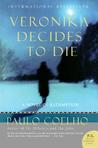
Veronika Decides to Die is about a young Slovenian woman, Veronika, who attempts suicide, fails, is institutionalized, and is informed that her attempted suicide damaged her heart and she has only five days to live. In the hospital she has to come to grips with what it means to be dying, but also what it means to be insane.
The book deals with the effect of Veronika’s death sentence diagnosis on her as well as on other patients with whom she interacts. The first patient Veronika comes in contact with is a depressive named Zedka who offers Veronika advice and insight. Then there is Maria, a woman who withdrew from her professional and family life to be institutionalized because she was having inexplicable panic attacks. Finally, there is Eduardo, a schizophrenic who is virtually non-functional when he meets Veronika, but who ends up in a relationship with the young woman nonetheless. These patients come to realize that they are hiding out at the hospital. They stay in the hospital because they are free to defy norms without judgment. When Veronika decides she doesn’t want to die hiding out, it has a profound impact on the others.
The book borrows heavily upon Coelho’s personal experience. He was institutionalized as a young man by parents who were disturbed when he went artsy and began hanging out with undesirables. Interestingly, Coelho has a cameo role in the book as himself. In the book he writes an article that playfully asks the question, “Where is Slovenia?” When Veronika is waiting to die from her overdose, she reads the article and decides to write a letter to the editor claiming that she killed herself because of the depressing effect of Coelho’s suggestion that nobody who’s anybody knows or cares where Slovenia is located.
In the end Veronika finds that she is truly free. Veronika seems to have everything at the beginning of the story: a job, boyfriends, and popularity. However, it’s those things that she comes to feel enslave her, and that’s what leads to the attempted suicide. In a way, Veronika is doubly freed. She is free because she is dying, and what can one do to a dying person. Second, she has been labeled crazy, and, having such a label, people expect her to act oddly. She has the freedom to do those things she has been too frightened to do all her life.
I’d recommend this book. It’s short, readable, and offers clear food for thought.
Dawn is the story of a woman, Lilith, who awakens in the custody of aliens. This is no run-of-the-mill alien abduction. Lilith is one of a small number of human survivors of nuclear holocaust. The aliens are akin to a merchant ship that comes upon the survivor-baring life rafts of a sunken cruise ship—or at least they appear to be. They offer rescue, the hope of survival, and a promise to allow human survivors to rebuild their society in a low-radiation area of Earth when they are sufficiently trained in the necessary survival skills.
However, for Lilith the situation is not akin to shipwreck rescue because there’s a stark in-group / out-group conflict to get over. And it features the most challenging and terrifying out-group imaginable—an intelligent alien race. Lilith instinctively fears and distrusts the aliens. She discovers that she’s been awakened and put back in stasis on more than one occasion. While Lilith’s fear turns out to be unfounded, her distrust proves sound. The aliens genuinely want to help the humans and mean them no harm, but they do have their own plans and see a means to benefit from their interaction with humanity. While the aliens don’t lie, they do withhold information, only gradually doling it out as they see fit. As Lilith’s fear subsides and her trust–at least in a limited sense–grows, this restricted information is a constant source of tension between Lilith and her alien handlers.
While Lilith is initially terrified and completely incapable of interacting with the aliens, she does by gradual turns accept the truth of the situation and begins to interact with the aliens, trying to discover their end-game. Her (relatively) calm and open-minded nature was—in part–why she was chosen. She’s to be a liaison between other newly awakened human survivors and the aliens. She and the humans she has already awakened will be the only beings that the newly awakened humans will see until they are deemed ready by the aliens. Of course, this makes Lilith distrusted among her fellow humans. Most of them are frozen in a Cold War mindset and think they are under the control of the Russians, refusing to believe the “nonsense” about aliens.
The heart of this novel is about Lilith being unwillingly cast as both Uncle Tom and Judas Goat to her fellow survivors. She has powers, albeit limited, granted to her by the aliens, and these only make her more suspect. These include the ability to awaken humans from stasis and to reconfigure the area in which they live, but it also includes rapid healing and enhanced physical capacities. These are given her so she can hold her own against the hostile newly awakened. The aliens know there will be physically violent individuals because they experienced it firsthand. In fact, they are hoping that using Lilith as an intermediary will ease this proclivity. However, it does nothing of the kind, and instead makes Lilith and those who are close to her targets for the rest.
This book is sci-fi because it’s futuristic, speculates about alien life, and proposes a world in which amazing technological advances have been made. However, if there was a genre called psych-fi (psychological fiction), it might be more apropos. The heart of this story is about fear and trust, and how people treat in-group and out-group people and those seen as crossing over. It also addresses the issue of the dissolution of in-group characteristics and the innate fear that creates. What if humanity does not survive, but rather some race that is in large part human, but also inhuman?
Warning to the squeamish, there’s a recurring theme of attempted rape in the book. In the first case, this is visceral and believable. However, there’s a straining of credulity when people later are coming straight out of stasis and succumbing to their most base prurient urges. Sex is a powerful driver, but in such a situation it would seem that more immediate survival drivers would dominate. In other words, it has to be the rare horn-dog who wakes up from a 300 year stasis aboard an alien vessel, and the first thing he thinks of is getting his freak on.
I enjoyed this book and found it quite thought-provoking. The concept hooked me from the start. Butler’s use of language can be beautiful, but she doesn’t go overboard with elaborate language that distracts or bogs down the story.
This book could be enjoyed not only by fans of science fiction, but by those who like a good story in general and, in particular, those who like to think about what makes people tick.
It should be mentioned that this is the first book of a trilogy. The other books are Adulthood Rites and Imago, respectively. The entire trilogy, often called the Xenogenesis trilogy, can be purchased in one volume entitled Lilith’s Brood.
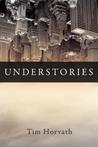
Two traits of Tim Horvath are rapidly revealed in reading the collection of stories entitled, Understories. First, he’s an academic to the core. Second, he loves words and the way they can be jigged around to create not only meaning but feeling. Combined, these characteristics yield both positive and negative outcomes.
On the positive side, Horvath writes what he knows, and this can be seen in tales like: The Understory, The Discipline of Shadows, Tilkez, and even Circulation. Horvath paints a vivid picture of life in academia with The Understory and The Discipline of Shadows in particular, replete with scholarly rivalry and interdepartmental politics. While that may make the book sound stunningly boring, those two stories are among the strongest–in part because the author knows how to build tension and character in this domain. His bookish characters are constructed with wit and depth.
On the other hand, this book is for the ones who love language more than they love story. The readability isn’t high. Horvath peppers the text with words that many of us memorized to take our GRE test but never used after receipt of our acceptance letter. Many avid readers never learned such words in the first place. This is where the Kindle edition, and its capability for instantaneous word lookup, comes in handy. (Though, the author does manage to stymie Kindle’s internal dictionary on a number of cases.) The shorter pieces tended to leave me wondering if Horvath had a point other than to dazzle with verbiage. To be fair, it’s not just monosyllabic and pretentious words that Horvath loves. He has a taste for all sorts of words that are evocative and powerful, be they whimsical, sexual, or emotional.
Understories consists of 21 short stories, but I use the term “story” loosely. Some of the chapters are stories in a conventional sense. That is, they have a beginning, a middle, and an end, and a character who takes some sort of personal journey. Other pieces are the literary equivalent of the masturbatory orgasm; they’re pleasant to experience but beg the question of what the objective is. The contents of the book are below. I’ll restrict my commentary to the more substantial pieces, and leave the reader to figure out what Horvath was trying to get at with the others.
1. The Lobby: This is really an artistic introduction and rules for reading the book.
2. Urban Planning: Case Study #1: This is the first of 8 such “case studies.” With the exception of one, they’re all flash pieces.
3. Circulation: If I had to pick a best story of the anthology, it would be this one. It’s about a man whose eccentric father is in the hospital with mind and body that aren’t what they used to be. The man is Director of Circulation for his hometown library, and the father has one published book and spent much of his life working on an unfinished Atlas of the Voyages of Things. The sub-story about the books as a reflection of the man is what gives this something extra beyond the usual “Cats in the Cradle” (Harry Chapin reference) narrative.
4. Urban Planning: Case Study #2: Another brief piece.
5. The Understory: This is one of the full length stories, and is one of the best pieces. It’s about the bringing together and falling apart of a platonic relationship between two scholars. Set in pre-war Germany, the story opens with a scholarly rivalry between two professors who become good friends. However, one of the men is a Jew and the other is promoted to a Deanship because he has appeal with the Nazis.
6. Urban Planning: Case Study #3
7. The Discipline of Shadows: This is the story of a professor in the Department of Umbrology. What’s Umbrology? It’s the study of shadows. An interdisciplinary department with a unifying theme of shadows provides and intriguing background for a story that’s not so out of the ordinary. The story delves into scholastic politics and a sordid intradepartmental love triangle.
8. Urban Planning: Case Study #4
9. Planetarium: This is story proper. It’s about the reunion of two high school buddies, and their differing recollections of a seminal event of their youth involving shenanigans at a planetarium. The story is an odd sort of confession.
10. The Gendarmes: This story will appeal to lovers of the surreal. It’s about a man who discovers that a team of scientists are playing baseball on his roof.
11. A Box of One’s Own: An eloquent tale of the curiosity inspired by boxes.
12. Internodium: This is another short piece.
13. Urban Planning: Case Study #5: This one probably ties for my favorite flash piece. It’s about a city that evolves into all restaurants.
14. Runaroundandscreamalot!: There’s a lot of humor sprinkled throughout this book, but this is the one story one might put in the humor genre. It’s funny from the title onward, which is the protagonist’s pet name for a generic Chuck-E-Cheese-esque place called “Playalot”—which is a medieval-themed kid’s play palace. The protagonist, a divorced man, takes his daughter there and meets a woman that he proceeds to try to get to know better despite only knowing her as “Hanh’s Mom” for most of the story.
15. Urban Planning: Case Study #6: This is the other tie-holder for best flash piece. It’s about a city in denial.
16. Pocket: A flash piece on, well… pockets.
17. Altered Narrative: A short and experimental piece.
18. Urban Planning: Case Study #7: This is the only one of these “Urban Planning Case Studies” that is a short story in the usual sense. It’s about a [grown man] film projectionist who abandons his post after seeing his wife with another man.
19. The Conversations: There’s a fair amount of surrealism sown throughout this book, but this is one of the more speculative pieces. That said, it’s really just about the death and resurrection of the conversation—along with “mint.” The sci-fi component revolves around speculation about precisely caused it and what the difference is between a “Conversation” and a “conversation.” The latter being what we normally think of (i.e. and informal discussion), and the former being the subject of the story.
20. Tilkez: The protagonist is a creepy little man who writes down everything and the story is about his relationship with both a female and language (I think. The female might be symbolic.)
21. Urban Planning: Case Study #8: One last flash piece.
Three series are collected into one volume. Each series is organized into four parts: Life, Love, Nature, and Time & Eternity. The connection between these themes and the verse contained therein is generally clear, and the latter category is largely concerned with death—a popular topic for Dickinson. While Dickinson is known for being morose, her poems often manage to be both playful and dark at the same time. The best example of this odd combo of grim / playfulness may be one of her most quoted poems, The Chariot.
Because I could not stop for Death, He kindly stopped for me; The carriage held but just ourselves And Immortality.
We slowly drove, he knew no haste, And I had put away My labor, and my leisure too For his civility.
We passed the school where children played, Their lessons scarcely done; We passed the fields of gazing grain, We passed the setting sun.
We paused before a house that seemed A swelling of the ground; The roof was scarcely visible, The cornice but a mound.
Since then ‘t is centuries; but each Feels shorter than a day I first surmised the horses’ heads Were toward eternity.
Dickinson’s life story is well-known, at least in broad brushstrokes. She was a 19th century poet who was introverted in the extreme, and eventually became an outright recluse. According to her own words, she didn’t take up writing poetry until she was in her 30s. This existence was facilitated by the fact that she was from a well-to-do family and had no pressing need of a husband or an income.
Dickinson’s introverted nature is touched on throughout her work, and no doubt contributes to her appeal among those similarly afflicted. The opening poem of the Second Series, another of Dickinson’s most famous, speaks to this aspect of her personality.
I’m nobody! Who are you? Are you nobody, too? Then there’s a pair of us! Don’t tell! They’d banish us, you know.
How dreary to be somebody! How public, like a frog To tell your name the livelong day To an admiring bog.
I enjoy Dickinson’s work, but it’s the playful nature, rather than the macabre, that appeals to me. This is accomplished by short lines, use of rhyme, or at least slant rhyme, that makes the poems melodious to the ear. I’m fond of lines such as:
Success is counted sweetest By those who ne’er succeed
God permits industrious angels Afternoons to play
Hope is the thing with feathers That perches in the soul
Faith is a fine invention For gentlemen who see; But microscopes are prudent In an emergency!
A word is dead When it is said, Some say. I say it just Begins to live That day.
There is no frigate like a book To take us lands away,
You cannot fold a flood And put it in a drawer,– Because the winds would find it out, And tell your cedar floor.
He fumbles at your spirit As players at the keys Before they drop full music on; He stuns you by degrees,
Deals one imperial thunderbolt That scalps your naked soul.
For we must ride to the Judgement, And it’s partly down hill.
While simple-hearted neighbors Chat of the ‘early dead,’ We, prone to periphrasis, Remark that birds have fled!
And if my stocking hung too high, Would it blur the Christmas glee, That not a Santa Claus could reach The altitude of me?
This Kindle version is readable. A common complaint about good books, particularly those that are cheap or free, is that the Kindle formatting detracts from the reading experience. That is not the case here. There is a first line index at the back. This is useful as most of the poems don’t have titles, and Dickinson’s first lines are often attention grabbers.

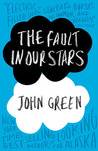 The Fault in Our Stars by John Green










 Tiger Riding for Beginners