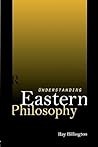
BOOK: “Understanding Eastern Philosophy” by Ray Billington

Understanding Eastern PhilosophyUnderstanding Eastern Philosophy by Ray Billington
My rating: 4 of 5 stars

Publisher Site — Taylor & Francis

This book does a solid job for one that bites off so much in a single go. Eastern Philosophy is a large subject, and to try to outline the major premises of its varied systems and also compare them to Western / Abrahamic notions (when Western schools are sometimes no more different from Eastern schools than each side is within,) and to do so in under two-hundred pages is a daunting undertaking.

For the most part, I felt the book did a fine job of meeting its objective. A fair amount of selection and simplification is required. I will say the part describing karmic doctrine didn’t seem consistent with what I was taught and seems more in line with the early Western scholars who started writing about Eastern Philosophy but could not help but couch the subject in a Western / Abrahamic frame because it was what they knew and was invisible to them. I say this as one who is no big fan of Karmic philosophy, though for another reason (one which is also mentioned in this book.) I’ve always been told that the central idea is to do selfless acts in order to escape the karmic cycle. Billington, like others before him, states it as do “good deeds” and then he puts forth the critique that this won’t help because doing good for one’s own benefit is fraught with peril. My understanding from Sanskrit scholars is: first, Hindu philosophers were aware of this paradox from the beginning and that’s why the emphasis has always been on “selfless” acts; second, the Abrahamic bifurcation of all actions into good and evil is not so much a thing in Hindu thinking (most actions are inherently neither.) I should point out that there is a lot of internal conflict within these philosophies (e.g. differences between Buddhist and Hindu thoughts on Karma) and that Billington does elsewhere reflect on the differences between Eastern and Western thinking about good and evil.

The first two-thirds of the book is organized by schools of thought (beginning with the Indian ones and working toward Chinese / East Asian schools) and the last third deals with a series of fundamental philosophical questions.

If you want a quick outline of Eastern philosophical ideas, this book gives a good look at them, particularly if one is interested in a comparison to Western ideas. The book also spends a fair amount of time in discussion of what a religion is and how one differs from a philosophy.

View all my reviews

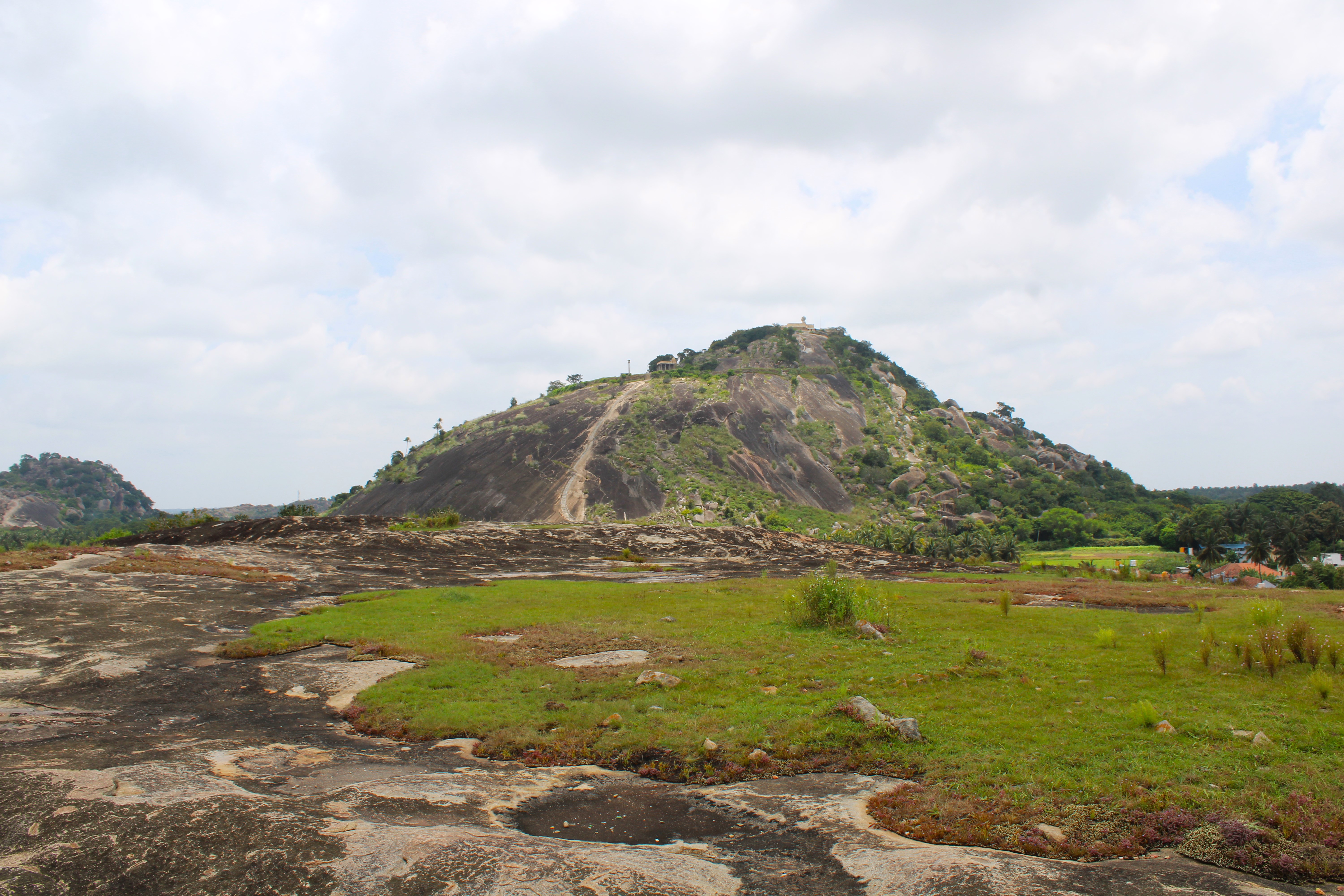
DAILY PHOTO: Vindhyagiri at a Distance

Taken in September of 2022 in Shravanabelagola

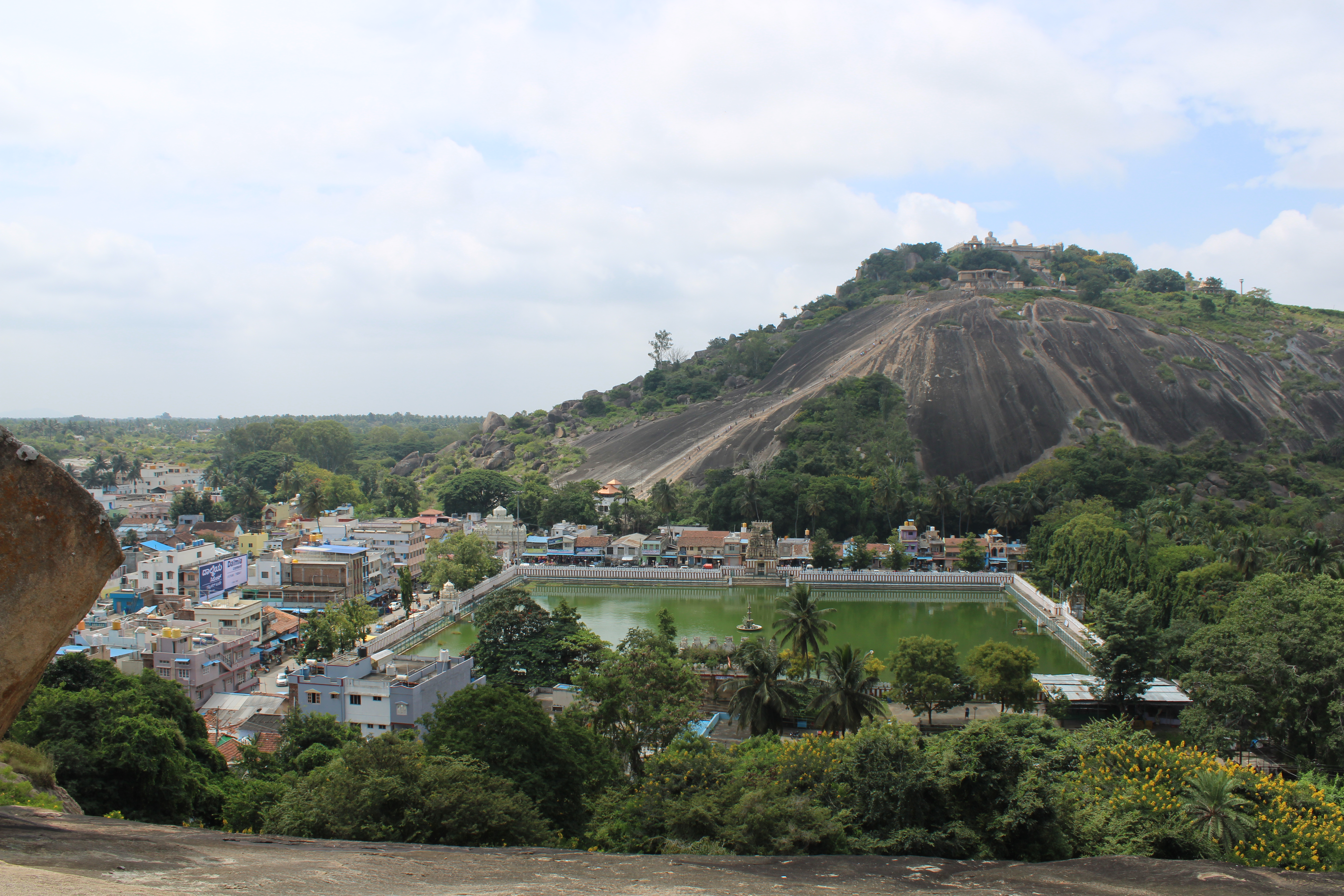
DAILY PHOTO: Bahubali Above the Wall

Taken on September 17, 2022 at Shravanbelagola

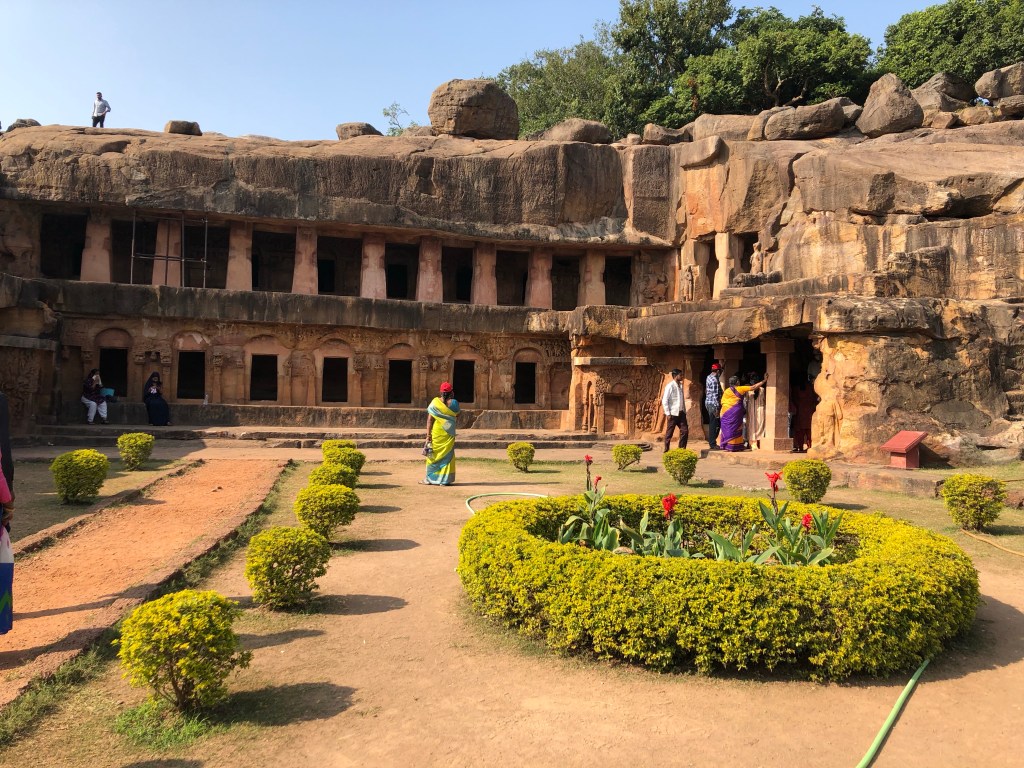
DAILY PHOTO: Udayagiri Caves

Taken on December 21, 2021 in Bhubaneshwar

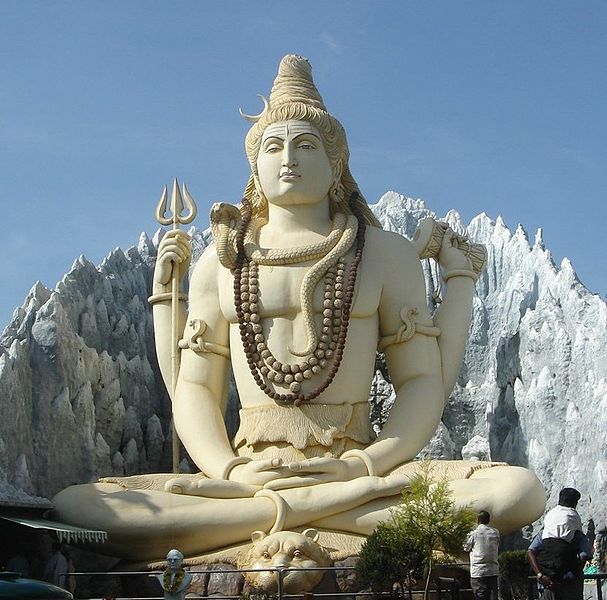
DAILY PHOTO: Gomateshwara of Shravanabelagola

Taken on November 23, 2013 on Shravanabelagola Hill

Taken on November 23, 2013 on Shravanabelagola Hill

[As I was on the road yesterday and missed my Daily Photo post, I’ll double up today—if I can. I’m iffy because Bangalore got 2” of rain in an hour last night (which we arrived home in; I saw a city bus literally—no hyperbole here whatsoever—half underwater in an underpass.) Anyway, my internet connection is spotty at the moment, and could go out permanently at any moment.]

The Gomateshwara (a.k.a. Bahubali) sculpture at Shravanabelagola is the world’s largest monolithic stone sculpture. Gomateshwara was a Jain Arihant, and was said to be the second of 100 sons of the first Tirthankara.

An Arihant–literally a “vanquisher of enemies” (a rather bellicose title for a sect that won’t eat onions because the plant must be killed to harvest them), is one who has defeated anger, ego, deception, and greed. (Oh, THOSE enemies. you say.) A Tirthankara is a special kind of Arihant that appears every so often to revitalize the Jain community.

Shravanabelagola is not a well-known site. Being in rural Karnataka, and not on the regular tourist loops, it’s easy to miss. However it can be grouped nicely with trips to the temples at Halebidu and Belur.

Tip 1: You’ll have to walk to the top of a rather large hill in bare feet, so be prepared. On the bright side, the steps are quite clean and devoid of the usual multi-species feces common to footpaths in India.

Tip 2: Jains, like Hindus and some Buddhist sects, utilize the swastik emblem heavily. Despite the ubiquity of what some call the “twisted cross” or “swastika,” you are not in a den of neo-Nazis. That emblem, and its mirror-image, was used for thousands of years in South Asia before Hitler co-opted the symbol—presumably misinterpreting its meaning (as he misinterpreted so many things.) Ironically, it means a wish for good fortune.

Paul Brunton’s Search for Sages in India

Source: Kalyan Kumar by way of Wikipedia

Source: Kalyan Kumar by way of Wikipedia

As I prepare to move to India, I’ve begun to read up on this subcontinent about which I know too little. For example, I’d never heard of Paul Brunton before a week ago, but now I am immersed in his book A Search in Secret India. Brunton was a Brit who, like a number of his contemporaries living in the first half of the 20th century, struck out to experience the mysteries locked in the heart of India. Like many, he wanted to gain access to the country’s treasure, but the treasure he sought had nothing to do with material wealth or ancient artifacts. He sought living sages, and the lessons they could teach him. The book I’m reading tells the story of this search.

Something about India drives internal reflection and the spirituality that often accompanies it. It’s the home of Hinduism, Buddhism, Sikhism, and Jainism, as well as many non-denominational wisemen (and wisewomen) who at once can be seen as followers of no religion and believers in many religions.  Value for the unity of mind and body can be seen in the popular national practice of Yoga, which is the antithesis of mindless exercise in which one jumps on a treadmill with an i-Pod and zones out for an hour as one’s body churns through its paces. Yoga, like Tai Chi, requires one’s full attention, and that one’s movement, one’s breath, and one’s awareness are all working toward the same purpose.

So far, Brunton’s work has appealed to me not only because he is in search of wisdom, but because he goes about this pursuit as a skeptic. In the introduction he tells how he edited out the many meetings with charlatans and frauds. Charlatans always abound in the presence of sages because it’s quite lucrative to convince people that they can achieve self-improvement effortlessly through some patented approach. (I’m here to tell you that self-improvement is a struggle that requires your physical and mental energy all the way–what I cannot yet tell you is whether it is worth it or not.) If one cannot see the cloud-enshrouded destination, it’s easy to sell maps–whether one knows the route oneself or not–and many are all too ecstatic to buy a map that shows a secret route that takes them to the pinnacle by way exclusively downhill paths.  The fact that Brunton enters his quest with a degree of skepticism suggests he didn’t fall for such traps; traps that should be obvious but that appeal to those for whom the force of wanting to believe is stronger than the force of truth. [As I am only a few chapters in, I reserve the right to change this prognosis. At some point, I’ll put up a review with my final thoughts.]

I look forward to discovering whether wisdom is alive and well on the subcontinent. Hopefully, the hucksters haven’t won the war for the mind’s of seekers.