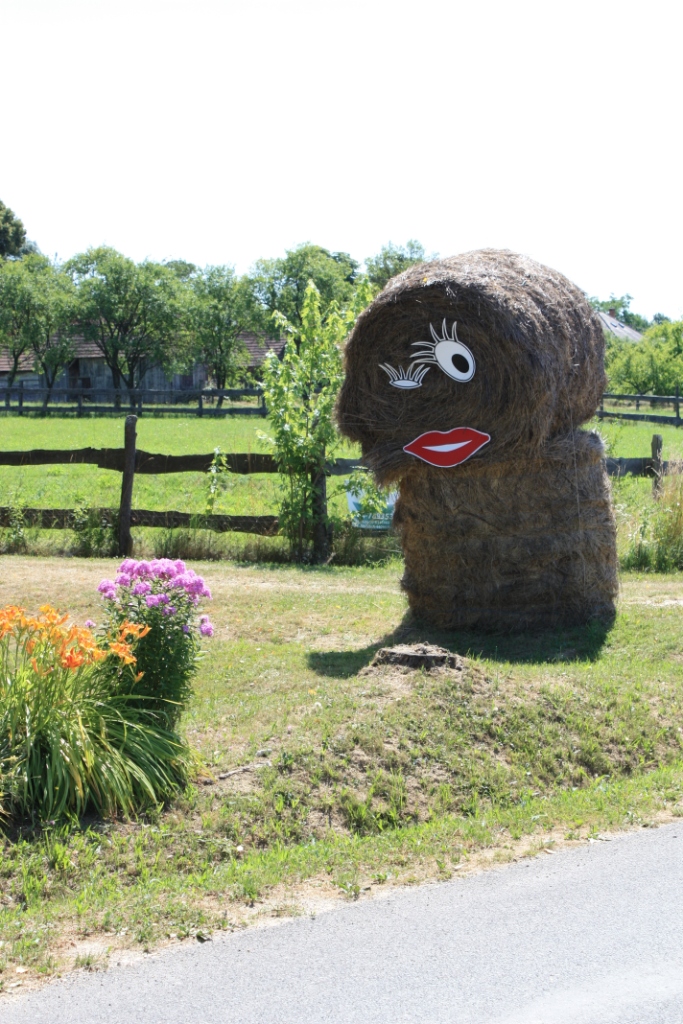
Farmyard fun: or, that hay bale may have had a stroke.

Farmyard fun: or, that hay bale may have had a stroke.
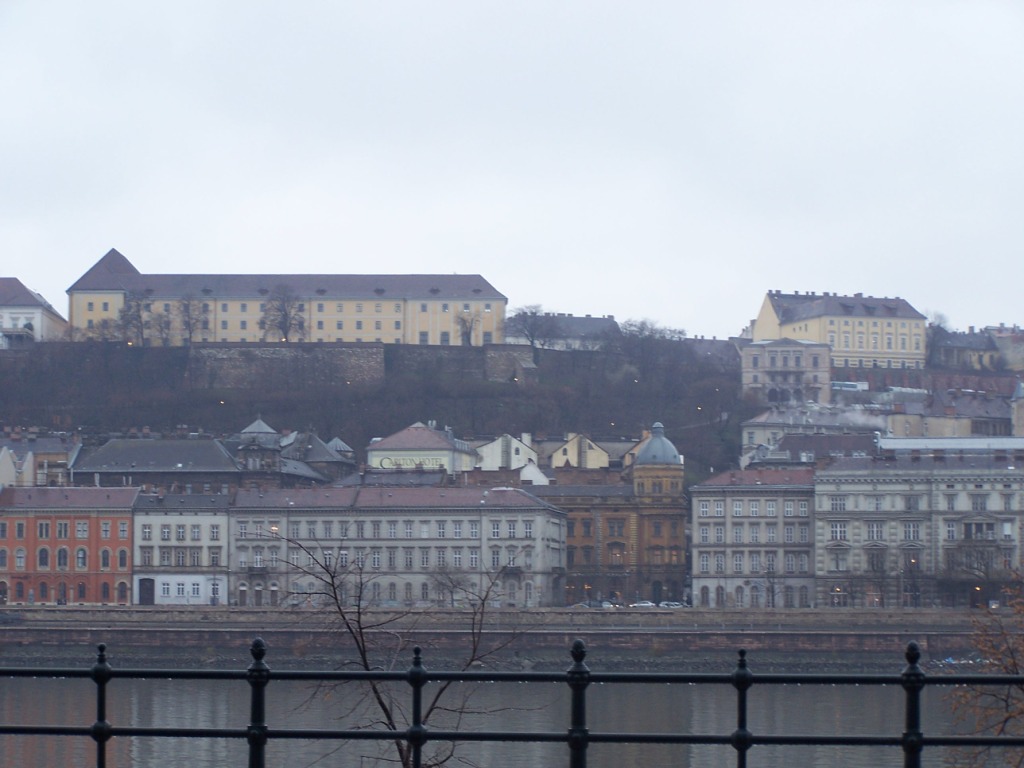
Buda from Pest; Taken in December of 2008

Taken on the road between Szentendre and Visegrad
 The Bridge at Andau by James A. Michener
My rating: 5 of 5 stars
In the fall of 1956, there was a revolt in Hungary against the Soviet-puppet leadership. While this revolution ultimately failed, it was a powerful underdog story that revealed the brutality of the USSR.
Novelist James Michener was one of the journalists at the border crossing for which the book is named. He collected the stories of those who were fleeing the Soviet crackdown. Michener found what he heard to be chilling, and this book had a profound impact on Americans.
The book begins with a typical story of a woman carted off by the ÁVO (Állam Védelmi Osztag), the Hungarian secret police. She was returned several weeks later, fundamentally changed and psychologically broken. It was this type of lawless injustice that led to the revolt.
The book recounts the many trials, tribulations, moments of hope, and moments of peril of the revolutionaries. It covers the opening salvos at the Magyar Radio building and then at the Kilian Barracks (located at a prominent intersection on the Budapest’s Grand Circle [Nagykörút]) and continues to the flight of the failed and hunted revolutionaries.
Throughout the book one is constantly reminded of how ingenuity and will can succeed in the face of severe disadvantage. The Soviets came with tanks, but the Hungarians had only the few small-arms that they could liberate from those military barracks that sided with the revolutionaries. The guerrillas would put brown dinner plates upside-down in the road. These looked roughly like anti-tank mines. When the tankers stopped to investigate, guerrillas would drop Molotov cocktails into the tank’s engine inlet.
The most heart-rending part of the book deals with the children that were actively involved in the fighting, and tank-killing specifically. The small and agile children could apparently move up to the tanks unseen more easily than adults.
This may seem like just another example of a true story with a sad ending. It’s true that the Soviets came back after a feigned withdrawal, tricking the revolutionary leadership into “negotiations” that turned out to be executions. Overall, thirty thousand Hungarian casualties resulted from this two-week battle. However, the story is not as simple as “the underdog got defeated.”
Michener quotes a revolutionary who summed it up best, “Russia won, but they’d better keep two of their soldiers in Budapest for every one Hungarian they give a gun. Let the Kremlin sleep on that.”
I’d highly recommend this book for those interested in history, military strategy, or even just a compelling human interest story.
My copy of Bridge at Andau is well-worn. As a Master of Science in International Affairs student, I did a thesis on Soviet/Russian asymmetric warfare. One of the three cases that I studied extensively was the Hungarian revolution. While the ’56 Revolution was arguably the least successful of the three (the others being Afghanistan and Chechnya), it wasn’t due to lack of Hungarian will so much as the still strong state of the Soviet Union.
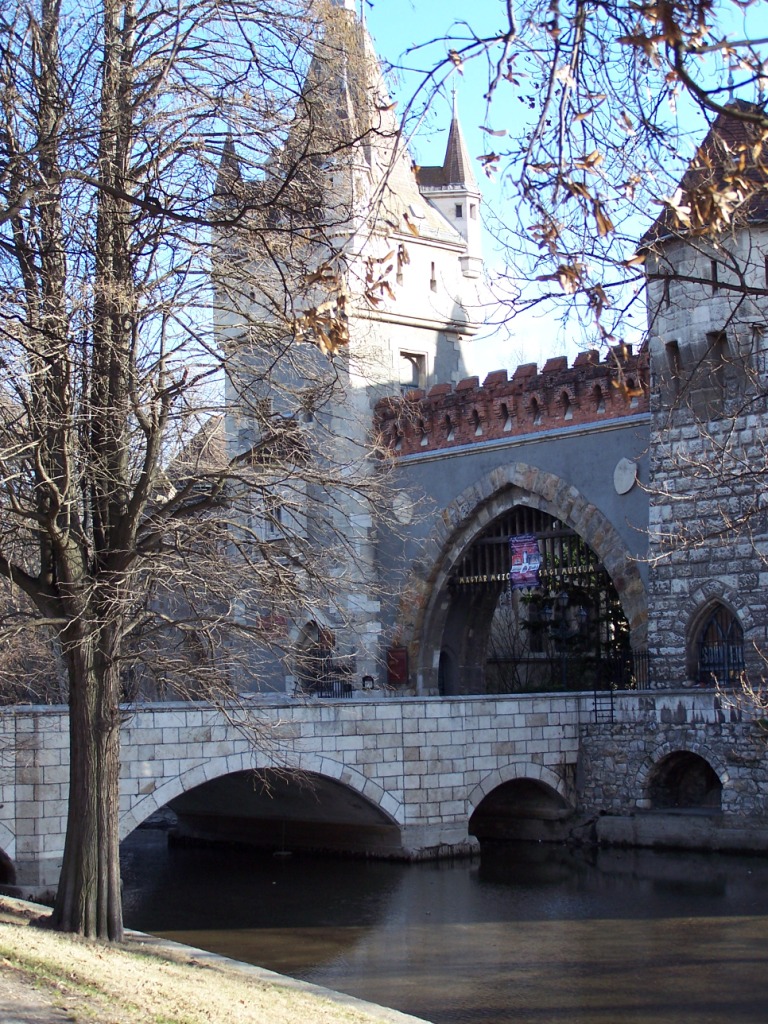
You just don’t see enough moats these days.

Budapest’s south side
Gellért Hill is a prominent overlook in Budapest; it’s topped by the Citadel. The hill offers splendid views both north and south down the Danube River. I show the view to the South to be contrary (pictures to the north, dominated by the sprawling neo-gothic Parliament building, are ubiquitous–and are commonly the subject of postcards.) If you want some exercise, you can walk up to the top. The stairs are adjacent to the roundabout at the foot of the Buda-side of the Erzsébet bridge.
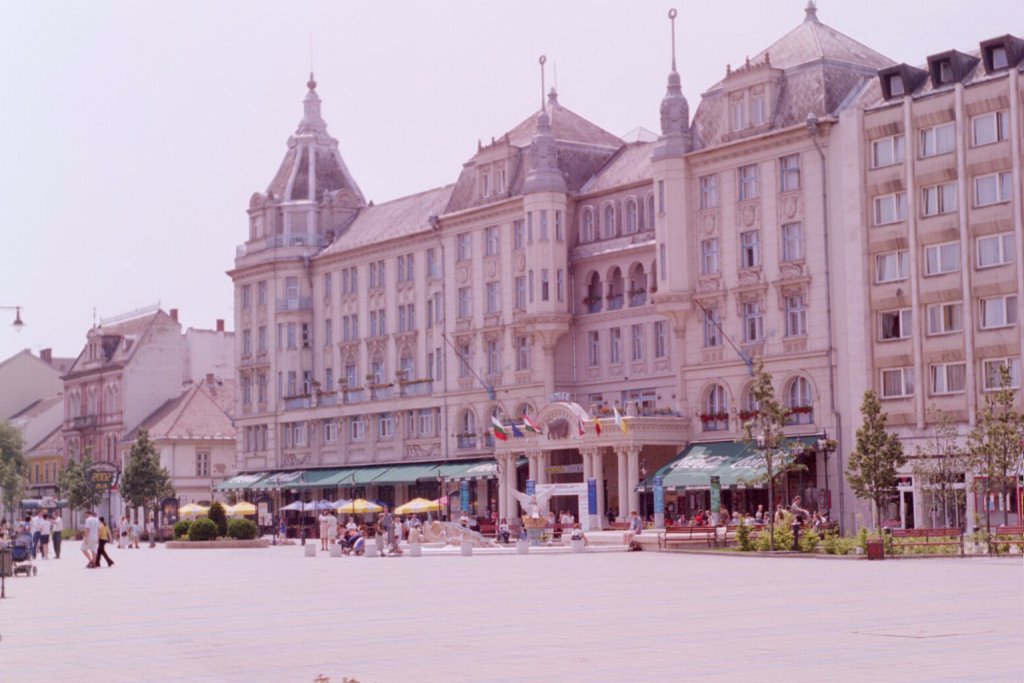
The Aranybika (Golden Bull) Hotel is one of the most prominent landmarks of Debrecen, Hungary. The Golden Bull is alternatively an important edict of 1222 or a soccer team. The hotel was built in 1915 in the secessionist style.
Debrecen is the second largest Hungarian city at 200,000+ residents. In 2002, I attended an intensive language course affiliated with the University of Debrecen. The building in which I was taught was near this square, across and down the street.
If you are interested in learning Hungarian, I’d highly recommend the school I attended, the Debreceni Nyári Egyetemen.
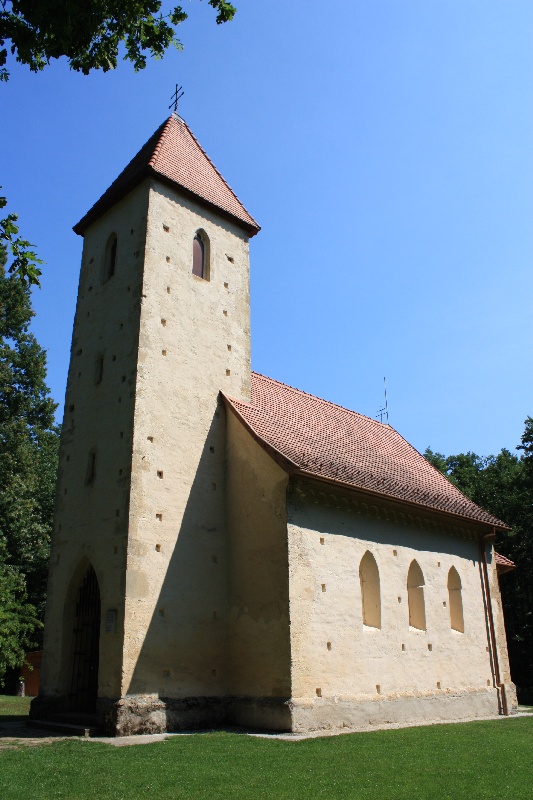
Árpád era chapel
This chapel sits on a solitary plot at the edge of a woods near Velemér. Velemér is a tiny village in the Őrség, which is a region on Hungary’s western border. The church dates back to 1360. The inside is covered with murals that have been restored after having been plastered over due to religious restrictions in the 18th century. The church had to be extensively repaired in the 19th century as a result of deterioration from the late 18th to early 19th century, but is now well-maintained.
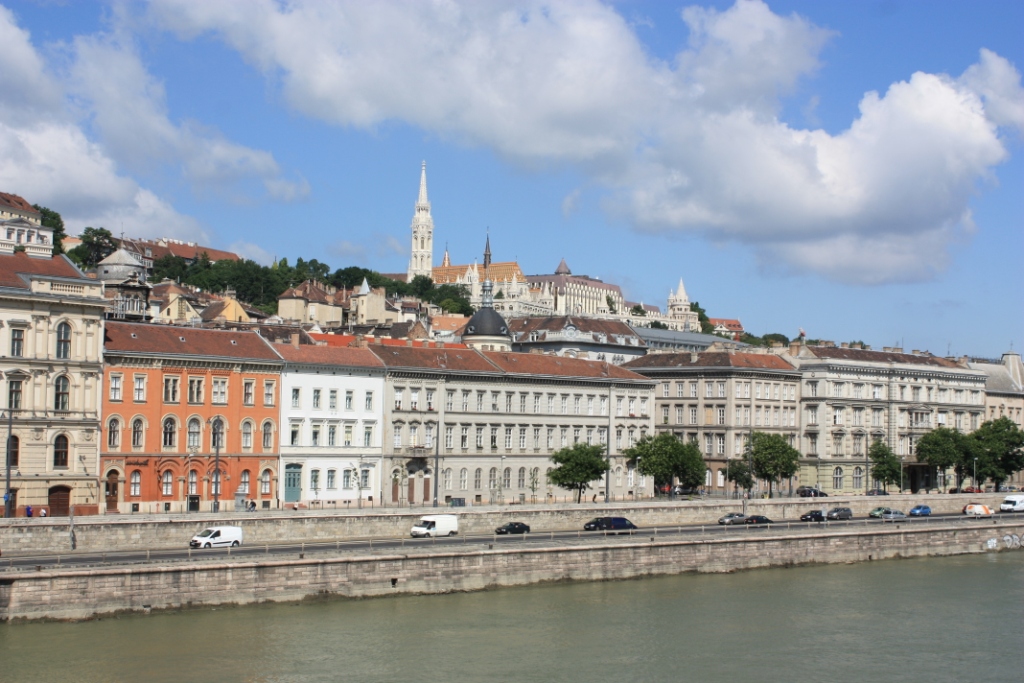
The steeple is Matthias Church in the Castle District
The Danube River flows through the middle of Budapest. Budapest was originally two cities that grew together. The hilly west bank (seen here) was Buda, and the flat east bank was Pest. High in the background one can see such tourist attractions as the Fisherman’s Bastion and Matthias Church.
I took these five years ago… how time flies. But, tis the season.
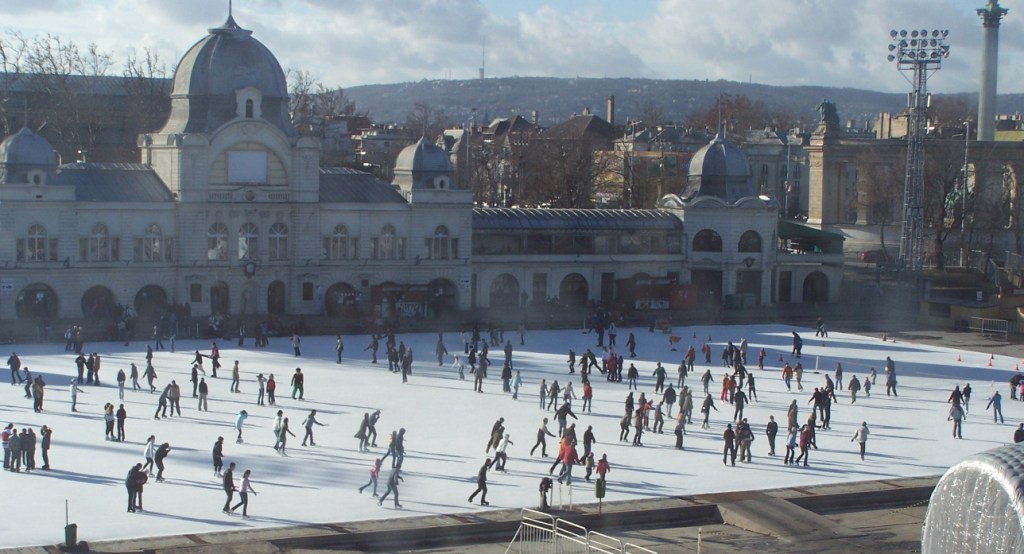
City Ice Rink next to the Vajdahunyad Castle
This has been one of the most popular pics on my photoblog as of late.
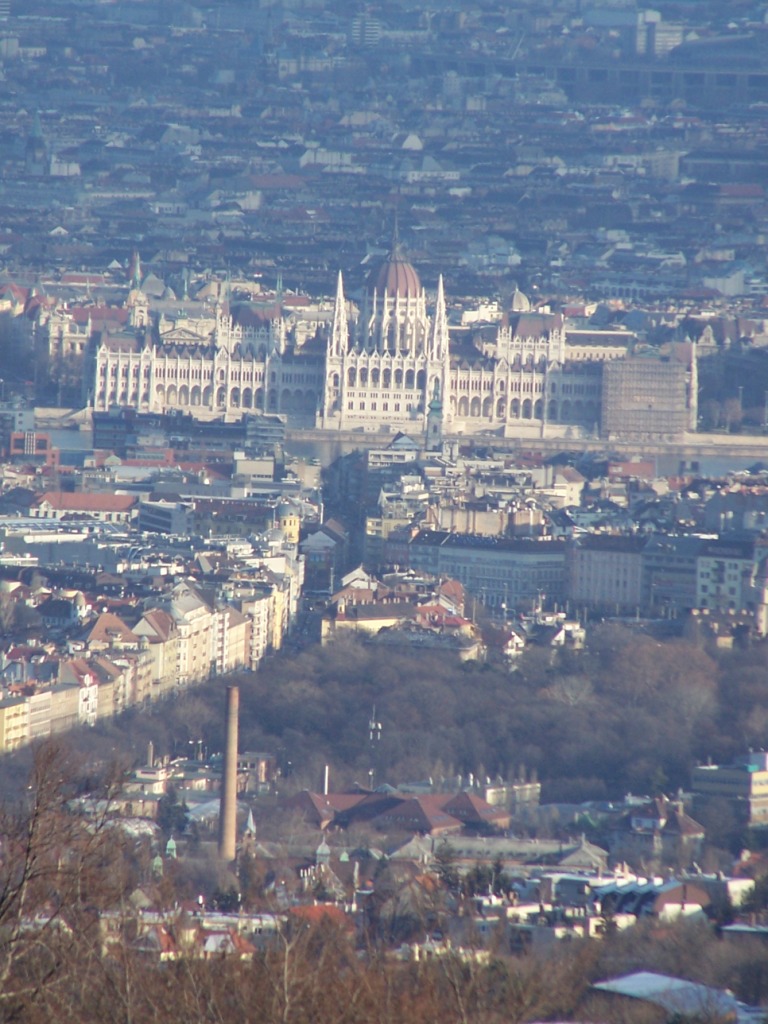
The Neo-Gothic Parliament building as seen from Normafa.
Normafa overlooks Budapest from atop of the hill. On this day the hilltop was dusted while there was not a trace of snow in Budapest.
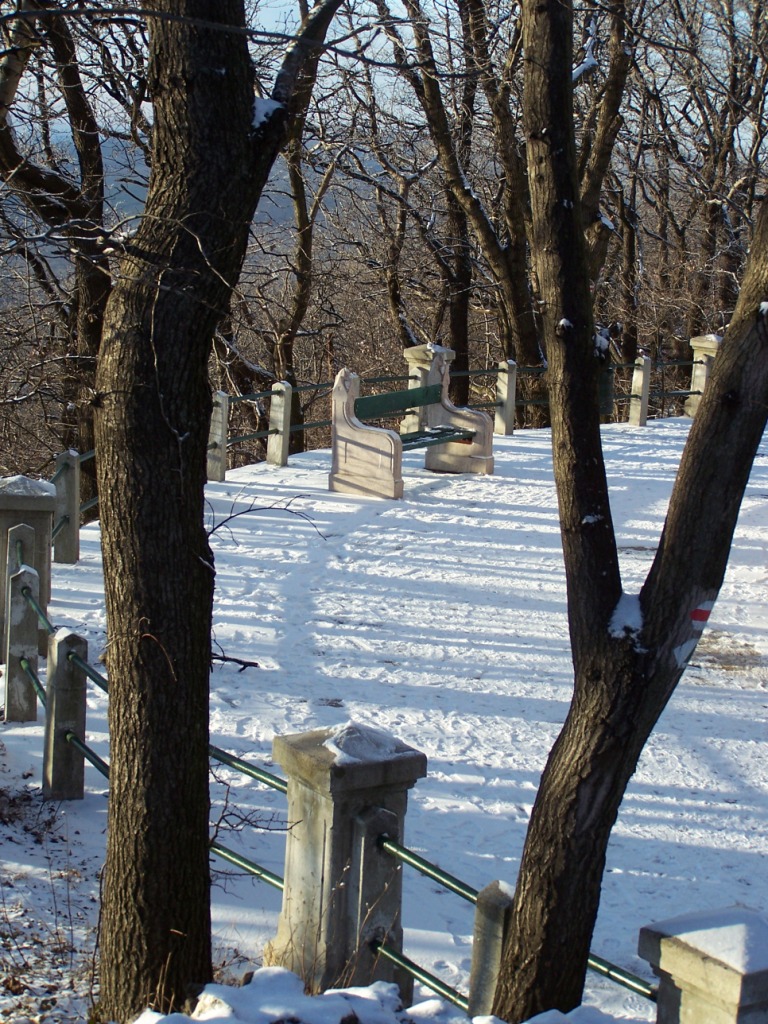
Normafa near the tower
The aforementioned dusting of snow written over by long shadows of winter.

A cross in the woods
A solitary cross and headstone next to the trail.
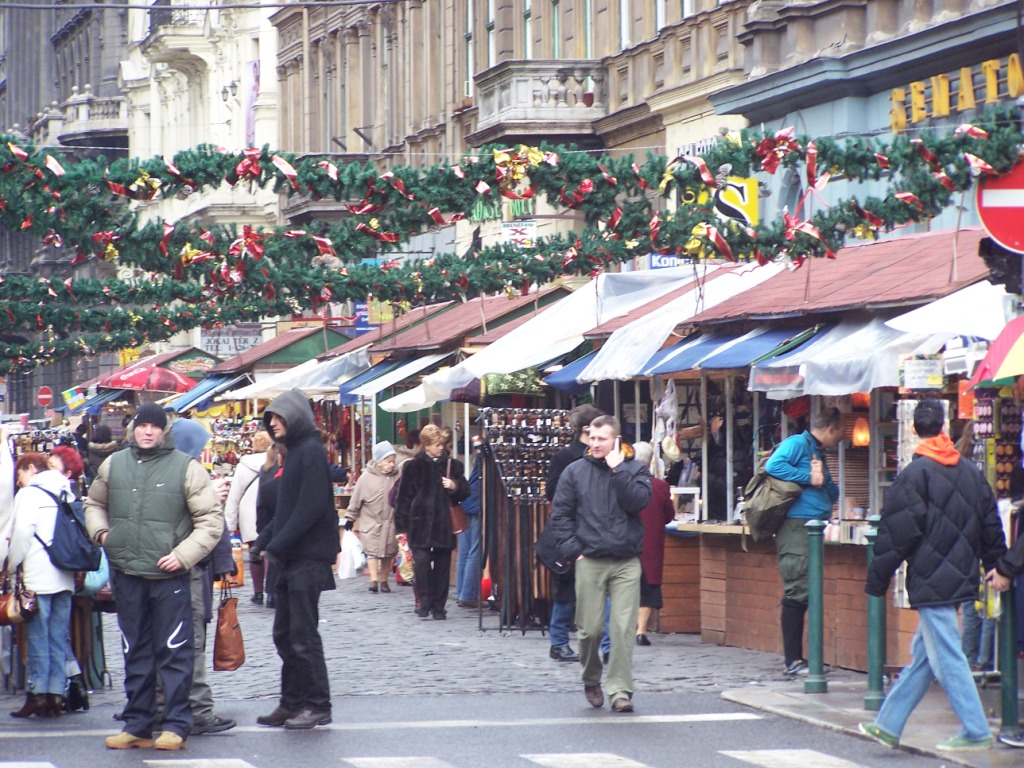
Winter markets
It wouldn’t be Budapest in winter without a shot of one of the markets. When it’s blustery and gray outside, the warm scent of roasting nuts or baked goods bring a smile to the face.
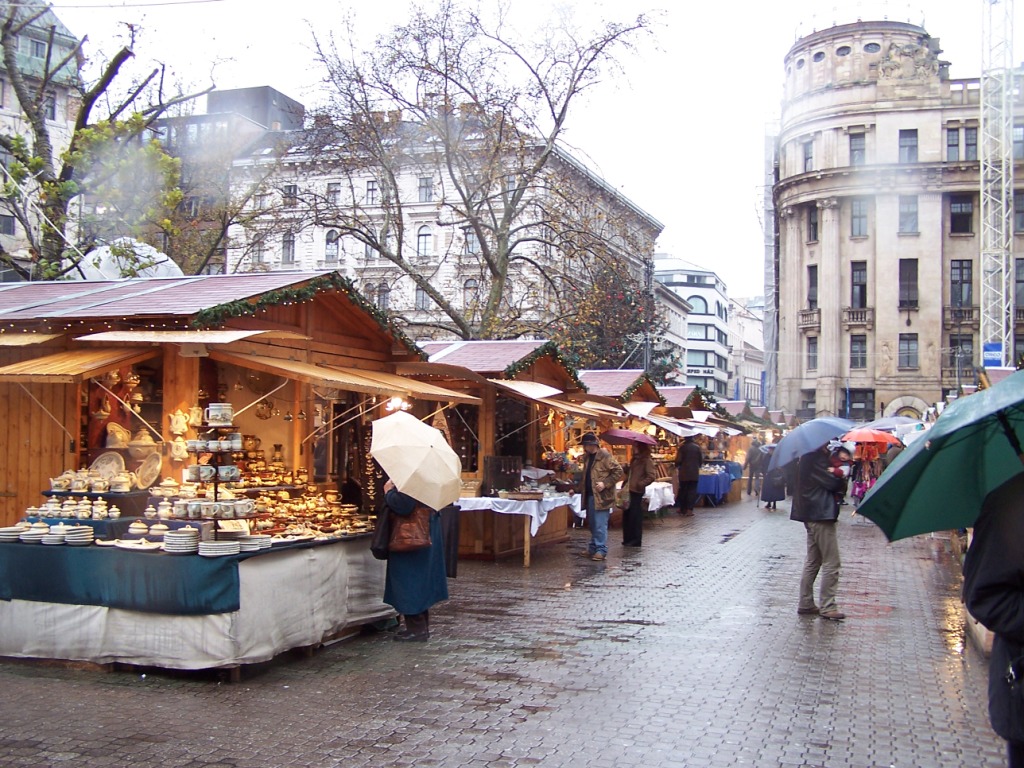
The big winter market at
Vörösmarty Square.


 Tiger Riding for Beginners