Robot Karateka Threat Underwhelming

Worried that Terminator-like robots may kick humanity out its pole position among sentient beings? You can sleep well tonight. A news report today suggests that the Karate Kid’s kicking dominance is not yet under threat by Robo-karateka.  In other words, Ralph Macchio can still out kick the state of the art karate robot. The Cobra Kai’s plans to achieve world dominance via a fleet of Karate androids have been thwarted for the time being.


How to Kill a “Cereal Killer” and Restore Halloween

cereal killerI know what you’re going to say. Why would I want to murder a cereal killer, a taco belle, a holy cow, a pig in a blanket, a deviled egg, or any of the other bearers of bad Halloween punnery? First, you want to kill someone.  You don’t have to admit it to me and I’d advise against admitting it to the District Attorney, but at least admit it to yourself. Second, if you kill the person you really want to kill (e.g. your boss, the tax man, your personal trainer, or your hairdresser—sorry, low blow) you’ll be the lead suspect. Therefore, you need to find a way to vent your homicidal rage into productive outlets, and I’d argue that the killing of punsters is community service. You shouldn’t even think of it as murder. It’s more like culling the Halloween herd. Forest fires kill, but the next year the forest is more lush and beautiful than ever before.


Now let’s get down to the real reason to conduct your own Halloween killing spree. Because it’s the perfect time for the perfect crime. Think about it.

  • Anonymity: Except for the lazy people who wear a T-shirt with “Halloween Costume” printed in unimaginative block letters, everybody is in makeup or has their head stuffed in some stinking mask that five people have thrown up in within the last three years. This makes it almost impossible to identify suspects. The lazy bastards would be eliminated immediately anyway because it takes commitment to be a homicidal maniac.
  • Relative Inconspicuousness: You won’t be the only one who’s apparently blood spattered. Besides Marti Gras and full moons, what other nights can one say that. There will be large numbers of people wielding weapons and looking creepy. What better time to blend in?
  • Distraction: If I might be granted a brief diatribe. Halloween used to be the holiday of terror, but no more. Valentine’s Day may be the holiday of romance (or florists), but Halloween is the holiday of sex. However, you can use this trend to your advantage. There’s a great deal of distraction to be garnered from the proliferation of sexy nurses, sexy waitresses, and sexy actuarials. When the girl whose costume is painted on rather than worn walks through the room to get a single potato chip, that’s a good time to jab the hypodermic into the neck of the nearest drunk pun and get the hell out of dodge.


So how will you choose your target? First, as indicated, it’s best to pick someone who’s inebriated because no one will realize they’re dead–and not just passed out–until they begin to stink. Don’t worry, finding a drunk won’t be hard. At a given Halloween party there will be four designated drivers for the 150 people in attendance—so 148 people will be completely hammered. [No, my math is not that bad. Two of those designated drivers are cheating bastards. If you kill a pun who’s a cheating designated driver you’ve hit the trifecta—OK, maybe my math is that bad. At any rate, you get bonus points. ]


Next comes the question of determining whether the costume is a pun or not. This can be harder than it seems. Sure there are the easy ones I mentioned above (and others like Kevin “Bacon” [Kevin nametag on a meat vest], “Bat” Man [w/ Louisville Slugger], Down for the Count [Dracula with a blowup doll orally affixed to his crotch region], Spice Girl, Dust Bunny, Formal Apology [tuxedo-clad man with “sorry” written on his tie], etc.) that will be immediately obvious.


However, what if one sees a guy in a Grim Reaper costume with a bag of pot. Perhaps this is just someone who likes to imbibe. However, if the pot is dayglow green, then you may have a “the grass is greener on the other side” who desperately needs killing. The key is that one must pay attention to the details. Sometimes the costume will be poorly done. Imagine a fine “Tom the Cat” costume with three misshaped spheres feebly stapled to the crotch region. This is a “horny as a three-balled tom cat” who must die.


On the other hand, you should avoid reading too much into costumes. Say you see a girl who looks like a stripper. You shouldn’t engage in some Rube Goldberg-esque thought process in which you conclude that she is saying, “All that glitters is not gold–because sometimes it’s a stripper.” Said woman may merely be costumed as a stripper, or might be a stripper who just got off stage and didn’t have time to go out looking for a costume.


When in doubt, if the costume doesn’t seem to make a lick of sense, it’s probably someone’s sense of clever gone awry and you shouldn’t feel bad about friendly fire against a non-pun.


Finally, some general rules of thumb (BTW: feel free to kill anyone dressed in a giant mitten with a page of the tax code taped to the thumb):

  • Only kill one pun per party. Being a killer of puns is like being a Marine Sniper—except that it’s completely illegal and involves no honor whatsoever—my point is that if you loiter in place you’ll get pinned down by the Vietcong. It doesn’t matter whether the party in question has the best pigs in a blanket (i.e. the hors doeuvres, not the cutesy couple costume), the best DJ, or the sluttiest witches, maids, librarians, or geologists in town. Don’t get greedy. Get in and get out—well, you can grab a handful of those delectable pigs in a blanket on the way out, but then get out of the house!
  • Never wear the same costume to more than one party. The police call that a clue. You have to be like Kathrine Heigl in that 27 Dresses  movie—which I never saw. Do the quick change like Clark Kent between parties. That brings me to an alternative killing scheme whereby you can kill anyone who’s dressed as a character from a romantic comedy.
  • Don’t consume a lot of legumes, high fiber foods, beer, or Taco Bell before your outing. Just because no one will see your face inside that barf-splotched mask doesn’t mean they won’t be able to smell you. Plus the zippers in costumes are unreliable, and you don’t want a case of Taco Trots to hamper your evening’s fun.
  • Don’t wear a costume that’s too menacing. You want to be able to point to someone who is nearby, completely innocent, and who looks like a killer and say, “she did it.” Also, don’t wear the “Identity Thief” costume in which one has name tags all over one’s outfit with different names. First, it plants the seed of criminality in the mind of those around you. Second, it’s a bad pun and may result in your being stabbed. Which brings me to the ultimate rule:
  • Don’t wear a pun costume yourself, it may result in your being stabbed. I’m not saying that I once stabbed a prostitute with a Seeing Eye dog who turned out to be just another good-hearted Halloween killer because “love is blind,” but…


I hope this guide to perpetrating a Halloween massacre has been helpful. I think we’d all like to bring the fear back to Halloween like all the Saints who partied down on All Saints’ Day Eve intended. So, whether you’re a first time killer or you’ve been around the block (another potential costume cliché to kill), a few simple steps will keep you out of the hands of the slutty cops—or regular cops.

BOOK REVIEW: Sorry I Ruined Your Orgy by Bradley Sands

Sorry I Ruined Your OrgySorry I Ruined Your Orgy by Bradley Sands

My rating: 3 of 5 stars

Amazon page

Contrary to the title, this isn’t an etiquette primer on how to make amends for a poor performance at a friend’s sexual soiree. It’s a collection of absurdist flash fiction that takes its name from a its introductory story in which a man shows up to an orgy wearing a bear costume and proceeds to behave badly.

Most of these stories are under a page long and few are longer than three pages. The stories don’t make sense, and are not intended to. (If they do make sense, the author has failed.) Instead, they are designed to subvert expectations to the maximum extent possible. Subverted expectations being the foundation of humor, there will be chuckles. However, it’s not just humor. It’s about defying one’s ability to judge what’s around the next corner by resisting any temptation to observe socio-cultural conventions about what could possibly and properly come next. Like spoken word acts, these stories are meant to invoke a response in the reader by surprises of language—often jarring surprises—more than by way of meaning.

If you are the type who doesn’t take words too seriously and take to absurdity like it’s a Zen koan, you might enjoy this brief work for the tickling it gives one’s mind. If you’re the type who takes words very seriously and are prone to get bent out of shape by “inappropriate” or loose word use, you will hate it and should avoid the trauma of reading it.

I’ll elaborate on my last statement. Irreverence, impiety, and a proclivity for the shocking are a few of the characteristics that go hand-in-hand with subverting expectations and conventions. Because of this, there’s a fair amount of profanity and jarring concepts included in the mix. I’ll offer one example of such a jarring concept that’s included in the book: “rape camp.” If you’re prone to be offended by the loose use of the word “rape,” then probably the only more reprehensible phrase than “rape camp” would be “rape fiesta” (though, to be fair, in the book a rape camp is more like a concentration camp than a summer camp.)

As a litmus test of how you’ll respond to this work, imagine opening a Hallmark card and reading the following sentence as contained in this book, “Sorry your grandma died! She molested me when I was eight.” If—despite realizing that it’s so wrong—you can’t help but grin, you’ll like this book. If your impulse is to write the author hate mail, you should avoid reading it.

It should be noted that the book is not all rape, molestation, and orgies. The book mostly consists of less prurient attempts to achieve the unexpected and/or shocking.

View all my reviews

TRAVEL TIP: Know Your Country’s Go-to Collision Avoidance Device

Bangalore

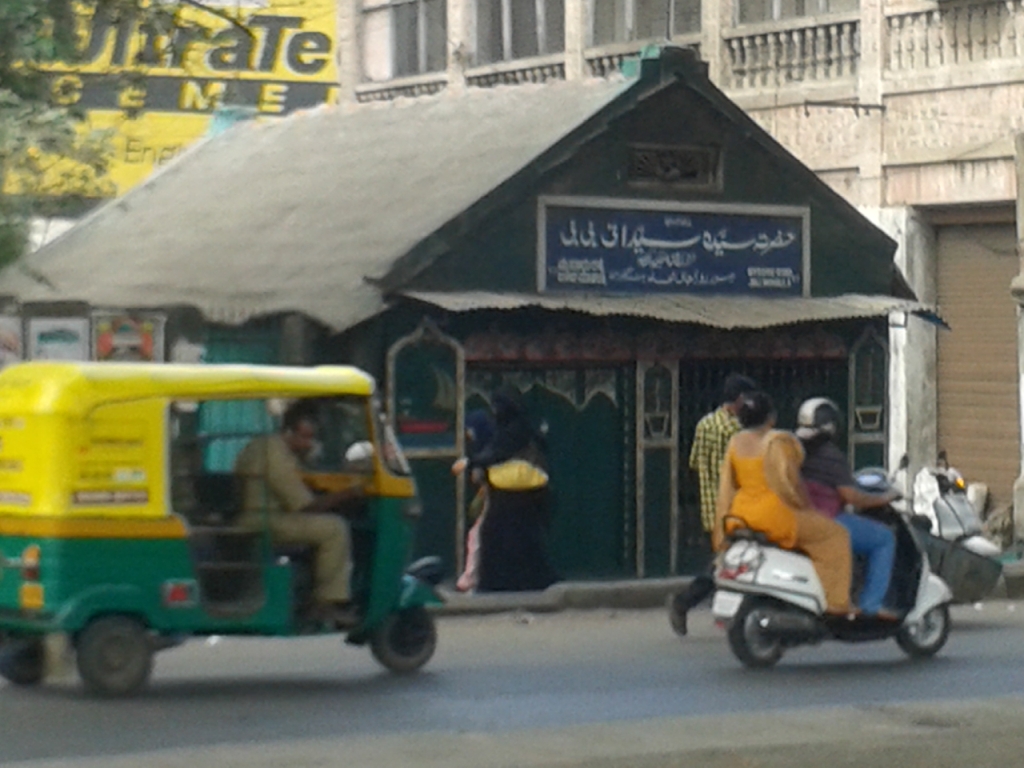
Bangalore traffic

It took me several months to master the art of crossing streets in India. Pedestrian crossing signals are as rare as gold crappers, and as useful as wings on a goat. There are many streets that one can’t cross in one fell swoop between the hours of 8am and 11pm. So, if you don’t want to spend the day trapped on your block like a jittery puppy, you need to plunge into traffic and take it one lane at a time.

Fearlessness. That’s the key–pure and simple. One will have crosstown buses whizzing past on either side. In the military, during Basic Training, we got inoculations via cattle vaccination-guns. It was an assembly line of shots. Take one step forward get a shot, one more step and get another shot. The clinic staff had a lot of recruits to inoculate that were standing between them and their morning coffee. The warning was, “Take one step and stand perfectly still.” Because as soon as you stopped, they would  “shu-shunk” that shot into your deltoid. If you wavered, the gun wouldn’t make a nice solitary puncture, but rather would gouge out a slit. Or so we were told. At any rate, the advice to a Bangalore pedestrian is the same, “Step onto the dashed line and remain perfectly still, because if you cringe, you’ll get a truck mirror up side the cranium and you’ll die.”

I traveled to Thailand this past month. I’ve been to Thailand on a couple previous occasions, but not with the implicit rules of Indian traffic ingrained in me. My first official act in Bangkok was to almost cause a multi-car pile up accident. Why? Because Thai people do this strange thing when a  pedestrian wanders into the street or an intersection in front of them, they apply the brakes. Now every Indian knows that the proper device to employ when someone crosses into traffic in front of one is the horn. As a matter of fact, the horn is the go-to Indian driving tool for almost every eventuality. It wouldn’t occur to most Indians to apply the brakes and certainly not to make a lane change for an encroaching pedestrian or other driver. If the pedestrian doesn’t get out of one’s way, you simply lean into the horn, putting all your body weight into it.

Now, it may sound like I’m giving Indian drivers a hard time. However, it occurred to me that either system works as long as everybody is on the same page. Those who’ve experienced roundabouts will tell you that they are at least as safe–and probably more so–than crossroad intersections. Even though roundabouts seem terrifying for novice drivers, they have a prevailing logic that is sound. By the same token,  it may be that the Indian approach is at least as safe. (It certainly makes a pedestrian more cautious.) The Thai approach, which is widespread though most of the world, is at once more polite but less trusting than the Indian approach.


BONUS TRAVEL TRAFFIC ADVICE: Anywhere in the developing world, always look both ways when crossing one-way streets. The prevailing view is that lane directives are optional for scooters and small motorcycles.


BOOK REVIEW: The Simpsons and Their Mathematical Secrets by Simon Singh

The Simpsons and Their Mathematical SecretsThe Simpsons and Their Mathematical Secrets by Simon Singh

My rating: 4 of 5 stars

Amazon page

It will come as no surprise that television comedy writers are disproportionately Ivy League educated individuals. What may come as a surprise is that a number of comedies—particularly animated series—have a large number of technically and mathematically educated individuals on their writing staffs. Mathematicians, computer scientists, engineers, and physicists regularly work in hidden humor that only a math geek could love—or get—into episodes of The Simpsons and Futurama. Singh’s book explores the subtle mathematical references and humor that swoosh over the heads of most viewers.

While the title doesn’t mention Futurama, it should be noted that there are four chapters devoted to that series. (This in contrast to the 14 chapters dedicated to the much older show, The Simpsons.)

Let’s assume that nerds can be categorized into three sets: nerds, super-nerds, and mega-nerds. This book takes as its core demographic the largest of these groups, run-of-the-mill nerds. How does one define these three apparently arbitrary designations? A mega-nerd would see the humor in the equation scrawled on a blackboard in the background as he (or she) watched an episode of The Simpsons. (All Hail, King of the Nerds!) A super-nerd wouldn’t get many of these jokes as he (or she) watched, but he would freeze-frame the scene, and would have enough mathematical skill to decipher the cryptic jokes. A regular nerd misses the joke altogether, but is interested enough to take the time to read an explanation of these obscure references. (These categories are contrasted with the typical TV viewer, who doesn’t get the joke, but is blissful in his ignorance.)

While much of the book is devoted to these series’ mathematical gags—which range from the elementary to the arcane—Singh offers interesting insight into the writing process on shows with a team that mixes traditional writers (English and Literature majors) with mathematical types. One of the most interesting behind-the-scenes questions is why mathematical writers work so well for the The Simpsons? Futurama, being a science fiction series–and thus aimed at the geek/nerd nexus, isn’t so much a surprise, but Homer and his family don’t have any motive to be particularly mathematical—with the possible exception of the occasional reference by brainy Lisa. The chapters are arranged by various mathematical themes, such as prime numbers, pi, statistics, topology, etc.

There are some ancillary sections that deserve mention. First, there are a series of “quizzes” that consist of jokes with the set ups written as the question and the punchline serving as the answer. These jokes get progressively more complicated—starting with crude elementary school jokes (e.g. “Why did 5 eat 6?”) and ranging to the truly obscure (e.g. “What’s big, grey, and proves the uncountability of the decimal numbers?” The answer, if you’re wondering, is “Cantor’s Diagonal Elephant.”) Second, there are five appendices that are used to go into more mathematical depth on some of the topics under discussion. This is written as a book for the masses, and so attempts are made to minimize and simplify equations. There are equations and graphic representations, but they’re kept at a relatively elementary level of mathematics.

I enjoyed reading this book and would recommend it for anyone who—like me–kind of likes mathematics, but finds it more palatable with a spoonful of sugar. In this case, the sugar is the discussion of the humorous scenes of these two comedies.

View all my reviews

TODAY’S RANDOM THOUGHT: Blind Dog

IMG_0606

This dog followed us around during our tea plantation walk in Munnar. It was a fine-looking dog with a warm disposition. It seemed quite healthy, except for the fact that it was missing its left eye.

This made me think. If you take in a blind dog, does that make you its seeing eye human?

TODAY’S RANDOM THOUGHT: Hitler’s Final Victory

Source: German Federal Archives

Source: German Federal Archives

Hitler killed the short-stache (a.k.a. the “toothbrush mustache.”) Imagine that, almost 70 years after his death, he still holds power over people’s decisions about facial hair.

This is a misplaced take-away lesson. It’s the unbridled narcissism, the icy hatred, and the irrational exuberance in the power of evil of Hitler that should be abandoned (yet, somehow, those intangibles still quietly exist.) It’s not the superficial aspects of Hitler that should be shunned, but the ones at the bastard’s core.

I’m not saying the toothbrush-stache was a good look. On the contrary–as one who has had a mustache his entire adult life and has worn a beard now for several years–I’m a little offended by the lack of commitment to one’s choice of facial hair that the toothbrush-stache represents. (Incidentally, I feel the same about the sole patch and mutton chops.) In my mind, one should go full-stache or go home to shave.

Still, there being no accounting for taste, I think those individuals who would otherwise find the short-stache appealing (i.e. you know, indecisive types who wear culottes and eat with sporks) should revive the toothbrush mustache as a big fuck-you to Hitler–don’t let tyrants boss you around from the grave.

Toothbrush mustache admirers of world, unite!  (No, I won’t be joining you.)

The Prostate Exam

Before moving to India, I got a stem to stern medical checkup. This included the dreaded  first prostate exam (emphasis on “prostate exam” not on “first” as I don’t suspect the process gets any more pleasant.) When my wife and I had both been on my work insurance, we had a HMO that said they didn’t do prostate exams for white males until they were 65 and older (or postmortem, if they died of prostate cancer, whichever came first.) That should’ve been a clue that they were a bunch of bean-counting quacks, but as I was less than eager to get said exam I took their word for it.


Anyhow, the area where I lived was fairly close to Emory University, and my new doctor’s office was even closer. (For those of you unfamiliar with Atlanta or Georgia–Emory has one of the preeminent medical schools in the Southeast and for some specialties the country) When I got my physical, after the preliminaries conducted by the nurse, I was next seen by what–for lack of a better term–I’ll call a junior doctor (ER went off the air too long ago for me to remember the proper terminology). This was a poised and professional young woman–I know not whether a medical student or recent graduate from Emory medical school.


She reviewed my medical history and did a few rudimentary “stick out your tongue and say ‘ahh'” kinds of things.   Then she told me that my doctor–a man I’d never met before–would be into look me over and write the prescriptions for the meds that I needed for coming to an area prone to malaria and other plagues.


She then asked, “If you’d prefer, your doctor can do your prostate exam. Otherwise, I’ll do it. Do you have a preference?”


I said, “Having never met the man, and at the risk of sounding sexist, I’m going to assume that you’ve got daintier hands. Ergo, you’ve got the job.”   To which she replied, “Yeeeah, me,” in the feeblest monotone voice, her tone suggesting that she might not be as thrilled by the prospect as her words would have indicated.


I had the exam. It was quick, painless, but–I’ll not lie–not without the inevitable awkwardness associated with one person having a hand–or part thereof–lodged in another person.


For those of you who know me, it goes without saying that my doctor turned out to be the most petite homuculus of a man. (You know what they say about what happens when you ASS-U-ME, U get the hand of  a bigger ME in your ASS.) However, you pays your money and you takes your choice. I wouldn’t have felt comfortable asking the doctor and intern to place their palms together to see who had bigger digits.

BOOK REVIEW: How to Lose Friends & Irritate People by Laszlo Wanky

Cover_How_to_Lose_Friends


How to Lose Friends and Irritate People by Laszlo Wanky

My Rating: 5 out of 5 Stars

Amazon Page


Wanky pays an homage to Dale Carnegie’s seminal self-help book by calling it, “a book for its time–that time being one in which people were lonely, pathetic, and didn’t understand social networking.” The author’s central premise is that we live in very different times, and today people are inundated by Facebook friends they neither like nor find interesting. Furthermore, Wanky goes on to argue, gone are the days when likable people are  liked. We live in an era in which douche-bags and drug-addled celebrities are gods among men. The book offers many headline examples, such as how Miley Cyrus’s career crashed as the sweet and admirable Hannah Montana, but then she caught her second wind by adopting the persona of a meth-addicted prostitute.


Roughly half of the book is dedicated to how to find success in defriending unwanted virtual amigos. Wanky suggests that the usual tactic of subtly “un-adding” people almost always fails because people are too “wussified” to make it stick. The only effective strategy, according to the author, is to trick others into removing you from their list of pseudo-friends. Be forewarned, however, being uninteresting and annoying is not enough–one must be spectacularly despicable. This is hard for most people–whom Wanky calls “the sychophantic masses”–because they slobber over being liked. Wanky devotes three chapters to helping people get over their love of being liked. The most cogent of these chapters is, “Kim Jong Un or Gandhi: Who Ya Wanna Party With?


The aforementioned chapters also help set up Part II of the book, which explains how one can put a skyrocket on one’s career by borrowing the techniques of the likes of Howard Stern, Rush Limbaugh, and Piers Morgan. Wanky shows how, like these individuals, one can be thoroughly unlikable while having people hang on your every word.  Again, three chapters form the core of this part of the book. They are: “Loud = True”, “Bombastic Fact Picking for Beginners”, and “Your Hairstyle Makes You Sound Stupid.”


I’m not going to pretend that Mr. Wanky’s language is fluid or graceful.  The author’s prose is colloquial… at best. A typical sentence–seen in chapter 8–is, “If ya wanna get with the boom-chiggy-booms, you gotta shout those fart-monkeys down, cause if they hear ’em they’ll all be like, ‘who’s the fart-monkey now, bitch, who’s the fart-monkey now?'”


The book’s strengths include its incredible brevity. Weighing in at only 26 pages, four chapters consist entirely of 27-syllable haiku. It also features fine graphics such as a picture of a “fart-monkey” that any grandmother would be proud to stick on their refrigerator. (The color choices were bit odd, but Wanky was clearly limited to the 16-color box of Crayolas.)


I’d recommend this book for anyone who doesn’t like friends and who really despises people’s indifference toward them. I have no doubt that by following Mr. Wanky’s recommendations, one can become a thoroughly loathsome individual in a matter of days.


Lastly, Happy April Fool’s Day.


Two Things To Keep On You In India

20140316_160803If you though I was going to say “Passport and FRRO Registration”– WRONG! First of all, that would make the most boring blog post ever–not a distinction for which I have aimed (but I wouldn’t turn down the award for it, if it comes with a cash prize.) Second, I’d keep those items some place safe–like a hollowed out Ganesh (but that’s not where I keep mine, so don’t get any ideas.)

1.) Tiny pictures of yourself: After about the ninth time I went someplace random and was matter-of-factly asked for a “passport size” print or a “stamp-size” print, I asked whether it was common for Indians to carry a bunch of photos of themselves around on their person–because there seemed to be such a presumption that I would have a stack of selfies on hand at any random moment.  The answer was “Yes, yes we do keep photos on hand.” Not only is it common to carry a small pack of passport pics–some keep a stock in various sizes. Long story-short, a lot of places will want a photo besides government offices–more than you might expect.

Americans just take a billion pictures of themselves and post them to Facebook, and would be self-conscious about the apparent narcissism of carrying around physical pictures of oneself. The only Americans who carry physical pictures of anybody are grandmothers who haven’t figured out how to use their phones (admittedly, a large but shrinking demographic) and they carry pics of munchkins–not themselves.

2.) Change: That’s “change” as in coins and small bills–I’m not getting abstract on you. India has a crisis of change–still not being abstract. I’m not just talking about the auto-rickshaw driver who negotiates a fare that is merely twice the metered rate, and then when you get to your destination they inform you that they have no change for a 100 rupee note (and because only someone who values “the principal of the matter”  at more than 30 cents will argue, you end up paying too much.) I’ve gotten the evil eye at such places as restaurants, stores, and even the Metro counter (who should have coins in stock if not the metro counter?) In India, there isn’t a strong expectation that the business will be the one who makes change in a commercial transation–like it is in …well, every other place in the world that I’ve visited.

I’m not sure if this change crisis is created by an inability of the Central Bank to calculate how much small currency to release into the economy, or whether the vast number of beggars are bogarting all the coin.

At any rate, if you are a nice guy and always make change for every business you deal with, you will inevitably end up in a situation in which you desperately need a pay toilet and the smallest money you have on you is a 1000 rupee note.  As paying 1000 rupee to visit the most disgusting place on Earth (a third-world public toilet) is demoralizing, I suggest you horde change like everybody else.