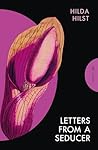
BOOKS: “Letters from a Seducer” by Hilda Hilst

Letters from a SeducerLetters from a Seducer by Hilda Hilst
My rating: 5 of 5 stars

Publisher Site – Pushkin Press Classics

Release Date: May 27, 2025

This is an upcoming English translation of a 1991 novella from Brazilian author, Hilda Hilst, from what has been called her “obscene cycle.” It is mostly an epistolary novella in which a man, Karl, writes his sister, Cordelia, informing her about his recent sexual adventures and attempting to coax a confession out of her about her own activities long in the past. We never see any replies from Cordelia. (And that is part of what makes the book fascinating.) The only indication of her responses that we get are Karl’s references to Cordelia’s comments from her last letter in his present letter. However, we can’t necessarily be certain that even those occasional suggestions of dialog represent the truth.

To understand why one might have doubt, one must be aware of what else is going on in this book. There is one other narrative voice, and that is of Stamatius. Stamatius is in socio-economic terms the opposite of Karl. Karl being of the gentlemanly class — his behavior and letters to his sister notwithstanding — and Stamatius is a starving artist (a writer, to be precise.) The two men speak of each other, though always in deprecating terms. However, there’s reason to think the two men might be one. Stamatius, while condemning Karl’s sex obsession, also mostly engages in tales of his own sexual adventures as well as presenting those of others. In fact, the end of this novella is a collection of short vignettes of the nature one might see in a smutty letter magazine, only better (and sometimes poetically) written.

By the author’s own description, this novella is intentionally pornographic. While the same thing is said of Hilst’s The Obscene Madame D I did not find that book particularly graphic or sex-centric. This book, however, is quite graphic and if one took away references to sexual activities
nothing of substance would remain. (Not true of The Obscene Madame D.)

I found this book to be intriguing, despite the fact that it is quite sloppily arranged (presumably on purpose,) but it does present some splendid use of language (at least in this translation — the original is in Brazilian Portuguese) and character psychology.

I’d recommend this book for readers of literary fiction who don’t mind plotlessness and pornographicness.

View all my reviews

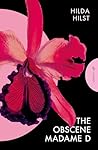
BOOKS: “The Obscene Madame D” by Hilda Hilst

The Obscene Madame DThe Obscene Madame D by Hilda Hilst
My rating: 4 of 5 stars

Publisher Site – Pushkin Classics

Release Date: May 27, 2025

This strange novella features a lot of stream-of-consciousness exchanges between the lead and her common-law spouse / lover. Hille, the protagonist, is a woman who’s decided to withdraw from her normal life and live a celibate, hermetic existence in a recess under the stairs of the home she shares with Ehud (her lover / long-time partner.)

It is a thought-provoking and philosophical work and will be most of interest to readers who like such books. On the other hand, it isn’t likely to have much appeal for readers of commercial fiction. It’s not story-driven and isn’t even deeply character-driven. [Except in the sense of showing thought processes that encourage the reader to drill down into the character’s psyche.] This book has been placed in the genre of (and titled as) erotica (or even pornography,) but I would say that it is much less accurately defined as such than other works of that category, including Hilst’s “Letters from a Seducer.” This isn’t to say the book doesn’t use graphic language or mention past sexual activity, but it’s not erotic at the core. It’s not shy about sex or “vulgar language” by any means, but it is a book about a woman who has given up sex along with other activities of ordinary life.

Ultimately, I’d recommend this book for readers of psychological and philosophical literary fiction. It is not intensely readable as a story and is not intensely erotic as erotica, but it does keep a curious person wondering about the motives and future of Hille.

View all my reviews

BOOKS: “Gothic Tales” by Marquis de Sade [Trans. by Margaret Crossland]

Gothic TalesGothic Tales by Marquis de Sade
My rating: 5 of 5 stars

Amazon.in Page

Release Date: September 3, 2024

This collection of short fiction is an excellent entry point for the reader wishing to be introduced to the philosophy and literary stylings of the Marquis de Sade. It is less visceral and explicitly violent than the works for which Sade is most famous (i.e. Justine, 120 Days of Sodom, and Philosophy in the Boudoir.) While it does deal in libidinal issues throughout and has a few stories that are explicitly erotica (notably the last couple pieces,) it never ventures up to or over whatever thin line separates erotica from pornography.

While all the pieces share Sade’s signature philosophy and interests, it is in other ways a quite diverse collection of writings. The first piece, “Eugenie De Franval,” is a novella that takes up about half the book, and it is followed by a piece that, in today’s parlance, might be called flash fiction, “The Horse-Chestnut Flower.” Pieces such as “Eugenie De Franval” and “Florville and Courval” are tragedies while the comedies include: “Emilie De Tourville,”[granted with grim elements] “The Husband Who Played Priest,” “Room for Two,” and “The Self-Made Cuckold.” Those last three – as well as “The Horse-Chestnut Flower”– are comedic in a modern sense, not just the literary sense.

I can’t say how much of the difference in tone and intensity of these pieces from Sade’s other stories is owed to the selected source material and how much is owed to translation and editorial decisions, but it makes for a read that is more intriguing in story and less shocking and disturbing than many other translations of Sade’s work.

I enjoyed these stories. They had many clever twists and turns that I don’t recall experiencing in Sade’s novels. Several stories rely on a great deal of deus ex machina coincidences, but I think that works just fine — particularly in the more humorous stories. I’d highly recommend this for readers looking to ease into the work of the Marquis de Sade.

View all my reviews

BOOK REVIEW: The Rope Artist by Fuminori Nakamura

The Rope ArtistThe Rope Artist by Fuminori Nakamura
My rating: 5 of 5 stars

Amazon.in Page

Release Date: May 2, 2023

This is a hard-boiled detective novel centered around the mysterious death of a kinbaku artist, kinbaku is a Japanese art of tying up a person with rope, the practice sprung from the need to bind prisoners of war and criminals, but it came to be associated with the BDSM (Bondage, Domination / Submission, & Sado-Masochism) activities of kinky sex. The death of the rope artist, Kazunari Yoshikawa, is but the first of a few fatalities that are somehow connected, though the reader only learns how by following the story through to the end. There are several novel elements of the story that grab the reader’s attention, including: sex worker doppelgangers and a man with a missing finger and no known name.

I was engrossed by this novel. It captured my attention from the beginning. The psychology on display in the story is at once fascinating and bizarre. The story is told via three perspectives. The first is a junior detective, Togashi, who is a bit libido-driven and prone to ill-considered decisions. As a main character, one anticipates some of Togashi’s decisions because one knows what drives him, he’s a sucker for a pretty woman, but what the reader doesn’t know is when and how it will blow up in his face. The other main perspective is that of another detective, Hayama, who is the antithesis of Togashi. Hayama is immune to libidinous temptations and is solid as a rock where Togashi is nervous and neurotic. (The third perspective is Yoshikawa’s epistolary confession [no one has completely clean hands in this book.])

If you like crime fiction that’s a bit edgy, you may want to look into this book. That said, a warning for sensitive readers, it is sexually explicit and, while it’s not so sex-centered as to be primarily classified erotica, sex of various types occurs throughout the book.


View all my reviews

BOOK REVIEW: Philosophy in the Bedroom by Marquis de Sade

Philosophy in the BoudoirPhilosophy in the Boudoir by Marquis de Sade
My rating: 4 of 5 stars

Amazon.in Page

This seven-part dialogue tells the story of a young woman’s education in libertinage (“libertine” shouldn’t be confused with liberal or libertarian.) The book mixes action sequences of a pornographic nature with philosophical discussions on ethics, law, governance, relationships, and religion. A young woman, Eugenie, is sent (without objection) by her father into the care of Madame de Saint-Ange, though another character, Dolmance, serves as both the girl’s primary philosophy lecturer as well as the choreographer of the orgiastic sexual activities that take place throughout book.

Overall, the philosophy is weak, but not altogether lacking compelling ideas, at least in the context of its time – i.e. late Age of Enlightenment. Setting aside the controversial and broadly reviled nature of Sade’s philosophy, I criticize it primarily on the grounds that it misunderstands its own foundations and frequently contradicts itself. The foundations I’m referring to are the workings of the natural world. Libertine philosophy is an offshoot of Enlightenment thinking, and as such attempts to replace the superstition and the arbitrary morals of religion. The question becomes with what one replaces religion-driven bases for determining action. Sade’s argument is that we should see ourselves as part of nature and behave in synch with it. It could be argued that using natural principles as one’s guide is as fine an idea as any, but the problem is Sade doesn’t have an accurate picture of how nature really works. Ironically, he seems to have the same unsophisticated view of nature that his opponents held – i.e. that nature is always and everywhere a brutal and chaotic hellscape. [The main difference is that Sade assumed that one must surrender to this hellscape while his opponents proposed that one must subdue it.] The fact of the matter is promiscuity and intraspecies killing aren’t universal in nature, and cooperation does exist alongside competition in the natural world. (To be clear, interspecies killing is universal for many species and intraspecies killing occurs, but consider venomous snakes of a given species that wrestle for dominance while not using their poison or infantrymen who only pretend to shoot their weapons in combat. Also, I don’t mean to suggest monogamy is the rule [besides in birds, where it is,] but Sade seems to believe there is no order to mating in the natural world.) In sum, nature does not tell us to default to the most savage behavior in all situations, and while animals can be ferocious, they generally don’t go around being jerks for the sake of being a jerk.

Since I also criticized the book’s philosophy for inconsistency, I will give one example to demonstrate a more widespread problem. Dolmance tells us that humans should live checked only as nature would check us (as opposed to by religious dictates,) but tells Eugenie to not listen to the voice of nature that tells her to not behave fiendishly.

I also said this philosophy wasn’t without compelling points. Setting aside the many ideas that were well-addressed by more mainstream philosophers long before Sade entered the picture (e.g. the need to separate the activities of religion from those of government,) Sade’s arguments for seeing a purpose for sexual activity beyond procreation, against seeing the making of more humans as a grand and necessary virtue, and against attaching stigmas to nonprocreative sex are all ideas that have gained traction since the turn of the 19th century and arguably could be furthered to positive ends.

Speaking briefly to the non-philosophical side of the book, I will say that – excepting Dialogue VII (the final one) – this book was much less disturbing than some other of the Marquis’s books (e.g. 120 Days of Sodom or Justine,) Prior to the last section, the book involves consensual activities that aren’t dialed up to the maximum level of shock value. That said, Dialogue VII is as cringeworthy as they come. Also, I didn’t understand how all the orgy choreography could work, but that might be attributable to my lack of imagination.

This book will obviously not be everyone’s cup of tea (too much orgy sex for some, too much philosophy for others, and to much of both for most) but as the Marquis de Sade’s books go, it does delve most deeply into philosophy and is moderately less disturbing than some others.


View all my reviews

BOOK REVIEW: Fine Print, Vol. 1 by Stjepan Šejić

Fine Print, Volume 1Fine Print, Volume 1 by Stjepan Šejić
My rating: 4 of 5 stars

Amazon.in Page

Out: November 30, 2021

This erotic graphic novel intertwines a “real world” star-crossed love story with a storyline set in a fantastical realm that mixes Greek Mythology, the lore of incubi and succubi, and elements from the author’s imagination. The central premise is a Faustian bargain, but with some twists.

The artwork is beautifully done, colorful, and in some cases quite explicit. Readers who are a bit prudish or who are considering buying this for someone as a gift should beware that there are many graphically explicit scenes of nudity and a wide variety of sex acts.

It’s best read in a single sitting because the non-linear depiction of events combined with the crossing between two different story worlds can result in the read being a bit disjointed / confusing.

I found this story to be engrossing and evocative with likable characters.


View all my reviews

BOOK REVIEW: Mademoiselle Baudelaire by Yslaire

Mademoiselle BaudelaireMademoiselle Baudelaire by Yslaire
My rating: 4 of 5 stars

Amazon.in Page

This graphic novel mixes fact and fiction to tell the tale of the romance between French poet, Charles Baudelaire, and Jeanne Duval, the Haitian mulatto woman with whom he maintained a long-term relationship. The fictional portion of the story is necessitated by the fact that some of the couple’s story is unknown. Much more is known about Baudelaire than Duval, and in terms of what is on record, accounts differ. The relationship was passionate and complex, but it’s hard to say how loving it was. Baudelaire is depicted as fetishizing Duval’s dark skin, and Duval seems like a gold-digger at times.


The bulk of the story is told in an epistolary fashion as a letter from Duval to Baudelaire’s mother after the poet’s death. While the epistolary form seems apropos for creating a tone for historical fiction set during the 19th century when that form was all the rage, it was the source of my only problem with the book. That problem is that some of what’s communicated strains credulity. First, the work is erotic in nature, and it seems unlikely that even the most libertine of women would feel the need to share with a mother what they did with her son. It just feels awkward. Second, there is a fair amount of “as you know, Bob” exposition in the letter. [“As you know, Bob” being shorthand for telling a character something that they would know at least as well as the teller knows, and – in some cases – more so.] This is most clearly seen when the letter talks about a time when Baudelaire was living with his mother, such that it’s not clear how Duval knows this information, but it’s non-sensical for her to act as though the mother wouldn’t know.


Other than that, my view of the book was entirely positive. I found the art was effective and captured the spirit of the time well. There’s large amounts of nudity and graphic sexuality, so if that’s troubling for you, it’s not your kind of book. The prose is just purple enough to lend authenticity to the 19th century epistolary format, but quite readable.


I found the book fascinating and I read it straight through. If you’re interested in the Bohemian life of a womanizing poet / laudanum addict, you’ll definitely find this book compelling.


View all my reviews

BOOK REVIEW: Money Shot, Vol. 1 by Tim Seeley and Sarah Beattie

Money Shot, Vol. 1Money Shot, Vol. 1 by Tim Seeley
My rating: 5 of 5 stars

Amazon.in page


This graphic novel weds a serious look at a serious problem with a raunchy romp into extraterrestrial porn. [Warning: If the latter part of that statement didn’t clue you in, this book is sexually graphic both pictorially and in terms of dialogue. While I don’t think there is anything in it that your average adult can’t handle, I wouldn’t recommend it for the puritanically-inclined or as a gift for one’s eight-year-old nephew – i.e. “because it’s a comic book.”]

At the center of the story is Dr. Christine Ocampos, the inventor of a Star Gate-like faster than light travel portal, a brilliant technology that is far too expensive to operate to get grant funding, money she needs to finance a multi-disciplinary team of researchers. The title, “Money Shot,” is used in two senses in the book. First, the portal was marketed as “Star Shot,” but because it is so expensive to run, it earned its “money shot” nickname, implying it was a good way to shoot a mass of cash into the dark void of space. The second sense of the word is as it’s used in the porn industry, the highly-visible climactic moment of a sex scene.

Ocampos, tired of spending her life writing enormous grant proposals that ultimately get rejected on the grounds of cost, stumbles upon an idea for an alternative approach while “decompressing” with pornography. The harried lab director realizes that people seem to be disproportionately interested in outlandish fetish porn, presumably because they are bored with the usual “meat-and-potato” varieties of sexual activity. Ocampos concludes that there can’t be anything wilder and more outlandish to catch the attention of the porn-viewing world than sex with extraterrestrials. She pitches her plan to the other four members of her research team, and –fortunately for her – they are all photogenic / attractive and surprisingly sexually liberated. [Meaning it’s not particularly difficult to convince them all to participate.]

I won’t go into the story in great detail, except in as much as to say there is one and it’s entertaining. The story uses a common science fiction idea of being drawn into the center of a dysfunctional alien society’s troubles. The five scientists / porn stars find themselves on an environmentally-depleted planet run by an authoritarian warlord who uses the ‘bread and circuses’ approach to keeping the population in check, thus resulting in gladiatorial battles and a groundswell of revolutionary sentiment.

While the book takes a light tone, it does convey a couple serious messages in the process. The most obvious of these messages is that science is expensive and, perhaps, the mainstream funding approach (applying to large government-run grant agencies) curtails some good science. A secondary message is that less sexual repression and shame could be a good thing for the world, overall.

The art is well-drawn and clear. The scenes are depicted in a clean and easy to follow fashion. Color palette changes are used to make it easy to follow between flashback and the present moment. While I made a comment about the team all being attractive, I suspect there was a conscious effort to include a range of body types – within some bounds at least. While Ocampos is the perfectly-proportioned Disney princess-type — on the whole, the team displays a mix of size and shape.

While this is unquestionably a bizarre premise for a comic book, I found it to be readable and compelling. If you like sci-fi comics, and aren’t put off by graphic sexuality, you’ll probably enjoy this book.

View all my reviews

BOOK REVIEW: Kink ed. by R.O. Kwon & Garth Greenwell

Kink: StoriesKink: Stories by R.O. Kwon
My rating: 4 of 5 stars

Amazon.in page

Out: February 9, 2021


This is a collection of fourteen erotic short stories with a common theme of asymmetric power dynamics. [That’s an excessively syllabic way of saying Dominant / submissive, top / bottom, or Sadist / masochist relationships.] As is common with anthologies, a meaningful overall rating isn’t really possible. I found a couple of the included stories to be highly evocative or engaging, many were good, while others were just okay – plagued by the usual suspects that impair erotica such as characters without depth / intrigue or thin story. That said, none of the stories were poorly written.

To be fair, a broadly appealing erotica collection is a tall order. For one thing, erotica is the most idiosyncratic of genres. Like Horror, if it’s too tame for one’s tastes, it’s boring; if it’s too wild, it grosses one out — or otherwise become unreadable. [I suspect few (if any) readers will have the latter problem with this collection; some might have the former. (That is, given the likely readership demographic.) If you are picking up a book on kinky erotica, you are unlikely to be triggered or otherwise shocked or offended by anything contained herein.] In addition to the varied levels of intensity readers look for in erotica, there is the question of whether varied sexual orientations and identities are of interest to a given reader. This book covers a lot of ground in this regard, including heterosexual, homosexual, bisexual, and transgender characters.

Because the anthology is so qualitatively and topically varied, I’ll say a little about each story.

1.) “The Cure” by Melissa Febos: I found this to be a strange choice for the collection and – particularly – for opening the collection. It’s about a lesbian who decides to have sex with straight men because she’s having trouble in her customary dating pool, but since she likes sex, she decides to pursue it in the form least laden with complication. So far, it could be fine, but it devolves into a laundry list of what she finds disgusting about intimacy with men. Now, one would expect a lesbian to find having sex with a man unappealing; just as anyone might when having sex outside their preferred orientation. However, it does raise the question: Why am I supposed to enjoy reading about this in a book of erotica? I think it’s fair to say that reading about people enjoying having sex is more erotic than hearing about people who aren’t enjoying their experience.

2.) “Best Friendster Date Ever” by Alexander Chee: This is a story about a hookup between two gay men who meet via a dating site, and who find themselves in a mutually appealing top / bottom sexual experience. While it’s not a story with a great deal of depth, it would have made a better opening because at least if features two people who are having intercourse because they like having sex with each other [as opposed to because there’s nothing on Netflix and each is the best the other can do on short notice.]

3.) “Trust” by Larissa Pham: As the name suggests, this story revolves around the issue of trust and the challenges that subject presents in a relationship of dominance and submission. When the couple goes on a getaway, the story mirrors the experience of trust-building in sexual encounters with the non-sexual circumstance of the male (dominant) driving off for the day without telling the female (submissive) that he’s leaving — or when / if he’ll be back. There’s some interesting insight into submissive psychology to be seen in this story.

4.) “Safeword” by R.O. Kwon: In this story, we see an issue that was touched upon in the previous on (and which later recurs,) which is what happens when one member of an intimate relationship is more into the kinky aspect than is the other. In this case, it’s a sadomasochistic relationship in which the female masochist is more desirous of the sadomasochistic aspect of the relation than is her male partner. The couple goes to a dominatrix so that the masochist can get what she desires and the man can learn to better pleasure [i.e. pain-ify?] his partner.

5.) “Canada” by Callum Angus: This atmospheric piece describes a girl’s relationship with a female to male transgender. It’s one of the shorter pieces, and – as the title suggests – it plays heavily on the setting, Canada, to create ambiance.

6.) “Oh, Youth” by Brandon Taylor: The story centers on an attractive young man named Grisha, and the appeal he has for some middle-aged people – particularly the infatuation that develops between the husband in a married couple that he is staying with temporarily during a college break.

7.) “Impact Play” by Peter Mountford: A recently divorced man enters into a serious relationship with the woman he was having an affair with when his marriage ended. He and this woman share an interest in kink and fetish sexuality that his previous wife apparently did not. We don’t learn much about his ex-wife, but we do learn quite a bit about his cousin, Betsy, whom he treats as a confidant and with whom he has a special relationship.

8.) “Mirror, Mirror” by Vanessa Clark: Diary entry of a well-endowed transgender escort. The story explores the fetishized nature of the main character’s occupation.

9.) “Reach” by Roxane Gay: A man and wife enjoy the former tormenting the latter with a steady stream of indignities as a fetish in their romantic life. It’s one of the more sensual pieces of writing in the anthology.

10.) “Gospodar” by Garth Greenwell: I would rate this as one of the two strongest entries in terms of story. It’s not the typical erotica in which the character comes out the other side of the story completely unchanged except for being momentarily spent. A submissive gay man meets up with a dominant in Romania that he learned about through the internet. The interaction starts off swimmingly, but it takes a hard turn south. The story is quite visceral, but provokes thought on the nature of consent where power dynamics are in play.

11.) “Scissors” by Kim Fu: This story is set amid a stage show in which sharp objects are used to undress a performer in motion. Attendees aren’t just after the prurient appeal of the striptease, but the vicarious visceral fear.

12.) “The Lost Performance of the High Priestess of the Temple of Horror” by Carman Maria Machado: This story has some superficial commonalities with the previous one – i.e. it largely takes place in a theater in which frightening shows are put on that feature a damsel-esque central character. However, it’s also quite distinct from the previous story. It’s the longest story and is the other entry that I consider strongest in terms of narrative qualities. The central character is a young girl [called “Bess” though that isn’t her real name] who becomes the protégé of the main character of the aforementioned horror show. The story is all about the changing nature of their relationship as the protégé grows from girl to woman.

13.) “Retouch / Switch” by Cara Hoffman: This ethereal piece is about fluctuation in sexuality and identity. It’s one of the shorter pieces, and features a dreamlike quality.

14.) “Emotional Technologies” by Chris Kraus: This piece frames the dominant / submissive relationship in artistic and philosophical terms. It’s erudite and among the most thought-provoking pieces in the collection. In particular, it discusses the role of an acting “technology” (most people would call it a “method”) that uses somewhat cruel and savage tactics to achieve the desired outcome. Because I’m a nerd who likes thinking about things that are “out there,” I really enjoyed this story. Others may find that the erotic adventure is undone by the philosophizing.

If you’re intrigued by what you’ve read so far, you should definitely give this one a read. While it won’t be everyone’s cup of tea, it’s well-written and has broad appeal. It takes chances in some ways, but stays inside the lines of most readers.

View all my reviews

BOOK REVIEW: The Inferno [a.k.a. Hell] by Henri Barbusse

The InfernoThe Inferno by Henri Barbusse
My rating: 5 of 5 stars

Amazon.in page


This is a translation of the French novel, L’Enfer, which is alternatively entitled Hell or The Inferno in various English language editions. It’s a short work with a simple premise, but is nevertheless psychologically and philosophically intriguing. An unnamed narrator, lodging at a rooming house, discovers that he can see and hear into an adjacent room. The book describes what this man witnesses, as well as doing some philosophizing about what he sees and the conversations he hears.

While the events of the book are voyeuristic and said voyeur does witness various sexual dalliances, it’s not a graphic – and certainly not a pornographic – work. The author is as much interested in the pillow talk as he is in the acts of intimacy, which it’s not clear how well he can see anyways.

It should also be pointed out that not all of what the narrator witnesses is carnal in nature. It could be argued that the most fascinating scenes involve an old man who is dying. In addition to the non-erotic intimacy of dying, itself, there’s a scene in which a priest comes to offer the dying man last rites. At first the old man is agreeable enough to this, but as the priest’s dogmatism and accusatory tone becomes oppressive, the man has enough and tries to send the priest away. The scene turns expectation on its head as the priest is so fearful for the man that he ultimately tries to just get the man to say the bare minimum needed to ensure his salvation. But, by that time the man — who doesn’t seem fearful at all – is no longer interested.

Another intriguing scene sits toward the end of the book. It’s one in which the story goes meta- on itself. The narrator, this time dining at a restaurant, witnesses a well-known writer who is sitting at a nearby table tell his guests about his new writing project. What he describes is the same as the book one has just read (in subject but not in tone) – i.e. it involves a boarder who is a voyeur, peeking in on an adjacent room. The difference is that the fictitious author wants to make it all humorous. This offends the narrator’s sensibilities. The narrator presumably wishes such a book to be more like the one that one is almost finish reading – deeper and more philosophical.

I found this book to be thought-provoking and evocative. It puts the reader into the voyeur’s seat and shows one people’s behavior when they think they are alone, they think they are only with a loved one, or they are engaged in intimate activities with someone with whom they don’t have a truly intimate relationship. It makes one think about how well one really reads the people one comes in contact with.

If you are interested in the psychology of intimacy and solitary behavior, this book raises some interesting considerations. I’d highly recommend it for individuals not too weirded out by the book’s voyeuristic aspect.

View all my reviews