The surprises. Who knows what the future might bring? Utopia. Dystopia. Technological breakthroughs might save us, or kill us all. Or maybe there’ll be no technological breakthroughs as we descend into a Luddite-driven dark age. Whatever happens, we’ll never see it coming. SURPRISE!
I don’t like music by its genre, much to the chagrin of the streaming service that would like to make recommendations but is stumped by the mix of folk, symphonic, rock, instrumental, jazz, international, country, heavy metal and easy listening music that I bounce through.
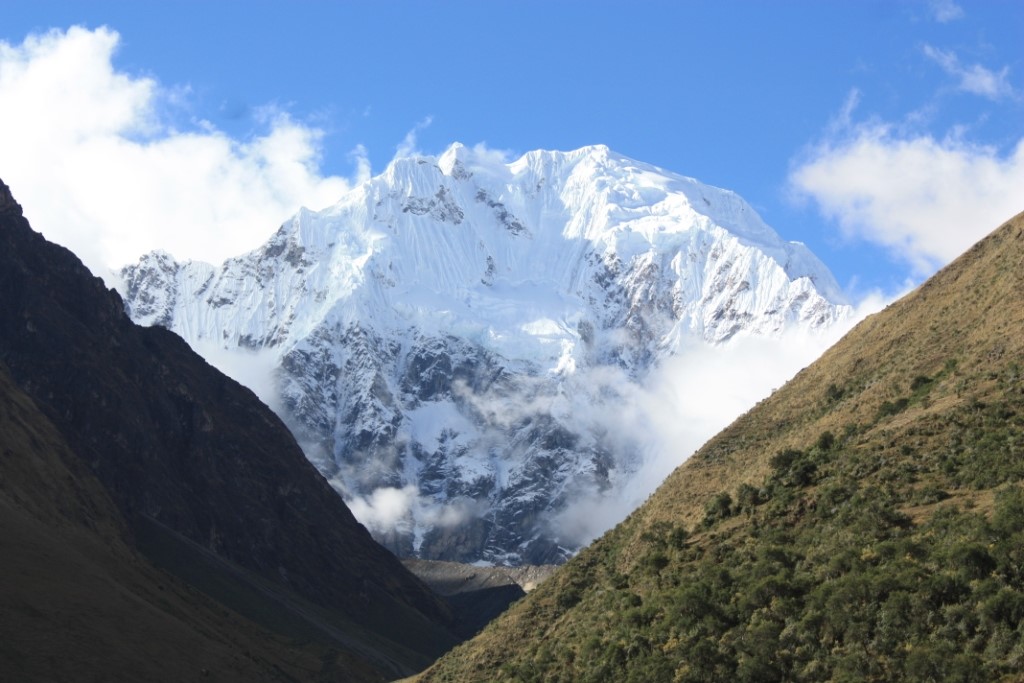
That’s a tough one, but I have to go with a trip to the Peruvian Andes about twelve-ish years ago. As a person from Northwest Indiana (where anthills appear on topographic maps,) it was my first time in the Very High Altitude range. We hiked through the Salkantay Pass (15,000+ft / 4500+m) on the second day of a trek with me vomiting (water, as my stomach was long devoid of other contents) every couple switch-backs. I’m told I was literally green, but can’t confirm for lack of mirrors. But I trudged through, one glacial step at a time.
At the end of our trip, we were in Arequipa and needed to get back to Cuzco for our flight out. After buying bus tickets, we discovered that the road from Arequipa to Cuzco would be shut down by a transportation strike, and that everyone was honoring the strike as they sometimes turned violent. After a day of frustration, we surrendered to the situation, traded in our Arequipa-Cuzco tickets for Arequipa-Lima tickets, and we got into Lima (where we had a layover) early enough to arrange to join the flight there.
The reason this stands out as such a wonderful trip (besides all the beautiful sights: Titicaca, Machu Picchu, the Andes, all the Incan ruins and old Spanish churches; not to mention the delicious food) is the powerful life lessons it taught me. First, I’ve never felt closer to death than crossing through Salkantay Pass, and yet one step at a time got me through. Second, I learned not to butt heads with changing circumstance, but rather flow over, around, or under. Lastly, trips where things go wrong produce the dividend of great stories. Nobody cares about your trip to Paris where everything went smoothly, but they can’t get enough about the trip to Zaire where you got Malaria and were caught up in an insurrection or the cruise where passengers started turning to zombies.
If by authority one means “having such expertise / understanding that you can just take my word for it with regards said subject,” then I claim no such authority — graduate degrees and certifications notwithstanding. I certainly don’t take anyone else’s [single source] word for anything, and I take the Jnani’s view that all knowledge should be subjected to one’s own experience and reasoning.
If, however, one means “having more insight than anyone else about the subject,” I would claim authority on the experience of operating the mind / body that is typing this reply.
Depends on the context. If I’m thinking about poetry or philosophy (which I often am,) then it pertains to the early nineteenth century movement that counterpoised the Enlightenment. Those “Romantics” disliked what they saw as the cold rationality of Enlightenment thinking; they valued spiritual and mystical experiences, and they believed it was important to not throw out the spiritual “baby” with the bathwater. That is, like many Enlightenment thinkers, they realized that it was necessary to jettison many of religion’s noxious ideas (e.g. the concept of “chosen people”) and also realized that mindlessly following moral dictates that may or may not have made sense in the pre-Christian Levant could be detrimental to their present-day life experience. However, unlike most Enlightenment thinkers, they did find value in spiritual views of the world as well as in the pursuit of mystical experiences. William Blake (even though he is often labeled pre-Romantic) provides an excellent example. His poems are spiritual to the core, and yet explicitly reject a lot of the moralizing and toxic aspects of conventional religion.
Of course, that variety of “Romantic” is usually given a big-R, and so I suspect the question is after a more colloquial definition. With that in mind, I believe “romantic” means “that which facilitates the unity of two (or more, I don’t judge) people in an immersive intimate experience of each other during a common period of time.” I’m not big on trappings. I think people obsess over trappings because it allows them to slack on the physical / cognitive demands of being fully engaged. This is why sex (done well) is such a great tool both for relationship building and for personal development. It makes it relatively easy (i.e. rewarding) to stay fully engaged in a common experience and in the moment, and to not fall into the attentional abyss.
I have a daily practice of FEELING gratitude for this awesome life and all that contributes to said awesomeness. I don’t place much emphasis on EXPRESSING emotion beyond the usual social protocols and niceties. Quite frankly, I think expression of gratitude is overrated. It binds the process up with ego and desire for reciprocity, and the next thing you know you’ve lost all touch with the experience of gratitude and the powerful influence it has on fostering a positive outlook.
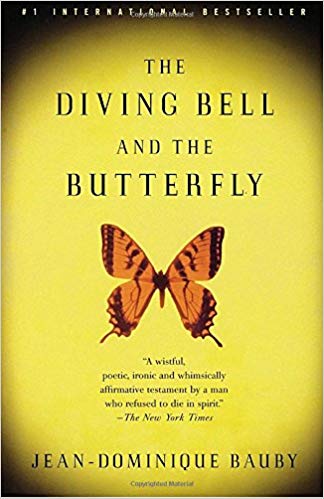
Furthermore, when one emphasizes expression, one tends to develop a blind-spot, thinking that the only entities worthy of consideration of gratefulness are other intelligent beings (or constructs attributed intelligence — e.g. gods.) I begin (though do not end) my practice of gratitude with my body (/ mind) and its systems. I’ve been told many people have trouble fostering gratitude when they focus on their body, but I don’t think one really understands gratitude if one can’t feel deep gratitude for one’s body and mind (literal warts and all.) For the body is the means by which one experiences everything, and one can only be unconditionally grateful for it. [For those who have trouble being grateful for body and mind, I’d recommend the book, “The Diving Bell and the Butterfly” by Jean-Dominique Bauby. It’s a short read because it was dictated using eye-blinks by a man who developed “Locked-in Syndrome,” a condition that left its author only with conscious control of an eyelid.]
As far as humanity’s future goes, nothing worries me. This despite the fact that I believe the odds are good that we’ll destroy the species before spreading to other planetary bodies. (Spreading so as to make humanity more robust in the face of extinction.) Even achieving colonization of other planetary bodies probably cannot be done by humanity as we know it but will require moving beyond biology — i.e. being able to carry consciousness into a sturdier vehicle. Everything is impermanent. We are no different.
Yes, in time, AI and robotics may be able to do every productive task more effectively than humans, but I’m confident I’ll outrun that. Besides if they can, they deserve to do so. I don’t want to be one of those participation trophy speciesists who believe we should be granted a victory even if we’re outperformed — all while whining about unfair advantage.
As for my personal future, the only thing that worries me is losing the ability to go out on my terms — i.e. losing command of mind and / or body with my body still being able to function enough to remain “alive.” Everything that lives will certainly die, so fearing death seems futile.
If a student (or students) voluntarily and enthusiastically come to learn from an individual, that individual is a great teacher.
The emphasis is on “to learn” because some people confuse great charisma with great pedagogy, but such people go to the charismatic person to take comfort from being in that person’s presence, not to learn — despite whatever truisms or clever-sounding parallel grammatical structures the charismatic individual might spout.
So, if one would go to an individual seeking knowledge, knowing the experience will be challenging and not merely comforting, one has found a great teacher.
The only optional activities I do every day are: reading, writing poetry, overhead hanging, and handstanding.
[Obviously, there are non-optional transport, hygienic, homeostatic, and metabolic maintenance activities: e.g. the breathing, peeing, pooping, walking, eating, toothbrushing, washing, etc.]






 Tiger Riding for Beginners