“Placid” [Poetry Style #2] by Sikong Tu [w/ Audio]

It thrives in silence and with calm --
ephemeral and gossamer.
It's ever-flowing harmony,
gliding with a solitary crane,
wisping like the gentle breezes
that rustle and billow one's robe,
trilling softly like a bamboo flute.
How does one become one with it?
A chance meeting, lucked into, but
don't lunge forward, or it'll vanish.
When you think it's attainable,
it twists in your hand and is gone.

NOTE: The late Tang Dynasty poet, Sikong Tu (a.k.a. Ssŭ-k‘ung T‘u,) wrote an ars poetica entitled Twenty-Four Styles of Poetry. It presents twenty-four poems that are each in a different tone, reflecting varied concepts from Taoist philosophy and aesthetics. Above is a translation of the second of the twenty-four poems.

“Song of More Sugar” by Liu Guo [w/ Audio]

Reeds cover the tiny island.
Shallow streams cut through the cold sand.

I see the Southern Tower for
The first time in two decades.

How many days since I moored
Under this willow tree?
Mid-Autumn Festival is almost here.

On the rocks of Yellow Crane,
Do my friends still reside?

This old place has many new sorrows.

If I bought wine and we cast off together,
Could we be young again?

“Written While Moored on the Qinhuai River” by Du Mu [w/ Audio]

Mist touches cold water and moon embraces the sand.

I’m moored for the night near a tavern on the Qinhuai.

The singing girl doesn’t know the empire is in bitter ruin.

Across the river I hear her singing “Blossom of the Inner Court.”

Translation: Barnstone, Tony and Ping, Chou. 2005. The Anchor Book of Chinese Poetry: From Ancient to Contemporary. New York: Anchor Books.

Hanshan 131 [w/ Audio]

During thirty years since my birth
I've hiked thousands of miles,
seen green grass converging with a river
and red dust rising at the frontiers,
searched in vain for immortals and elixirs,
studying books and histories.
Today I've returned to Cold Mountain.
I lie back in a stream, washing out my ears.

Translation: Barnstone, Tony and Ping, Chou. 2005. The Anchor Book of Chinese Poetry: From Ancient to Contemporary. New York: Anchor Books.

“Seeking a Hermit-Sage in Vain” by Jia Dao [w/ Audio]

I question a local boy under a pine.
He says, "Teacher is gathering herbs
right here on the mountain...
But who can say where?
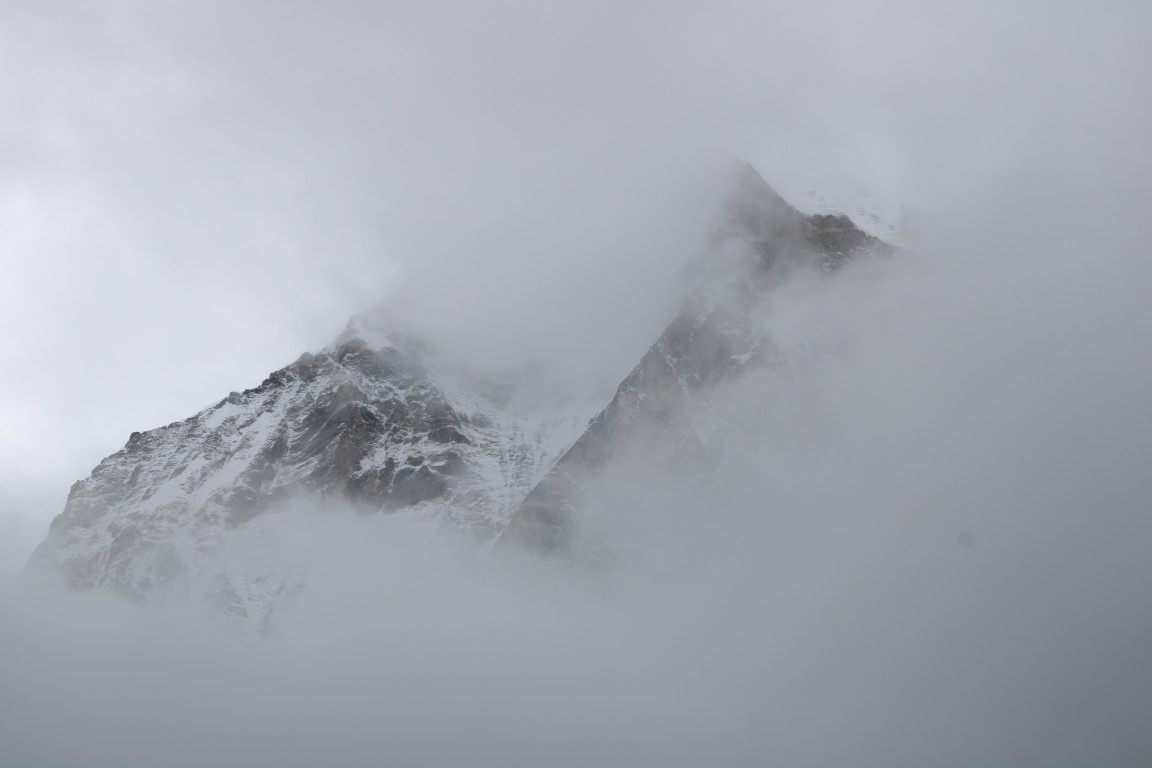
The mountain is thick with clouds."

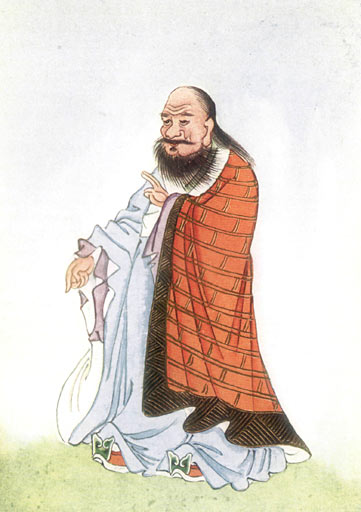
“On Laozi” by Bai Juyi [w/ Audio]

"The ignorant speak, while the wise keep silent."
I read the words of Laozi.
But if Laozi knew the Way,
Why did he write those five thousand characters?

“Night Rain” by Bai Juyi [w/ Audio]

Chirp of an early cricket. Silence.
The lamp dies then flares up again.
Night must be raining outside the window:
plink, plink on the banana leaves.

Translation: Barnstone, Tony and Ping, Chou. 2005. The Anchor Book of Chinese Poetry: From Ancient to Contemporary. New York: Anchor Books.

“Treading on Grass” by He Zhu [w/ Audio]

On winding pool with willows dim,
At narrow strait the lovebirds swim.
Green duckweeds float,
Barring the lotus-picking boat.
Nor butterflies nor bees
Love fragrance from the withered trees.
When her red petals fall apart,
The lotus bloom 's bitter at heart.

The setting sun greets rising tide,
The floating clouds bring rain.
The swaying lotus seems to confide,
Her sorrow to the poet in vain.

Then she would not be wed to vernal breeze.
What could she do now autumn drives away wild geese?

Translation: Xu Yuanchong [translator]. 2021. Deep, Deep the Courtyard. [庭院深深.] Cite Publishing: Kuala Lumpur, p.226.

“West River Moon” by Su Shi [w/ Audio]

Wavelet on wavelet glimmers by the shore;
Cloud on cloud dimly appears in the sky.
Unsaddled is my white-jadelike horse;
Drunk, asleep in the sweet grass I'll lie.
My horse's hoofs may break, I'm afraid,
The breeze-rippled brook paved by moonlit jade.
I tether my horse to a bough of green willow.
Near the bridge where I pillow
My head on arms and sleep till the cuckoo's song awakes
  A spring daybreak.

Translation: Xu Yuanchong [translator]. 2021. Deep, Deep the Courtyard. [庭院深深.] Cite Publishing: Kuala Lumpur, p. 238

BOOKS: “Deep, Deep the Courtyard” [庭院深深] trans. by Xu Yuanchong

庭院深深:最美的宋詞英譯新詮 (Traditional Chinese Edition)庭院深深:最美的宋詞英譯新詮 by 吳俁陽(賞析)
My rating: 5 of 5 stars

Publisher Website

This is a bilingual (Chinese / English) anthology of Song Dynasty poetry. It features more than 140 poems by almost fifty poets of the Song Dynasty, but a few of the Song poetic rockstars are particularly well represented (e.g. Su Shi, Qin Guan, Ouyang Xiu, and Xin Qiji.) The principal language of the book is Chinese (Mandarin) and so, while the poems themselves appear in English as well as Chinese, the ancillary matter is only in Chinese. Said ancillary matter includes notes, contextual information, bio-blurbs on the poets, and brief front and back matter.

I learned after reading the translations, that the translator was Xu Yuanchong and that he was (i.e. he’s now deceased) a very big deal as a translator, translating classical Chinese poetry into both English and French. All in all, I enjoyed the translations and found them to be sound as poems in their own right. That said, my personal preference would have been to have had less effort put into maintaining rhyme. I suspect a closer transmission of the ideas of the originals could have been achieved without the forced constraint of rhyme. Furthermore, while in many cases metering was attended to, sometimes it was not, leaving those poems to have a doggerel quality. [I come to this conclusion by comparing a few of the poem’s translations to those by other translators as well as to literal translations.] That said, the translator was clearly no slouch, and his stylistic choices were likely informed by what was popular during his career.

This book is part of a series. Other volumes include: In the Thick Woods a Deer Is Seen at Times (Tang Dynasty poems) and A Pair of Swallows Fly (from The Book of Songs, a.k.a. The Classic of Poetry.) I picked this book up in Taipei’s Zhongshan Book Street (Eslite Bookstore,) and don’t know how widely available the books of this series are outside of Taiwan, but if you are interested in Classical Chinese poetry and can find a copy, I’d recommend it.

View all my reviews