My First Tibetan Buddhist Meditation & Lecture

Having settled into life in India over the past month, I’m now getting around to some of the self-enrichment activities I’ve planned on taking advantage of here in Bangalore. Today I attended a meditation session and discussion/lecture at the Thubten Lekshey Ling Tibetan Buddhist Meditation Center. I’ve read a few books on Buddhism and even one or two specific to Tibetan Buddhism, but this was my first time attending such a session. Also, while I’ve done several kinds of secular meditation, both in a group and individually, this was my first exposure to guided meditation in the Tibetan Buddhist tradition.

The title of the session was As the Clouds Drift by… The first hour was the meditation portion and the following two hours were the lecture / discussion portion. The session opened with a few prayers that were chanted in what I believe was Sanskrit, but there was an English translation for newbies such as myself to follow along with the meaning. Then we did a few short meditations that were much like others that I’ve done: meditation on breath and meditation on bodily awareness. Then there was a visualization as we read a sutra in English.

Transitioning into the discussion and lecture portion, we first discussed the meaning of life. No, I’m not making that up. While it might seem like a hackneyed question, some intriguing points were raised. We were directed to think of the question as having two alternative meanings. First, why am I here? Second, what is my purpose? The conversation gravitated to the latter topic. I’m not sure if this was because there was a consensus that the question “why am I here?” is meaningless, or if the question of purpose was just more intriguing. There were various opinions about whether there was a purpose, and–if so–whether it is universal or individual-specific.

After a brief tea break, the remainder of the session involved readings from The Way of Bodhisattva followed by analysis and prompted discussion. Much of the discussion revolved around the issue of how compassion is expressed and the difficulty (or ease) of being a Bodhisattva. (A Bodhisattva is one who seeks enlightenment out of compassion for all sentient beings.)

I found the session to be thought-provoking and beneficial, and thought the atmosphere was conducive to growth. Emphasis was placed on discussion rather than straight lecturing. I will no doubt be back to visit in the future.

I did learn something interesting about myself through the process of the class, and that’s that I need to learn to be still for more than two hours. While there was no prohibition on moving around–particularly beyond the meditation portion– in an effort to not be a distraction, I tried to keep fairly still. I practically ran home afterwords. I had all this pent-up energy. I would have thought myself better than average at sitting in a contemplative state. I’m a writer for goodness sake. I spend entire days at my computer. However, in truth, I rarely sit more than an hour without getting up and stretching or doing some sort of movement to limber up my body and get the blood flowing. I was raised Catholic, and so I’m not new to sitting quietly for long periods of time. Though that was a long time ago. I also have three college degrees and have spent more than my fair share of time in classrooms, but the wandering mind is not discouraged in that environment–in a way it’s encouraged.

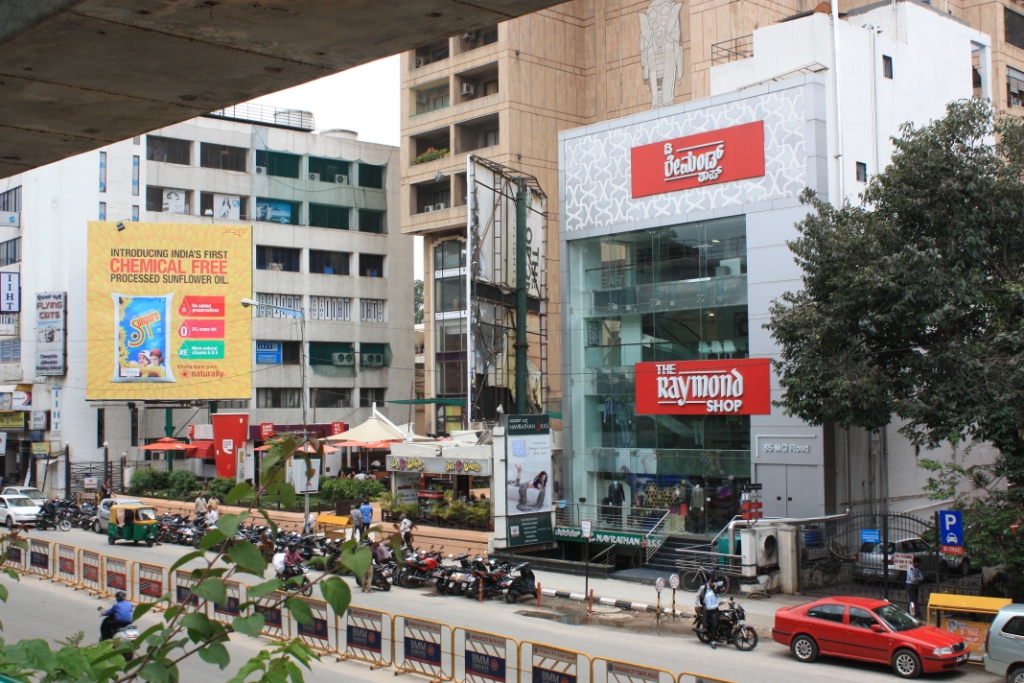
DAILY PHOTO: MG Road at Barton Center

Taken in September of 2013 in Bangalore

Taken in September of 2013 in Bangalore

MG Road (short for Mahatma Gandhi Rd.) is the main drag in Bangalore. It’s lined with shops, malls, and office buildings.

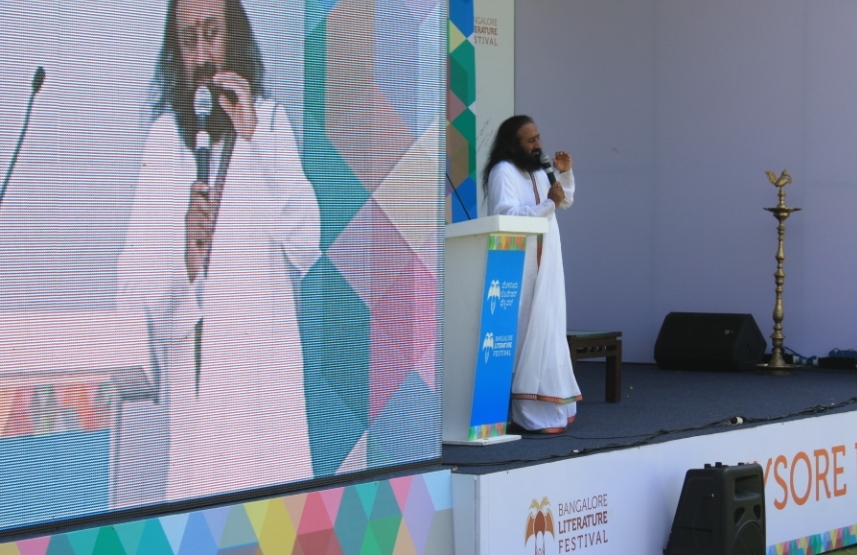
DAILY PHOTO: Bangalore Literature Festival

Taken September 27, 2013

Taken September 27, 2013

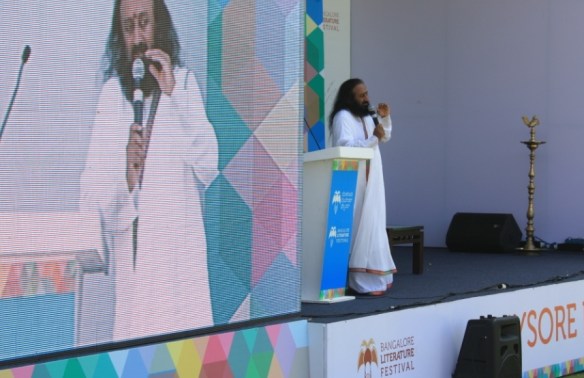
I spent Friday September 27th at the Bangalore Literature Festival. This was the second year of the event, and the first day of this year’s festival. Pictured onstage here is Sri Sri Ravi Shankar, a world-famous guru and charitable foundation leader who is headquartered in Bangalore. He drew the biggest crowd that I saw, although the rest of the talks I went to were on a secondary stage called Lawn Bagh. (“Mysore Park” was the name of the main stage.)

I went to a panel entitled “Vision for India” that featured a politician, a retired General, and a well-known pundit. The panel solicited the three men’s opinions on the future of India. It was fascinating to the international affairs / economist trained part of me. There were some political and economic reforms all of them seemed to agree on, but, great for this type of panel, there was some controversy as well.

I also went to panels on crime fiction, geographic-centric poetry, and the coexistence of literary and commercial fiction in the publishing space.

I was impressed with the festival. The caliber of speakers and authors was high. They had to contend with something that no other literary festival that I’ve been to had to, and that is that there are many written languages  in India–and at least one French and  German writer each that I saw. While English was the lingua franca of the festival, I heard poetry in Tamil, French, and other languages as well.

The campus it was held on, Velankani Park, was sparkling clean held a lot of interesting plant life.  This was my first trip out to Electronic City. It seemed odd that they held the festival so far from the city center, but I can see why in a way. As one of the speakers said during the “Visions” panel, it’s a first world oasis in a third world country. The little I saw, verified that. That said, if they wish to grow, they may need to put it closer to the city center. (Of course, as the metro comes on-line and people start using it, this may become a moot point.)

They did have trouble controlling the schedule. By the end of the day they were about 45 minutes behind. This is something that they’ll have to control if they wish the festival to grow beyond three stages. In terms of quality, this was very much like a scaled down version of my previous home city’s literary festival, the Decatur Book Festival. However, DBF has about 20 stages and a much bigger vendor space. This means the DBF has to have “stage Nazi’s” that will crack the whip. Even with a compact three-stage campus, they probably need to build defined break space into the schedule.

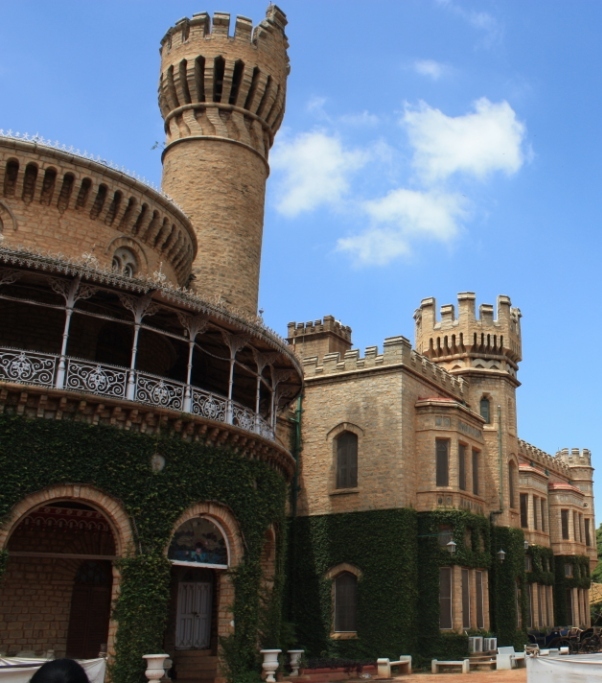
DAILY PHOTO: Bangalore Palace

Taken in September of 2013

Taken in September of 2013

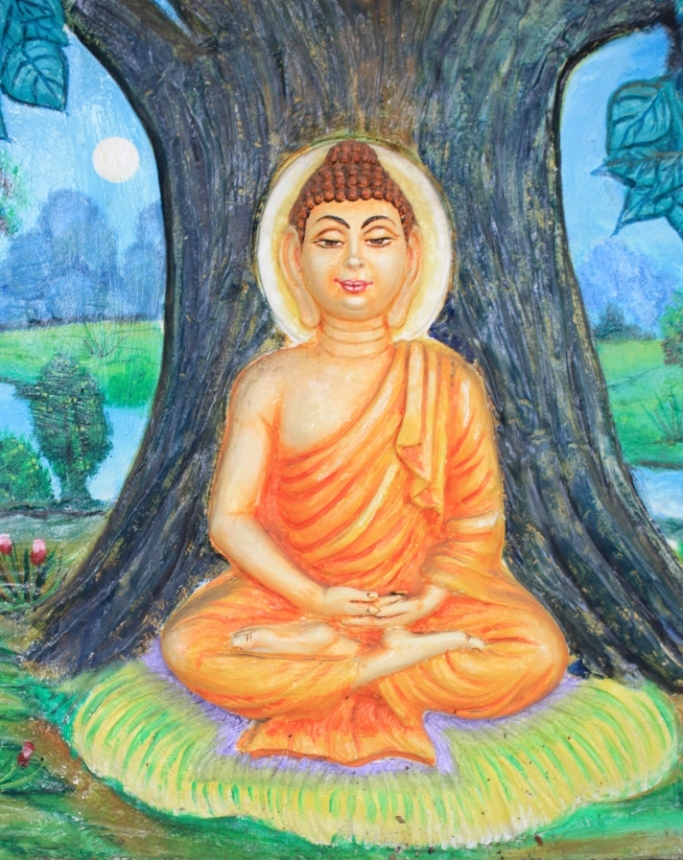
DAILY PHOTO: Buddha Under the Bodhi Tree

Taken September 24, 2013 at the Mahabodhi Society Temple in Bangalore

Taken September 24, 2013 at the Maha- Bodhi Society Temple in Bangalore

There are a whole series of these brightly colored bas-reliefs in recesses in the exterior wall at the Mahabodhi Loka Shanti Buddha Vihara, which is a temple run by the Maha-Bodhi Society. This society was founded by a Sri Lankan monk with the intention of bringing Buddhism back to India. While Buddhism was founded in India, there had been a long period of decline of individuals self-identifying as Buddhists.

DAILY PHOTO: Bangalore Central Jail

Taken September 24, 2013

Taken September 24, 2013

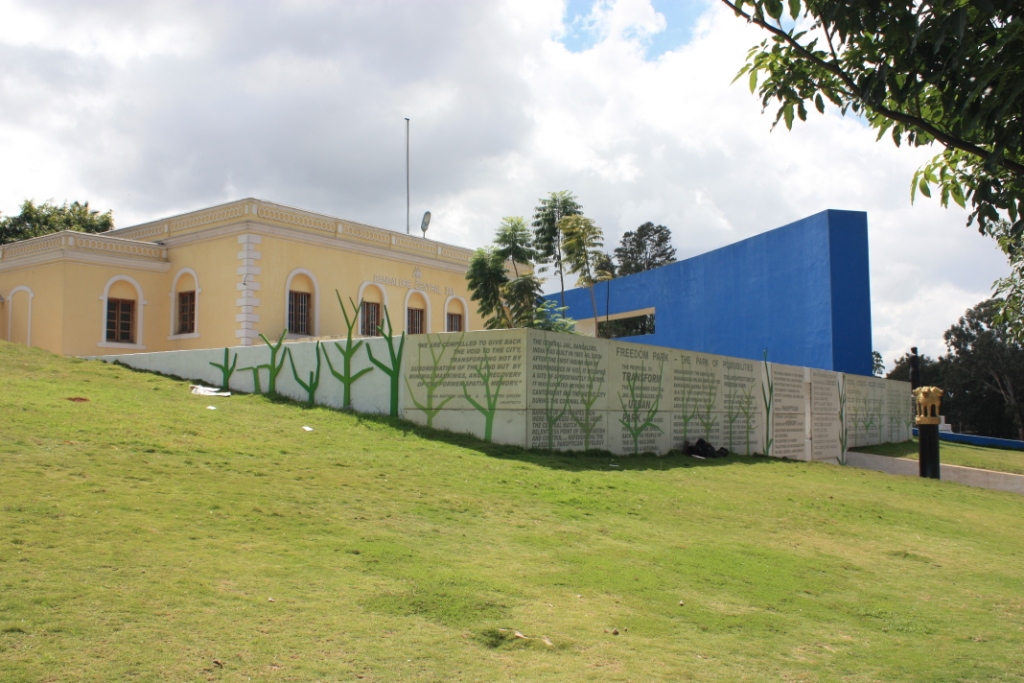
While parks like Cubbon and Lal Bagh Gardens are more famous, Freedom Park may be the most pristine city block in all of Bangalore. The park sits on what was the grounds of the Bangalore Central Jail. Built in 1866 in the wake of the First Indian War of Independence, the Central Jail was constructed to hold rebels and revolutionaries opposing British rule. The first war didn’t succeed in achieving independence, that didn’t come until 1947. The first war did succeed in changing the ruling power from the British East India Company to the British Empire proper, a distinction without a difference in the eyes of Indians I suspect.

DAILY PHOTO: Tipu’s Lodge in the Mist

Taken on September 21, 2013 in Nandi Hills.

Taken on September 21, 2013 in Nandi Hills.

Tipu’s Lodge, also referred to as Tipu’s Summer Palace, is one of the first things one sees upon entering the old fortification of Nandi Hills. On this particular morning, the hilltop was submerged into clouds, making visibility limited and casting a haze over everything.

DAILY PHOTO: Garden Overlook

Taken September 21, 2013 in Nandi Hills, India.

Taken September 21, 2013 in Nandi Hills, India.

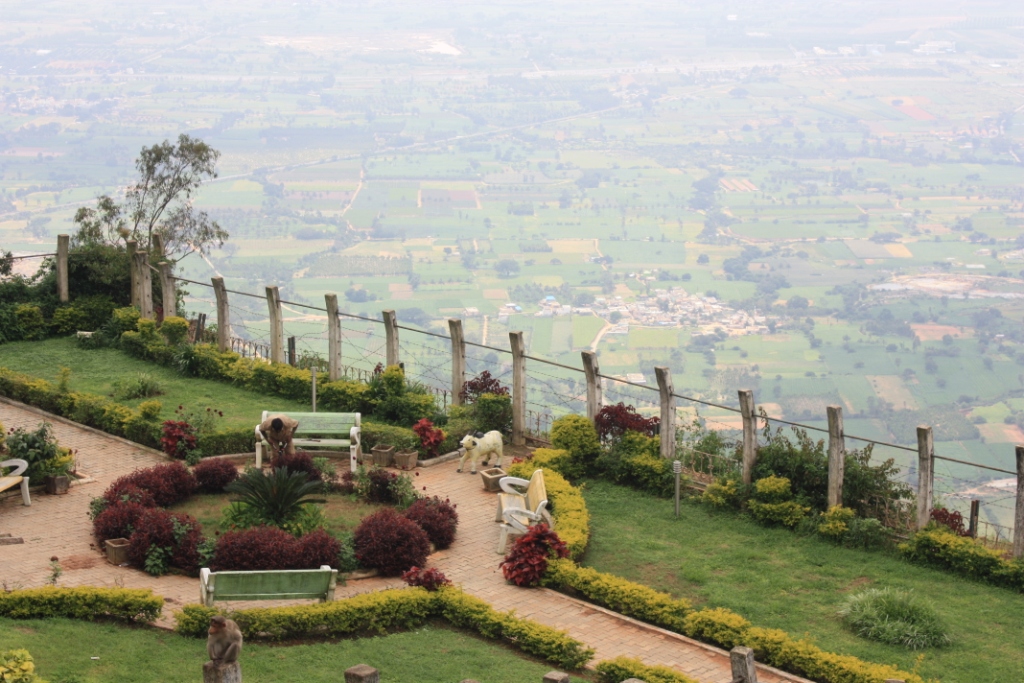
This garden sits behind a little inn at the top of Nandi Hills. In the background is a town and farmland as seen from the hilltop.

DAILY PHOTO: Indian Amphibious Armored Personnel Carrier

Taken September 15, 2013 at the National Military Memorial

Taken September 15, 2013 at the National Military Memorial

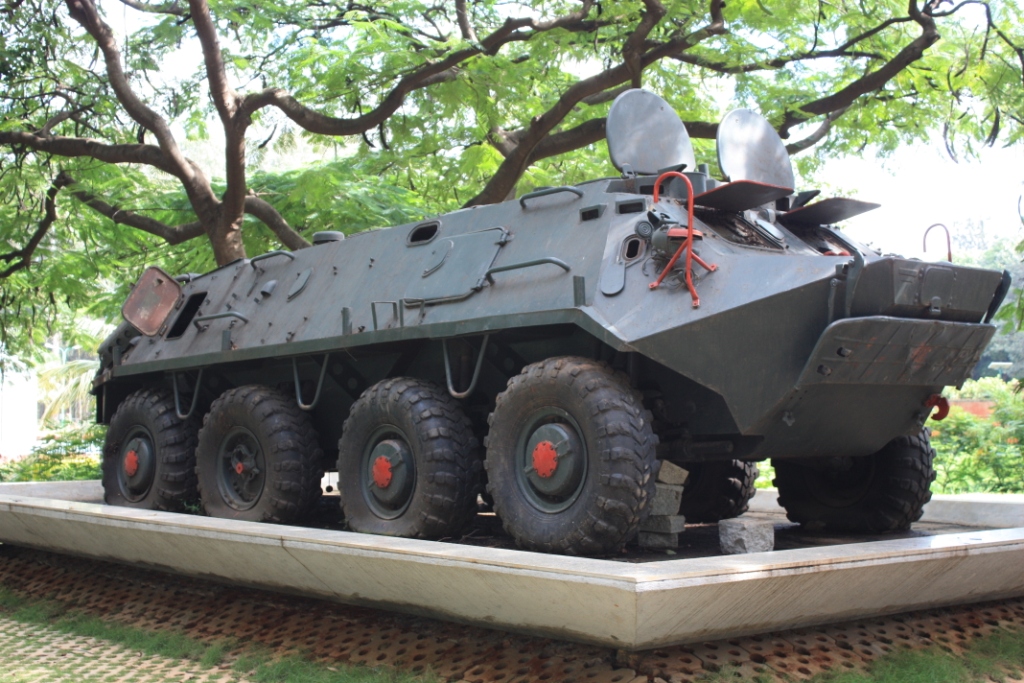
This eight-wheeler is on display at Bangalore’s National Military Memorial park. It appears to be an amphibious armored personnel carrier (APC). However,  they don’t yet have any signage up to explain what’s what. Looks kind of like a Soviet BTR-60.

DAILY PHOTO: Bull Temple

Take September 2013 in Bangalore.

Take September 2013 in Bangalore.

This was my first experience inside a Hindu Temple, so I was completely out of my element. Fortunately, it was easy enough to follow the crowd through the procedure. (As opposed to the multi-deity temples where many disparate and complex practices may be being carried out at once.) First, one leaves one’s shoes outside, as one would at a Buddhist temple. One then walks down a corridor toward the bull. When one gets to the front of the bull, one turns to one’s left and circles the bull in a clockwise fashion, passing by a Hindu priest. There is a Hindu priest at both the head and the tail end of the idol. There’s an opportunity to make a monetary offering at both. When one gets back around to the front, the priest puts a tilaka mark on one’s forehead with bright red tikka powder. This is made in the same place one sees Hindu women wearing bindi ornamentation.