Sonnet 18 by William Shakespeare [w/ Audio]

Shall I compare thee to a summer's day?
   Thou art more lovely and more temperate:
 Rough winds do shake the darling buds of May,
   And summer's lease hath all too short a date:
 Sometimes too hot the eye of heaven shines,
   And often is his gold complexion dimm'd:
 And every fair from fair sometime declines,
   By chance, or nature's changing course untrimm'd;
 But thy eternal summer shall not fade,
   Nor lose possession of that fair thou ow'st,
 Nor shall death brag thou wander'st in his shade,
   When in eternal lines to time thou grow'st;

   So long as men can breathe, or eyes can see,
   So long lives this, and this gives life to thee.

Jabberwocky by Lewis Carroll [w/ Audio]

'Twas brillig, and the slithy toves
   Did gyre and gimble in the wabe:
 All mimsy were the borogoves,
    And the mome raths outgrabe.

"Beware the Jabberwock, my son!
   The jaws that bite, the claws that catch!
 Beware the Jubjub bird, and shun
    The frumious Bandersnatch!"

He took his vorpal sword in hand:
   Long time the manxome foe he sought --
 So rested he by the Tumtum tree,
    And stood awhile in thought.

And as in uffish thought he stood,
   The Jabberwock, with eyes of flame,
 Came whiffling through the tulgey wood,
    And burbled as it came!

One, two! One, two! And through and through
   The vorpal blade went snicker-snack!
 He left it dead, and with its head
    He went galumphing back.

"And hast thou slain the Jabberwock?
   Come to my arms, my beamish boy!
 O frabjous day! Callooh! Callay!"
    He chortled in his joy. 

'Twas brillig, and the slithy toves
   Did gyre and gimble in the wabe:
All mimsy were the borogoves,
    And the mome raths outgrabe.

O Captain! My Captain by Walt Whitman [w/ Audio]

O Captain! my Captain! our fearful trip is done,
 The ship has weather'd every rack, the prize we sought is won,
 The port is near, the bells I hear, the people all exulting,
 While follow eyes the steady keel, the vessel grim and daring;
       But O heart! heart! heart!
          O the bleeding drops of red!
             Where on the deck my Captain lies,
                Fallen cold and dead.

O Captain! my Captain! rise up and hear the bells;
 Rise up -- for you the flag is flung -- for you the bugle trills,
 For you bouquets and ribbon'd wreaths -- for you the shores a-crowding,
 For you they call, the swaying mass, their eager faces turning;
       Here, Captain! dear father!
          This arm beneath your head!
              It is some dream that one the deck
                 You've fallen cold and dead.

My Captain does not answer, his lips are pale and still,
 My father does not feel my arm, he has no pulse nor will;
 The ship is anchor'd safe and sound, its voyage closed and done,
 From fearful trip the victor ship comes in with object won;
       Exult, O shores! and sing, O bells!
          But I, with mournful tread,
             Walk the deck my Captain lies, 
                 Fallen cold and dead. 

In Flanders Fields by John McCrae

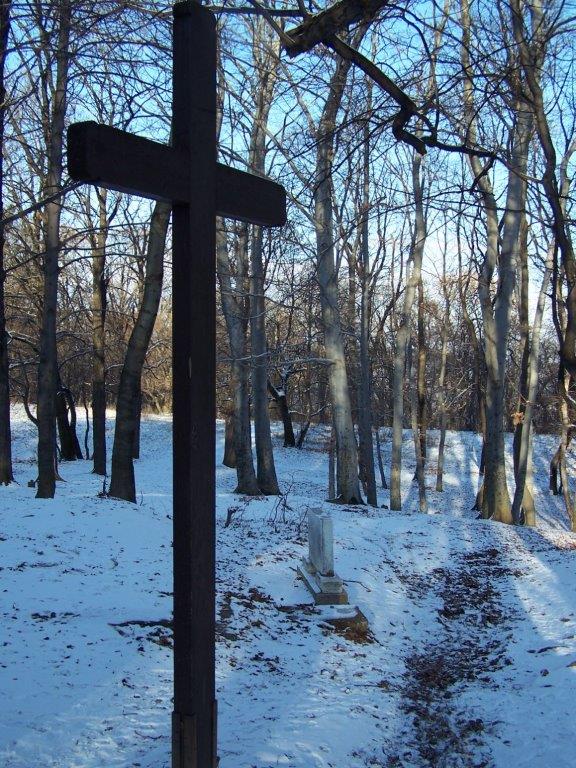
In Flanders fields the poppies blow
 Between the crosses, row on row,
      That mark our place; and in the sky
      The larks, still bravely singing, fly
  Scarce heard amid the guns below.

We are the Dead. Short days ago
  We lived, felt dawn, saw sunset glow,
       Loved and were loved, and now we lie,
          In Flanders fields.

Take up our quarrel with the foe:
   To you from failing hands we throw
       The torch; be yours to hold it high. 
       If ye break faith with us who die
    We shall not sleep, though poppies grow
         In Flanders fields. 

Stopping by Woods on a Snowy Evening by Robert Frost [w/ Audio]

Whose woods these are I think I know.
 His house is in the village though;
  He will not see me stopping here
 To watch his woods fill up with snow. 

My little horse must think it queer
 To stop without a farmhouse near
   Between the woods and frozen lake
 The darkest evening of the year. 

He gives his harness bells a shake
 To ask if there is some mistake.
  The only other sound's the sweep
 Of easy wind and downy flake.

The woods are lovely, dark and deep.
 But I have promises to keep,
  And miles to go before I sleep,
 And miles to go before I sleep. 

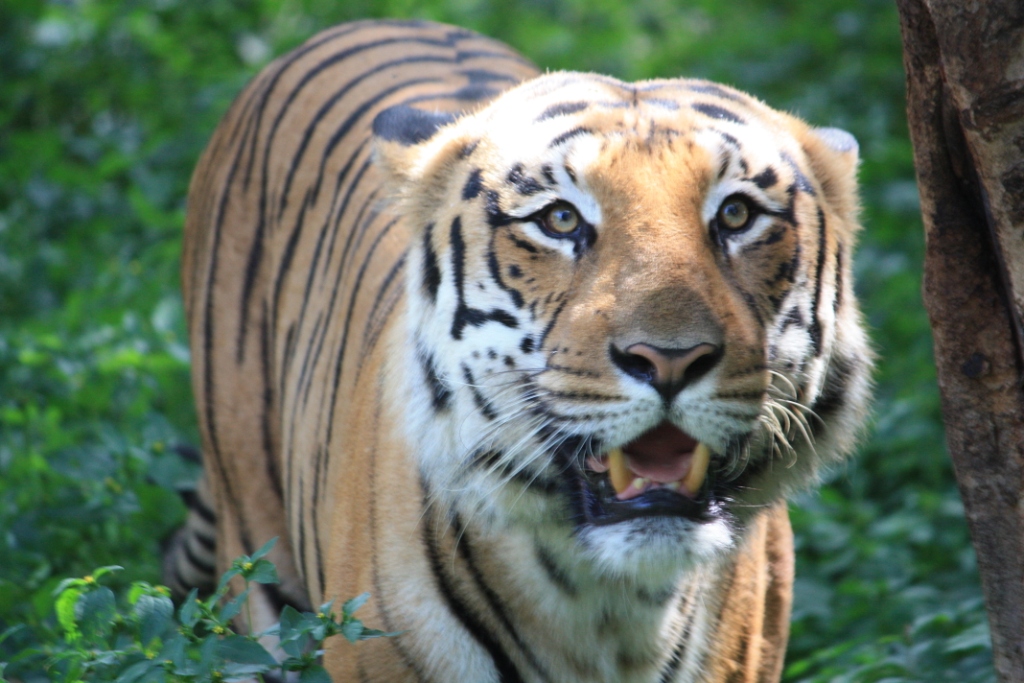
The Tiger by William Blake [w/ Audio]

Tiger, tiger, burning bright
 In the forests of the night,
  What immortal hand or eye
 Could frame thy fearful symmetry?

In what distant deeps or skies
 Burnt the fire of thine eyes?
  On what wings dare he aspire?
 What the hand dare seize the fire?

And what shoulder and what art
 Could twist the sinews of thy heart?
  And, when thy heart began to beat,
 What dread hand? and what dread feet?

What the hammer? What the chain?
 In what furnace was thy brain?
  What the anvil? What dread grasp
 Dare its deadly terrors clasp?

When the stars threw down their spears,
 And watered heaven with their tears,
  Did he smile his work to see?
 Did he who made the lamb make thee?

Tiger, tiger, burning bright
 In the forests of the night,
  What immortal hand or eye
 Dare frame thy fearful symmetry? 

BOOK REVIEW: The Power of Podcasting by Siobhan McHugh

The Power of Podcasting: Telling stories through soundThe Power of Podcasting: Telling stories through sound by Siobhan McHugh
My rating: 5 of 5 stars

Amazon.in Page

This book is in part a how-to guide, and in part a history of podcasting’s rise, though a history that tries to look from within rather than from a distance as much as possible. The two major thrusts of the book are story and sound. Of the many varieties of podcasts that exist today, the focus of this book is on ones that are story-centric, be they non-fiction or fiction. [Of course, there’s an argument that all podcasts should employ story to some degree, even if they aren’t of a format that facilitates an overarching story.] McHugh, herself, uses stories and what I’d call meta-stories (i.e. the stories of how various podcast-delivered stories got told) extensively throughout the book.

With respect to sound, there’s a lot of background sound and music that makes the difference between a professional sounding podcast and one that’s not. This is a particularly difficult subject to grasp because – while one often experiences background sound and music drawing one deeper into the story (or – perhaps more accurately – one feels its absence as a vague sense of detachment,) one tends not to be aware of this background audio on a conscious level. Therefore, discussions that point out the thinking about background audio choices can be profoundly eye-opening for a neophyte, such as myself.

When I say that the book has a podcasting how-to aspect, I should emphasize it doesn’t get into the technical aspects (i.e. what kind of mic to buy and how to use it,) but rather it discusses such topics as scripting, interviewing, editing / reorganizing for effect, and starting out. The book also has chapters at the end about increasing diversity in what has been an extremely Caucasian-centric industry as well as offering insight into potential future directions of audio storytelling. Throughout. there are short interviews with individuals with expertise in the industry, and there’s an extensive appendix, listing podcasts and podcasting resources.

If you’re interested in starting a podcast or learning more about podcasting, I’d highly recommend this book.


View all my reviews