
Taken in May of 2015 at Chaminuka Game Reserve

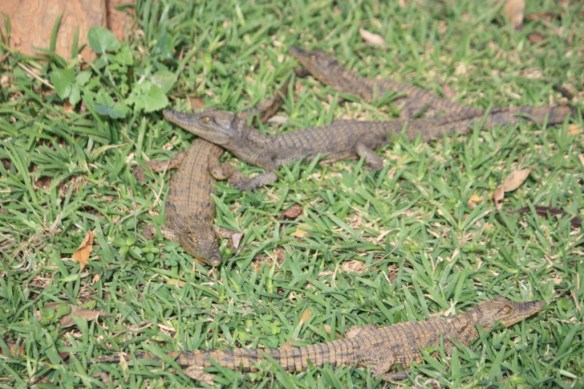
Taken at Kalimba Reptile Park near Lusaka, Zambia in May of 2016

A closeup

Mass flight to water
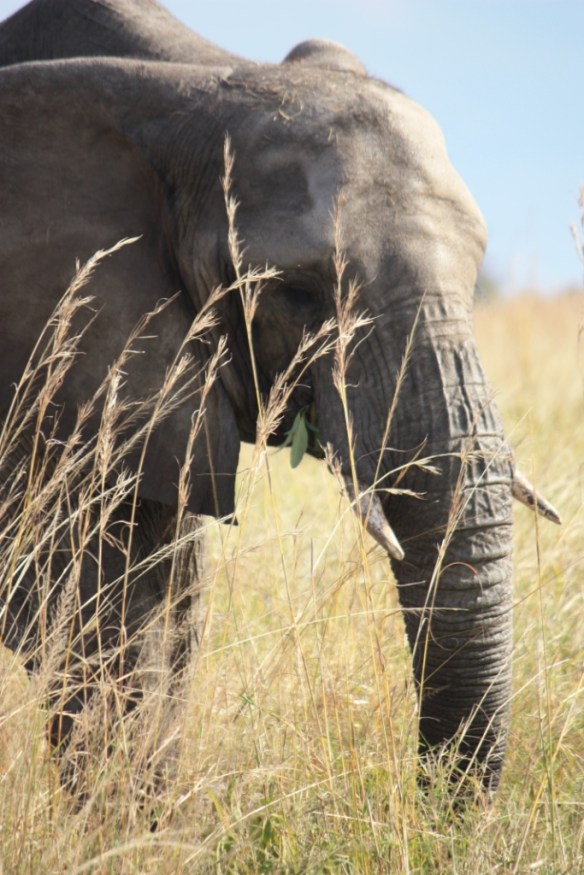
Taken on May 25, 2016 at Chaminuka Game Reserve near Lusaka
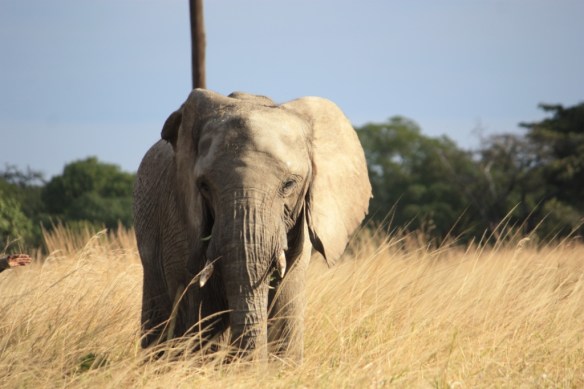

Taken in May of 2016 at the Palmwood Lodge in Lusaka
I’m back from travels in Thailand, Zambia, and the UAE with lots of new photos. This is an African species of Carpenter Bee (Xylocopa caffra) hanging from a flower. Lusaka was in full bloom, despite the fact that it’s [southern hemisphere] winter there and the weather was cool.
 Things Fall Apart by Chinua Achebe
My rating: 4 of 5 stars
Things Fall Apart is about a man who conducts his life ever trying to distance himself from his father. In the process, he sows the seeds of his own destruction. Residing in the small (fictional) Nigerian village of Umuofia in the late 19th century, Okonkwo strives to be hyper-masculine in everything he does. As a young man he becomes a village wrestling champion and, when it comes time to start farming, he’s driven to be the best farmer possible in order to pay off his debts and to be as wealthy as possible. He feels that his father, who was constantly in debt and negligent in his familial duties, was weak and effeminate. On the one hand, Okonkwo’s drive is respect worthy, but, on the other, his need to appear strong in the extreme comes off as a bit pitiful.
There are a couple of crucial events in Okonkwo’s life in which his need to appear manly results in great inner distress. The first occurs when it’s determined that a young man who’s been staying with Okonkwo’s family must be killed. (The young man was sent to Umuofia as a settlement for a wrong between the young man’s father and an Umuofia resident.) Okonkwo has been a father to the young man. Even when a village elder tells Okonkwo to have no part in the killing owing to being like a father to the boy, Okonkwo feels he must participate lest he be seen as effeminate. Of course, Okonkwo is wracked with guilt because he murdered a boy who’d been like a son to him. Later, an accidental discharge of Okonkwo’s firearm kills an innocent young man. The worst part of this for Okonkwo is that an accidental killing is seen as a “woman’s offense.” As punishment, Okonkwo and his family are sent in exile on another village for seven years. Okonkwo isn’t so much torn up by killing another innocent as by the fact that the way it happened makes him look girly in the eyes of others—or so he believes.
Besides the character portrait of Okonkwo, the book is also a commentary on the nature of colonialism and proselytizing missionaries. The first part of the book is set in a pre-colonial state, but in the latter half the rapidly developing tensions between the missionaries and the local villagers is featured. When Okonkwo and his family return to Umuofia after seven years, he finds that white men have built a church and are actively seeking to turn the villagers away from the indigenous beliefs. Of course, for Okonkwo this is just too much, and he can’t believe others are putting up with this. (Adding to his torment is the fact that his son is one of the converts—possibly because that son himself wants to distance himself from the father who murdered his best friend [the boy from the other village.]) Okonkwo is ultimately unable to tolerate that the world has become something so different from what he believes is right, and to continue living means to steer away from the path that he has locked his life into.
This short and thought-provoking book is a great window into pre-colonial Africa and the clash of worldviews that colonization brought. It’s also a cautionary tale about not having sympathy for the failings of one’s father—not to mention the weakness inherent in our own humanity.
 The Elephant Whisperer by Lawrence Anthony
My rating: 5 of 5 stars
This is the story of Thula Thula, a wildlife preserve in South Africa, and the herd of elephants that came to live there. It’s one of the most gripping nonfiction works that I’ve read in some time. Even if it was just the story of Anthony Lawrence’s interactions with a herd of wild elephants that he took on at first reluctantly and then became powerfully connected to, it would have made a worthwhile read. However, there is so much more to keep one flipping pages. There’s the internecine and tribal warfare among the Zulus that at one point results in a contract being taken out on Lawrence’s life. There are the tales–sometimes happy and sometimes tragic—of the other animals that share Thula Thula with the elephants, including: crocs, rhino, cape buffalo, snakes, and—of course—the humans and their pet dogs. And, sadly, there’s a constant war going on against poachers that occasionally results in a firefight.
That said, the stars of this book are undeniably the herd of wild elephants. The author is told these pachyderms are unruly and are to come into the possession of a big game hunter to be shot if he doesn’t take them. There are no elephants in the area of Thula Thula, and taking them on is a big risk. The neighbors are opposed because if the elephants get out they could cause untold damage—even if not maliciously. Furthermore, these elephants have had bad experiences with humans; the only adult bull had recently been killed—making them all the more hostile. These elephants have a history of escape, and when a herd of elephants wants to escape, it’s hard to keep them in. They are five or more tons of raw power. In fact, the herd does escape once early in the book, and a major drama unfolds as a result. There’s pressure on Lawrence to get rid of at least the matriarch and another female, Frankie, who is almost the same size as the matriarch and is even more aggressive. Eventually, he gets the herd to calm down through patience and an attempt to understand them.
However, even as the herd becomes calmer and actually friendly toward Lawrence, there are always new challenges popping up. They add an adolescent who comes in alone, its entire family having been killed off. This history makes the new addition skittish, angry toward humans, and dangerously aggressive. Furthermore, the adolescent bull transitions into adulthood and is increasingly pushed away from the herd, but without a male role model. By the book’s end, there is even a new generation being brought into the fold.
I won’t tell you this book is all rosy. There are a number of really sad sub-stories within the overall tale of the elephants of Thula Thula. I won’t get into details because these chapter or two long narrative arcs are among the most edge-of-the-seat reading in the book. That said, the overall story is one of triumph. A herd that was on the verge of being eliminated is not only saved, but eventually grows in size due to new births—though, sadly, not without some losses. It’s about successful coexistence and preservation of these species.
A lot of the book is about communication, both the stomach-grumbling elephantine intraspecies communication and the interspecies communication between the author and the elephants. It turns out that elephants can communicate with others across great distances, most notably by stomach rumbles that largely take place at a frequency outside human capacity.
There’s also humor. There are times when all one can do is to accept that elephants will be elephants and gardens will be trampled and swimming pools will become watering holes. There’s no maliciousness. It’s just that five and six ton animals leave their mark wherever they go. They are intelligent but unsubtle creatures.
I’d highly recommend this book to just about anyone. Even if you normally only read commercial fiction, I think that you’ll still find enough tension and intrigue throughout this book to keep you reading. If you’re an animal lover you’ll be engrossed from start to finish even without the poachers, death threats, and, tribal wars. If you’re one of those pathetic old men who think you need rhino horn powder to get it up or need a pair of carved tusks to show your wealth, you should be forced to read the book while an elephant holds its foot over your head.
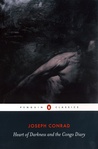 Heart of Darkness by Joseph Conrad
My rating: 4 of 5 stars
Heart of Darkness is a story within a story (i.e. a frame narrative) in which the protagonist, Marlow, tells a group of men on a ship on the Thames about his adventures captaining a boat on the Congo River. The use of a frame narrative both gives this novella/ novel a confessional feel, but also imagines Marlow’s audience feeling his tale particularly viscerally as some of them might be caught up in similar intrigues themselves.
Marlow’s job in the Congo is transporting ivory. However, the core of the story revolves around a trip to extract an agent of the ivory trade named Kurtz, and to transport the ill man to medical care. Kurtz is an intriguing character. This isn’t a man one can feel indifferently towards. Some love his intellect, charisma, or even his ruthlessness. Others despise him as the face of villainy. Kurtz represents imperialism at its most vile. Some natives are at war with him. Others respect and fear him. However, he’s willing to destroy them all on a whim to make the flow of ivory come more swiftly.
Marlow isn’t a member of Kurtz’s fan club initially and thinks the agent is completely insane, but he becomes intrigued with him as their journey progresses. In a way, Marlow is the moderate face of Imperialism. He doesn’t like the way the natives are treated, or the power plays and bureaucracy of the trade. However, he’s an active and willing participant, and, ultimately, when given a choice to work against the system or in support of it he chooses the latter. He hands over Kurtz’s report on the “Suppression of Savage Customs.” He also shows his sympathy towards Kurtz through his interaction with the dead man’s fiance.
This is definitely 19th century literature. While the book is very short, it’s readability isn’t high by today’s standards. It’s organized into just three parts or chapters, and the prose isn’t built for speed. Also, while it turns out to be a gripping tale, it’s slow off the blocks. It must also be put in the context of 19th century literature because the themes of imperialism and suppression of “savagery” have long since been settled. Viewed through today’s lens, the story might not ring true. Though I suppose there’s still a heart of darkness in urban environments today, behind walls rather than across seas.
What are the book’s strengths? While it may seem silly, the title is pure-D awesomeness. Also, while it’s not organized or written for readability by today’s standards, by 19th century standards it’s a page-turner. It’s certainly a compact tale. As I indicated, I’m not sure whether to call it a novel or a novella. Reading this book isn’t a major time investment, and it does pay off. Conrad’s use of descriptive language is often beautiful. Conrad’s characters all ring true and serve to sit one in a world of darkness beyond the imaginings of the London elite, where sad and terrible things happen to make their world possible.
Lastly, the book makes one think. Like Kurtz, one is likely to love it or hate it.





 Tiger Riding for Beginners