 There was an old man from Kazakhstan
happy to hear of the testing ban.
His house didn’t explode,
but sometimes it glowed.
&
Despite a lead vest he still had a tan.
Kazakhstani Limerick
Reply

There was an old man from Kazakhstan
happy to hear of the testing ban.
His house didn’t explode,
but sometimes it glowed.
&
Despite a lead vest he still had a tan.

 What’s leached the life from these lands?
Winter snuck in. True enough.
But that doesn’t mean a bird can’t hoot, caw, screech, or titter.
We may be too deep in the season for lizards to dart, or even schlep in tailless bluntness.
But surely squirrels, fluffy-tailed rodents, should be out, shoving aside leaf litter in search of sacred acorns?
I don’t trust my mind in a soundless forest —
it leads me to believe that I tumbled back into the recesses of my mind, and only noticed [too late] that I forgot to load the soundtrack.

Taken in May of 2016 in Dubai.
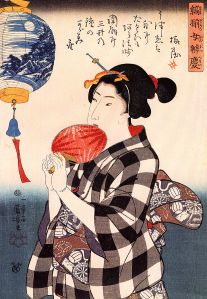 There was a beautiful woman of Japan
who was never without her folding fan.
She seemed to play coy,
but it was a ploy.
Her saké breath could kill a caveman.

Taken in December of 2019 in Doha.
 I
two tall pines —
one bends more in the wind,
lean-in for kiss
II
the tall grass
lunges and retreats
with wind gusts
III
in springtime,
breezes, gusts, and gales
affirm flower’s view
 A Prayer for Owen Meany by John Irving
My rating: 5 of 5 stars
This is an oldie (originally published in 1989,) but I just got to it and must say that it’s one of the most skillfully crafted novels I’ve read in some time. One indication of this is that it is both highly readable and often nonlinear in storytelling. Stories that jump about in time have to keep the reader in a rapt state of attention and need to be written with multiple cues as to where one is in the timeline. Otherwise, if one misses a time transition, one is lost — and then the reading becomes a tedious slog. Irving maintains one’s attention through masterful revelation. The reader is always asking questions that are teased out until (at the optimal time) a revelation is made, but by that time one has a new slate of questions – all of which are resolved by book’s end.
The story revolves around the relationship between the titular character, Owen Meany, and the narrator – who is also Meany’s best friend, John Wheelwright. Owen Meany is a fascinating character mentally, physically, and spiritually. Mentally, he is at the top of his class and is often the smartest person in the room even when the room contains adults. Conversely, physically he is the tiniest kid in class and never grows out of that position, and he has a strange and grating voice that also isn’t cured by puberty. Spiritually, he is not only a person of iron-clad faith, he also believes he is God’s instrument. [Faith and doubt is a major theme of this novel.] The close relationship between Wheelwright and Meany is fire-forged by the trauma of Meany hitting a foul ball that careens into the temporal lobe of John’s mother, killing her instantaneously (and, perhaps more crucially, the relationship survives the the revelation that Owen believes he is God’s instrument.) It should be pointed out that Owen is also devastated by the foul ball killing. John’s mother, Tabitha Wheelwright, is as much a mother figure to him as to John, both because Owen’s mother is ambiguously not right in the head and because Tabitha says she will pay for anything necessary (beyond the scholarship he is sure to get) to allow Owen to go to the Gravesend Academy. (John comes from money but Owen is from a struggling blue-collar family, and so Owen couldn’t go to the prestigious school otherwise – even though he is academically much more suitable for such an educational environment.)
One fascinating aspect of character development is that Irving keeps the reader in Owen Meany’s corner. This is no small feat as the boy can be a bit of a pill, being a self-important know-it-all with a Biblical level of faith and (in some cases) dogmatism, as well as – oddly enough – a palpable disrespect for his own parents. One way this is done is by making Meany relatively reasonable, moral, and consistent – i.e. even when he is irksome it is usually in opposition to even more irksome forces. The other way that the author achieves this is by showing us that all the likeable characters in the book stay in Owen’s corner, as well. The most telling example of this is when John admits that he secretly hasn’t forgiven the batter two before Owen in the lineup for a play that allowed his friend to get to bat [while Owen, himself, is exonerated.] When John’s grandmother, who initially finds Owen to be painfully annoying, becomes Owen’s benefactor and primary maternal figure we know that there is something about this guy.
As kids who grew up in the 50’s and 60’s, Owen and John enter adulthood at the height of the Vietnam conflict, and the story climax revolves around there diverging paths. Neither is a fan of the war, but Owen believes he has been called by God to participate for a very specific purpose. Therefore, he ends up in the bizarre situation of struggling to get sent to war while the Army finds him unfit for combat because of his diminutive stature (and his friends and family think he’s lost his mind.) The climax and conclusion tie up all the loose-ends generated by the book, including a few that one may have dismissed as purposeless “quirky behavior.”
Interspersed throughout the book are flash forwards to the “present day” (mid / late 1980’s.) These were the least appealing part of the book to read, though they did serve a purpose. For the most part, these sections consisted of John Wheelwright ranting about American politics or discussing his troubled relationship with the church he attends or the school at which he teaches. Ultimately, I saw these as a way to show John’s loathing for the American government and America because he believes they stole the genius of Owen Meany from him and from the world. As I was reading them, I wondered if they weren’t Irving’s way of getting across a loathing for the Reagan Administration and the Iran-Contra Affair. However, these parts also created an evocative lonely feel because one notices all the characters with strong individual identities are absent. This is not to say that the character of John Wheelwright / narrator is ill-developed, but he is a bit milquetoast compared to Owen or even characters like Hester or Grandmother. John’s obsession with national and institutional entities rather than individuals makes one feel the loss at points throughout that John has felt since Owen’s demise.
If you read fiction, this is a must-read. It is storytelling at its best. Despite excellent foreshadowing that lets the reader know the the book is on a tragic course, how this plays out is full of unexpected turns. The book is emotionally charged and intellectually engaging. I can’t recommend it strongly enough.


