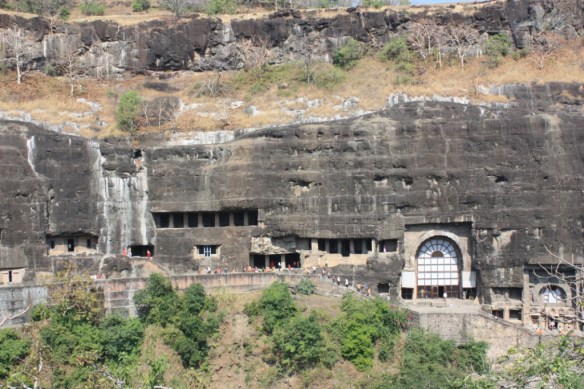
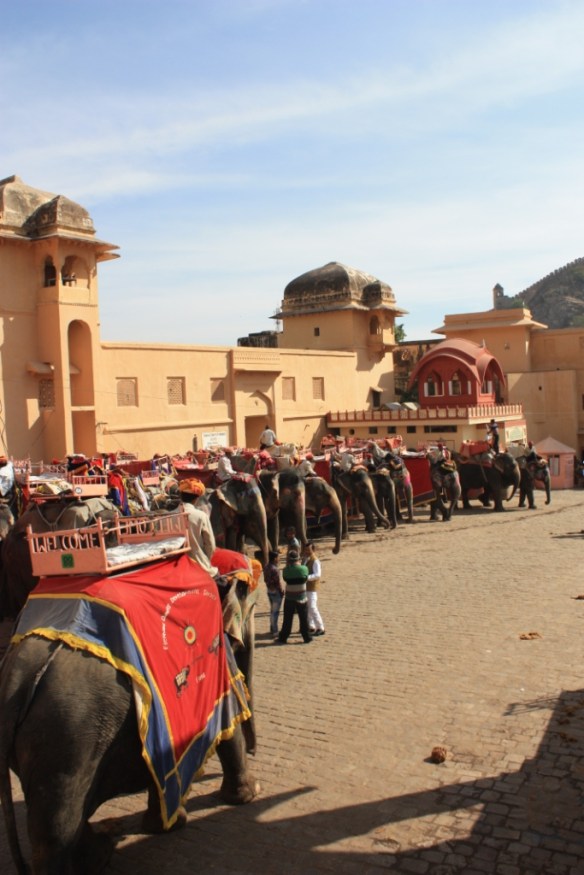
Taken in October of 2012 at Angkor

Taken in October of 2012 at Angkor
 The Little Prince by Antoine de Saint-Exupéry
My rating: 5 of 5 stars
A pilot crash lands in the middle of the desert and meets a little traveler who came from a tiny planet. As this “Little Prince” tells of his travels, he shares his child-like (not to be confused with “childish”) wisdom on friendship and how adults misunderstand what are “matters of consequence.” While the Little Prince takes a child’s perspective, one’s responsibility to others is an important theme. Of course, that may just be the theme intended for children. At the same time, the lesson for adults may be to reevaluate what one considers important. (The reader may be familiar with the controversy as to whether this is really a work of children’s literature.)
The book is humorous and light-hearted, but with some serious themes and moments. There are many though-provoking ideas in this classic. Some quotes that struck me as profound are:
“The thing that is important is the thing that is not seen.”
“One runs the risk of weeping a little, if one lets oneself be tamed.”
“’Then you shall judge yourself,’ the king answered. ‘That is the most difficult thing of all.’”
“For it is possible for a man to be faithful and lazy at the same time.”
It’s a tiny book—less than 100 pages, including the many color drawings that feature throughout the book.
I’d highly recommend this book for anyone who hasn’t read it at least once. (There may be a couple of you out there.)
 Fortunately, the Milk by Neil Gaiman
My rating: 5 of 5 stars
Amazon page
It’s “The Usual Suspects” for kids, but with Gaiman’s humor and imagination. A father goes out to buy a carton of milk for his kids’ cereal. When he comes back after being long delinquent, he’s got a rather extraordinary explanation for why the short run to the corner c-store took so long.
I read in a Gaiman’s new nonfiction collection, “The View from the Cheap Seats,” (due out May 31, 2016) that even he got grief for writing a children’s book in which the lead isn’t a child. But, he’s Neil Gaiman; so they wisely published it anyway. While the book is aimed at the children’s market, there’s enough humor and absurd happenings to keep an adult reading. So the risky choice of protagonist may prove useful. It certainly helps Gaiman’s argument against narrow definitions of children’s versus adult books (also discussed in detail “The View from the Cheap Seats.”)
Apropos of a youth market book, it’s only about 140 pages, but that’s with extensive illustrations (on almost every page, and many are full-page) and large font. Chris Riddell’s black and white drawings match the whimsicality of the text well.
I’d recommend the book for anyone who reads kid’s books (whether they’re a kid or not.)
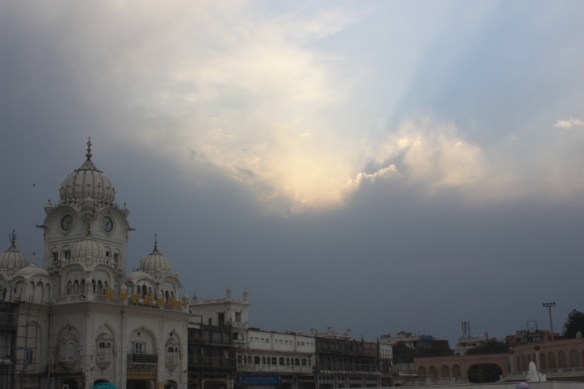
Taken on April 8, 2016 in Amritsar

Taken on April 10, 2016 in Amritsar

We watched a chipmunk tug a blanket up a tree in the garden of the Maharaja Ranjit Singh Panorama in Amritsar. It was neither a small cloth nor a small tree. (But the heart of that rodent was huge.) It’s a beautiful garden, and the museum is highly undervalued by the “must-visit” lists–e.g. as TripAdvisor. If you’re in Amritsar, give it a try.
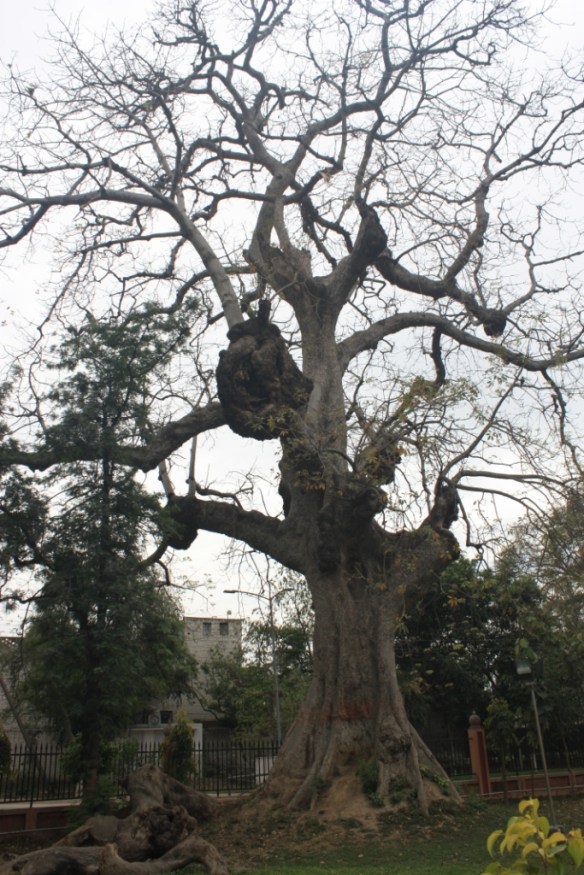
This is the tree in question.
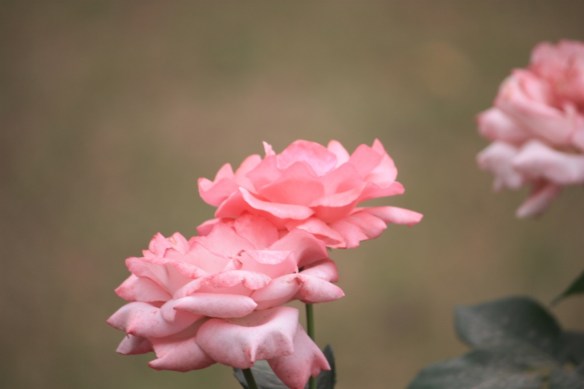
And here are some flower photos from the garden.


 Applied Tai Chi Chuan by Nigel Sutton
My rating: 4 of 5 stars
This book distinguishes itself from the pile of books on tai chi chuan sitting on the shelves of your local bookstore. Most tai chi books are large-format, glossy books with full-color photographs of the various moves of the solo forms–usually the Yang-style short form (also called the Beijing Standard Form [or the like.]) Sutton’s book, on the other hand, is mostly text about the history, philosophy, tactics, and lesser-known dimensions of tai chi chuan. In short, while most books give little indication that there’s more to tai chi than the solo form, Sutton builds his niche in focusing on everything other than the solo form. Those who’ve practiced tai chi will be familiar with the on-going debate about whether the art is primarily chi gong (energy work for health purposes) or a martial art. Sutton comes down on the latter side.
The book consists of 32 short chapters (mostly 2 to 4 pages.) It isn’t written as a how-to manual, but rather as a series of meditations on various aspects of tai chi. As I mentioned, the book deals more with “push hands,” the “san shou” fast forms, and weapons than does most books on tai chi. It doesn’t try to teach these methods, but instead tries to offer insight on them. The book would be of most value to someone who has some experience with the art, but who isn’t an expert. The latter might find it boring, but those without minimal knowledge might have trouble visualizing what the author is attempting to convey.
There are some black & white graphics in the book. They are static photos in a section at the middle of the book. The pictures don’t convey a sequence or details of any particular movement, but instead capture various masters within a movement so as to give the reader a taste of the art. There are also a few line drawings used to show items such as weapons and the yin-yang symbol.
The oddest part of the book is the last chapter (which is far longer than the others and is out of character with the rest of the book.) It consists of extended bios on a number of teachers under which the author has trained. I understand the value of paying homage to one’s teachers, but the bios in this section are long and are inconsistent with the general approach of the book. In essence it’s like a 15 page dedication on a 125 page book. The teachers covered seem to have nothing particular in common other than that the author trained with each of them as some point in his life (i.e. they cover different styles and are from different locales.) That said, there are some interesting nuggets about some of these individuals.
I’d recommend this book for anyone wanting to learn more about tai chi. However, if you’re purely interested in learning the solo forms for chi gong (i.e. you don’t want to know about tai chi as a martial art) then one of those other books may serve you better.
 Guide To Chinese Martial Arts by Li Tianji
My rating: 3 of 5 stars
This is a brief guide to the martial arts of China. The bulk of the book (about 150 pages of the book’s 178 pages) tells the reader about three major branches of Chinese martial arts: Chang Quan, Tai Chi Chuan, and Shaolin Kung fu at a general level. (The book devotes space to those arts in the same order–i.e. the largest number of pages discuss Chang Quan, then Tai Chi, and the smallest number to Shaolin. This may be surprising as your average non-Kungfu practitioner is least likely to have heard of Chang Quan—by name anyway. Chang Quan is a general term that encompasses several Northern Styles—some of which might be more familiar to general readers [of martial arts books.]) The book also has a brief chapter that describes the history of martial arts in China from ancient times through the modern era, and one that talks about the many schools of martial arts of China (in no great detail because there are so many of them) as well as the various strengths and purposes of these arts.
The bulk of the illustrations are line drawings used to show typical sequences for each of the three major branches of martial art mentioned above. However, there are some black and white photographs and copies of relevant art works and documents as well.
I found this book to be interesting and informative. There’s a bit too much space devoted to describing techniques for my taste. However, I realize that I may be in the minority in that regard. I don’t believe that martial arts can be taught via books or media, and, therefore, there’s a diminishing value to detailed descriptions of technique. In this sort of book one only needs to get a feel so as to be able to see how the martial arts compare and contrast with others.
I’d recommend this book for someone who wants to learn a bit about the nature of Chinese martial arts. It may not be of much value for an expert, but for a kungfu neophyte it provides some interesting information about the history, tactics, and training methods of Chinese martial arts. It’s originally published by Foreign Languages Press in Beijing, but I don’t suspect there is any more bias than there would be if it was published by anyone else (i.e. it’s the rare martial arts book that doesn’t present the martial art under discussion as the ultimate fighting art.)