
Taken in Kashmir in August of 2016

 The Story of the Human Body: Evolution, Health, and Disease by Daniel E. Lieberman
My rating: 4 of 5 stars
The story that this book tells is of a human body adapted and optimized for hunting and gathering that has been thrust by agricultural and industrial revolutions into conditions for which it is ill-suited. The central idea is that of the “mismatch disease.” The mismatch in question is a mismatch between the lives humans were evolved to lead and the ones that we have developed through cultural and technological progress. The human body is governed by what Nassim Nicholas Taleb calls “anti-fragility” or what biologists call “phenotypic plasticity.” Both terms say that our bodies get stronger when exposed to physical stressors and weaker in the absence of such stressors. We’ve now used culture and technology to reduce exposure to such stressors, while—at the same time—food is more available than ever and is in calorically dense / nutritionally sparse forms. This mismatch accounts for many problems. Of course, technology has also allowed us to reduce our exposure to dirt and germs, and this, after being once a boon, has begun to swing us into dangerous territory.
The 13 chapters (including the introduction) are divided into three parts in a logical manner to address the book’s objective. After an introduction that lays groundwork for understanding human evolution in a broad sense, the first part describes human evolution up to the point where culture became dominant force for our species. It clarifies how we became bipedal, how our diets developed, how we got smart, and the ways in which the aforementioned characteristics are interconnected. The second part shifts from Darwinian evolution to cultural evolution, and—in particular—elucidates the effects that the agricultural and industrial revolutions had on the human body. These cultural forces act much faster than evolution. While some argue that humans aren’t really subject to evolutionary forces anymore, owing to cultural and technological advances, Lieberman points out that Darwinian evolution does still effect humanity, but its effect is muted by comparison to fast-acting cultural developments. The final part looks at humanity in the present and projects out into the future. It considers what effect an over-abundance of energy and a declining need for physical activity have had on our species, and what can be done about it.
This book is thought-provoking, well-organized, and uses narrative evidence and humor to enhance readability. (A discussion of the absurdity of products in the Skymall catalog—e.g. luxury items for pet—is a case in point.) It certainly gives on a good education about human evolution. Furthermore, while there are many books out there that deal with mismatch as a cause of diseases like obesity and diabetes, Lieberman also addresses under-explored issues like postural problems from chairs, the influence of shoes on running gait, and the development of nearsightedness because of our close-focusing ways.
I’d say the book’s greatest flaw comes in its discussions of solutions at the end. The author puts all his eggs in the basket of wholesale solutions aimed to make society as a whole improve, while he could do more to share the details of what individuals can do to solve their own problems. Lieberman considers why natural selection won’t solve problems of mismatch and dysevolution. Then he considers how research and development and educational campaigns can only provide partial solutions. His ultimate solution is suggesting regulatory paternalism—e.g. what economists call Pigovian taxes–taxes designed to change behavior by making bad behavior (in this case sedentary lifestyles and over-eating / malnutrition) more expensive. Perhaps such solutions (which will remain political untenable for the foreseeable future in the US, at least) may be necessary, but one shouldn’t conclude that readers with better information and ways of approaching the problem can’t make a difference. I say this based upon the fact that a substantial (if minority) portion of the population is already doing the right thing—eating right, exercising, and not succumbing to modernity’s creature comforts. I, furthermore, say it as a one trained as an economist who has seen easier attempts at paternalism fail over and over again.
I’d recommend this book. I think it gives the reader insight into the problems caused by being evolved to be one thing while being groomed by culture to be another.
 Missing Microbes: How the Overuse of Antibiotics Is Fueling Our Modern Plagues by Martin J. Blaser
My rating: 4 of 5 stars
This is one of several popular human biology books of recent years to take note of the fact that your body’s cells are outnumbered 10 to 1 by the bacteria that live in and on you—mostly in your digestive tract—and that our penchant for killing microbes has begun to show signs of harm as well as good. Since the germ theory took hold, we’ve been slaughtering all the little buggers we could, but increasingly we’ve learned that this isn’t without costs. In essence, we’ve been throwing out the baby with the bath water when it comes to our bacteria, while at the same time creating super-bugs.
As a first-worlder who’s been living in the developing world (India), I sometimes get ask if I get sick here a lot or at all. My stock response is to ask the asker whether they have Crohn’s Disease, IBS, Type II diabetes*, or any of the other diseases of affluence seen mostly in the first world. (*Type II diabetes is becoming much more prevalent in the developing world, notably in India where they like their deserts about 9000 times sweeter than, say, a fudge brownie. Furthermore, the disease has disproportionate effects in such countries because of limited treatment availability and late diagnosis.) In many cases, these developed world diseases are being tied to the killing off of our good gut bacteria.
Doctor Blaser’s book focuses on how overuse of antibiotics creates problems. For those who say, “I don’t get no stinkin’ antibiotics when I’m sick. I just suffer it out. Ergo, I don’t need to read this book,” there remain facts of which you should be aware. One such fact is that some of the antibiotics injected into the animals that become our food can act against our own personal microbiome. Yet another is that antibacterial soaps and gels are ubiquitous. Furthermore, the increased popularity of C-sections has starved infants of a source of good bacteria, and made them more prone to certain childhood illnesses.
“Missing Microbes” is organized into 16 chapters. The first discusses many of the “modern plagues” that have come about through the wholesale war on bacteria. The next couple chapters look at the role of microbes on the planet and in our bodies. There is a discussion of increasingly successful pathogens as well as the drugs that came along to take care of them. There is a discussion of over-prescription of antibiotics by dentists and doctors, their use in agriculture, and the transfer of good bacteria from mother to child and how rampant use of C-section negates this transfer. There are a couple of chapters on H. pylori and the lessons learned from trying to eliminate it after it became tied to ulcers. (In one of the most famous stories in modern medicine, a researcher swallowed a beaker of H. pylori to prove his theory to a skeptical audience of physicians.) Asthma is discussed as an example of an illness one might not expect to come about from destroying gut bacteria. One of the effects covered over two chapters is getting bigger (re: fatter as well as taller.) Staving off disease under crowded conditions isn’t the only reason modern agriculture uses antibiotics, it also makes for big, meaty animals—which when eaten by people may make big, meaty (actually, fatty) humans. Blaser then talks about how bad the situation might get (using the term “antibiotic winter,”) before discussing solutions. It’s, of course, true that humanity has gained a lot from antibiotics, and so putting the genie back in the bottle is not a solution. A nuanced approach is called for, and that’s what the author discusses.
I found this book to be informative, and would recommend it to anyone wanting to learn more about the risks presented by overuse of antibiotics.

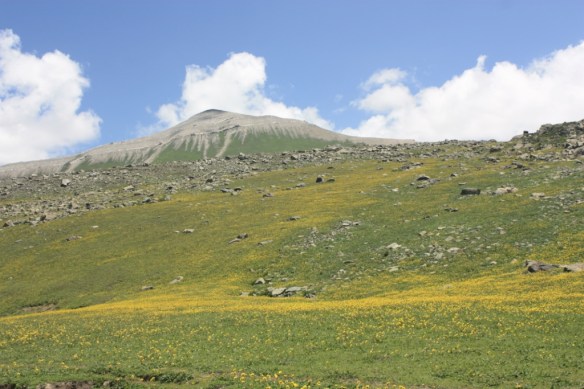
Taken in July of 2016 in Sonamarg
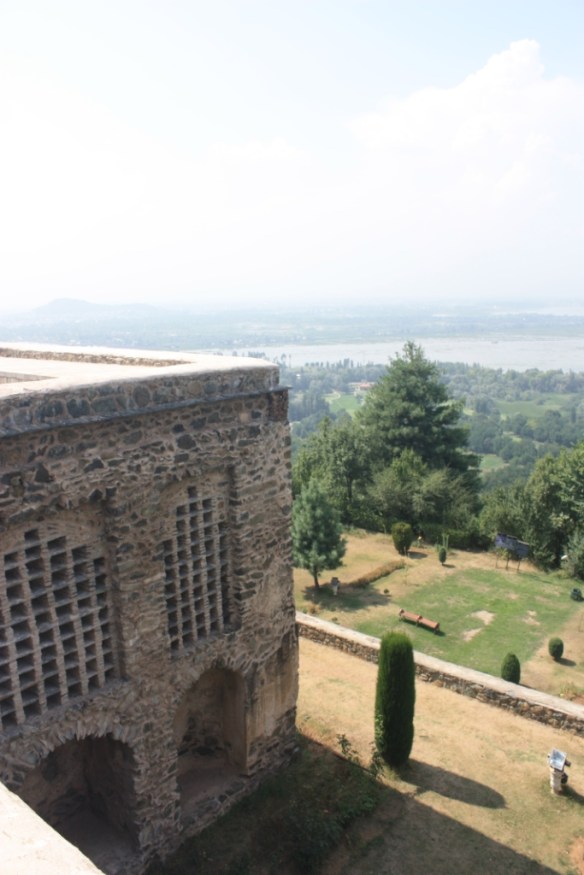
Taken in July of 2016 in Srinagar
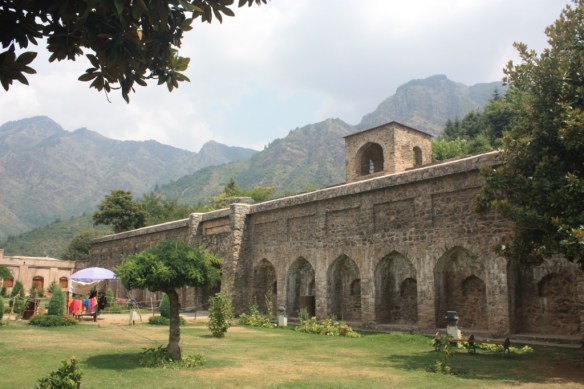
I’m just back from three weeks of travel in Kashmir and Ladakh. I’m planning on doing a post about our experience traveling in Kashmir, which was interesting–to say the least–owing to the renewed unrest there of recent weeks. (It didn’t feel dangerous, but it was quite restrictive.)
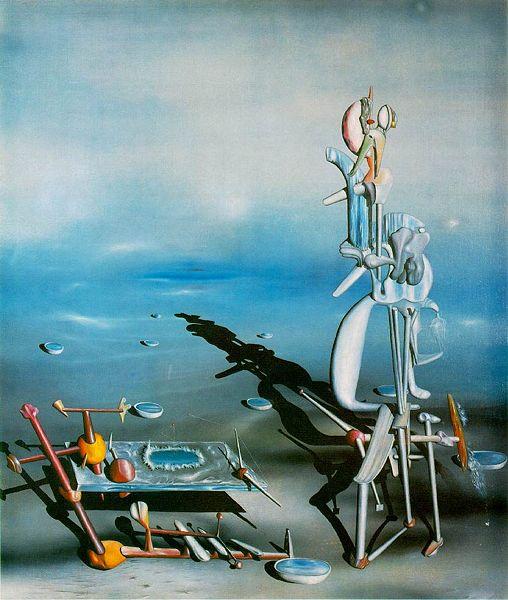
“Indefinite Divisibility” (1942) by Yves Tanguy
T.S. Eliot said,
Midnight shakes the memory
As a madman shakes a dead geranium
I know–exactly–what he means
Tragedy lurks in the midnight deeps
It hides, free from consciousness
It hides, outside memory
A catastrophic tick that has no echo
Fleeting images and emotional residue
all amble home in the morning

Taken in July of 2016 in Kolkata
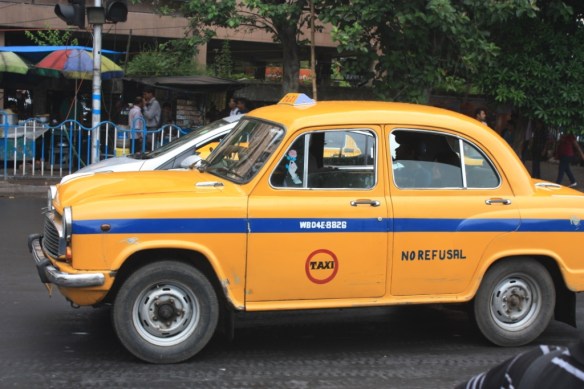
Kolkata (Calcutta) has some distinctive taxicabs. They’re yellow Ambassadors, a model made by Hindustan Motors, featuring a solitary blue racing stripe.
 Yoga Assists: A Complete Visual and Inspirational Guide to Yoga Asana Assists by Sharon Gannon
My rating: 4 of 5 stars
This is an illustrated guide to making yoga assists, or what are often called corrections or adjustments. The style is Jivamukti Yoga, and the book is written by its founders. The postures will be familiar to practitioners of any form of Hatha Yoga, but the action of the teacher (or assistee) may be quite unlike what one is used to.
This book offers some valuable information for any teacher of yoga, though many—probably most—will find the overall approach unsuitable. (If it is suitable, more power to you; you’ll want to read and re-read this book.) However, even if you’re not likely to use this style of teaching, there’s worthwhile technical information to be gained.
I’ll explain why this won’t be everybody’s cup of tea. First, many of the assists are highly invasive, by that I mean they involve being at an intimate distance with the student for an extended period of time. If you primarily teach experienced students who know and trust you, these invasive assists may be helpful. However, if you’re teaching beginners in studio sessions, one may need to be selective about what one uses and what one doesn’t. The ultimate goal is “chitta vritti nirodhah” (calming mental turbulence) and not to contort the student’s body into a perfect version of the posture. If, instead of facilitating the student’s look inward, you make them feel awkward and self-conscious, you’ve missed the mark. If everybody in question has achieved a monkish state of mind, this won’t be an issue, but history (and many a lawsuit) suggests that this is often not the case.
The second issue follows from the discussion above. By manipulating the student toward some objectively perfect version of the posture, you may encourage them to think that is important—that it’s important to you and that it should be important to them. This may have adverse ramifications such as driving away students who are far from the perfect expression of the pose or making it difficult for them to internalize santosha (contentment with where one is presently.) Being so hands-on may be at odds with one’s philosophy. Not only does it discourage contentment and gradually advancement toward better form, it also detracts from the notion that it’s about the student looking inward. (In other words, so much hands-on assistance thrusts the teacher onto the spotlight of what should as much as possible be the student’s private time and space.) Corrections are needed to avert injuries and to help the student improve, but this level of contact is more intense than required for those goals.
Still, I found this to be an informative and worthwhile read. It’s not every assist in the book that is invasive, and the ones that are still have their use with students with whom one has built trust and rapport, and particularly in workshop settings. The assists are optimized to be stable and safe, which is why they are often close and handsy—at least for those of us who were taught to start with verbal instruction, move to non-touching gestural instruction, and—only when necessary–put hands on the student (and then with care to be at an angle so as to not make the student uncomfortable.) Overall, the book does a fine job of presenting the necessary information.
The authors use both photographs and line drawn diagrams to convey the details of the assists. The organization is logical. After a section of general background, the book proceeds through poses using the standard groupings with which Hatha teachers will be acquainted (standing, forward bends, twists, back bends, inversions, and relaxation poses.) There is textual explanation in a form consistent from one asana (posture) to the next to support the graphics. The poses are the most common of the classic asana, and they cover a good number of the basics that one will teach in classes. They also provide some insight into how to apply the same principles to intermediate and advanced poses that aren’t included.
The book does have its faults. One of them is to wedge in irrelevant information. This can be seen from the get-go with an introductory “Go Vegan” rant. There’s also a bit of a tendency to muddle science with pseudo-science, but all that matters for the most part is basic anatomy–and that’s handled well enough. This isn’t so much criticism as forewarning, but you may find some of the commentary to be like those YouTube parodies of yoga classes—you know the ones that are hilariously far out. But just occasionally.
I’d recommend this book for yoga teachers or intermediate / advanced students who want to increase their understanding of alignment.