BOOK REVIEW: Mastermind by Maria Konnikova

Mastermind: How to Think Like Sherlock HolmesMastermind: How to Think Like Sherlock Holmes by Maria Konnikova
My rating: 4 of 5 stars

Amazon page


This is a book about how to be more observant while avoiding the pitfalls of drawing faulty conclusions based on unsound reasoning, tainted memory, or faulty assumptions. Examples from the canon of Sherlock Holmes (i.e. the 4 novels and 56 short stories written by Sir Arthur Conan Doyle) are prevalent throughout the book, but Konnikova also discusses Doyle’s limited real life investigations as well as those of the men who influenced the writer. Doyle lived at time when science and reason were making great strides in overcoming superstitious and spurious ways of thinking, and so the Sherlock Holmes works were cutting edge for their time.

The book is neatly organized into four parts with two chapters each. The first part is entitled “Understanding Yourself” and it unpacks what we have to work with in the human brain. One learns how one’s brain works and how it sometimes leads one astray. It also introduces how the scientific method can provide a framework to harness the brain’s strengths and avoid the hazards of its weaknesses.

Part II investigates how one can become more skilled at investigation, as well as the role played by creativity and imagination. We learn how our attention is much more limited than we feel it to be.

The third part reflects upon the building one’s powers of reasoning as well as the importance of knowledge-building in the process. Konnikova describes “deductive reasoning” using Holmes’s favorite term. [She doesn’t really get into the whole muddle of—as many have pointed out—the fact that Holmes more often uses induction than deduction, i.e. going from very specific observations to draw broader conclusions.] The second chapter considers the importance of being knowledgeable and broadly educated. Holmes’s conclusions often hinge on fairly arcane knowledge about a range of issues: animal, vegetable, and mineral. However, a large part of the discussion is about the idea of degree of confidence. It’s also pointed out that knowledge can be double-edged sword—an impediment as well as a tool. Extraneous knowledge may lead one down the wrong path.

The final part suitably closes the book with one chapter on practical advice for how to put all of the knowledge discussed in the book to work and another on the recognition that even the best minds can go astray. The first chapter summarizes as it offers pragmatic advice. The second of these chapters discusses a fascinating investigation of a supernatural phenomenon (i.e. the existence of fairies from photographic evidence) upon which even Sir Arthur Conan Doyle’s mind led him astray.

The use of the Sherlock Holmes character is beneficial as many readers have consumed the entire Holmsian canon, or will do so, because it’s short and readable even today. Even those who haven’t read it will at least be familiar with the lead character and his proclivities as well as the other essential characters, such as Dr. Watson, Professor Moriarty, and Irene Adler. There are too many television shows, movies, and pop culture references to not be aware of these characters. One needn’t have read all Doyle’s Holmes to benefit, as Konnikova offers the essential background. However, one might find it a bit more intriguing if one has read the canon. At the end of each chapter, Konnikova offers a set of references that point to the sections in the Sherlock Holmes canon relating to that chapter’s discussion. Konnikova uses quotes and stories that aren’t attributable to Doyle to good effect throughout this book as well.

Graphics are used sparsely and only as absolutely necessary. There is a “Further Reading” section at the end of the book in addition to the end of chapter pointers. Besides a list of the Sherlock Holmes books, there are chapter-by-chapter prose suggestions of relevant key readings.

I found this book interesting and informative. While it may be most useful for someone who wants to become more attentive, less prone to biases, and more effective in drawing conclusions, it could also be enjoyed by Sherlock Holmes fans as a way to drill down into stories a bit further.


View all my reviews

DAILY PHOTO: Erawan Shrine

Taken March 9, 2017 in Bangkok


This Hindu shrine to Brahma is located at a prominent intersection in downtown Bangkok.


Those who don’t know it as a religious site may be aware of it from the bombing that occurred there in August of 2015. 20 were killed and more than 120 were injured.


DAILY PHOTO: Red

Taken on March 5, 2017 in Bangkok

DAILY PHOTO: The Elephant Building [Chang Building]

Taken on March 5, 2017 in Bangkok

DAILY PHOTO: The Ananta Samakom Throne Hall

Taken on March 5, 2017 in Bangkok

Taken on March 5, 2017 in Bangkok


img_7041

DAILY PHOTO: Curious Lizards of Dusit Zoo

Taken on March 5, 2017 at  Dusit Zoo in Bangkok

Taken on March 5, 2017 at Dusit Zoo in Bangkok


img_6958


img_6955

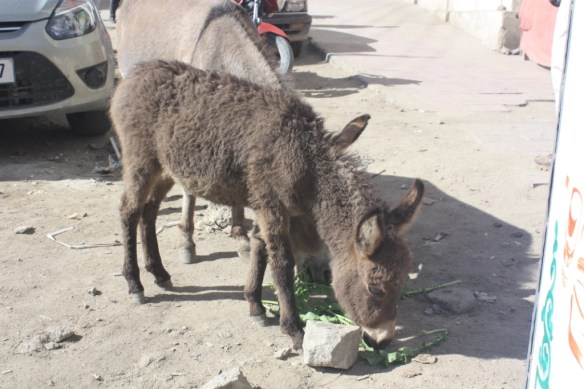
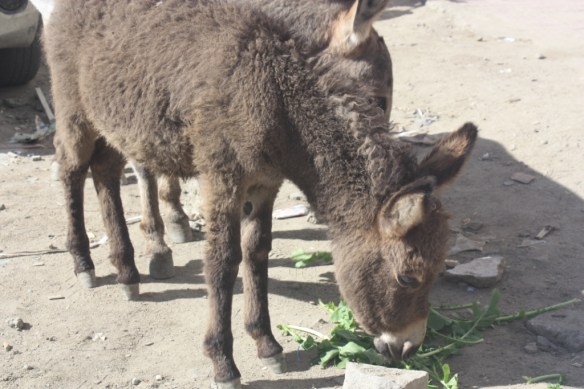
DAILY PHOTO: Ladakhi Donkeys

Taken in the summer of 2016 in Leh

Taken in the summer of 2016 in Leh


img_2062

DAILY PHOTO: Earth & Sky in the Andes

Taken in the Peruvian Andes in the summer of 2010

Taken in the Peruvian Andes in the summer of 2010


img_3855


img_3874


img_2938


img_3424

DAILY PHOTO: Kandy Sunset

img_0548

Taken in May of 2015 in Kandy

Taken in May of 2015 in Kandy

BOOK REVIEW: Norse Mythology by Neil Gaiman

Norse MythologyNorse Mythology by Neil Gaiman
My rating: 5 of 5 stars

Amazon page


This is the telling of a select group of Norse myths with the signature humor and down-to-earth prose of Neil Gaiman. It’s a fascinating collection of stories and is well-ordered so that the reader is often familiar with references to past events from earlier stories.


After an introduction that explains how Gaiman first became interested in Norse mythology both through the comics and then actual mythologies, there are a couple of chapters that largely provide background before delving into the chosen Norse myths in great detail. One of these chapters gives extended “bios”—if you will—for three of the most prominent characters: Odin, Thor, and Loki. Then there are a couple of chapters that both convey the timeline and of the spatial dimensions of the nine realms of the world the Norse created.


There is a brief story of how Odin lost his eye in the pursuit of wisdom that’s entitled “Mimir’s Head and Odin’s Eye.”


It’s from this point on that the stories are substantial and complete. The first of these stories is entitled “The Treasures of the Gods” and it’s about of how Loki created a competition among dwarf master craftsman. Loki does this in order to keep Thor from beating him with Mjöllnir after the god of mischief stole the hair of Thor’s wife, Sif (one of the items to be judged by the gods was stipulated to be a set of hair that would reattach and be as beautiful as Sif’s original hair.) The competition was Loki’s way of using a clever ploy to make the fix without it costing him anything and while at least sticking it to the dwarfs a little. The story is also well positioned as some of the items that are gifted to the gods in the competition are seen repeatedly in later stories. Loki creating mischief is a recurring theme not only in Norse mythology, but in this collection of myths specifically as they make for some particularly humorous tales.


“The Master Builder” is about a builder who shows up right as the Asgardians need a wall built. He claims that he can build it improbably quickly in exchange for the sun, the mood, and the hand of Freya (the most beautiful Norse goddess) in marriage. While all the other gods consider the price too high—not the least of whom being Freya—Loki convinces them that it’s an impossible task and that they can get free foundations if they give the builder a set timeline (a fraction of what he stated) and set another limitation or two. When they are on the verge of losing, the gods—suspecting the builder isn’t what he appears—agree to cheat.


“The Children of Loki” concerns a second family that Loki that is kept secret from the Asgardians. The three are an odd bunch: a girl who is half beauty / half corpse, the creature that becomes the Midgard serpent, and Fenrir wolf. Most of the story deals with the wolf child and the fact that they will only release the creature if they know that they can later bind it, but its strength is such that it seems to be able to break any binding. This story also explains why the Norse god Tyr has only one hand.


“Freya’s Unusual Wedding” This story revisits the idea of someone trying to negotiate Freya’s hand in marriage. Freya proves unwilling to take one for the team in order to fix the problems of other gods—in this case Thor’s hammer, Mjöllnir, has gone missing and the thief says he will give it back as a wedding gift. This time it is Heimdall—rather than Loki—who hatches a clever plot that will save the day.


“The Mead of Poets” This story revolves around a god of wisdom named Kvasir who comes into being after a strange treaty agreement between the Aesir and the Vanirs. Kvasir is killed and his blood is used to brew mead that is said to give imbibers the ability to write great poetry. This time it is Odin who saves the day and retrieves the mead. It also offers a humorous explanation of from whence bad poetry comes.


“Thor’s Journey to the Land of the Giants” Thor travels with Loki, and—eventually—with a bondservant named Thialfi (how Thialfi comes to be with them is part of a prank that Loki pulls that is explained at the story’s beginning.) The three were each subjected to a competition to see whether they were worthy, and it appears they weren’t.


“The Apples of Immortality” This is another tale that begins with a traveling trio including Thor and Loki. When Loki gets himself into hot water, he agrees to hand over the Apples of Immortality, which go hand-in-hand with the goddess who oversees them, Idunn. Without Idunn’s apples the Asgardian gods age and die like humans. Loki first has to hatch a plot to surrender Idunn, and then he’s forced by the angry and aging gods to carry out a plan to get her back.


“The Story of Gerd and Frey” This is a love story in which the god Frey (brother to the aforementioned Freya) is smitten with a woman named Gerd. Frey promises his magical sword, capable of defeating any attack, to his manservant in order for him to ask for Gerd’s hand.


“Hymir and Thor’s Fishing Expedition” Thor needs to borrow the huge mead cauldron of a giant to make a massive banquet happen. Thor goes on a fishing trip to help grease the wheel with the giant, who is very attached to the cauldron. Thor shows both his legendary strength and dimwittedness, but ultimately wins a bet that will grant him ownership of the cauldron.


“The Death of Balder” Balder is one of the most beloved Norse gods, and he dies as the result of one of Loki’s vicious mischiefs. To call it a prank would seem to trivialize it, but that seems to be how Loki views these acts. When the overseer of the underworld (where the dead who didn’t die gloriously in battle go), Hel, agrees that she will release Balder if all the creatures of the world agree that he was beloved, Loki outdoes himself.


“The Last Days of Loki” Adding insults (literally) to the injury of having been responsible for the death of Balder, Loki heads off into exile, but is pursued by the Asgardian gods.


“Ragnarok: The Final Destiny of the Gods” Here we have a description of how the Asgardian end of days is to play out. The Norse gods aren’t immortal, but Ragnarok is the end of a cycle, but not the end of all existence.


As I mentioned, the first couple chapters offer more backstory than the extensive myths through the rest of the book. This works well as it gives the reader the necessary background in a readable and palatable fashion. Another nice feature is a glossary that includes all the named characters and major places mentioned throughout the book. The section of mini-bios at the front only covers Odin, Thor, and Loki, and so it’s beneficial to have a list of all the various other gods–a number of whom (e.g. Freya, Frigg, Heimdall, Tyr, etc.) play major roles in one or more of the stories.


I’d highly recommend this book. It’s extremely readable, humorous, and educational to boot.

View all my reviews