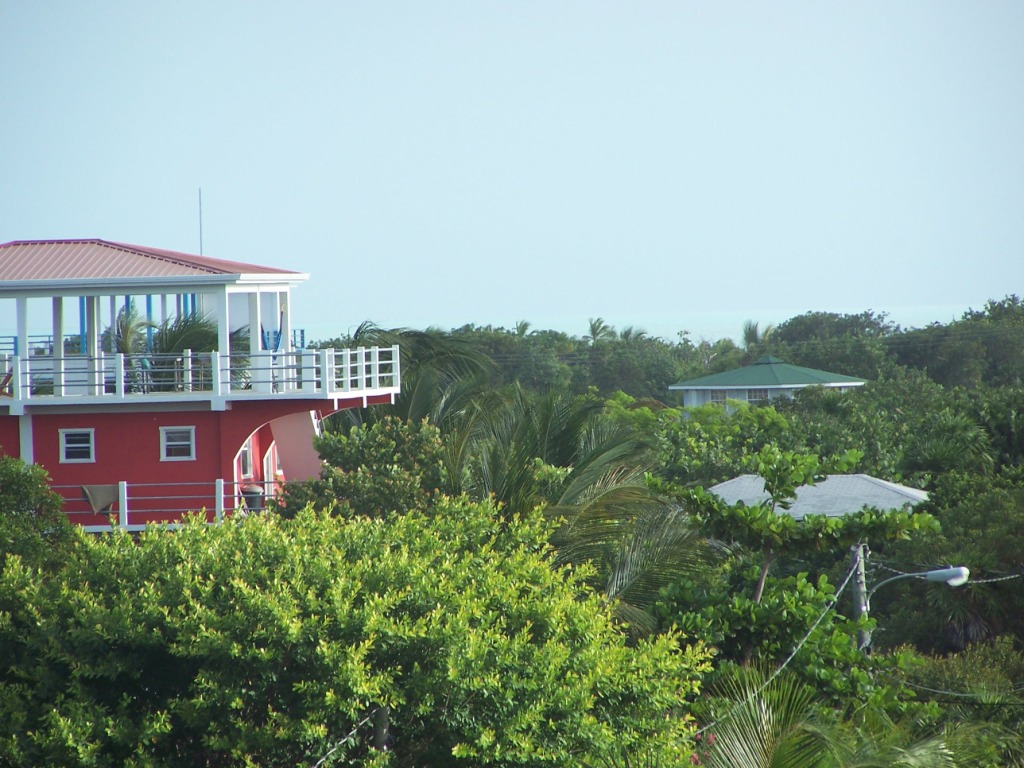
Taken from the rooftop gazebo of a B&B.
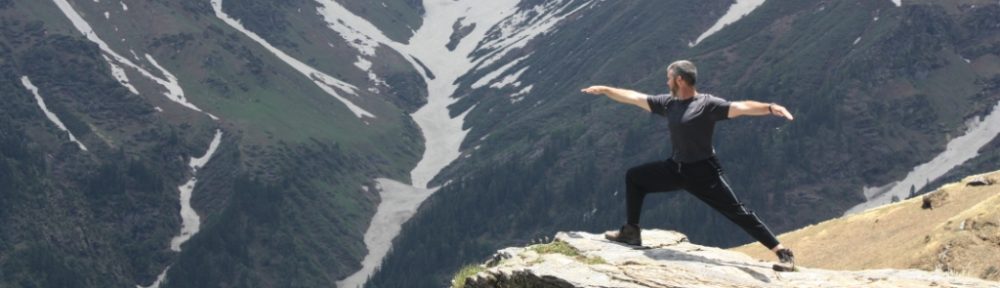
Taken from the rooftop gazebo of a B&B.
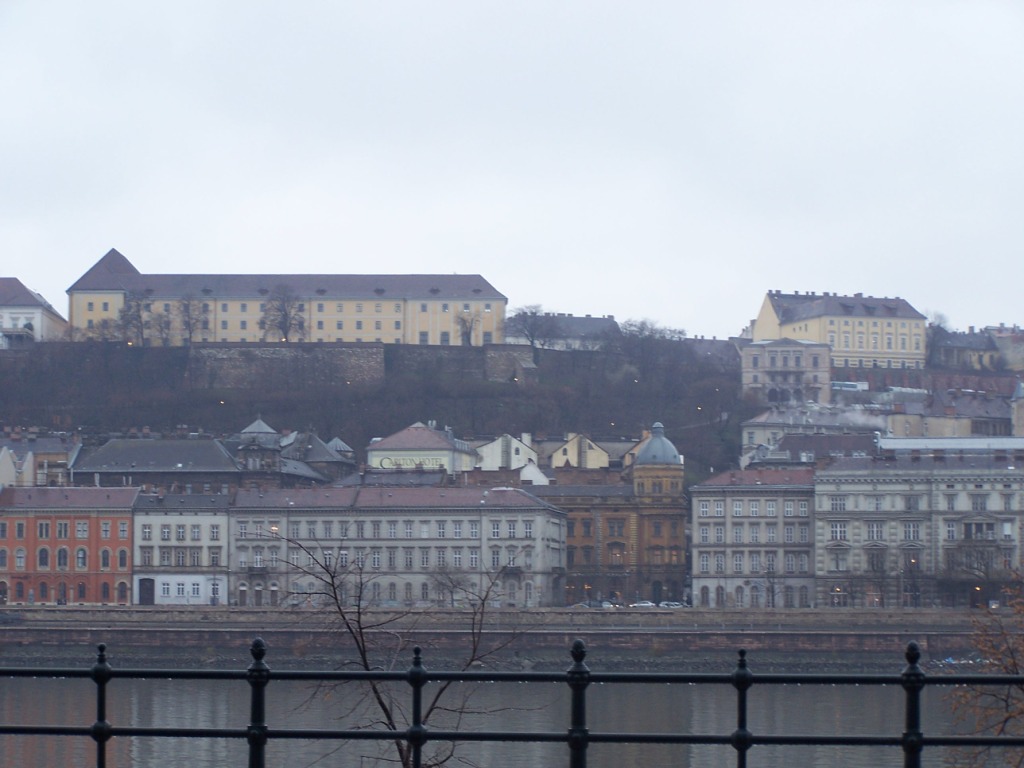
Buda from Pest; Taken in December of 2008

Three women standing around chatting in the nude, as happens all the time… in the minds of men. Taken in Tokyo in the Summer of 2008.
[Yes, it has come to this–the last bastion of a weary scoundrel. I am rerunning “greatest hits” posts from my first blog. But, if you haven’t seen it, it’s new to you.]
It is easy enough to forget that one is in an authoritarian Communist country when visiting Beijing. They have gone to great lengths to avoid that which Communists around the world have most excelled–constructing buildings that display both a complete lack of creativity and not the slightest hint of visual appeal. On the contrary, the Chinese are putting up some very cutting-edge architecture such as the trouser-leg building, the bird’s nest stadium, and they have even been known to bolt visually interesting facades onto buildings constructed in an era during which they were practicing a more traditional form of Communism. Also, there are few places in the world where market economics thrive more apparently. When I first visited Hungary in the early 1990’s, I was surprised to go into shops and be totally ignored by the sales staff – in some cases while vigorously trying to get their attention. They were simply lagging behind in getting a hang of capitalism. In China, on the other hand, no one would complain that one is being ignored by the sales staff. On the contrary, one is more likely to feel smothered by them. One sales girl of about 1/5th my size actually tried to physically restrain me from leaving by grabbing my wrist.

Oh, there are the hints of the nature of the regime. When one is in Tiananmen Square, there are lists of rules played squakingly over loudspeakers in the manner reminiscent of a concentration camp. However, this is the rare exception. In many cases the Chinese have gone to great lengths to put rules in a positive form. You won’t see “Don’t Walk on the Grass”, but rather signs that say things like “Please Protect the Greenery.” I was told second-hand that someone saw a van pull up and whisk away a local wearing a Tibetan Independence T-shirt while I was visiting, but I cannot corroborate that was true. In general, what I saw was reflective of a market economy in a country that mixed prosperity and poverty in a way not unlike other developing nations that are transitioning upward.

I suggest a visit to the Military Museum for two reasons. First, it houses a sizable and impressive collection of weapons, sculptures, and displays, and it covers a lot of history (mostly 20thcentury, but not exclusively so.) It also seems to be a secret of sorts. It is not a secret in terms of being hard to find. It is located right above a Line 1 subway station that bears its name. That is, where most stations have a name showing in both Chinese characters and the romanized alphabet spelling of the Chinese word, this stop is labeled “Military Museum” in English. However, we had two Beijing guidebooks from large and well-known travel book publishers, and neither had coverage of the museum. This seemed odd because military history is not exactly a rare interest among tourists, and, once inside, it became apparent that this was an extensive museum. My wife and I were two of five non-Chinese tourists that we saw at the Museum, and there were probably a couple hundred visitors throughout the museum at the time.
I think the reason for the lack of visitation by non-Chinese is related to the second reason I recommend a visit here. That is, it gives one a reminder that one is in a Communist country and insight into the nature of what a Communist regime is, and what it does. It is not for those who take umbrage in the face of propaganda, and it is not nearly as friendly as other tourist destinations. There are many statements, such as reference to the Korean War as something like the “Proud War to Overthrow US Aggression in Korea”, that would probably be offensive to many. However, if you are one who can find amusement in an Orwellian framing of events, this museum is for you. Sign-after-sign gives the impression that Mao’s forces were able to crush the Kuomintang, who were armed with the latest and best American arms, while relying on pitchforks, spears, and halberds – because , of course, they always employed superior strategy and had the support of all of the people.

To be fair it doesn’t take an authoritarian regime to put out propaganda, all manner of nationalist forces do this. (In some ways, China reminds me more of a heavily nationalist country than a Communist one. I am told that China has a lesser proportion of its economy owned by the government than some Western democracies, and so the definition of a communist country as one in which the government controls the means of production may not be entirely reflective of China.) While I visited Tokyo on this same trip, I did not get a chance to go to Yasukuni Shrine, which has a museum apparently as full of propaganda as this Chinese Military Museum. Obviously, the two museums mentioned have polar opposite perspectives. The Yasukuni Museum portraying Japan as the victim, rather than perpetrator, of aggression during the Second World War.
However, I am still curious why this is not a destination for the tourists? It is not the case, by any means, that the propaganda is all over the top. In fact, it is, in some cases, subtle. It is also not the case that the museum is altogether hostile to the US and other Western countries. (It should be mentioned that there are some well-deserved anti-Western statements such as those relating to the Opium War.)

There are a few distinct displays of positive relations. For example, among the small arms exhibitions there are cases that pay respect to American gunsmiths such as Samuel Colt.

If imitation is the sincerest form of flattery, then there are quite a number of examples of such flattery in the museum. As I was walking around on the first floor, which holds tanks, missiles, artillery pieces, and other sizable weapons, I came upon what I thought for a moment was an American Humvee. I briefly wondered where they would have gotten one. They have a large number of US World War II era weapons that were either left during that war or shipped to the Kuomintang during the Chinese Civil War, and even a few Viet Nam-era US weapons that presumably made their way from the Communist Vietnamese. However, I was soon disabused of the notion that it was an American Humvee by the placard that said that it was, in fact, a Chinese made “Mengshi” FAV. I have since read that a company in China is actually licensed to make them, and buys a number of the parts from US firms. They also had the spitting image of a Claymore Mine. I have no idea if it was legally licensed or not (but I suspect not.)

There is also a Hall of Friendship that houses a wide range of gifts given to the Defense Minister and other Ministry personnel over the years from various countries. The largest block of these seem to be from Warsaw Pact era countries during the Cold War. However, there are a wide range of countries represented including the US.

Last but not least, in the gift shop you could actually buy “US Ranger” T-shirts and other American military logoed goods (not authentically logoed, mind you, but rather the type of over-the-top imagery that is sold in “Soldier of Fortune” magazine), but the fact that it is sold in a Museum run by the People’s Liberation Army (PLA) is interesting to say the least. As an aside, we came across the PLA surplus store while we were there, and they also sold such US military related wears.
I highly recommend a trip to Beijing. You may need an oxygen supply occasionally, but the food is good, the people friendly, the goods inexpensive, and the history amazing. For anyone interested in history, and particularly military history, the museum has a lot to offer as well– just suspend your disbelief at the audacity of the propaganda at the door.
Those interested in the museum can see more on my other blog .

Taken in Montreal in the Spring of 2011
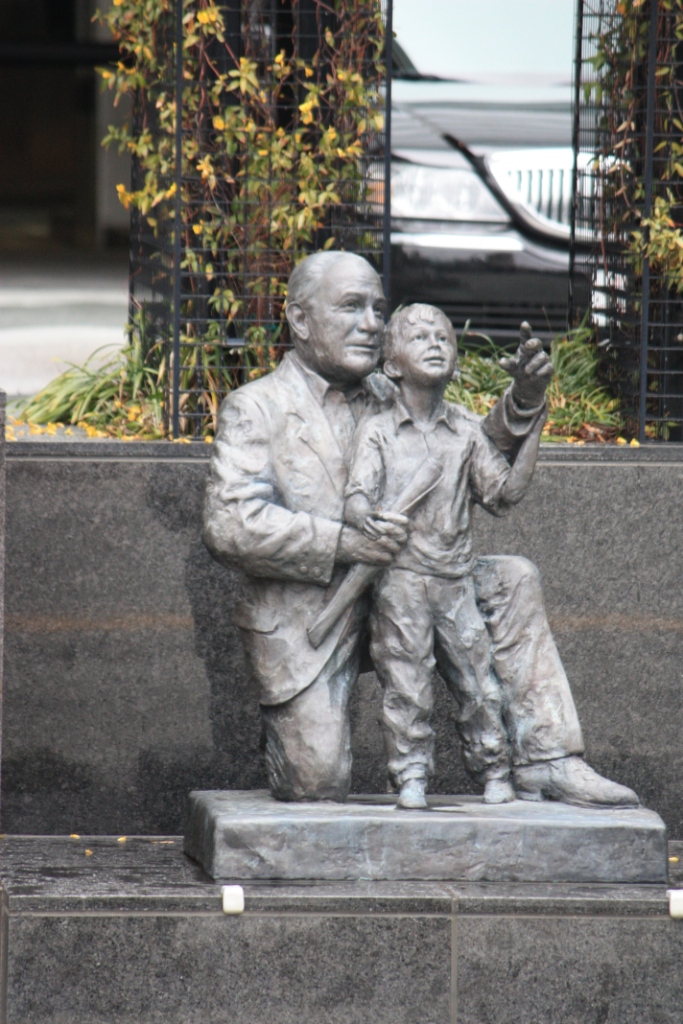
Taken in downtown Atlanta in November of 2012
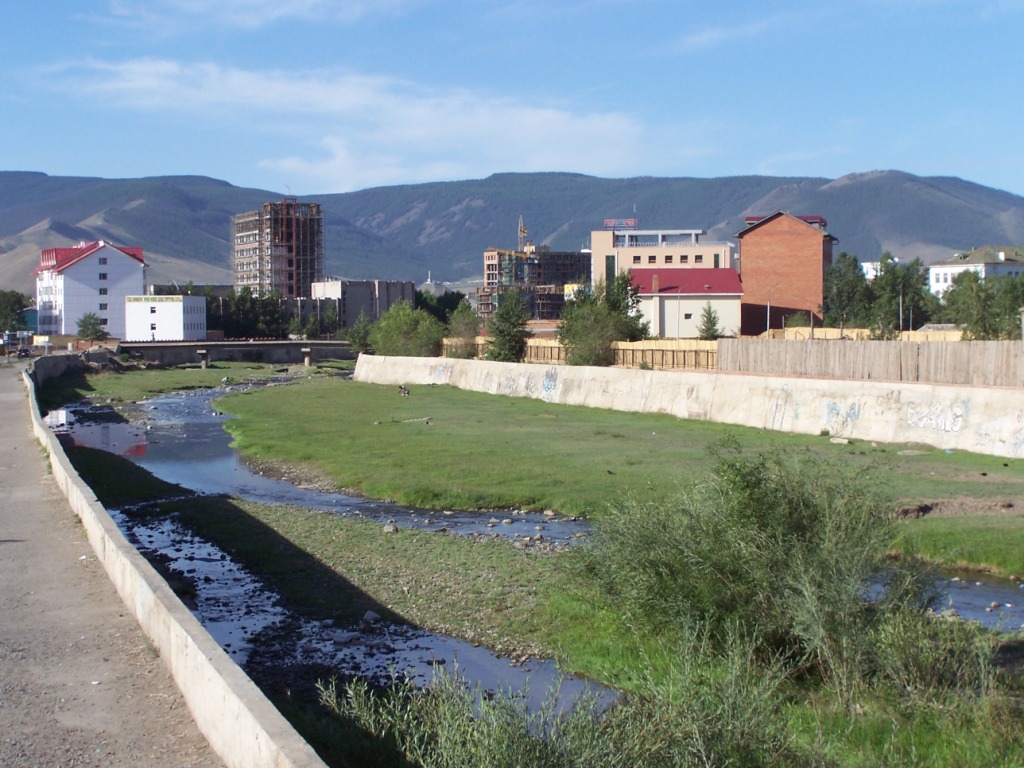
Selbe Gol; Taken in 2007

Taken 1989
Imagine my dismay as a hayseed teenager to discover that Piccadilly Circus wasn’t really a circus at all. There was not an elephant or a trapeze artist in sight.

Need some wriggling snakes for dinner? This is your place.

What’s this India I hear so much about?
I haven’t been writing, editing, or conducting research much as of late. This has probably gone unnoticed in the vastness of the cyberspace, but in the spirit of blogging I thought I’d answer a question that no one asked. I recently learned that my wife and I will probably be moving to Bangalore, India later in the year. This has kept me physically occupied with home repair and boxing up the house. In my non-labor moments, my mental faculties are largely devoted to understanding the country in which I will be living. I’ve never been there before.
India is a harder nut to crack than one might think. Yes, there is the obvious. At 1.2 billion people, it has the world’s second largest population and is screaming up on China for number one. It’s the seventh largest country by land area. It’s the birthplace of that most excellent yoga that keeps all the twisty people twisty. It’s home of tandoori chicken and naan bread, both of which I love.
However, that’s all superficial. I must sadly admit that–until recently–my in-depth knowledge has come from three sources:
1.) The Jungle Books by Rudyard Kipling
2.) A junior high school field trip to see the film Gandhi, which I had been under the impression was six hours long, but, according to Wikipedia, is only a little over three hours long. I guess that, just as kids think everyone is taller, a kid’s perception of Oscar-winning motion picture run times is greatly distorted.
3.) A ton of reading about the Indo-Pakistani rift and its strategic implications as a graduate student studying International Affairs with a focus on Strategic Studies.
With respect to number 3, the amount of study of this region was not commensurate with the fact that the Indo-Pakistani border region is generally voted “Most Likely Point of Origin for Global Nuclear Winter.” I’m not suggesting that the relationship between India and Pakistan is any more dysfunctional, unstable, or rooted in irrationality than other relationships between nuclear powers. However, the adjacency of the two countries is a problem from the perspective of strategic stability. When alarms went off in the U.S. or the U.S.S.R. back in the day, there was at least a little time to evaluate and communicate. Being next-door neighbors makes the Indo-Pakistani conflict particularly troubling. That said, they’ve had some pretty big strain tests on their relationship without blowing up the world, so that’s a positive sign.
So why does this country, which should be so front and center in the global consciousness, remain so mysterious? One way we know countries is by those grand competitions through which nations–friends and enemies alike–interact. In this domain, India really hides its light under a bushel. India has won 26 Olympic medals in 23 games, this is fewer than either Kenya or Jamaica–and both of those countries did it in fewer games. Yesterday, in a post about a book by Nobel Prize-winning Hungarian, Imre Kertész, I may have mentioned that Hungarians have won 12 Nobel Prizes–that’s more than India by a large margin. Now, while India has had its problems, it’s 100 times more populous than Hungary, and has a history of publishing scientific literature in English (an undeniable advantage in this domain.) Depending upon which country Rudyard Kipling is counted toward, India has either eight or nine Nobel Prize wins. Of course, it would be ridiculous to think that India doesn’t have the human capital to excel in such domains. While I realize it may not be a representative sample, I think almost every Indian I’ve met in person has had an advanced degree and has been smart as a whip. So it’s certainly NOT true that this is a country that undervalues education. With a third of the world’s population, statistically speaking, they must be home to physical and mental specimens of humanity that are as impressive as any, but somehow either the will or ability to convert that human capital into winners on the global stage is missing.
I do know a little more about India. It’s the birthplace of both Hinduism and Buddhism, as well as a bunch of other religions. As a martial artist, I’ve heard that many believe most Asian fighting systems could trace their origins back to India. I don’t know how much truth there is to this belief. Martial arts always evolve into optimization with the local conditions and culture, and, therefore, a lack of superficial similarities doesn’t discount the possibility of such a connection. One of the origin myths the Indo-centric martial arts is the story that Bodhidharma brought a fighting style to China that would be the stepping off point for most of the myriad Asian martial arts. The current consensus among historians seems to be that this part of the Bodhidharma story is not true (See: Meir Shahar’s The Shaolin Monastery.) However, that being said, there is an odd but clear connection between this most pacifistic of world religions, Buddhism, and some of the world’s most kick-ass martial arts. Whether one is talking about China’s Shaolin monks or Japan’s legendary warrior-monk Benkei, it’s clear that some exceptional martial arts have developed in tandem with the spread of Buddhism. Of course, even this just creates more questions, namely: Why should a pacifist religion have legendary fighters sprouting up anywhere near it?
I’m looking forward to getting to know more about India than that it’s huge and its Chicken Vindaloo is scrumptious. It’s a country with a long and intriguing history. I want to see its jungles, its deserts, its mountains, and its beaches. I want to visit its temples and learn from its sages. I’m eager to see its vivid colors and smell [at least some] of its pungent scents. At some point I expect to have some awesome posts about my time there, and hopefully some bold pictures as well. In the mean time, please forgive my slacking.


