
BOOK REVIEW: Top 10 Phuket by DK Publishing

Top 10 Phuket (EYEWITNESS TOP 10 TRAVEL GUIDE)Top 10 Phuket by DK Publishing

My rating: 3 of 5 stars

Amazon page

I bought this book in Kindle format both because Amazon was having a sale on the series and because I will be traveling to Phuket soon. The sale included many—if not all—of the books in the series, not just the one on Phuket.

I’m pleased with the book given the sale price that I paid, which was substantially less than Amazon’s usual price and vastly less than list. I don’t think I would be pleased with the book at all had I paid list price, however.

As you may have realized by the title, this book contains a series of lists. The publisher tells one what they believe are the top 10 beaches, temples, bars, travel tips, etc. These lists are arranged in three sections: geographical (best of Phuket Town, best of Patong, etc.), topical (best entertainment venues, best outdoor activities, etc.) and practical (best transportation advice, best money advice, etc.)

The strengths of this book lie in its organization. It’s easy to find what one is looking for. First one finds the list one needs, and then skims the brief text of the particular enumerated items for what one wants to see. This is facilitated by hyperlinking of the table of contents and the index. There are also maps in the back that are connected by hyperlink to the text. I found the maps to be of limited use due to their small size, but I have the baseline model of Kindle, so your results may vary. The maps do put the numbers in large type, so it’s easy to find where a site is in a general sense and relative to other sites.

The weaknesses of this book have to do with lack of information and redundancy. One isn’t going to get more or better information on a given subject from this book than one would from the free tourist information one picks up at the tourism office, from a hotel rack, or online. If you’re expecting any depth or insight, and you would be if you paid the list price of $14, you’ll be sorely disappointed.

The book is only 128 pages, but, on top of that, there’s a great deal of redundancy. Because of the way the book is arranged, one will find out about the same subjects in more than one section. For example, one will read about the Phuket Vegetarian Festival in both the Phuket Town and the Festivals chapters.

A more nit-picky complaint has to do with the arbitrary limitations of the 10-list format. I suspect that some of these subjects could have benefited from longer lists, while others could have been shortened without doing harm.

My bottom line is if you can get this book on sale, like I did, you’ll probably be satisfied. If you pay list, you’ll likely be displeased. Of course, DK Books are largely about the graphics, and my black-and-white, small-format Kindle doesn’t support pictures well—so, again, your experience my vary.

Given the consistency of DK Books, I imagine the same could be said for the other books in the series.

View all my reviews

DAILY PHOTO: Garden of Fatehpur Sikri

Taken October 13, 2013 at Fatehpur Sikri.

Taken October 13, 2013 at Fatehpur Sikri.

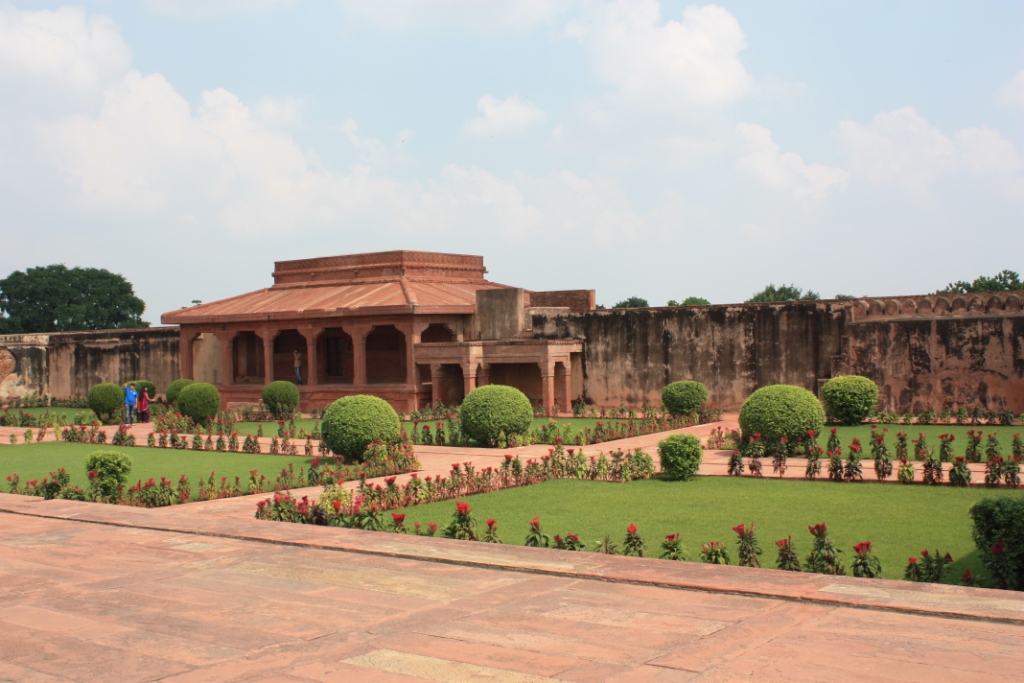
Red sandstone dominates the scene at Fatehpur Sikri, a 16th century Mughal city near Agra. The architecture is beautiful, but the view can be a bit drab. There are two areas where this monotony of hue is broken. One is the white marble in the Tomb of Salim Chishti (as well as some decorative accent white marble on the mosque itself.) The other is this little garden which inserts a field of green and rose-red into the mix.

DAILY PHOTO: Tomato Lantern

Taken November 2013 at Queen's Restaurant in Bangalore

Taken November 2013 at Queen’s Restaurant in Bangalore

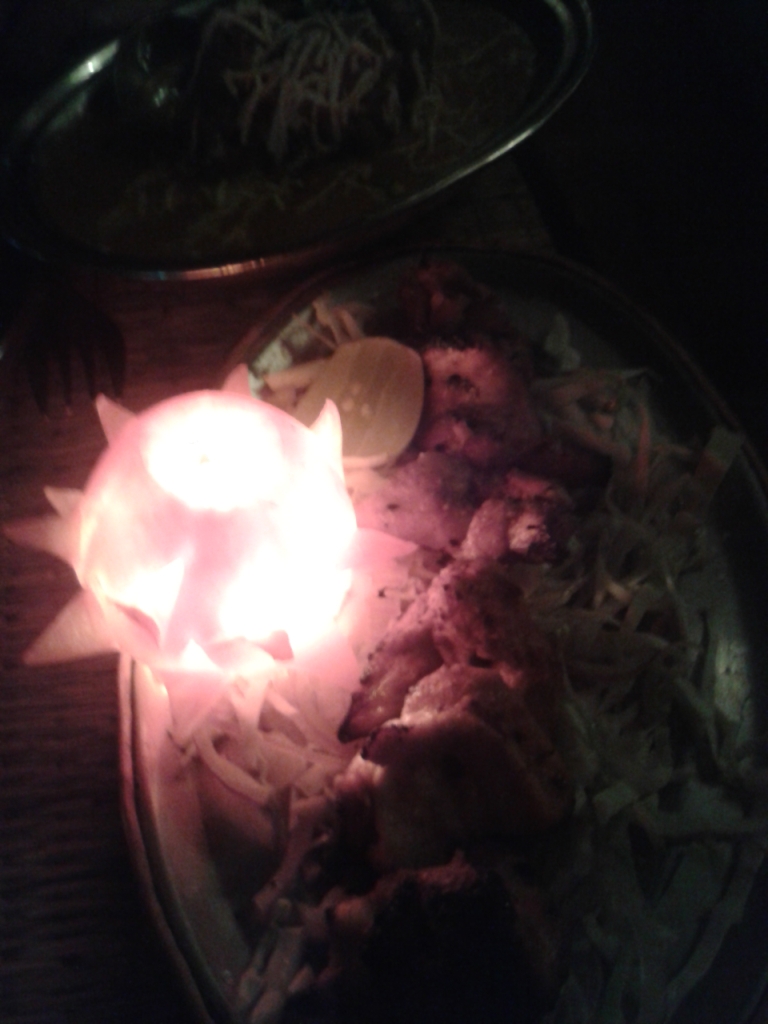
I took this in a dimly lit Bangalore restaurant with a cellphone. Needless to say, it did not turn out well, but it’s something different for a Sunday. My chicken tikka came with a cool tomato lantern. It looks like something that fell out of Iron Man’s chest in this photo, but was a pleasant piece of ambiance in person.

Queen’s is a little hole-in-the-wall restaurant on Church St. I’ve found the food to be consistently good, though the decor might keep the faint-of-heart out.

DAILY PHOTO: Connaught Circle in Delhi

Taken October 15 in Delhi

Taken October 15 in Delhi

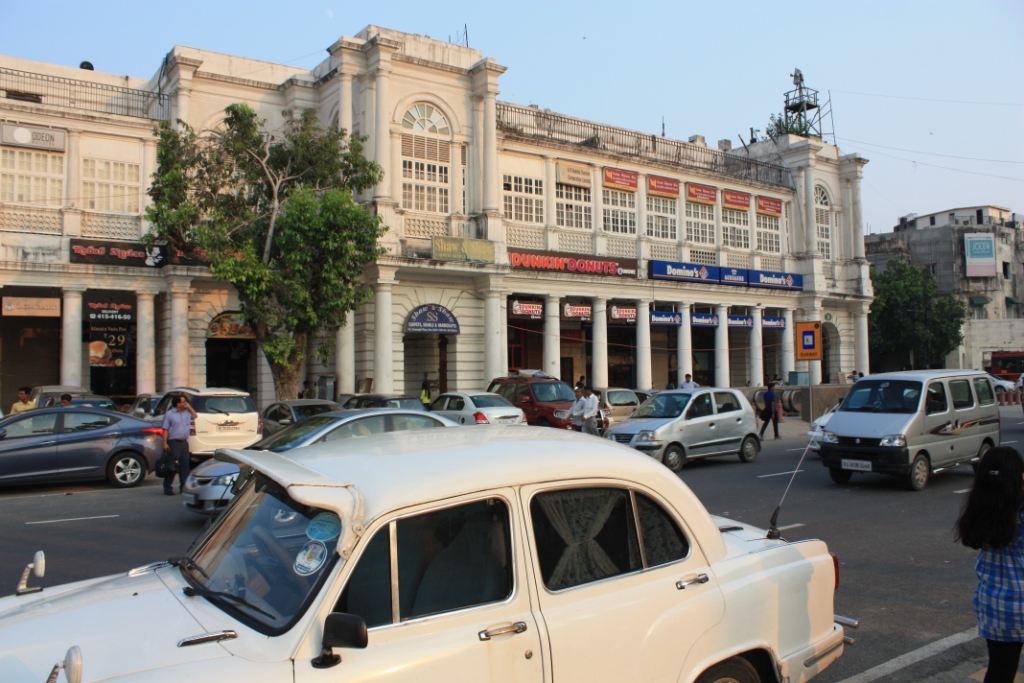
Connaught Place  is a bulls-eye in the heart of Delhi. The inner circle is Rajiv Chowk and the outermost loop is Indira Chowk. The name Connaught obviously goes back to India’s colonial past. It was named for the first Duke of Connaught, Prince Arthur. Today it’s a popular hangout, has one of the busiest Metro stations in the city, contains a keyhole shaped park, and is surrounded by many corporate headquarters.  Careful though, it also has one of the highest concentrations of shysters and con men in the city.

DAILY PHOTO: Incensed at Wat Phnom

Taken October 2012 at Wat Phnom in Phnom Penh.

Taken October 2012 at Wat Phnom in Phnom Penh.

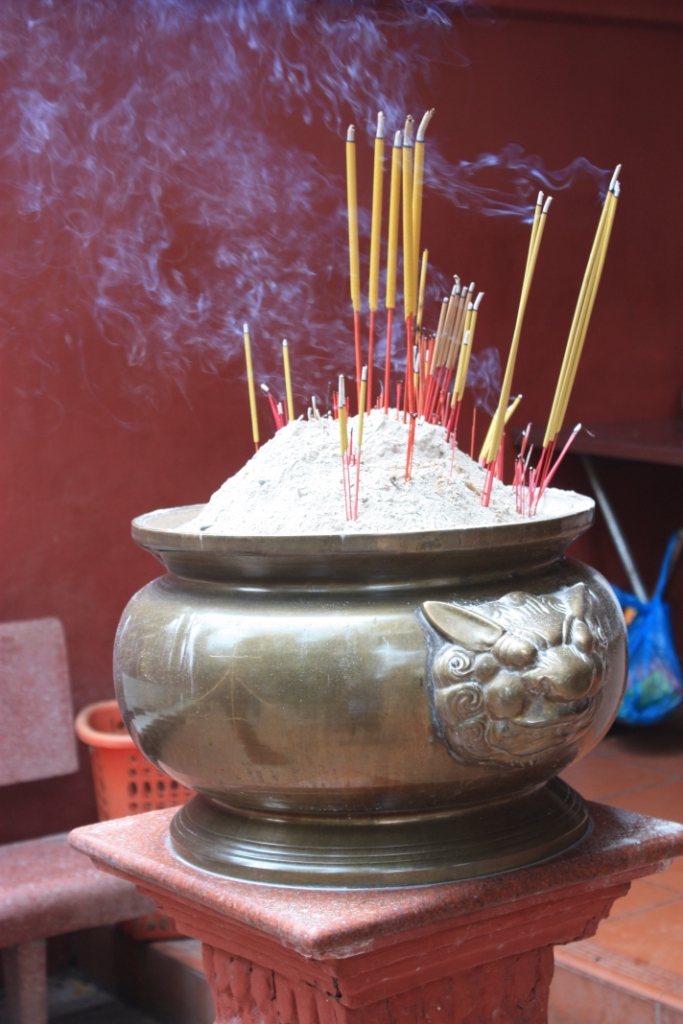
How come the noun “incense” means “a substance that releases a strong fragrance when burned,” but in its adjectival or verbal form it means to be, or make someone, extremely angry.

It’s not a rhetorical question, people. If you’ve got an answer, let me know.

DAILY PHOTO: Leopard

Taken at the Mysore Zoo on November 29, 2013.

Taken at the Mysore Zoo on November 29, 2013.

I took this photo at Mysore zoo through the chain link fence, but got focus on the leopard.

DAILY PHOTO: Ancient Temple, Modern Workers

Taken November 23 at Hoysaleshwara Temple in Halebidu

Taken November 23 at Hoysaleshwara Temple in Halebidu

For almost 900 years poor schlubs have had to scrub their way around this temple, washing its ornate carvings.

I wonder how similar or different the workers of past generations looked? Obviously, they didn’t have molded plastic water jugs, but the pottery version might have looked similar (not the day-glo lime green one, but certainly the brick-colored one.) No dress shirts or ball caps  back then, but the turbans and sarongs are probably not so out-of-place.

Of course, the scaffolding, rough-cut wood lashed together, gives it an ancient feel.

Probably, the most striking difference is the female job foreman.

DAILY PHOTO: Spiraling Sun Salutations

Taken October 16, 2013 at Indira Gandhi International Airport.

Taken October 16, 2013 at Indira Gandhi International Airport.

In the Delhi airport, there is a series of 12 bronze sculptures set up on a spiral platform that together demonstrate the yoga sequence called Surya Namaskara (i.e. Sun Salutation) The sculptor is Nikhil Bhandari.

I think this was a nice move. If ever one needed yoga, it’s in an airport–having been packed into a tiny space for hours and with high stress about whether one will get where one wants to go, it’s the perfect place to bust out the yoga.

Delhi10

DAILY PHOTO: Temple Gate at Chennakeshava

Taken November 23, 2013 at Belur.

Taken November 23, 2013 at Belur.

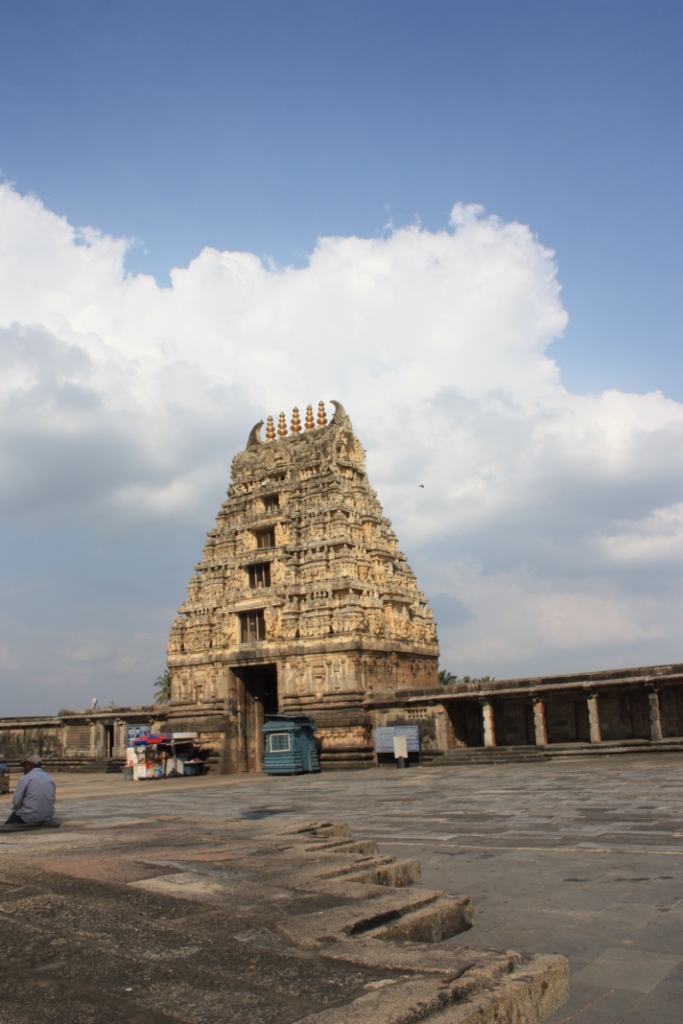
This is the gate into the Chennakeshava temple in Belur. In the foreground is the base of a pillar that served to hold the temple lantern that let all find the temple in the darkness. (Fun fact: the pillar isn’t secured to the base. That is, it’s held in place by gravity.) The base is the same multi-sided shape as the temple mounts.

Below is a pic of the lantern pillar (it’s not as askew as it appears in the pic.) (Fun fact #2: if you type askew into Google’s browser it will twist the page askew.)

IMG_1433

DAILY PHOTO: Half a Tree is Better than None

Taken December 7, 2013 in Cox Town.

Taken December 7, 2013 in Cox Town.

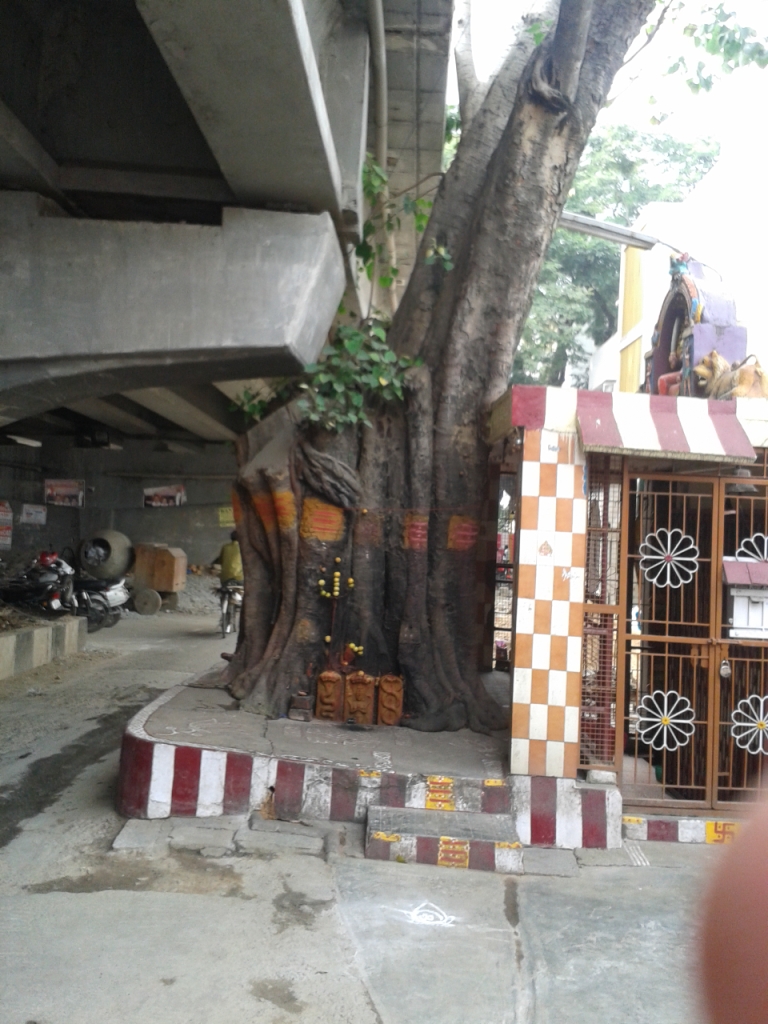
I took this photo yesterday in Cox Town as we were walking over to the United Charities Bazaar (a great and highly recommended event.) It’s a tree that juts out into the road next to a small Hindu temple. When they put in a flyover, they cut away quite a bit of the tree, but the part that remains seems to be thriving.

When one moves to a new country, one experiences a wide variety of cultural insights. All of a sudden, this invisible thing called culture becomes visible. There are, of course, many norms that grate on one’s nerves with respect to the culture one has been transplanted into. In the vast majority of cases, there isn’t anything inherently wrong with the new culture–they are just differences, just shocks to one’s system. There are a few cultural proclivities that one can fairly say are objectively inferior, and it’s a testament to India that they are trying to fix these problems (e.g. by outlawing the caste, by trying to prevent killing off of girl children, etc.)

However, if one is honest with oneself, one also gains insight into one’s native culture, and its particular inferiorities.  As I said, we take culture so for granted that we don’t necessarily even see the peculiarities of our own culture. One of the Indian  norms that I find most laudable is the preservation of living things to the extent possible. Put alternatively, one of the norms of my own culture that I’ve come to find most dismaying is the belief that anything that causes a person the least inconvenience must die immediately.

I imagine that some Westerners in India find it to be a pain to have to step out into the street when walking down the sidewalk because there are occasionally ten-foot diameter trees hogging the whole sidewalk. In the US, they’d just cut down the big tree and replace it with a dwarf tree of some sort that would never give them a problem–and if it did, just get out the saw.