
BOOK: “Understanding Eastern Philosophy” by Ray Billington

Understanding Eastern PhilosophyUnderstanding Eastern Philosophy by Ray Billington
My rating: 4 of 5 stars

Publisher Site — Taylor & Francis

This book does a solid job for one that bites off so much in a single go. Eastern Philosophy is a large subject, and to try to outline the major premises of its varied systems and also compare them to Western / Abrahamic notions (when Western schools are sometimes no more different from Eastern schools than each side is within,) and to do so in under two-hundred pages is a daunting undertaking.

For the most part, I felt the book did a fine job of meeting its objective. A fair amount of selection and simplification is required. I will say the part describing karmic doctrine didn’t seem consistent with what I was taught and seems more in line with the early Western scholars who started writing about Eastern Philosophy but could not help but couch the subject in a Western / Abrahamic frame because it was what they knew and was invisible to them. I say this as one who is no big fan of Karmic philosophy, though for another reason (one which is also mentioned in this book.) I’ve always been told that the central idea is to do selfless acts in order to escape the karmic cycle. Billington, like others before him, states it as do “good deeds” and then he puts forth the critique that this won’t help because doing good for one’s own benefit is fraught with peril. My understanding from Sanskrit scholars is: first, Hindu philosophers were aware of this paradox from the beginning and that’s why the emphasis has always been on “selfless” acts; second, the Abrahamic bifurcation of all actions into good and evil is not so much a thing in Hindu thinking (most actions are inherently neither.) I should point out that there is a lot of internal conflict within these philosophies (e.g. differences between Buddhist and Hindu thoughts on Karma) and that Billington does elsewhere reflect on the differences between Eastern and Western thinking about good and evil.

The first two-thirds of the book is organized by schools of thought (beginning with the Indian ones and working toward Chinese / East Asian schools) and the last third deals with a series of fundamental philosophical questions.

If you want a quick outline of Eastern philosophical ideas, this book gives a good look at them, particularly if one is interested in a comparison to Western ideas. The book also spends a fair amount of time in discussion of what a religion is and how one differs from a philosophy.

View all my reviews

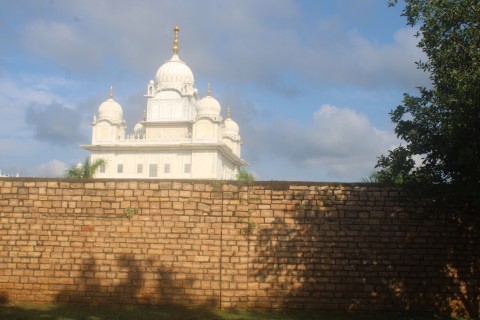
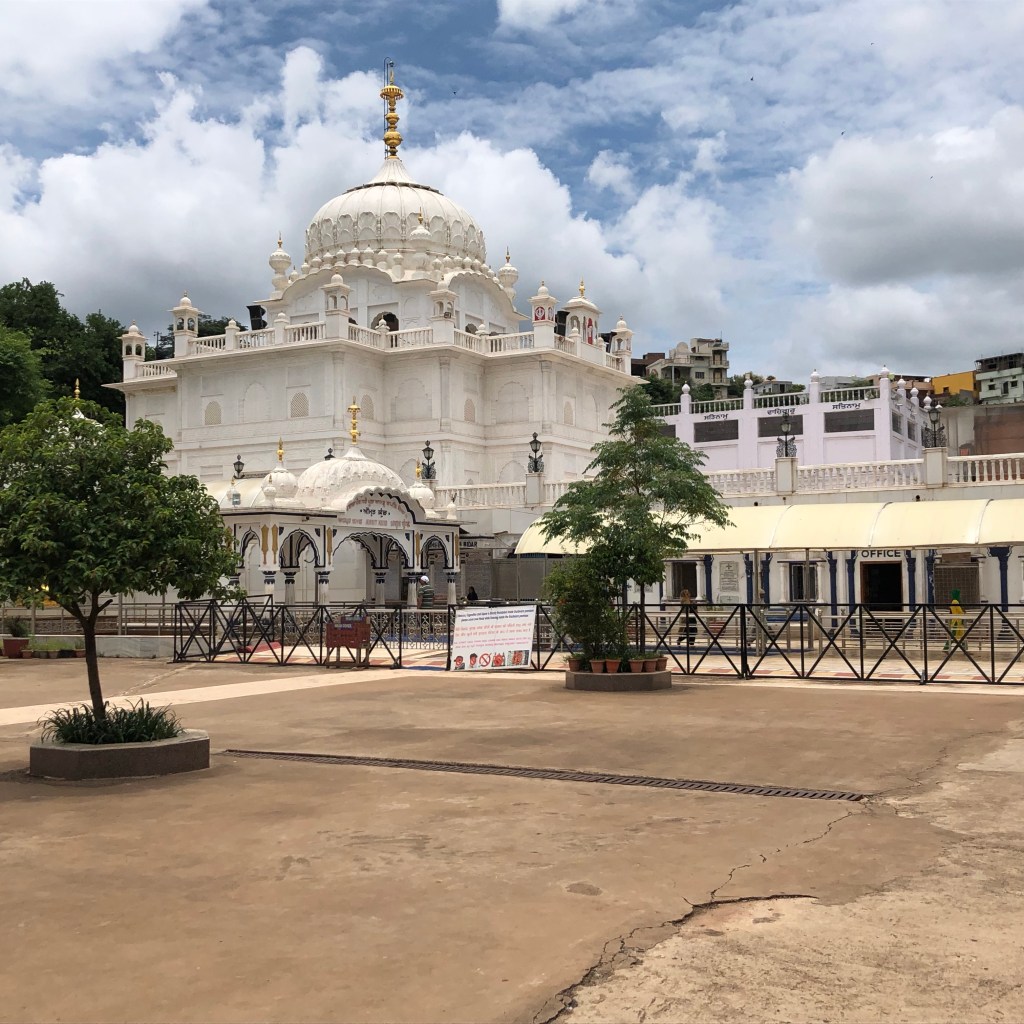
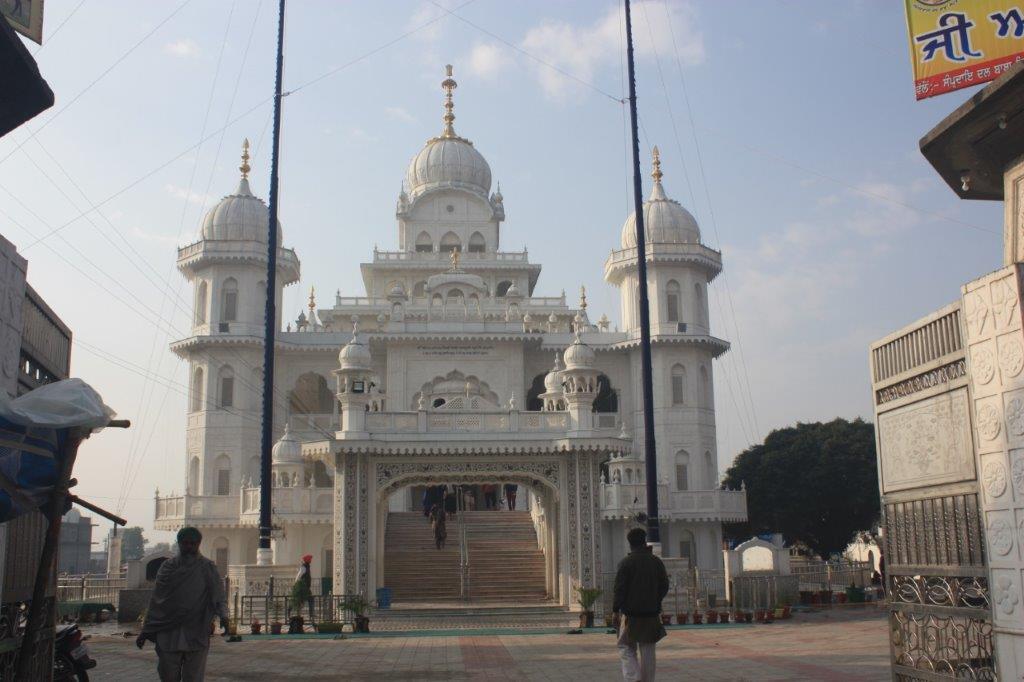
DAILY PHOTO: Gurudwara Data Bandi Chhod Sahib, Gwalior

Gurudwara Data Bandi Chhod Sahib in Gwalior on the Fort Hill (Gopachal.) Taken from the front.
Gurudwara Data Bandi Chhod Sahib in Gwalior on Fort Hill. Taken from near Teli Temple.
Gurudwara Data Bandi Chhod Sahib Gwalior. Taken from the front.

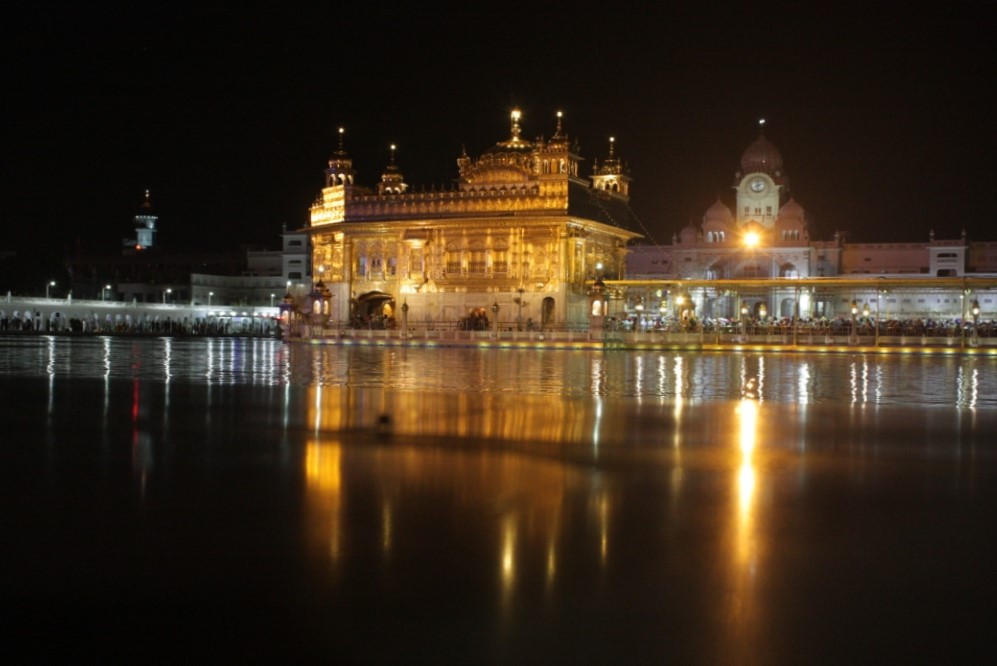
DAILY PHOTO: The Golden Temple [Harimandir Sahib]

Taken in Amritsar in April of 2016

DAILY PHOTO: Guru Nanak Jhira Sahib

Taken on August 5, 2022

DAILY PHOTO: Anandpur Sahib Gurdwara

Taken in March of 2020 in Anandpur Sahib

DAILY PHOTO: Two Unusual Views of the Golden Temple

DAILY PHOTO: Golden Temple, Amritsar

Taken in Amritsar in April of 2016

DAILY PHOTO: Khalsa Memorial Reflections

Taken in March of 2020 in Anandpur Sahib

BOOK REVIEW: Sikhism: A Very Short Introduction by Eleanor Nesbitt

Sikhism: A Very Short IntroductionSikhism: A Very Short Introduction by Eleanor Nesbitt
My rating: 4 of 5 stars

Amazon page


I picked up this book before a trip to Amritsar. While Sikhs are arguably the most visually distinct religious adherents, it’s one of the least understood world religions with respect to internal aspects like beliefs and practices. And a major religion, it is. With 23 million followers, it’s between the fifth and eighth most widely practiced religion in the world (depending upon whether one aggregates traditional religions in China or Africa.)

This book offers a 150 page overview of what it means to be Sikh, and it explains it not only in religious, but also in cultural, political, and historical, terms. If one needs deep insight and great detail about Sikhism, this may not be the book for you. But it gives one the big picture quite nicely, and with a scholar’s balanced view (as opposed to that of a theologian.)

There are eight chapters in the book. The first chapter introduces one to Sikhism. Besides the basics, this chapter discusses what makes Sikhism a distinct religion, and how it has been influenced by other religions—most significantly Hindu and Islam, in that order. It also discusses what it means to be Punjabi, in contrast to what it means to be Sikh. To understand the subject of the second and third chapters, one has to know how the leadership of this religion unfolded. There were ten human teachers (Guru), and then a book of scriptures assumed the mantle of Guru. The second chapter is about the human Gurus (and mostly about the first one—Guru Nanak, with a little about the next four, and almost nothing about the last five.) The third chapter is about the Guru Granth Sahib, which is the book of scriptures that has served as the religion’s guide since the early 18th century.

Chapter four discusses Sikh religious practices–including the five K’s that serve to give Sikhs such a distinct physical appearance. The 5 K’s are: kesh (uncut hair), kanga (comb), kirpan (sword), kachh (cotton breeches), and kara (steel braclet.) While only the Khalsa (i.e. the community of initiated) necessarily practice all of these, it’s common to see at least some of these features among the community at-large. The wearing of turbans, beards (though often not completely uncut), and steel bangles are ubiquitous in Punjab. The chapter also delves into turbans, ethics, symbols, and the controversial question of vegetarianism (some Sikhs are and some aren’t.)

The fifth chapter offers a history of Sikhism over the past few centuries from the era of the Maharaja Ranjit Singh in the early 19th century to the dire events of early 1980’s (there was a massacre of Sikhs by government forces in 1982 and in 1984 Indira Gandhi was assassinated by Sikh bodyguards, leading to yet more violence.) Chapter 6 discusses the topic of Sikhs abroad. While Punjab is consider the Sikh homeland, there are Sikhs around the world—but particularly in a few areas where there numbers are sufficient to constitute a community—e.g. in the United Kingdom. Chapter 7 investigates the theory and practice of Sikhism with regards to a few key issues of life on the Indian subcontinent including: the caste system, gender, and attitudes toward other religions. (In many regards, Sikhism is comparatively progressive, but practice hasn’t always followed the scripture—e.g. high girl child infanticide rates.) The last chapter considers the future of Sikhism moving forward.

There are graphics of several types throughout the book—most notably black-&-white photographs. There are a few helpful ancillary features including a “Further Reading” section, a timeline, and a glossary of terms.

I found this book useful, and would recommend it for anyone seeking background on Sikhism.

View all my reviews

DAILY PHOTO: Mata Ganga Ji Niwas

Taken on April 10, 2016 in Amritsar

Taken on April 10, 2016 in Amritsar