This book is actually several different books woven together. It’s part autobiography of the author’s running life, it’s part a study of comparative biology between various creatures with an endurance bent and humans, it’s part an examination of the evolutionary biology of humanity’s proclivity to run, and it’s part guide to preparing to engage in ultramarathons. Often I pan such books as being unfocused, ill-planned, and—most often—attempts to whip an article’s worth of material into a book length piece. However, Heinrich keeps it interesting enough that I don’t feel it necessary to level these criticisms. Still, my first warning to readers is that one has to read on for quite a while before one gets to the book that one thought one bought—i.e. one that answers the title question of “why WE (i.e. people in general and not the author specifically) run.” In short, you’ll need to have an eclectic set of interests to get through the whole book, but some may find reading only part of it gives them all they wanted from the book.
It should be noted that the book is on its second title. The original title was: “Racing the Antelope: What Animals Can Teach Us about Running and Ourselves.” The author explains in the front matter why the original name was changed (apparently some loud and obnoxious writer had a similarly titled book on a different subject and whined about it.) Changing the title wasn’t required because: a.) titles cannot be copyrighted, and b.) it wasn’t exactly the same title anyway. Still the new, more succinct, title may lead one to expect a succinct book, which this isn’t so much.
Some readers will enjoy Heinrich’s writing style; others will find that it ventures too far into flowery territory on occasion. I did enjoy it. However, I can see how a reader might find some of the descriptive sequences to be excessive–particularly toward the beginning of the book.
While there’s some overlapping and interweaving, one can think of the book in three sections. It’s written in twenty chapters. The first six tell the author’s story of getting into running and his youth. The next eight chapters deal in comparative and evolutionary biology. In general, these chapters look at the biology of other creatures as they pertain to said animals’ ability to engage in running (or activities that are like running in that they involve endurance of muscles and the cardiovascular system.) Also included in this section is the evolutionary biology of humans as it relates to becoming a species of runners. This is the core of the book and was the most interesting section for me. In it, Heinrich considers the endurance activities of insects, birds, antelopes, camels, and frogs. Each of these has a particular relevance. For example, camels are masters of endurance under harsh conditions. Frogs tell the story of the difference between fast and slow twitch musculature (relevant to sprinters versus distance runners.) Antelopes are, of course, the exemplars running in the animal kingdom, but the nature of their running is so different from that of humans (i.e. making quick escapes versus pursuing wounded prey.) The last six chapters can be seen as a guide to preparing for ultramarathon races, but it’s also a continuation of the author’s self-examination of his running life from the time he began ultramarathoning.
I’d recommend this book for readers who are interested in the science of human performance. It’s well written, and the insights it offers into the biology of other animals are fascinating. Whether you read the whole book or just the part that pertains to your interests, you’ll take something away from this book.
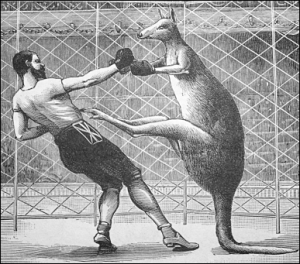
A study by researchers at the University of Alberta found that while mixed martial arts (MMA) fighters are more likely to suffer minor injuries, boxers are more likely to suffer severe injuries like concussions or detached retinas. The study, to appear in the print edition of the Clinical Journal of Sports Medicine, involved 1181 mixed martial artists and 550 boxers who’d fought in Edmonton between 2003 and 2013. This was all fighters who fought professionally in that city in those two sports.
This finding seems counter-intuitive, given that so many more methods of delivering mayhem are allowed in MMA and the protection is less at least with respect to gloves.
Gloves may be an important factor. This isn’t a result from the aforementioned study, but it’s an idea put forth by MMA boosters. It goes like this, “Yes, the lightweight MMA glove offers less protection to the one being hit, but it also offers less protection to the hand of the one delivering the hit, and, ergo, an MMA fighter is more likely to moderate his / her punches to avoid the (in this case ironically-named) ‘boxer’s break’ to the bones of said fighter’s hand.”
MMA style gloves on the left and 16oz. boxing gloves on the right (the same hand fits inside.)
I haven’t seen any rigorous scientific studies of whether the argument above has merit. There was a National GeographicFight Science episode that made a comparison of gloves, but it was looking at a little different question. It studied how much force barehand, MMA glove, and boxing glove delivered to a heavy bag. Incidentally, it found minimal difference in force delivered between the two types of gloves, which at least might help to hush those who make a big deal about MMA’s “thin gloves.” However, this doesn’t tell us whether fighters put the same level of force into hitting a bony target when wearing the two types of gloves. Still a YouTube clip of the test is below for your information.
There are other explanations for why MMA fights might be less prone to cause concussions and severe head injuries. For example, there’s less time spent at an optimal distance to deliver strikes with maximal force. Once fighters are in close, there’s less room to get strikes up to speed. Once fighters are on the ground, putting a lot of body weight into a strike may be impossible. While submissions, whether chokes or joint locks, may seem brutal to the home viewing audience, it’s not clear that they result in major injuries to anything but the fighter’s self-esteem. (Though this might be an area that needs to be factored into studies.)
I’d like to see how muay thai compares to the two sports covered in the aforementioned study. I suspect it’s the only combative sport that might beat out these two. (All the nastiness of boxing, none of the close range grappling, plus elbows and shins to the side of the head.) Though, who knows? Judoka do seem to land on their heads an unfortunate percentage of the time.
I’m curious about what you think about which combative sport is most damaging, and why?
The title says it all. This is a book about all that can go wrong with the human body when it’s exposed to the most extreme conditions possible—including places where no human can survive without the benefit of modern technology. The medical science provides plenty of tidbits of fascinating food for thought, but it’s the stories of survival (or, sometimes, the lack thereof)—many of which the author, Kenneth Kamler, M.D., was present for—that make this a gripping non-fiction read.
There are only six chapters, addressing survival in the jungle, on the high seas, in the desert, underwater (diving), high in the mountains, and in space. There’s also a prologue that sets up the book with examples from Dr. Kamler’s experiences at high elevation (specifically Mount Everest.) Each chapter is full of illuminating stories about the threats to human life that exist in all of the aforementioned environments. The author is a hand surgeon who made a secondary specialization through expeditions to extreme environments to deal with the maladies that are largely unknown to the average person’s day-to-day existence—from pulmonary edema to exotic Amazonian parasites. A few of the chapters feature mostly stories of Kamler’s own experiences. These include the chapters on the jungle, deep-sea diving, and high altitude climbing. For other chapters Dr. Kamler draws together fascinating cases of survival and perishment in extreme environments such as living in a life raft on the high seas.
Besides considering what might kill you in extreme places, this book also reflects upon a couple of other interesting tangential questions. First, what adaptations (cultural or physical/genetic) do the locals have who live at or near these extremes that allow them to live? A fascinating example of this seen in the explanation of how Sherpas of the Himalayas differ from the Andean Indians who live at high elevations in terms of their biological adaptations to elevation. These two peoples living under similar conditions share some common adaptations, but other adaptations are quite different. On a related subject, Kamler also looks at what adaptations other species have developed to allow them to be so much more successful in some extreme environments (e.g. seals in water.)
Second, the role that x-factors like belief and will to survive play are never shunted aside as irrelevant anomalies by the author. Kamler devotes an epilogue to the subject of will to survive. Dr. Kamler was at one of the camps above base camp on the day of the 1996 Everest tragedy in which 12 perished. Kamler saw and advised on the treatments of Beck Wethers and other severely frostbitten climbers. Wethers’s story is particularly fascinating as he lay freezing in the snow overnight in a blizzard, apparently snow blind—though it later turned out to be an altitude related problem with an eye surgery (radial keratotomy)—before climbing to his feet and shambling into the wind (his only guide to where the camp might be.) Kamler considers the science of how Wethers neurons might have fired to get him to his feet against what seems like impossible odds, but concedes there’s much we don’t understand about what separates survivors from those who succumb.
I found this book to be fascinating and would recommend it to anyone interested questions of what a human is ultimately capable of. If you’re interested in medicine, biology, or survival, you’ll likely find this book engaging.
Every once in a while, one stumbles onto a book that one feels desperately needed writing but which one thought didn’t yet exist. In the case of The Secrets of Judo, the book has been around for almost 60 years. First off, a more telling title for this book would be “The Science of Judo” or “The Physics of Judo.” It’s not a book that deals in arcane knowledge, as its title might suggest, but rather applies science to the skills of throwing, pinning, and submitting seen in judo.
While there’s a brief discussion of the nervous system as it pertains to reaction times, the bulk of the book is classic mechanics applied to judo techniques. The first six chapters (which constitute a little over half the book) provide a background of the relevant principles of both physics (e.g. force, momentum, and center of gravity) and judo (e.g. kuzushi [unbalancing], seiryoken zenyo [maximum efficiency], and ukemi [breakfalls].) The last two chapters provide explanations of how forces are applied to achieve successful throws (ch. 7) and grappling techniques—i.e. pins, chokes, and locks (ch. 8.)
I found this book to be invaluable and would recommend it for anyone who’s interested in grappling arts generally (whether judo or not) or even the science of human movement. The writing is clear. There are some mathematical equations, but just the algebraic formulas seen in basic physics. The graphics (mostly line drawings with a few photos) are useful, especially the drawings of the sequences of techniques which have letter labeled arrows to clarify the lines of force.
I should note that I read the original (1960) edition. Tuttle put out a 2011 edition that is probably what you will get–unless you stumble onto a copy in the used bookstore as I did. From a quick glance at the table of contents of the new edition, it doesn’t look like a major change and I suspect the new edition is at least as good.
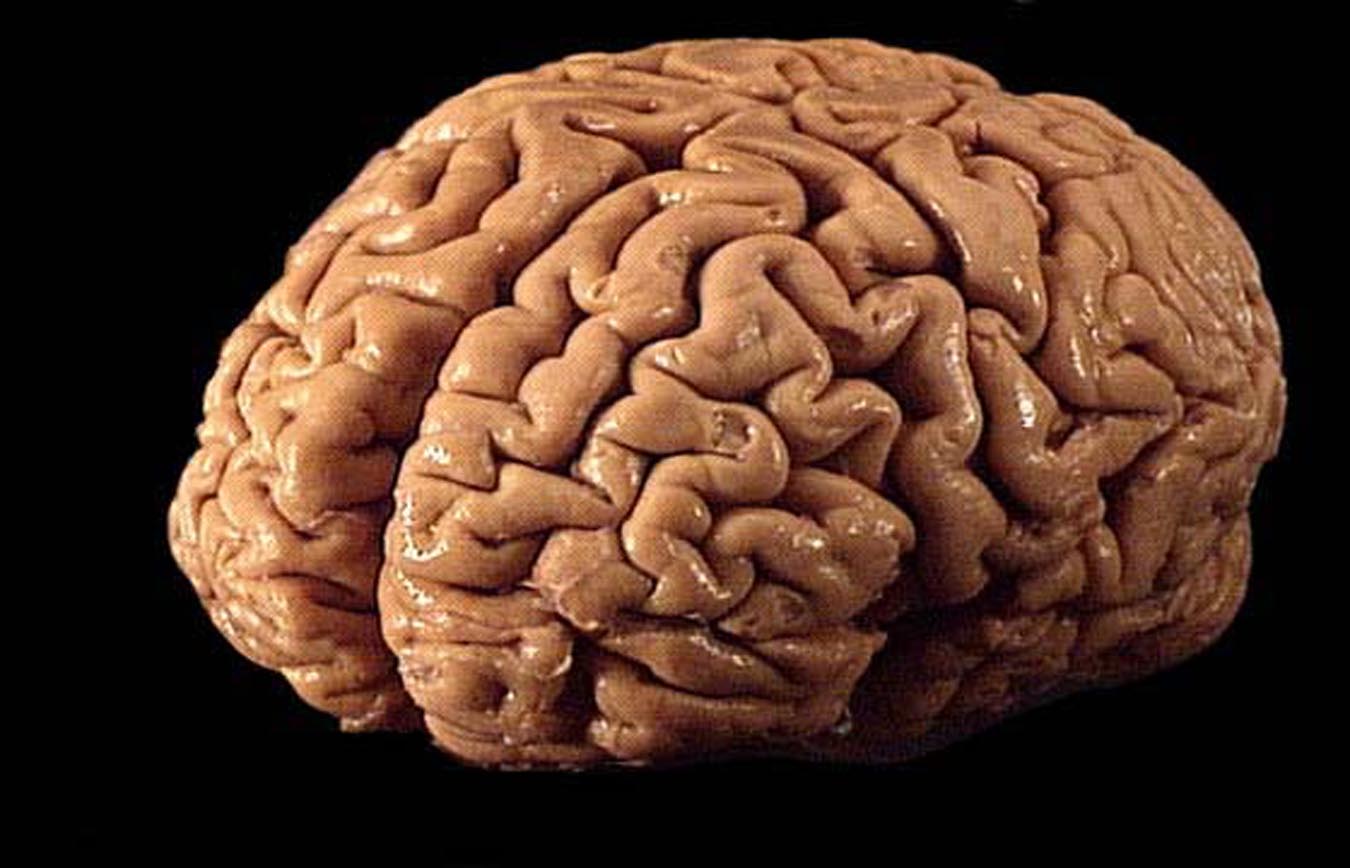
1.) 10%: As this story goes, we humans only use about 10 percent of our brain’s capacity. This long-debunked myth is so well ensconced that there was a film built around the premise as recently as 2014. That movie, “Lucy”, features a titular character who accidentally ingests an overdose of a drug that allows one to exploit increased levels of one’s mental capacity. Admittedly, by the movie’s end the 10% myth is one of the lesser violations of reality because as Lucy gets closer to 100% of mental capacity all the laws of physics dissolve in her presence.
I’ll give a reference at the bottom of this paragraph from which one can learn about all the evidence of the folly of this belief. I’ll just lay out part of the evolutionary argument. The fundamental rule of the biological world is that mother nature doesn’t over-engineer. Once there is no longer any benefit to be gained in terms of enhanced likelihood of survival, we don’t evolve new and costly capacities. We don’t see people who can run 500 miles per hour or jump 50 feet vertically from a standstill. Those capacities weren’t necessary to survive the beasts that preyed upon us. Our brains are very costly, they consume 20 to 25% of our energy intake. [For the science, see: Beyerstein, Barry L.1999. “Whence Cometh the Myth that We Only Use 10% of our Brains?”. in Mind Myths: Exploring Popular Assumptions About the Mind and Brain. ed. by Sergio Della Sala. Hoboken, NJ: Wiley. pp. 3–24.]
Why does this myth get so much play? There are two likely reasons. One is wishful thinking. We’d all like to think there is much more available to us. And lucid moments of meditation or flow, we may even feel that we have tapped into a vast dormant capability. (In both the aforementioned cases, it’s interesting that the enhanced performance we may experience is a function of parts of the brain shutting down and not increased capacity ramping up.) The other reason is that people see savants of various sorts, but they don’t account for the full picture. There are people who can carry out activities with their brains that seem supernatural. However, it should also be noted that savants who can memorize phone books or tell you the day of the week for a random date hundreds of years ago [or in the future] often suffer corresponding downsides with respect to their brain activity. Of course, there are people who are just geniuses. Geniuses are endowed with more intelligence than most of us. They have a bigger pie; they aren’t just eating a bigger slice.
2.) Left and Right Brained: The myth is that some people use one of the hemispheres of their brain much more than the other, and that this explains why some people are creative and artsy and others are logical and mathematical. We must be careful about the nature of the myth and separating it from reality. The science is NOT saying that there aren’t some people inclined to be “artsy” and some inclined to Spock-like rationality. Clearly, these personality types exist. The science is also not suggesting that there aren’t some functions that are carried out exclusively in one hemisphere–e.g. language is a left brain function. The myth says that predominant use of one hemisphere is the cause of these extremes of personality type. This myth has had–and continues to have–a great following, but it’s not supported by the studies that use the latest brain imaging technology to see exactly where the brain is being active.
For the science, see: Nielsen JA, Zielinski BA, Ferguson MA, Lainhart JE, Anderson JS. 2013. “An Evaluation of the Left-Brain vs. Right-Brain Hypothesis with Resting State Functional Connectivity Magnetic Resonance Imaging.” PLoS ONE. 8(8): e71275.
Why is this a persistent myth? First of all, we all know people who fit neatly into one of the boxes, either “artsy” or “logical.” The left-brained / right-brained explanation is as good a way as any to explain these differences in the absence of evidence. It may have also been a way for people to attribute their weaknesses to an uncontrollable cause (always a popular endeavor among humans.) Secondly, once this idea caught on, a lot of people built the idea into their teachings, businesses, and academic ideas. Yogis used the notion to support ideas about imbalances in the “nadi” (channels.) Psychologists used it in their personality testing and profiles. In short, many people had a vested notion continuing false belief. Thirdly (maybe), there could be something to the issue of how we notice differences versus similarities. (e.g. A person says, “Hey, look Jimi Hendrix is playing a left-handed guitar. Lefties are creative.” The next thing one knows people are disproportionately noticing the left-handed individuals in the arts [and failing to notice the many (more) righties.])
3.) The Conscious Mind Makes All Our Decisions: We all have a conscious mind that we think is our ultimate decision-maker. The evidence, on the other hand, suggest that this is wrong. It turns out that it’s entirely possible for an entity to think it has decision-making authority, when–in fact–it’s finding out about the done deal decisions after the fact. Like the left / right brain myth, this is an idea that was firmly affixed right up until brain imaging technology became sufficiently sophisticated to see what parts of our brain were firing and when. In the wake of such imaging studies, we could see that the subconscious mind does its work first, and this has led to the widespread (though perhaps not consensus view) that decisions are made subconsciously before they filter up to our conscious minds.
There are many sources of information on this idea, but one popular book that is built around the idea is David Eagleman’s “Incognito“, a book that devotes itself to the part of our neural load iceberg that goes on below the waterline (i.e. subconsciously.) Scientists often compare consciousness to the CEO of a large and complex corporation. The CEO doesn’t personally make every decision. Instead, the CEO sets an agenda and the strategy, and–if all goes as planned–the decisions that are made are consistent with those overarching ideas.
It’s easy to see why this myth is persistent. First, if part of a process is buried from view, as subconscious thought has been (and–to a large extent–continues to be) then it’s easy to see how humanity would develop a story that excludes it and fills in from the visible parts. Second, there is immense vested interest in protecting all sorts of views of consciousness that are embedded in religions and quasi-scientific undertakings.
Thirdly, people have a deep-seated need to feel in control, and reducing the role of consciousness to long-term strategist and rationalizer of decisions would seem to make free will illusory. A number of scientists and scholars (e.g. Sam Harris) do argue that free will is an illusion. However, it should be noted that there are others who suggest otherwise (e.g. Daniel Dennett and Michael Gazziniga.) These “compatibilist” scholars aren’t necessarily arguing that the conscious mind is the immediate decision maker in contradiction of the scientific evidence. What they are arguing is that through learning, thinking, and agenda-setting, people can influence the course of future decisions–perhaps imperfectly, as when one eats a sleeve of Oreos after contemplating what one has learned about how that’s not good for you. (This goes back to mother nature not over-engineering. The conscious mind must have some role in facilitating survival or it–being incredibly costly–wouldn’t have evolved. If it can’t influence our path, it can’t enhance or likelihood of survival.)
I’ll attach this video by Alfred Mele that contradicts the notion that free will has been proven an illusion. This isn’t to suggest that I’m convinced Mele is right, but he does lay out the issues nicely and more clearly than most.
4.) The Sleeping Brain Shuts Down: I won’t spend a lot of time on this one because: a.) in a sense it’s a continuation of the consciousness myth (i.e. we lose track of this time as far as our conscious mind goes, and so we think nothing is happening because our conscious experience = what we believe our world to be.) and, b.) it’s not as ingrained a myth as some of the others. Perhaps this is because it began to be debunked with electroencephalogram (EEG) studies which began decades ago–in the 1950’s–well before the functional Magnetic Resonance Imaging (fMRI) that has been providing many of our most recent insights into the brain. (The EEG measures brainwaves and the fMRI blood flow.)
The NIH (National Institutes of Health) offers a quick and clear overview of this science that can be viewed here.
Our bodies go from a very relaxed to completely paralyzed state over the course of a night’s sleep. The paralyzed state occurs with Rapid Eye Movement (REM) sleep and may be an adaptation that kept our ancestors from fleeing out of trees or cliff-side caves during their dreams. If the body is essentially immobile, it’s not a far stretch to imagine the brain is as well. However, the brain is like a refrigerator–always humming in the background (part of the reason it uses between 1/5th to 1/4th of our energy.)
5.) Adults Can’t Generate New Brain Cells: This was the prevailing thought until quite recently. It was believed that one’s endowment of cells–at least as far as the Central Nervous System (CNS) is concerned–didn’t change / replenish once one reached adulthood. It turns out that, at least for the hippocampus, there is now evidence to support the idea of CNS neurogenesis (the production of new nerve cells.)
There’s a Ted Talk by Sandrine Thuret that explains the current state of understanding on this topic, including what activities and behaviors facilitate neurogenesis. (Long-story short: Exercise and certain healthy foods are good, and stress and sleep deprivation are bad.)
What is the basis of this myth? First, one must recognize that the studies don’t show that any and all CNS nerve cells are regenerated. That means there is an element of truth to this myth, or–alternatively stated–a more precise way of stating the idea would produce a statement of the best current understanding of medical science. Of course, telling teenagers that every beer they drink kills 20,000 brain cells irrevocably has probably proved a popular–if ineffective–reason for the continuation of this myth. (Note: at least heavy drinking is definitely damaging to the brain, though by damaging / interfering with dendrites and not by “killing brain cells.” It’s also not believed to be irreversible.)
6.) Emotion and Reason Are Forever at Odds: Most people have had the experience of boiling over with emotion. That is, they’ve experienced instances during which they believed a particular emotion didn’t serve them and they didn’t want to be caught up in it, and yet they couldn’t help themselves. It’s clear that there’s an ability to inhibit or suppress emotions; recent findings have suggest that the neural pathways involved with voluntary suppression are different from those used when one is persuaded to suppress the emotion.
Of course, there’s also evidence that continually suppressing emotion can have a downside. While it remains an unclear correlation, it’s commonly believed that suppression of emotion is related to untimely deaths from certain diseases–e.g. cancer, and there has been some evidence to support this.
Still other evidence supports the notion that there are healthy ways of regulating one’s emotional life rather than the ineffective and counterproductive process of just suppressing emotions. The key may lie in changing one’s way of perceiving events rather than telling oneself to not show emotions. Rather than one’s conscious mind wrestling with the emotion, activities like breath control have shown effective in regulating exposure to stressful situations.
The brain is an organ we all possess, and we intuitively think we’ve got a grasp of it. Yet brain science is one of the scientific disciplines in which we have the most to learn.
University of Chicago paleontologist / anatomist, Neil Shubin, charts the progression of life that ultimately leads to the human body. Professor Shubin’s discovery of one of the earliest fish (the Tiktaalik) to survive at the fringes of land makes him well placed to delve into this topic. The book does tell the paleontological detective story involved in tracking down the Tiktaalik. Shubin also uses his experiences in cadaver dissection to elucidate some of his points. However, the book goes beyond these stories to unshroud the development of the arms, hands, heads, and sense organs that lead to our own structure.
Along the way, the author does an excellent job of clearly presenting the overwhelming evidence in support of Darwinian evolution. A fine example of this can be seen in the quote, “If digging in 600 year-old rocks, we found the earliest jellyfish lying next to the skeleton of a woodchuck, then we would have to rewrite our texts.” Needless to say, no such discovery has been made, and the layers of rock remain an orderly record of the progress of life from simple to increasingly complex. Shubin spends more of his time talking about the evidence in terms of specific anatomical detail. For example, “All creatures with limbs, whether those limbs are wings, flippers, or hands, have a common design. One bone,… two bones,… a series of small blobs…”
The book is arranged in eleven chapters. The first chapter provides an overview and tells the story of the search for and discovery of the Tiktaalik. Then the book goes on to explain the development of limbs, genes, teeth, heads, anatomical plans, and the various sense organs. A final chapter looks at what our evolutionary history means for our present-day lives (particularly what systematic problems the process has left us, from hernias to heart disease.) The book covers many of the structures that define us as human, but notably excludes the ultimate defining factor: our relatively gigantic brains. That’s alright; the evolution of the brain is surely a book or more unto itself. There are line drawings throughout to help clarify the subject, many of these show analogous structures between various creatures.
I found this book to be readable and informative. It’s both concise and clear. It’s approachable to readers without scientific backgrounds. I’d recommend it for anyone interested in learning how the human body got to its present shape.
Sleights of Mind explains magic tricks by telling one about the shortcuts, limits, and programming of brain (and attendant sensory systems) that facilitate such tricks. The reader needn’t be concerned that the book will spoil all the illusionists’ secrets for one. The authors carefully demarcate the beginnings and endings of spoiler sections that explicitly explain tricks. This allows a reader to skip over such sections if one doesn’t want to know the trick. I suspect few readers do skip the spoiler sections because that’s where the rubber meets the road in terms of the neuroscientific concepts being discussed. The spoiler sections are an attempt to comply with the magician’s code (the neuroscientist authors became magicians themselves) and to maintain a good relationships with the many magicians (some, like Teller or the Amaz!ng Randi, quite famous) who cooperated in the writing of the book.
Over 12 chapters, the authors explain the neuroscience of how various classes of illusion work. Most of the chapters address a specific class or subclass of illusion. The first few chapters deal with visual illusions. We look at the world in what seems like crystal clarity (at least with glasses on or contacts in), but there are many limitations and gaps in our visual processing system. While it seems like we are directly seeing the world around us, in point of fact, our visual experience is a product of the brain reconstructing information that the eyes take in—and it doesn’t do it as perfectly as our brain tricks us into believing. As the authors state it, “The spooky truth is that your brain constructs reality, visual and otherwise.” Chapter 3, deals with illusion in art, which is little outside the theme of the book, but it offers an opportunity to explain some intriguing facts about how the brain and eyes work in concert.
The next couple chapters (Ch. 4 and 5) deal with cognitive illusions. Just like our visual system, our conscious minds save energy by engaging in short-cuts that disguise the mind’s limits while offering the possibility of manipulation. The brain also works hard to reconcile what appear to be inconsistencies, and often this reconciliation leads us astray. Misdirection is discussed in detail. Our minds are primed to let certain actions and sensory inputs draw its attention, and humans are awful at paying attention to more than one input stream at a time. Teller explains that, “Action is motion with a purpose.” So, if one can give one’s movement a purpose (even scratching one’s chin) it will be ignored while movements seemingly without purpose are anomalous and draw attention. The authors introduce the reader to mirror neurons—the part of our brains that take observations of another’s actions and makes forecasts about that person’s intent. This system is highly hackable by magicians.
Chapter 5 informs us that we aren’t as good at multitasking as we think—which is to say we completely stink at it but tend to think we are awesome multi-taskers. The gorilla experiment is offered as a prime example of this situation. In the gorilla experiment, about half-a-dozen people, moving around randomly, pass a ball / balls among themselves. The subject is asked to count the number of passes. In the middle of this activity a man in a gorilla suit walks through the middle of the rapidly moving passers. When asked whether they saw the gorilla, most people say they didn’t (and those who do see the gorilla invariably offer a count of passes that is vastly off the mark.) [If this is either unclear or unbelievable, you can YouTube it.]
Chapter 6 examines multi-sensory illusions. The quintessential example is how our brains lead us believe that the sound of a ventriloquist’s voice is coming from the moving lips of a dummy. (Also, it seems like voices are coming from the lips of actors on-screen in the movies, even though the speakers are probably off to the side in the walls or ceiling.) Synesthesia (cross-wiring between senses and brain such that some people may always see the number 5 in red or hear a C-sharp in green) is introduced to the reader.
Chapter 7 explores the illusions of memory. Just as with our vision and attention, our memories aren’t as indelible as they seem to be. We think we’re calling up a transcription of the events of our lives, but really we’re remembering the last remembrance of said event. This can lead to a migration / distortion of events in the same manner as the kid’s experiment whereby one whispers a phrase into the ear of the kid in the next chair and it traverses the classroom. The original sentence “The cat is on the windowsill” invariably becomes something like “Lenny Kravitz steals puppies from the till.” (Have you ever experienced a situation in which a person remembers the details of an event substantially differently from yourself even if the broad brushstrokes are the same?) Some entertainers use pneumonic tricks to convince audiences that they have supernatural mental abilities when—in fact—they have merely turned understanding of memory to their advantage.
Chapter 8 considers how in-built expectations and assumptions are exploited by magicians and mentalists. Again, these methods work because our brains employ all sorts of energy-saving shortcuts. For example, our brains often do the same thing as Google’s search engine—filling in the blanks by taking advantage of one’s experience to avoid the need for costly cognitive processing.
Chapter 9 explains that our “free choices” are often not so “free” as we think. One of the most disconcerting, yet intriguing, facts to come from the onslaught of brain imaging studies since the 1990’s is that our decisions are made on a subconscious level before our conscious minds are even aware the decision has been made. Prior to this, we’d always been under the misapprehension that we are consciously making all these decisions–big and small–because the conscious mind is just a big credit stealer (to be fair, the conscious mind doesn’t recognize that it’s so out of the loop in decision-making.) So many of our decisions are made in predictable ways by emotional / automated responses, and mentalists use that fact to their advantage.
Chapter 10 is a catchall for topics that didn’t fit into earlier chapters, including hypnosis, superstitions, and the gambler’s fallacy (i.e. the idea that a roulette number that hasn’t come up in a while [or slot machine that hasn’t paid off recently] is bound to pay soon—regardless of the probability distribution that actually rules the outcome.)
The remainder of the book tells the story of the author’s try-out for a magic society and discusses the question of whether knowing the neurological and psychological roots of magic tricks will kill magic as a source of entertainment. I found the latter to be the more interesting discussion. The authors are optimistic about magic’s survival, and offer good reasons. After all, almost nobody believes that magicians are conducting supernatural activities [not even people who take some wildly unsubstantiated beliefs as givens.] Even knowing how the tricks work doesn’t create the ability to see through the tricks because so many of the factors that magicians exploit operate on a subconsciously programmed level, and such proclivities would have to be trained away. People who want to enjoy the spectacle of magic aren’t likely to go to the trouble of training themselves in that way.
I enjoyed this book even though I’m not particularly a fan of magic—though I did find myself watching quite a few YouTube clips of the magicians mentioned in the book. If you’re interested in how one’s mind and sensory systems work, and the limitations of those systems, you’ll find this book worthwhile. If you’re into magic, you’ll like it all the more so.
This is one of those books whose title leaves one unclear as to the book’s nature. The title has religious connotations, but its subtitle, The Practical Neuroscience of Happiness, Love, and Wisdom suggests a secular and rationalist work. The subtitle might clear things up if it weren’t for the fact that there are so many New Agey, spiritualist types who like to glom onto scientific terminology—presumably in an attempt to lend credibility to ideas that are “out there.” Thus, one may reasonably wonder whether this is just another Biomechanics of Chakra Fluffing style book—actually, I made that one up, but if you can see why such a title would be oxymoronic you know where I’m coming from. Without further ado, let me state that this book is rooted in the science of the brain, and, while it uses its fair share of concepts from Eastern religion as pedagogic devices, it doesn’t presuppose need to believe in anything [or anybody] for which there is no evidence. [What remains less clear is whether this book is properly considered self-help or pop science?] This issue with the title may be why Hanson came out with the more secularly-titled Hardwiring Happiness book a few years later that seems to cover similar territory (though, I’ve not yet read the latter.)
The central premise of Buddha’s Brain is that the brain’s neuroplasticity allows one to change the way one experiences life by changing the way one perceives and responds to life’s little trials and tribulations. Over time, one can become happier, more loving, and wiser—i.e. one can have a brain more like the Buddha’s. “Spiritual” matters are always at the periphery of what Hanson is discussing because this type of practice has historically been in the bailiwick of religious traditions—specifically Eastern (and other mystic) traditions that focus on looking inward to be a more virtuous person. However, where said traditions have often relied on assumptions unsupported by current science—such as the existence of a unitary (i.e. universally interconnected) consciousness, Hanson considers the issue from the perspective of our current understanding of the brain. In particular, he focuses on the fact that we are capable of training our brain to respond more positively to events.
Evolution, beautiful and elegant as it may be, has made us pessimistic and prone to disproportionately focus on the negative. This is because survival depended on being ready for worst case scenarios. So we imagine what that worst case is, and endlessly replay scenarios to prepare ourselves for how to deal with said worst cases. While this approach may have enhanced our ancestor’s survival probability, it can easily get out of hand and for far too many people it has. In the book, Hanson proposes three evolutionary strategies (i.e. creating separations [us / them, I / you, etc.], maintaining stability, and threat avoidance / opportunity seizure) that often end up tainting our worldview, raising our stress levels, and causing declining health and well-being. The book does get into the mechanics of stress reduction as well as how to change the way one experiences the world so as to be exposed to less stress.
Rick Hanson is a psychologist who holds a Senior Fellowship at a center at the University of California at Berkeley. He also founded his own center called The Wellspring Institute for Neuroscience and Contemplative Wisdom.
The book is organized into 13 chapters arranged in four parts. The four parts are: I.) The Causes of Suffering, II.) Happiness, III.) Love, and IV.) Wisdom. These parts are preceded by front matter which includes the first chapter which lays out the basics of the brain in layman’s terms as well as discussing the evolutionary survival strategies that sometimes fail to serve us well in modern living. More detailed discussion of the brain is introduced throughout the book at is relevant to the discussion at hand, but the level of this discussion should be approachable to all readers. Each chapter is divided into many subsections to make the reading easily digestible. One of the nice features of this book is that each chapter has a bullet point summary at the end. Actually, the author uses bullet points prominently throughout the book. There is one appendix which explores questions of nutrition for brain health. There is an extensive reference section containing largely scholarly references, as one would expect of a science book.
I mentioned earlier that I wasn’t certain whether to classify this as a self-help or popular science book. In many ways it’s both. It does give a great deal of practical advice about what one can do to change one’s life. On the other hand, it offers more background into the science than your average self-help book—though always at a layman’s level.
I’d recommend this book if you are interested in self-improvement, the science of the mind, or both.
In writing this post, I realized that Monty Python provides the I-Ching of life wisdom. If they don’t say it, it may not need being said. So I’ve let them expound upon my points wherever possible.
1.) Always Usually look on the bright side: Our brains are programmed to constantly be on the look for potential problems and ruminate over solutions. This isn’t without its advantages. However, as your brain takes flight with this problem anticipation mode, it can begin to taint how one sees the world.
My high school psychology teacher told us a story of what he called the “gestalt of expectations.” The story goes like this: One is driving across southwestern America and there’s a gas station coming up, but one still has half a tank. Being from the East, one doesn’t realize how rare service stations can be in the desert, so one passes it by. Of course one runs out of gas (it wouldn’t be much of a story otherwise.) As one is walking back toward the service station, one begins to obsess over how the service station attendant is going to screw one over. After all, the unknown individual knows one is in a desperate situation. The more one walks under a burning sun, the more one inflates the gas station attendant’s ill-intentions, and one suitably escalates one’s mentally rehearsed response. Finally, disheveled and weary, one reaches the service station. A concerned-looking attendant bursts out of the station to meet one, saying, “Geez, you look beat, what can I do for you?” And that’s when one punches him right in the nose.
The good news is that one can gradually train one’s brain to take a more positive perspective. A neuroscientist, Rick Hanson, has written a few books on how one can go about this cognitive rewiring. Buddha’s Brainis probably the most well-known of these books. The book lays out the science behind the brain and negative thinking in particular, and then goes on to present suggestions as to how one can change this cycle and yield the benefits of a more positive outlook. While the title of this book makes it seems like a religious tract, it’s really secular and scientific. If you’re still concerned, you might check out the more secularly titled Hardwiring Happiness.
2.) Make rest part of the process–and an essential one at that: Duh? Yeah, it sounds self-evident, but too many people think of rest as the slacking off that one does between doing “useful stuff.” What isn’t valued is given short shrift. Don’t think of rest as a necessary evil. Equating rest with goofing off results in two problems. First, the obvious one, people don’t get as much rest as they should. Second, while one thinks he or she is resting, one may be under chronic stress (the bad kind) as one’s minds churns over what they should be doing and the adverse impacts of not doing it. Just as one should have rests built into one’s workout for maximal effect, one should have rest times built into the day, week, and year.
3.)Find your bliss, and just do “it”: You probably think that by “it” I’m referring to sex. Actually, sex isn’t a bad “it,” as its go, but it’s not the only it. Exercise, work the heavy bag, do a vinyasa (yoga flow sequence), go to work solving the problem at hand, or practice your Silly Walk. This also sounds like a “duh!” kind of statement, but far too many people wallow when they feel overwhelmed. What do they wallow in? Negative feelings. They worry that they can’t possibly hit the deadline or find the perfect solution. They worry that they’ll let someone down. They get angry at other people, the world, or a god or gods for putting them in their present predicament. They bristle at the unfairness of the universe. All of this snowballs into a stress monster–to mix my metaphors up nicely. If one can’t meditate or keep one’s mind on one’s breath, one may find relaxation in exhaustion. It’s all about inertia. It’s hard to get moving when one thinks one’s world has gone to shit, but that movement will make one feel much better–even if it doesn’t seem it can solve the problem at hand. One might need to change one’s life’s course altogether and become a lumberjack.
4.) Don’t create false monsters: Remember what Michel de Montaigne said, “My life has been full of terrible misfortunes most of which never happened.” As this is really just expanding on a point in item #1, instead of elaborating, I will offer you this Monty Python skit to consider.
5.) Exhale: Each exhalation trips the “rest & digest” circuit (i.e. the Parasympathetic Nervous System [PNS]) just a little. Granted, this subtle relaxation effect is easily overwhelmed by the countervailing forces of stressors and even the antagonistic effect of inhalation with its–also minute–fight or flight mode (of the Sympathetic Nervous System [SNS.]) Still, if you don’t know what to do, controlling your breath while elongating each exhalation is a good start. This will help in two regards. First, it helps the PNS gain a little ground. Second, it’ll break your conscious mind’s obsession with the problem (or potential problem) at hand. One’s mind will wander and one will lose track of the breath, but the more one practices quietly returning one’s attention to the breath the better off one will be. Becoming frustrated with these diversions only strengthens the stress monster–so don’t do it.
The bible of the rest and digest mode is Herbert Benson’s Relaxation Response. This book was first written over a quarter of a century ago, but it remains readily available. It’s telling that Walter B. Cannon’s work on “fight or flight” mode predates Benson’s work by such a long time. In other words, the medical and scientific community were researching the body under stress for decades before it ever occurred to anyone to think in terms of rest mode as a state that could be studied and advanced–as opposed to just being the normal state of affairs. This should give one an insight into how the human mind goes about considering problems.
6.)Recognize that stress is like cholesterol–there’s a good kind as well as the bad: Acute stress can serve one well during instances of danger. We have this response for good reason. The problem is chronic stress. When one’s body is in a stressed state, it’s not taking care of general maintenance tasks like healing itself. That’s fine in a short term, but problems compound over time. Chronic stress brings a high likelihood of illness because the body isn’t dealing with its run of the mill chores as it should be.
There are a number of books that expand upon this issue and which offer advice for keeping one’s stress of a healthy type. Robert Sapolsky’s Why Zebras Don’t Get Ulcersis among the best. It’s a long book and goes into great detail, but Sapolsky’s sense of humor helps to continue reading when the scientific minutiae might seem overwhelming. Another book on this topic that I found to be quite informative was Lissa Rankin’s Mind Over Medicine. Rankin is a medical doctor, and so she offers a little different perspective from that of Sapolsky. (The latter is a biologist / neurologist.)
7.) Realize that you are a speck in a vast universe and, so, how big or long-lasting can your problem be?: Yeah, it’s a double-edged sword because it’s–in a way–a demoralizing thought as well as a comforting one. Therefore, one should first watch this bit of Monty Python wisdom:
But then one can keep things in perspective through the realization that one is not yet dead.
The knee is a hinge joint. It’s designed to flex and extend with the thigh bone (femor) and the shin bone (tibia) in the same plane. A healthy joint can tolerate a certain amount of torquing or poor distribution of the body’s weight on occasion, but repetitive movements of that nature and /or severe uncontrolled movements can lead to permanent damage. Healthy knees are stable when straight (extended), but become slack when bent (flexed.)
Knee damage among martial artists is all too common, and the causes may or may not be self-evident. Martial artists whose practice includes kicks that require pivoting on a support leg or which involve landing leaping maneuvers may be intimately aware of the risks. However, the first martial art that I ever trained in had no twisting / pivoting kicks and few leaps (that were rarely practiced), but knee injuries were epidemic. The culprit in this case was low postures which required the thigh to be turned out (externally rotated and abducted) with the knee deeply flexed.
Well, I should say those postures were the culprit in conjunction with lack of flexibility and/or strength in all the right places. This isn’t to say that the individuals who developed knee problems weren’t strong or flexible, but the areas that needed work weren’t necessarily the big muscle groups that leap to mind when workout time comes around. Emphasis on the big muscle groups (quadriceps and hamstrings) with neglect of the muscles involved with adduction, abduction, external rotation, internal rotation and stabilization can create some problems. If you’re a runner or a weightlifter (with good form) you may be able to get away with such a stretching and strengthening emphasis. [Note: I’m not advocating such an approach for anyone. What I’m saying is that if your knee is only worked with the knee straight below the hip and pointed forward in a hinge fashion, your risks are not the same as someone who works with a flexed knee with the thigh turned out. The likely injuries are different.]
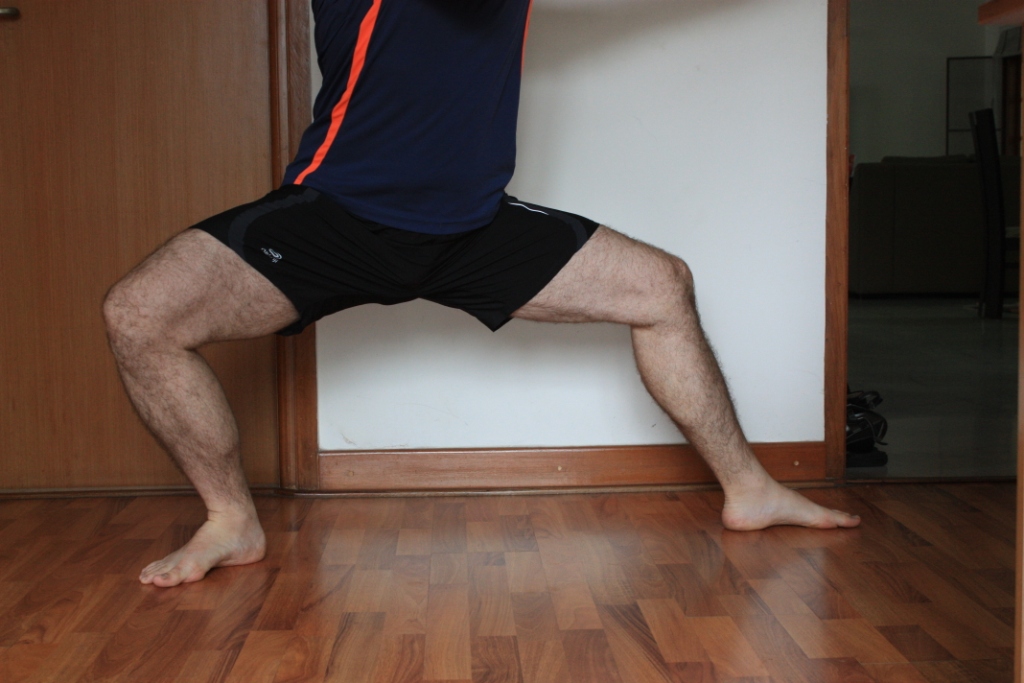
Note: Knees pointing the same direction as the toes. (The back knee might be a little far back but that’s an issue for the ankle health post.)
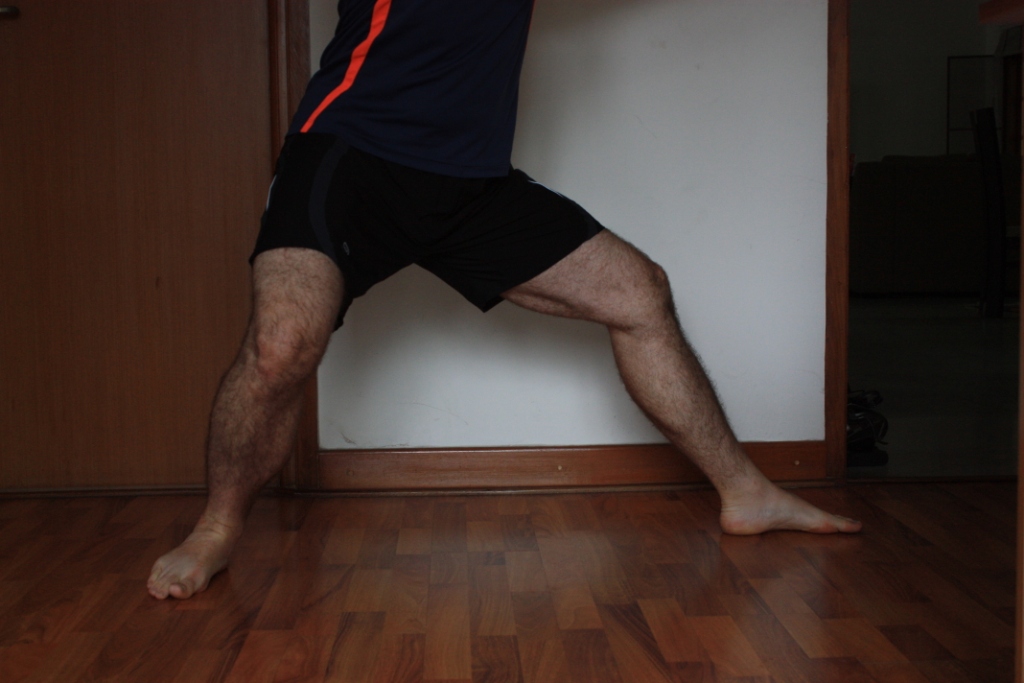
WRONG: Note: if one dropped a line down from the knee it would be well inside the foot. That means the ligaments are having to work too hard and your skeleton isn’t doing enough
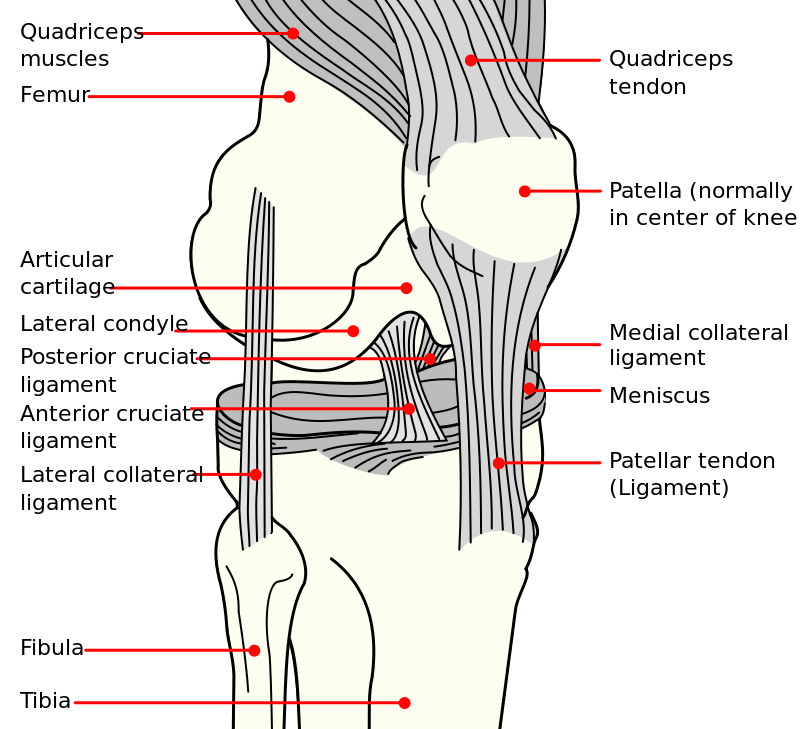
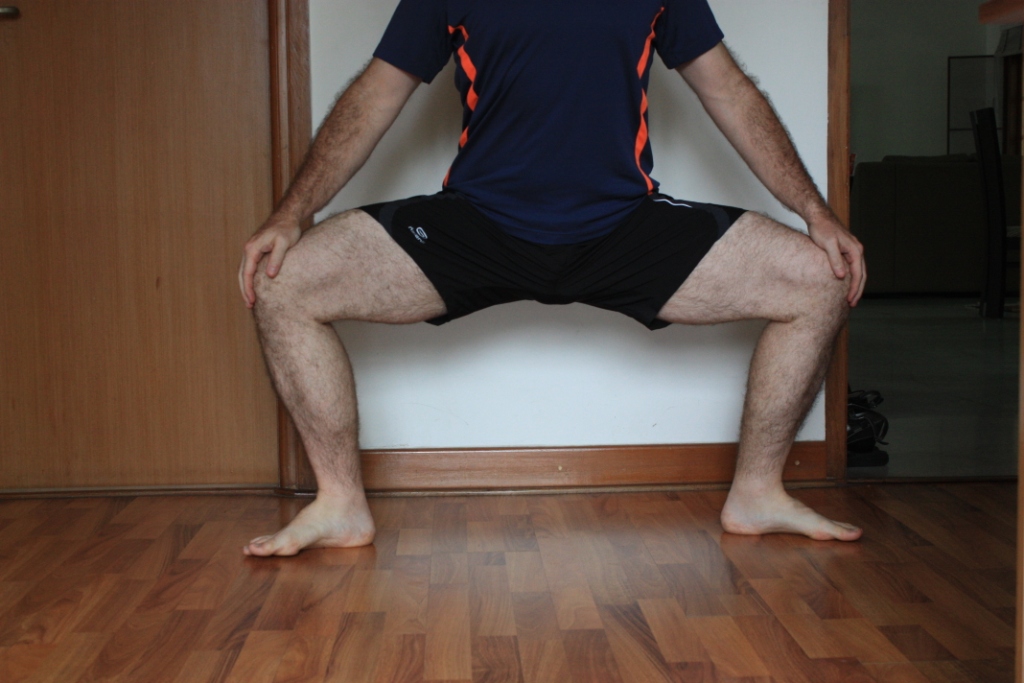
To do a posture like the one above, one needs the flexibility to keep the knee wide enough so that it points the same direction as the toes. The joint shouldn’t be wrenched or torqued with load on it. The four ligaments (Anterior Cruciate Ligament [ACL], Posterior Cruciate Ligament [PCL], Medial Collateral Ligament [MCL], and the Lateral Collateral Ligament [LCL]) and the surrounding musculature keep the joint snug during movements. And, as mentioned earlier, when the knee is deeply flexed it’s more sloppy than when extended.
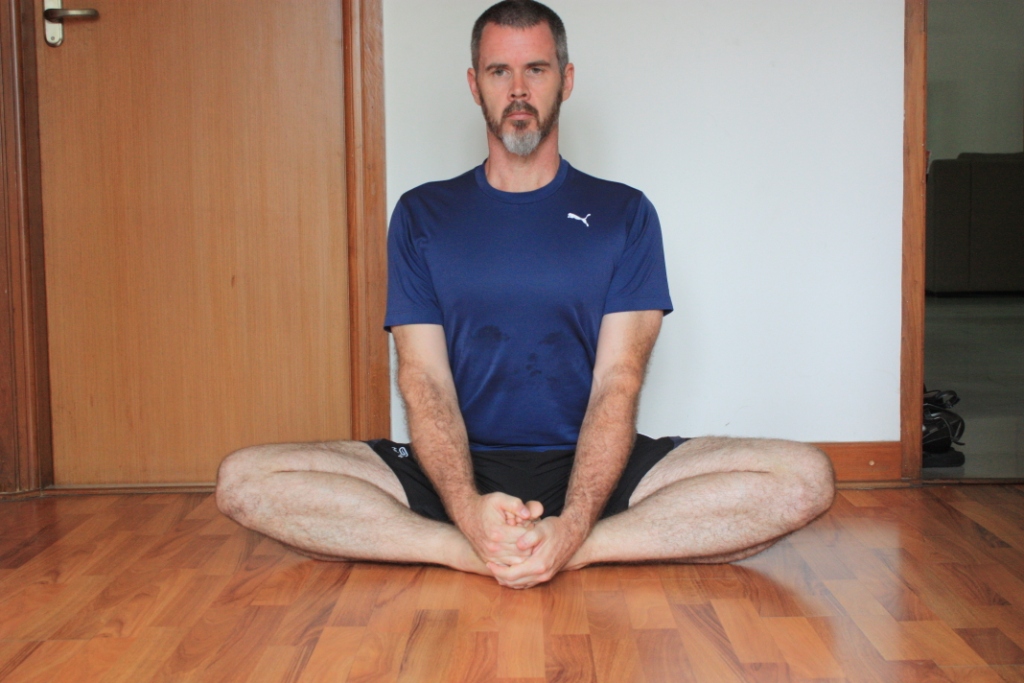
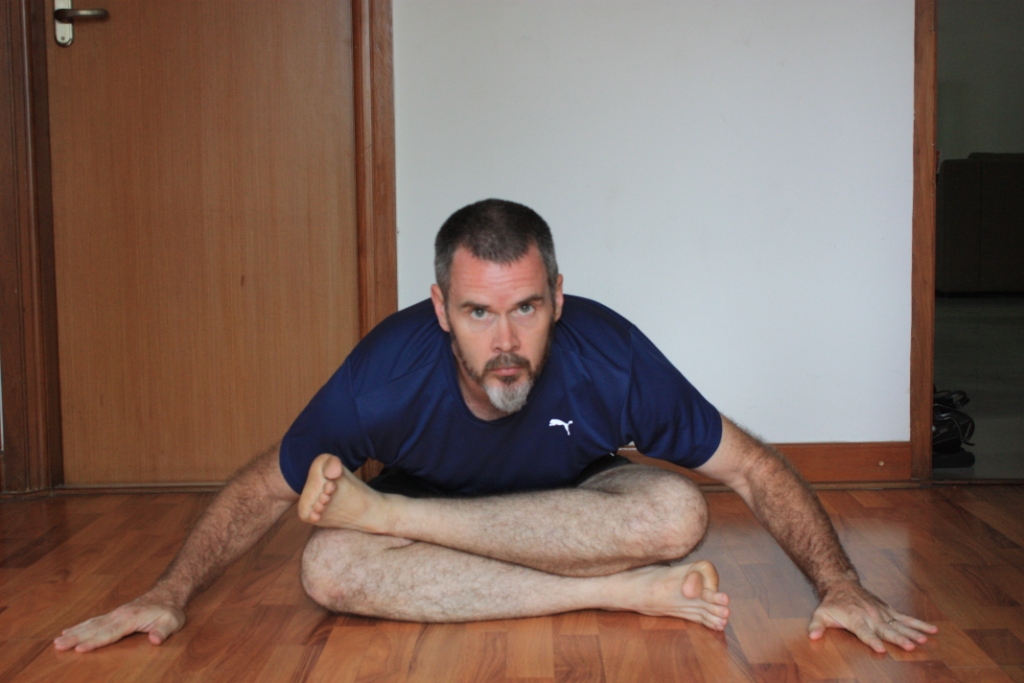
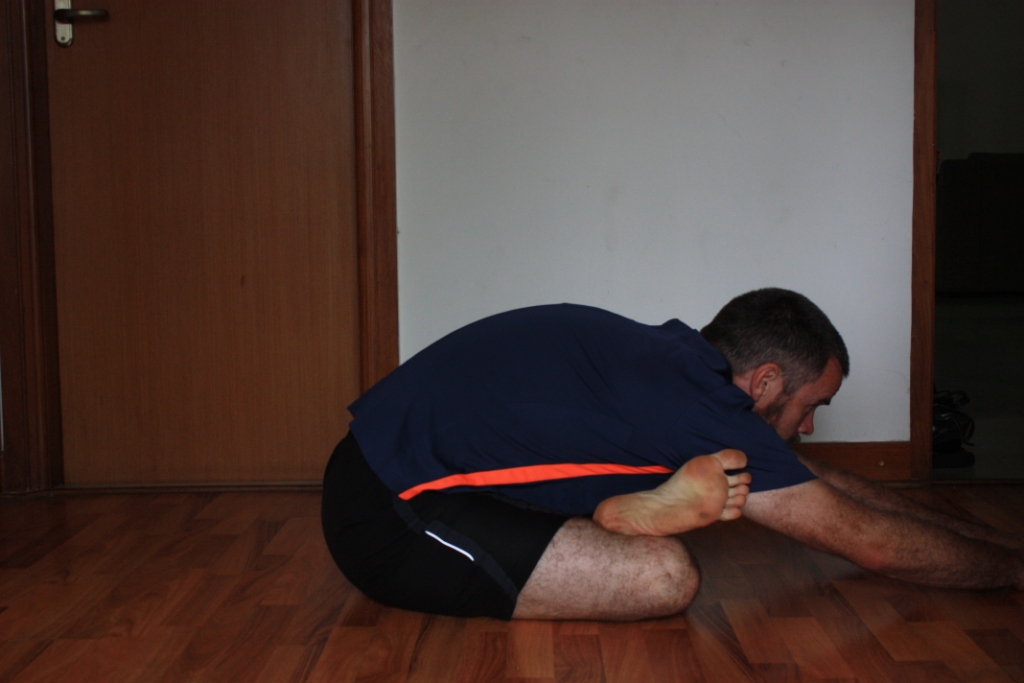
-Increase flexibility in the muscles that internally rotate and adduct the thigh: When one goes into a wide-legged stance, one’s thigh is pulled away from the body’s center-line (abducted) and the thigh externally rotates. If the muscles that act in the opposite direction (pulling the thigh back on center and rolling the thigh inward) are too tight to allow the knee to move into proper position, then the load of the body weight will be going into the ground through a kinked joint. Furthermore, one will end up torquing through the joint as one moves. Below are a few hip openers that will help one achieve the requisite range of motion.
Utkatakonasana (often called goddess pose) variations will show you whether you’re getting your knees and toes in line.
Badhakonasana (often called the butterfly stretch): Work on getting those knees down
Place one foot on top of the opposite knee (and vice versa for the other side) carefully shift weight forward. This puts an intense stretch on the hip-joint to help rotate the thigh sufficiently
Same as the last from the side
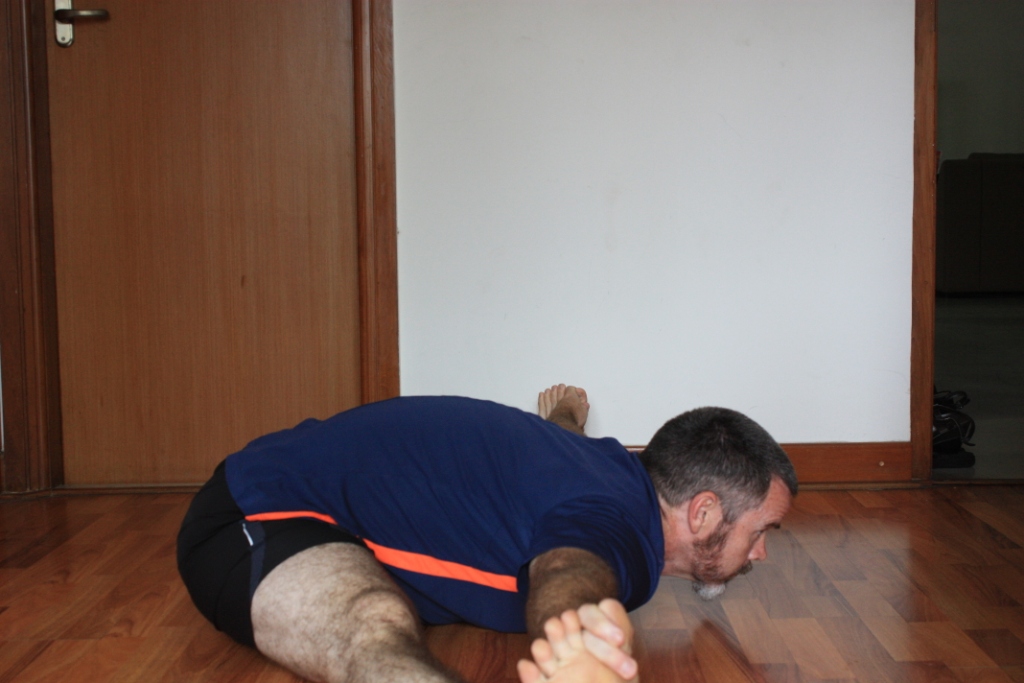
Upavistakonasana: put legs at about 90 degrees relative to each other, and then lean forward with a flat back placing the stomach, chest, and chin on the floor (in that order.)
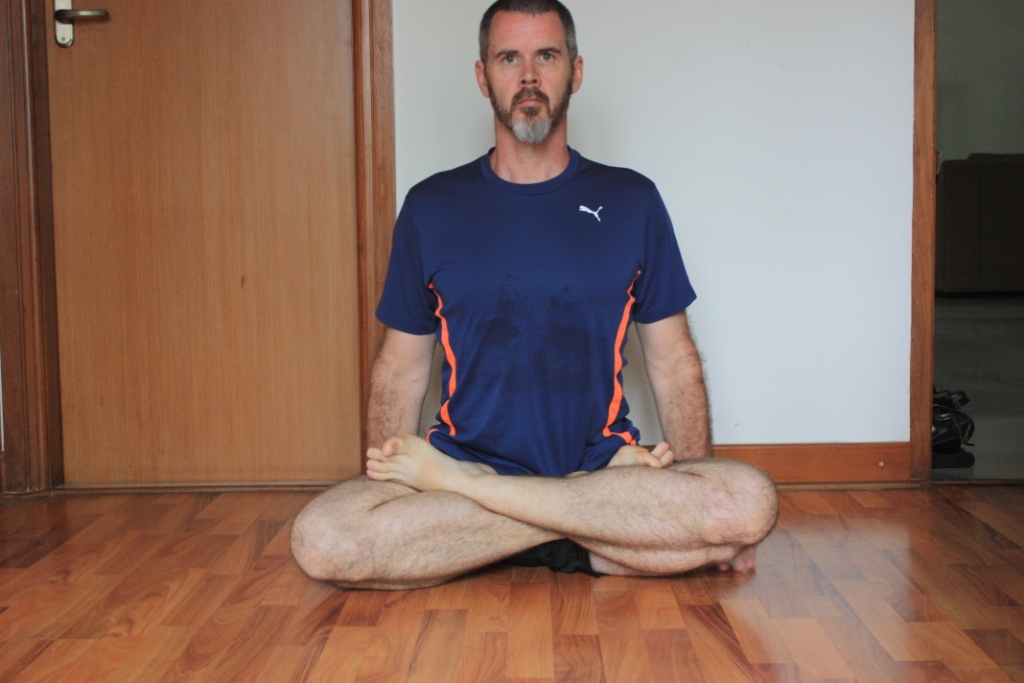
Padmasana (lotus): If you meditate in padmasana, you probably already have the range of motion necessary. Note: if padmasana hurts your knees, you need to go back to hip openers and discontinue the practice.
-Strengthen the muscles that stabilize the knee-joint. One begins this process with the usual suspects of leg exercise. One just needs to focus intently upon alignment. Here are a few of the exercises you may already be doing.
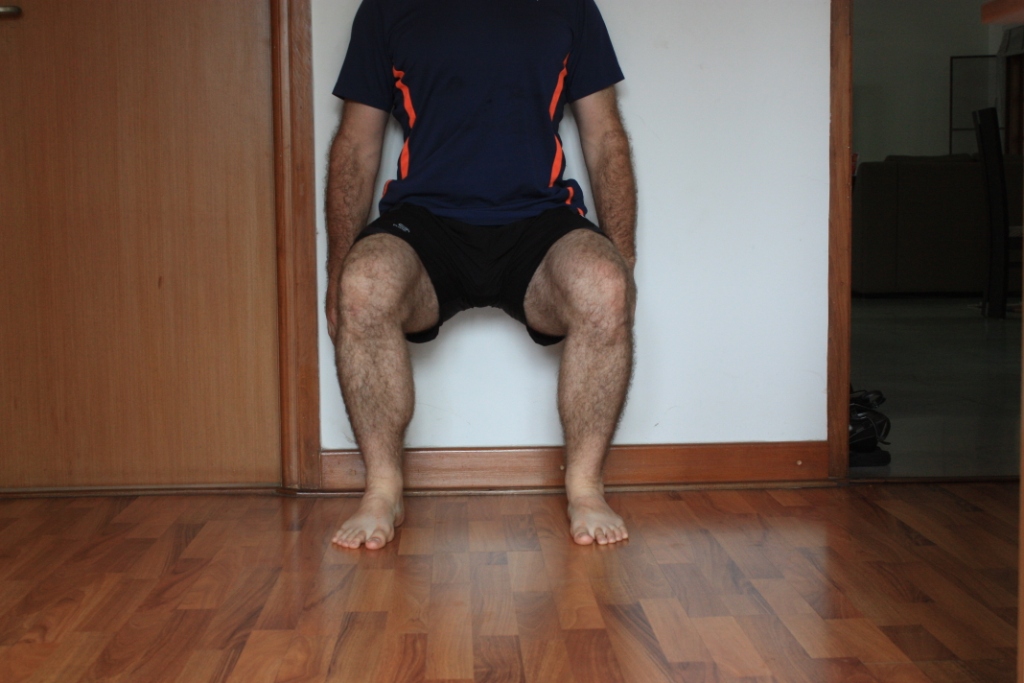
Wall squat: just like sitting on a chair with one’s back to the wall–sans the chair.
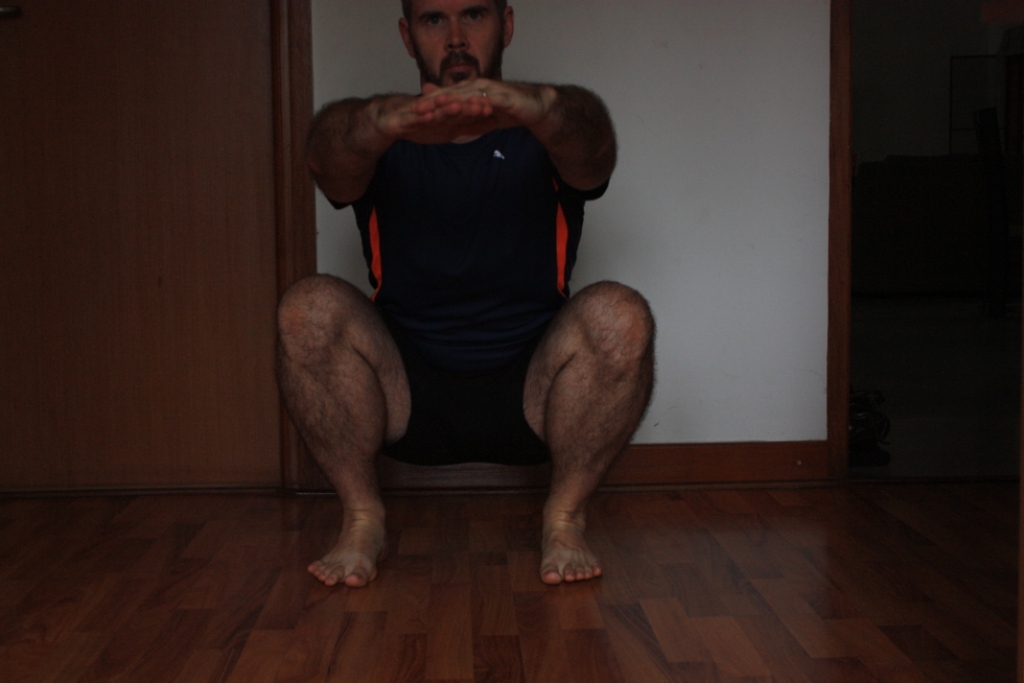
The classic squat
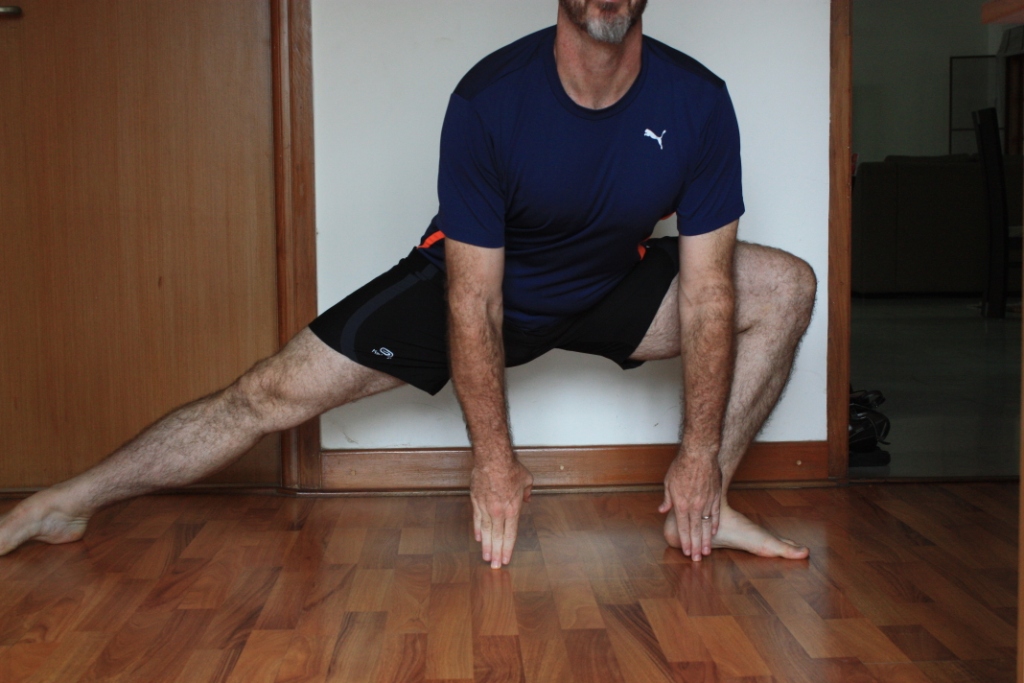
Side lunge: This one is particularly important to get the knee aligned with the foot.
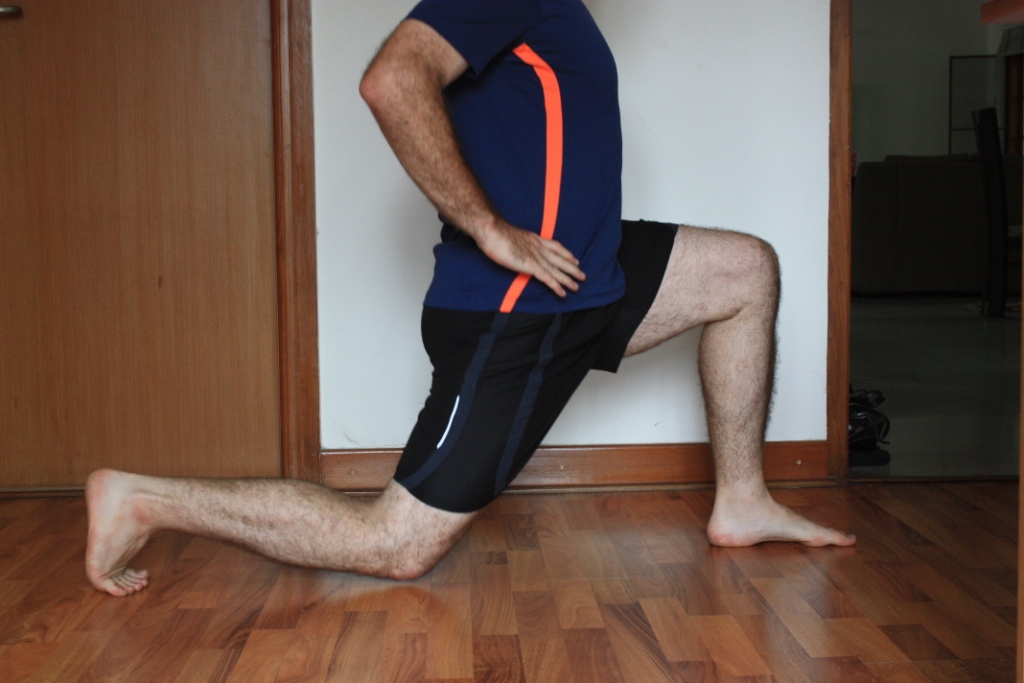
The basic lunge: can be done stepping forward, backward, or both (the latter in an alternating fashion)
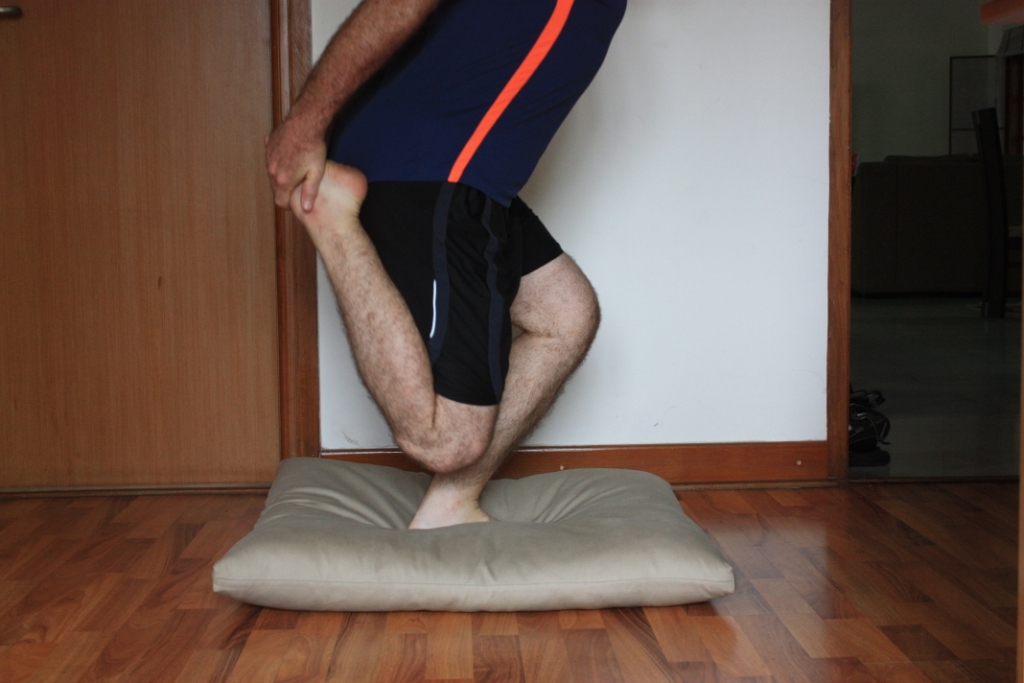
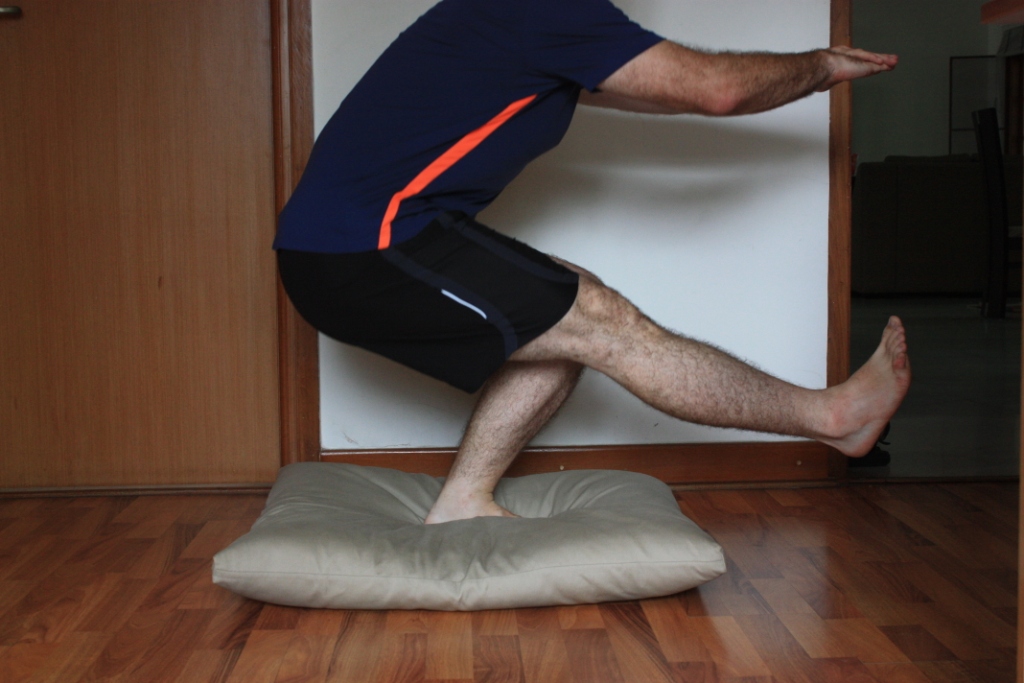
As one needs more challenge, one can achieve it in the usual ways (single-legged, unstable surface, add weight, or combinations thereof.) Below are a couple of variations that combine single-limbed work with an unstable surface.
-Save static stretching for after the joint has warmed up. It used to be common to begin a workout with static stretching. While few do this anymore, it’s a practice that needs to be replaced. Stretch warm.
-Don’t neglect the opposing muscle groups: When I said that one needs to increase flexibility in adductors and internal rotators, that doesn’t mean to ignore the opposing muscles. Nothing good comes of stretching or strengthening in an unbalanced fashion. Your musculature works as a team with agonists, antagonists, and stabilizers all working in conjunction to produce effective movement.
-Don’t go overboard with stretching: If your aim is to be a contortionist, then by all means go ahead. However, highly flexible martial artists need to be concerned about joint laxity. Laxity is when the joint gets so loose that it’s vulnerable to popping out-of-place. A martial artist needs a balanced style of fitness. Extreme flexibility results in weakness and lack of joint robustness, just like extreme strength training produces a body that lacks range of motion and stamina.
Most importantly, don’t ignore pain when it’s still at the minor twinge point. If you have knee pain you’re doing something that joint doesn’t like. One should reevaluate your movement and, if necessary, considering stepping back from your current practice to work on capacity building exercises.

 Why We Run: A Natural History by Bernd Heinrich










 Tiger Riding for Beginners