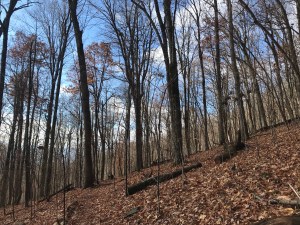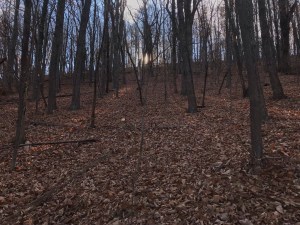
Walking Alone III [Haiku]

clouds drift;
a boy traces shapes with a
pointing finger

Walking Alone I [Haiku]

 lush valley.
a solitary hiker 
walks through

Coffee Plantation [Haiku]

coffee estate.
one yellow plant stands out
from a wall of green

Blush [Haiku]

green seed pods
blush to blood red,
then split open

Necropolis [Free Verse]

a city of the dead
tunneled under the living,

awaiting the flip,
a shift in who's who

-the living & the dead,
-the dead & the living
-the alive and the existent
-the living dead &
those dying alive

all jumbled together
in a sea of inhumanity,
tumbling past each other,

scrambling for humanity -
for the breath of life,
for life in a breath

the musty scent of decay
in the living city
was the first sign...

those in the necropolis 
smelled flowery scents --
clean and bright --
and found those fragrant
perfumes
as revolting as the
living found the rot stench

in the brief time it took
to become acclimated to the stink,
all found themselves in the churn,
struggling for more
of something they
didn't understand

Mountain Fog [Free Verse]

fogged in at a teahouse,
a growing gray of view,

this world lacks 
sharp lines,
excepting the hint of:

-a sloping roofline
&
-a building's corner

 these lines are 
sharp relative to
the amorphous gray;

but fuzzy compared to 
the same line's clarity 
on a blue sky day

now,
they're blurred, 
as if the village
had been painted by a
skilled - but lazy -
painter,

a sumi-e master
with a melancholy soul

Wu Shih / “Nothing Special” [Free Verse]

a steady rain patters
into puddles
far below

i close my eyes,
listening for a
pattern

but it's chaotic -
 a random rhythm that
tugs at my eyelids,

lulling me into 
a dull state of mind

BOOK REVIEW: Writing Haiku by Bruce Ross

Writing Haiku: A Beginner's Guide to Composing Japanese PoetryWriting Haiku: A Beginner’s Guide to Composing Japanese Poetry by Bruce Ross
My rating: 5 of 5 stars

Amazon.in Page

Out: March 15, 2022

With this guide, Ross offers a compact guide to navigating Japanese poetic forms and the offshoots and variations that have evolved in America. The book does have a particular focus on the American and international style of haiku, and related forms, though the author always lays the groundwork by first exploring the “rules” of the traditional Japanese form. He also discusses concepts, such as wabi and sabi, that heavily inform Japanese poetry. However, most of the examples come from English language writers, and there’s extensive discussion of how American haiku differs in form and substance. This makes the book particularly useful for English-as-native-language writers who wish to capture the flavor of this spare and elegant poetic form, but who have limited acquaintance with the Japanese language and culture.

I didn’t think I’d need another guide for writing haiku after reading and re-reading William Higginson’s The Haiku Handbook, but Ross does cover a few topics in greater depth and detail, particular haiga (combining graphic arts with haiku,) renga (a partnered / team style) and several American variations, and ginko (a nature walk-based practice.)

The book has graphics as needed (i.e. in the haiga section,) and offers and extensive set of recommendations for further reading as well as resources.

While I’ve been writing haiku, tanka, and senryū for some time, I learned a lot from this book, and it got me excited to try some of the forms with which I’m inexperienced. I’d highly recommend this book for beginner, intermediate, and advanced haiku poets.


View all my reviews