BOOKS: “Southeast Asia: A Very Short Introduction” by James R. Rush

Southeast Asia: A Very Short Introduction (Very Short Introductions)Southeast Asia: A Very Short Introduction by James R. Rush
My rating: 4 of 5 stars

Publisher Site

I’ve been to most of the eleven countries of Southeast Asia, but still my questions are many. This short guide answered some of them. The book takes a largely historical approach, breaking the timeline into periods during which these countries were pre-nation-state kingdoms, then colonies, and then independent countries. While the guide is written by a historian and is organized by governance (i.e. who won the wars,) it does not solely address politics and regimes.

The guide also explores subjects such as religion. This was fortunate for me because a lot of my questions involve this topic. Why is the northern part of the region mostly Buddhist while the southern part is mostly Muslim? Why did Hinduism and other Indian religions (not inclusive of Buddhism, which virtually died out within India) almost entirely give way to other religions in this area, except for spotty exceptions (most notably Bali?) Incidentally, the former question is answered more than the latter, which makes sense as this is small book for a relatively large area, but more importantly for a long history. Southeast Asia has been a strategically and economically important place for centuries.

As a traveler, I found this book well worth reading as a way to gain insight into the region. It doesn’t dive deep into cultural questions (except a bit into religion,) and so there is much more to learn from other books. It does explore who governed these countries and how, and the last chapter brings the question up to date — reflecting on the political and economic changes in the last couple decades. If you’re curious to know more about Southeast Asia, in a way that doesn’t get too deep in the minutiae, this book is worth checking out.


View all my reviews

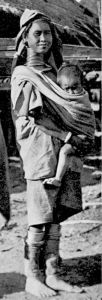
Limerick of Myanmar

There was a young woman from Myanmar
who had the longest neck around, by far,
but when she shed the rings
her neck drooped like a string-
she was the flex-necked gal of Myanmar.

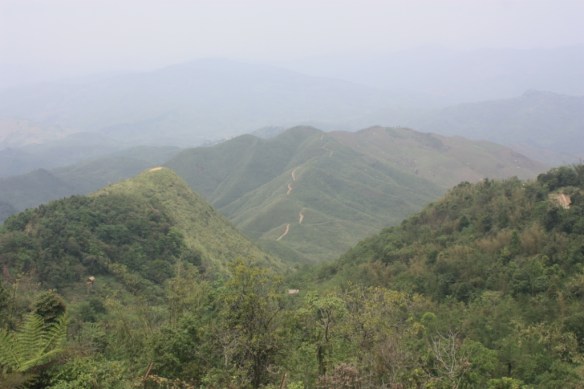
DAILY PHOTO: Myanmar from India

Taken on the India – Myanmar border in May of 2017

BOOK REVIEW: Miss Burma by Charmaine Craig

Miss BurmaMiss Burma by Charmaine Craig
My rating: 5 of 5 stars

Amazon page


This novel tells the story of a mixed-race family and their trials and tribulations in Burma / Myanmar from the colonial period (before the Second World War) through the early 1960’s when a civil war was in progress. The father / husband, Benny, is ethnically Indian, religiously Jewish, works for the British, but was born and spent his early childhood in Burma. He marries a Karen woman (i.e. of the Karen tribe.) The central (and titular) character is the couple’s first child, Louisa. Louisa is a beauty, and for various reasons – none of which reflect her own preferences – she ends up a beauty queen and national celebrity.

What is fascinating about this book is how the many levels of humanity – from the individual level (e.g.Louisa / Miss Burma) to the international level – play into each other. At an individual level, each member of the family finds his or her life intruded upon by the nation’s conflicts. Benny ends up a prisoner of war of the Japanese and then later a prisoner of the Burman ruling regime. He feels beholden to the Karens because of a combination of factors involving repaying of debt, familial obligation, and friendship. Louisa ends up in the pageant – in part — because of the question of whether the leaders and Burman citizens are really serious enough about unity to allow a non-Burman into that high-status role.

At a national level, there is a rapid succession of changing situations. First, the country needs to thwart the Japanese invasion. Next, they must throw off the British colonial yoke, and, finally, Burma must figure out what kind of nation (or nations) it will become. The Burman leader wants to consolidate the country, while many tribal groups, including the Karen, want independence. Benny’s family is tied up in this conflict, in part, because of their Karen connection, but also the fact that Benny was able to exploit the post-war economy to his advantage and became rich after the war. This makes him, and his family, both important and simultaneously loved and despised.

At the international level, America and other global powers have interests in keeping Burma from disintegrating into tribal sub-states. In the early post-war period, these interests are largely economic, and involve the preference to have a solitary trading partner for Burmese goods. However, later, as “domino theory” takes center stage in American foreign policy, the interest shifts to thwarting the spread of Communism. (“Domino theory” was the idea that if a non-Communist government fell, others would proceed in a chain reaction throughout the region. It was a little simplistic, but reflected the anxiety of the times and was a large part of the justification for the Vietnam War.)

I found this book gripping and fascinating. The international intrigue and family tensions both work together to make an intensely readable work. Without getting into the ending, I will say that it feels a little bit rushed and anti-climactic. However, the events of the book give it plenty of tension overall, and there is a logic to the place the book ends. It is emotionally powerful to see how this family is repeatedly torn apart and must come together again through great difficulties. We also see how obligation and sense of duty play themselves out, often trumping other considerations.

I would highly recommend this book for readers of fiction, particularly those with interests in historical fiction and works that offer insight into a nation and a culture.

View all my reviews

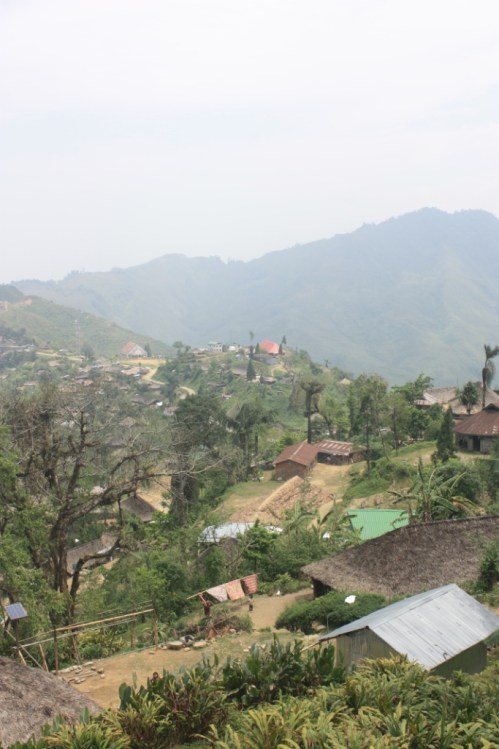
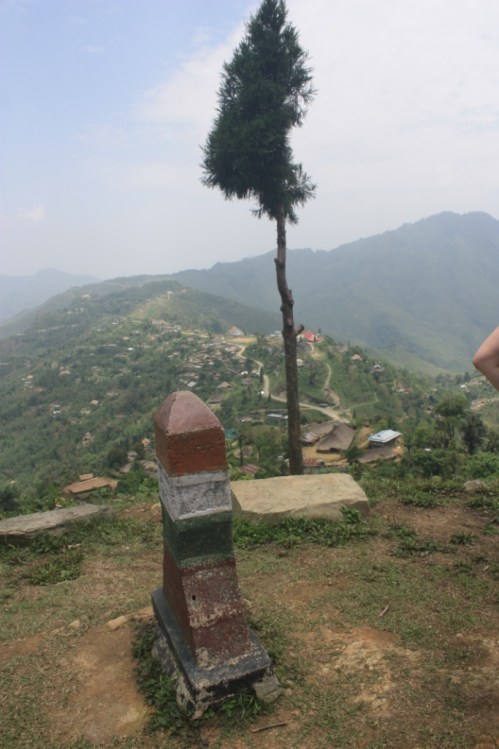
DAILY PHOTO: Overlooking Lungwa, Indo-Burmese Border Village

Taken in April of 2017 at Lungwa in Nagaland

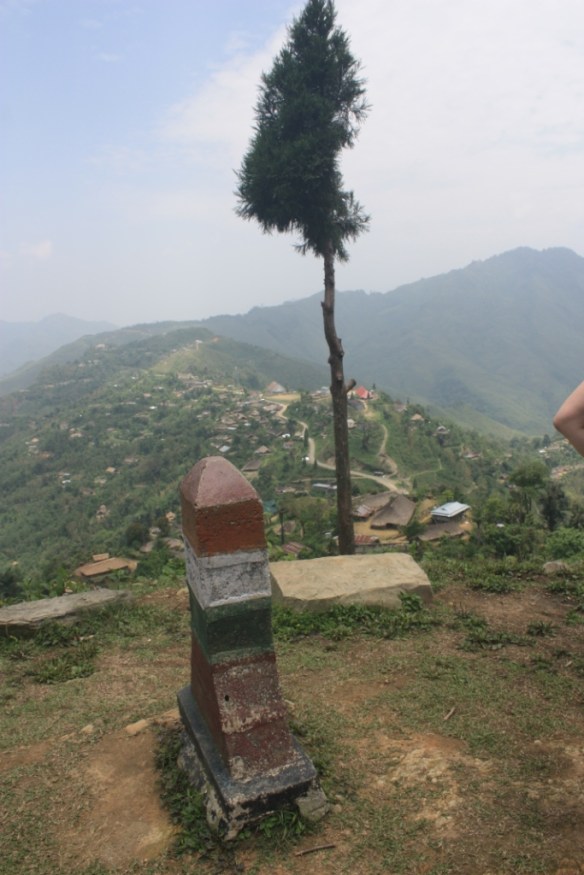
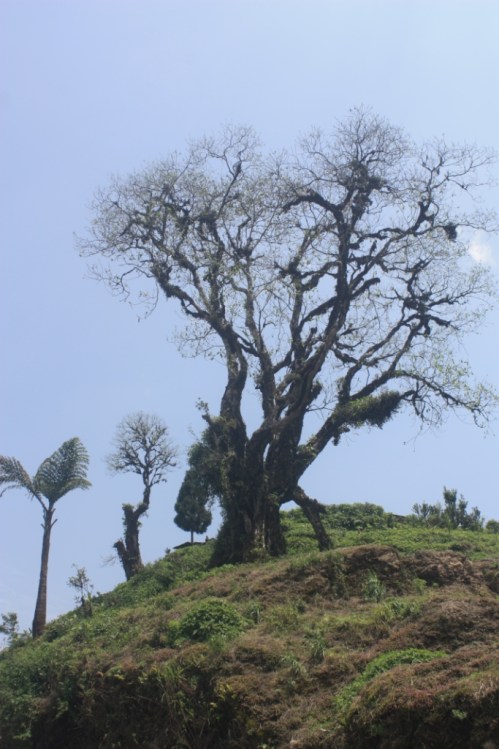
DAILY PHOTO: Strange Tree on a Hilltop

Taken on April 27, 2017 near Longwa in Nagaland


I’m not sure / can’t remember whether this was on the Indian or Myanmar side of the border.