BOOK REVIEW: The Diving-Bell and the Butterfly by Jean-Dominique Bauby

The Diving Bell And The ButterflyThe Diving Bell And The Butterfly by Jean-Dominique Bauby
My rating: 5 of 5 stars

Amazon page


If it had been written under ordinary circumstances, this would be a fine book. It offers some beautiful imagery and language, and – more importantly — is heartfelt, touching, and nakedly honest. But it wasn’t written under ordinary circumstances, which makes it an astounding book. Its author suffered a severe stroke that, after leaving him in a coma for a time, resulted in a condition called “Locked-In Syndrome,” which resulted in his inability to move any part of his body save his left eyelid. It was by moving this eyelid that he painstakingly dictated the book. As one might suspect, the book is concise and sparse in tone, but it read like that could have been a stylistic choice, rather than a necessity.

The title becomes less nebulous once you know it’s about a man with Locked-In Syndrome. The diving-bell represents his body, a clunky cumbersome entity that limited his perception to narrow slices of the world. The butterfly is his mind, which remained free to go anywhere and create anything he could imagine. Some of what I found most fascinating about the book was the author’s discussion of the mental world he created. Though the book deals even more extensively with how the condition changed his interaction with people. Loneliness is a central theme. Because of the severity of the condition, he is restricted to a special facility and can only see his children on weekends. While his children are the most important to him, he also reflects back to people that he worked with in his role as a magazine editor or who he counted as friends.

The organization is not strictly chronological, and I felt this was beneficial. By presenting flashbacks to before he was injured and, eventually, to when he had his stroke, he broke up the tragedy to keep it from becoming overwhelming.

I found the book to be extremely powerful. I would highly recommend it for all readers.

View all my reviews

BOOK REVIEW: Story of the Eye by Georges Bataille

Story of the EyeStory of the Eye by Georges Bataille
My rating: 4 of 5 stars

Amazon.com


This story follows a couple through a destructive series of events as they chase sexual hedonism. They aren’t a couple in the romantic sense so much as friends who share in common both intense sex drives and also a particular psychology. It’s a psychology commonly associated with rebellion against a repressive upbringing. This rebellion manifests both in a longing for perverse and taboo activities, and also in an urge to debauch the virtuous. This love of depravement is first seen in the pair’s actions with a conflicted girl of their own age, Marcelle, and in the climax and conclusion with a young priest in Seville. In yet a darker turn, the two also conflate violence and sexual arousal.

Character development is not particularly strong in this book, and without the requisite background, the actions of the unnamed male narrator and his companion, Simone, can seem hard to believe at times. (To be fair, the book is more surrealism than realism.) While lack of character development and character complexity are a common problem in erotic literature, this book is also smothered in Freudian belief about how strange sexual drives always and everywhere exist in the subconscious in a struggle to break free. In other words, Bataille may not have felt he needed to set up the reader for the bizarre behavior of the narrator and Simone because he saw the pair as not as unusual, but merely as how most people would behave if they were a bit braver and less inhibited.

Marcelle is the most multi-dimensional character. We see her on a teeter-totter that balances primal urges and constraining morality, or shame and abandon. But we don’t get much depth of her either because she is treated largely as a puppet or plaything for the lead characters.

The novel shares some tendencies in common with the works of Marquis de Sade, but it also displays some differences. The eroticizing of degrading virtuous characters is a theme that holds over. It might also seem that the involvement of a Catholic priest is a continuation of Sade’s philosophy as well. However, there’s a difference. In Sade’s work (and similar works of erotic political philosophy) the priests are lecherous and are villains in league with the aristocracy. Bataille’s priest is a man minding his own business, who would like to be virtuous, but the young priest just doesn’t have the inner strength in the face of a strong-willed debaucher.

From the discussion above and the comparison with the works of the Maquis de Sade, it should be clear that there is a great deal of graphic sexual activity and even a little bit of graphic violence in this book. For readers who aren’t disturbed by that, and who are amenable to a bit of bizarre and surreal activity, the book is intriguing both as a story and for its psychological insight. If you read horror, and aren’t disturbed by fetish sexual activity, you’ll probably enjoy this book.

View all my reviews

BOOK REVIEW: How to Love a Country by Richard Blanco

How to Love a CountryHow to Love a Country by Richard Blanco
My rating: 5 of 5 stars

Amazon page

Out March 26, 2019


This book takes one on a roller coaster ride of insight into the author’s relationship with his country as an immigrant from a family of Cuban exiles. At times the tone is hopeful and at other times seething or even vitriolic. Unlike many of the angry works of political verse of late, this one sometimes reflects that most beautiful of pragmatic truths: one can’t truly love anything if one can’t embrace it imperfections and all. As it happens, this wide sway in tone is partly the result of these poems being collected from various sources. Having a poem commissioned by the State Department in a collection with a poem that was a response to a news story about someone being gunned down is bound to result in some variation in feel. Still, I think the poems were well-organized to reflect the various trials and glories one goes through in a relationship. The angry verse is well-positioned toward the middle, and about the time I was over the rage, the storm clouds began to break up and a more beautiful scene unfolded.

The poems are prose poetry or free verse. There is beautiful use of language interspersed with plain-spoken verse.

I’d recommend this collection for poetry readers. I don’t suspect it will have a particularly wide audience. A jingoistic reader who picks it up for its title will drop it like a hot rock long before getting to the aforementioned angry plateau. Which is not to say that there isn’t something to be gained from reading this book even if it doesn’t comport with one’s own views. The issue of division along fault lines of political-philosophy is a major theme of this collection.

View all my reviews

BOOK REVIEW: Milkman by Anna Burns

MilkmanMilkman by Anna Burns
My rating: 5 of 5 stars

Amazon page


This quirky novel is about a girl struggling to stay out of the limelight in a place where a socio-cultural schism leads to the most mundane happenings becoming a source of intrigue and speculation. The reader is never told that the aforementioned location is Belfast, Northern Ireland. However, between reading the author’s bio-blurb and having been around for the news stories from that city a few decades ago, it’s easy enough to draw that conclusion.

There’s a lot readers aren’t told in this novel. For example, we don’t learn anyone’s proper name. The characters are defined by their relationship to the protagonist (e.g. “ma,” “may-be boyfriend,” or “wee sisters”), his or her profession (e.g. “real milkman” the qualifier distinguishing said individual from the titular character [who is not nor never was – to anyone’s knowledge – an actual milkman],) or a peculiarity of said character (e.g. “tablets girl” or “nuclear boy.”) There is actually a character named “Somebody McSomebody.” One can only speculate about the author’s choice to not name the characters. My guess is that it reflects an attempt to emphasize a craving for anonymity and an avoidance of being free with detail.

The titular Milkman is a mysterious militant who takes an interest in the lead character. While the narrating lead tells us that she is definitely not interested in the Milkman, the community soon concludes that she is in a covert relationship with him. While the lead wants to keep her business to herself, there are a couple of factors working against her. First, one of her idiosyncratic behaviors – which one gets the impression she engages in to get a break from people – is walking home while reading, rather than taking the bus. This draws unwanted attention, perhaps ironically as one presumes she does this thinking that she’s slipping out of the public awareness. A second factor is that, while we are never told as much, one gets the impression that the lead is a beautiful young woman. Of course, the biggest factor is that everybody is watching everybody else like a hawk, attempting to find faults in what I call tribe signaling behavior (those actions – e.g. FaceBook posts – that serve to tell people who one is part of some group A and definitely not part of that vile group B.) For example, may-be boyfriend wins a Bentley turbo-charger and there is furor over the fact that said product usually has a little British flag on them, putting may-be boyfriend in a traitorous camp.

In one sense, this is a book about life in a place that has a specific socio-cultural fault line, specifically Northern Ireland. However, there is a lot in the story that is relevant to readers today, as we see sharp politico-cultural divides forming in many places in the world – certainly, for example, in the US. The book will make one sympathetic to the woes of those trying to opt out of tribe-signaling in a community in which to be unaffiliated is to be relegated to the lowest status imaginable.

I would highly recommend this book for all readers. Its humorous, albeit with the dark undertone of conflict ever-present. It’s readable and the reader will find themselves carrying about the plight of the lead.

View all my reviews

BOOK REVIEW: William Blake ed. by J. Bronowski

William Blake: A Selection of Poems and Letters (The Penguin Poets)William Blake: A Selection of Poems and Letters by Jacob Bronowski
My rating: 5 of 5 stars

Amazon page

This is a selection of poems and letters by William Blake. The poetry includes several of Blake’s collections in their entirety, including: “Songs of Innocence,” “Songs of Experience,” “The Everlasting Gospel,” “The Book of Thel,” “The Marriage of Heaven and Hell,” “America,” and “The Song of Los.” Additionally, it includes selections from Blake’s “Poetical Sketches 1783,” “MSS c. 1793,” “MSS c. 1803,” “MSS c. 1810,” “The Four Zoas,” “Milton,” “Jerusalem,” and “The Gates of Paradise.”

This selection gives the reader all of Blake’s most well-known and beloved works in the form of “The Songs of Innocence and Experience” and “The Marriage of Heaven and Hell.” The former presenting the short and lyrical poems such as: “The Lamb,” “The Little Black Boy,” “The Tyger,” and “A Little Boy Lost.” The latter best voicing Blake’s philosophy, which was spiritual but yet ran afoul of the zeitgeist by rejecting the morality of the day – particularly as regards sexuality and relationships. In truth, Blake was considered a madman by many of his contemporaries. At this point, it’s hard to know the degree to which he was truly insane versus just in conflict with the prevailing mode of thought. I’ve read that Blake’s biographies (particularly Chesterton) heavily overplays the insanity angle. It should be noted that Blake was also a painter, and his images – which are in some cases nightmare fodder – probably helped establish his lunatic status. Still, his poetry reads much less objectionably to the modern ear [possibly why Blake was one of those poets who was not well-known or well-read during his lifetime, but rather gained a major following after he was deceased.]

Most of the works that are merely sampled from are collectively called “Blake’s prophetic works” – e.g. “The Four Zoas,” “Milton,” and “Jerusalem.” These are epic poems expressing a mythology developed by Blake. For most readers, sampling these works will prove sufficient. The prophetic works involve many characters and an unfamiliar mythological base (i.e. as opposed to reading Norse or Greek mythology for which the educated reader likely has some helpful background.) In their day, the prophetic works were considered nonsensical, but more recent scholars and reviewers tend to look upon these poems in a kindlier fashion. At any rate, the select chapters aren’t enough to give the reader a flow of the story, but rather merely a taste of the language and tone of the works.

The letters number fewer than twenty, and include thank you notes and explanations of the drama going on in Blake’s life at the time. Ordinarily, I would consider the inclusion of these documents mere padding, but I’m more fascinated by Blake as a person than I am many other poets and so the letters do shed a little light on Blake as a man. Still, because one is only getting snippets of information and all from Blake’s side, the insight offered by the letters is quite limited. In my opinion, the editor should have either left the letters out or heavily footnoted them to provide background context to make sense out of them.

I’d recommend this book. I think the editor’s selection strikes the right balance in excerpting the prophetic works. I think most readers can skip the letters, unless one has a major fascination with Blake.

View all my reviews

BOOK REVIEW: Prussian Nights by Alexander Solzhenitsyn

Prussian Nights: A PoemPrussian Nights: A Poem by Aleksandr Solzhenitsyn
My rating: 5 of 5 stars

Amazon page


This long-form narrative poem tells a tale of inhumanity in the Soviet advance toward Germany during the Second World War. The narrator is a run-of-the-mill soldier who witnesses rape and murder by his comrades. Solzhenitsyn was a young officer in the military during the war, and it’s probable that the story of the poem draws from his real-world experience during the war. It’s said that he composed and memorized the poem while he was in the Gulag.

While the poem’s story focuses on violence and inhumanity perpetrated by some soldiers, it isn’t particularly graphic in its description. Rather, the author sets up scenes and leaves it to the reader’s imagination to fill in the blanks. It’s also true that in some cases the narrator is witnessing the aftermath of violence and not the act itself. It’s not a pretty story, but readers needn’t be concerned it will be gratuitously graphic.

While the translator chose to stick to rhyming verse, the poem is quite readable. The story is told in a straightforward fashion. Many will find this appealing because the readability is high. However, others may find the lack of metaphor and poetic approaches to language to make for unappealing poetry. There’s not a lot of symbolism and the meanings seem quite literal. That said, the imagery is often vivid and evocative, and the metered verse reads smoothly and lyrically.

The book has a feature that I like, which is the original [Russian] is on the left-hand page with the English translation, produced by Robert Conquest, on the right. The translation didn’t come in greatly useful for me. I had two years of Russian back in college, but that was a long time ago and I read Cyrillic with the unconfident stammer of a first grader. Still, it’s interesting to get a taste of the original.

I’d recommend this book, regardless of whether one is a poetry reader. The story can be read as just that, a story, and it offers insight into the ugly inhumanity too often set free in the act of warring.

View all my reviews

5 Literary Classics That Could Have Used an Editor

I’ve got nothing against long novels. Some of my best friends are long novels. Sometimes a book either needs to be long, or — at least — manages to be a joy to read despite being long. However, I’m arguing here that there are some novels that could afford to have a little taken off the top.


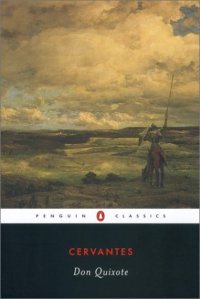
5.) Don Quixote by Miguel de Cervantes: This is a funny and clever novel, but the gag goes on a bit too far. We don’t need to see every man, woman, and child in Spain kick the man of La Mancha’s butt because he hallucinates that each is a brigand or neer-do-well while he imagines himself a knight.


4.) Tale of the Genji by Lady Murasaki: To be fair, some consider this to be the first novel, and so it’s a little unreasonable to expect perfection of style and readability. (Not to mention that its target audience of 11th century Japanese courtiers are all long dead.)


3.) Atlas Shrugged by Ayn Rand: Irrespective of how one feels about Rand’s work as a political statement, we should all be able to agree that it doesn’t take 1,100+ pages to show us a world where entrepreneurs and capitalists go on strike.


2.) Moby Dick by Herman Melville: I realize that many consider this to be the great American novel, but I knew far too much about ambergris and whale bile ducts when I finished reading it… just sayin’.


1.) Ulysses by James Joyce: I’m aware of the stunningly beautiful language, but almost 800 pages to cover a single day in the life of one guy?

BOOK REVIEW: The Heart’s Necessities by Jane Tyson Clement

The Heart's Necessities: Life in PoetryThe Heart’s Necessities: Life in Poetry by Jane Tyson Clement
My rating: 4 of 5 stars

Amazon page


At its heart, this is a collection of the poems of Jane Tyson Clement, who lived from 1917 to 2000, but there’s more going on in the book than the poetry. As the subtitle, “A Life in Poetry,” hints, the poems range over the almost sixty-year writing career of this author and poet. Having a selection of verse that runs from Clement’s teenage years into her seventies, offers the reader an opportunity to watch the growth of this poet and to see how the dictates of life influenced the style and content of her poems. The poems cover a range of topics, including: relationships, art, and nature. I found the nature poems particularly evocative, but they are all skillfully composed and endearing. Also, it should be noted that the Prelude and commentaries were presented by a musician and songwriter, Becca Stevens, and her interest skews to the artistically oriented works. While I’ll discuss at length how these poems were spread across the life of a little known but skillful 20th century poet, I should point out that the poems don’t feel dated or obsolete. Dealing in fundamental issues of humanity, the selections have aged well.

The collection is divided into five chapters. There is a roughly chronological progression to the collection, but chronology isn’t strictly followed in favor of supporting each chapter’s theme. (Though the themes are informed by what was going on in the poet’s life during various points.) The first chapter presents poems written between 1935 and 1939 (age 18 to 22.) The second picks up in 1939 and while it ends on a poem from 1953, mostly covers a period to 1941. Chapter three includes selections from 1940 to 1953 (ages 23 to 36.) The penultimate chapter includes poems from 1954 and 1955. The last chapter is stretched out from 1955 to 1991 with much less temporal density to the poems than is seen in earlier chapters.

I said in the introductory paragraph that there was more going on than the poems. Here I’ll discuss what these ancillary additions were, ranging from what I found to be most to least beneficial to the work overall. First, there are photographs throughout the book that are warm, heavily oriented toward nautical-coastal themes, and which create a retro vibe appropriate to a book on the life of a twentieth century poet. Besides the coastal and nautical photographs, there are many that revolve around music, including photos of Stevens but also more artsy still-lifes.

Second, each chapter begins with a brief biographical statement of where Tyson Clement was at during the period in question in terms of relationships, family, religious beliefs, where she was living, and what else was occupying her time besides poetry writing. It was interesting to see what was going on with the poet as she was composing the selected works.

Finally, there are commentaries interspersed amid the poems here and there, presented as though Becca Stevens is letting the reader into her head as she ruminates on some of the poems. At this point I’ll confess my own bias. I’m not a big fan of commentaries in poetry collections. There is a famous saying by E.B. White about humor that I think equally applies to poetry: “Analyzing humor is like dissecting a frog. Few people are interested and the frog dies of it.” I’m not saying that Stevens didn’t offer insight, particularly related to her life as a musical artist. She is certainly articulate and thoughtful. Still, I think commentary detracts from the poetry reading experience by overwriting what the reader takes from a piece with the commentator’s thoughts. But, your mileage may vary.

I would recommend this work for poetry readers. The poems are evocative and the language is beautiful. The poems are readable and have aged well.

View all my reviews

5 Readable Philosophical Novels

There are many philosophical novels in existence. However, many of them are difficult reads either because they are complex in language or concepts (e.g. “Thus Spoke Zarathustra” or “Faust“) or because — while readily understandable — they were badly in need of an editor (e.g. “Atlas Shrugged.”) Here are a few novels with interesting philosophical lessons that aren’t killers to read.


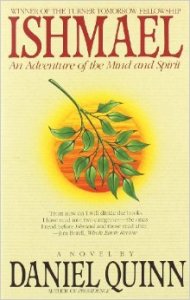
5.) Ishmael by Daniel Quinn: A man answers an ad that begins: “Teacher seeks pupil.” The teacher he discovers and the lessons he is taught aren’t what he bargained for. The book considers the impact of modern man versus aboriginal people, and the two groups’ respective place in the world.


4.) Brave New World by Aldous Huxley: In a futuristic world, people are controlled and manipulated by genetic engineering, classical conditioning, sleep-teaching, not to mention heaping helpings of drugs and promiscuity. The book considers the role of technology in humanity’s trajectory, and it contrasts Orwell’s bleak vision of dystopian governance with one that is every bit as manipulatory — if a great deal more pleasant in appearance.


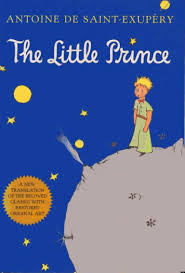
3.) The Little Prince by Antoine de Saint-Exupéry: A young prince from a far-away land comes to Earth, and shows how wise the young can be and how absurd adults often are.


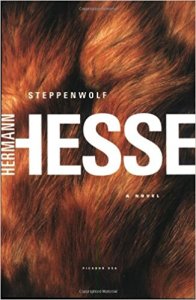
2.) Steppenwolf by Hermann Hesse: A man who feels out of step with humanity faces events that force him to reconsider what it means to be a man in the world of men.


1.) The Journeys of Socrates by Dan Millman: The prequel to Millman’s acclaimed book “The Way of the Peaceful Warrior.” It blends Eastern and Western philosophy in the training of a warrior.

BOOK REVIEW: The Unlimited Dream Company by J.G. Ballard

The Unlimited Dream CompanyThe Unlimited Dream Company by J.G. Ballard
My rating: 5 of 5 stars

Amazon page


The protagonist, Blake, crashes a stolen small aircraft into the Thames River beside the sleepy English town of Shepperton. In short order, Blake discovers that he cannot escape Shepperton and gradually he comes to realize that he can do anything else that he can imagine. This gradual discovery is like a dream becoming lucid. At first the world seems right even though there is plenty that is odd about it, as is the case when one is dreaming and oddities and anomalies don’t trigger a response as they do when one is conscious. Despite the fact that Ballard captures the surrealism of the dream state well, and even uses the word “dream” in the title, the reader is never sure what is going on exactly until the book’s conclusion. Is Blake dreaming everything? (including the plane theft?) Or, was he knocked unconscious in the crash? Or, is something supernatural going on that is dreamlike, but not a dream. There are a cast of townsfolk who sometimes behave oddly, but who seem like they have enough depth to be more than projections of Blake’s subconscious. The unfolding of the story involves the surreal nature of Shepperton becoming more obvious as the reader — little-by-little — gets a better idea of what is going on there.

Readers with a prudish streak should be aware that references to sex are ubiquitous. It’s not that there are a lot of graphic sex scenes, but – as in a dream state, the subconscious mind is at the fore and primal urges take center-stage. Blake imagines having sexual relations with everyone in the sleepy town. He doesn’t, but he speculates about it. There is also symbolic sexual reference – e.g. flowers growing from his seed. Frequent references are made to Blake being naked, but the townsfolk not realizing it. There’s generally not graphic description, this recurring device primarily serves as a means to show how the other people in the story aren’t lucid, because Blake’s nudity doesn’t set off their weird-o-meters as it would in waking consciousness.

I enjoyed this book, and, if you like surreal and trippy stories, you should give it a read.

View all my reviews